On May 4 I published a post about the National Guard shootings at Kent State University on May 4, 1970.
Later that day, on May 4, I was tidying up a large media cabinet, looking for extra space. The cabinet contains CDs, DVDs, books, and an assortment of other items. I found a small pile of stuff taking up space, a pile I hadn’t looked at in years. I pulled out the pile and unstacked it. There between the CDs was a little brochure.
It was a brochure from a long-ago visit to the May 4 Visitors Center at Kent State University (see above).
I can’t explain it. Actually, I can come up with different explanations, none of which I can be certain of. While I haven’t calculated the odds of this happening by chance, they are astronomical. But things happen by chance. On the other hand, forces are at work that we can’t fully know, no matter how smart we claim to be. As Hamlet said, “There are more things in heaven and earth, Horatio, than are dreamt of in your philosophie [science].”
There is magic in the universe. Believing in it makes us bigger and better.
“You see these bums, you know, blowing up the campuses. Listen, the boys that are on the college campuses today are the luckiest people in the world, going to the greatest universities, and here they are burning up the books, storming around about this issue. You name it. Get rid of the war there will be another one.”
Three days later, on May 4, 1970, the National Guard shot and killed four and wounded nine at Kent State University in Ohio.
Nixon won election in 1968 on a platform of law and order. He had no use for student protests. But even those Americans who still supported the Vietnam War and agreed that student protestors were “bums” were troubled. So Nixon ordered a Commission on Campus Unrest. The Commission, under the leadership of former Pennsylvania governor William Scranton, investigated and issued a 537-page report. It included a special section on Kent State, containing a detailed day-by-day, minute-by-minute description, leading up to this moment:
Major Jones said he first heard an explosion which he thought was a firecracker. As he turned to his left, he heard another explosion which he knew to be an M-1 rifle shot. As he turned to his right, toward Taylor Hall, he said he saw guardsmen kneeling (photographs show some crouching) and bringing their rifles to their shoulders. He heard another M-1 shot, and then a volley of them. He yelled, “Cease fire!” several times, and rushed down the line shoving rifle barrels up and away from the crowd. He hit several guardsmen on their helmets with his swagger stick to stop them from firing.
General Canterbury stated that he first heard a single shot, which he thought was fired from some distance away on his left and which in his opinion did not come from a military weapon. Immediately afterward, he heard a volley of M-1 fire · from his right, the Taylor Hall end of the line. The Guard’s fie was directed away from the direction from which Canterbury thought the initial, nonmilitary shot came. His first reaction, like that of Fassinger and Jones, was to stop the firing.
Canterbury, Fassinger, and Jones–the three ranking officers on the hill–all said no order to fire was given. Twenty-eight guardsmen have acknowledged firing from Blanket Hill. Of these, 25 fired 55 shots from rifles, two fired five shots from .45 caliber pistols, and one fired a single blast from a shotgun. Sound tracks indicate that the firing of these 61 shots lasted approximately 13 seconds. The time of the shooting was approximately 12:25 p.m.
Four persons were killed and nine were wounded.
A map from the report:
Any lessons for today and beyond?
Whenever a university or a government decides to enforce its standard of order against gatherings and protests, that enforcement should be pursued carefully and judiciously, if at all. Things can and will happen when those forces are let loose. The choice of enforcement should be pursued only if there are no other options, which there almost always are. Emotions run high on all sides. Whenever weapons are officially introduced—from batons to rubber bullets to tear gas to guns and rifles—they can easily be used indiscriminately. And fatally.
Few things are more tragically ironic than anti-war protestors being injured or killed. It doesn’t have to be.
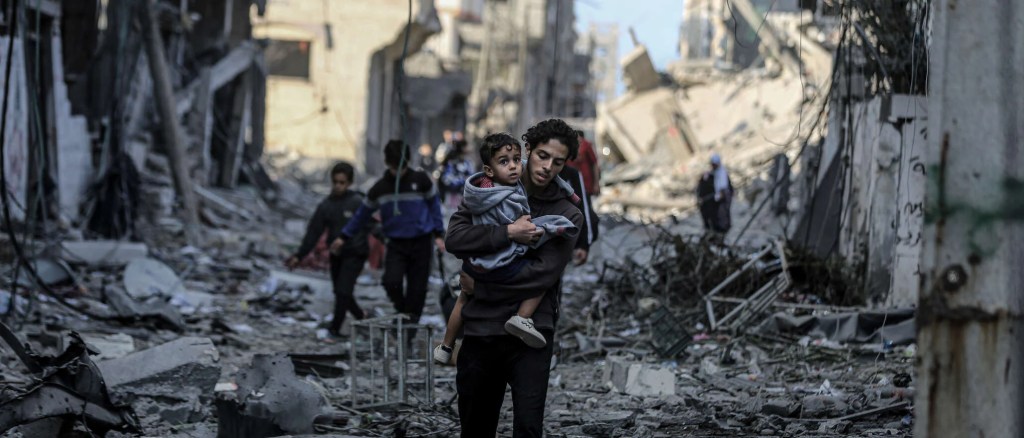
The primary point of the protests is bringing attention to the continuing horrors inflicted on Gaza. Most politicians of both parties and many media find this point uncomfortable and inconvenient for their purposes. So they would rather feature the protests themselves. Politicians believe too much attention to the underlying situation distracts from a law-and-order position or from support of Israel. Media believe that the protests are appropriately showy and newsworthy. A few injured or mistreated protestors make a good story. Thousands of dead, injured and mistreated don’t make for must-see TV and demand context.
Don’t forget that the primary point of the protests is Gaza. The protests have not surprisingly been mishandled by universities and government, and they will be. Free speech has been stifled, and it will be. These are important issues. But the people of Gaza, the families of the dead, injured, starving and displaced don’t care. They just want people to pay attention and act to help them.
When students protested the U.S. war in Vietnam, our elders told us, condescendingly, that we were too young to understand the big picture, but we would when we were older. (Understanding wasn’t helped by chronic government lies, but that’s another story.) It may seem, they said, that supporting a corrupt and autocratic regime in South Vietnam, conducting a war for them and sending our young men to kill and die, is not a good idea. But trust us, they said, it is what the people of Vietnam want, what the world needs, and it is for the best. Someday you’ll understand.
The war in Gaza is complicated. But something seems simple to the protestors. There is a level of aggression against innocent people that exceeds appropriate response, that is not justified, and that should not be enabled and supported. There is a lifetime to learn that relativism, equivocation and compromise have their place. Young as the protestors are, they know that Gaza is not it.
Above is a photo of Martin Luther King Jr. being arrested in Atlanta for taking part in a sit-in. Below is an excerpt from Dr. King’s Letter from a Birmingham Jail, where he was being imprisoned for taking part in nonviolent demonstrations against segregation.
You will not hear much mention of Dr. King from those cracking down on campus protests these days. It is inconvenient, because they would then have to make some fine distinctions between demonstrating for civil rights and demonstrating for human rights. Silence combined with force is easier.
It should not be necessary to explain the role of nonviolent protest and civil disobedience in American and world history. But apparently, the current thinking is that protesting this way proves that your cause is unworthy and wrongheaded. It is implied that if protestors don’t remove their campus encampments by a deadline, they are obviously illegitimate. Just as the civil rights movement was unworthy, wrongheaded and illegitimate to some.
From Letter from a Birmingham Jail
In no sense do I advocate evading or defying the law, as would the rabid segregationist. That would lead to anarchy. One who breaks an unjust law must do so openly, lovingly, and with a willingness to accept the penalty. I submit that an individual who breaks a law that conscience tells him is unjust, and who willingly accepts the penalty of imprisonment in order to arouse the conscience of the community over its injustice, is in reality expressing the highest respect for law.
Of course, there is nothing new about this kind of civil disobedience. It was evidenced sublimely in the refusal of Shadrach, Meshach and Abednego to obey the laws of Nebuchadnezzar, on the ground that a higher moral law was at stake. It was practiced superbly by the early Christians, who were willing to face hungry lions and the excruciating pain of chopping blocks rather than submit to certain unjust laws of the Roman Empire. To a degree, academic freedom is a reality today because Socrates practiced civil disobedience. In our own nation, the Boston Tea Party represented a massive act of civil disobedience.
We should never forget that everything Adolf Hitler did in Germany was “legal” and everything the Hungarian freedom fighters did in Hungary was “illegal.” It was “illegal” to aid and comfort a Jew in Hitler’s Germany. Even so, I am sure that, had I lived in Germany at the time, I would have aided and comforted my Jewish brothers.
One line from the Book of Exodus crystallizes our moment.
As with all biblical Hebrew, the translation is challenging and varied.
Exodus 23:9
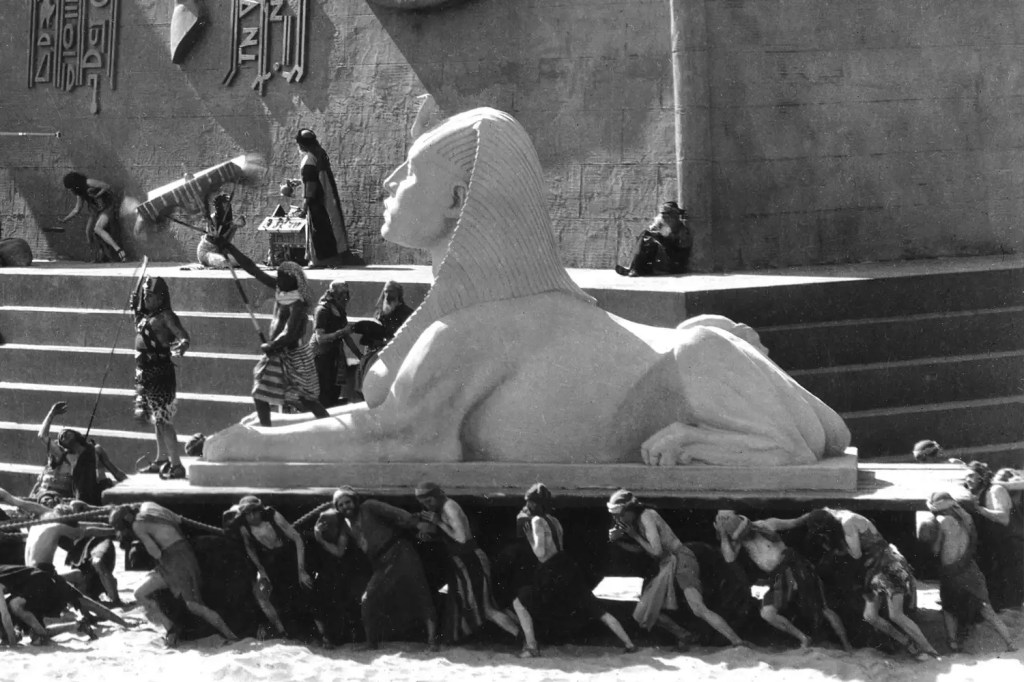
You shall not oppress a stranger, for you know the feelings of the stranger, having yourselves been strangers in the land of Egypt. (NJPS)
You shall not oppress a resident alien; you know the heart of an alien, for you were aliens in the land of Egypt. (NRSV)
No sojourner shall you oppress, for you know the sojourner’s heart, since you were sojourners in the land of Egypt. (Robert Alter)
Alter addresses one of the translation challenges, the Hebrew word nefesh/נֶ֣פֶשׁ:
“The Hebrew is nefesh, “heart”, “life,” “inner nature,” “essential being,” “breath.””
Another word needing expansion is the Hebrew ger/גֵּ֔ר. Scholars Mark Allen Powell and Dennis R. Bratcher explain in the HarperCollins Bible Dictionary:
alien (ger): In the Bible, one who is not a member of a particular social group. Accordingly, Abraham was an alien (NRSV: “stranger”) among the Hittites at Hebron (Gen. 23:4), as were Moses in Midian (Exod. 2:22) and the Israelites in Egypt (Deut. 23:7; cf. Ruth 1:1). The Hebrew word is ger, and it has often been translated “sojourner” in English Bibles. The NRSV is inconsistent, translating it “alien” in some instances and “stranger” in others. After the settlement in Canaan, the term not only designated a temporary guest but also acquired the more specialized meaning of “resident alien,” one who lived permanently within Israel (Exod. 22:21; 23:9). No doubt because the Israelites were keenly aware of their own heritage as aliens without rights in a foreign land, they developed specific laws governing the treatment of aliens. Strangers or aliens were to be treated with kindness and generosity (Lev. 19:10, 33–34; 23:22; Deut. 14:29). The basic principle was, “You shall also love the stranger, for you were strangers in the land of Egypt” (Deut. 10:19). And, again, “You shall love the alien as yourself, for you were aliens in the land of Egypt” (Lev. 19:34)….
“Alien” or “stranger” also appears in a figurative sense, usually in appealing to the generosity and mercy of God in dealing with undeserving people (Pss. 39:12; 119:19; 1 Chron. 29:15). The idea of dwelling in a land owned by someone else is also applied theologically to the relationship of the Israelites to the land; it belonged to God and they were the strangers in it (Lev. 25:23). (emphasis added)
This Passover, we give a thought to the nefesh—heart, life, inner nature, essential being, breath—of the ger—stranger, sojourner, resident alien. As the Bible reminds us, we were strangers too.
Where Do the Children Play? is the opening track on the fourth album by Yusuf / Cat Stevens, Tea for the Tillerman (1970). A beautiful simple profound song about the price of progress,
Well, I think it’s fine Building jumbo planes Or taking a ride on a cosmic train Switch on summer from a slot machine Get what you want to if you want ‘Cause you can get anything
Well, you roll on roads Over fresh green grass For your lorry loads Pumping petrol gas And you make them long And you make them tough But they just go on and on And it seems that you can’t get off
Well, you’ve cracked the sky Scrapers fill the air But will you keep on building higher ‘Til there’s no more room up there? Will you make us laugh? Will you make us cry? Will you tell us when to live? Will you tell us when to die?
I know we’ve come a long way We’re changing day to day But tell me, where do the children play?
Some people, Jews and others, believe that the Israeli strategy in Gaza is justified and that the deaths and suffering of innocent people are unfortunate collateral damage of an important goal. Some people, Jews and others, disagree.
One thing we all can agree on is that when people, especially children, suffer, justifiably or not, it is our duty to help relieve that suffering in any way we can. People of all religious traditions or none can agree on this.
The International Rescue Committee is one of the most respectable and responsible organizations in the world working on this:
The International Rescue Committee (IRC) helps people affected by humanitarian crises—including the climate crisis—to survive, recover and rebuild their lives.
Founded at the call of Albert Einstein in 1933, the IRC is now at work in over 50 crisis-affected countries as well as communities throughout Europe and the Americas.
As Jews, on Passover we recall how our storied ancestors suffered—under the hand of a wicked ruler, wandering in a desolate desert. As we have suffered and suffer still, how can we deny the suffering of others and fail to relieve it?
When the Israelites were starving in the desert, we are told that God provided manna:
In the desert the whole community grumbled against Moses and Aaron. The Israelites said to them, “If only we had died by the Lord’s hand in Egypt! There we sat around pots of meat and ate all the food we wanted, but you have brought us out into this desert to starve this entire assembly to death.” Then the Lord said to Moses, “I will rain down bread from heaven for you. The people are to go out each day and gather enough for that day. (Exodus 16:2-4)
Francis Ford Coppola’s Apocalypse Now (1979) is regarded as an all-time great movie. Thought to be the best of many movies about the Vietnam War. To some, as great as his masterpiece Godfather movies.
It is more than a movie about the Vietnam War or about war. Inspired by Josef Conrad’s novella Heart of Darkness (1899), it is about how lost we can get on missions, no matter who we are or think we are, no matter how well or ill conceived, well or ill intentioned those missions are.
We are just people. As people we are irresistibly and inevitably prone to forces, inside and outside, seemingly controllable but ultimately uncontrollable, that drive us as we drift into terra incognita, unknown territory.
That is why to watch Apocalypse Now now. Right now.
One famous scene is the Air Cavalry descending on a Vietnamese village. The surfing colonel in charge blasts Wagner’s Ride of the Valkyries from the helicopters as they attack.
The soundtrack for the opening scene is The End by the Doors:
Lost in a Roman wilderness of pain And all the children are insane All the children are insane Waiting for the summer rain