Bob Schwartz

Category: Politics

Trump: In the Future Voters May Look to Military People for President

Highlighting what Donald Trump doesn’t know about public affairs, or history, or geopolitics, or lots of other significant matters, is fishing in a barrel. So nothing is surprising.

And yet this nugget from his book The America We Deserve (2000) is special. In it he writes:

“Voters are going to look to the worlds of business, entertainment, professional sports, and maybe the military—not to career politicians—for our next generation of political leadership.”

There’s an old comedy bit that starts out with “Any five-year-old can do that.” “Okay” is the reply “get me a five-year-old.”

Any school kid (I hope) knows that military people have always been active as public leaders in America, at the highest levels. In fact, twelve generals have become Presidents of the United States, from the first one, to most recently Dwight Eisenhower, who served during Trump’s lifetime. Of course, Trump may not have been paying attention then. Or in 2000. Or now.

From the Unpublished Archive: It’s Now Safe for All Democrats to Love Joe Biden

This was written in October 2015, when Joe Biden announced he would not run for the Democratic nomination. The election story isn’t over yet, but we know what happened since. Bernie Sanders galvanized progressives who yearned for a new path and who had distaste for and distrust of Hillary Clinton. Donald Trump galvanized a completely other constituency of the distasteful and the distrustful. And so it goes.

Joe Biden is neutralized, so it is now safe for all Democrats to say how much he is loved, not just by Democrats, but by Republicans and the whole nation. And how capable, experienced and qualified he is. And how nobody is better at working across the political aisle.

The way he is being praised to the heavens by all, including Hillary Clinton supporters, you would think this was a new discovery. In fact, he was just as beloved, capable, experienced and qualified a couple of days ago. In fact, it was Republican Lindsey Graham who said three months ago, “He’s the nicest person I’ve ever met in politics. He’s as good a man as God has ever created.”

The difference, of course, is that Joe Biden now poses no threat to Hillary Clinton. And therein lies some insight, not about Joe or Hillary, but about what people do not like about politics, certainly not the way it is played by some of our leading figures.

Politics may be a game, but when playing it involves hiding the truth about people, or delaying telling the truth about people because it is not politically expedient, something is wrong. It may be “right” electorally, but wrong by most other human measures. Good people and behavior should be lauded in a timely way, not so good people or behavior should be noted in a timely way.

When people are as constant and talented as Joe Biden, members of the Democratic Party, even if they supported someone else, shouldn’t have waited to celebrate that constancy—even it meant giving him his due. But they did wait until today. When it was safe.

Which is not only sad, but bodes ill for those who claim to be truth tellers and uniters of a clearly divided body politic. Because if you are afraid of someone beloved, capable, experienced and qualified, what exactly does that say about you?

Hunter S. Thompson and Political Journalism

Fear and Loathing on the Campaign Trail

Hunter S. Thompson developed one of the most original and irresistible voices in American journalism. He killed himself in 2005, and nowhere is his work more missed than in politics.

To sample that voice, you can and should try The Great Shark Hunt, the best single volume collection of excerpts from his many years and areas of coverage. If you just want to see what he did for and to political journalism, read Fear and Loathing on the Campaign Trail ’72.

We can only wonder what he would make of this political season and of the major party candidates for President. Wish he was here. That would be something. From his first exposure to Richard Nixon, for example, Thompson saw right through to Nixon’s dark soul. Maybe he wasn’t the only one who saw it, but he was the only journalist who would talk about it at all. Talk about it in ways that seemed borderline deranged, because faced with twisted truth, sometimes only the twisted can tell it like it is. Or as Thompson liked to say, “When the going gets weird, the weird turn pro.”

Thanks to him, it’s a little more common now to hear a bit more seemingly immoderate but completely justified criticism of questionable candidates. But not as much as we need and not as much as is deserved. Not as much as Thompson would have handed out.

Here is an excerpt from Thompson’s 1994 obituary for Nixon (“He Was a Crook”).   Note his criticism of the failures of “Objective Journalism” when journalists are faced with the extraordinary.

Kissinger was only one of the many historians who suddenly came to see Nixon as more than the sum of his many squalid parts. He seemed to be saying that History will not have to absolve Nixon, because he has already done it himself in a massive act of will and crazed arrogance that already ranks him supreme, along with other Nietzschean supermen like Hitler, Jesus, Bismarck and the Emperor Hirohito. These revisionists have catapulted Nixon to the status of an American Caesar, claiming that when the definitive history of the 20th century is written, no other president will come close to Nixon in stature. “He will dwarf FDR and Truman,” according to one scholar from Duke University.

It was all gibberish, of course. Nixon was no more a Saint than he was a Great President. He was more like Sammy Glick than Winston Churchill. He was a cheap crook and a merciless war criminal who bombed more people to death in Laos and Cambodia than the U.S. Army lost in all of World War II, and he denied it to the day of his death. When students at Kent State University, in Ohio, protested the bombing, he connived to have them attacked and slain by troops from the National Guard.

Some people will say that words like scum and rotten are wrong for Objective Journalism — which is true, but they miss the point. It was the built-in blind spots of the Objective rules and dogma that allowed Nixon to slither into the White House in the first place. He looked so good on paper that you could almost vote for him sight unseen. He seemed so all-American, so much like Horatio Alger, that he was able to slip through the cracks of Objective Journalism. You had to get Subjective to see Nixon clearly, and the shock of recognition was often painful.

Political Expediency and Conscience

Marcellus and Butch - Pulp Fiction

Now the night of the election, you may fell a slight sting, that’s conscience messin’ wit ya. Screw conscience! Conscience only hurts, it never helps.
Loosely adapted from Pulp Fiction

Political pragmatism is a messy business, especially when it looks like pure expediency. That goes for candidates who are not trusted or liked, and for supporters and enablers who overlook obvious shortcomings and transgressions for the sake of some higher goal. (For Democrats and Republicans who think this is only about the other, think again.)

The best movie moment about expediency comes from Pulp Fiction. Those who know this great movie may know the scene. Those who haven’t seen it should, for entertainment and for Tarantino’s willingness to take on interesting moral and ethical questions. Be advised that the movie is rough, as is the language in this scene.

Boss Marsellus Wallace (Ving Rhames) is bribing aging boxer Butch Coolidge (Bruce Willis) to take a dive:

MARSELLUS WALLACE:

I think you’re gonna find ­ when all this shit is over and done ­ I think you’re gonna find yourself one smilin’ motherfucker. Thing is Butch, right now you got ability. But painful as it may be, ability don’t last. Now that’s a hard motherfuckin’ fact of life, but it’s a fact of life your ass is gonna hafta git realistic about. This business is filled to the brim with unrealistic motherfuckers who thought their ass aged like wine. Besides, even if you went all the way, what would you be? Feather-weight champion of the world. Who gives a shit? I doubt you can even get a credit card based on that.

Now the night of the fight, you may fell a slight sting, that’s pride fuckin’ wit ya. Fuck pride! Pride only hurts, it never helps. Fight through that shit. ‘Cause a year from now, when you’re kickin’ it in the Caribbean you’re gonna say, “Marsellus Wallace was right.”

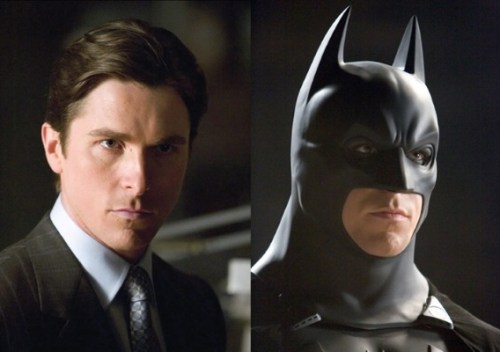
Bruce Wayne Is Batman, Donald Trump Is John Miller/John Barron

Bruce Wayne - Batman

Millionaire Bruce Wayne never wanted it to be known that he was the crime fighter Batman because he didn’t want those close to him to be in danger.

Millionaire Donald Trump never wanted it to be known that he was publicist/executive John Miller/John Barron because…

This analysis leads to one conclusion. That Donald Trump actually wanted to be, or at least considered being, Batman. But Trump is no fool. He realized that calling up journalists and saying he was Batman, or John Batman, might not sound authentic—even if he knew intimate details of Trump’s life and loves. Which is how he ended up telling them he was John Miller or John Barron. So prosaic, so low energy, so small-handed.

But life is long. We may yet hear tapes of “John Batman” calling up reporters with the latest scoop on what Donald Trump is up to. Let’s pray for the day.

Politics and People of Conscience

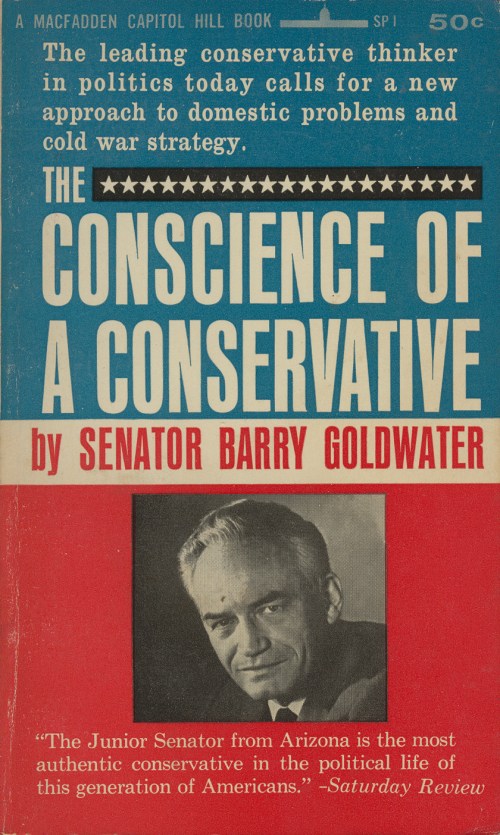
Conscience of Conservative

There’s talk of Barry Goldwater in the context of the current election cycle. I’ve written about him before—as it turns out, a few times, here, here, and here. It’s not that I’m a fan of conservative politics; it’s that I’m a fan of conscience.

Goldwater’s unlikely and iconoclastic nomination for President at the Republican National Convention in 1964 was predicted to be a disaster. It was, as he was crushed by Lyndon Johnson in the election. On the other hand, his political philosophy lived on in the party—coming into full flower with Ronald Reagan and, more than fifty years later, is still the touchstone of conservative Republican politics.

Goldwater’s famous book was a manifesto called The Conscience of a Conservative. Focus on that word “conscience.” It means principles that are grounded in the deepest part of your beliefs, principles that are often difficult to stand by. On one side is the temptation of expedience. On the other is being criticized for standing in the way and being outcast. Or in Goldwater’s case, for leading the party into a (temporary) black hole.

In both parties right now, conscience is being tested.

Paul Ryan and others are speaking their mind about Donald Trump, even in the face of calls for unity over conscience, for party above principle. Other Republicans, seeing the same candidate, admit he is flawed in ways they have trouble abiding, but a unified party has a shot a victory, while a splintered one has none.

Among Democrats, even some Hillary Clinton supporters, in candid moments, admit that they have deep reservations about her on fundamental grounds of honesty, integrity, and transparency, but say that winning is everything, and that she is the path to victory—whatever her shortcomings.

We shouldn’t indict those who compromise their conscience, in politics or elsewhere. Each of us does it or has done it, and we live with it. Maybe sleeplessly sometimes, but we live with it. What we should do is praise those who manage to know their conscience and follow it, often at a price. This is what we try to teach our children. This is what we should suggest to our politicians.

Some Disingenuous Republicans Are Waiting for Trump to “Change His Style”

Republicans who honestly support Donald Trump are entitled to do so. This is America and it’s a free country. But some disingenuous Republicans are saying that they are holding off support to see if Trump “changes his style.” Which is a dishonest and cowardly position.

You can support Trump because you like him and think he would be a great President—the greatest ever. You can support him because you dislike the Democrats and Hillary Clinton.

You can oppose Trump because…well, so many reasons.

But waiting for Trump to change his style is absurd. Not because he can’t or won’t—though he probably won’t—but because his problem is substantive, not stylistic. It is about who he is. And everybody on the face of the earth knows who he is, because he has been compulsive about telling us for years, especially during this campaign.

So if you hear about some politician waiting for Trump to change his style, don’t believe it. It’s just another skittish and not particularly brave politician blowing in an ill wind.

Stale Donuts: What I Share with Ted Cruz

Donut

This is a true and inconsequential story.

I may not be as smart as Ted Cruz. But he and I share something important.

Ted has said he loves donuts. I love donuts.

Donuts get stale, somewhat quickly. Donut lovers devise ways to freshen stale donuts.

On the campaign trail, Ted has talked about refreshing stale donuts (really). He says he puts them in a microwave for 12 seconds.

I also have a technique for refreshing stale donuts. I put them in a microwave for 10 seconds. (Too much microwaving can destroy their delicate texture.)

So while he and I share this love, we disagree slightly on this. We have bigger disagreements on other matters, of course.

I did not clerk for a Supreme Court Justice. I am not running for President. Etc. So maybe Ted’s 12 seconds are better than my 10 seconds. If you’d like, you can try it for yourself.

Democracy Awakening

DA general 6

We are hearing questions about whether the Bernie Sanders phenomenon is a “movement”. It is pointed out that many other moments, in and out of electoral politics, either never turned into movements at all or, if they did, quickly fizzled out.

Last weekend in Washington D.C. there were events sponsored by a group called Democracy Awakening, mobilizing a wide array of progressive organizations, big and small.

We’re a broad coalition of organizations representing the labor, peace, environmental, student, racial justice, civil rights and money in politics reform movements. We share a firm belief that we will not win on the full range of policy issues we all care about until we combat attacks on voting rights and the integrity of the vote by big money.

At a demonstration on Monday, more than 300 were arrested, including Ben and Jerry, Rosario Dawson, and others famous and not. If you didn’t see or hear much about it, it was overshadowed by New York Primary coverage. And by the fact that there are many who are hoping that this isn’t a movement—at least not one that lasts.

Think about those who stand out in the ocean at low tide, facing the shore. The water gently laps at their ankles, rises a little more vigorously to the knees. Still they stand confident and firm. They can choose to ignore the tide and the waves, but eventually the tide has a way of coming in and rising, and the waves have a way crashing against whatever is in their path.

So maybe the best idea is to turn around and face the ocean. That’s where the movement comes from.

DA Robert Reich quote 1

Bernie Sanders and Pope Francis

Bernie Sanders at the Vatican

This kind-of-cute headline from Politico sort of says it all.

Bernie’s fanboy moment: A meeting with Pope Francis

As you may know, Bernie Sanders was invited to a conference at the Vatican on issues related to economic justice. He interrupted his New York campaign to attend, gave an excellent speech that frequently cited the Pope’s own writings, but was told that the Pope would not be able to meet with him and others at the conference.

Then, at the last minute, the Pope was able to meet for five minutes with Bernie and his wife Jane. It was thrilling to hear that. It is unimaginable to conceive what it must have been like for Bernie, who as the headline suggests, is a huge fan of the Pope and his thinking on economic issues.

In case you think this is all about electoral politics, think again.

A major American politician has met with the Pope, based on a shared vision of economic justice. That vision comes from a background of Jewish fairness and compassion in one case and from the deepest, most Jesus-based tenets of the Catholic Church in the other. This doesn’t happen every day, or month, or year.

It is a unique and sweet moment for those who care about the future of America and the world. If that sounds a little grandiose, maybe believing big is exactly what we need.