Making No Sense

I looked at the stars
Like an astrologer
Saw constellations
Like an astronomer
Saw suns and planets.
I looked again
And saw stars.
I looked at the stars
Like an astrologer
Saw constellations
Like an astronomer
Saw suns and planets.
I looked again
And saw stars.

This is a test. It is an actual news story about a man who tried to have sex with an ATM and a picnic table.
Place and name have been deleted, and no link to the story is provided. There is more than enough embarrassment already. You can no doubt find the story if you are so moved.
This is a test not unlike an inkblot test. Listen to the police officer’s report. Then listen to your own thoughts. What are you thinking when you hear this? Are you laughing? Saddened? Disgusted? Confused? All that and more? What stories are you telling yourself? You might find that just as interesting as the original story.
A man was arrested Friday night and charged with public intoxication.
The police officer said, “He entered the bar and walked to the ATM. Once at the ATM, he pulled down his pants and underwear exposing his genitals, and then attempted to have sexual intercourse with the ATM…Once outside he again exposed himself and engaged in sexual intercourse with the wooden picnic table.”

It’s Saturday, the Sabbath in Jewish communities. Why is this Sabbath different than all other Sabbaths?
Because on this Sabbath Sheldon Adelson’s Republican Jewish Coalition is continuing its three-day Spring Leadership Meeting, including a galaxy of political and policy stars looking for support, prestige, power, and money, including:
New Jersey Governor Chris Christie
Ohio Governor John Kasich
Wisconsin Governor Scott Walker
Vice President Dick Cheney
Israeli Ambassador Ron Dermer
Ambassador John Bolton
It’s true that the majority of American Jews don’t fully honor the Sabbath as a time for rest, reflection, and study. It’s also true that some number of those do try in small ways to live in the spirit of the Sabbath. Where Sheldon Adelson and the RJC sit on this spectrum of Sabbath observance and honor is between them and their God and their party.
One of the things that most non-Jews and many Jews don’t recognize is the complex significance of the Sabbath. The year is filled with special days, some regarded as very serious, very important and, in the case of the High Holidays, literally awesome. The Sabbath, though, stands apart, characterized as a beloved or royalty, as a bride or queen.
The great, deep and inspiring Jewish theologian Abraham Joshua Heschel wrote an incomparable work on the nature and meaning of this. The Sabbath presents a spiritual picture of what he calls sacred time. The book is considered by readers of all faiths and even no faith an uplifting view of how we are to live in the context of such a powerful reality.
It would be presumptuous to say whether the late Dr. Heschel, who among his many achievements marched with Martin Luther King in Selma almost fifty years ago, would attend the RJC Spring Leadership Meeting. In any case, most likely not the RJC on the Sabbath.
Although the RJC will be holding its political beauty pageant today, they still might have a moment to squeeze in some Heschel. This passage from the Epilogue of The Sabbath is out of context, and not so easy to appreciate on its own. It does have something to say about space, which can be owned and fought over, and time, sacred time, in which we are all joined and connected and sharing—no matter who you are, no matter how many casinos you own, no matter how big your PAC:
Time, then, is otherness, a mystery that hovers above all categories. It is as if time and the mind were a world apart. Yet, it is only within time that there is fellowship and togetherness of all beings.
Every one of us occupies a portion of space. He takes it up exclusively. The portion of space which my body occupies is taken up by myself in exclusion of anyone else. Yet, no one possesses time. There is no moment which I possess exclusively. This very moment belongs to all living men as it belongs to me. We share time, we own space. Through my ownership of space, I am a rival of all other beings; through my living in time, I am a contemporary of all other beings. We pass through time, we occupy space. We easily succumb to the illusion that the world of space is for our sake, for man’s sake. In regard to time, we are immune to such an illusion.

This message for the start of spring comes from the masterpiece Treasury of the True Dharma Eye (Shobo Genzo) by Dogen, the founder of Soto Zen.
The passage is taken from Fascicle 44, Flowers in the Sky, written in 1243:
Thus, when the time comes, flowers open. This is the moment of flowers, the arrival of flowers. At this very moment of flowers arriving, there is no other way. Plum and willow flowers unfailingly bloom on plum and willow trees. You see the flowers and know plum and willow trees. You understand flowers by looking at plum and willow trees. Peach and apricot flowers have never bloomed on plum and willow trees. Plum and willow flowers bloom on plum and willow trees. Peach and apricot flowers bloom on peach and apricot trees. Flowers in the sky bloom in the sky in just this way. They do not bloom on other grasses or trees.
Seeing the colors of flowers in the sky, you fathom the limitlessness of fruit in the sky. Seeing the opening and falling of flowers in the sky, study the spring and autumn of flowers in the sky. The spring of flowers in the sky and the spring of other flowers should be the same. Just as there are a variety of flowers in the sky, there should be a variety of springtimes. This being so, there are springs and autumns in the past and present.
Those who assume that flowers in the sky are not real and other flowers are real have not seen or heard the Buddha’s teaching. To hear the words that the sky originally had no flowers and assume that the flowers in the sky that did not exist do exist now is a lesser view based on shallow thinking. Step forward and think deeply.

The crisis in Ukraine is deepening, and with that lots of thought, opinion, and calls for action. It may seem like the wrong time for self-awareness and contemplation. Enough talk. This is a Nike world, so let’s just do it.
Whether it is about the Russian invasion of Ukraine or about unfairness in our own nation, our desire for justice and aversion to injustice is a good thing. But it can be so powerful and overwhelming that we easily get lost. It isn’t that we shouldn’t act decisively; it’s that in our zeal, we can be confused or overly certain about what the right decision is.
Last summer, in the face of terrible killings in India that had profound implications for Buddhist communities, Shambhala Publications published a free book you can get, Beyond Anger: How to Hold On to Your Heart and Your Humanity in the Midst of Injustice.
The publisher explains:
In July 2013, multiple bombs exploded in Bodh Gaya, India, in and around the holiest Buddhist pilgrimage site, the Mahabodhi temple that marks the spot where the Buddha attained enlightenment. In response, Shambhala Publications offers this free eBook consisting of excerpts from some of our books from a variety of Buddhist traditions that encapsulate values of love and nonviolence, which we can all practice ourselves.
You may not be a Buddhist, or care about Buddhist philosophy. You may or may not be angry about what is going on around the world, or about what some people say about how to solve the problems. You may believe that you have a better way, and you may be right. It’s just that no matter what, a different perspective can always be helpful.
In a section of the book called Conflict Resolution: Anger Is the Problem, The Karmapa, Ogyen Trinley Dorje talks about Global Conflicts, Global Solutions:
When bigger and more powerful nations step in to offer guidance to other nations, many of the same principles apply as when individuals intervene to resolve interpersonal conflicts. A sincere motivation is absolutely key, and on top of that, the intervention must be done with sensitivity and skill.
In this small world we live in, nations coexist interdependently. The actions of one country affect others deeply. Countries with more power have the potential to influence others more. I believe that with this power comes a great deal of responsibility, and that includes the responsibility not to exercise one’s power over others in pursuit of the private interests of one’s own nation….
Before you approve the actions proposed, you should be confident that they are in the best interest not only of your country, but of the world as a whole. To be a responsible, conscious citizen, it is important that you think for yourself, and take universal peace, stability, and well-being into account. Use your discernment and take a stand that serves the whole world, not just one corner of it.
Even when we are sure that the motivation to contribute positively to the well-being of the world is sincere, we also have to scrutinize the means used to pursue that aim. For example, in the name of bringing freedom to other countries, weapons are produced and wars are waged. As powerful countries themselves expand their arsenals and wage more war, the peace and stability of their own country and of the world are both placed at risk.
Again, a pure motivation needs to be applied with wisdom. I feel very strongly that war and fighting are not an effective means to bring about peace or prosperity, stability or freedom. I am certain that history will demonstrate war to be ineffective and counterproductive in the long run.
I have met many people from powerful countries who are deeply unhappy with how their leaders wield their power internationally. This seems especially common when people have failed in their efforts to urge the decision makers to pursue a more compassionate and skillful course. Some of these people become angry at their own governments. In other cases, people direct their anger at the governments of other countries.
If you find yourself angry at any government, please recollect how harmful anger is to yourself and others, and steady yourself with a firm resolve. Make an unwavering commitment to yourself that you will not allow your mind to become perturbed. Be immovable—unshakable from a peaceful state of mind.

The other poverty is the poverty of ideas.
Let us ask each of our leaders and politicians for just one relatively new and interesting idea to solve a pressing problem. Just one. It doesn’t have to be an idea that has won substantial support or that has achieved broad consensus. In fact it can’t be that. Instead it should be something that is just a little bit out there, the kind that might elicit a “you must be kidding” or “that will never pass” or “that will never work.”
What we mostly have is problem solving that borders on archival monomania, the single idea with ancient lineage that fits a particular purpose or ideology—but has not really demonstrated an ability to solve particular problems.
This morning Sen. Dean Heller of Nevada explained why he is one of the few Republicans supporting an extension of unemployment benefits. In the course of the interview, he said that the biggest problem was jobs. He then ticked off the number one conservative solution—tax reform—but when he got to the second idea, it came out sounding like “something else” without a single detail. That’s because leaders and politicians on both sides of the aisle are stumped, which they admittedly should be by the unique and unprecedented economic moment we are living through.
During the 2012 presidential campaign, Newt Gingrich was roundly derided for his suggestion that we mine the Moon and colonize Mars. There are plenty of reasons that Newt wasn’t and isn’t a good choice for President, but that isn’t one of them. Sure it’s a bit science fictionish, but then so is practically all of the current tech that is one of the only bright spots in the global economy. Can you imagine a U.S. Senator in the 1950s coming to the floor of the Senate brandishing a copy of that weekend’s Sunday funnies, pointing to Dick Tracy and saying “That wrist radio, gentlemen, is where we should be heading.”? China and India are racing to the Moon, and it is not for the view.
Politics and political leadership are inherently conservative, in the sense that maintaining the institution and its support seems to demand modest, slow, incremental change—if any change at all. That’s where party lines and sticking to scripts come from. An intolerance for innovation and fringe philosophy go with that. We shouldn’t be asking parties or politicians to give up core principles and precepts. But if we actually want to solve problems, and not just hear tired old nostrums that won’t do any good, then we have to make a safe place for innovation, one where thinkers who happen to be in office are not committing political suicide by offering something interesting and maybe even eccentric. Because until we ask our politicians to enrich us with new ideas and not empty platitudes and happy talk, more of us will be unhappy with increasingly empty pockets.

James P. Carse, now Professor Emeritus of history and literature of religion at NYU, published Finite and Infinite Games in 1986. The book’s spare 160 pages belie its significance. It is a masterpiece of clear, poetic and transformative thought, as Carse takes on the big question that faces us now and always: What are we doing and saying when we act and talk about things religious—or for that matter about life?
His answer—and this is impossibly oversimplified—is that we are playing games. To say even that little is misleading. The only way to appreciate the book and its power is to follow its 101 very brief sections end to end.
This was written at a time when the idea of religion as myth was enjoying renewed currency. It was not a new idea, but by the 1980s a generation of thinkers was trying to make intellectually honest sense of a conundrum: If religious narrative is merely myth, how can religious history have any value or substantial meaning, and how then can we be religious? It turned out in their view that it was not “merely” myth, but a matter that necessarily coexisted with, complemented and completed religion.
This continues to be something both hard for many to accept or wrap their heads around and equally hard to articulate. Carse articulates this better than anybody else has, and elevates the entire area to a platform for considering the whole of existence and life. If that sounds like hyperbole, please read the book and decide.
In the meantime, a wholly inadequate sample, given that many definitions and premises are missing:
1
THERE ARE at least two kinds of games. One could be called finite, the other infinite.
A finite game is played for the purpose of winning, an infinite game for the purpose of continuing the play.
. . .
99
If it is true that myth provokes explanation, then it is also true that explanation’s ultimate design is to eliminate myth. It is not just that the availability of bells in churches and town halls of Europe makes it possible to forge new cannon; it is that the cannon are forged in order to silence the bells. This is the contradiction of finite play in its highest form: to play in such a way that all need for play is erased.
The loudspeaker, successfully muting all other voices and therefore all possibility of conversation, is not listened to at all, and for that reason loses its own voice and becomes mere noise. Whenever we succeed in being the only speaker, there is no speaker at all. Julius Caesar originally sought power in Rome because he loved to play the very dangerous style of politics common to the Republic; but he played the game so well that he destroyed all his opponents, making it impossible for him to find genuinely dangerous combat. He was unable to do the very thing for which he sought power. His word was now irresistible, and for that reason he could speak with no one, and his isolation was complete. “We might almost say this man was looking for an assassination” (Syme).
If we are to say that all explanation is meant to silence myth itself, then it will follow that whenever we find people deeply committed to explanation and ideology, whenever play takes on the seriousness of warfare, we will find persons troubled by myths they cannot forget they have forgotten. The myths that cannot be forgotten are those so resonant with the paradox of silence they become the source of our thinking, even our culture, and our civilization.
These are the myths we can easily discover and name, but whose meanings continually elude us, myths whose conversion to truth never quite fills the bells of their resonance with the sand of metaphysical interpretation. These are often exceedingly simple stories. Abraham is an example. Although only two children were born to Abraham in his long life, and one of those was illegitimate, he was promised that his descendants would be as numberless as the stars of the heavens. All three of the West’s major religions consider themselves children of Abraham, though each has often understood to be itself the only and final family of the patriarch, an understanding always threatened by the resounding phrase: numbered as the stars of the heavens. This is the myth of a future that always has a future; there is no closure in it. It is a myth of horizon.
The myth of the Buddha’s enlightenment has the same paradox in it, the same provocation to explanation but with as little possibility of settling the matter. It is the story of a mere mortal, completely without divine aid, undertaking successfully a spiritual quest for release from all forms of bondage, including the need to report this release to others. The perfect unspeakability of this event has given rise to an immense flow of literature in scores of languages that shows no signs of abating.
Perhaps the Christian myth has been the narrative most disturbing to the ideological mind. It is, like those of Abraham and the Buddha, a very simple tale: that of a god who listens by becoming one of us. It is a god “emptied” of divinity, who gave up all privilege of commanding speech and “dwelt among us,” coming “not to be served, but to serve,” “being all things to all persons.” But the worlds to which he came received him not. They no doubt preferred a god of magisterial utterance, a commanding idol, a theatrical likeness of their own finite designs. They did not expect an infinite listener who joyously took their unlikeness on himself, giving them their own voice through the silence of wonder, a healing and holy metaphor that leaves everything still to be said.
Those Christians who deafened themselves to the resonance of their own myth have driven their killing machines through the garden of history, but they did not kill the myth. The emptied divinity whom they have made into an Instrument of Vengeance continues to return as the Man of Sorrows bringing with him his unfinished story, and restoring the voices of the silenced.
100
The myth of Jesus is exemplary, but not necessary. No myth is necessary. There is no story that must be told. Stories do not have a truth that someone needs to reveal, or someone needs to hear. It is part of the myth of Jesus that it makes itself unnecessary; it is a narrative of the word becoming flesh, of language entering history; a narrative of the word becoming flesh and dying, of history entering language. Who listens to his myth cannot rise above history to utter timeless truths about it.
It is not necessary for infinite players to be Christians; indeed it is not possible for them to be Christians—seriously. Neither is it possible for them to be Buddhists, or Muslims, or atheists, or New Yorkers—seriously. All such titles can only be playful abstractions, mere performances for the sake of laughter.
Infinite players are not serious actors in any story, but the joyful poets of a story that continues to originate what they cannot finish.
101
There is but one infinite game.
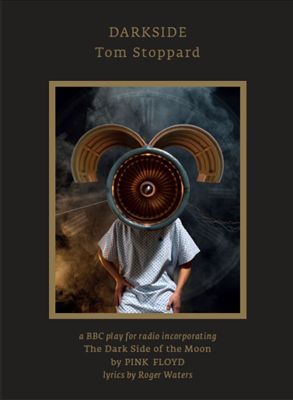
Last week, the most unusual pop album ever was released. That’s an incredible overstatement, literally unbelievable, because who has listened to all those truly out-there albums and how could you possibly contrast and compare them anyway?
Okay, last week, the most philosophical unusual pop album ever was released.
Tom Stoppard, maybe the greatest of all living English-language playwrights, is a longtime Pink Floyd fan, with a special place in his heart for Syd Barrett, the disturbed creator who sparked the group, even after his untimely but unavoidable departure. You may know Stoppard most popularly for his Oscar-winning work as co-writer of Shakespeare in Love. Before and after that, his total embrace of language, philosophy, literature and the overall beautiful strangeness of people led to masterful theatre and, often, radio plays.
When the BBC wanted to mark the 40th anniversary of Dark Side of the Moon, they asked Stoppard to create one of his radio concoctions. The result is Darkside, which integrates dramatic scenes into the music of the album.
Description is futile. Stoppard has always believed that philosophy is a form of play, that you can play philosophy the way you do language and music and entertain with it. Listeners and viewers might also learn something. Here we have clever demonstrations of moral philosophy and discussion of the nature of thought itself; that is, as he keeps pointing out, what he is doing is a thought experiment—as is all creativity. He then asks us and them about the juggler on the radio: there is a juggler on the radio, but not hearing him, how do we know? Do we believe in the juggler?
What is most clear listening to Darkside is not just that Stoppard knows how to play with words and mind, but that Pink Floyd was just as agile doing the same, with the addition of some of the most memorable and popular music of all time. Dark Side of the Moon was on the Billboard 200 chart for 14 years after it was released in 1973, and still hovers near there, 40 million copies later. Thousands still buy it every week and somewhere right now someone is listening and discovering something. Stoppard has devised a valuable appreciation of the weird wonder that is Dark Side, making it just a bit more wonderful. The lunatic is still on the grass and in your head.
All that you touch
And all that you see
All that you taste
All you feel
And all that you love
And all that you hate
All you distrust
All you save
And all that you give
And all that you deal
And all that you buy
Beg, borrow or steal
And all you create
And all you destroy
And all that you do
And all that you say
And all that you eat
And everyone you meet
And all that you slight
And everyone you fight
And all that is now
And all that is gone
And all that’s to come
And everything under the sun is in tune
But the sun is eclipsed by the moon
Eclipse, Dark Side of the Moon

It is time to bring Emerson back from the dead and ignored.
Up until the late 20th century, at least one of Ralph Waldo Emerson’s essays—usually the one titled Self-Reliance—was a staple of many high school curricula. So was the work of his fellow 19th century Transcendentalist Henry David Thoreau—though it was mostly Thoreau’s nature paean Walden, rather than On the Duty of Civil Disobedience. Maybe they are still there, but with our changing definition of what constitutes an American liberal arts education—if we consider that worthwhile at all—they have likely disappeared.
In the middle of the 19th century, the philosophical/political/religious/social/literary movement known as Transcendentalism gave birth to new ways of thinking and acting in America. Among the many intellectuals and activists associated with it, such as Thoreau and Margaret Fuller, none was more famous or prolific than Emerson. Transcendentalism gave new legitimacy to questioning the authority of convention and history. In the 1960s we would call this counterculture, and it is no coincidence that Thoreau became a guiding light to many in that generation.
Books and essays by the hundreds are devoted to Transcendentalism (see this entry from the Stanford Encyclopedia of Philosophy). They agree that pinning down exactly what Transcendentalism was and what it became over the years is a challenge. The same is said about Emerson, who unapologetically might contradict himself or change particular views over time.
With all that fluidity and vagueness, a few points of it are clear. According to Transcendentalism, we are driven to improve and grow, to aspire and rise higher. What drives us there is spiritual, but not in any conventional, narrow or simplistic sense. What we do is as important as what we believe and say. We must act, believe and speak as individuals, but knowing the nature of our particular individuality requires work and solitude. This life, this world, this existence are all-encompassing processes and not things—a concept that would later be refined as a core of modern philosophy, but that had its origins in the most ancient roots.
All of the work of the Transcendentalists is in the public domain and widely available free online. Though more people are familiar with Thoreau, or at least some of his concepts, Emerson is a good place to start. In his Essays (First Series) you will find Self-Reliance. In it you will find what we might consider a libertarian distrust of the crowd and of the government, something shared with Thoreau. But this is an enlightened sort of selfness, different than modern mutations, because it makes no distinction between the one and the all, that is, if I do what is good for me but is not good for all, it is by definition no good at all. Figuring out how that exactly works is the mission of the Buddha, of Jesus, of just about every philosopher who urges us to find our unique self and act in the benevolent context of community, country and cosmos. Emerson was one of the first to say this in American, as an American, in America. Maybe he got lost in the rush to the shiny and new, but he’s still there, just waiting to be discovered.
The 20th century gave us two world wars and an atomic bomb, but the most interesting of the Big Events of the century may be the Russian Revolution. An inequitable and unbalanced way of life gave bloody way to abstract enlightened visions of a better world. The particular inequities ended, Russia moved into modern times, but competition for the “right” vision and ineradicable baser human natures seeking power and control led to decades of national and global troubles. “Meet the new boss, same as the old boss,” the Who said.
The Russian Revolution was grounded in a Marxist vision, which was in turn a Christian vision: a community on earth as it is in heaven, a brotherhood of people in which suffering and want would be softened, if not alleviated, by those who have a surplus of comfort and resource. It was Lennon, not Marx, who said, “You can say I’m a dreamer, but I’m not the only one. I hope someday you’ll join us, and the world will live as one.”
What went wrong?
What almost always goes wrong is that evolution and revolution are out of sync. It is easy to say that people and society should first evolve for a while, and then at some critical moment, all that’s needed is that next faster-than-evolution event to take it to the next level.
That turns out rarely to be the case.
Evolution is slow, erratic, and always engenders resistance and reaction. The cliché is that people and society fear change, but that is too easy. They fear the unknown. The expression “better the devil you know than the one you don’t” sums it up. It takes a substantial leap—you might say a leap of faith—the walk into a vision rather than remain in a lesser but familiar reality.
Revolution is both an attempt to make evolution more real and to create conditions where that evolution can continue more broadly and forcefully. But, as pointed out with the Russian experience, it doesn’t always work that way. Revolution is conflict, and conflict creates its own set of conditions sometimes antithetical to evolution. “Fighting for peace” is oxymoronic (some would say just plain moronic), but we have had to live through that. (Note the moment in Stanley Kubrick’s brilliant film Dr. Strangelove where the President scolds his arguing advisers, “Stop it. There’s no fighting in the War Room.”)
One of the exceptional examples of evolution and revolution working together is the American Revolution. It is one of the reasons it worked so well. The founders may have been the fathers of our country, but they were the children of the Enlightenment. That multi-faceted evolution—philosophical, political, economic, spiritual—had gone as far as it could go when it hit a wall. They believed that if they could break through, which did mean war, they could establish an enlightened nation. And, to an extent greater or lesser than some might like or expect, they did.
Evolution, or lack of it, is at the heart of some current American problems.
America is heir to two great evolutions, sometimes unrecognized, often distorted. Some of those obstructionists who fight today hark back to the patriots who were mad as hell and wouldn’t take it any more, and so upended a cargo of British tea. Others who claim this is a Christian nation have the idea that if alive today, Jesus would certainly choose to be an American.
Every American in these dynamic times is free to pick the evolution they aspire to. There are plenty to choose from. We do have two very big ones on the menu. If a rabid revolutionary patriot, you might choose to follow the path of a 21st century version of Enlightenment; you might even study the work of those founding Enlightenists—Jefferson, Madison, Monroe, et al.—for guidance. If a committed Christian it’s even easier. No slogging through the Federalist Papers, or even the whole Bible. Just read and read again the words of Jesus—the ones in red type—and consider just how much evolution he was asking for and expecting. Then again, maybe it’s not evolution he was talking about at all.

