Bob Schwartz

Category: Media

The News and the Wheel

The Wheel - Jerry Garcia

The wheel is turning
and you can’t slow down
You can’t let go
and you can’t hold on
You can’t go back
and you can’t stand still
If the thunder don’t get you
then the lightning will

The Wheel
Jerry Garcia

If you are still listening to, watching, or reading the news, oh boy. If the world seems out of balance, that’s not just the news talking. That’s the way it is.

Thousands of U.S. troops sent to fight Ebola. No troops but planes and bombs to fight thuggish madmen disguised as religious fanatics whose organizational name we can’t keep straight. Honored gladiators beating their wives and children. Police shooting the people they are sworn to protect. The most powerful legislature in the world doing nothing when something is called for, something when nothing is called for, and blabbering on when silence is golden. Rampant use of destructive drugs, demonizing of less destructive drugs. Speaking of drugs, powerful pharmaceuticals interrupting your entertainment with the news that they can cure you, but may also kill you, harshly and slowly. And that’s just for starters.

Every time that wheel turn round
bound to cover just a little more ground

Won’t you try just a little bit harder
Couldn’t you try just a little bit more?
Won’t you try just a little bit harder?
Couldn’t you try just a little bit more?

Breathe. If it seems like madness, that’s because it is. But it’s our madness and we just have to live with it. Being strong and smart will move us forward, but it’s never enough. Being strong and smart will not, for example, cure our madness, and like those very high-tech pharmaceutical drugs, can do more harm than good. Misplaced confidence in our strength and our brains is like putting a thumb on the scale. Which is no way to get in balance.

The Abstract Perpetual War Is Real

Rome

Consider this: If you have a child or grandchild age 12 or younger, they have lived their lives with America at war.

And this: In six years that child will be old enough for military service, but will not necessarily have to serve because we have no mandatory universal service. So even if we are still at war, that child is probably not at risk.

And this: Why don’t we have mandatory universal service, especially if we are in perpetual war? Do we have perpetual war because we don’t have mandatory universal service?

Michael Auslin, a Resident Scholar at the American Enterprise Institute, has a fascinating piece in Politico about the prospect of a perpetual war footing, Don’t Do As the Romans Did… His politics may not be yours, but his analysis is compelling and worth reading in its entirety:

For Washington, which has already spent at least $2 trillion on relatively limited wars in Iraq and Afghanistan, the prospect of decades more competition, deterrence and fighting at an unknown cost represents the greatest security challenge since the Cold War, and perhaps since World War II. It is just as much a domestic political issue, and will figure as prominently in the debates over the future direction of the country, as do the battles over Obamacare, the regulatory burden or the transformation of the economy. Yet so far, it does not seem that either the country’s political elites or ordinary citizens have fully appreciated both the scope and, more importantly, the nature of America’s new two-front conflict. They soon will, as the country’s economic health and domestic political stability will be directly affected by rising global risk. To quote Leon Trotsky, “You may not be interested in war, but war is interested in you.”

Americans must accept the fact that, while their country may not be engaged in daily fighting, neither will it know peace for the foreseeable future. The world will become far more insecure and unstable over the next decades, and the amorphous yet crucial idea of global “order” will be strained, perhaps to the breaking point.

America’s greatest strength is also its greatest weakness. The spirit of can-do, roll up your sleeves, and in the words of Larry the Cable Guy, “get ‘er done” is a model for the world. But a related failure to think things through, apply broad and deep vision, and act deliberately and more slowly, can neutralize or outweigh the benefits of that spirit.

Living in the moment, in the now, is a great way for people to not be mired in the mistakes of the past and not be intimidated by the hypothetical misfortunes of the future. That is, unfortunately, not a luxury that nations, particularly super powerful ones, have. When you can spend trillions of dollars of your citizens’ money, send thousands of citizens to their deaths, and have the potential to blow up cities and the whole world, we expect you to think twice or more before you roll up those sleeves and get ‘er done.

Jack Cristil: The Voice of God is Gone

Jack Cristil Biography

There are two ways you might know Jack Cristil, who died this weekend at the age of 88. But maybe not.

If you’re from Mississippi, or an SEC sports fan, you know him as the The Voice of Mississippi State football and basketball for almost sixty years, until his retirement in 2011.

If you are a member of the Tupelo Jewish community, where Jack was an essential part of Temple B’nai Israel for almost that long, you know him, more or less, as The Voice of God. In addition to his leadership roles in the congregation, Jack frequently led services. Most of us have heard clergy and lay people at the pulpit with some memorable voices and presences. Jack stood above them all. That perfectly modulated baritone, driven by his deep and unshakable faith, gave us all the play-by-play for a different sort of game, season after season.

That extraordinary voice would mean nothing without the man behind it—just a trick of vocal cords and breath. But Jack’s mind and heart were even bigger than that voice. Which is why when he spoke on the radio or at services, or in the more intimate setting of a meeting or conversation, you listened. Some people get our attention by the way they say things, and Jack could get anybody’s attention. But others keep our attention because of what they say, and even more, who they are.

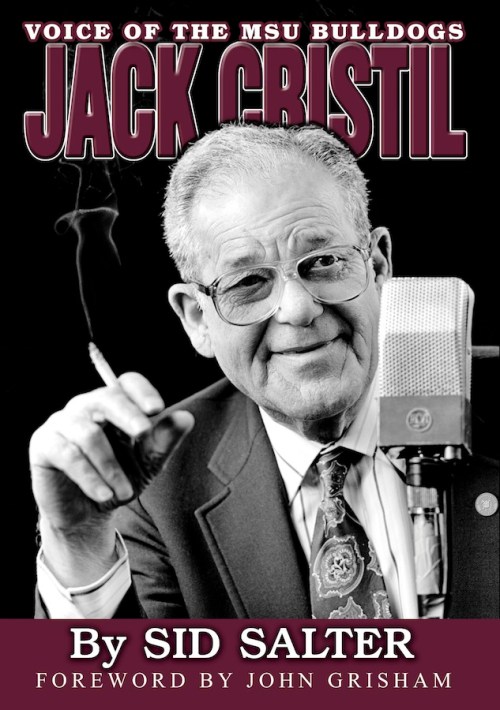
In case you still think that Jack was not so well-known or important, see the above book cover from a biography of him. You may not have heard of Jack or of the author, veteran Mississippi journalist Sid Salter. But the man who wrote the Foreword to Jack’s biography is a little more familiar—a Memphis-based writer named John Grisham.

And if that’s not famous enough, here’s a photo of Jack interviewing Elvis:

Jack Cristil and Elvis

Jack is gone, but anyone who has heard that voice, even once, will hear it forever. One of Jack’s favorite bits in services was to ask the congregation to turn to a particular page in the prayer book and to indicate having done so by being seated. Today, we indicate our love and respect by standing up. We hear you, Jack.

We Need a Doctor: Who Hasn’t Seen Jennifer Lawrence’s Breasts or Why We Need Social Therapy

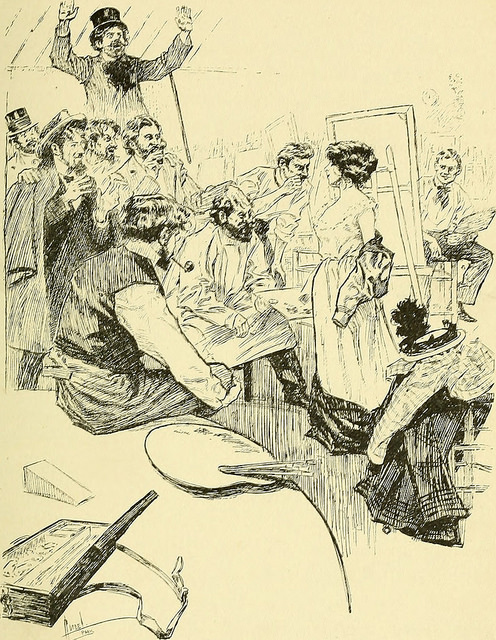
Bohemian Paris of Today

One of the biggest stories of the weekend was the posting of nude photos of Jennifer Lawrence and other female celebs, apparently stolen from their cloud storage accounts. The search activity for these photos almost brought the Internet down.

So in the immediate aftermath, with more to be revealed, what might we learn, besides how these beautiful strangers look without their clothes?

We are no closer than ever to figuring out what we think about privacy, or even what privacy means, especially now.

Digital didn’t create the issue, just heightened it exponentially. Inquiring minds have always wanted to know, and see. Celebrities, some though not all, have used degrees of exposure for publicity—or in some cases to put curious fans off the trail of the truth. Now we have an entire industry of programs about the “real” lives of unknowns, used-to-be-knowns, just-a-little-knowns, and soon-to-be-knowns because they are on a reality show.

Then there is the willingness of many people to chronicle everything. Twitter long ago dropped its signature question, but the most important phrase of the century so far may be “What are you doing?”, which was supposed to be answered in 100 characters or less. It turns out that people are more than willing to talk about what they are doing, what they are thinking, how they are looking, and anything else.

This doesn’t mean people don’t deserve privacy, morally and legally. It’s that line-drawing is now so hard for so many, and that goes along with a certain amount of confusion or even hypocrisy. The same people who searched for these photos or others like it in the past would be fuming if anyone stole their private shots and published them. They might try to rationalize the distinction, but it would be pretty feeble. Yet, not to forgive their double-standard, it is not surprising under the circumstances.

When we are confused about anything, and have difficulty drawing a line, sex makes it worse, clouding our judgment and our actions. Private parts are signifiers of sex, and if the private parts of loved ones or of strangers are arousing, the private parts of the quasi-strangers who are celebrities are positively crazy-making. So it is understandable, if not acceptable. People are only human, or so we say. But that doesn’t mean a little help and discussion—about privacy, about the cloud, about celebrity—might not be valuable. Maybe a little social therapy is in order.

We need a doctor, call us a doctor
We need a doctor, doctor to bring us back to life

(apologies to Dr. Dre, Eminem, and Skylar Gray)

Aereo: Agreeing with Justice Scalia

Aereo

It doesn’t happen often that I agree with Justice Antonin Scalia. On the law or much else.

But his dissent in today’s Supreme Court decision in ABC v. Aereo is pretty good and pretty right. By 6-3, the Court decided to allow Aereo to be subject to violation of copyright law.

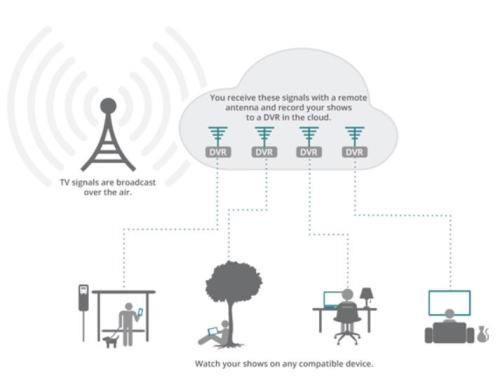
As explained in an earlier post at the time of oral arguments, Aereo has devised a complex tech scheme by which it captures over-the-air-broadcasts at the request of subscribers, using tiny antennas that subscribers essentially time-share, and then allows subscribers to watch those broadcasts online.

In the opinion, the majority agreed with the networks, finding that this is just a too-clever-by-half way of getting around copyright law and avoiding paying retransmission fees, as cable companies are required to do. Justice Scalia found the reasoning and judgment of the majority deficient in many ways, and his dissent is well worth reading.

Among the points, he notes that exploiting loopholes is not illegitimate, and is in fact one of the things that lawyers are good at and are supposed to do. Justice Scalia does not necessarily think that Aereo should go without liability or responsibility, but that trying to make the law fit to reach a desirable result is not the way to get there. If the law doesn’t fit the technology, Congress is charged with and capable of fixing it. (Note that this is the connection between his strict constructionism and his very progressive position in this particular case.)

There was a lot of apocalyptic talk at oral arguments (Aereo would destroy broadcasting as we know it), and there is apocalyptic talk today (the somewhat fuzzy majority opinion leaves all sorts of cloud-based services under legal suspicion). The earlier post repeated the maxim: hard cases make bad law. This is a hard case, and whether the law is bad or not, it sure is an irresolute path to the future. About that, Justice Scalia is right.

The Aereo Case and Media Reality

Aereo

Today the Supreme Court hears arguments in the case of ABC, et al. v. Aereo. Some characterize it as the most important media case in decades, one which could destroy broadcasting as we know it.

That is both overstated and understated. The big broadcasters who claim this is the apocalypse won’t go out of business; they will continue, though they might make a little less money or have to work a little harder for it. On the other hand, nothing less than the nature of modern reality is being considered, which is what makes the case so interesting and ultimately so hard to decide.

In a nutshell, this is what Aereo does:

Aereo sets up lots of tiny (thumbnail) antennas in your locality.

The antennas pick up the same over-the-air (OTR) TV signals you would if you had an antenna at your home (but you probably don’t).

You subscribe to Aereo for as little as $8 a month.

When you want to watch something from the stations that are on the air in your locality, Aereo assigns you an antenna, collects and records the signal from that antenna in its cloud, and streams that signal the way you want to the device you want, now or later.

The question is whether Aereo is retransmitting copyrighted content to subscribers, cleverly skirting retransmission fees that cable systems and others must pay, which would be stealing. Or whether Aereo is simply enabling you to do something you are legally entitled to do: receive OTR TV and then watch it, record it, or redistribute it to your own devices for your own personal use.

The Second Circuit Court of Appeal decided in favor of Aereo, with a vigorous dissent and with other Circuit Courts disagreeing, and now the Supreme Court will decide. If you read the briefs you can get an idea of the difficulty and the possible impacts.

One can say, as the big broadcasters do, that Aereo may be trying to fit through a loophole in the law, but that isn’t quite right. Aereo is taking advantage of a reality so profoundly new and so newly understood that every medium and every media business is just barely beginning to come to grips.

When you reduce things to information and can move that information around infinitely and frictionlessly and at relatively low cost, the processes and regulations meant to handle grosser things are of limited value.

First a book was a thing made of paper, then there was a copier which could copy pages on paper, then there was a scanner that could turn paper pages into digital images and, with OCR, characters, then there were entire books that never had anything to do with paper, ever, just pure arranged information. The same goes, with slightly different details, for every medium. The solution for the producers who wanted to control things (often with legitimate interests, such as creators being compensated), was to put the information in some kind of box, which to some looked like an information jail. It was and is this simple: once it gets out of the box, catching it and catching up with it is quite a chore. Because, as Stewart Brand famously said, information wants to be free.

If you had to characterize the actors in this case as good guys or bad guys, it does look like ossified old school versus new school, mega-corporations versus insurgents, or as one of the briefs says, David versus Goliath. Any way you put it though, and wherever your opinion lies, this is a hard case, and the maxim is that hard cases make bad law. In this case, bad law would mean that even if progressive principles are maintained, more looking forward than back, we are still in an astonishing mess when it comes to dealing with all this. One case at a time won’t do, and the expectation that Congress will seize the reins and lead us boldly into an enlightened future on digital intellectual property is, at least for the moment, not in the cards or the cloud.

Record Store Day 2014

Record Store Day 2014
That’s not a record store:

Spotify

This is a record store:

Amoeba Records

Record Store Day
Saturday, April 19, 2014

“I think it’s high time the mentors, big brothers, big sisters, parents, Guardians, and neighborhood ne’er do wells, start taking younger people That look up to them To a real record store and show them what an important part of life music really is. I trust no one who hasn’t time for music. What a shame to Leave a child, or worse, a generation orphaned from one of life’s great beauties. And to the record stores, artists, labels, dj’s, and journalists; we’re all in this together. Show respect for the tangible music that you’ve dedicated your careers and lives to, and help It from becoming nothing more than disposable digital data.”
– Jack White

Turkey Goes Radioactive

Erdogan and Twitter
Turkish Prime Minister Tayip Erdogan tried to close down Twitter in Turkey yesterday. Instead it exploded in his face, like a digital trick cigar.

Erdogan is miffed because Twitter is being used to disclose details about corruption, including the broadcast of phone conversations. “Twitter, mwitter,” he ranted as he blocked access.

The world noticed and, of course, tweeted. So did those in Turkey, who circumvented the ban by using an SMS text-based version.

As previous posts point out, Turkey is unlike any country in the world. Its path to modern democracy is unique and apparently unfinished. More than a bridge between east and west, it is a bridge between ancient and very modern. No nation, except perhaps for Israel, has experimented so creatively with making the past present, the past future, and the present and future past.

And, without any particular personal or filial or ancestral connection, it was for me love at first visit.

Also, even if you have no other feeling for it or reason to watch it, watch carefully. Turkey is a bellwether. If democracy and modernism proceed hand-in-hand there, there is great hope for the world, if not necessarily a replicable model. If Turkey cannot pull off that trick, we should all be concerned. Very concerned.

Erdogan has no plans to give up. But when I heard this morning’s score—Twitter 1, Erdogan 0—the song that came to mind was Radioactive by Imagine Dragons:

I’m waking up
I feel it in my bones
Enough to make my systems blow
Welcome to the new age, to the new age
I’m radioactive, radioactive

The Comcast-Time Warner Cable Merger

Comcast TWC
Meet the new boss
Same as the old boss
The Who, Won’t Get Fooled Again

Comcast and Time Warner Cable are not bad companies, but their proposed merger is a bad idea, for consumers and for the country. For one thing, it would put cable Internet service for the majority of the country—including 19 of 20 metros—in the hands of a single enterprise. Consumers Union among others has come out against the merger. For an excellent overview, see Free Press, which has been articulate and vocal in its opposition.

Even in these first weeks after the proposal, this should have caused more public concern than it has. Some of that diffidence may be understandable. Without impugning motives, in this 2014 election cycle, federal candidates have received $1,184,535 in contributions related to Comcast ($3,188,117 for 2012) and $351,649 related to TWC ($845,616 for 2012)—split almost evenly across party lines.

MSNBC, the chatty and progressive cable outlet, has been relatively quiet. You can determine this by searching for “merger” on the MSNBC.com site over the last month. Of the 54 hits, it looks like all but one reflect a February 14 Morning Joe joint appearance by Comcast CEO Brian Roberts and TWC CEO Robert Marcus. Their positive talk was expected. But the lack of sharp questioning is a different matter. In fact, at one point Joe Scarborough strangely prefaced his praise for Comcast this way: “It’ll sound like a softball question, but I’m genuinely intrigued: what is Comcast doing right over the past several years?” Why is that so strange? Because Joe and Mika and everyone else on Morning Joe and the network work for Brian Roberts, since Comcast owns NBCUniversal. None of that was discussed or disclosed.

But even that isn’t the solution to the puzzle of why this issue hasn’t and may never reach the level of concern it deserves. It’s this: consumers aren’t worried about living with cable monopoly because they already do, and have for a long time.

To understand that, we have to go back to the start of broadcast regulation. Radio was the beginning of over-the-air broadcasting. Just because the radio pipeline was invisible didn’t mean it couldn’t be filled to overcapacity; the radio spectrum was finite. People could build bigger and more powerful transmitters, using brute force to fight over frequencies, leaving the radio listener lost in chaos. Order had to be imposed so that some body—now the FCC—could control who was on the air, how they maintained their presence on the air, and, most controversially, what they said on the air.

Cable turned that (and cutting-edge modernity) on its head. Instead of just building bigger and more powerful transmitters to reach farther and more people invisibly, old-fashioned physical wires would be strung and laid to connect consumers to a network. Theoretically, there was no limit to how many cables you could build over mountains and across valleys, on poles and underground, all to bring broadcasts, and eventually Internet, from a source to your home. But practically, building out that infrastructure was expensive and inconvenient. To maintain, expand and improve service, cable companies wanted assurance that it would be worth it. And so local cable monopoly was born. For decades, and to this day, municipalities across the country enter into agreements with cable providers to be the sole source for particular areas, with loose oversight of rates and service. In general the place you live will be served by one particular provider.

This squeeze was a little relieved by certain technological advances. Satellite service could provide both television and Internet, though the physical requirement of line-of-sight to the sky made it sometimes impractical. DSL Internet over phone lines also offers an alternative, though as Internet needs have grown, cable has proven a much “fatter” pipeline for data. In the end, as a practical matter, the local cable provider is for many consumers the best choice.

If you can call it a choice. Those consumers may not be as concerned about whether Comcast/TWC acquires some sort of monopoly because for years those consumers have been living with a local cable monopoly. This is another of the strange moments from the Morning Joe interview with Comcast’s Brian Roberts. One of the arguments used to defend the merger is that there is practically no overlap between the Comcast and TWC markets. Of course, that is precisely the point. Roberts’s argument, though it isn’t what he meant to say, is that since consumers never had a choice in the first place, they won’t notice the difference.

And maybe, just maybe, he’s right.

Comic Book Plus: Digital Superheroes

Comic Book Plus
If it isn’t apparent from previous posts, the premier pop cultural medium of these times (meaning the last century) may not be movies or music or television or any of the usual suspects. It is comic books, and while explaining that in detail will have to wait for another post, just ask the entertainment enterprises that have built billion-dollar franchises on that foundation. Hint: Don’t just look at the movies; look at video games, which are sometimes expressly, sometimes implicitly interactive comic books at heart.

Digital has provided new ways to enjoy the old and the new. Comixology, for example, offers an excellent cross-device platform for digital comics. But if you love comic books as essential cultural artifacts, the digital pickings have been slim and erratic. Of course comic book connoisseurs and scholars have been scanning and distributing them for as long as there has been an internet, but organization, information and, above all, copyright integrity has been missing.

The developers of the Comic Book Plus are digital and cultural superheroes. “Free and Legal” they trumpet, and nowhere in the universe can you both read and download such a collection representing decades of this historical basis of American—of world—culture. Free and legal. (Note: The downloads are in special comic book file formats that require some sort of reader. One way to deal with this is with Calibre, the world’s most popular free ebook manager and converter. Calibre will convert the comics to any format you choose, e.g., epub or pdf, to be read on your existing readers.)

If you love comic books and graphic novels, no more needs to be said. If you love pop culture and its origins, immerse yourself in the sequential art of these digital waters. Just make sure you have some time to spare because you won’t want to come out. And for those in the know, just tell them Will Eisner sent you.