Bob Schwartz

Category: Law

Detroit: Motown and Corvettes and Tigers, Oh My!

Stingray 1963

Sometimes the best way to tell a story is not to tell it. The news about Detroit’s municipal bankruptcy, the biggest ever in America, is like that. Others will tell it at length. Sometimes the best way is to offer a few items that are interesting and related, and let readers and listeners make the connections, draw the lines, complete the picture.

Just in case your dot-connecting doesn’t make it clear, the story of Detroit’s bankruptcy is the biggest American story of the day, and possibly one of the biggest in many years. It is bigger than the story of Trayvon Martin and George Zimmerman, bigger than last fall’s story of the rich son of a former Michigan governor disastrously running for President (and loving those Michigan trees, though not Detroit), bigger than the continuing economic malaise, but related to all of them.

Fifty years ago, in July 1963, Motown Records, Hitsville U.S.A., released the single Heat Wave by Martha and the Vandellas. It reached #4 on the Billboard Top 100, but did top the R&B chart. Like so many Motown records, who cares about the numbers? Motown is some of the best pop music ever produced in America. Want proof? Just play Heat Wave, or other irresistible tracks by the Vandellas, the Temps, the Tops, or put on another Motown single from fifty years ago that did go to #1, the astonishing Fingertips (Part 2) by 11-year-old phenomenon Little Stevie Wonder. Motown founder Berry Gordy was not just a model of black entrepreneurship in a white country, at a time when black voting rights had still not been established, but was the model for some of the hugest entertainment moguls in the world, including Jay-Z. But that was fifty years ago in Detroit.

Fifty years ago, the Corvette Stingray was introduced. Edmunds not only rates it the best Corvette of all time; it says “A full half-century after its debut, the 1963 Corvette coupe remains one of the most alluring automotive designs ever conceived.” The ad above shows an airline pilot in Los Angeles (back when being a pilot was super-special manly, and LA was the city of the future) ogling the new Stingray. He was envying the Motor City vision. But that was fifty years ago.

This very day, as the second half of baseball season begins, the Detroit Tigers are one of the best teams in baseball, with maybe the best pitcher (Max Scherzer) and certainly the best hitter (Miguel Cabrera), who may be on his way to becoming the first player to win consecutive Triple Crowns. Detroit fans appreciate this, and have been showing up for home games at a solid pace, about 37,000 a game—equal to the attendance for the Los Angeles Angels and way more than the 17,000 fans per game that show up in “ultra cool” Miami.

Saying that Detroit will be back from beyond the brink isn’t just wishful thinking. The idea that Detroit can fail but that everybody else in America will be alright is all wrong. The 17th century poet John Donne said it:

No man is an Island, entire of itself; every man is a piece of the Continent, a part of the main; if a clod be washed away by the sea, Europe is the less, as well as if a promontory were, as well as if a manor of thy friends or of thine own were; any man’s death diminishes me, because I am involved in Mankind; And therefore never send to know for whom the bell tolls; It tolls for thee.

And if you don’t go for old poetry that you hated in high school, and would rather forget the troubles of Detroit and the world, Motown has lots to offer, especially on a sweltering July day.

Whenever I’m with him
Something inside starts to burning
And I’m filled with desire
Could it be a devil in me
Or is this the way love’s supposed to be?

It’s like a heat wave, burning in my heart
I can’t keep from crying, it’s tearing me apart

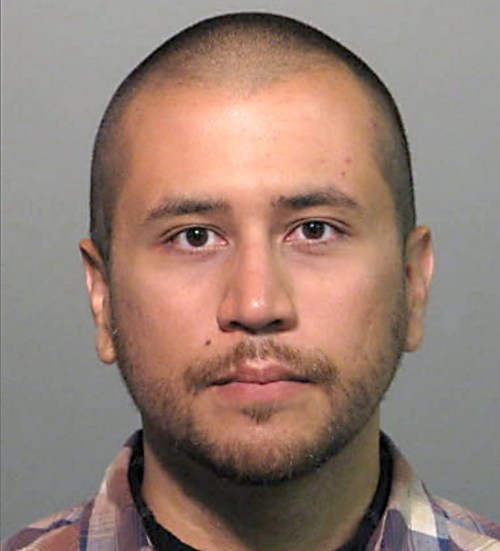
George Zimmerman: Not Guilty. Responsible? Sorry?

George Zimmerman
It’s easy to see how we’ve come to confuse the legal and the moral. Here and everywhere, laws are put in place that offend a general or specific sense of what is right, so we tend to connect the two. We’re also so used to seeing the legal system in media that it occupies a lot of our thinking. Even though those movies and shows try to include moral dilemmas for lawyers and clients, it’s the law that intrigues and entertains us. We have not yet had a hit television show featuring a team of super-attractive philosophers hammering out the fine points of moral right and wrong.

George Zimmerman is not guilty, at least of the crimes charged in Florida. We are awaiting possible federal civil rights charges or a wrongful death civil lawsuit. But we have no official moral court, and so we can consider where he might stand before that bench.

Every minute, people around the world, people you know, maybe even you, cross some pretty bright moral lines, and we don’t put them in jail. Not that they don’t deserve to somehow be punished, but the legal system doesn’t fit the deed, and anyway, our prison overcrowding would be exponentially more critical.

There are lots of killings we allow or sanction, including self-defense, war and capital punishment. (It would be disingenuous and dishonest not to include abortion—not because it is or isn’t killing, but because from the moral perspective of some, it is killing that we legally allow, and we can’t have the already underserved moral discussion without at least mentioning it.)

George Zimmerman killed Trayvon Martin. It is an unrefuted, admitted fact. The legal system, in its first but maybe not last swipe at the situation, has found him not guilty of a particular crime. For the record, for those who think the justice system failed, be aware that it was never enough for the jury to believe that Zimmerman was a liar and that his version of the scenario made no sense at all. The jury could only convict on the basis of another, more damning scenario—a scenario many of us could easily imagine, but a scenario the prosecution could never paint from the evidence they had to work with. The jury is allowed to draw inferences but can’t just use their imagination the way we can.

George Zimmerman killed Trayvon Martin, and many of us have come to the reasonable, non-legal conclusion about how it happened. People who reach that conclusion want him to be punished, not just for retribution, but to prevent something like this every happening again. Even if further legal proceedings don’t end up punishing him, many have the clear sense that he crossed a moral line and he was very wrong. That’s something that gets lost in all the fascinating legal discussion. You don’t have to be guilty to be wrong. And ever if there isn’t some sort of moral jail, that is still a big deal.

Which brings us to the apology. Even giving credit to the Zimmerman account, the killing happened, he did it, and all the legal exoneration can’t take it back or make it better. Apologies have gotten an increasingly bad name; just look at how the Republicans used it as pejorative in describing President Obama’s early “apology tour” of the world. (It does make you wonder what home life is like for some of those politicians, who in the face of expected apology refuse, not wanting to seem weak or ineffectual. Marriage counseling alert.)

George Zimmerman should apologize to Trayvon Martin’s family. Fully and sincerely. In legal terms, he can’t, of course, since there are still proceedings possible or likely. In moral terms, though, experts say that the need to confess is the best friend of police and prosecutors, because truth is a heavy weight that needs lifting. He is actually half-way to a confession anyway, since we know he shot Trayvon Martin. He doesn’t even have to detail the circumstances in any way different than he has, even if it’s not true.

All he has to say is this: I shot him I killed him. Whatever the law says, I was wrong. I’m sorry.

Notes for a George Zimmerman Sermon

Pulpit
This is Sunday, the day after the night before when the George Zimmerman verdict was reached and announced.

There will be countless sermons preached in churches today about the meaning of the crime, the trial and the verdict. The quick take of the media has focused on black churches for obvious reasons. In a case easily seen as having a racial component, the anger and frustration has been color-blind, but members of the black communities have reason to have special interest, if not to take it personally.

That still leaves a large number of churches that are not predominantly black. or more broadly, not non-white, or more plainly, white churches. This isn’t a monolith, nor is this an easy case and verdict to digest. There will be pastors who openly question how well justice was done, others who distance themselves from judgment, and maybe others who find a vindication of something in the verdict. Many more will not touch it at all, either because it has nothing to do with what goes on in church or because even if it does, the right words aren’t yet found to be spoken.

Whatever the identity of those in the pulpits or the pews, here are a few points that might belong in a George Zimmerman sermon.

The laws written by people and the higher laws (whether you call them the laws of God or something else) are two different things. Human imperfection extends to our inability to do perfect justice. Not only is it impossible to do perfectly, it is impossible for people to conceive of how it would be done perfectly in some other “better” realm. If there is a heaven or heaven/hell combination, exactly what are those trials like and what do the statures and rules of evidence look like? Whether you picture the 10 laws, or the 613 laws, or however many laws and interpretive regulations being litigated against you or those you love or despise, how does that case go?

There are some suggested solutions that are widely preached but, let’s say, inconstantly practiced. If we admit we don’t know everything, can’t build everything, can’t “correctly” judge everything, then we might be stuck with just some one-size-fits-all answer: forgive. This doesn’t mean, in the case of George Zimmerman, giving up on changing the laws, or not pursuing further legal tactics such as a federal civil rights suit or a civil wrongful death suit, or being friendly to George Zimmerman if you see him on your street or on your tv screen. Those are the worldly things we should feel free to pursue if that is what’s in our hearts. But in our hearts, where those higher laws are supposed to find a home, we are better off working on the compassion and forgiveness stuff. Especially with a tragic death, when we are the living, still capable of making things better.

Imperfection. Compassion. Forgiveness. Especially in light of this case. Oh God, that is so hard to take.

What Sorts of Weapons Might George Zimmerman Now Carry?

Bandolier
Robert Zimmerman says that his brother George will now be “looking over his shoulder.” There has been plenty of angry and overheated rhetoric aimed at George Zimmerman in the wake of the not guilty verdict in the case of his killing Trayvon Martin. Whether or not he needs to be in fear of his safety and life, that is something he is going to have to reasonably decide—a decision he has experience with.

In case he does decide he needs extra protection, Florida statute gives him lots of options:

Title XLVI, Chapter 790
WEAPONS AND FIREARMS

790.06 License to carry concealed weapon or firearm.—
(1) The Department of Agriculture and Consumer Services is authorized to issue licenses to carry concealed weapons or concealed firearms to persons qualified as provided in this section. Each such license must bear a color photograph of the licensee. For the purposes of this section, concealed weapons or concealed firearms are defined as a handgun, electronic weapon or device, tear gas gun, knife, or billie, but the term does not include a machine gun as defined in s. 790.001(9). (emphasis added)

So now that George has gotten his handgun back, he doesn’t have to stop there. He is free to add a bigger handgun, a Taser, a tear gas gun, a knife or billie club—or all of them. This is Florida, right on the edge of the subtropics, so it is almost literally a jungle out there. If he chooses not to stay in Florida, which he might deem a good idea, he may feel more comfortable out West, where there are states with conceal carry laws even more accepting of the Zimmerman philosophy, and where standing your ground while armed to the teeth is historically a way of life on the frontier. He might begin a new career writing cowboy fiction, where phrases like “you got me!” would not be out of place.

That was the 19th century, of course, and this is the 21st, but unfortunately for the sometimes glacial advance of civilization, some things never seem to change. If anything, they can look like they are moving backward.

Thank You Mask Man

Thank You Mask Man
The release of the new Lone Ranger movie is an opportunity to introduce some readers to Lenny Bruce, very nearly the most significant comic of the modern comedy era.

In the 1950s and early sixties, there was nothing that Bruce wouldn’t talk about—in language that you could hear anywhere except on stage or screen, in attitude that was mercilessly satirical and uncomfortable for a lot of people. Most of all, it was funny. It wasn’t that he didn’t care and was only doing it to be sensational. He did it because he cared painfully about hypocrisy and self-righteousness that ended up hurting people deeply (just like today). He held up a mirror, and if what people saw looked ridiculous and less than complimentary, he was just the observer.

He has been called the Elvis of stand up, and that applies in a few ways. First, he was a groundbreaking talent who did what others had not done before and made it wildly popular. Second, his work was controversial and resulted in reaction. In the case of Bruce, it was not only social or media reaction; it was legal. Elvis was never busted for his hip shaking. Third, each of them had certain personal demons that contributed to a sad and untimely demise.

Lenny Bruce continued the long tradition of telling truth to power in a funny way. In his later years, after numerous busts for obscenity, a certain bitterness colored his attempts at comedy, “attempts” because to be honest much of it wasn’t funny. But at his height, there was a sweet honesty that made his arguments hard to resist.

Thank You Mask Man is a comedy bit about the Lone Ranger. In 1968, it was made into an animated short, with Bruce’s routine as the soundtrack. The premise of the bit is that the Lone Ranger never stops to accept “thank yous” from the people he helps. When he finally does agree to enjoy appreciation, it turns out to be something the townspeople don’t expect. Be aware and warned: Bruce manages to work small-mindedness, homosexuality, and even religion into the goofy mix (i.e., we won’t need the Lone Ranger after the Messiah returns).

Enjoy Lenny Bruce and a Lone Ranger you’ve never seen before.

In Advance of the Marriage Equality Decisions

MLK

It appears it may be only a few minutes before the Supreme Court releases its opinions in the marriage equality cases, California Proposition 8 and DOMA. As always, when it does happen, please read the opinions yourselves, and don’t just take anybody’s word for what they say or mean.

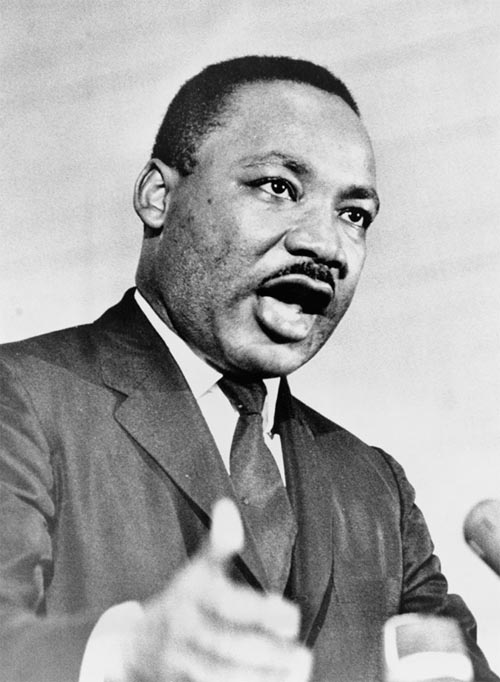
Meanwhile, some are bound to be disappointed because the decisions don’t go far enough, if they seem to go anywhere at all. So here is a quote from Martin Luther King, Jr. so familiar that we may have stopped actually hearing it. Listen and believe.

I have not lost faith. I’m not in despair, because I know that there is a moral order. I haven’t lost faith, because the arc of the moral universe is long, but it bends toward justice.

DNA and the Supreme Court Reading Program

DNA Court
Today’s Supreme Court decision on the patentability of genetic material, Association for Molecular Pathology v. Myriad Genetics, Inc.  is another example of just how informative and fun these opinions can be, as opposed to just hearing the media summaries. This leads to a suggestion for a Supreme Court Reading Program.

Earlier posts have covered the value—in knowledge and entertainment—of reading current Supreme Court opinions, even if you are not a lawyer. This also includes reading the briefs in support of various positions, from a range of people and organizations. When the marriage equality cases were argued back in March, a post was devoted to The Briefs on Marriage Equality.

In this complex and significant gene case, the unanimous opinion of the Court (Justice Scalia concurred in a very short comment of his own) is that particular genetic material that isolated and identified (here, the site of mutations leading to breast and ovarian cancer) is not patentable, but that a new synthesized version of that same material, with the deletion of some parts, is.

Among the things that makes the opinion so interesting is its cogent explanation of a technical area. Genetics isn’t easy, and the opinion is really an understandable primer on a difficult topic.

Even more interesting are the array of briefs submitted in the case. Along with companies that want to be able to hold lucrative proprietary interest in genes, there are scientists and health care advocates who want nothing to stand in the way of free and open development and application. (The Humane Genome Project, for example, from the first offered all the work on the mapping the human genome to humanity.) Lawyers and intellectual property activists also chimed in, with intense interest in how patent law is a mess in these hyper-advancing times, having fallen so far behind the realities of digital and bio innovation. Also interesting is a brief from the Southern Baptist Convention, which taken from their church perspective makes a pretty good argument that, to put it bluntly, you can’t patent God.

So when you hear mention of an interesting Supreme Court case, either when it is argued or decided, step away from the media reports, even when those are reliable from experts you trust. Instead, visit the Supreme Court site to read or download the opinion (the opinion is published on the site almost immediately). Then visit the American Bar Association site that collects all the amicus briefs for each case that is argued. There will be a lot of those briefs—more than a hundred in the case of marriage equality—so you will want to pick and choose. Sometimes the name of the person or organization submitting the brief will catch your interest, just by who or what they are.

That certainly applies to the gene patent case. There among the many briefs is one identified as Brief for James D. Watson, Ph.D. in Support of Neither Party. Just in case the name isn’t familiar, James Watson, Ph.D. is the co-discoverer of the double helix structure of DNA, for which he and Frances Crick were awarded the Nobel Prize in Physiology in 1963. Even if he wasn’t one of the most important scientists in history, his delightful and erudite 26-page brief would be worth reading. It’s just one more example of how a Supreme Court Reading Program can be an enlightening and surprising addition to whatever else you’re currently paying attention to.

Publius Speaks to Congress

Federalist Papers
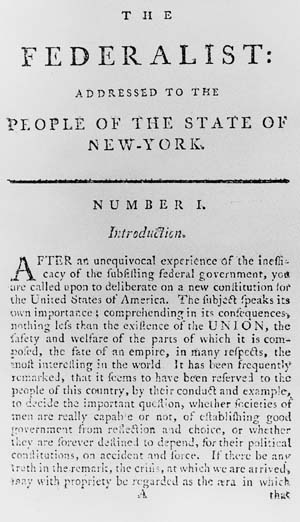
Publius Valerius Publicola (“friend of the people”) was a Roman consul who helped found the Roman Republic circa 509 BCE. When James Madison, Alexander Hamilton and John Jay began publishing The Federalist Papers in 1787, they attached his name to their arguments for adoption of the Constitution.

We don’t know how many current members of Congress have read the Federalist Papers—not even all 85 papers, maybe just a few. We also don’t know how many senior members of the executive branch have done so. We can assume that all nine Supreme Court Justices have; these are, after all, an essential part of the legislative history of the Constitution.

Every time you see politicians brandishing the Constitution as a weapon, well-meaningly or just plain meanly; every time you hear a half-baked political argument or analysis that makes absolutely no sense, but is based mostly or entirely on emotion or ambition; every time you wonder whether a particular politician is taking the best interests of the country to heart or is just interested I getting ahead, the Federalist Papers are your talisman.

The Federalist Papers are a brilliant combination of careful philosophy and political realities—a balance between aspiration and actuality, between the way we want to be and the way we are.

When we hear today about “grand bargains” being struck in Congress—or often not being reached at all—you have to laugh. The very same founders who are treated as saints or even gods had to make the grandest of all bargains so that this nation could exist and endure. And in the Federalist Papers, we find the philosophical intelligence, the political courage and the candid self-awareness to expose how narrow interest and pettiness can stand in the way of solutions. If anything has changed in more than two centuries, it’s that we seem to have fewer Madisons, Hamiltons and Jays front and center in our national discourse:

A torrent of angry and malignant passions will be let loose. To judge from the conduct of the opposite parties, we shall be led to conclude that they will mutually hope to evince the justness of their opinions, and to increase the number of their converts by the loudness of their declamations and the bitterness of their invectives.

An enlightened zeal for the energy and efficiency of government will be stigmatized as the offspring of a temper fond of despotic power and hostile to the principles of liberty. An over-scrupulous jealousy of danger to the rights of the people, which is more commonly the fault of the head than of the heart, will be represented as mere pretense and artifice, the stale bait for popularity at the expense of the public good.

It will be forgotten, on the one hand, that jealousy is the usual concomitant of love, and that the noble enthusiasm of liberty is apt to be infected with a spirit of narrow and illiberal distrust. On the other hand, it will be equally forgotten that the vigor of government is essential to the security of liberty; that, in the contemplation of a sound and well-informed judgment, their interest can never be separated; and that a dangerous ambition more often lurks behind the specious mask of zeal for the rights of the people than under the forbidden appearance of zeal for the firmness and efficiency of government.

Federalist No. 1

Tsarnaev and Miranda

Miranda Warning
Dzhokhar Tsarnaev, suspect in the Boston Marathon bombings, is now in custody and in hospital recovering from gunshot wounds. The Justice Department has announced that it will not be giving him a Miranda warning before initially questioning him, under the public safety exception to the need for such warning.

In Miranda v. Arizona (1966), the Supreme Court established guidelines for the taking and use of statements by suspects in custody. In very brief summary, if a suspect is in custody and being interrogated, statements made will be admitted into evidence only if he has been properly warned about his right not to talk, about the potential use of his statements for self-incrimination, and about his right to have an attorney. The various versions of the Miranda warning reflect this decision, and embody the protections of the Fifth and Sixth Amendments.

A narrow exception to Miranda was established in New York v. Quarles (1984)  . In an age of terrorism and the prosecution of terrorists, this so-called “public safety exception” has become the focus of intensive analysis and application—along with a push for its expansion.

In Quarles, a victim of rape pointed police officers toward her armed assailant. The police pursued him into a supermarket:

Respondent ran toward the rear of the store, and Officer Kraft pursued him with a drawn gun but lost sight of him for several seconds. Upon regaining sight of respondent, Officer Kraft ordered him to stop and put his hands over his head; frisked him and discovered that he was wearing an empty shoulder holster; and, after handcuffing him, asked him where the gun was. Respondent nodded toward some empty cartons and responded that “the gun is over there.” Officer Kraft then retrieved the gun from one of the cartons, formally arrested respondent, and read him his rights under Miranda v. Arizona. Respondent indicated that he would answer questions without an attorney being present and admitted that he owned the gun and had purchased it in Florida. The trial court excluded respondent’s initial statement and the gun because the respondent had not yet been given the Miranda warnings, and also excluded respondent’s other statements as evidence tainted by the Miranda violation. Both the Appellate Division of the New York Supreme Court and the New York Court of Appeals affirmed.

The Supreme Court reversed the New York courts and created an exception to Miranda, when the interrogation was aimed at preventing further harm and enhancing public safety:

Procedural safeguards that deter a suspect from responding, and increase the possibility of fewer convictions, were deemed acceptable in Miranda in order to protect the Fifth Amendment privilege against compulsory self-incrimination. However, if Miranda warnings had deterred responses to Officer Kraft’s question about the whereabouts of the gun, the cost would have been something more than merely the failure to obtain evidence useful in convicting respondent. An answer was needed to insure that future danger to the public did not result from the concealment of the gun in a public area.

The narrow exception to the Miranda rule recognized here will to some degree lessen the desirable clarity of that rule. However, the exception will not be difficult for police officers to apply because in each case it will be circumscribed by the exigency which justifies it. Police officers can and will distinguish almost instinctively between questions necessary to secure their own safety or the safety of the public and questions designed solely to elicit testimonial evidence from a suspect.

It is useful and enlightening to read the dissent by Justice Thurgood Marshall, joined by Justices William Brennan and John Paul Stevens. Justice Marshall, whose practical understanding of constitutional rights was second to none (see Brown v. Board of Education), had difficulty with the trading away of such a fundamental right, even for something as paramount as public safety. He had an elegant solution: Please do interrogate without a Miranda warning—just don’t expect to introduce the answers at trial:

The irony of the majority’s decision is that the public’s safety can be perfectly well protected without abridging the Fifth Amendment. If a bomb is about to explode or the public is otherwise imminently imperiled, the police are free to interrogate suspects without advising them of their constitutional rights. Such unconsented questioning may take place not only when police officers act on instinct but also when higher faculties lead them to believe that advising a suspect of his constitutional rights might decrease the likelihood that the suspect would reveal life-saving information. If trickery is necessary to protect the public, then the police may trick a suspect into confessing. While the Fourteenth Amendment sets limits on such behavior, nothing in the Fifth Amendment or our decision in Miranda v. Arizona proscribes this sort of emergency questioning. All the Fifth Amendment forbids is the introduction of coerced statements at trial.

There is one thing that in the early aftermath of this dynamic story can be missed: Whatever he did, whatever we believe about what he did, however vital his knowledge is, Tsarnaev is under no legal obligation to say anything and has the constitutional right not to say anything that could be used against him.

The Justice Department has invoked the public safety exception: it will not yet Mirandize Tsarnaev. In part, they may be trying to reserve the right to use at trial any of the statements he makes in response to questions such as “Are there more IEDs? Who else is currently involved and dangerous?”. Maybe more significantly, they simply don’t want him—as they don’t want any other suspect—to prematurely stop talking. They won’t be telling him yet that he has the right to remain silent or to have an attorney.

But…not telling him he has these rights doesn’t mean that he doesn’t already have them. He does. A Miranda warning does not magically grant a suspect those rights. The much more magical Constitution and Bill of Rights do.

It is not clear that Tsarnaev needs a reminder of those rights. He is by all accounts a smart and educated young man, even if by recent actions a horribly misguided and tragic one. Almost all television viewers are expert on Miranda warnings anyway; even the most law-abiding American has heard them hundreds of times. But if he should decide to say nothing, other than his desire for a lawyer, in America there is nothing police or prosecutors can do. What we may justifiably feel and believe about him and what he and his brother perpetrated won’t change that, and shouldn’t. We didn’t write these self-imposed limitations for easy cases. We put them in place as a test, to see just how deliberate and fair we could be, when all we want is swift and hot-blooded justice. We wrote them to remind ourselves that we are better than that—even when we for a moment and for good reason don’t want to be.

Gun Violence Legislation

HenQ: Why is there a picture of a chicken on this post about gun violence legislation?

A: Because a small number of U.S. Senators have decided that the best way to approach the very important issue of legislation to curb gun violence in America is to block a vote on any legislation.

Q: Why is this text so big?

A: Because there have been previous posts about gun violence and about political courage, and after saying the same thing multiple times, it can be therapeutic, if not any more effective, to say the same thing louder. Also, if any of those Senators are not wearing their glasses, they will still be able to see the chicken and read this message about the historic lack of political courage. (Idea borrowed from John Hancock.)

Q: Isn’t this childish and unbecoming adult and reasoned debate?

A: Which? The use of a chicken post? Or the failure of well-paid and trusted public servants to stand up and do their job?