Bob Schwartz

Category: Law

The Man Who Could Kill Democracy

McCutcheon v FEC

Today the Supreme Court hears arguments in the case of McCutcheon and Republican National Committee v. Federal Election Commission, an attack on the constitutionality of limits on individual contributions to federal elections. Just as the Court found in Citizens United that corporations have a First Amendment right to unlimited campaign contributions, so Alabama businessman Shaun McCutcheon would have that extended to people (since, as Mitt Romney pointed out, corporations are people too, ergo, people are corporations—at least for election money).

Mr. McCutcheon seems to be a decent and hardworking person, a loyal American, and he is of course entitled not only to his opinion but to his pursuit of it in the courts. But Mr. McCutcheon could conceivably be known as the man who killed American democracy, or at least the one nominally identified with its murder. Yes, he would have the heirs to Abraham Lincoln as his accomplices or co-conspirators, but his fingerprints would be on the weapon.

Is that hyperbole? Before Citizens United, it might have seemed so. But beyond theory, we now have proof that Big Money has a distorting effect on Big Democracy. A contortionate, twisted beyond recognition effect. There is reason to believe that if individual limits are lifted, the effect might go beyond injury to mortal blow.

You can read the submitted briefs here. After the arguments, you can listen to them here.

The questions presented on appeal are these:

Federal law imposes two types of limits on individual political contributions. Base limits restrict the amount an individual may contribute to a candidate committee ($2,500 per election), a national-party committee ($30,800 per calendar year), a state, local, and district party committee ($10,000 per calendar year (combined limit)), and a political-action committee (“PAC”) ($5,000 per calendar year). 2 U.S.C. 441a(a)(1) (current limits provided). Biennial limits restrict the aggregate amount an individual may contribute biennially as follows: $46,200 to candidate committees; $70,800 to all other committees, of which no more than $46,200 may go to non-national-party committees (e.g., state parties and PACs). 2 U.S.C. 441a(a)(3) (current limits provided) (see Appendix at 20a (text of statute)). Appellants present five questions:

1. Whether the biennial limit on contributions to non-candidate committees, 2 U.S.C. 441a(a)(3)(B), is unconstitutional for lacking a constitutionally cognizable interest as applied to contributions to national-party committees.

2. Whether the biennial limits on contributions to non-candidate committees, 2 U.S.C. 441a(a)(3)(B), are unconstitutional facially for lacking a constitutionally cognizable interest.

3. Whether the biennial limits on contributions to non-candidate committees are unconstitutionally too low, as applied and facially.

4. Whether the biennial limit on contributions to candidate committees, 2 U.S. C. 441a(a)(3)(A), is unconstitutional for lacking a constitutionally cognizable interest.

5. Whether the biennial limit on contributions to candidate committees, 2 U.S.C. 441a(a)(3)(A), is unconstitutionally too low.

Without going into the arguments so well-developed in the written briefs, and in the oral arguments today, one point should be stressed. The First Amendment is central to American democracy, but it has never been absolute. It could be of course, and we would be free to destroy the reputations of others, or talk freely about overthrowing the government, or republish the words of others without penalty, or yell fire in that crowded theater. Instead, as an exercise in social priorities, we argue about balance, though sometimes the argument for the good of the many and “democracy” is cover for what’s good for me and mine.

If the Court agrees that both the base limits (the per election money) and the aggregate limits (cumulative over two years) are unconstitutional on their face, anyone with money can attempt to influence public opinion and the action of public officials to the full extent that money can. And it can. Some say that this would simply level the playing field—the same way that everybody having guns would level the playing field, insuring that only the bad guys would get shot. Funny how the First and Second Amendments can work so well together.

In the worst case, where we may be speaking about McCutcheon as we do about Citizens United, only more so, there is still an answer. Simple but not easy:

Get smart.
Vote.

Without casting aspersions too wide, it does seem that a number of Americans really don’t do their homework on public issues. As far as voting, our abysmal turnout numbers tell the tale. But if Americans did do their homework and did vote, we really could have a pragmatic, centrist, reasonable and successful country—instead of an extremist-obstructed one based more on blustery ideology and vaguely-veiled self-interest. We can hope.

Patents: Just One More Shutdown Victim

Election Game

You have heard stories, but you may not be directly affected by the shutdown at the moment, or know anyone who is. The shutdown may end tomorrow, but it may go on for weeks, as the last one did in 1996.

You understand the human misery that begins today. But maybe you don’t realize the legitimate, non-controversial things that the federal government does—things that are actually required by the U.S. Constitution, which even the most radical and extreme government haters say they respect.

The United States Patent and Trademark Office is one of those functions. It is an engine of innovation, which is one of those buzzwords that everyone across the political specturms like to throw around. How busy and important is the USPTO? Right now, there is a backlog of 1,000,000 patent applications in the pipeline

The USPTO site features this:

USPTO Operation Status

During the general government shutdown that began October 1, 2013, the United States Patent and Trademark Office will remain open, using prior year reserve fee collections to operate as usual for approximately four weeks. We continue to assess our fee collections compared to our operating requirements to determine how long we will be able to operate in this capacity during a general government shutdown. We will provide an update as more definitive information becomes available.

Should we exhaust these reserve funds before the general government shutdown comes to an end, USPTO would shut down at that time, although a very small staff would continue to work to accept new applications and maintain IT infrastructure, among other functions. (Should it become necessary for USPTO to shut down, details of the agency’s plan for an orderly shutdown are available on page 78 of the United States Department of Commerce’s shutdown plan, available here.)

Any new or updated public information related to USPTO operations during the government shutdown will be placed on this page.

The mentioned shutdown plan includes 87 pages and obviously took many hours to create and will take many more to execute.

While there, a search of the patent database found numerous political games (above). Unfortunately, there did not seem to be any patents for helping political extremists understand that government is not a game, and that the extraordinary founders of the nation who they claim to love never meant it to be one. Those founders believed in government, and could never imagine any representatives irresponsible enough to believe otherwise.

TMFG: Too Many F***ing Guns

.TMFG

People are dying from politeness about guns.

We are a nation of laws, and especially of constitutions, so we talk and write about the Second Amendment. Rich, smart and safe people debate in really fancy buildings, but nothing gets done about guns. The Naval Shipyard shooting, for example, is supposed to demonstrate problems with our mental health system, or with our veterans affairs system, or with a lack of communication between our law enforcement agencies.

But we are also a nation of plain talk. Just ask Joe Biden and others. So it is time for polite and respectful people to speak openly and plainly. Constitutional arguments and political realities have their place, but so does this: There are too many f***ing guns. That is why and how too many are killed and injured—in our homes, on our streets, in our schools, in our movie theaters, in our military facilities.

Feel free to engage in extended discussion and political action; that is what we do in a democratic society. But sometimes, it can be therapeutic to speak truth to nonsense.

Four words. Four letters. TMFG. If you believe it, say it.

Some Little Truths About Obamacare

Affordable Care Act

You may not want to think or talk about the Affordable Care Act. Who can blame you? Politicos and talking heads are doing enough for all of us.

And yet, October 1 marks the start of people reading the menu of health insurance options and deciding which way to go. Which is why the volume of debate is once again up to 11 and why it is harder than ever, even after all this time, to make sense of any of it.

Previous posts have covered the process: how ACA is based on a Republican proposal, how Republicans ran screaming away from their own proposal, how the Supreme Court narrowly allowed it to proceed, etc. Now is the time to consider the substance and the merits, reluctantly. Reluctant because some kind of truly broad and truly affordable health coverage really is necessary for a civilized, modern and (in some segments) wealthy society, so a critique should not appear to deny that. Reluctant because, under the circumstances, ACA may really be the best we can do, even if that is not saying much.

But here are a few truths.

1. This is the most complicated, Rube Goldberg-like social program in American history. Comparisons to Social Security and Medicare—as in “people were skeptical or opposed to Social Security and now these programs are an integral part of American life”—are inapposite. Think: one concept, one law. That may be oversimplifying, but not much. Social Security was and is a way to create a fund to help older and disabled Americans who can’t help themselves. The way it’s evolved may be complicated and not to all tastes, but the basic concept remains. The same can be said about Medicare.

The single concept of ACA is more elusive, despite the name making clear it is about affordability. Separate from the execution and success in that regard, ACA is also about the reach and availability of coverage. More properly, it might be called the Market-Based Universally Available Affordable Care Act, a name that would hint at its complexity.

2. It may be too complicated to manage. To get to the truth of this, we have to look bigger. Bigger, as in the manageability or not of the American government. The loud complaint from some corners is that the government is “too big.” This is a misplaced critique. The problem is that very big enterprises are very hard to manage effectively. Just shrinking an unoptimally managed enterprise lessens the damage and the cost, but it doesn’t change the fact of ill management. Scientific management tells us that in theory any enterprise of any size can be managed, by discovering or devising the appropriate principles and executing soundly. But there is a cousin to “too big to fail” that is “too big to run.” Maybe the government is that.

Maybe the ACA is that also, too big and too complicated. Which touches back to the idea of its not having one single concept. It seems clear, as it did to the ACA proponents, that so-called universal, single-payer health care would never be accepted in “free market” America. If that wasn’t always clear, the debacle of the Clintoncare proposal, engineered by Hillary during the Clinton administration, put it out of reach for a generation. The only way to get anything, rather than nothing, was to patch together components that were variously consistent with popular ideas, market mechanisms, federalism, healthy business and industry interests, along with political and legal constraints. The wonder isn’t that a combination car/boat/plane gets designed and built. The wonder is that it can drive or float or fly.

3. The American political environment is distrustful, skeptical and toxic. Social Security was born during the worst economic crisis ever. So the building of an historic safety net was fitting. But on top of that, even with virulent opposition, there was a widespread understanding that we were all Americans, and part of that was caring for others, and part of that care was trusting that the government would, within the limits of human fallibility and self-interest, do the right thing.

We can pray for the return of that context, but it isn’t today. Today we have an unprecedented spectacle of a small but powerful segment of the country working desperately, and maybe effectively, to make sure that ACA is repealed or at least fails miserably. The reasons are as complex as the act itself, a bit about the shortcomings of the law, but, not surprisingly, mostly about politics. Proponents find themselves in the position of defending the act, promising to improve it, and trying to make it work—all the while perhaps harboring doubts in the places they can’t talk about that it won’t, not entirely.

Let’s hope it does work, a little. Because American health care is so broken, and for the moment, this is what we’ve got.

Obama Must Renounce His Hawaiian Citizenship

Ted Cruz Birth Certificate

Now that we’ve (mostly) agreed that Barack Obama was born in Hawaii, there’s one final step: he must renounce his Hawaiian citizenship to legitimately serve as President of the United States.

That’s actually not right. Hawaii was a state when Obama was born there, and before that, it was an American territory (remember Pearl Harbor?).

But it is a splashy way to introduce the latest chapter in the story of Ted Cruz as possible presidential candidate.

Ted Cruz, U.S. Senator from Texas, was born in Calgary, Alberta, Canada to an American mother. The question of whether he is qualified to be President arises from Article Two, Section 1 of the U.S. Constitution, which restricts the presidency to “natural born Citizen[s]”. Even though there has been a colloquial understanding that this means “born in the U.S.A.”, the point has never been litigated, and there is a growing sense that it simply means born American, rather than naturalized.

There is no dispute that Cruz was an American citizen at birth, being born of an American citizen, even if abroad. But after he released his birth certificate this weekend (see above), to answer speculation that he might not be qualified, a new wrinkle has cropped up. As indisputably as he is an American citizen, it now appears that he is—at this very moment—also a Canadian citizen. A number of experts on Canadian law are making it clear that when you are born in Canada, citizenship is automatic. You can renounce it later on if you choose, as some do. But right now, Cruz is both an American and Canadian citizen, able to vote in Canadian elections and even run for office there. (Note how weirdly complicated this would have been had he been born there before 1947, when his birth would have made him both an American citizen and a British subject: God Save the Queen.)

It isn’t clear whether Cruz has long known he was also a Canadian citizen, whether he secretly participates in Canadian ceremonies, whether he privately exhibits the legendary Canadian civility and sensibility, whether his support of the XL Pipeline was specially motivated, whether his plan to bring the U.S. government to a halt is meant to make his Canadian homeland look better by comparison, whether he still has feelings for Her Royal Highness, given that he is a citizen of the Commonwealth, if not the United Kingdom.

There is a political issue here, though one that Cruz might be able to turn to his advantage. He might be able to continue his Senate role as a dual citizen (at least it’s Canada, not Russia), but the presidency is another matter. If he does choose to renounce, he could do it on an ideological basis, pointing out how the socialist leanings of his homeland to the north have left it far behind the achievements of free market America, and how, unless America is careful, it will end up exactly like Canada—the land he chose to leave at the age of four, precisely because he knew that America was the true land of freedom and opportunity. Not to mention a whole lot warmer, particularly in Texas.

Detroit: Motown and Corvettes and Tigers, Oh My!

Stingray 1963

Sometimes the best way to tell a story is not to tell it. The news about Detroit’s municipal bankruptcy, the biggest ever in America, is like that. Others will tell it at length. Sometimes the best way is to offer a few items that are interesting and related, and let readers and listeners make the connections, draw the lines, complete the picture.

Just in case your dot-connecting doesn’t make it clear, the story of Detroit’s bankruptcy is the biggest American story of the day, and possibly one of the biggest in many years. It is bigger than the story of Trayvon Martin and George Zimmerman, bigger than last fall’s story of the rich son of a former Michigan governor disastrously running for President (and loving those Michigan trees, though not Detroit), bigger than the continuing economic malaise, but related to all of them.

Fifty years ago, in July 1963, Motown Records, Hitsville U.S.A., released the single Heat Wave by Martha and the Vandellas. It reached #4 on the Billboard Top 100, but did top the R&B chart. Like so many Motown records, who cares about the numbers? Motown is some of the best pop music ever produced in America. Want proof? Just play Heat Wave, or other irresistible tracks by the Vandellas, the Temps, the Tops, or put on another Motown single from fifty years ago that did go to #1, the astonishing Fingertips (Part 2) by 11-year-old phenomenon Little Stevie Wonder. Motown founder Berry Gordy was not just a model of black entrepreneurship in a white country, at a time when black voting rights had still not been established, but was the model for some of the hugest entertainment moguls in the world, including Jay-Z. But that was fifty years ago in Detroit.

Fifty years ago, the Corvette Stingray was introduced. Edmunds not only rates it the best Corvette of all time; it says “A full half-century after its debut, the 1963 Corvette coupe remains one of the most alluring automotive designs ever conceived.” The ad above shows an airline pilot in Los Angeles (back when being a pilot was super-special manly, and LA was the city of the future) ogling the new Stingray. He was envying the Motor City vision. But that was fifty years ago.

This very day, as the second half of baseball season begins, the Detroit Tigers are one of the best teams in baseball, with maybe the best pitcher (Max Scherzer) and certainly the best hitter (Miguel Cabrera), who may be on his way to becoming the first player to win consecutive Triple Crowns. Detroit fans appreciate this, and have been showing up for home games at a solid pace, about 37,000 a game—equal to the attendance for the Los Angeles Angels and way more than the 17,000 fans per game that show up in “ultra cool” Miami.

Saying that Detroit will be back from beyond the brink isn’t just wishful thinking. The idea that Detroit can fail but that everybody else in America will be alright is all wrong. The 17th century poet John Donne said it:

No man is an Island, entire of itself; every man is a piece of the Continent, a part of the main; if a clod be washed away by the sea, Europe is the less, as well as if a promontory were, as well as if a manor of thy friends or of thine own were; any man’s death diminishes me, because I am involved in Mankind; And therefore never send to know for whom the bell tolls; It tolls for thee.

And if you don’t go for old poetry that you hated in high school, and would rather forget the troubles of Detroit and the world, Motown has lots to offer, especially on a sweltering July day.

Whenever I’m with him
Something inside starts to burning
And I’m filled with desire
Could it be a devil in me
Or is this the way love’s supposed to be?

It’s like a heat wave, burning in my heart
I can’t keep from crying, it’s tearing me apart

George Zimmerman: Not Guilty. Responsible? Sorry?

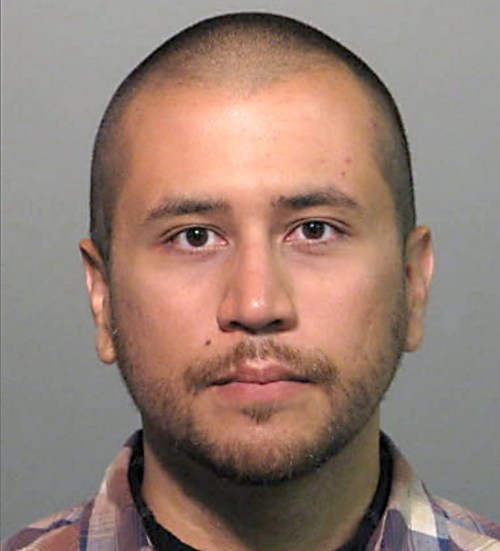
George Zimmerman
It’s easy to see how we’ve come to confuse the legal and the moral. Here and everywhere, laws are put in place that offend a general or specific sense of what is right, so we tend to connect the two. We’re also so used to seeing the legal system in media that it occupies a lot of our thinking. Even though those movies and shows try to include moral dilemmas for lawyers and clients, it’s the law that intrigues and entertains us. We have not yet had a hit television show featuring a team of super-attractive philosophers hammering out the fine points of moral right and wrong.

George Zimmerman is not guilty, at least of the crimes charged in Florida. We are awaiting possible federal civil rights charges or a wrongful death civil lawsuit. But we have no official moral court, and so we can consider where he might stand before that bench.

Every minute, people around the world, people you know, maybe even you, cross some pretty bright moral lines, and we don’t put them in jail. Not that they don’t deserve to somehow be punished, but the legal system doesn’t fit the deed, and anyway, our prison overcrowding would be exponentially more critical.

There are lots of killings we allow or sanction, including self-defense, war and capital punishment. (It would be disingenuous and dishonest not to include abortion—not because it is or isn’t killing, but because from the moral perspective of some, it is killing that we legally allow, and we can’t have the already underserved moral discussion without at least mentioning it.)

George Zimmerman killed Trayvon Martin. It is an unrefuted, admitted fact. The legal system, in its first but maybe not last swipe at the situation, has found him not guilty of a particular crime. For the record, for those who think the justice system failed, be aware that it was never enough for the jury to believe that Zimmerman was a liar and that his version of the scenario made no sense at all. The jury could only convict on the basis of another, more damning scenario—a scenario many of us could easily imagine, but a scenario the prosecution could never paint from the evidence they had to work with. The jury is allowed to draw inferences but can’t just use their imagination the way we can.

George Zimmerman killed Trayvon Martin, and many of us have come to the reasonable, non-legal conclusion about how it happened. People who reach that conclusion want him to be punished, not just for retribution, but to prevent something like this every happening again. Even if further legal proceedings don’t end up punishing him, many have the clear sense that he crossed a moral line and he was very wrong. That’s something that gets lost in all the fascinating legal discussion. You don’t have to be guilty to be wrong. And ever if there isn’t some sort of moral jail, that is still a big deal.

Which brings us to the apology. Even giving credit to the Zimmerman account, the killing happened, he did it, and all the legal exoneration can’t take it back or make it better. Apologies have gotten an increasingly bad name; just look at how the Republicans used it as pejorative in describing President Obama’s early “apology tour” of the world. (It does make you wonder what home life is like for some of those politicians, who in the face of expected apology refuse, not wanting to seem weak or ineffectual. Marriage counseling alert.)

George Zimmerman should apologize to Trayvon Martin’s family. Fully and sincerely. In legal terms, he can’t, of course, since there are still proceedings possible or likely. In moral terms, though, experts say that the need to confess is the best friend of police and prosecutors, because truth is a heavy weight that needs lifting. He is actually half-way to a confession anyway, since we know he shot Trayvon Martin. He doesn’t even have to detail the circumstances in any way different than he has, even if it’s not true.

All he has to say is this: I shot him I killed him. Whatever the law says, I was wrong. I’m sorry.

Notes for a George Zimmerman Sermon

Pulpit
This is Sunday, the day after the night before when the George Zimmerman verdict was reached and announced.

There will be countless sermons preached in churches today about the meaning of the crime, the trial and the verdict. The quick take of the media has focused on black churches for obvious reasons. In a case easily seen as having a racial component, the anger and frustration has been color-blind, but members of the black communities have reason to have special interest, if not to take it personally.

That still leaves a large number of churches that are not predominantly black. or more broadly, not non-white, or more plainly, white churches. This isn’t a monolith, nor is this an easy case and verdict to digest. There will be pastors who openly question how well justice was done, others who distance themselves from judgment, and maybe others who find a vindication of something in the verdict. Many more will not touch it at all, either because it has nothing to do with what goes on in church or because even if it does, the right words aren’t yet found to be spoken.

Whatever the identity of those in the pulpits or the pews, here are a few points that might belong in a George Zimmerman sermon.

The laws written by people and the higher laws (whether you call them the laws of God or something else) are two different things. Human imperfection extends to our inability to do perfect justice. Not only is it impossible to do perfectly, it is impossible for people to conceive of how it would be done perfectly in some other “better” realm. If there is a heaven or heaven/hell combination, exactly what are those trials like and what do the statures and rules of evidence look like? Whether you picture the 10 laws, or the 613 laws, or however many laws and interpretive regulations being litigated against you or those you love or despise, how does that case go?

There are some suggested solutions that are widely preached but, let’s say, inconstantly practiced. If we admit we don’t know everything, can’t build everything, can’t “correctly” judge everything, then we might be stuck with just some one-size-fits-all answer: forgive. This doesn’t mean, in the case of George Zimmerman, giving up on changing the laws, or not pursuing further legal tactics such as a federal civil rights suit or a civil wrongful death suit, or being friendly to George Zimmerman if you see him on your street or on your tv screen. Those are the worldly things we should feel free to pursue if that is what’s in our hearts. But in our hearts, where those higher laws are supposed to find a home, we are better off working on the compassion and forgiveness stuff. Especially with a tragic death, when we are the living, still capable of making things better.

Imperfection. Compassion. Forgiveness. Especially in light of this case. Oh God, that is so hard to take.

What Sorts of Weapons Might George Zimmerman Now Carry?

Bandolier
Robert Zimmerman says that his brother George will now be “looking over his shoulder.” There has been plenty of angry and overheated rhetoric aimed at George Zimmerman in the wake of the not guilty verdict in the case of his killing Trayvon Martin. Whether or not he needs to be in fear of his safety and life, that is something he is going to have to reasonably decide—a decision he has experience with.

In case he does decide he needs extra protection, Florida statute gives him lots of options:

Title XLVI, Chapter 790
WEAPONS AND FIREARMS

790.06 License to carry concealed weapon or firearm.—
(1) The Department of Agriculture and Consumer Services is authorized to issue licenses to carry concealed weapons or concealed firearms to persons qualified as provided in this section. Each such license must bear a color photograph of the licensee. For the purposes of this section, concealed weapons or concealed firearms are defined as a handgun, electronic weapon or device, tear gas gun, knife, or billie, but the term does not include a machine gun as defined in s. 790.001(9). (emphasis added)

So now that George has gotten his handgun back, he doesn’t have to stop there. He is free to add a bigger handgun, a Taser, a tear gas gun, a knife or billie club—or all of them. This is Florida, right on the edge of the subtropics, so it is almost literally a jungle out there. If he chooses not to stay in Florida, which he might deem a good idea, he may feel more comfortable out West, where there are states with conceal carry laws even more accepting of the Zimmerman philosophy, and where standing your ground while armed to the teeth is historically a way of life on the frontier. He might begin a new career writing cowboy fiction, where phrases like “you got me!” would not be out of place.

That was the 19th century, of course, and this is the 21st, but unfortunately for the sometimes glacial advance of civilization, some things never seem to change. If anything, they can look like they are moving backward.

Thank You Mask Man

Thank You Mask Man
The release of the new Lone Ranger movie is an opportunity to introduce some readers to Lenny Bruce, very nearly the most significant comic of the modern comedy era.

In the 1950s and early sixties, there was nothing that Bruce wouldn’t talk about—in language that you could hear anywhere except on stage or screen, in attitude that was mercilessly satirical and uncomfortable for a lot of people. Most of all, it was funny. It wasn’t that he didn’t care and was only doing it to be sensational. He did it because he cared painfully about hypocrisy and self-righteousness that ended up hurting people deeply (just like today). He held up a mirror, and if what people saw looked ridiculous and less than complimentary, he was just the observer.

He has been called the Elvis of stand up, and that applies in a few ways. First, he was a groundbreaking talent who did what others had not done before and made it wildly popular. Second, his work was controversial and resulted in reaction. In the case of Bruce, it was not only social or media reaction; it was legal. Elvis was never busted for his hip shaking. Third, each of them had certain personal demons that contributed to a sad and untimely demise.

Lenny Bruce continued the long tradition of telling truth to power in a funny way. In his later years, after numerous busts for obscenity, a certain bitterness colored his attempts at comedy, “attempts” because to be honest much of it wasn’t funny. But at his height, there was a sweet honesty that made his arguments hard to resist.

Thank You Mask Man is a comedy bit about the Lone Ranger. In 1968, it was made into an animated short, with Bruce’s routine as the soundtrack. The premise of the bit is that the Lone Ranger never stops to accept “thank yous” from the people he helps. When he finally does agree to enjoy appreciation, it turns out to be something the townspeople don’t expect. Be aware and warned: Bruce manages to work small-mindedness, homosexuality, and even religion into the goofy mix (i.e., we won’t need the Lone Ranger after the Messiah returns).

Enjoy Lenny Bruce and a Lone Ranger you’ve never seen before.