Bob Schwartz

Category: History

Putin and the Little Engine That Could

Vladimir Putin - Little Engine

The pro-Russian insurgency in eastern Ukraine, and the Russian warnings to stay away and out, are not surprising. A fifth-grader doing a Social Studies assignment (if there is still Social Studies) had this one figured out.

So obviously did the American intelligence and foreign policy experts. They can’t tell us they know because that would give something away, even if that fifth-grader has already guessed. The other reason it isn’t officially talked about is that, officially, few are sure what to do next.

Vladimir Putin is well set up, for something. He can take little bites out of the region, or if Ukraine should erupt in instigated civil war, he can enter on the pretext of assuring the stability and security of a neighboring country. There is plenty of historical precedent for this strategy, and for this strategy working.

We—and this includes those who claim to know him—are not sure exactly who Putin is: cunning statesman, cowboy, sociopath? Whether he has himself killed people, up close, is a matter of conjecture, but many have no trouble believing it. German Chancellor Angela Merkel, who grew up in Communist East Germany and knows him, suggests that he is out of touch with the realities of the situation. Former U.S. President George W. Bush just displayed his painting of Putin, which picture says as much about W. as an artist as it does about the Russian President.

Putin is not out of touch with reality, any more than those people who believe that visualizing an outcome will ultimately make it so. He is under no delusion that realizing his reality will be cost free. He is just willing to pay the price, or allow others to chip in, maybe profoundly.

The U.S. may have the most distorted view of war in history. It isn’t that great sacrifice or valiant service haven’t been made. The U.S. didn’t just participate in some of the most significant defenses of human freedom; it helped freedom prevail. But for a few generations, there has been a lot of blood and treasure sacrificed in a sometimes well-meaning, sometimes self-serving fog. The source of the confusion is that for more than 150 years, the U.S. has not experienced national war on its soil. Regional conflicts and shocking, fleet- and building-destroying hostilities, but not a national war, inside or on our borders.

Whatever the list of solutions to international problems and provocations, war shouldn’t just be at the bottom of the list. It should be in some strategic sub-basement, below the last resort. At this moment, war in Europe is where it should be: unthinkable. But if something is unthinkable, then everything else has to be more thinkable, more discussed. Right now, the U.S. body politic is fascinated with other matters major and minor, because we need a break.

But trust this: Putin doesn’t give a care for what happened to a plane that has been at the bottom of the Indian Ocean for weeks. He is single-mindedly like that favorite American children’s book The Little Engine That Could, chugging along: I think I can, I think I can.

We don’t have to be concerned about Ukraine or we can be concerned. We don’t have to take action or we can take action. We don’t have to go to war or we can go to war. What isn’t optional is talking about it in the public square, in a conversation led by the President and others. This is not jumping the gun. It is a sensible prelude to an emerging situation, which could at any moment escalate from blah-blah-blah to something more active and serious.

The U.S. has not been very good at sensible preludes. The run-ups to recent wars have been filled with hyper-drama, fueled by the occasional exaggeration or lie. Ukraine, Europe, and the world need something else. Putin thinks he can. Who knows what we think?

Ukraine: Adolf Hitler and William Faulkner

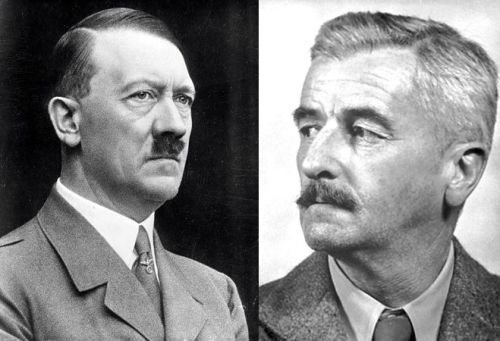
Adolf Hitler - William Faulkner
The term lingua franca means a language that is understood across cultures. It literally means “Frankish language,” referring to a hybrid language that was used for commerce and diplomacy during the Renaissance. Today, one might call English a lingua franca, since unofficially and officially (as in air transport), it is the one universally used and understood.

In contemporary history, the person who comes up most often as an historical analogy is Adolf Hitler. For good reason. Others may have killed more. Others may have conquered more territory. But Hitler did it all, ignited world war, and did it in our times, in living memory, and in ways that shaped the world—and thus shaped our thinking and conversation now and for generations to come. He is the historical persona franca.

A previous post pointed out that Putin’s post-Olympics invasion of Ukraine bested Hitler’s annexation of Austria in March 1938. Hitler waited almost two years after his self-promotional 1936 Berlin Olympics before the Anschluss; somewhat bizarrely, even though Putin politely waited for two days after the Paralympics in Sochi closed, the annexation of Crimea was effectively done while the Olympics were still being held.

When Hillary Clinton mentioned in a speech that Putin’s actions were reminiscent of Hitler, she was shushed up by her supporters and her detractors. Talk like that was deemed premature, alarmist, undiplomatic, and, in Hillary’s case, unpresidential. And yet as events have sped along, the mentions increase. Just today, the former U.S. Ambassador to Russia had to admit that we have not seen an event like the annexation of Crimea since…the 1930s. And whether Hitler is a persona franca or a trump card, Putin uses it himself, claiming that the Ukrainian ouster of Yanakovych was orchestrated by Nazi thugs who are now in power.

History matters, and Hitler matters in history, whatever use he may be in thinking about the critical issues developing in Ukraine. This year is the centennial of World War I (also known as THE World War and the War to End All Wars, before there was a second one). So maybe take a little time to learn a little more about Europe in the period from 1914 to 1945—a mere thirty years or so in which there were two world wars, one of the most evil men in history, an attempt to eliminate an entire people from the earth, and the development of an apocalyptic weapon that gives God a run for his money.

Why learn this history? Because literally everything that is in the news about Russia and the Ukraine is joined with it. Because history never goes away, particularly in Europe. Or anywhere. As William Faulkner wrote, having lived in the American South where history never goes away, where understanding history is the only way to understand today, “The past is never dead. It’s not even past.”

Anschluss 1938

Anschluss
History doesn’t have to be analogical, though that is often tempting. Instead, it can just be generally informative, not predictive about how particular parties may act and should react, but just as lessons in the variety of global experience.

In March 1938—the anniversary just passed last week—Hitler annexed Austria, an event now known as the Anschluss. Here, for general information, and not necessarily for comparison, are excerpts from the BBC Bitesize site:


Hitler wanted all German-speaking nations in Europe to be a part of Germany. To this end, he had designs on re-uniting Germany with his native homeland, Austria. Under the terms of the Treaty of Versailles, however, Germany and Austria were forbidden to be unified.

Hitler also wanted control of the largely German-speaking area within Czechoslovakia, called the Sudetenland. Importantly, Austria shared a border with this area.

In an attempt to realise his goals, Hitler was determined to destabilise Austria and undermine its independence. His ultimate goal was anschluss (union) with Austria…

The new Austrian Chancellor, Schuschnigg tried to preserve the country from German invasion by trying not to give Hitler an excuse for aggression. He tried to co-operate with Hitler as much as possible…

Hitler ordered Austrian Nazis to create as much trouble and destruction as possible in order to put pressure on Schuschnigg. If Hitler could claim that Austrian law and order had broken down he could justify marching German troops into Vienna to restore peace – despite the fact that he was responsible for the chaos in the first place.

Four days in March

Wednesday 9th March 1938

On the 9 March 1938, in a desperate act, Schuschnigg announced a referendum whereby the Austrian people would decide for themselves if they wanted to be a part of Hitler’s Germany. Hitler was furious. If the Austrians voted against joining Germany his excuse for invasion would be ruined.

Thursday 10th March 1938

Hitler told his generals to prepare for the invasion of Austria. He ordered Schuschnigg to call off the referendum. Knowing he would receive no help from Italy, and that France and Britain would not interfere in Hitler’s plans, Schuschnigg conceded. He called off the referendum and resigned.

The Nazi Austrian Interior Minister, Seyss-Inquart, was ordered by Hitler to ask for German help in restoring order in Austria.

Friday 11th March 1938

Hitler reassured Czechoslovakia that they had nothing to fear.

Saturday 12th March 1938

German troops marched into Austria unopposed. Hitler now had control of Austria. A month later, Hitler held a rigged referendum. The results showed that the Austrian people approved of German control of their country.


Note: Czechoslovakia indeed had something to fear. That same year, Germany invaded the German-speaking Czech region, the Sudetenland, and ultimately conquered the entire nation. It was that invasion that prompted the intervention of British Prime Minister Neville Chamberlain, who tried to “make peace” with Hitler at the infamous Munich conference.

In 1968, exactly thirty years later, the Prague Spring of political and cultural liberalization led to an invasion of Czechoslovakia by the Soviet Union. Fortunately, the spirit of that spring was never fully crushed, and inspired a flowering of sometimes secret creativity and rebellion.

Putin’s Bizarro World: Simultaneously Defending and Attacking Jews

Babi Yar Momument Kiev
In the last few days, Vladimir Putin has represented himself as the enemy of anti-Semitism and therefore the friend of Jews. He says, with a selective bit of truth, that among the many constituencies who deposed former Ukraine President Viktor Yanukovych were ultra-nationalists and neo-Nazis who are themselves anti-Semitic. By this logic, Putin claims that his intervention in Ukraine is in part to restore Yanukovych and deny power to those anti-Semites.

In those same last few days, synagogues in the Ukraine have been vandalized and attacked, according to Russia by those same ultra-nationalists and neo-Nazis. Few believe that. Instead it is widely believed that Russia is responsible for this anti-Semitic mischief, which conveniently fits the Russian story line.

Jews have had a tough time in Europe, in Eastern Europe, in Russia, and certainly in Ukraine. In September 1941, about 33,000 Jews were rounded up by the Nazis in Kiev, and along with tens of thousands of others, massacred in a ravine known as Babi Yar. Say what you will about the execrable, pathological and murderous Hitler, he knew how to play the strategic blame game. He regularly blamed the Jews for just about everything, but he rarely blamed someone else for hating and attacking the Jews. That was something he wanted full credit for.

So the suggestion for Putin is this: leave the Jews out of this particular rationale. The Jewish community in Ukraine is small, and it is true that in the just-evolving democratic regime, Jews will be uncomfortably standing side-by-side with people who don’t like them. Democracy makes for strange bedfellows, or at least that’s the lesson in America. Jews have enough problems without Putin as their friend and defender. Because with friends like that…

Putin About to Win Post-Olympics Invasion Competition

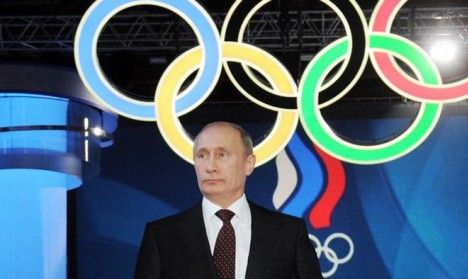
Putin Olympics
In August 1936 Adolf Hitler hosted the Olympics in Germany. In March 1938 he invaded Austria. He waited about 18 months.

In February 2014 Vladimir Putin hosted the Olympics in Russia. Just a few days after the closing ceremonies, Putin is hosting ousted Ukraine President Viktor Yanukovych. Putin is also engaging in rhetoric and military movements that reasonably look like a prelude to some sort of Russian intervention in the Crimea region of eastern Ukraine, or he is at least engaging in bullying and sabre rattling.

Putin is on his way to winning the gold for post-Olympics invasions, moving Hitler down to the silver. Well done.

The Gates Book and the Gates Speeches

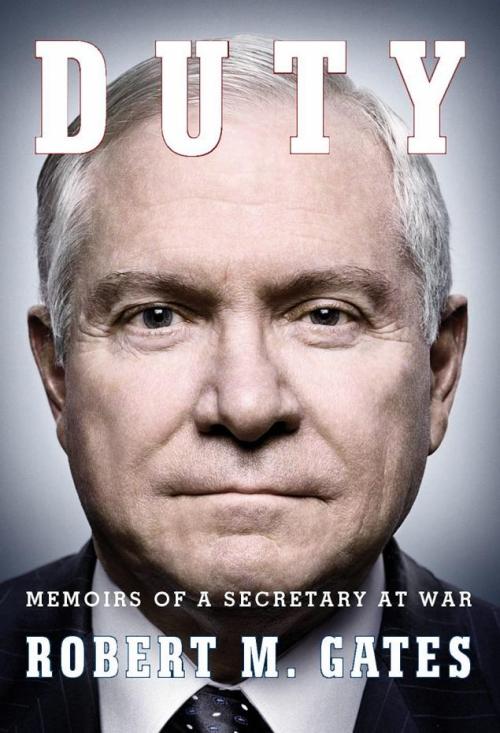
Duty
Former Secretary of Defense Robert M. Gates is about to release a memoir of his tenure under Presidents Bush and Obama. Provocative advance excerpts from Duty are now being released, and these explosive devices are anything but improvised.

Every news outlet, pundit and politician is already busy making points about President Obama, Vice President Biden, former Secretary of State Hillary Clinton and others, based on comments clipped from these excerpts, rather than having read the whole book. Even out of context, it is clear that Gates has formed some definite opinions based on working for and with these American leaders. That is anyone’s privilege, but particularly that of a man who spent forty-five years in laudable public service, much of it at the highest levels of government.

As always, though, opinion and criticism is a matter of perspective, that is, where the critic stands underlies what a critic sees and says.

You can read all the speeches that Gates delivered as Secretary of Defense. This is guaranteed not to be as titillating as reading or hearing about the “best parts” of Duty, but it might give you additional insight that will make the context of the book clearer.

Here, for example, are excerpts from remarks he made to the Heritage Foundation on May 13, 2008, when he was serving under President George W. Bush. (You can read the entire speech here) At that point, the Iraq war was five years old, only halfway to its conclusion. At that point, he had been Secretary of Defense for two years, and from that point, he would remain in that position under President Obama until July 2011.

But there is a more fundamental point that I will close with – and again, historical perspective is important. It is impossible to separate discussions of the “broken” Army following Vietnam – a conscription army – from the ultimate result of that conflict. At a congressional hearing last year, General Jack Keane, former Vice Chief of Staff of the Army, recounted the profound damage done to the Service’s “fiber and soul” by the reality of defeat in that war.

The risk of overextending the Army is real. But I believe the risk is far greater – to that institution, as well as to our country – if we were to fail in Iraq. That is the war we are in. That is the war we must win.

There it is, the context: Iraq was “the war we must win.” Gates’ insights into military matters is often brilliant and sensible, informed by his intelligence, experience and education. But on this point he candidly reveals a premise that for some colors everything else he offers. We must win Iraq because the failure to win would “break” the military the way that Vietnam did.

We did not win in Iraq, but technically, we did not lose. That current events in Iraq point to some devolution doesn’t really settle the question. That some U.S. Senators are calling for us to return to Iraq to avoid that loss or at least to avoid the appearance of futility is a partial reflection of exactly what Gates said.

We know that Gates’ personal critiques are based on close working relationships and observations. We also know, or should recognize, that those critiques are grounded in a worldview that others may not, very legitimately, share. If for Gates one of the measuring sticks is whether someone believes that Iraq had to be won, that measure may be skewed by genuine differences in informed opinion. One opinion is that as valorous as the service and sacrifice was, Iraq was a mistake, to be abandoned as prudently as possible; others might now say the same about Afghanistan. What Gates has to say about our leaders is certainly worth listening to, provided we pay equal attention to the mindset of the speaker.

Finite and Infinite Games: Thoughts to End and Begin a Year

Finite and Infinite Games
James P. Carse, now Professor Emeritus of history and literature of religion at NYU, published Finite and Infinite Games in 1986. The book’s spare 160 pages belie its significance. It is a masterpiece of clear, poetic and transformative thought, as Carse takes on the big question that faces us now and always: What are we doing and saying when we act and talk about things religious—or for that matter about life?

His answer—and this is impossibly oversimplified—is that we are playing games. To say even that little is misleading. The only way to appreciate the book and its power is to follow its 101 very brief sections end to end.

This was written at a time when the idea of religion as myth was enjoying renewed currency. It was not a new idea, but by the 1980s a generation of thinkers was trying to make intellectually honest sense of a conundrum: If religious narrative is merely myth, how can religious history have any value or substantial meaning, and how then can we be religious? It turned out in their view that it was not “merely” myth, but a matter that necessarily coexisted with, complemented  and completed religion.

This continues to be something both hard for many to accept or wrap their heads around and equally hard to articulate. Carse articulates this better than anybody else has, and elevates the entire area to a platform for considering the whole of existence and life. If that sounds like hyperbole, please read the book and decide.

In the meantime, a wholly inadequate sample, given that many definitions and premises are missing:

1

THERE ARE at least two kinds of games. One could be called finite, the other infinite.
A finite game is played for the purpose of winning, an infinite game for the purpose of continuing the play.

. . .

99

If it is true that myth provokes explanation, then it is also true that explanation’s ultimate design is to eliminate myth. It is not just that the availability of bells in churches and town halls of Europe makes it possible to forge new cannon; it is that the cannon are forged in order to silence the bells. This is the contradiction of finite play in its highest form: to play in such a way that all need for play is erased.

The loudspeaker, successfully muting all other voices and therefore all possibility of conversation, is not listened to at all, and for that reason loses its own voice and becomes mere noise. Whenever we succeed in being the only speaker, there is no speaker at all. Julius Caesar originally sought power in Rome because he loved to play the very dangerous style of politics common to the Republic; but he played the game so well that he destroyed all his opponents, making it impossible for him to find genuinely dangerous combat. He was unable to do the very thing for which he sought power. His word was now irresistible, and for that reason he could speak with no one, and his isolation was complete. “We might almost say this man was looking for an assassination” (Syme).

If we are to say that all explanation is meant to silence myth itself, then it will follow that whenever we find people deeply committed to explanation and ideology, whenever play takes on the seriousness of warfare, we will find persons troubled by myths they cannot forget they have forgotten. The myths that cannot be forgotten are those so resonant with the paradox of silence they become the source of our thinking, even our culture, and our civilization.

These are the myths we can easily discover and name, but whose meanings continually elude us, myths whose conversion to truth never quite fills the bells of their resonance with the sand of metaphysical interpretation. These are often exceedingly simple stories. Abraham is an example. Although only two children were born to Abraham in his long life, and one of those was illegitimate, he was promised that his descendants would be as numberless as the stars of the heavens. All three of the West’s major religions consider themselves children of Abraham, though each has often understood to be itself the only and final family of the patriarch, an understanding always threatened by the resounding phrase: numbered as the stars of the heavens. This is the myth of a future that always has a future; there is no closure in it. It is a myth of horizon.

The myth of the Buddha’s enlightenment has the same paradox in it, the same provocation to explanation but with as little possibility of settling the matter. It is the story of a mere mortal, completely without divine aid, undertaking successfully a spiritual quest for release from all forms of bondage, including the need to report this release to others. The perfect unspeakability of this event has given rise to an immense flow of literature in scores of languages that shows no signs of abating.

Perhaps the Christian myth has been the narrative most disturbing to the ideological mind. It is, like those of Abraham and the Buddha, a very simple tale: that of a god who listens by becoming one of us. It is a god “emptied” of divinity, who gave up all privilege of commanding speech and “dwelt among us,” coming “not to be served, but to serve,” “being all things to all persons.” But the worlds to which he came received him not. They no doubt preferred a god of magisterial utterance, a commanding idol, a theatrical likeness of their own finite designs. They did not expect an infinite listener who joyously took their unlikeness on himself, giving them their own voice through the silence of wonder, a healing and holy metaphor that leaves everything still to be said.

Those Christians who deafened themselves to the resonance of their own myth have driven their killing machines through the garden of history, but they did not kill the myth. The emptied divinity whom they have made into an Instrument of Vengeance continues to return as the Man of Sorrows bringing with him his unfinished story, and restoring the voices of the silenced.

100

The myth of Jesus is exemplary, but not necessary. No myth is necessary. There is no story that must be told. Stories do not have a truth that someone needs to reveal, or someone needs to hear. It is part of the myth of Jesus that it makes itself unnecessary; it is a narrative of the word becoming flesh, of language entering history; a narrative of the word becoming flesh and dying, of history entering language. Who listens to his myth cannot rise above history to utter timeless truths about it.

It is not necessary for infinite players to be Christians; indeed it is not possible for them to be Christians—seriously. Neither is it possible for them to be Buddhists, or Muslims, or atheists, or New Yorkers—seriously. All such titles can only be playful abstractions, mere performances for the sake of laughter.

Infinite players are not serious actors in any story, but the joyful poets of a story that continues to originate what they cannot finish.

101

There is but one infinite game.

Thanksgiving and Hanukkah in America: A History

Hanukkah in America
Hanukkah is getting lots more attention this year than it usually does, because it starts on Thanksgiving, rather than on or about Christmas.

This is nearly unprecedented. Of course there’s lots of controversy about just how rare it is, partly because Thanksgiving has officially moved from the last Thursday in November to the fourth Thursday, partly because the Jewish calendar is a lunar calendar, partly because of some esoterica of interest to extreme calendar freaks. Some say it won’t happen again for 70,000 years, others say it will never, ever happen again. If you happen to be around when it does, if it does, please e-mail, post, tweet, or whatever sort of advanced messaging will be used then to communicate with the curious but departed.

Thanksgivingukkah, or whatever other ridiculous and ear-hurting names people are coming up with, is second only to Black Friday as a cultural meme this week. We will be seeing lots of turkeys with Hanukkah candles stuck in them—actual ones, not just Photoshopped ones, at actual Thanksgiving tables, with plenty of videos to prove it. Might even see some turkey selfies. On the food front, we will have combined cuisines, where things not usually seen on the Thanksgiving table make an appearance, such as latkes and sour cream. (Note: I am promoting latke stuffing as the best of all possible hybrids.)

There’s a lot to talk about when Hanukkah and Christmas collide and coincide, theologically, historically and socially. Both involve charismatic Jewish religious leaders taking on tyranny—though one battles on the military and political front, while the other wields an entirely different set of weapons. As a central theme, both at some point take on the profaning of the Temple, in one case made unholy by soldiers, in the other made unholy by turning sacred space into a commercial enterprise. Both involve miracles and miraculous lights challenging the darkness. Not to mention that at the time of Jesus, Jews knew and marked the events of the Maccabee revolution, which had taken place less than two hundred years earlier.

Whether you are Jewish, or just newly fascinated by Hanukkah because it is for once not getting lost in the Christmas mishegas (“craziness” in Yiddish), have I got a book for you. Hanukkah in America: A History by Dianne Ashton is more than just a review of how American Jews regarded and celebrated this once-minor holiday. It is the definitive and delightful book about how Hanukkah evolved to become a laboratory for what it means to be a Jew in America, and for that matter what it means to be Americans of any kind.

Here’s something Ashton writes about Thanksgiving and the “deluxe Hanukkah turkey dinner”:

Many Jews combined food products available in America with recipes they deemed appropriate for Hanukkah meals. Even with a simple meal at home, immigrants could imagine a different Hanukkah past than the one in Eastern Europe. They could envision a personal bond with Judah Maccabee by selecting Carmel wine, which claimed to be “what the Maccabees drank.” Local food shops such as Goldman’s Tea and Coffee Store held special sales in honor of Sabbath Hanukkah. Jewish restaurateurs sometimes targeted immigrants’ desires for American foods at special occasions. Perhaps no food is so identified with America as the turkey, an animal native to North America and the featured dish of the Thanksgiving dinners that take place across the country only a few weeks before Hanukkah. When Gorfein’s, a kosher restaurant, advertised a deluxe Hanukkah turkey dinner in the Forverts, it apologized in print the next day to “hundreds [who had to be] turned away” because the restaurant “had no space or food left for them.” Gorfein’s offered the same dinner a second night.

My usual Hanukkah post, sometime around Christmas, ends with a mention of a wonderful Comedy Central special, A Colbert Christmas: The Greatest Gift of All. Our comic saviors Jon Stewart and Stephen Colbert perform the song Can I Interest You In Hanukkah? with Stewart making the case for the Jewish holiday:

Jon: Can I interest you in Hanukkah? Maybe something in a Festival of Lights. It’s a sensible alternative to Christmas. And it lasts for seven – for you – eight nights.
Stephen: Hanukkah huh? I’ve never really thought about it.
Jon: Well, you could do worse.
Stephen: Is it merry?
Jon: It’s kind of merry.
Stephen: Is it cheery?
Jon: It’s got some cheer.
Stephen: Is it jolly?
Jon: Look, I wouldn’t know from jolly. But it’s not my least unfavorite time of year.
Stephen: When’s it start?
Jon: The 25th.
Stephen: Of December?
Jon: Kislev.
Stephen: Which is when exactly?
Jon: I will check
Stephen: Are there presents?
Jon: Yes, indeed eight days of presents. Which means one nice one, then a week of dreck.
Stephen: Does Hanukkah commemorate events profound and holy? A king who came to save the world?
Jon: No, oil that burned quite slowly.
Stephen: Well, it sounds fantastic!
Jon: There’s more. We have latkes.
Stephen: What are they?
Jon: Potato pancakes. We have dreidels.
Stephen: What are they?
Jon: Wooden tops. We have candles.
Stephen: What are they?
Jon: THEY ARE CANDLES! And when we light them, oh the fun it never stops. What do you say, Stephen, do you want to give Hanukkah a try?
Stephen: I’m trying see me as a Jew. I’m trying even harder. But I believe in Jesus Christ
So it’s a real non-starter.
Jon: I can’t interest you in Hanukkah? Just a little bit?
Stephen: No thanks I’ll pass. I’ll keep Jesus, you keep your potato pancakes. But I hope that you enjoy ‘em on behalf of all of the goyim.
Jon: Be sure to tell the Pontiff, my people say “good yontif”.
Stephen: That’s exactly what I’ll do.
Both: Happy holidays, you
Jon: too!
Stephen: Jew!
Jon: Too?

That’s it for this holiday mashup. Read the book; it’s great. Celebrate religious freedom by eating too much food. Spin the turkey. Light the candles. But whatever you do, don’t smoke the turkey, because it is impossible to keep that thing lit.

Happy holidays. Be safe.

The Book of Matt: Hidden Truths About the Murder of Matthew Shepard

Kennedy Monore Kennedy
When the legend becomes fact, print the legend.
Director John Ford in The Man Who Shot Liberty Valence

The Book of Matt by Stephen Jimenez is about the heinous and now-legendary murder of Matthew Shepard. It obliquely brings three people to mind: John F. Kennedy, Bobby Kennedy and Marilyn Monroe.

All three are legends apart, so maybe it is not surprising that legends have grown up about all three in various pairings, and even all together on at least one purported occasion. Whether or not Monroe had an affair with either or both of the Kennedys, whether Bobby was with her on the night of her death, whether evidence of those affairs was covered up or destroyed, is almost certainly never going to be incontrovertibly established. Some will say that some of it appears near certain while other of it is sordid and unsubstantiated conjecture. For the most part, we’ve reached a general consensus that none were saints, none were complete role models, but that we liked some of what they did, and we liked them for what they did, including inspiring us, and the rest is just shades of humanity. JFK helped prevent a nuclear war, Bobby Kennedy helped end the Vietnam War, and Marilyn was just Marilyn. If they didn’t live like saints, they died as complex and heartbreaking lessons.

Jimenez has investigated the Matthew Shepard murder for more than a decade. He concludes that this was not a vicious hate crime against a young gay man. Instead, it is a cautionary tale about the epidemic of methamphetamine. According to this report, Shepard was troubled, and was involved in the Laramie meth scene. The killer, who knew Shepard, was a meth head who had been up for a week, and was trying to get information from Shepard about a meth deal. He intended to coerce the information from Shepard, but out of his mind, simply beat Shepard mercilessly and insanely. The killer and his accomplice pled guilty, which kept details of the local meth market and the killer’s gay dealings with Shepard—trading meth for sex—secret.

The police investigation never involved a hate crime. The now-infamous imagining of Shepard being trussed up on a fence in a crucifix position never happened; he was found on the ground, hands tied behind his back. The anti-gay angle for the horrific event was soon added.

This might present a problem.

Jiminez has found himself in an odd position. He is accused of being anti-gay, though he is gay himself, in which case he is accused of being a “traitor” to a cause. He is accused of being a tool of the reactionary right wing, though he himself is far from being a right winger. What he is, he repeats, is a journalist who wants to do what he is supposed to do: find and tell the truth, as best as it ever can be found and told.

Matthew Shepard has become very important to the movement for gay rights. It is a powerful story: the young man who did nothing wrong, who only wanted to live a free and openly gay life, who had the misfortune of running into a black-hearted, hate-filled, intolerant stranger—the sort that fifteen years ago, and today, you can meet anywhere.

If it turns out that some or more than some of what Jimenez concludes is true, what happens to Matthew Shepard, the young man and the legend? In essence, Jimenez says that nothing happens. The issues remain the same, the good fight remains the good fight, but we will be fighting it armed with a little more truth about the story, convenient or not.

That sort of complication should be welcome, but it may not be, at least not everywhere. We like our stories simple, because so much of life is convoluted and mysterious. There are lines that are clear, but simple stories are mostly for children. Grownups have to work and stretch. This is a warts-and-all age, so we take our big characters as they come: flawed but still valuable. People work every day, their entire lives, on establishing equality—some of those people under the Matthew Shepard banner. That cause isn’t going away, and if we have to accept a little bit of historical adjustment, that’s the price we pay for having our eyes open.

Un-Americans in Congress

Capitol Flag
The first appearance of un-Americanism came during the American Revolution. Conservative colonists who remained loyal to the British crown were reviled by those who pledged their fortunes to a new and forward-looking vision. To the Patriots, the Loyalists were backward-looking un-Americans—even though “America” was not quite yet a reality.

The next appearance came during the Civil War. This time, a powerful portion of American citizens and leaders made philosophical and economic arguments that being a “real American” meant having the freedom to own people as property and, if that was taken away, the freedom to split the nation. Many other Americans disagreed, and in a war that took 620,000 lives, having a united nation and government was established as the bedrock of Americanism. Disagree and fight vigorously to change policy and direction, but when your initiatives threaten the integrity of that union, your Americanism is in question or even forfeited.

Right now, Republican members of Congress are on track to bring parts of the American government to a standstill, and probably damage a still-unstable American economy. This is un-American. Pointing fingers and trying to avoid accountability is childish; at least take credit or blame if the principles are so important. We need adult Americans. What we seem to be getting in some quarters are childish un-Americans. Nothing could be more sad or dangerous.