Bob Schwartz

Category: Books

Record Store Day

Record Store Day 2016

Today is Record Store Day.

Record Store Day was conceived in 2007 at a gathering of independent record store owners and employees as a way to celebrate and spread the word about the unique culture surrounding nearly 1400 independently owned record stores in the US and thousands of similar stores internationally. The first Record Store Day took place on April 19, 2008. Today there are Record Store Day participating stores on every continent except Antarctica.

This is a day for the people who make up the world of the record store—the staff, the customers, and the artists—to come together and celebrate the unique culture of a record store and the special role these independently owned stores play in their communities. Special vinyl and CD releases and various promotional products are made exclusively for the day. Festivities include performances, cook-outs, body painting, meet & greets with artists, parades, DJs spinning records,  and on and on. In 2008 a small list of titles was released on Record Store Day and that list has grown to include artists and labels both large and small, in every genre and price point. In 2015, 60% of the Record Store Day Official Release List came from independent labels and distributors. The list continues to include a wide range of artists, covering the diverse taste of record stores and their customers.

Next to Independent Bookstore Day —coming up on April 30—this the most important cultural retail event on the calendar.

Independent Bookstore Day

Find your local record store and buy something—CD, vinyl, or whatever format you play that they sell.

And in two weeks, find your local indie bookstore and buy something there too.


Hey kid, rock and roll
Rock on, ooh, my soul
Hey kid, boogie too, did ya

Hey shout, summertime blues
Jump up and down in my blue suede shoes
Hey kid, rock and roll, rock on

And where do we go from here
Which is the way that’s clear

Still looking for that blue jean, baby queen
Prettiest girl I ever seen
See her shake on the movie screen, Jimmy Dean

(James Dean)

Jimmy Dean
Rock on

David Essex, Rock On

Dim Dusty Mirror

For now we see in a mirror, dimly, but then we will see face to face. Now I know only in part; then I will know fully, even as I have been fully known.
1 Corinthians 13:12 (New Revised Standard Version)

Can you keep your crescent soul from wandering
can you make your breath as soft as a baby’s
can you wipe your dark mirror free of dust
can you serve and govern without effort
can you be the female at Heaven’s Gate
can you light the world without knowledge
can you give birth and nurture
but give birth without possessing
raise without controlling
this is Dark Virtue
Verse 10, Lao-tzu’s Taoteching
Translated by Red Pine

“Our spirit dwells in our eyes. When the eyes see something, the spirit chases it. When we close our eyes and look within, everything is dark. But within the dark, we still see something. There is still dust. Only by putting an end to delusions can we get rid of the dust.”
Commentary on Verse 10 by Wu Ch’eng (1249–1333)

Donald Trump, You’re No Barry Goldwater

Donald Trump is now being compared to Barry Goldwater in 1964, an unfavored Republican candidate for President who lost big yet did not destroy the party.

I wrote recently about how the Bernie Sanders phenomenon is like the Goldwater one: a philosophical wing that will eventually take over the whole party—as Goldwater conservatism took over the Republicans.

To compare Goldwater and Trump, following are excerpts from their literary masterworks: Goldwater’s erudite and principled The Conscience of a Conservative, which is for many still the Bible of the modern conservative movement, and Trump’s Trump: The Art of the Deal, which is still…something.


The root difference between the Conservatives and the Liberals of today is that Conservatives take account of the whole man, while the Liberals tend to look only at the material side of man’s nature. The Conservative believes that man is, in part, an economic, an animal creature; but that he is also a spiritual creature with spiritual needs and spiritual desires. What is more, these needs and desires reflect the superior side of man’s nature, and thus take precedence over his economic wants. Conservatism therefore looks upon the enhancement of man’s spiritual nature as the primary concern of political philosophy. Liberals, on the other hand,—in the name of a concern for “human beings”—regard the satisfaction of economic wants as the dominant mission of society. They are, moreover, in a hurry. So that their characteristic approach is to harness the society’s political and economic forces into a collective effort to compel “progress.” In this approach, I believe they fight against Nature.

Surely the first obligation of a political thinker is to understand the nature of man. The Conservative does not claim special powers of perception on this point, but he does claim a familiarity with the accumulated wisdom and experience of history, and he is not too proud to learn from the great minds of the past…

So it is that Conservatism, throughout history, has regarded man neither as a potential pawn of other men, nor as a part of a general collectivity in which the sacredness and the separate identity of individual human beings are ignored. Throughout history, true Conservatism has been at war equally with autocrats and with “democratic” Jacobins. The true Conservative was sympathetic with the plight of the hapless peasant under the tyranny of the French monarchy. And he was equally revolted at the attempt to solve that problem by a mob tyranny that paraded under the banner of egalitarianism. The conscience of the Conservative is pricked by anyone who would debase the dignity of the individual human being. Today, therefore, he is at odds with dictators who rule by terror, and equally with those gentler collectivists who ask our permission to play God with the human race.

With this view of the nature of man, it is understandable that the Conservative looks upon politics as the art of achieving the maximum amount of freedom for individuals that is consistent with the maintenance of social order. The Conservative is the first to understand that the practice of freedom requires the establishment of order: it is impossible for one man to be free if another is able to deny him the exercise of his freedom. But the Conservative also recognizes that the political power on which order is based is a self-aggrandizing force; that its appetite grows with eating. He knows that the utmost vigilance and care are required to keep political power within its proper bounds.

The Conscience of a Conservative
Barry Goldwater


I don’t do it for the money. I’ve got enough, much more than I’ll ever need. I do it to do it. Deals are my art form. Other people paint beautifully on canvas or write wonderful poetry. I like making deals, preferably big deals. That’s how I get my kicks.
Most people are surprised by the way I work. I play it very loose. I don’t carry a briefcase. I try not to schedule too many meetings. I leave my door open. You can’t be imaginative or entrepreneurial if you’ve got too much structure. I prefer to come to work each day and just see what develops.

There is no typical week in my life. I wake up most mornings very early, around six, and spend the first hour or so of each day reading the morning newspapers. I usually arrive at my office by nine, and I get on the phone. There’s rarely a day with fewer than fifty calls, and often it runs to over a hundred. In between, I have at least a dozen meetings. The majority occur on the spur of the moment, and few of them last longer than fifteen minutes. I rarely stop for lunch. I leave my office by six-thirty, but I frequently make calls from home until midnight, and all weekend long.

It never stops, and I wouldn’t have it any other way. I try to learn from the past, but I plan for the future by focusing exclusively on the present. That’s where the fun is. And if it can’t be fun, what’s the point?

Trump: The Art of the Deal
Donald J. Trump

Translators May Be Traitors

If you read important books that are written in a language other than your own, you are at a disadvantage. You are depending on the kindness or brilliance of strangers. On translators.

That is doubly complicated if the original text is ancient, and the original language itself is a mystery, even for those who are expert.

The Bible, both First and Second Testaments, not to mention collatral ancient scriptural books and fragments, are a well-known example. The same problem arises with Asian texts such as the Tao Te Ching, the I Ching, or early Buddhist discourses.

So you see the challenge. Jesus or the Buddha said great things in their native language. Nobody transcribed them when spoken. The thoughts and words were remembered and kept accurately alive, as accurately as possible, in oral transmission and storage. Then they were set down in writing, in a language related to the original speech, maybe, but later in entirely different languages. And as the words migrated, the texts were overlaid and transformed, even as there was a sincere attempt to preserve the original.

Finally, they come to you, in the language you speak, read and understand. Which is far removed from the original.

When the French had the audacity to translate Dante into their own language, the Italians came up with a harsh accusation: Traduttore, traditore. Translator, traitor.

Consider that when you read translations, you are someone who cannot read yourself, or even see. You are in the dark. You depend on those who read to you. And hope that they are good and true readers themselves.

“Books Smell Like Old People”

Denby - Decline of Teen Reading

David Denby in the New Yorker asks: Do Teens Read Seriously Anymore?

If reading means books or other extended forms of writing, evidence and anecdote say the answer is no.

Denby doesn’t have anything particularly new to say about the big picture and long term consequences of generations who are less interested in books than ever. This is an ongoing conversation that just gets more and more attention as digital demographics continue to roll over us all.

Still, it’s worth reading his piece as a reminder and, for some, a wakeup call.

Denby mentions the related ascendance of STEM education:

The Times reported on Monday that at least fifteen state governments were offering some type of bonus or premium for high-demand STEM degrees. “All the people in the world who want to study French literature can do so,” Matt Bevin, the governor of Kentucky, said. “They’re just not going to be subsidized by the taxpayers like engineers will be, for example.” (Governor Bevin, as it turns out, graduated from Washington and Lee with a bachelor’s degree in Japanese and East Asian studies. So much for the crippling effects of the humanities.)

Denby also mentions a recent book by media scholar Sherry Turkle, Reclaiming Conversation: The Power of Talk in a Digital Age:

Much of their social life, for boys as well as girls, is now conducted on smartphones, where teen-agers don’t have to confront one another. The terror of eye contact! Sherry Turkle, in her recent book “Reclaiming Conversation,” has written about the loss of self that this avoidance creates and also of the peculiar boredom paradoxically produced by the act of constantly fleeing boredom.

Denby doesn’t come off like a snobbishly literate dinosaur. He doesn’t over-idealize “the way things were” as being infinitely and generally better, which they weren’t. He is just an astute observer making the point that extended discourse, written and read, is an essential part of moving society and civilization along. How we reclaim that, if it is in fact getting lost, is a difficult but worthwhile mission.

Rules for Radicals: A Pragmatic Primer for Realistic Radicals

Rules for Radicals

Saul Alinsky, author of Rules for Radicals: A Pragmatic Primer for Realistic Radicals (1971), is a currently infamous architect of political change, demonized but also mostly unread.

His infamy comes from the revelation that Barack Obama had used Alinsky’s work as a sourcebook for community organizing back in Chicago. That was enough for conservative Obama haters, who took this as just one more sign of Obama’s anti-Americanism. Most of them had never read Alinsky, but were sure he was some sort of scary Commie/enemy of the state type, who in the right kind of America belonged in jail—if he hadn’t already been dead.

Rules for Radicals is none of that. It is instead an articulate and sensible outline for making political change—not by rejecting or blowing up the system or the establishment, but by first accepting the way things and people are and working from there.

As an organizer I start from where the world is, as it is, not as I would like it to be. That we accept the world as it is does not in any sense weaken our desire to change it into what we believe it should be — it is necessary to begin where the world is if we are going to change it to what we think it should be. That means working in the system.

Anything else, Alinsky says, alienates people by going outside their experience. Which is why, for example, he was so opposed to the tactic of burning the American flag as a form of protest.

This failure of many of our younger activists to understand the art of communication has been disastrous. Even the most elementary grasp of the fundamental idea that one communicates within the experience of his audience — and gives full respect to the other’s values — would have ruled out attacks on the American flag. The responsible organizer would have known that it is the establishment that has betrayed the flag while the flag, itself, remains the glorious symbol of America’s hopes and aspirations, and he would have conveyed this message to his audience.

Alinsky cites many political thinkers, giving special attention to the virtues and vices of those behind the American Revolution. Sam Adams, for example, made the case for revolution against the British, but once he was part of the established new regime, opposed rebellions within the new American democracy. This, Alinsky says, is a typical pattern.

Writing in 1971, after decades as an organizer, Alinsky hoped to guide a new generation of young radicals who seemed passionate but relatively rudderless. He laid out the practical lessons of his experience, especially the distinction between the rhetorical radical and the pragmatic radical.

This is the promise and the danger of what Alinsky saw at the time, and in a certain light, might still see today:

The “silent majority,” now, are hurt, bitter, suspicious, feeling rejected and at bay. This sick condition in many ways is as explosive as the current race crisis. Their fears and frustrations at their helplessness are mounting to a point of a political paranoia which can demonize people to turn to the law of survival in the narrowest sense. These emotions can go either to the far right of totalitarianism or forward to Act II of the American Revolution.

Hillary in Iowa 2008


Hillary Iowa State Fair

“Character is destiny.”
Heraclitus

Will Iowa 2016 be Iowa 2008 for Hillary? Here are her thoughts back in 2008, as documented in Game Change: Obama and the Clintons, McCain and Palin, and the Race of a Lifetime by John Heilemann and Mark Halperin:

The problem was, she hated it there. Every day felt like she was stuck in a Mobius strip: another barn, another living room, another set of questions about immigration (from people who were anti-) and the war (ditto). She’d get back on the plane, slump into her seat, heave a deep sigh, and grunt, “Ugh.”

The Iowans didn’t seem to be listening to her, just gawking at her, like she was an animal in a zoo. Hillary would hear from her staff the things voters were saying about her: “She’s so much prettier in person,” “She’s so much nicer than I thought.” It made her ill. She found the Iowans diffident and presumptuous; she felt they were making her grovel. Hillary detested pleading for anything, from money to endorsements, and in Iowa it was no different. She resisted calling the local politicos whose support she needed. One time, she spent forty-five minutes on the phone wooing an activist, only to be told at the call’s end that the woman was still deciding between her and another candidate. Hillary hung up in a huff.

“I can’t believe this!” she said. “How many times am I going to have to meet these same people?”

Over and over, she complained about the system that gave Iowa so much power in selecting the nominee. “This is so stupid,” she would say. “So unfair.” She bitched about Iowa’s scruffy hotels and looked for excuses to avoid staying overnight. But among the sources of her frustration and bewilderment, the absence of connection was paramount. “I don’t have a good feeling about this, guys,” she told her staff on the plane. “I just don’t have a good feeling about this place.”

Treasure Again

Dhammapada

How could I know
When I first read this treasure
How I would wander away
This way and that.
Make no mistake that others
Had value
Like other food that feeds well
Medicine that soothes ills.
But all along there it stood
Waiting for me to look again
And see its simplicity.
No time wasted
Here it is.

It is easier than we might think to lose track of things that once inspired us, the way a match is lost once we use it to light a fire.

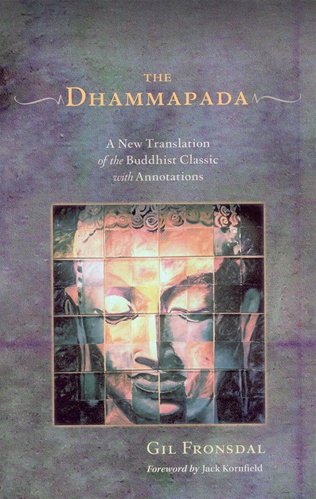
This verse refers to my turning back to the Dhammapada. It is the brief, most basic, and most widely-read collection of wisdom from the Buddha, whose recollected discourses fill volumes. Depending on which Buddhist trails you follow, just as with Jewish, Christian, Muslim, etc. trails, you will have read and heard plenty of excellent teaching from plenty of excellent teachers along the way. But there is something extraordinary about revisiting the first thing seen, the first coin from the treasure, which for many on the Buddhist way is The Dhammapada.

If you are curious to explore the Dhammapada, try this translation by Thomas Byrom or this one by Gil Fronsdal, both from Shambhala Publications.

Prisoners Beat Harvard in Debate

Bard Prison Initiative

A team from a prison just beat a team from Harvard. In a debate.

The Washington Post reports not just the victory of the team, part of the Bard Prison Initiative, but the constraints that the debaters prepared under—including having to research without the internet, from actual books and articles, but only those approved by the prison administration.

Too many lessons to count. Among them:

The two million or so people we consign to prison aren’t all there because they are not smart enough or motivated enough to function or excel in the real world.

The people who consign themselves to our most privileged houses of learning aren’t all as smart and motivated as some of those consigned to prison.

If you want to learn, really learn, learn enough to defeat the nation’s purportedly premier scholars, you can do it offline. Just like this prison debate team. Just like Abraham Lincoln.

Winnie-the-Pooh

winnie-the-pooh

Winnie-the-Pooh is not only a children’s book, not exactly, though it should be read to and by every child. It wasn’t read to or by me as a child, but I found it later anyway, and have never let go of it since.

Pooh, as you know or might have heard, is a bear formally known as Edward Bear, but nicknamed by his friend Christopher Robin. He lives with his other friends Rabbit, Piglet, Eeyore, Kanga and her baby Roo in the Hundred Acre Wood.

In this bit from Chapter 7, Pooh and friends are trying to distract Kanga so that they can capture her baby. Pooh recites some spontaneous poetry:

“Talking of Poetry,” said Pooh, “I made up a little piece as I was coming along. It went like this. Er–now let me see–“

“Fancy!” said Kanga. “Now Roo, dear–“

“You’ll like this piece of poetry,” said Rabbit

“You’ll love it,” said Piglet.

“You must listen very carefully,” said Rabbit.

“So as not to miss any of it,” said Piglet.

“Oh, yes,” said Kanga, but she still looked at Baby Roo.

“How did it go, Pooh?” said Rabbit.

Pooh gave a little cough and began.

LINES WRITTEN BY A BEAR OF VERY LITTLE BRAIN

On Monday, when the sun is hot
I wonder to myself a lot:
“Now is it true, or is it not,”
“That what is which and which is what?”

On Tuesday, when it hails and snows,
The feeling on me grows and grows
That hardly anybody knows
If those are these or these are those.

On Wednesday, when the sky is blue,
And I have nothing else to do,
I sometimes wonder if it’s true
That who is what and what is who.

On Thursday, when it starts to freeze
And hoar-frost twinkles on the trees,
How very readily one sees
That these are whose–but whose are these?

On Friday—-

“Yes, it is, isn’t it?” said Kanga, not waiting to hear what happened on Friday. “Just one more jump, Roo, dear, and then we really must be going.”

Note to English and philosophy professors: Shakespeare is great, but if you are not including A.A. Milne and his Pooh books in your syllabus, you are shortchanging your students. As for philosophy, “what is which and which is what?” and “who is what and what is who?” are questions that could take up a full semester, if not a lifetime.

Note to parents and children of all ages: If you are not reading Pooh to your kids or you haven’t read the book yourself, just do it.

Note to lovers: This may not seem like very romantic literature. But it contains the sort of sweet nonsensical silliness that love, stripped down to its unserious basics, is all about.

WARNING TO ALL: The Disney version of Pooh is known and beloved by many, maybe including you. Sweet Christopher Robin and Pooh would never say unkind or harsh things, such as saying that the Disney version completely misses everything wonderful about the Pooh books and characters, and that it might be deemed a creative desecration. They would never say anything like that.