Bob Schwartz

Anthropic: Don’t be mean to Claude. Be nice.

ChatGPT image of anthropomorphized Claude


Anthropic 2026 Usage Policy update
Oct 8, 2026

Each year, Anthropic updates its Usage Policy in response to the evolving capabilities of our models, and the feedback we’ve received from our customers. We’re publishing a new version of the policy today. In this post, we summarize the changes we’ve made.

Most of the updates in the latest version are intended to clarify existing rules. In the year since our last refresh, Claude has taken on longer, more independent work. This update provides new examples that show how our rules apply to Claude’s new capabilities. It draws on new patterns of misuse in influence operations, weapons development, and surveillance that we’ve observed in the past year (as we’ve documented in our latest threat intelligence report). We’ve also made updates to clarify our requirements for high-risk use cases in areas like health and finance, to add controls for when Claude is used to autonomously take physical actions, and to address abusive behavior toward our models.

Addressing abusive behavior toward our models

We’ve added a prohibition on sustained and needless abusive or cruel behavior toward our models. The policy update is meant to apply only in extreme cases, where users repeatedly act cruelly toward our models, with no discernible purpose. It does not apply to common versions of user frustration, pushback, dark creative themes, or model testing and research.

This addition aligns with a step we’ve already taken, allowing Claude models to end rare conversations with persistently abusive users on Claude.ai and Claude Code. Such abuse is the main focus of this update; Claude’s ability to end these interactions will remain the primary enforcement mechanism.


This is of great interest to all of us who regularly engage with Claude. How many of us are there? Anthropic won’t say (though it may appear in their IPO), but it is millions.

It is also of interest to those who use—or abuse—other models and to those who study and pontificate about AI. Maybe also millions, include the Pope himself.

First, let us wish to be a fly on the wall when this policy was discussed and crafted. It may have included both Amodeis, Dario and Daniela, along with other significant leaders, plus philosophers, psychologists, writers, and, almost certainly, Claude itself.

Second, how did this start? Did it begin with a complaint from Claude? For those not familiar with Claude, it takes itself and its users seriously, with a sprinkling of humor and irony. One thing is certain: Claude was trained to be nice, and the reciprocal expectation is that users will be nice. My prompts do sometimes include “please” and “thanks”. Not usually, but when I issue a blunt directive/instruction, a little part of me wonders if it is impolite.

Third, what kind of abuse is Anthropic talking about? It tries to draw a line between prohibited “sustained and needless abusive or cruel behavior toward our models” and allowed “common versions of user frustration, pushback, dark creative themes, or model testing and research.” A fine line. I want to be there when the lawyers argue about whether particular engagements cross that line. In fact, I suspect just such arguments went on when this policy was crafted.

I’m sure that an infinite number of users have already addressed Claude to ask, “Am I allowed to say this?” or “Am I prohibited from saying that?” I am not going to be one of those, though it is tempting.

As the saying goes: You can catch better AI results with honey than you can with vinegar. Don’t be mean to Claude. Be nice.

Note: Above you will find the ChatGPT image of an anthropomorphized Claude. As you can see, this is someone to be nice to, not to be mean to. Even OpenAI thinks so.
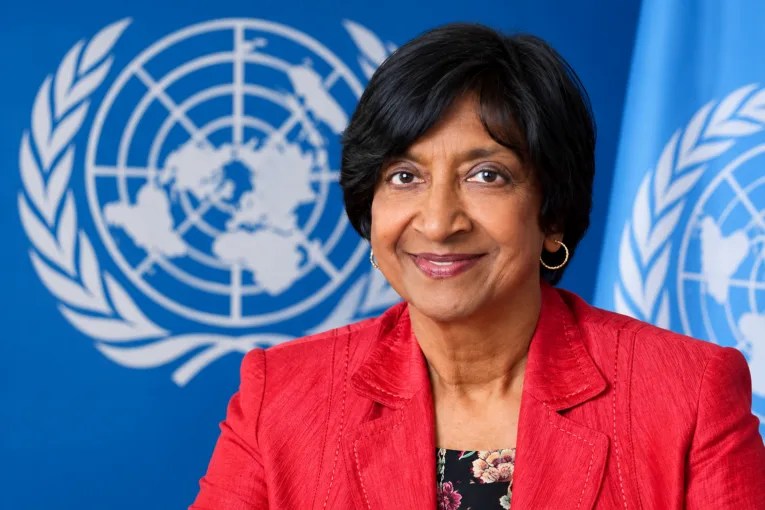
Nobel Peace Prize 2026 to Navi Pillay

“History has shown that a world operating without the rule of law is unjust, unwise and inhumane.”
–Nobel Peace Prize 2026 to Navanethem “Navi” Pillay

The one unfortunate thing about the award of this year’s Nobel Peace Prize to such a worthy recipient is that the attention and reporting was distorted by a loud and unworthy sore loser.

In case you missed it, here is who Navi Pillay is and what she has done:


Announcement, Nobel Peace Prize 2026

9 October 2026

The Nobel Peace Prize for 2026 goes to a person who with exceptional courage and integrity has led the way towards a more comprehensive global legal order. This year’s laureate has been instrumental in ensuring that war crimes, crimes against humanity and genocide are prosecuted.

The Norwegian Nobel Committee has decided to award the Nobel Peace Prize for 2026 to Navanethem “Navi” Pillay for her efforts to promote peace and international law.

Navi Pillay’s commitment to universal legal principles and her firm moral compass are constants in a long career. Born into a family of Indian Tamil origin under apartheid in Durban, South Africa, Pillay became a lawyer and legal pioneer, confronting deep structural discrimination, segregation and exclusion. A common thread runs from her early work defending Nelson Mandela and others who stood up against apartheid to her service as a judge in some of the key international court cases of our time.

This year’s laureate has significantly enlarged the scope and impact of international law. She has served as a judge on the High Court in South Africa, the International Criminal Tribunal for Rwanda and the International Criminal Court. She was the United Nations High Commissioner for Human Rights and, until recently, she chaired the UN Independent International Commission of Inquiry on the Occupied Palestinian Territory. Today Navi Pillay is a judge on the International Court of Justice in the case where Myanmar stands accused of genocide.

In historic international court cases, she has shown that legal measures can help prevent acts of war and violence. Navi Pillay has also contributed to strengthen the institutions of international law. Her independence, expertise and steadfastness have made her one of the most respected international jurists of our time.

The first Nobel Peace Prize was awarded 125 years ago. Already then, the Norwegian Nobel Committee underscored the importance of resolving conflicts through international law – a theme that has remained prominent throughout the history of the peace prize. The reach of international law expanded after the Second World War, in particular with the creation of the UN institutions. The key insight was that lasting peace must be built on legal principles, not on the will of the strong or a fragile balance of power. Additional legal mechanisms were introduced in the post-war decades, and momentum picked up further after the end of the Cold War.

However, the rules-based international order has never been perfect. The greatest powers have often evaded responsibility. In practice, cases brought under international law have produced different results depending on who is the perpetrator and who is the victim.

Nonetheless, we have seen that more and more conflicts are being addressed through diplomacy, treaties and legal mechanisms, rather than threats, violence and warfare. Leaders and populations alike have come to the same conclusion: international law is a foundation for a more peaceful world.

At a time of existential challenges – including more wars and conflicts than the world has seen in a long time – international law is no longer just a supplement to peace and security. It is an absolute necessity.

And yet, the system of international law is under tremendous pressure, and its institutions are under attack. We see a shift towards power politics at the expense of legal frameworks and global respect for law and justice. Whenever might overtakes right, it undermines stability, trust and peaceful co-existence.

In awarding this year’s Nobel Peace Prize, the Norwegian Nobel Committee wants to remind the world that the rule of law – national and international – underpins the system we have set up to ensure peace and resolve conflicts non-violently. Peace requires justice.

History has shown that a world operating without the rule of law is unjust, unwise and inhumane. The judges – those who guard the thin red line between order and chaos – are therefore highly deserving of our praise. But today, as these same judges are sanctioned, and their institutions are attacked, we need people of courage, vision and determination – qualities that Navi Pillay demonstrates in her work on the bench.

Navi Pillay has held states and national leaders accountable and brought hope to victims of violence and conflict. In all the positions she has held, she has stressed the responsibility of individuals and states to comply with the rule of law. She has also helped define the relevant norms and legal principles. When the International Criminal Tribunal for Rwanda established that rape and sexual violence could constitute a crime against humanity – as well as genocide – her influence was a significant factor. In the same case, Ms Pillay was instrumental in a separate legal breakthrough: for the first time, a defendant faced charges of incitement to commit genocide purely on the basis of spreading propaganda.

The Nobel Peace Prize for 2026 springs directly from Alfred Nobel’s will. Navi Pillay strengthens fraternity between nations and – by systematically advancing the use of tribunals for peace and justice – she provides substance, direction and motivation for peace conferences in their modern form.

Navi Pillay is one of the great defenders of international legal principles in our time. Her distinguished career reminds us of the need to support, fortify and expand the global rule of law. Navi Pillay’s commitment to justice and human dignity is a source of hope and inspiration to all who seek to bring about a more peaceful world.