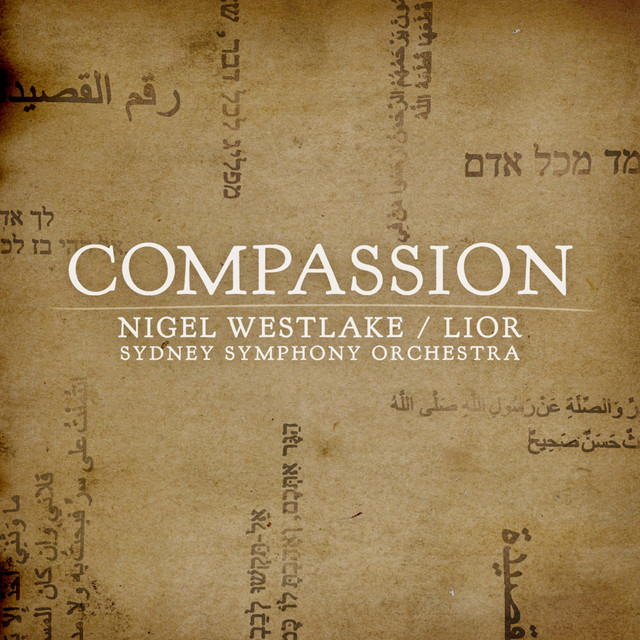
Joyously it also included a great surprise, Avinu Malkeinu from the album Compassion (2014) by Lior and Nigel Westlake, with the Sydney Symphony Orchestra. Lior is an Israeli-born singer/songwriter whose family emigrated to Australia when he was young.
The notes to this song cycle explain the rich mixture of Hebrew and Arabic songs, including an essential High Holiday hymn like Avinu Malkeinu, all centered on the title concept–and the Yom Kippur concept–of compassion.
Compassion: IV: Inna Rifqa (The Beauty Within) is taken from a Muslim hadith:
“Compassion does not enter into anything without beautifying it, and is not removed from anything without making it ugly.”
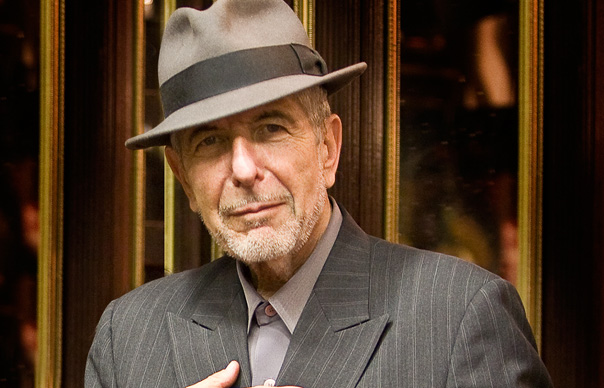
It is obvious to point to Leonard Cohen’s Who By Fire for Yom Kippur, as it is his take on the liturgical poem Unetanah Tokef, recited during the holiday services. The poem says:
On Rosh Hashanah it is inscribed, And on Yom Kippur it is sealed. How many shall pass away and how many shall be born, Who shall live and who shall die, Who shall reach the end of his days and who shall not, Who shall perish by water and who by fire, Who by sword and who by wild beast, Who by famine and who by thirst, Who by earthquake and who by plague, Who by strangulation and who by stoning, Who shall have rest and who shall wander, Who shall be at peace and who shall be pursued, Who shall be at rest and who shall be tormented, Who shall be exalted and who shall be brought low, Who shall become rich and who shall be impoverished. But repentance, prayer and righteousness avert the severe decree.
Here it is featured as one of three songs that cover kindred territory and decades of his creative and spiritual life: Who By Fire (1974), Everybody Knows (1988), You Want It Darker (2016).
Appropriate for Yom Kippur, you will read and hear the evolution that artists model for us as they—and we—face our world, our lives and each other. Cohen as a man in his thirties, in his fifties, in his eighties.
You Want It Darker, written as he approached death, is punctuated by an exclamation suitable for facing your god, your life, yourself: Hineni. Here I am.
Who By Fire
And who by fire, who by water Who in the sunshine, who in the night time Who by high ordeal, who by common trial Who in your merry merry month of may Who by very slow decay And who shall I say is calling?
And who in her lonely slip, who by barbiturate Who in these realms of love, who by something blunt Who by avalanche, who by powder Who for his greed, who for his hunger And who shall I say is calling?
And who by brave assent, who by accident Who in solitude, who in this mirror Who by his lady’s command, who by his own hand Who in mortal chains, who in power And who shall I say is calling?
Everybody Knows
Everybody knows that the dice are loaded Everybody rolls with their fingers crossed Everybody knows the war is over Everybody knows the good guys lost Everybody knows the fight was fixed The poor stay poor, the rich get rich That’s how it goes Everybody knows
Everybody knows that the boat is leaking Everybody knows that the captain lied Everybody got this broken feeling Like their father or their dog just died Everybody talking to their pockets Everybody wants a box of chocolates And a long-stem rose Everybody knows
Everybody knows that you love me baby Everybody knows that you really do Everybody knows that you’ve been faithful Oh, give or take a night or two Everybody knows you’ve been discreet But there were so many people you just had to meet Without your clothes Everybody knows
Everybody knows, everybody knows That’s how it goes Everybody knows Everybody knows, everybody knows That’s how it goes Everybody knows
And everybody knows that it’s now or never Everybody knows that it’s me or you And everybody knows that you live forever When you’ve done a line or two Everybody knows the deal is rotten Old Black Joe’s still picking cotton For your ribbons and bows And everybody knows
And everybody knows that the Plague is coming Everybody knows that it’s moving fast Everybody knows that the naked man and woman Are just a shining artifact of the past Everybody knows the scene is dead But there’s gonna be a meter on your bed That will disclose What everybody knows
And everybody knows that you’re in trouble Everybody knows what you’ve been through From the bloody cross on top of Calvary To the beach of Malibu Everybody knows it’s coming apart Take one last look at this Sacred Heart Before it blows Everybody knows
You Want It Darker
If you are the dealer, I’m out of the game If you are the healer, it means I’m broken and lame If thine is the glory, then mine must be the shame You want it darker We kill the flame
Magnified, sanctified Be the holy name Vilified, crucified In the human frame A million candles burning For the help that never came You want it darker
Hineni, hineni I’m ready, my Lord
There’s a lover in the story But the story’s still the same There’s a lullaby for suffering And a paradox to blame But it’s written in the scriptures And it’s not some idol claim You want it darker We kill the flame
They’re lining up to prisoners And the guards are taking aim I struggle with some demons They were middle class and tame I didn’t know I had permission To murder and to maim You want it darker
Hineni, hineni I’m ready, my Lord
Magnified, sanctified Be the holy name Vilified, crucified In the human frame A million candles burning For the love that never came You want it darker We kill the flame
If you are the dealer, let me out of the game If you are the healer, I’m broken and lame If thine is the glory, mine must be the shame You want it darker
No sin is so light that it may be overlooked; no sin is so heavy that it may not be repented. —Moses ibn Ezra
A person cannot find redemption until he sees the flaws in his soul, and tries to efface them. Nor can a people be redeemed until it sees the flaws in its soul and tries to efface them. But whether it be a person or a people, whoever shuts out the realization of his flaws is shutting out redemption. We can be redeemed only to the extent which we see ourselves. —Martin Buber
Should we despair of our being unable to retain perfect purity? We should, if perfection were our goal. However, we are not obliged to be perfect once and for all, but only to rise again and again beyond the level of the self. —Abraham Joshua Heschel
Bear in mind that life is short, and that with every passing day you are nearer to the end of your life. Therefore, how can you waste your time on petty quarrels and discords? Restrain your anger, hold your temper in check, and enjoy peace with everyone. —Rabbi Nachman of Breslov
Al Cheit (For Our Sins) is a central prayer of Yom Kippur. It is traditionally recited while beating our hearts for each item on the list.
It is a long list. Few will have committed all of them. Few have escaped committing any. It is just a list of examples. Your experience may vary, and there may be others you might add.
The tradition says that the Book of Life is open during the Ten Days of Awe. When the holy days end with Yom Kippur, the Day of Atonement, when the shofar sounds, the book closes and our lives will have been written for the next year. But the book is always open. This isn’t an inventory of recriminations. It is an opportunity to reflect and, if needed, to make amends. That is how, as Heschel says, “to rise again and again beyond the level of the self.” That is how we write the book.
Al Cheit
For Our Sins
For the sins we have committed through arrogance and selfishness:
For being obsessed with our own concerns,
For choosing rudeness over common courtesy,
For loving our egos.
For the sins we have committed by defrauding others:
For using people in pursuit of our ambitions,
For manipulating the love of others,
For gossiping.
For the sins we have committed through denial and deceit:
For creating theories to rationalize our behavior,
For faking emotions for our own benefit,
For using the sins of others to excuse our own,
For claiming that ends justify the means.
For the sins we have committed through greed and overindulgence:
For using force to maintain our power,
For poisoning our planet,
For remembering the price of things but forgetting their value.
For the sins we have committed through hardening our hearts:
For accepting poverty as inevitable,
For staying silent when we should speak out,
For resenting the young and ignoring the elderly,
For abandoning proper outrage.
For the sins we have committed through hypocrisy:
For condemning in our children the faults we tolerate in ourselves,
For condemning in our parents the faults we tolerate in ourselves,
For neglecting our promises.
For the sins we have committed by narrow-mindedness:
For passing judgment without knowledge,
For denying our baseless hatreds.
For the sins we have committed against You through sex and love:
For confusing love with lust,
For pursuing fleeting pleasure while disregarding lasting hurt,
For withholding affection to control the ones we love.
For all these sins, forgive us, pardon us, grant us atonement.
 Bob Schwartz