Bob Schwartz

Save, Don’t Save, Cancel

If you write on a computer, as most of us do, you face a dilemma.

When you wrote hand to paper (and still may)—on legal pads, notebooks, single sheets, scrap paper—you could instantly crumble and toss or eventually discard. As in throw away. Forever. Whether you did or not depended on lots of factors. Not the least of which was storage space. Because those drawers and shelves and manila folders and file cabinets and boxes, they do fill up.

Now your writing rests on a hard drive, flash drive, or in the cloud, just waiting for you to wake it up from a nap or from a long Rip Van Winkle sleep. It takes up virtually no space. So when you jot something down, or create a paragraph or page of text, the answer to this choice question should be easy:

Save
Don’t Save
Cancel

Why not Save?

I look at that Word choice box maybe a dozen times a day. Save would seem automatic. What if those words are the best formed and most important you have ever composed? Why not keep it, just in case?

But sometimes, even if some time and effort has gone into the work, I let it go. Not that I need the storage space available, which is now measured in terabytes (that’s a million million bytes of data). It’s the self-awareness that however good and important I momentarily think those notes/thoughts might be, many are not. And the realization that by letting them go, I am helping myself along the rocky path of humility, which in the end is really much more valuable than whatever would be in that file. No matter how much I might wish otherwise.

Trump Protester Sucker-punched at Rally in North Carolina: Update

Update:

‘We might have to kill him,’ says man who punched Trump protester
Josh Hafner, USA TODAY 6:38 p.m. EST March 10, 2016

The man who punched a protester at a Donald Trump event Wednesday suggested the protester may have to be killed if seen again.

John McGraw, 78, was charged Thursday with assault and disorderly conduct after sucker-punching a man who was being led out of the Fayetteville, N.C., event by security.

After the event ended but before he was charged, McGraw told Inside Edition that he liked “knocking the hell out of that big mouth.”

“The next time we see him, we might have to kill him,” McGraw said. “We don’t know who he is. He might be with a terrorist organization”

McGraw told Inside Edition that the protester, Rakeem Jones, deserved to be hit.

“We don’t know who he is, but we know that he’s not acting like an American,” McGraw said.

Video from Wednesday’s event show Jones, a black man, being led out as McGraw walks over and quickly strikes Jones in the face.

At least one officer in the video watches Jones get hit before authorities went on to detain Jones on the ground, apparently letting McGraw walk away.

The Cumberland County Sheriff’s Office later announced it was investigating why Jones was detained but not his assailant, The Wall Street Journal reported.


The story shared here about events yesterday has just begun getting covered nationally this afternoon. It is a developing story, as the assailant has just been arrested and charged.

But that still leaves a couple of questions:

Why wasn’t this the biggest story of the campaign this morning, even with the other events of last night? It’s not like this regularly happens during every major party campaign every presidential year. Maybe the media thinks it is the new normal.

Why, at this point almost a day later, does this story have only about 130 articles showing on Google News? That’s about the same number of articles right now about Lindsay Lohan’s current dating habits. Again, is the hateful and bizarre now the new normal in major party politics? Or are some in the media actually scared, not of Donald Trump, but of prematurely killing the orange goose, with so many months of golden eggs still to be laid?

Trump protester sucker-punched at rally in North Carolina
Josh Hafner, USA TODAY 12:02 p.m. EST March 10, 2016

A protester was being led out of a Donald Trump event Wednesday night when a man attending the rally sucker-punched the protester in the face, videos show.

The incident, captured from multiple angles, involved security leading the protester, a black man, out of Trump’s Fayetville, N.C. event when an apparently white man sporting a ponytail walks over and quickly punches the protester in the face as at least one member of security watched, recordings show.

The Washington Post interviewed the protester, Rakeem Jones, who said the punch blindsided him.

“After I get it, before I could even gain my thoughts, I’m on the ground getting escorted out,” Jones said, adding, “I was basically in police custody and got hit.”

Shortly after the punch, men in uniforms that read “Sherrif’s Office” detained Rakeem on the ground. It’s not clear whether the man who assaulted him was detained.

Jones attend the rally with friends including a Muslim, a gay man and a white woman, he told The Post. He said “no one in our group attempted to get physical,” but said the woman with him began shouting after Trump’s speech began.

Other event attendees shouted back.

Ronnie Rouse, who was at the event with Jones, told The Post the audience members shouted “Go home n—–s” and “You need to get the f— out of there!”

Both the Sheriff’s Office of Cumberland County, where Fayetteville is located, and the city’s police denied detaining Jones, who was not arrested.

The altercation marks the latest violent incident between Trump supporters and protesters at the candidate’s events.

Earlier this month, video captured several white men shoving and yelling at a young black woman who protested a Trump event in Kentucky.

One of the men involved was identified as a white nationalist named Matthew Heimbach. Another, a young recruit slated to join the Marines, was later discharged by the Marine Corps for taking part in what it called a “racially charged” event.

Shaun King, an activist who helped identify the young Marine recruit, is now seeking to identify the ponytailed man who punched Jones.

A Visual Vacation in Fun and Relevant History: WPA Posters

WPA - Shall the Artist Survive

In case you think that government has no positive role to play in our lives, society or culture, especially in times of national stress, please have a look at the WPA posters from 1936 to 1943.

The Library of Congress has the largest collection:

The Work Projects Administration (WPA) Poster Collection consists of 907 posters produced from 1936 to 1943 by various branches of the WPA. Of the 2,000 WPA posters known to exist, the Library of Congress’s collection of more than 900 is the largest. The posters were designed to publicize exhibits, community activities, theatrical productions, and health and educational programs in seventeen states and the District of Columbia, with the strongest representation from California, Illinois, New York, Ohio, and Pennsylvania. The results of one of the first U.S. Government programs to support the arts, the posters were added to the Library’s holdings in the 1940s.

Here is a description of the WPA:

Of all of Roosevelt’s New Deal programs, the Works Progress Administration (WPA) is the most famous, because it affected so many people’s lives. Roosevelt’s vision of a work-relief program employed more than 8.5 million people. For an average salary of $41.57 a month, WPA employees built bridges, roads, public buildings, public parks and airports.

Under the direction of Harry Hopkins, an enthusiastic ex-social worker who had come from modest means, the WPA would spend more than $11 million in employment relief before it was canceled in 1943. The work relief program was more expensive than direct relief payments, but worth the added cost, Hopkins believed. “Give a man a dole,” he observed, “and you save his body and destroy his spirit. Give him a job and you save both body and spirit”….

When federal support of artists was questioned, Hopkins answered, “Hell! They’ve got to eat just like other people.” The WPA supported tens of thousands of artists, by funding creation of 2,566 murals and 17,744 pieces of sculpture that decorate public buildings nationwide. The federal art, theater, music, and writing programs, while not changing American culture as much as their adherents had hoped, did bring more art to more Americans than ever before or since.

It would be lovely to include dozens of the posters here. Instead, here are just a few more. Please visit and enjoy the entire collection.

WPA - Yellowstone

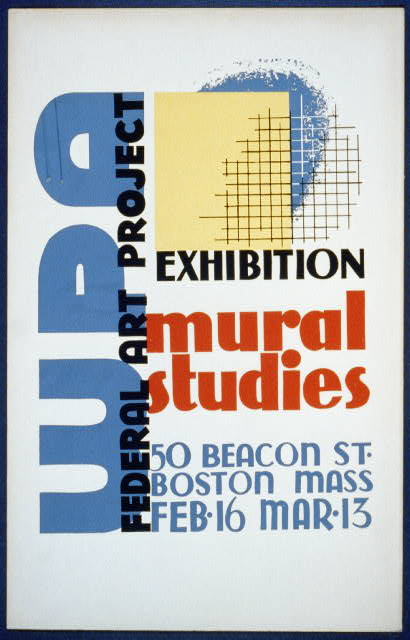
WPA - Mural Studies

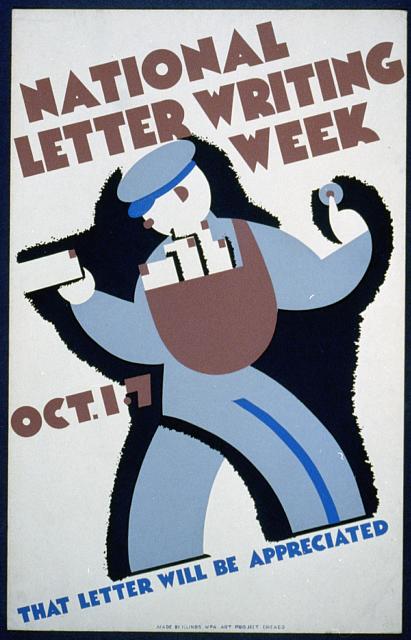
WPA - Letter Writing

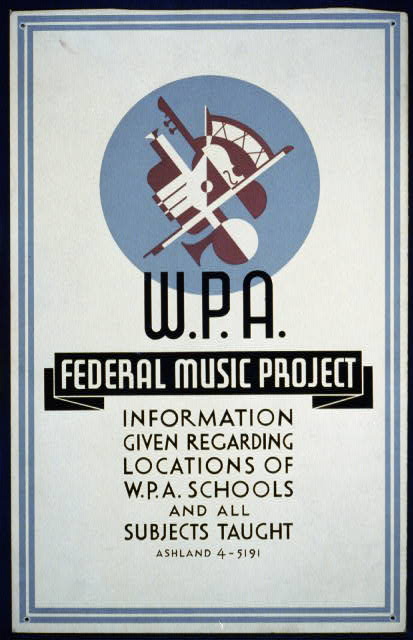
WPA - Music Project

WPA - Lack of Funds

Life Story

Life Story

How many life stories
Count.
Plain and fancy
Good and plenty
One
Million
Billion
Worthy of a biopic
Or a headstone.
Breathless and amazed
At what it has come to
In the pages
Or paragraphs
Or words
That sum it all.

Translators May Be Traitors

If you read important books that are written in a language other than your own, you are at a disadvantage. You are depending on the kindness or brilliance of strangers. On translators.

That is doubly complicated if the original text is ancient, and the original language itself is a mystery, even for those who are expert.

The Bible, both First and Second Testaments, not to mention collatral ancient scriptural books and fragments, are a well-known example. The same problem arises with Asian texts such as the Tao Te Ching, the I Ching, or early Buddhist discourses.

So you see the challenge. Jesus or the Buddha said great things in their native language. Nobody transcribed them when spoken. The thoughts and words were remembered and kept accurately alive, as accurately as possible, in oral transmission and storage. Then they were set down in writing, in a language related to the original speech, maybe, but later in entirely different languages. And as the words migrated, the texts were overlaid and transformed, even as there was a sincere attempt to preserve the original.

Finally, they come to you, in the language you speak, read and understand. Which is far removed from the original.

When the French had the audacity to translate Dante into their own language, the Italians came up with a harsh accusation: Traduttore, traditore. Translator, traitor.

Consider that when you read translations, you are someone who cannot read yourself, or even see. You are in the dark. You depend on those who read to you. And hope that they are good and true readers themselves.

Give to the Emperor

Render Unto Caesar

Resolutions to stay away from politics, when it’s pretty or ugly or pretty ugly, can be hard to keep. But politics, no matter how significant it may seem, can be like psychic, emotional, moral quicksand, which as it reaches your shoulders, leaves you wondering if this trip was really necessary.

So let’s see what Jesus said about all this.

The famous “Question about Paying Taxes” is one of the most discussed and interpreted passages in the Gospels. Here it is, from the Gospel of Luke in the NRSV translation:

So they watched him and sent spies who pretended to be honest, in order to trap him by what he said, so as to hand him over to the jurisdiction and authority of the governor. So they asked him, “Teacher, we know that you are right in what you say and teach, and you show deference to no one, but teach the way of God in accordance with truth. Is it lawful for us to pay taxes to the emperor, or not?” But he perceived their craftiness and said to them, “Show me a denarius. Whose head and whose title does it bear?” They said, “The emperor’s.” He said to them, “Then give to the emperor the things that are the emperor’s, and to God the things that are God’s.” And they were not able in the presence of the people to trap him by what he said; and being amazed by his answer, they became silent. (Luke 20:20-26)

Some view this as a story about the separation of state and church. Some view it as about obedience to civil or religious authority. Some view it very particularly as a directive on withholding tax payment from ungodly government. And so on.

I take this as a spiritual message, grounded in practical experience. Political speech and action can be very important, even essential, to the accomplishment of positive and beneficial goals. And very seductive. But those activities can also set you in the midst of circumstances and environments that can seriously put you at a distance from more enlightening aspirations and possibilities. Sometimes really far from them.

You can’t run away from politics and its consequences. Those coins and emperors are always going to be there. So if you get caught up in it, just remember that there are other higher callings that have nothing to do with policies and positions and politicians.

Vatican Newspaper Essays Say Women Should Preach at Mass

Calvi Alessandro, detto il Sordino, Caterina esorta Gregorio XI a tornare a Roma, sec. XVIII.jpg

When the news seems to suggest we may be moving backwards, the news seems to suggest we may be moving forward.

Vatican newspaper essays say women should preach at Mass
By David Gibson, Religion News Service:

A series of essays in the semiofficial Vatican newspaper is urging the Catholic Church to allow women to preach from the pulpit at Mass, a role that has been reserved almost exclusively to the all-male priesthood for nearly 800 years.

“This topic is a delicate one, but I believe it is urgent that we address it,” Enzo Bianchi, leader of an ecumenical religious community in northern Italy and a popular Catholic commentator, wrote in his article in L’Osservatore Romano.

“Certainly for faithful lay people in general, but above all for women, this would constitute a fundamental change in their participation in church life,” said Bianchi, who called such a move a “decisive path” for responding to widespread calls — including by Pope Francis — to find ways to give women a greater role in the church….

So what will Pope Francis do?

The pontiff has repeatedly called for women to have a greater role in the church, but he has also reiterated the ban against ordaining women as priests and has warned against “clericalizing” women by trying to make them cardinals or to focus on promoting them to higher church offices.

Then again, that the Vatican’s own newspaper would dedicate so much space to the issue of women preachers is intriguing, said Massimo Faggioli, a church historian at the University of St. Thomas in Minnesota.

“I think it is a big signal,” he said.

Impeaching Donald Trump As Nominee

The majority of the Republican Party has finally decided to take on the very loud, engaged and energetic Trump minority. To do it, they’ve devised the strategic approach of all those who are behind the curve and in the hole: they are gambling. Here is the strategy you may not hear about from many of the talking heads.

The Republicans aren’t sure they can stop Trump from getting the numbers he needs to secure the nomination by the time of the convention. They hope so. But whether he does have the numbers or whether it is instead a brokered convention doesn’t matter.

The point of the current movement is only partly to deny Trump the numbers. It is partly—mostly—to build a case to deny him the nomination, whether he has the numbers or not. Just walking into the convention and offering opinions about how bad Trump is and how bad he is for the party and the country won’t do.

Instead, they are going to essentially put him on trial. They are going to impeach him as a nominee. At that point, they will have evidence from Republican leaders of all kinds, from experts of all kinds, from friendly foreign leaders of all kinds, etc. Mostly, they will have Trump’s own words and behaviors. When it is all over, when all the evidence is in, a majority of the party will agree to convict and to disqualify him from any possibility of nomination.

A minority of the party will protest. The result will be that Trump, after threatening to sue (which is what he does), will walk, take his supporters with him, and run as an independent candidate.

This is where the gamble comes in.

The Republicans have to be confident that they have somebody to run who can beat Trump and the Democratic nominee (likely to be Hillary Clinton) in a three-way race. If they lose that gamble, both alternative outcomes are disastrous for them.

If you think things are strange so far, just wait until you see the impeachment trial of Donald Trump at the Republican National Convention.

Daily Mail

Daily Mail

Britain’s Daily Mail newspaper isn’t quite what it appears.

From the outside, it looks like a sensationalist buffet, focusing on things like showbiz and celebrity culture. Which it is. Some of its stories, such as those highlighting controversial medical cures, have been criticized by British scientists and doctors.

But it also contains excellent reporting on a range of stories in the U.S., U.K., and around the world. In a number of cases, you will find better and more insightful reporting of the current campaign than in many of the more respectable American papers.

Plus, if you need a break from the bleakness of the news, a small dose of the more frivolous stories can be welcome relief.

Visit the website or get the app. Enjoy.

Actor’s Nightmare, Actor’s Dream

Actor’s Nightmare, Actor’s Dream

I wake up to find everything
In the place it was left.
Props on the stage
For another performance
Moved an inch or two
Back or forth
But more or less
The same.

Is this the day
I try to speak the first line
But don’t remember
The words and actions
Or even which play?

It’s called
The actor’s nightmare
Entry to an unbidden hell.
But to me it is a dream
A heaven of unscripted silence
Where everything
Including me
Are newly born.
No different
Unpredictable
Ready and
Right where we belong.