Bob Schwartz

Tag: technology

The Goofy Digital Clock

Dali - Persistence of Memory

I have a digital clock that stays in touch with a smart satellite to keep exact time. One way I know this is that last night, when the time switched from Standard Time to Daylight Savings Time, it automatically added an hour.

But here’s the thing. From the beginning, years ago, that digital clock has offered the slightly wrong time. It is slow by seven minutes. Not six or eight. Exactly seven minutes slow. I have pushed every button, slid every switch, plugged and unplugged. It is just plain wrong, in its own idiosyncratic way.

It is an excellent alarm clock otherwise, does a great job at that. Except that all wake up times have to be adjusted by seven minutes.

I could replace it easily and inexpensively. But I’m used to it. And I’ve actually grown fond of the clock’s tiny quirkiness.

There’s a life lesson here. Which you, as I have, can probably figure out.

Save, Don’t Save, Cancel

If you write on a computer, as most of us do, you face a dilemma.

When you wrote hand to paper (and still may)—on legal pads, notebooks, single sheets, scrap paper—you could instantly crumble and toss or eventually discard. As in throw away. Forever. Whether you did or not depended on lots of factors. Not the least of which was storage space. Because those drawers and shelves and manila folders and file cabinets and boxes, they do fill up.

Now your writing rests on a hard drive, flash drive, or in the cloud, just waiting for you to wake it up from a nap or from a long Rip Van Winkle sleep. It takes up virtually no space. So when you jot something down, or create a paragraph or page of text, the answer to this choice question should be easy:

Save
Don’t Save
Cancel

Why not Save?

I look at that Word choice box maybe a dozen times a day. Save would seem automatic. What if those words are the best formed and most important you have ever composed? Why not keep it, just in case?

But sometimes, even if some time and effort has gone into the work, I let it go. Not that I need the storage space available, which is now measured in terabytes (that’s a million million bytes of data). It’s the self-awareness that however good and important I momentarily think those notes/thoughts might be, many are not. And the realization that by letting them go, I am helping myself along the rocky path of humility, which in the end is really much more valuable than whatever would be in that file. No matter how much I might wish otherwise.

Technology Saves Us Again with Infinite Self-Tying Water Balloons

Bunch O Balloons

Just when you think that 21st century technology has served up all it can—for better or worse—along comes Bunch O Balloons .

Let them tell the story:

Bunch O Balloons is the ultimate way to make water balloons! Fill over one hundred water balloons in just seconds with this ready to go bunch of self-tying water balloons and blast the competition out of the water.

One hundred water balloons in just seconds!
Self-tying water balloons!

We barely had the audacity to wish it.
They had the inspiration and creativity to build it.

Other modern marvels will have to step aside. Even the atomic bomb—the fiercest and most significant technology of the 20th century, maybe of any century—can sit in the shadows. We now have a means of mass warfare that it is fun and relatively harmless (except to Wicked Witches and others sensitive to water). It’s true that some spoilsports will think about filling the balloons with liquids other than water. And that those who could only throw one water balloon as a symbol of protest will now have an unlimited arsenal.

But seriously, how can we not be in awe of a development so, well, awesome?

Stay dry, my friend. If you can.

Pope Francis’ Encyclical Laudato Si’

Laudato Si'

The Pope’s new encyclical, Laudato Si’, has been much in the news. Whatever you’ve heard about it, if you haven’t seen it, you really don’t know the whole story.

You’ve heard it is about the environment and climate change, which is in small part true. You’ve heard Catholic presidential hopefuls such as Jeb Bush and Bobby Jindal admonish the Pope, their spiritual father, telling him to stick to religion and stay out of politics.

The encyclical is much bigger than climate change, the environment, and certainly bigger than Bush or Jindal or dozens of politicians. It is a big statement about the moral and religious shortcomings of this modern world and us modern people. You don’t have to be Catholic or Christian or faithful or religious to read and appreciate it. You just have to read it.

It is full of inconvenient and uncomfortable truths. Which is probably why the coverage has focused on the environmental exhortations, rather than on the broader cultural, media, technological and social ones. In essence, it is nothing less than a call for radical evolution, in the spirit of the radical evolutionary upon whom the church is built. There are plenty of established institutions and powerful interests and individuals, including the media, who could be forced to change if such radical evolution came to pass. And many of them don’t want to change, and don’t even want us to listen to the Pope talking about it.

The encyclical is a long and deep but very readable work. Download it, sample it. You don’t have to read it all, or all at once. It is naturally grounded in theology, and in some particular theology, but be assured that the observations and conclusions don’t require you to hold any sectarian beliefs. It only requires that we believe that things are far from perfect, and that after we take a close look at ourselves and others, we believe that we have the power and obligation to make things better.

It is filled with so much quotable inspired thought and inspiration. Here is just one brief excerpt:

114. All of this shows the urgent need for us to move forward in a bold cultural revolution. Science and technology are not neutral; from the beginning to the end of a process, various intentions and possibilities are in play and can take on distinct shapes. Nobody is suggesting a return to the Stone Age, but we do need to slow down and look at reality in a different way, to appropriate the positive and sustainable progress which has been made, but also to recover the values and the great goals swept away by our unrestrained delusions of grandeur.

Laudato Si’ PDF

Laudato Si’ epub and Kindle

Broken Memory Card Books

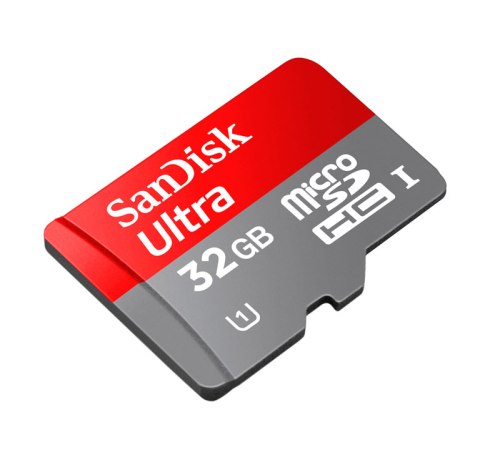
Micro SD Card

The micro SD memory card I inserted into my tablet is now broken. Literally. Bent in two places. All the books, music and movies on it cannot be accessed. (How it got that way is another story. Also, all you cloud storage lovers can please be quiet about “This is why cloud storage is so much better.” I like my local electrons.)

This is not a tragedy in so many ways: compared to the rest of the world, the rest of my life, the rest of my digital life. None of the media was lost; it is simply a matter of loading a new card with any of them.

Micro SD cards are very small and delicate, but powerful. The size of thumbnail, this one had 32 GB (gigabyte) of memory. The average book is less than 1 MB (megabyte), a music track around 5 MB. One GB is about 1,000 MB. Not that I had a thousand books on that broken card (more like a few hundred), but I could have.

This is an opportunity. Rather than ask the memory card to remember all sorts of books that I might have loaded because I liked them a little or liked them once or thought them possibly interesting, but never actually got around to any more if at all, I will load the new card slowly and carefully, one by one, starting with those books that have meaning for me that is essential or nearly so. The moment I realized I was going to be starting over, I knew almost exactly which those were. Rather than desert island books, these are my broken memory card books.

There are metaphors about memory here, some pretty interesting ones, and you might have fun playing around with them. I might have time to do that too. But right now, I have put in a new card, and I’m about to load the first book. It won’t last forever as the only book on my tablet, but for now, it will be the center of my reading universe—a status it deserves.

The Tower of Babel and Technological Humility

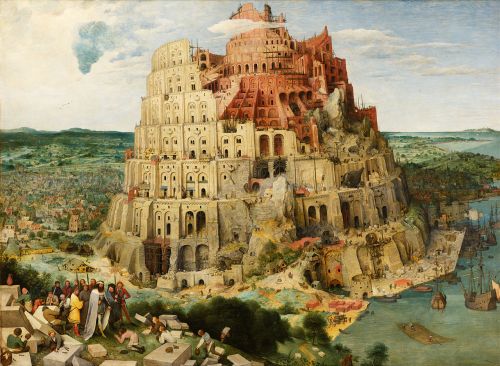
Tower of Babel - Bruegel the Elder

This week’s Torah reading, Genesis 6:9-11:32, includes two very different STEM achievements.

The first is the story of Noah, with a boat big enough to hold representatives of everything that lives (but does not swim). The ark’s purpose is to save all life in the face of an ultimate disaster. It works.

The other story is the Tower of Babel, with an immensely tall structure that has no obvious or express practical purpose. It is an early and elegant literary example of “because we can” philosophy. Think of it as a giant cosmic finger by some very arrogant builders.

Giving the finger is always rude and dangerous. Here, though, there is no violent retribution and no smiting by flood or fire. Instead, the result of that technological arrogance is eternal confusion and failure to communicate.

The Hebrew Bible has lots to say about human behavior, psychology, and spirituality. But no story may have more to tell us about life today than the Tower of Babel, especially when read in conjunction with Noah.

If we think we can build a boat big enough to save us from a particular catastrophe, maybe we can. But even then, as the rest of the post-Noah biblical stories and the rest of world history demonstrate, staying dry in the flood is just the beginning of our problems.

And if we think we can just show how smart we are by concocting a bunch of oversized technological wonders, monuments of pride, we may find ourselves, as the saying goes, too clever by half.

Consequences are inevitable. Purposes are necessary. Really big towers are awesomely cool. Just be sure you know, more or less, what you’re doing and why.


And all the earth was one language, oe set of words. And it happened as they journeyed from the east that they found a valley in the land of Shinar and settled there. And they said to each other, “Come, let us bake bricks and burn them hard.” And the brick served them as stone, and bitumen served them as mortar. And they said, “Come, let us build us a city and a tower with its top in the heavens, that we may make us a name, lest we be scattered over all the earth.” And the LORD came down to see the city and the tower that the human creatures had built. And the LORD said, “As one people with one language for all, if this is what they have begun to do, now nothing they plot to do will elude them. Come, let us go down and baffle their language there so that they will not understand each other’s language.” And the LORD scattered them from there over all the earth and they left off building the city. Therefore it is called Babel, for there the LORD made the language of all the earth babble. And from there the LORD scattered them over all the earth.

Genesis 11:1-9
The Five Books of Moses: A Translation with Commentary
Robert Alter

The Sabbath: To Have and To Do Without

Abraham Joshua Heschel

“To set apart one day a week for freedom, a day on which we would not use the instruments which have been so easily turned into weapons of destruction, a day for being with ourselves, a day of detachment from the vulgar, of independence of external obligations, a day on which we stop worshiping the idols of technical civilization, a day on which we use no money, a day of armistice in the economic struggle with our fellow men and the forces of nature—is there any institution that holds out a greater hope for man’s progress than the Sabbath?

“The solution of mankind’s most vexing problem will not be found in renouncing technical civilization, but in attaining some degree of independence of it.

“In regard to external gifts, to outward possessions, there is only one proper attitude—to have them and to be able to do without them. On the Sabbath we live, as it were, independent of technical civilization: we abstain primarily from any activity that aims at remaking or reshaping the things of space. Man’s royal privilege to conquer nature is suspended on the seventh day.”

The Sabbath
Abraham Joshua Heschel