Bob Schwartz

Tag: President

Building the Perfect 2016 Candidate

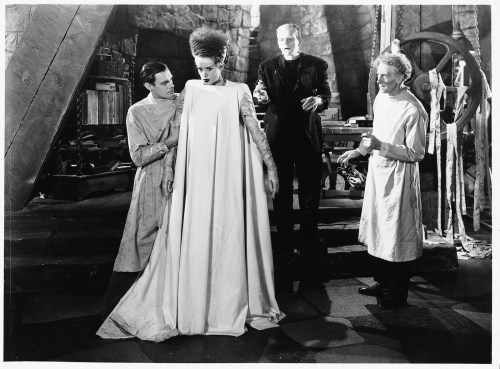
Frankenstein

A new report from the Pew Research Center doesn’t exactly tell us how to choose or build the most successful Presidential candidate for 2016. But the survey asking adults for their views of various Presidential traits offers some guidelines on who might be the best choices.

Views of Presidential Traits

Military service increases the likelihood of support more than any other factor. Being an atheist or never having held office before? Not so good. In between, take your pick. Being in your 70s is viewed as positive by just 6%, as negative by 36%. In fact, aside from atheism or inexperience, age is most likely to lose support. Interestingly, in 2008 when John McCain was running, Democrats overwhelmingly viewed age as a negative trait. They still don’t completely like candidates in their 70s, with 44% less likely to support, but something about the current possibilities seems to have softened that position (a favorite candidate who will be approaching 70, perhaps?).

If you look at the biggest differential between more and less likely to support, it appears that this is what Americans might be looking for:

Military veteran
Governor
Held office, but not Washington experience
Not in their 70s
Not gay or lesbian
No extramarital affair
Believes in God

How does your current favorite, if you’ve got one, fit that profile?

Are Presidential Comparisons Odious?

Lydgate - Horse, Sheep and Goose
Comparisons are odious.

This phrase, roughly meaning that comparing people and situations can be unhelpful and counterproductive, is centuries old. It is variously attributed, but as good a source as any seems to be medieval British writer John Lydgate. It comes from his poem The Debate of the Horse, Goose, and Sheep (1436–37).

(For those concerned that this blog just makes stuff up, be assured that scholarly authorities have been consulted. Maura Nolan’s John Lydgate and the Making of Public Culture (2006) was not read in its 290-page entirety, but it was used. Consider this pertinent passage:

Lydgate’s debt to Gower in this passage is obvious; though he has clearly read both Isidore and Higden’s accounts (and possibly Bromyard’s as well), he takes from the Confessio Amantis the notion that the vagaries of Fortune constitute the lesson of the exemplum, a lesson he later directly applies to present-day rulers, ‘‘wise gouernours of euery londe and region’’ (65, lines 25–26). Note: Lydgate makes a similar point in ‘‘The Debate of the Horse, Goose, and Sheep,’’ dated 1436–37 by Pearsall ( John Lydgate (1371–1449), 51), telling his readers that ‘‘thees emperours . . . with ther victories & triumphes’’ (lines 638–39) are subject to Fortune and fall. The political message is explicit: ‘‘Beth war, ye pryncis, your suggettis to despise’’ (line 643). See MacCracken, ed., Minor Poems of John Lydgate, part 2, 539–66)

(Please feel free to show off to your friends and colleagues who wonder if your liberal arts degree, if you have one, is worth anything. Knowing that “In the fifteenth century Lydgate was the most famous poet in England, filling commissions for the court, the aristocracy, and the guilds. He wrote for an elite London readership that was historically very small, but that saw itself as dominating the cultural life of the nation” should impress them.)

About Presidents and odious comparisons: In the many crises of his presidency, including the most recent, President Obama has endured more comparisons than perhaps any other President. Just in the past few days, we have heard about Woodrow Wilson, George W. Bush, Lyndon B. Johnson, Ronald Reagan, Bill Clinton, Jimmy Carter, John F. Kennedy, and in this very blog, Harry Truman.

Comparisons are natural for a few reasons. It is an office that has been held by a relatively small number of people over more than two centuries, and so how you do the job is defined as much by what others did as some sort of abstract definitions and expectations. There is also the flawed logic: the United States is the greatest country in the world, the President is the leader of the United States, therefore the President is the greatest leader in the world. At moments yes, but please check history, the sometimes impossibility of situations, and the nature of imperfection of all powerful humans. Finally, Obama is so unlikely, if not unlike any of his predecessors, that you almost want to jump to comparisons.

My best attempts to find out what the horse, sheep and goose were debating about six centuries ago, and what it has to do with comparisons, have come up empty. So I do have had to make this part up. If the debate was about which one is superior—whether a horse, sheep or goose is better—the answer is elusive and equivocal. This is in no way to cut the current President the slightest bit of slack, as readers of the blog already know. But the presidency is not a single job, even in more stable and simple times, which these are not. So compare away, but don’t let those comparisons obscure clear thinking and distract us with reveries (or lingering antipathies) about this leader or that. That would be odious, in a country and world with odium enough.

Presidential Debates Without Tears: Politics Isn’t Beanbag


You can’t expect objective evaluations of the first Presidential debate from either campaign. Republicans want to talk hyperbolically about a victory. Democrats may have candid ideas, but few outside the inner circles will hear them.

The significance of any competition, besides the actual win or loss, is lessons learned. After that first debate, four explanations appear:

The President and his campaign were complacent.
They misread the situation.
They could not strategize or execute effectively.
It was just a bad night.

It was probably a little of all of these. Some will think that last one is just an excuse made by losers, but if you’ve watched competitions of all kinds, sports and otherwise, you’ve seen it. It’s circumstances, it’s the moment. It’s a quantum thing.

Nevertheless, that still leaves the other three as explanations and lessons.

The most significant Republican politician of the last days of the 20th century—yes, that would be Newt Gingrich—said straight out during the halcyon days of the primaries that Mitt Romney was a liar. Whether that was said with admiration or dismay is hard to know.

During that same campaign, Romney observed that “Politics isn’t beanbag.” Detractors then and now focused on the absurdity of this reference to an obscure children’s game. It was like his mentions of trees or the Keystone Cops. Who talks like that, they scoffed.

The focus was on the wrong point of the statement. Strange as Romney may appear to many people, one thing that isn’t strange, and shouldn’t be, is his ambition. Few if any politicians have ever played beanbag, or seen a beanbag match, if that’s what it’s called. But every politician knows about fighting hard, with or without rules.

If a banner saying “Politics isn’t beanbag” isn’t hanging from the wall of the Obama debate headquarters, it should be. Everything the campaign needs to know about Mitt Romney is captured in those three words.

The Presidential Campaign: How Do They Get Away With This Stuff?


The refrain of this Presidential campaign, in the face of the breathtakingly nonsensical and mendacious, should be “How do they get away with this stuff?”

Consider these two related items.

1. In the view of most political scientists and pundits, the single most significant impact of being elected President of the United States is the power to appoint Supreme Court justices.

2. A recent FindLaw.com survey found that only 34 percent of Americans can name any member of the Supreme Court. Only 1 percent could name the entire Court. The percentage who can name any particular justice:

John Roberts – 20%
Antonin Scalia – 16%
Clarence Thomas – 16%
Ruth Bader Ginsburg – 13%
Sonia Sotomayor – 13%
Anthony Kennedy – 10%
Samuel Alito – 5%
Elena Kagan – 4%

Presumably, a number of the people paying attention to the campaign and voting for President are the same people who don’t know the name of a single Supreme Court justice.

That’s how.

Is Mitt Romney Being Handled?

It is preposterous to think that a Presidential candidate, let alone a President, is being “handled” by other people or forces, instead of just informed and guided. Politicians at that level are accomplished and have big egos, ranging from large to XXL, that seemingly would not permit it.

But less preposterous is the idea that others believe that they should, can, or will handle the candidate. It is an idea that thrives given Mitt Romney’s uncertainty, reticence and vacillation about his positions. It is an idea that has currency. It is an idea that is bothering people, and in an election year, that means voters.

History teaches that some Presidents and candidates have been more malleable or more stubborn than others. One proposed theme of the George W. Bush Presidency is that Dick Cheney really ran the country, that he was the real President, and that Bush merely carried out his bidding. Cheney undoubtedly had huge influence, but the idea that Bush rolled over at his command is inconsistent with anything we know about the ego that was Bush.

More than a century ago, in the election of 1896, it was suggested that Mark Hanna was not only the mastermind of William McKinley’s campaign, but that Hanna was the master of the McKinley Presidency. This idea has persisted since, though some historians believe it was more of a synergistic partnership, each one playing to his political and strategic strengths.

There are not so veiled intimations from insurgent forces in the Republican Party that Romney is expected to be a “team player” once he is in the White House. We don’t know what is said in private, but in public Romney hasn’t so much failed to toe the Tea Party line as failed to toe any line. This encourages some to think that he will ultimately fall into the right place, but others to worry that he will blithely fall into the wrong place.

In other words, there is thinking—well founded or not— that Mitt Romney can or will allow himself to be handled. For some operatives and for many voters, the only question is by whom and for what.

Bobby Kennedy: To Strive and Not To Yield


June 6th is the anniversary of the assassination of Robert F. Kennedy in 1968. The assassination of his brother John F. Kennedy is a milestone, a marker between eras. The assassination of Bobby Kennedy is a touchstone, a regular reminder that bright possibilities exist for a while, but things get in the way. Life goes on, just not the way you imagined or dreamed.

It seems useless to add to the volume of words about Bobby Kennedy. Not as many words as those devoted to his brother, who was, after all, President. After all, Bobby Kennedy was not President, and maybe would never have been. Maybe destiny planned all along to serve us up Richard Nixon. Maybe that Kennedy presidency could never live up to expectations or aspirations. We have learned that he was not a personal or political saint, but that was not a surprise. Saints belong in churches, not politics. We want and need heroes, which often means tragic ones. Bobby Kennedy was that and more.

For those unfamiliar with his life and career, here is the condensed version, courtesy of Congress:

KENNEDY, Robert Francis,  (brother of John Fitzgerald Kennedy and Edward Moore Kennedy, grandson of John Francis Fitzgerald, uncle of Patrick J. Kennedy, and father of Joseph Patrick Kennedy II), a Senator from New York; born in Boston, Suffolk County, Mass., November 20, 1925; graduated from Milton (Mass.) Academy; served in the United States Navy Reserve 1944-1946; graduated from Harvard University in 1948 and from the University of Virginia Law School in 1951; admitted to the Massachusetts bar in 1951; attorney, Criminal Division, Department of Justice 1951-1952; campaign manager for John F. Kennedy’s election to the United States Senate in 1952; assistant counsel, Senate Permanent Subcommittee on Investigations 1953; assistant counsel, Hoover Commission 1953; chief counsel to the minority, Senate Permanent Subcommittee on Investigations 1954, and chief counsel and staff director 1955; chief counsel of Senate Select Committee on Improper Activities in the Labor or Management Field 1957-1960; campaign manager for John F. Kennedy’s election to the Presidency in 1960; Attorney General of the United States from January 1961, until his resignation September 3, 1964, to be a candidate for the United States Senate; elected as a Democrat from New York to the United States Senate and served from January 3, 1965, until his death; died from the effects of an assassin’s bullet at Los Angeles, Calif., June 6, 1968, while campaigning for the Democratic presidential nomination; interment in Arlington National Cemetery, Arlington, Va.

Bobby Kennedy was a lover of literature and poetry. He frequently quoted the poem Ulysses by Alfred, Lord Tennyson. It is the tale of the old warrior Ulysses, who eschews comfort for mission. He has already sacrificed family life for duty, and he can’t help but set out one more time. It is not about glory, but about the dullness of a life of ease and about fiercely pursuing a dream until the end of days.

The poem closes with one of the great calls to action in the English language, both realistic and idealistic. “That which we are, we are,” Ulysses says. Bobby Kennedy was what he was.

…Come, my friends,
‘T is not too late to seek a newer world.
Push off, and sitting well in order smite
The sounding furrows; for my purpose holds
To sail beyond the sunset, and the baths
Of all the western stars, until I die.
It may be that the gulfs will wash us down:
It may be we shall touch the Happy Isles,
And see the great Achilles, whom we knew.
Tho’ much is taken, much abides; and tho’
We are not now that strength which in old days
Moved earth and heaven, that which we are, we are;
One equal temper of heroic hearts,
Made weak by time and fate, but strong in will
To strive, to seek, to find, and not to yield.

This is how it ends: Bobby Kennedy giving a victory speech after his winning the California Presidential primary. All these years later, the divisions he speaks about seem just as present and pressing as ever. Could he have healed them then? Could he heal them now? Not too late to seek a newer world:

I think we can end the divisions within the United States. What I think is quite clear is that we can work together in the last analysis. And that what has been going on with the United States over the period of that last three years, the divisions, the violence, the disenchantment with our society, the divisions—whether it’s between blacks and whites, between the poor and the more affluent, or between age groups, or in the war in Vietnam—that we can work together. We are a great country, an unselfish country and a compassionate country. And I intend to make that my basis for running.

Update: A check mid-day on June 6 shows that a Google News search for “Bobby Kennedy” results in 7 hits and a search for “Robert F. Kennedy” finds 24, and some of those concern gossip about his son Robert F. Kennedy, Jr. It might be that the 44th anniversary of any event is less important than the rounder numbers like 40 or 50. Besides, we aren’t obliged to pay attention to anything, present or past. There is some tendency, not only today but maybe always, to dismiss looking back at pivotal events as pointless nostalgia. But history is not nostalgia, a confusion related to the very current idea that trivia is news. This endless political season is filled with lots of lesser mortals on all sides, not indictable because they are flawed, but because their flaws so outweigh their nobility. The point of the post is to remind us that this doesn’t have to be true, and there was a time when it wasn’t, and might yet be again.