Bob Schwartz

Tag: Passover

Elijah’s reward (Passover)

Elijah’s reward

Who wants to be a prophet?
Preaching and predicting
Making enemies of friends
Exhausted and enraged
By the constant gloom
Dying alone in the end.
Except Elijah.
Attending dinner parties
Seated in a special chair
As honored guest
Surrounded by admirers
Drunk on wine
Leaving bleak visions behind
Never dying.
Open the door.

© 2024 by Bob Schwartz

Schrödinger’s Jesus

We begin with the physics concept of superposition, which is the ability of a quantum system to be in multiple states at the same time until it is measured.

In 1935 Nobel Prize physicist Erwin Schrödinger devised a thought experiment to illustrate what he believed was a flaw in one interpretation of this concept. Schrödinger’s cat, also known as Schrödinger’s cat paradox, is one of the most referenced, debated and misunderstood thought experiments in modern science.

In simple form:

A cat, a bit of radioactive material, a Geiger counter, a hammer, and a glass flask of poison are in a sealed box. During the next hour, there is an equal chance that the radioactive substance might emit a particle and an equal chance it might not. If it is emitted, the Geiger counter will measure it, cause the connected hammer to shatter the flask, releasing the gas and killing the cat. During that hour, there is equal probability of the cat being alive or dead. Only when an observer opens the box is the cat alive or dead. Until then the cat is simultaneously alive and dead, according to quantum superposition. Schrödinger devised this “ridiculous case” to demonstrate its absurdity.

Easter is a powerful example of an alive or dead paradox, and not the only one in the Bible. Elijah, we are told, did not die, but was taken alive to heaven in a fiery chariot.

Billions of people live in a state of faith. Billions more (I hope) in a state of reason. It is an appropriate time to ask whether we can live in a simultaneous state of reason and a state of faith, or if we must choose between the two.

On Easter some ask whether and how it is possible that there is life after death. On Passover some ask whether the story of an impossible journey actually took place. I am one of those questioners.

Reason is powerful and has its limits. Faith is powerful and has its limits. Schrödinger was, from a certain perspective, wrong in thinking that his cat could not be both dead and alive, that it was a ridiculous absurdity.

“There are more things in heaven and Earth, Horatio, / Than are dreamt of in your philosophy.” (Hamlet). Don’t you think?

© 2023 by Bob Schwartz

Music for Passover: The Ten Commandments Soundtrack and Freedom! ‘90

It’s not easy finding Passover morning music. Once you’ve gotten through Maotzur, Chag Gadya and Dayenu at seder, you’re done. Or are you?

The Ten Commandments Soundtrack (1956) by Elmer Bernstein

As memorable and long (3 hours and 40 minutes) as The Ten Commandments movie is, you don’t want to be dealing with Charlton Heston first thing the morning after seder. Instead, listen to the exceptional musical score by legendary film composer Elmer Bernstein.

Freedom! ’90 by George Michael

Once you get past the obvious connection between the Exodus and freedom, there’s no real reason to listen to this for Passover, except it is a great pop track and one of the best videos of the Golden Age of music videos. Also, the album is called Faith, so there’s that.

© 2023 by Bob Schwartz

“My God, my God, why have you forsaken me?”: The last words of Moses?

Robert Hawke Dowling (1827–1886)

Then Moses went up to Mount Nebo and God showed him the whole land. God said to him, “This is the land of which I swore to Abraham, to Isaac, and to Jacob, saying, ‘I will give it to your descendants’ I have let you see it with your eyes, but you shall not cross over there.”* Moses cried with a loud voice, “אֵלִי, אֵלִי, לָמָה עֲזַבְתָּנִי?” (“Eli, Eli, lema sabachthani?”), that is, “My God, my God, why have you forsaken me?”**

*Deuteronomy 34:1-4
**Matthew 27:46 (with revision)


Passover is mostly about Moses. Easter is all about Jesus.

Passover is about the life of Moses. Easter is about the death of Jesus.

Yet with all the drama of the Exodus story, the moment of greatest pathos in the life of Moses—maybe in the Torah—is his death. All that trouble (the Yiddish word is tzuris), and God denies him entry to the promised land.

Moses had complained to God before, as do others in the Tanakh, but at that moment not a word from him. Jesus had an equally understandable reason to talk back, hanging on the cross. He does, with a question that has sounded down the millennia: “My God, my God, why have you forsaken me?”

The denial of Moses on Mount Nebo is heartbreaking. We are not told whether Moses himself was heartbroken, angry or bitter. Or maybe accepting and understanding. He stays silent. The next thing we are told is that Moses is dead and honored.

Which doesn’t stop us from imagining. In my imagining, the last words Moses speaks are the last words Jesus speaks.

Happy Passover. Happy Easter.

© 2023 by Bob Schwartz

The ultimate Opening Day match up: Moses v Jesus

It happens every spring. The Major League Baseball season begins, then the major holy days of Passover and Easter arrive.

There are some serious explanations of the coincidence between these two holidays. But let’s set those aside.

Instead, let’s talk about the Opening Day pitching match up between Moses and Jesus. Both are known for their seemingly miraculous powers with a baseball (and with all kinds of other things, including big and little bodies of water). They’ve got great stuff. When either is on the mound, it hardly seems fair to batters. But as in religion and life, in baseball some are just more gifted than others.

Who would win? Both have great teams behind them. Moses has his prophets and rabbis. Jesus has his saints. All of them five-tool players: hitting, hitting for power, running, fielding and throwing. But it always comes down to pitching. Moses and Jesus have been described as “magicians on the mound” and they are. (Some batters facing Moses have claimed that sometimes their bats turn into snakes, though it’s never been proven).

Moses v Jesus? Even though it’s baseball, of course it’s a tie. Happy Passover. Happy Easter. Play ball!

© 2023 by Bob Schwartz

Passover Posts Past: The Greatest Hits

Each year this blog includes different Passover posts. Each year at Passover many readers find their way back to these past posts. For those who haven’t been in these parts much, following are a few throwbacks.

Moses on Krypton, Superman in Egypt

In the Siegel and Shuster version, there is no infant floated off in a basket to avoid his death, and no Egyptian princess to find and adopt him. Instead, the Kryptonian infant Kal-el (a version of the Hebrew phrase Kol El, “the voice of God” or “all of God”) is rocketed off in a space capsule to avoid the planet’s destruction. The capsule crashes on Earth, and he is found and adopted by the Midwestern couple, Ma and Pa Kent.

The biblical infant is raised as an Egyptian and given the Egyptian name Moses; Kal-el is raised as an earthling and given the Midwestern name Clark Kent. The time will come for both of them, Moses and Clark Kent, to reclaim their true identities in order to tap into great power, to become super-men….

Matzo: Dealing with Eating the Bread of Affliction

Don’t try to make sandwiches. At the seder, the tradition is to eat a tiny sandwich of horseradish and haroset (a sweet paste representing the mortar of the building the Jews slaved on) between two pieces of matzo. The great sage Hillel supposedly created this sandwich, and his name is attached to it. Even this tiny sandwich throws matzo crumbs all over the place. A full-size matzo sandwich is not a good idea. No matter how wise Hillel was….

American Freedom Seder 2017: Where There’s a Pharaoh There’s a Wilderness

It’s possible you believe there are some special struggles going on right now in America. Which would make it a good time to gather with like-minded friends and family, brothers and sisters, and as a community share a meal and recall that the struggle is never easy or short (and might include some flat, dry bread), but that there is a better nation at the end of the journey. One hopeful, undiscouraged step at a time….

Refugees and the Bread of Affliction

Passover begins this evening. As part of the festival, many Jews will be eating the flat dry bread of matzo at seder tonight; some will eat it for the next eight days. Matzo is known as the bread of affliction, commemorating the hardship of slavery and the hardship of the flight to freedom. As we break bread—flat or otherwise—we might also remember the plight of millions of refugees around the world….

Passover and Freud

What does Freud want? He might not want people attending a Passover seder, offering prayers to a God who isn’t there. But things are not that simple.

Sigmund Freud was a Jew by birth, an atheist by belief. He abstracted and analyzed religion as a powerful manifestation of powerful forces at work. But near the end of his career, he considered whether there was something in God that was more than a mere reflection of psychic need and dynamics.

In his final book, Moses and Monotheism, he suggests that while there is no God, the positing of one had forced the Jews—and all who followed on that spiritual path—to think and act differently. The gift of the idea of God was the imperative to transcend instinct and old ways, to make new and positive sense of the insensible, and to act accordingly….

Passover: Let’s Get Lost

Passover
Americans are lost
Jews are lost
Jews are used to being lost

Wake up wandering in the wilderness
Wanting guidance assurances
That it will be all right
Promises will be kept
A land will be found

No assurances
No promises
No land
No turning back

Tell the story
Then like the afikomen
Broken and lost
Let’s get lost

Passover 2020: With stay-at-home seders, Elijah will be making many more wine stops

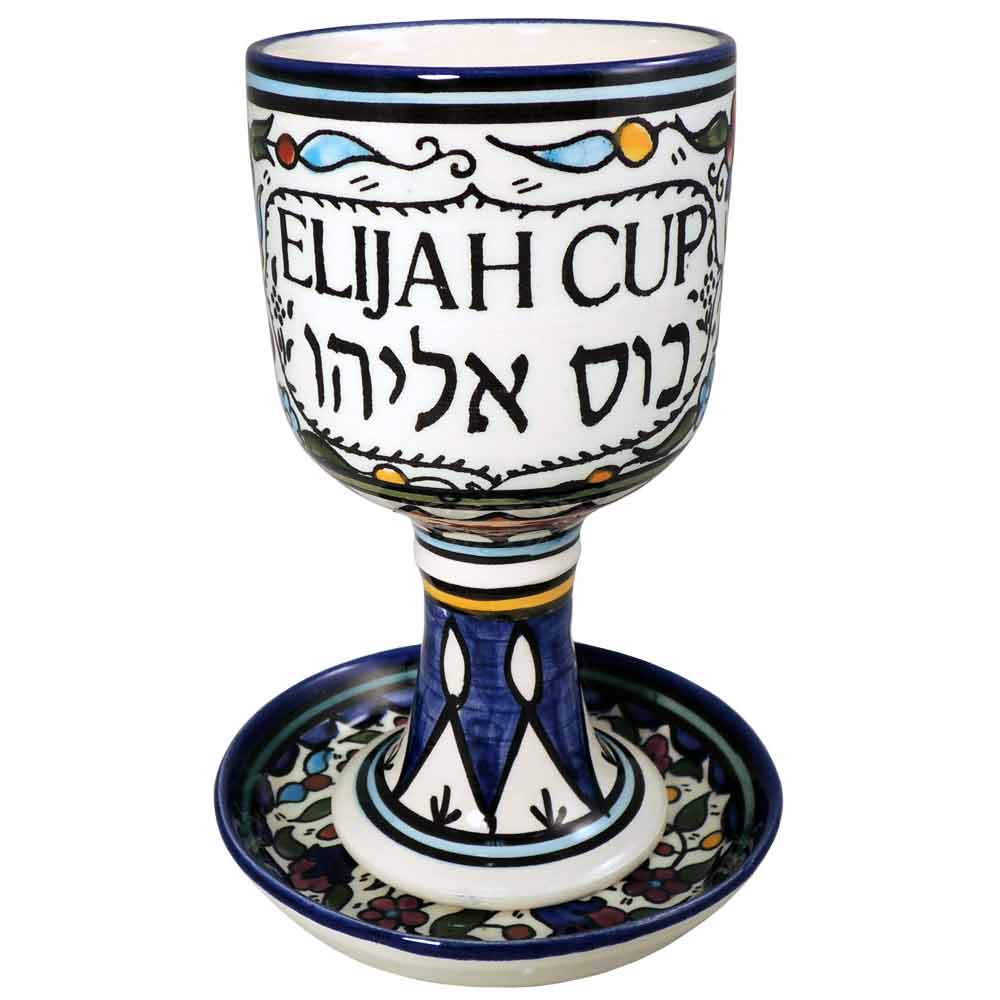
The tradition of Elijah at the seder is common in many Jewish communities. The practice of pouring a fifth cup of wine and opening the door for Elijah has a complex history. The theme is the prophet as a harbinger of redemption. The scholarship on this is voluminous, and it is generally concluded that the practice is not ancient, only coming into use after the Crusades.

Setting aside the fascinating history of the cup of Elijah, this much is clear: at Passover 2020, Elijah will be visiting a lot more seders. Instead of big groups, single family seders—many of them virtually connected—will be pouring that extra cup for Elijah to drink. Not to mention all the other extra cups that will be poured and drunk on this Passover, different than all other Passovers.

According to the Bible story, Elijah, like Moses before him, fled to the wilderness. Pursued by Ahab and Jezebel, Elijah wanted to give up. Instead, he found water and food to sustain him, ending up at the very same mountain where Moses stood:

And He said, “Go and stand on the mountain before the LORD, and, look, the LORD is about to pass over, with a great and strong wind tearing apart mountains and smashing rocks before the LORD. Not in the wind is the LORD. And after the wind an earthquake. Not in the earthquake is the LORD. And after the earthquake—fire. Not in the fire is the LORD. And after the fire, a sound of minute stillness.” (1 Kings 19:10-12, Robert Alter translation)

Wilderness, food, wine, a sound of minute stillness. Happy Passover.

Pandemic Passover and Easter: Faith without form

Our religious traditions, from their beginnings, have been about form. Practices, beliefs, texts, communities. These are all forms that are required, recommended, unifying.

It is unavoidable to see an identity between the traditions and forms. That is, the point of the traditions seems to be the forms themselves.

There is a Zen thought that the finger pointing at the moon is not the moon itself. We point because the finger shows us which way to go and where something may be found. But the finger is not the way or the thing. The form is not the way or the thing.

There is unique value in gathering around the Passover table, following the order (seder) of together retelling a central story. There is unique value in gathering in church on Easter Sunday and retelling another central story.

The Passover seder is important but not essential. The Easter service is important but not essential. These are forms, the finger pointing at the moon.

What exactly is the moon of Passover and the moon of Easter? To be transformed and to transform the world and all the people in it. If you need examples of that, just look at the central stories of the two holidays and the teachings that surround them. You and the world start off one way and, by the time you are done wandering, you and the world are better. The dark places are a little bit lighter.

How do you get there? You take part in a seder, in person or virtually, or maybe you don’t. You attend a church service, in person or virtually, or maybe you don’t. You wander in a wilderness and find yourself and something new. You die and are reborn spiritually. The seder and the service are forms, valuable but not necessary. You can wander and arrive without them.

Apart but not alone, happy Passover and happy Easter.

Passover: Let’s Get Lost

Well we know where we’re going
But we don’t know where we’ve been
And we know what we’re knowing
But we can’t say what we’ve seen
And we’re not little children
And we know what we want
And the future is certain
Give us time to work it out
We’re on a road to nowhere
Come on inside
Taking that ride to nowhere
We’ll take that ride
Talking Heads, Road to Nowhere


Let’s Get Lost

Passover
Americans are lost
Jews are lost
Jews are used to being lost

Wake up wandering in the wilderness
Wanting guidance assurances
That it will be all right
Promises will be kept
A land will be found

No assurances
No promises
No land
No turning back

Tell the story
Then like the afikomen
Broken and lost
Let’s get lost

©


Living under an American Pharaoh: What’s a Jew to do?

It’s almost Passover, so Pharaoh is our minds. Also on our minds because we are living under an American Pharaoh—or at least a wannabe Pharaoh.

Don’t let him fool you. Just because his chief henchman is Jewish, or his son-in-law is Jewish, or some of his rich donors are Jewish, or because he says and does things that make it seem that he understands and cares about Jews and Israel (he doesn’t), he is nothing less than a Pharaoh.

So where does that leave American Jews, particularly at Passover?

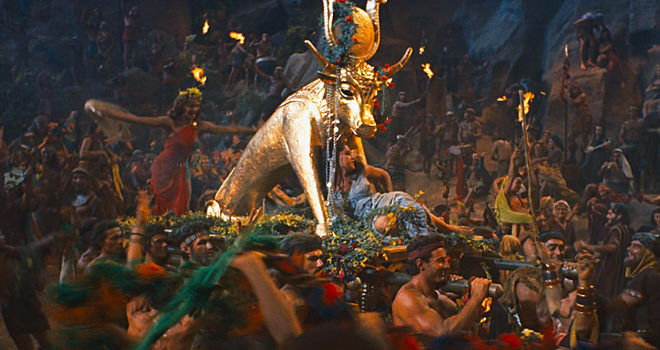
It is actually not that surprising that some Jews have joined the Pharaoh’s cause. There are dramatic moments in the exodus story where Jews are willing to throw away freedom and principle for a golden calf and the comfort of the Pharaoh’s harsh protection.

And Aaron said to them, “Take off the golden rings that are on the ears of your wives, your sons, and your daughters, and bring them to me.” And all the people took off the golden rings that were on their ears and brought them to Aaron. And he took them from their hand and he fashioned it in a mold and made it into a molten calf. And they said, “These are your gods, O Israel, who brought you up from the land of Egypt.” And Aaron saw, and he built an altar before it, and Aaron called out and said, “Tomorrow is a festival to the LORD.” And they rose early on the next day, and they offered up burnt offerings and brought forward communion sacrifices, and the people came back from eating and drinking and they rose up to play.
Exodus 32:2-6

So where does that leave the Jews who do not believe in Pharaoh? We can stay and argue with those who support Pharaoh, though that has so far proven pointless. We can escape to the wilderness in search of a Promised Land of freedom and light, although by many conventions America is already the Promised Land of freedom and light.

Or we can all be tiny Moses, telling fellow Jews at Passover that worshiping Pharaoh and a golden calf and unprincipled conduct is ungodly and unholy. We cannot wait for God to intervene because God leaves it up to us. Let us not disappoint.