Bob Schwartz

Tag: Hillary Clinton

Hillary Campaign Aims Preemptive Threats at Joe: We Will Allow You To Go Out With Respect and Esteem

From the New York Times:

This week, David Brock, who created the pro-Clinton group Correct the Record, which is coordinating with Mrs. Clinton’s campaign, told Chicago Magazine his “gut” told him Mr. Biden would not run because “he’ll realize that at this point in his career, he can go out with everyone’s respect and esteem.”

Only the most naïve would not recognize this as a threat. Choose not to run and you “can go out with everyone’s respect and esteem.” Choose to run and…well, we can’t be responsible for what might happen in the heat of an aggressive campaign.

This shouldn’t be surprising to anyone who has paid attention to politics. Politics is hardball, and the Clintons play major league hardball. Just because Joe is one of the most beloved and sympathetic figures in current politics doesn’t give him immunity. From any attacks, including from a candidate who was bitterly denied her first shot at superstardom.

Ultimately this is what Joe’s still-pending decision is all about. Beau’s death is only one part of a bigger life picture. As for Hillary, the only thing more dangerous than a healthy behemoth is a wounded one. The circumstances of the Democratic nomination are far from as clear as they were just months ago. What is clear is the Clinton vow, this time, to win. High-minded, low-minded, pretty or ugly. If, as promised, it is going to get ugly, Joe must be asking himself whether he wants to be in the middle of it all. Or whether he’d rather enjoy his retirement, untouched by relentless and vicious attacks. Who can blame him, whatever he decides.

Still, as Americans, we don’t appreciate threats, political or otherwise. My guess is that Joe and his millions of supporters and admirers don’t appreciate it either.

August 17, 1998: Clinton Admits to Misleading People

Bill Clinton

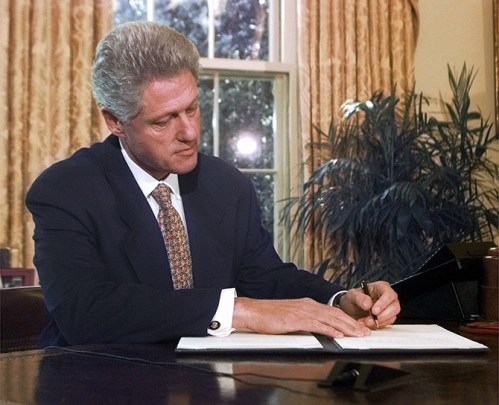
Exactly seventeen years ago, on August 17, 1998, Bill Clinton admitted that, under oath, he had not told the truth about his relationship with Monica Lewinsky.

Why mention this now, other than the anniversary? To understand that, you might check out the most famous quote from American philosopher George Santayana—one of the most often repeated quotes in modern times.

On that day in August, President Clinton gave a brief television address to admit: “While my answers were legally accurate, I did not volunteer information….I know that my public comments and my silence about this matter gave a false impression. I misled people.”

Clinton was subsequently impeached by the House of Representatives on charges including perjury and obstruction of justice, but retained his office when the Senate failed to convict by a two-thirds majority.

Note in passing that his lead counsel in the impeachment trial was Cheryl Mills, who went on to become Hillary Clinton’s Chief of Staff at the Department of State. And that another Bill Clinton lawyer in the proceedings was David Kendall, who is currently one of Hillary Clinton’s lead attorneys in the matter of her e-mail server. For what it’s worth.

Here is an excerpt from Bill Clinton’s address to the nation:

This afternoon in this room, from this chair, I testified before the Office of Independent Counsel and the grand jury.

I answered their questions truthfully, including questions about my private life, questions no American citizen would ever want to answer.

Still, I must take complete responsibility for all my actions, both public and private. And that is why I am speaking to you tonight.

As you know, in a deposition in January, I was asked questions about my relationship with Monica Lewinsky. While my answers were legally accurate, I did not volunteer information.

Indeed, I did have a relationship with Miss Lewinsky that was not appropriate. In fact, it was wrong. It constituted a critical lapse in judgment and a personal failure on my part for which I am solely and completely responsible.

But I told the grand jury today and I say to you now that at no time did I ask anyone to lie, to hide or destroy evidence or to take any other unlawful action.

I know that my public comments and my silence about this matter gave a false impression. I misled people, including even my wife. I deeply regret that.

Joementum

Joe Biden

Let’s say you lined up all the presidential prospects from both parties. And just for the heck of it, let’s put Joe Biden in the lineup.

Now let’s rank them according to experience and knowledge in public service. Separate that from any partisan or ideological views—that is the wrong kind of experience and knowledge—Joe is going to stack up pretty well.

And now, let’s add the comments of Lindsey Graham a few days ago about Biden:

He’s the nicest person I’ve ever met in politics. He’s as good a man as God has ever created.

That’s Lindsey Graham, a seriously conservative Republican Senator and presidential candidate. And a longtime friend and Senate colleague of Biden’s.

Okay. So we now have an undeniably experienced person who one political opponent says is the nicest person in politics and the best man on earth.

And the problem with his being the Democratic candidate is exactly what?

The only thing that will stop the momentum for Joe running is his taking himself out of consideration. Which would be understandable in many ways. But which has not yet happened.

It would be clichéd to say that this is Hillary Clinton’s worst nightmare, but it is. Last time she was ambushed by a young pipsqueak upstart who just happened to be everything she was not, including black. So her major trump cards were neutralized. Now she has much more leadership experience under her belt, thanks to that upstart, and the field has mostly cleared itself away for her.

But along comes the exact opposite obstacle. A man even older than she is. A face even more familiar in American politics than hers, by decades. A man who has twice failed to win the Democratic nomination.

And yet, his experience and acumen in government and retail politics can’t be denied. Neither can his progressive views and his forthright uncalculated candor, giving rise to some unscripted moments, but also bolstering his authenticity and the affectionate concept of “Joe being Joe.”

Above all, there are no Republican politicos, and maybe not that many Democrats either, who, with all due respect, might be heard to describe Hillary Clinton thus:

She’s the nicest person I’ve ever met in politics. She’s as good a woman as God has ever created.

So if Joe wants to run, then he should run. Because the presidential race, not to mention the country, might need him more than we know.

Hillary Says She Was Inartful

Hillary Clinton

Asked about her comments on the Clinton family wealth, Hillary Clinton now says, “Well, I shouldn’t have said the five or so words that I said, but my inartful use of those few words doesn’t change who I am, what I’ve stood for my entire life, what I stand for today.”

There were actually more than five words, on two recent occasions. First she said that she and Bill Clinton were not only dead broke when they left the White House, they were in debt. Then she said that they paid their taxes like regular people, not like others who were “truly well off.”

Aside from whether these words reflect their financial affairs, or whether they reflect her being out of touch or just a bit rusty as a candidate, this is the thing: regular people don’t use the word “inartful,” at least or especially not if they are running for President and trying to look like regular people.

Publicly, Bill Clinton would not say “inartful.” George W. Bush wouldn’t say it. Barack Obama wouldn’t say it. And besides those last three Presidents, John McCain wouldn’t say it. And neither would Mitt Romney, who when he faced having made a similar and very damaging comment about income, simply said that he “misspoke.”

There’s nothing wrong with being wealthy, smart, well-spoken, or intellectual. Plenty of Presidents and successful leaders have been some or all of these. But the challenging key is to be both comfortable with who you are and yet able to be appropriately yourself in whatever context you are in.

Lots of us may use “inartful” as part of our writing or conversation; it’s actually a very useful word. But lots of us—almost all of us—are not running for President, or considering it.

Finally, for those who are into word things, there is another point. “Artful” sounds pretty good, particularly if you mean getting your language just right to express your thoughts. But it is a close cousin of the word “artifice,” which has a very different meaning and feel. So if what Hillary was trying to say was that her previous comments were imperfect artifice—that she didn’t get the story about the Clinton wealth quite right—then maybe she is on to something. And maybe “inartful” was le mot juste.

The Gates Book and the Gates Speeches

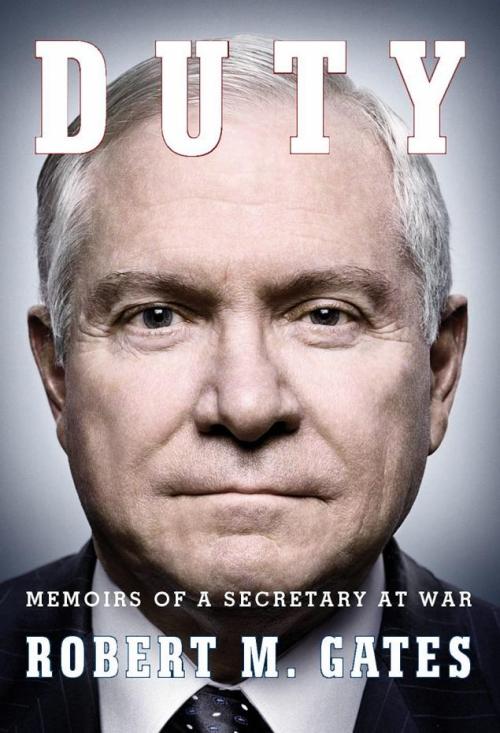
Duty
Former Secretary of Defense Robert M. Gates is about to release a memoir of his tenure under Presidents Bush and Obama. Provocative advance excerpts from Duty are now being released, and these explosive devices are anything but improvised.

Every news outlet, pundit and politician is already busy making points about President Obama, Vice President Biden, former Secretary of State Hillary Clinton and others, based on comments clipped from these excerpts, rather than having read the whole book. Even out of context, it is clear that Gates has formed some definite opinions based on working for and with these American leaders. That is anyone’s privilege, but particularly that of a man who spent forty-five years in laudable public service, much of it at the highest levels of government.

As always, though, opinion and criticism is a matter of perspective, that is, where the critic stands underlies what a critic sees and says.

You can read all the speeches that Gates delivered as Secretary of Defense. This is guaranteed not to be as titillating as reading or hearing about the “best parts” of Duty, but it might give you additional insight that will make the context of the book clearer.

Here, for example, are excerpts from remarks he made to the Heritage Foundation on May 13, 2008, when he was serving under President George W. Bush. (You can read the entire speech here) At that point, the Iraq war was five years old, only halfway to its conclusion. At that point, he had been Secretary of Defense for two years, and from that point, he would remain in that position under President Obama until July 2011.

But there is a more fundamental point that I will close with – and again, historical perspective is important. It is impossible to separate discussions of the “broken” Army following Vietnam – a conscription army – from the ultimate result of that conflict. At a congressional hearing last year, General Jack Keane, former Vice Chief of Staff of the Army, recounted the profound damage done to the Service’s “fiber and soul” by the reality of defeat in that war.

The risk of overextending the Army is real. But I believe the risk is far greater – to that institution, as well as to our country – if we were to fail in Iraq. That is the war we are in. That is the war we must win.

There it is, the context: Iraq was “the war we must win.” Gates’ insights into military matters is often brilliant and sensible, informed by his intelligence, experience and education. But on this point he candidly reveals a premise that for some colors everything else he offers. We must win Iraq because the failure to win would “break” the military the way that Vietnam did.

We did not win in Iraq, but technically, we did not lose. That current events in Iraq point to some devolution doesn’t really settle the question. That some U.S. Senators are calling for us to return to Iraq to avoid that loss or at least to avoid the appearance of futility is a partial reflection of exactly what Gates said.

We know that Gates’ personal critiques are based on close working relationships and observations. We also know, or should recognize, that those critiques are grounded in a worldview that others may not, very legitimately, share. If for Gates one of the measuring sticks is whether someone believes that Iraq had to be won, that measure may be skewed by genuine differences in informed opinion. One opinion is that as valorous as the service and sacrifice was, Iraq was a mistake, to be abandoned as prudently as possible; others might now say the same about Afghanistan. What Gates has to say about our leaders is certainly worth listening to, provided we pay equal attention to the mindset of the speaker.

Another Fleetwood Mac Presidency?

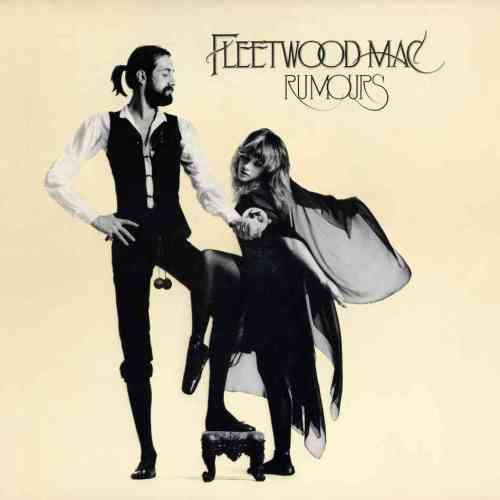
Fleetwood Mac - Rumours
That’s not Bill and Hillary Clinton on the cover of the Rumours album.

Pandora popped this album up and three things came to mind. The music is still pretty good, as well-crafted as any pop of its day, but it does sound  a bit dated. The second thought is about this now-iconic photo of Mick Fleetwood and Stevie Nicks. What in the name of artsy pretentiousness is going on, and why does Mick have two balls hanging near his crotch?

The final thought was of the Clintons. If you were there, you will never, ever get the identity between Bill and the campaign theme song Don’t Stop out of your head, hard as you try.

Hillary’s presidential candidacy is a big topic that has to be dealt with in bite-size chunks. Among the sub-topics is whether she will run, whether she will win the nomination, whether she will win the presidency, and whether any of it is a good idea for the party or the country. All that is stuff for another day.

The subject here is what it means in terms of Fleetwood Mac. Does Hillary still like and listen to them, or did she never, instead just giving in to another of Bill’s peccadilloes? Did she think of herself more as a Stevie Nicks or as a Christine McVie? Did she think more of Stevie or Christine? Did Bill think more about Stevie or Christine?

(As a bonus, consider that the songs on Rumours are famously confessional about broken relationships and secret infidelities among band members. That’s why it’s called Rumours. Ironic, yes?)

The big question is whether a Hillary candidacy is a hark back to Mac, essentially a call for the better days of the mid-1970s or early-1990s, the decades that frame the Clinton Years. If it is, the question then is what kind of place, if any, there is for Fleetwood Mac in 2016. It’ll soon be here.

The Republican Health Care Plan Is Obamacare

National Health System for America - Heritage Foundation (1989)

Say something once, why say it again?
Talking Heads, Psycho Killer

Sometimes making a point means repeating yourself and not saying you’re sorry.

The current situation is that Newt Gingrich yesterday criticized attempts by some Republicans to repeal the Affordable Care Act, saying that the party had to offer alternative plans and unfortunately had not one idea.

He is of course wrong. As pointed out in an earlier post Heritagecare, the Republicans at one time did have a big idea about health care reform. It was developed at the conservative Heritage Foundation in 1989, as a market-based alternative to any sort of single-payer national health plan. The centerpiece of this reform was a national mandate requiring everybody to have insurance. With some refinement, this Heritage plan is at the heart of the Affordable Care Act. Obamacare is a version of Heritagecare.

Following the development of the Heritage plan, this is what happened.

Bill Clinton was elected President. First Lady Hillary Clinton promoted the adoption of national single-payer universal health care. This proved to be a political disaster and embarrassment. Health care was taken off the table for years.

Mitt Romney was elected Governor of Massachusetts. He used the Heritage plan—a Republican idea— as the basis for a state health care program. By all accounts, it was a success.

Barack Obama was elected President. He made health care reform a priority, but with single-payer dead in the water—maybe forever—he promoted a program based on the Heritage plan. As proof of concept for the Affordable Care Act, he could point to Massachusetts, where such an idea had worked.

Republicans intent on eviscerating Obama and his presidency used what they called “Obamacare” as a prime example of totalitarian socialism in action. They ignored the conservative origins of the plan. These Republicans were aghast when the Supreme Court narrowly allowed the plan to proceed as constitutional, but continue to do whatever they can to thwart it, including the dozens of attempts to repeal it—the same useless attempts that Gingrich criticized.

Mitt Romney ran for President. He could no longer embrace Heritagecare/Romneycare/Obamacare. He explained that while the plan might be good for Massachusetts, it is no good for America. He was never directly confronted with a version of the question: Are you serious?

Newt Gingrich is a very complicated man and politician, but he should be given his due. He is joining a chorus of mostly old-school Republicans trying to tell the Young Turks to get real. In this case, getting real could actually work to the Republican advantage, though they seem to be too ideology-blinded (and Obama-hate blinded) to see it.

People really do have some serious and legitimate qualms about the Affordable Care Act, and its implementation is bound to be a rocky road. If the Republicans looked back to their own Heritage plan, and if they took seriously the lip service of “compassionate conservatism”, they might actually be able to offer some constructive, earnest and enlightened adjustments—all for the sake of the general welfare of the country. As it is, that won’t be happening now or anytime soon.

Clinton, DOMA and GLAAD

Bill Clinton
People—including some politicians—hate politics, for a thousand reasons. Every one of those reasons is valid.

The answer to these reasons is the often cited quote from Otto von Bismarck: “Politics is the art of the possible, the attainable – the art of the next best.”

Oh principles, oh pragmatism. We honor and admire the idealists, but in the end we support those who get things done—especially the things that we want done.

This is a timeline. The common thread is one of America’s current political dynasties.

  • 1996 – President Bill Clinton signs the Defense of Marriage Act.
  • 2003 – Hillary Clinton votes for the Iraq War Resolution.
  • 2008 – Hillary Clinton runs for President.
  • 2011 – Bill Clinton comes out in favor of marriage equality.
  • 2013 – The Iraq War ends.
  • 2013 – Bill Clinton calls DOMA unconstitutional.
  • 2013 – DOMA is argued before the United States Supreme Court.
  • 2013 – Hillary Clinton comes out in favor of marriage equality.
  • 2013 – Bill Clinton to receive the Advocate for Change Award from the Gay & Lesbian Alliance Against Defamation (GLAAD)
  • 2016 – Hillary Clinton runs for President?

People who do things for political reasons, or support those who do, should never be ashamed of that. Otto von Bismarck, unifier of the German Empire in the nineteenth century, certainly wasn’t.

But the “art of the possible” does create some tight and twisted places that Houdini might have trouble escaping from. Unless, of course, he had help.

Bill Clinton’s statement before signing DOMA includes this: “I also want to make clear to all that the enactment of this legislation should not, despite the fierce and at times divisive rhetoric surrounding it, be understood to provide an excuse for discrimination.”

Here is DOMA, which has been the law of the United States for the last seventeen years, and may or may not still be the law after the Supreme Court decision.

The statute reads:

No State, territory, or possession of the United States, or Indian tribe, shall be required to give effect to any public act, record, or judicial proceeding of any other State, territory, possession, or tribe respecting a relationship between persons of the same sex that is treated as a marriage under the laws of such other State, territory, possession, or tribe, or a right or claim arising from such relationship.

It also changed the definition of marriage in U.S. law:

In determining the meaning of any Act of Congress, or of any ruling, regulation, or interpretation of the various administrative bureaus and agencies of the United States, the word `marriage’ means only a legal union between one man and one woman as husband and wife, and the word `spouse’ refers only to a person of the opposite sex who is a husband or a wife.

Evolution—political, philosophical, or most other kinds—can be a wonderful thing, particularly if it leads to freedom and fairness. But evolution presupposes a prior state, which might be called “less evolved” or “unevolved.”

Some people approach this by pretending that the pre-evolutionary state didn’t exist. They may also be unwilling to acknowledge that the pre-evolutionary state was politically motivated, or that the evolution itself may be. Remember, the art of the possible is only possible by paying no attention to the man, or woman, behind the curtain. Once in a while, they even apologize for it, or contort themselves as John Kerry did, well-meaningly, about his prior support for the Iraq War: “I was for it before I was against it.”

Still, this is America. We love second chances and second acts. Consider the late Senator Robert Byrd, who emerged from the depths of racism to become a champion of Constitutional rights. But while it may not be fitting to punish people for having once upon a time acted in a powerfully less enlightened way, this doesn’t always mean they have to be rewarded. Or awarded.

What Must Todd Akin Think of Sarah Palin?


What must Todd Akin think of Sarah Palin?

Todd Akin has lots of opinions about the ladies, inside and out. As for the inside, he has apparently been graced with some sort of revelation—dare we call him a prophet?—about a previously undiscovered physiological process whereby a woman’s body “knows” whether a rape is the kind that should or should not allow a resulting pregnancy. He has been asked to write a monograph about this process, profusely illustrated, but he has been otherwise occupied with his race against Senator Claire McCaskill in Missouri. It is a loss for medical science, but maybe he will have lots more time after the election. Citizens and gynecologists can only hope.

His views about the outside of women came clear after his debate with Sen. McCaskill, when he said:

“I think we have a very clear path to victory, and apparently Claire McCaskill thinks we do, too, because she was very aggressive at the debate, which was quite different than it was when she ran against Jim Talent,” Akin said. “She had a confidence and was much more ladylike, but in the debate on Friday she came out swinging, and I think that’s because she feels threatened.”

A review of Sen. McCaskill’s debate performance shows that she was thoughtful, firm, politely aggressive, and unrelenting—which is exactly what you would expect and hope for from a former prosecutor and current United States Senator.

When it comes to men dealing with women in politics—as candidates and voters—there are two ways of looking at it. One is external and pragmatic. Whether those men are saintly idealists or craven devils, women can play a role in their obtaining and maintaining power—given that women have had the vote for almost a century, and have held public office even longer.

The second and more fascinating view involves what’s going on inside—inside the heads of those men. This political season, something that got touched on in the 2008 campaign is now even clearer. It’s something that can be said about some small number of men who have been complicit, as actors or fellow travelers, in what for a while this cycle was called the “war on women”:

They don’t understand women.
They can’t control women, at least not easily.
They fear women, because they don’t understand them and can’t control them.

Keep these in mind and much will make sense.

What doesn’t make sense is what Todd Akin must think of Sarah Palin.

There are a thousand things to say about Sarah Palin, and particularly about her controversial role in the 2008 election. One thing is certain: she does not fit Todd Akin’s idea of “ladylike.” She is happy to be the pitbull with lipstick. Think of a political woman who is ambitious, confident, outspoken, and likely to dismember the man or moose who crosses her. Quick: Is that Sarah Palin or Hillary Clinton? Exactly.

In America, women have failed to reach their deserved heights and presence in many fields. Elective politics, particularly at the national level, is one of them. By definition, the U.S. Senate can’t be the world’s greatest deliberative body, overstuffed as it is with men. And it certainly won’t be enhanced by Todd Akin’s membership; just ask most Republicans who nearly killed him over his “legitimate rape” remarks.

Conservatives worship Margaret Thatcher. Some of them no doubt hold out hope for the love that dared not speak its name, the hope that the obvious affection between Thatcher and Ronald Reagan went all the way, and that one day, not long from now, the offspring of that union will arrive in our political life as a savior.

If it’s a son, that is. If it’s a daughter, we might still have a problem.

While we are playing with ridiculous fantasies, here’s another one. Suppose that instead of Claire McCaskill on an open stage, Todd Akin had to face Maggie Thatcher, Hillary Clinton and Sarah Palin behind closed doors to explain his visionary, man-centric thinking.

It wouldn’t be ladylike, and it would be worth paying to see.