Bob Schwartz

Tag: Bible

Ani Shalom – I am peace – אֲֽנִי־שָׁ֭לוֹם

Too long have I dwelt with those who hate peace.
I am all peace;
but when I speak,
they are for war.

Psalm 120:6-7

I am not a pacifist.

There are many definitions of pacifist, including:

A person who opposes war or violence as a means of settling disputes.
A person who believes that war and violence are unjustifiable.

Up until now, I hadn’t thought about whether I would classify myself as or be considered a pacifist. The short answer is ‘no”. During the wars I’ve lived through or for those I know from recent or ancient history, I can say that some of the wars and violence pursued were justified. Others were not, or were pursued in ways that were not justified, or for objectives that were not justified, or were pursued without trying other means, or were just stupid or evil.

But I am for peace. Peace should never be a secondary or tertiary objective once the other objectives have been achieved or not, once all the destructive and deadly means have been tried. Peace should have co-equal status at the top of the list.

During the ongoing war in Gaza, I’ve discovered that all the divergent thinking and rhetoric, from me and so many others, from just plain folks up to world leaders, is having little effect on the course of hostilities. Wars are about action, well-chosen or ill-chosen, and stubborn actors convinced of their rightness can be deaf.

Then I realized that if I am going to be using my words to little practical effect, I might as well use them to promote the possibility of peace.

Which is how I came to find a verse in Psalm 120. The standout Hebrew phrase is “Ani shalom”, literally the words are “I” and “peace”. Lacking a verb, it is variously translated as “I am peace”, “I am all peace”, “I am for peace”.

I am peace and I hope you are too.


רַ֭בַּת שָֽׁכְנָה־לָּ֣הּ נַפְשִׁ֑י עִ֝֗ם שׂוֹנֵ֥א שָׁלֽוֹם׃
אֲֽנִי־שָׁ֭לוֹם וְכִ֣י אֲדַבֵּ֑ר הֵ֝֗מָּה לַמִּלְחָמָֽה׃

Rabat shachna la nafshi
Ani shalom v’chi adaber hama lamilchama

Too long have I dwelt with those who hate peace.
I am all peace;
but when I speak,
they are for war.

Psalm 120:6-7

Mad Gods by the sea

Palestine Sunbird in Gaza

Mad Gods by the sea

God of Moses
God of Jesus
God of Mohammed
God of infinite names
Sitting by the desert sea
Pained and grieved.
This is madness.
These people
Every inclination
Is only evil
All the time.*
They take our names
In vile vain.**
There is the water
Let us drive them in
And start again
Just like days of old
Do better next time.
But how would they learn?
Hard hearts may soften
Dissolved in blood and tears.
We won’t abandon
We don’t approve.

*Genesis 6.5-7
**Exodus 20.6

© 2023 by Bob Schwartz

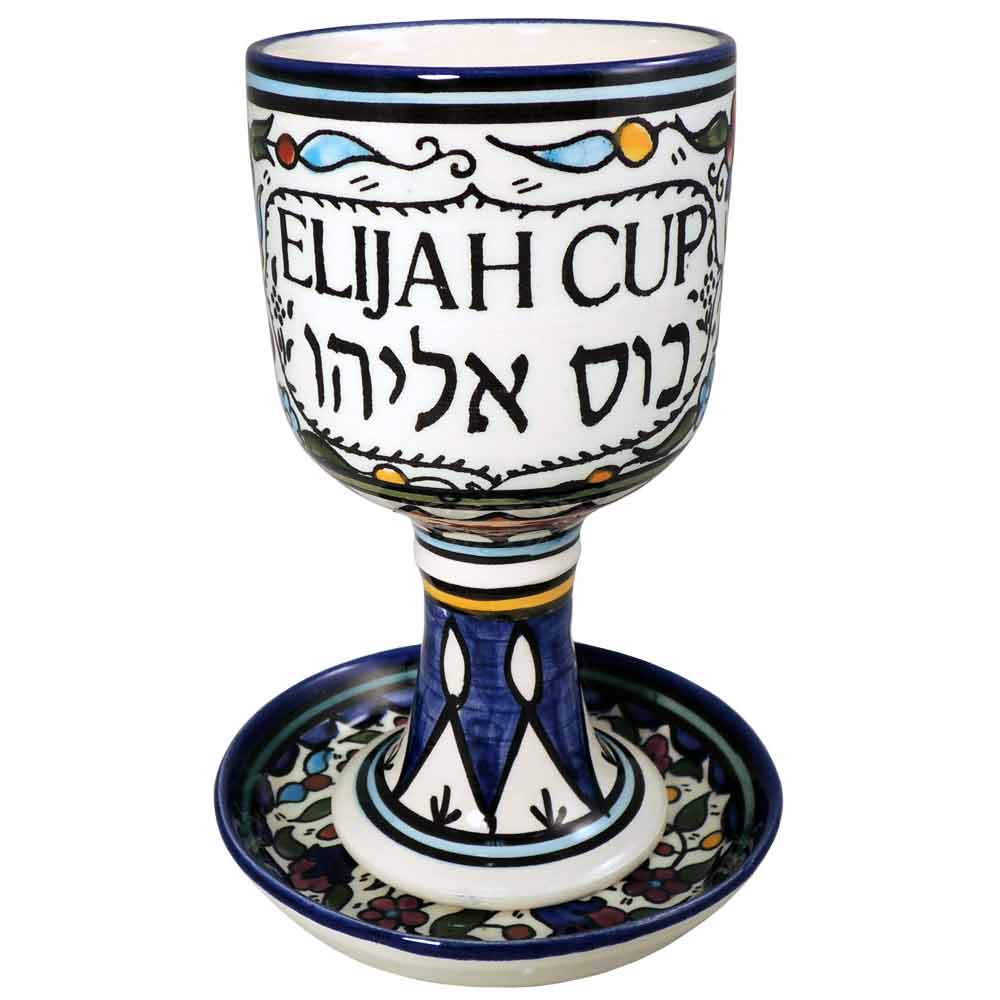
Passover 2020: With stay-at-home seders, Elijah will be making many more wine stops

The tradition of Elijah at the seder is common in many Jewish communities. The practice of pouring a fifth cup of wine and opening the door for Elijah has a complex history. The theme is the prophet as a harbinger of redemption. The scholarship on this is voluminous, and it is generally concluded that the practice is not ancient, only coming into use after the Crusades.

Setting aside the fascinating history of the cup of Elijah, this much is clear: at Passover 2020, Elijah will be visiting a lot more seders. Instead of big groups, single family seders—many of them virtually connected—will be pouring that extra cup for Elijah to drink. Not to mention all the other extra cups that will be poured and drunk on this Passover, different than all other Passovers.

According to the Bible story, Elijah, like Moses before him, fled to the wilderness. Pursued by Ahab and Jezebel, Elijah wanted to give up. Instead, he found water and food to sustain him, ending up at the very same mountain where Moses stood:

And He said, “Go and stand on the mountain before the LORD, and, look, the LORD is about to pass over, with a great and strong wind tearing apart mountains and smashing rocks before the LORD. Not in the wind is the LORD. And after the wind an earthquake. Not in the earthquake is the LORD. And after the earthquake—fire. Not in the fire is the LORD. And after the fire, a sound of minute stillness.” (1 Kings 19:10-12, Robert Alter translation)

Wilderness, food, wine, a sound of minute stillness. Happy Passover.

The binary and the infinite: What we learn from computers, the I Ching, the Bible and breathing.

We live today and have long lived in what seems to us, at first glance, a binary world. So it seems.

At their most basic, computers are binary machines. Countless combinations of yes/no, on/off decision circuits, adding up, as speed and the number of decisions increase exponentially, to processes that mimic (or exceed) human thought.

The I Ching begins its panoramic presentation of world with a simple binary calculation: either a solid yang line or a broken yin line, combined into eight trigrams and sixty-four hexagrams, from which the entire nature of life and time is profiled, if not actually predicted.

Traditions, such as Taoism, Zen and others, suggest non-duality. That reality exists between those choices we are so attached to. That it is not either/or, not neither/nor. Computers agree. Reduced to each of the billions of digital decisions, binary means nothing. The I Ching reduced to a single line means little. The meanings, all of them, are in the matrix of combinations.

The Bible agrees. It would seem, in its rules and lists, to promote binary behavior. The Ten Commandments are a prime example. But at the literal first moment, if we immerse ourselves in the question of what is between existence and non-existence at creation (contemplation that according to one legendary interpretation drove the Talmudist Ben Zoma crazy), the answer may be everything. The Book of Ecclesiastes, famous for saying that all is ephemeral vapor and listing the binary poles (a time to laugh, a time to weep…), is telling us we live now and ever in the changes in between. Not unlike the I Ching.

Physics has also given up on the binary. Simplistic analysis has given way to acknowledgement that as much as we would like to hold on to a concept of this or that, now or then, the physical world at a foundational level exists in simultaneous multiple states.

Not everything about our organic human lives is binary, but plenty of it is. Ten has its place (fingers, toes), but a distinct second place to two. Two arms and hands, legs and feet, eyes, ears, lungs.

Lungs bring us to breathing, the penultimate binary. Inhale, exhale. There is nothing in between. The failure of that binary leads to the ultimate: life, death. Some do posit an alternative to that binary, a third option. But if we just stick to life/death, what do we learn about either one from this discussion of binary?

Things as they are are not exactly binary, except we make them so. This doesn’t mean that one can think away breathing or death. No inhale/exhale, no life happens. But the values in between—the digital fabric, the I Ching, the space between existence and non-existence, the time between laughing and weeping, the quantum states—are where it is at.

The Miracle of the Palm Tree (The Journey of Baby Jesus Continues)

More from The Gospel of Pseudo-Matthew (see previous post Baby Jesus Is Worshiped by Dragons and Other Wild Beasts)

20
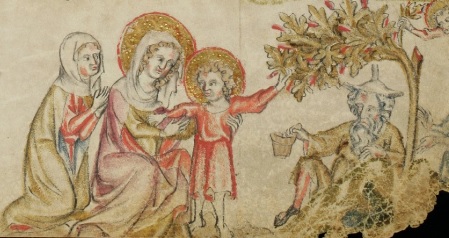
The Miracle of the Palm Tree

1 Then, after these things, on the third day after they had started out, Mary was weary from too much sun in the wilderness, and seeing a palm tree she wanted to rest awhile in its shade. Joseph hastened to lead her to the palm and he had her descend from the donkey. When Mary sat down, she looked to the foliage on the palm and saw that it was full of fruit, and she said, “If only I could get some of that fruit from the palm!” Joseph said to her, “I am surprised that you’re saying this, when you can see how high the palm is. You are thinking of the fruit of the palm; but I am thinking about the water that we no longer have in our water skins; we have nowhere to replenish them to quench our thirst.”

2 Then the young child Jesus, sitting in the lap of his mother, the virgin, cried out to the palm tree and said, “Bend down, O tree, and refresh my mother from your fruit.” Immediately when he spoke, the palm tree bent its top down to Mary’s feet. Everyone gathered the fruit in it and was refreshed. After all its fruit had been gathered, the tree remained bent, expecting that it would rise up at the command of the one who had ordered it to bend over. Then Jesus said to it, “Stand erect, O palm, and be strong, and become a companion of my trees that are in the paradise of my Father. And open up from your roots the hidden springs, that water may flow from them to quench our thirst.” Immediately the palm stood erect, and from its roots springs of water began to come forth, clear, cold, and very sweet. When they saw the springs of water flowing, they all rejoiced with a great joy and drank, together with their beasts and companions, giving thanks to God.

The image above is taken from a 14th century manuscript of the Gospel of Pseudo-Matthew.

Baby Jesus Is Worshiped by Dragons and Other Wild Beasts

From The Gospel of Pseudo-Matthew
The Other Gospels: Accounts of Jesus from Outside the New Testament
Edited and Translated by Bart D. Ehrman and Zlatko Pleše

The Gospel of Pseudo-Matthew

17
The Wrath of Herod and the Flight to Egypt

1 When King Herod saw that he had been deceived by the magi, his heart was inflamed and he sent his soldiers out on every path, wishing to capture them. When he was not able to find a trace of them, he sent soldiers to Bethlehem and killed every infant from two years and under, according to the time that he had solicited from the magi.

2 One day before Herod had done this, Joseph was warned by an angel of the Lord, “Take Mary and the child and go, take the desert route to Egypt.”

18
Baby Jesus Is Worshiped by Dragons and Other Wild Beasts

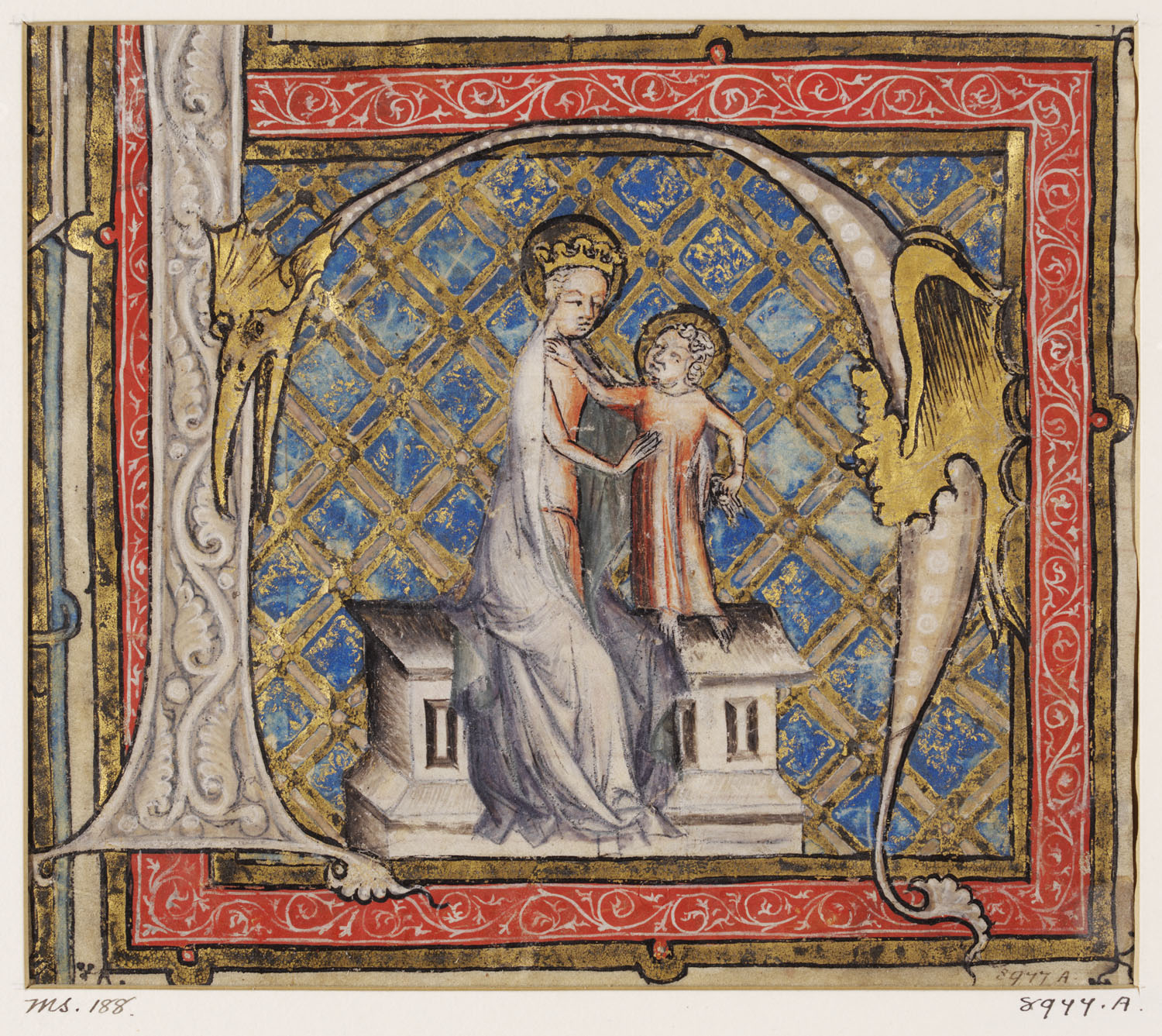
1 When they arrived at a certain cave where they wanted to cool themselves off, Mary came off the donkey and sat down, and held Jesus on her lap. There were three male servants with them on the road, and one female servant with Mary. And behold, suddenly many dragons came out of the cave. When the servants saw them they cried out. Then the Lord, even though he was not yet two years old, roused himself, got to his feet, and stood in front of them. And the dragons worshiped him. When they finished worshiping him, they went away. Then was fulfilled what was spoken by the prophet in the Psalms, who said, “Praise the Lord from the earth, O dragons and all the places of the abyss.”

2 The Lord Jesus Christ, though just a small child, walked along with them so that he might not be a burden to anyone. Mary and Joseph were saying to one another, “It would be better for those dragons to kill us than to harm the child.” Jesus said to them, “Do not think of me as a young child, for I have always been the perfect man, and am now; and it is necessary for me to tame every kind of wild beast.”

19

1 So too both lions and leopards were worshiping him and accompanying him in the desert, wherever Mary went with Joseph. They went before them showing them the way and being subject to them; and bowing their heads with great reverence they showed their servitude by wagging their tails. But on the first day that Mary saw lions, leopards, and various other wild beasts surrounding them, she was terrified. The young child Jesus smiled in her face and spoke to her with a consoling word, saying, “Do not fear, Mother, for they are hastening along, not to hurt you but to serve you.” With these words he removed the fear from their hearts.

2 And so lions, asses, oxen, and beasts of burden carrying their baggage were all walking together with them, and whenever they made a stop, they would graze. There were also tame goats who came out with them and followed them from Judah; these were walking among the wolves with no fear. One was not afraid of another, and none of them was harmed by another in any way. Then was fulfilled what Isaiah said, “Wolves will pasture with sheep and the lion and ox will eat straw together.” There were two oxen used as pack animals with them on the way; lions guided them on the way of our Lord Jesus Christ, whose baggage they were carrying.


Notes from The Other Gospels: Accounts of Jesus from Outside the New Testament:

The book is a Latin reworking of the (Greek) Proto-Gospel of James, based probably on one or more Latin editions of that work that have long since been lost. There are numerous differences from the Proto-Gospel, in both contents and emphases….Pseudo-Matthew tells of the holy family’s flight to Egypt, during which the infant Jesus performs numerous miracles—taming dragons, lions, and leopards; making a palm tree bend down to deliver its fruit to a famished Mary; causing idols in an Egyptian pagan temple to bow down in worship before him. These were some of the most familiar stories of the Christ child throughout the Middle Ages….

There continue to be debates concerning when the Gospel itself was composed….Pseudo-Matthew must obviously date to some time in the mid-seventh century, at the earliest.

In the most thorough analysis to date, Gijsel has maintained that even though direct literary dependence on the Rule of Benedict cannot be demonstrated, there are enough general similarities to suggest that the book was written when monastic orders were beginning to expand in the West, by someone invested in them. Largely on these grounds he makes a convincing argument that the text was produced in the first quarter of the seventh century, by a monk in the Latin-speaking West who was enchanted by the account of the Proto-Gospel and its potential for conveying homage to Mary as a model virgin embracing the monastic ideal.

Not only was Pseudo-Matthew itself popular in such circles for nearly a millenium, its message was spread even further abroad as its reworked stories were themselves edited for incorporation in the eleventh-century book, Libellus de nativitate sanctae Mariae (“Book on the Birth of Saint Mary”) and by Jacob of Voragine in The Golden Legend (written 1260 CE), which was the most widely read and influential book of the late middle ages, down to the Reformation.

Hanukkah: Joy Comes with the Morning

Reading Psalm 30 is a Hanukkah tradition. Not nearly as well-known or widely practiced as lighting the Hanukkah candles, eating fried foods (latkes and donuts) and playing dreidel, but just as essential.

Psalm 30 contains one of the most uplifting of all biblical verses. The sometimes perplexing Hebrew leads to a variety of English translations, but it is best known this way:

Weeping may linger for the night,
but joy comes with the morning.
Psalm 30:5

Prof. Marc Zvi Brettler explains the connection between Psalm 30 and Hanukkah:

Jewish custom mandates that a psalm be recited for each weekday, and a special psalm for each festival. This custom goes back at least to late rabbinic times, as recorded in the post-Talmudic Tractate Soferim (ch. 18), where Psalm 30 is associated with Chanukah. Ostensibly, the psalm was chosen because the superscription, מזמור שיר חנכת הבית לדוד, refers to the dedication (chanukah) of the temple.

Traditionally, the superscription refers to the dedication of the First Temple, Solomon’s Temple, though some scholars connect it to the dedication of the Second Temple (some psalms are clearly Second Temple in origin). Thus, the connection between Psalm 30 and Chanukah would be a loose one, but the best the rabbis could find—after all, Chanukah occurred in 164 B.C.E., hundreds of years after the dedication of the Second Temple in 515 BCE. Thus, the psalm cannot be referring to Chanukah … or can it?

In fact, I, along with many other biblical scholars, believe that the superscription to Psalm 30 does not refer to the dedication of the Temple (first or second) but literally refers to Chanukah….

A number of points connect this psalm and the Maccabean uprising. First, the psalm describes overcoming, at great odds, enemies—an apt description of the Maccabean experience and the exact situation that led up to Chanukah. In addition, the psalm mentions chasidim (v. 5). The NJPS translates this phrase properly as the “faithful,” the typical meaning of this term in early psalms. Yet we know from both 1 and 2 Maccabees that in the second century B.C.E. a group or party developed, associated with the Maccabees, who called themselves Chasidim, as reflected in the Greek term asidaioi.

In other words, it is possible that someone (on the winning side) after the Hasmonean victory in 164 BCE could have read Psalm 30 and imagined: “David prophesized this about us!” The psalm, for that very reason, may even have been recited as part of the dedication ceremony on Chanukah in 164 BCE since it was seen as broadly appropriate—or even prophetic—to what had happened.

What does Psalm 30 say? In The Jewish Study Bible translation:

Psalm 30

1 A psalm of David. A song for the dedication of the House.
2 I extol You, O Lord,
for You have lifted me up,
and not let my enemies rejoice over me.
3 O Lord, my God,
I cried out to You,
and You healed me.
4 O Lord, You brought me up from Sheol,
preserved me from going down into the Pit.

5 O you faithful of the Lord, sing to Him,
and praise His holy name.
6 For He is angry but a moment,
and when He is pleased there is life.
One may lie down weeping at nightfall;
but at dawn there are shouts of joy.

7 When I was untroubled,
I thought, “I shall never be shaken,”
8 for You, O Lord, when You were pleased,
made [me] firm as a mighty mountain.
When You hid Your face,
I was terrified.
9 I called to You, O Lord;
to my Lord I made appeal,
10 “What is to be gained from my death,
from my descent into the Pit?
Can dust praise You?
Can it declare Your faithfulness?
11 Hear, O Lord, and have mercy on me;
O Lord, be my help!”
12 You turned my lament into dancing,
you undid my sackcloth and girded me with joy,
13 that [my] whole being might sing hymns to You endlessly;
O Lord my God, I will praise You forever.

Whether you celebrate Hanukkah or Christmas or nothing, light candles or tree lights, believe in God or gods or none, this is a message for all seasons and all time. Especially this season and these times.

When we are troubled, with a desecrated temple, death or illness, heartbreak, we can find a path to turn our lament and mourning into dancing. Weeping may linger for the night (many nights), but joy and light come with the morning.

Hanukkah begins on the evening of December 22. Chag urim sameach (Happy Festival of Lights).

The Torah Begins Again: A Big Nothing or A Big Something?

Whether or not you believe in religion, God, Judaism or the Torah, it is exciting that the annual cycle of Torah reading begins again with the first words of Genesis. A Big Nothing? A Big Something that becomes a different Big Something? Who knows? Who even knows what it says?

Here, a few different translations and comments from some brilliant scholars.


GENESIS 1:1-2

בְּרֵאשִׁ֖ית בָּרָ֣א אֱלֹהִ֑ים אֵ֥ת הַשָּׁמַ֖יִם וְאֵ֥ת הָאָֽרֶץ׃

הַמָּֽיִם׃ וְהָאָ֗רֶץ הָיְתָ֥ה תֹ֙הוּ֙ וָבֹ֔הוּ וְחֹ֖שֶׁךְ עַל־פְּנֵ֣י תְה֑וֹם וְר֣וּחַ אֱלֹהִ֔ים מְרַחֶ֖פֶת עַל־פְּנֵ֥י


When God began to create heaven and earth, and the earth then was welter and waste and darkness over the deep and God’s breath hovering over the waters

Note:

welter and waste. The Hebrew tohu wabohu occurs only here and in two later biblical texts that are clearly alluding to this one. The second word of the pair looks like a nonce term coined to rhyme with the first and to reinforce it, an effect I have tried to approximate in English by alliteration. Tohu by itself means “emptiness” or “futility,” and in some contexts is associated with the trackless vacancy of the desert.

hovering. The verb attached to God’s breath-wind-spirit (ruaḥ) elsewhere describes an eagle fluttering over its young and so might have a connotation of parturition or nurture as well as rapid back-and-forth movement.

Robert Alter, The Hebrew Bible: Translation with Commentary


When God began to create heaven and earth—the earth being unformed and void, with darkness over the surface of the deep and a wind from God sweeping over the water—

Note:

A tradition over two millennia old sees 1.1 as a complete sentence: “In the beginning God created the heavens and the earth.” In the 11th century, the great Jewish commentator Rashi made a case that the verse functions as a temporal clause. This is, in fact, how some ancient Near Eastern creation stories begin—including the one that starts at 2.4b. Hence the translation, When God began to create heaven and earth.

This clause describes things just before the process of creation began. To modern people, the opposite of the created order is “nothing,” that is, a vacuum. To the ancients, the opposite of the created order was something much worse than “nothing.” It was an active, malevolent force we can best term “chaos.” In this verse, chaos is envisioned as a dark, undifferentiated mass of water. In 1.9, God creates the dry land (and the seas, which can exist only when water is bounded by dry land). But in 1.1–2.3, water itself and darkness, too, are primordial (contrast Isa. 45.7). In the midrash, Bar Kappara upholds the troubling notion that the Torah shows that God created the world out of preexistent material. But other rabbis worry that acknowledging this would cause people to liken God to a king who had built his palace on a garbage dump, thus arrogantly impugning His majesty (Gen. Rab. 1.5). In the ancient Near East, however, to say that a deity had subdued chaos is to give him the highest praise.

The Jewish Study Bible (Second Edition)


In the beginning of God’s creating the skies and the earth —when the earth had been shapeless and formless, and darkness was on the face of the deep, and God’s spirit was hovering on the face of the water—

Note:

the earth had been: Here is a case in which a tiny point of grammar makes a difference for theology. In the Hebrew of this verse, the noun comes before the verb (in the perfect form). This is now known to be the way of conveying the past perfect in Biblical Hebrew. This point of grammar means that this verse does not mean “the earth was shapeless and formless”—referring to the condition of the earth starting the instant after it was created. This verse rather means that “the earth had been shapeless and formless”—that is, it had already existed in this shapeless condition prior to the creation. Creation of matter in the Torah is not out of nothing (creatio ex nihilo), as many have claimed. And the Torah is not claiming to be telling events from the beginning of time.

shapeless and formless: The two words in the Hebrew, th and bh, are understood to mean virtually the same thing. This is the first appearance in the Torah of a phenomenon in biblical language known as hendiadys, in which two connected words are used to signify one thing. (“Wine and beer” [Lev 10: 9] may be a hendiadys as well, or it may be a merism, a similar construction in which two words are used to signify a totality; so that “wine and beer” means all alcoholic beverages.) The hendiadys of “th and bh,”plus the references to the deep and the water, yields a picture of an undifferentiated, shapeless fluid that had existed prior to creation.

Richard Elliott Friedman, Commentary on the Torah


At the beginning of God’s creating of the heavens and the earth, when the earth was wild and waste, darkness over the face of Ocean,

Note:

At the beginning…: This phrase, which has long been the focus of debate among grammarians, is traditionally read “In the beginning God created the heavens and the earth.” B-R agrees. I have followed several medieval commentaries, and most moderns, in my rendition.

When the earth…: Gen. 1 describes God’s bringing order out of chaos, not creation from nothingness. Wild and waste: Heb. tohu va-wohu, indicating “emptiness.” Ocean: The primeval waters, a common (and usually divine) image in an ancient Near Eastern mythology.

Everett Fox, The Five Books of Moses


When God was about to create heaven and earth, the earth was a chaos, unformed, and on the chaotic waters’ face there was darkness.

Note:

When God was about to create (b’reishit bara elohim); other translations render this: “In the beginning God created.” Our translation follows Rashi, who said that the first word would have been written (ba-rishonah, at first) if its primary purpose had being to teach the order in which creation took place. Later scholars used the translation “In the beginning” as proof that God created out of nothing (Latin: ex nihilo), but it is not likely that the biblical author was concerned with the question of matter’s origin.

W. Gunther Plaut, The Torah: A Modern Commentary (Revised Edition)


In the beginning when God created the heavens and the earth, the earth was a formless void and darkness covered the face of the deep, while a wind from God swept over the face of the waters.

Note:

In the beginning when God created, or “When God began to create.” The grammar of this temporal clause was clarified by the medieval Jewish commentator Rashi, who noted that the Hebrew word for “beginning” (reshit) requires a dependent relation—it is the “beginning of” something—and can be followed by a verb. The traditional rendering, “In the beginning, God created,” dates to the Hellenistic period (as in the Septuagint), when these details of classical Hebrew grammar had been forgotten. The idea of creatio ex nihilo (Latin, “creation out of nothing”) is dependent on the later rendering. In the original grammar, creation is a process of ordering and separation that begins with preexisting chaotic matter.

This disjunctive clause portrays the primordial state as a dark, watery chaos, an image similar to the primordial state in Egyptian, Mesopotamian, and Greek traditions. Unlike these other traditions, the chaos here is not a god or gods, but mere matter. The wind from God is he only divine substance and seems to indicate the incipient ordering of this chaos (cf. the role of God’s wind in initiating the reversal of watery chaos in 8.1).

The HarperCollins Study Bible


In the beginning when God created the heavens and the earth, the earth was a formless void and darkness covered the face of the deep, while a wind from God swept over the face of the waters.

Note:

Scholars differ on whether this verse is to be translated as an independent sentence summarizing what follows (e.g., “In the beginning God created”) or as a temporal phrase describing what things were like when God started (e.g., “When God began to create . . . the earth was a formless void”; cf. 2.4–6). In either case, the text does not describe creation out of nothing (contrast 2 Macc 7.28). Instead, the story emphasizes how God creates order from a watery chaos.

New Oxford Annotated Bible
Old scripture, new world: The homosexual ban in Torah portion Acharei Mot

This week’s Torah portion is Acharei Mot, the second part of which is Leviticus 18. It contains very specific laws for sexual conduct, prohibiting practices that Jews must avoid on penalty of death.

Some of the prohibitions are still commonly accepted by most (though not all) in modern times and societies, including bans on incest within extended families and on bestiality. But among them is one that increasingly requires explanation in the face of changing norms–a ban on male homosexual relations. (Lesbian relations are not covered, as Robert Alter notes: “Lesbianism, which surely must have been known in the ancient Near East, is nowhere mentioned, perhaps because no wasting of seed is involved, although the reason for the omission remains unclear.”)

This demands some attention from people of faith who nevertheless believe that homosexual relations are as godly and natural as relations between men and women. The squaring of this circle is actually not that complex, though for some it remains difficult.

It is entirely possible to regard scripture as special, elevated and inspired without treating it as immutable and eternal law. That of course creates its own set of challenges, that is, which of the laws are we to embrace and which do we set aside? The ten commandments contain some valuable guidance we would like generally followed. Not lying, for example, comes immediately to mind.

Here’s the good news. We can do this, we can study and discern what is good and healthy for us individually and as communities. Here’s the inconvenient news. Study and discernment are hard, though rewarding. In my experience, discarding the Bible, or religion for that matter, because of its most pernicious elements and outcomes, is self-defeating and self-denying.

There are people who don’t eat vegetables because, to be honest, some vegetables are pretty terrible or are abysmally prepared. But vegetables are truly wondrous, as taste treats and as part of a healthful diet. You just have to be open to it and work at it a little. And not be put off by the stuff you don’t like and can’t accept.

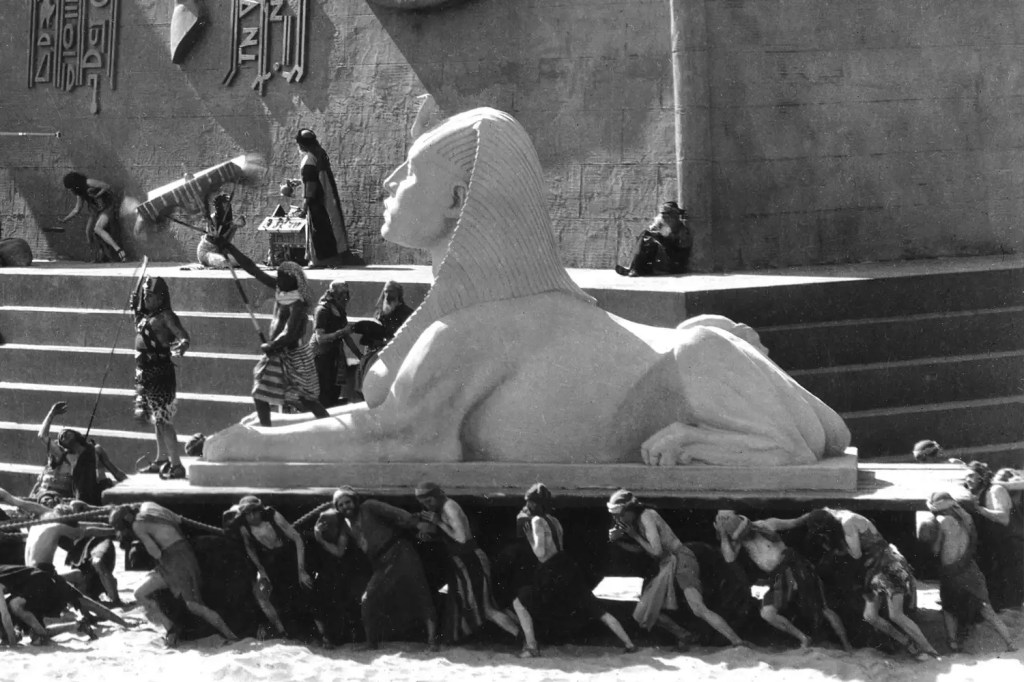
Living under an American Pharaoh: What’s a Jew to do?

It’s almost Passover, so Pharaoh is our minds. Also on our minds because we are living under an American Pharaoh—or at least a wannabe Pharaoh.

Don’t let him fool you. Just because his chief henchman is Jewish, or his son-in-law is Jewish, or some of his rich donors are Jewish, or because he says and does things that make it seem that he understands and cares about Jews and Israel (he doesn’t), he is nothing less than a Pharaoh.

So where does that leave American Jews, particularly at Passover?

It is actually not that surprising that some Jews have joined the Pharaoh’s cause. There are dramatic moments in the exodus story where Jews are willing to throw away freedom and principle for a golden calf and the comfort of the Pharaoh’s harsh protection.

And Aaron said to them, “Take off the golden rings that are on the ears of your wives, your sons, and your daughters, and bring them to me.” And all the people took off the golden rings that were on their ears and brought them to Aaron. And he took them from their hand and he fashioned it in a mold and made it into a molten calf. And they said, “These are your gods, O Israel, who brought you up from the land of Egypt.” And Aaron saw, and he built an altar before it, and Aaron called out and said, “Tomorrow is a festival to the LORD.” And they rose early on the next day, and they offered up burnt offerings and brought forward communion sacrifices, and the people came back from eating and drinking and they rose up to play.
Exodus 32:2-6

So where does that leave the Jews who do not believe in Pharaoh? We can stay and argue with those who support Pharaoh, though that has so far proven pointless. We can escape to the wilderness in search of a Promised Land of freedom and light, although by many conventions America is already the Promised Land of freedom and light.

Or we can all be tiny Moses, telling fellow Jews at Passover that worshiping Pharaoh and a golden calf and unprincipled conduct is ungodly and unholy. We cannot wait for God to intervene because God leaves it up to us. Let us not disappoint.