Bob Schwartz

Tag: Barack Obama

Still Waiting for 21st Century American Politics

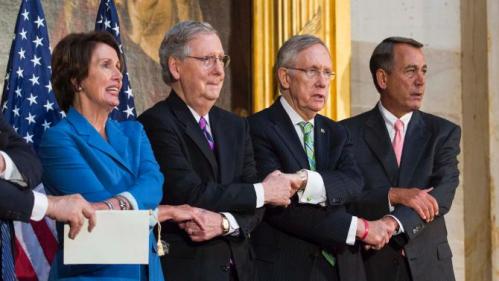
Pelosi McConnell Reid Boehner

We are still waiting for the emergence of 21st century politics in America.

The first part of this may seem simplistic and overgeneralized. The second part may seem silly. But this is about politics, so what can you expect?

1

Many Republicans seem to be stuck at some point in the 19th century—not just Robber Barons and the Gilded Age, but certainly that. Many Democrats seem to be stuck with some version of 20th century progressivism—not a bad thing, by any means, but constructed in a different world under different circumstances.

2

Forget the bourbon and beer political summits. The President, Mitch McConnell, Harry Reid, John Boehner, and Nancy Pelosi should take advantage of D.C.’s new legalized marijuana and share the peace pipe. The scripts would fall away, they would be channeling some different higher power. (Question: Which of these, besides Obama, has actually smoked pot before? Answer: All of them, even if it was just a puff, even if it was just a dare, even if they didn’t inhale.)

Music and food might be issues. Not knowing their individual tastes, and if the point is to get to a better and more creative, communal, and enlightening space, Bob Marley could do the trick. Shoulders swaying, spirits lifting, to the heavenly prayer of One Love.

Food? Whatever’s in the fridge.

3

As I said, simplistic, overgeneralized, and silly. But if politics keeps trying to recreate some ideal of a bygone era, country, or world, two centuries ago, one century ago, fifty years ago, it won’t work. Yes, of course there are timeless values that deserve our allegiance. But these are always set in temporal realities. Being current means more than just being “relevant” or using the latest technologies to drive your message home or appealing to ascendant populations. It means that however much you love the way it was, just inhale, exhale, and breathe the air of 2014, 2016, and beyond. Because, politicians, it’s not your parents’ air—it’s not even yours.

We Are at War with ISIL but Not at War with ISIS

We are at war with ISIL, the White House has just announced. But only yesterday, Secretary of State John Kerry said we are not at war with ISIS.

As mentioned previously there seems to be some confusion about what to call this entity: ISIS, ISIL, or Islamic State.

And that explains it. President Obama is talking about one enemy. John Kerry is talking about another. That is, we are at war with one but not the other.

Seriously, not being able to decide on what to call an enemy is not unimportant. But it pales beside not being clear, within the administration, about whether this is war. And then trying to reconcile it by saying that whether you call it war or not is splitting semantic and legal hairs.

The White House would have been better off pleading confusion about which names the President and the Secretary of State were using.

There is something deeper in this talk about war. The explanation by the White House is that it is just like the “war” against al-Qaeda. There is no mention of the War on Terror, the War on Drugs, or other quasi-metaphorical wars. It isn’t that we haven’t had military conflicts with non-state actors. And Obama was clear in his big speech about the maybe-war: “ISIL is certainly not a state.” It’s just that whenever we do have stateless enemies, things get very confused and confusing.

If you don’t believe me, read our history. Or just watch and wait.

Obama Speech: Is It ISIS, ISIL or IS, and What is a True Religion?

Obama ISIS Speech

This is not a comprehensive review of last night’s speech by President Obama about ISIS/ISIL/IS. But if you asked me to join the millions of reviewers, descriptors that come to mind are lukewarm, vague, uninspiring, insufficiently informative, tactical (the speech, not the plan), and blah-blah-blah.

Here is one paragraph that stuck out, because it reflects two issues that may not get enough attention:

And one of those groups is ISIL — which calls itself the “Islamic State.”

Now let’s make two things clear: ISIL is not “Islamic.” No religion condones the killing of innocents. And the vast majority of ISIL’s victims have been Muslim. And ISIL is certainly not a state. It was formerly al Qaeda’s affiliate in Iraq, and has taken advantage of sectarian strife and Syria’s civil war to gain territory on both sides of the Iraq-Syrian border. It is recognized by no government, nor by the people it subjugates. ISIL is a terrorist organization, pure and simple. And it has no vision other than the slaughter of all who stand in its way.

What Is the Name of This Enterprise That We Are at War Against?

Is it ISIS, ISIL, or Islamic State? This is much more significant than whether the English transliteration of the name of the Egyptian President was Morsy, Morsi, or Mursi or the Libyan dictator was Gadhafi, Qaddafi, Kadafi, Gaddafi, or Gadafy. This is our new mortal enemy, and besides, all these IS names are in English.

Different nations and different news media have different approaches to this. The BBC, for example, has settled on Islamic State, apparently opting for whatever the organization chooses to call itself. What is totally strange about the “official” U.S. nomenclature is that at the highest levels, there is no consistency. The President prefers ISIL, while those in his cabinet regularly use ISIS.

One small matter about ISIL does deserve note. The full name is the Islamic State in Syria and the Levant. I challenge many in the administration, and many in Congress, and many in the media, to explain—without Google or cheat sheet—what the Levant is. For five hundred years or so it has described the land of the eastern Mediterranean, now roughly comprising Syria, Lebanon, Israel, and contiguous countries. The word comes from the French word for “rising”, as in the east where the sun rises. It isn’t much in use any more, outside of scholarly circles and, of course, in our latest war.

So please, President Obama, if you are gathering the support of dozens of nations and hundreds of millions of Americans, let’s all decide on what to call this organization that, in the words of Vice President Joe Biden, we will pursue to the Gates of Hell.

What is a True Religion?

“No religion condones the killing of innocents,” the President said. Without going into historic and contemporary detail, this is patently false. I believe the President knows better, but he didn’t want to get into a deep discussion, and instead just wanted to make a rhetorical flourish. If he doesn’t know, there are thousands of histories he can read and scholars he can consult, or even easier, news reports from the past few weeks, months, and years he can read.

If, however, he really did mean it, he has disqualified the majority of world religions from being classified as such. Which, by the way, plenty of critics of religion would applaud.

The President doesn’t have to be the Teacher in Chief, the Scholar in Chief, the Explainer in Chief, etc. Being Communicator in Chief is enough of a job, but if he just wants to say stuff for effect, without regard to its making sense or being true, we’ve already had plenty of that in years past, from those less smart or thoughtful than you. We get enough nonsense from many in Congress. Speak as if some of us are actually thinking about what you say. Because some of us are.

Do Something/Anything about ISIS? Would You Rather Have No Strategy or Bad Strategy?

Just Do It

President Obama candidly admitted that we have no strategy for dealing with ISIS, but that we are developing one.

Maybe too candid for the moment and his leadership position, but still a necessary truth. Necessary because no one on earth has a good strategy for dealing with that or the complex of situations around the world right now. For the religiously inclined, consider that Moses, Jesus, and Mohammed convening in the Situation Room would have a tough time figuring out what to do next, short of calling in the Big Gun and wiping the slate clean and starting again.

This hasn’t stopped Congress from urging a simple solution to this puzzle: do something/anything. This is an all-time irony, given that Congress is currently infamous for doing absolutely nothing, ever, no matter how important the problem and no matter how relatively simple the solution. If a number of the members had a sense of irony, we could all wryly laugh at this, except that their sense of irony is absent, along with a sense of duty, democracy, and Americanism (the real kind, not the fake). Some of these same members do seem to have a sense of justice, John Wayne frontier justice, which is unfortunately out of place in the liquid world of 2014 global politics and insurgency.

A few years ago, some thought that democracy would spread around the oppressed nations like an epidemic, like Arab Spring fever. But chaos is also an opportunistic contagion, and as those on one insurgent or imperialist front look at the other fronts multiplying, they see opportunity and seize it. It doesn’t help that the geography is claustrophobic. If you don’t know it, connect the dots from Iraq to Syria to Israel to Gaza to Egypt, Sudan, and Libya. And that’s just one pole of the current dynamic.

We have been tragically mistaken on strategy in the last three major American wars. One was an abject defeat, the other two—Iraq and Afghanistan—have sort of ended, with an indeterminate outcome, and withdrawal that may or may not last. Let’s pull back from partisan finger-pointing, and just admit that some situations—whether you choose to demur or however you choose to engage—may have outcomes, but may not have solutions.

You can be smart or stupid, fearless or timid, right or wrong, and you can still be overwhelmed by circumstances. That is, there is no “perfect” strategy, especially not with the way things are aligning. So no, you can’t wait for that perfect strategy. But you also shouldn’t rush in with the next idea that comes into your head, especially if that idea comes from some outdated playbook that has already proven itself ineffective in current realities.

“Just do it” sounds great, as long as you spend sufficient time really considering what “it” is and what the consequences and outcomes might be. Oh, and also, you might try being candid, as Obama has been, rather than making stuff up. Like about WMDs. Like about wars that will last weeks and cost nothing. Let’s leave that sort of unhelpful lying to fairy tale tellers like Vladimir Putin, who is not invading Ukraine, and to Putin’s admirers and portrait painters.

The Gates Book and the Gates Speeches

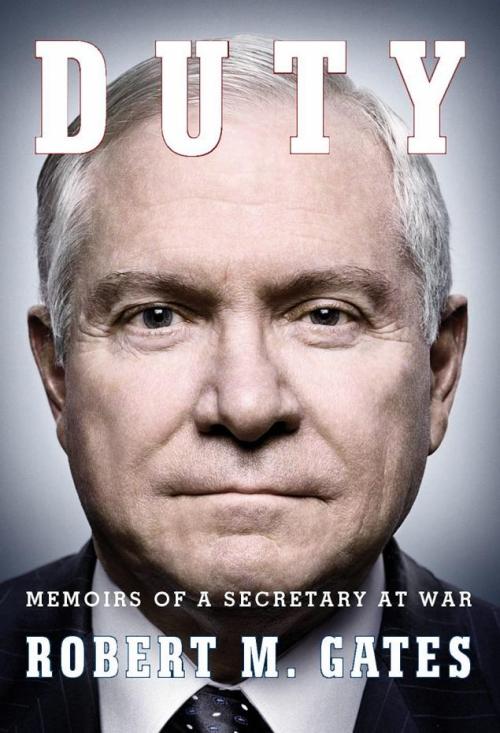
Duty
Former Secretary of Defense Robert M. Gates is about to release a memoir of his tenure under Presidents Bush and Obama. Provocative advance excerpts from Duty are now being released, and these explosive devices are anything but improvised.

Every news outlet, pundit and politician is already busy making points about President Obama, Vice President Biden, former Secretary of State Hillary Clinton and others, based on comments clipped from these excerpts, rather than having read the whole book. Even out of context, it is clear that Gates has formed some definite opinions based on working for and with these American leaders. That is anyone’s privilege, but particularly that of a man who spent forty-five years in laudable public service, much of it at the highest levels of government.

As always, though, opinion and criticism is a matter of perspective, that is, where the critic stands underlies what a critic sees and says.

You can read all the speeches that Gates delivered as Secretary of Defense. This is guaranteed not to be as titillating as reading or hearing about the “best parts” of Duty, but it might give you additional insight that will make the context of the book clearer.

Here, for example, are excerpts from remarks he made to the Heritage Foundation on May 13, 2008, when he was serving under President George W. Bush. (You can read the entire speech here) At that point, the Iraq war was five years old, only halfway to its conclusion. At that point, he had been Secretary of Defense for two years, and from that point, he would remain in that position under President Obama until July 2011.

But there is a more fundamental point that I will close with – and again, historical perspective is important. It is impossible to separate discussions of the “broken” Army following Vietnam – a conscription army – from the ultimate result of that conflict. At a congressional hearing last year, General Jack Keane, former Vice Chief of Staff of the Army, recounted the profound damage done to the Service’s “fiber and soul” by the reality of defeat in that war.

The risk of overextending the Army is real. But I believe the risk is far greater – to that institution, as well as to our country – if we were to fail in Iraq. That is the war we are in. That is the war we must win.

There it is, the context: Iraq was “the war we must win.” Gates’ insights into military matters is often brilliant and sensible, informed by his intelligence, experience and education. But on this point he candidly reveals a premise that for some colors everything else he offers. We must win Iraq because the failure to win would “break” the military the way that Vietnam did.

We did not win in Iraq, but technically, we did not lose. That current events in Iraq point to some devolution doesn’t really settle the question. That some U.S. Senators are calling for us to return to Iraq to avoid that loss or at least to avoid the appearance of futility is a partial reflection of exactly what Gates said.

We know that Gates’ personal critiques are based on close working relationships and observations. We also know, or should recognize, that those critiques are grounded in a worldview that others may not, very legitimately, share. If for Gates one of the measuring sticks is whether someone believes that Iraq had to be won, that measure may be skewed by genuine differences in informed opinion. One opinion is that as valorous as the service and sacrifice was, Iraq was a mistake, to be abandoned as prudently as possible; others might now say the same about Afghanistan. What Gates has to say about our leaders is certainly worth listening to, provided we pay equal attention to the mindset of the speaker.

A Chilly Breeze of Hate, a Hungarian Conductor and the Prospects for American Anti-Semitism

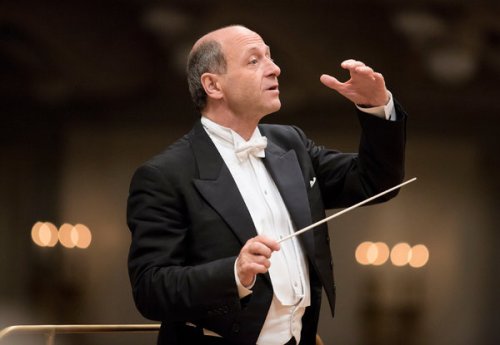
Ivan Fischer
Those of us who grew up Jewish in late 20th century America had a pretty good experience of tolerance, certainly compared to even our parents’ generation. The Holocaust had an immunizing effect, not so much because people saw where such ugly expressions of hatred might lead, but because it was harder to hold those views—at least publicly. There was not an immediate spillover effect, so common prejudices against blacks, women, gays, and other intolerance “classics” continued, while new groups such as Muslims were added all the time. Hate takes no holiday.

The news was not without stories of anti-Semitism. And if we lived in certain parts of the country, we might be more likely to feel like a stranger, and even to hear somebody we liked talk about bargaining as “Jewing” someone down. Oh well, that was ignorance talking, and overall those folks often had a good heart. Maybe the greatest deterrent to taking it too seriously was the Jewish cohort who daily found an anti-Semite around every corner. It wasn’t that there weren’t and aren’t anti-Semites everywhere, including some positions of high profile and power, it’s just that the progress Jews have made in acceptance and mainstreaming made these anomalies. There were other groups still having a much tougher time.

A story from this weekend’s New York Times prodded that complacency, just a little. It comes not from America at all. It is from Hungary. There, anti-Semitism and nationalism are on the rise, to the point where the country’s most celebrated conductor, Ivan Fischer, has written and staged an opera about it. Called The Red Heifer, it is about a 19th century incident in which Jews were blamed for the murder of a peasant girl. But contemporary elements make clear that this is not a story about historical artifacts. The whole world context of the opera is not just Hungary; much of Europe, particularly but not entirely those in the former Soviet empire, are trying to establish new identities in these trying times. That insurgent identity frequently involves a broad menu of nationalistic intolerance. See, for example, the treatment of gays in Russia and the rise of neo-Francoism in Spain. And where there’s a list, Jews are on it. That doesn’t make sense, but not making sense is precisely the hallmark of all this.

It is no secret that certain kinds of intolerance are a little more obviously a part of American life today. There can, for example, be argument about whether the unprecedented disrespect and vitriol for the President is purely political. It isn’t, and most know, or should, that race is near the heart of the hate. Americans too are having hard times that may continue for a while. Even if the current crop of demagogues seems penny-ante compared to “real” American demagogues of the 20th century—the Huey Longs, the Father Coughlins, the Joe McCarthys, the George Wallaces—demagoguery it is. And if we hope and do transcend history, it may be that some things don’t or can’t change: where there’s a list, Jews are on it.

One of the saddest phenomena of recent years is the ultra-ironic sight of a Jewish vigilance about anti-Semitism bizarrely combining with near-paranoid anti-Islamism. E-mails have circulated praising Dutch nationalist politician Geert Wilders, who advocates keeping Muslims out of the Netherlands and out of all (supposedly) white and Western Europe, lest those white and Western values be despoiled, or worse. Why this appeals to some Jews may not be a mystery, but it is moral madness.

And yet. These are stressful times around the world; outside of war, the most stressful in generations. Distrust and fear of “the other” is bred in the human bone. We must work to rise above and to mutate it out. If you have any sense of history—and all of us should study to be amateur historians—you may at certain moments get a little instinct, a buzz, a foreboding that you hope is way off, one that might be as much about you as about the state of things, and thus should be shaken off. On the other hand, there is the cliché: just because you’re paranoid doesn’t mean that somebody isn’t out to get you.

Two truths co-exist in America. Public anti-Semitism has never been at a lower ebb, and will not return to earlier levels. Privately, the truth is that the vast majority of Americans have never met a Jew, and know little about Judaism except the occasional news story or that it is the primitive religious precursor to Christianity. That unknowing is not pernicious, even if it’s not ideal. But seeing what is going on in the rest of the world is a reminder that vacuums can be filled by suspicion, perplexing troubles need someone to blame, and this “other” or that “other” is just too convenient not to accuse.

For American Jews, it is overstatement to call this a chilly breeze. There is not much in the air at the moment. But intolerance is a funny thing. It has a life of its own, and it doesn’t always take the same course. Over-vigilance and paranoia can be counter-constructive and debilitating. This doesn’t mean that closing your eyes works either. What’s happening thousands of miles away is not happening here. But who’s to say who’s next, once the dogs of hate are let loose.

There are never enough occasions to repeat the famous words of Martin Niemöller, the Protestant pastor who was a public foe of Adolf Hitler and who spent years in concentration camps. In a sense it is his translation of Christian (and Buddhist) non-judgmentalism and non-dualism. If you think you are not different but/or are “the right kind” of different, you are mistaken.

First they came for the Socialists, and I did not speak out—
Because I was not a Socialist.

Then they came for the Trade Unionists, and I did not speak out—
Because I was not a Trade Unionist.

Then they came for the Jews, and I did not speak out—
Because I was not a Jew.

Then they came for me—and there was no one left to speak for me.

The Most Significant Shutdown Front Pages

El Diario

Republicans should pay close attention to the front pages of America’s newspapers this morning, the first day of the government shutdown prompted by their obsessive opposition to Obamacare.

Most papers carry some version of “shutdown” or “gridlock,” with photos of John Boehner and Harry Reid, or John Boehner and Barack Obama (it’s all about John Boehner).

But the big story on two front pages is the opening of the Affordable Care Act insurance exchanges. These two papers just happen to be two of the largest Spanish-language dailies—El Diario in New York (above) and La Opinion in Los Angeles (below).

La Opinion

Why is this significant for Republicans? Because they claim (but in their heart of hearts still may not believe) that here in the second decade of the 21st century, they can’t become an American national party without broad Latino support. That is true, but the fact is that a large part of that constituency is uninsured and is deeply interested in the benefits of Obamacare. This is reflected in those front pages. But the Republicans are sworn enemies of Obamacare, so committed that they are willing to put people out of work to do it. How can the Republicans be a party attractive to Latinos under that circumstance?

The answer is that they can’t. It is a circle Republicans cannot square. And no matter how much lip service they pay to underserved populations, everything they do says something else. Actions, like front pages, speak louder than words.

The Government Shutdown and Masturbating Fetuses

Rep. Michael Burgess
In the contentious Saturday night House debate on the Continuing Resolution to fund the federal government—a resolution that guts Obamacare and will almost certainly lead to a partial government shutdown—Republican Rep. Michael Burgess of Texas revealed a little known fact about the Affordable Care Act: it was “never intended to be law,” even though it obviously is. How so?

And here’s the real crux, Mr. Speaker. Here’s what’s really wrong and why Washington is in such a lather right now: The Affordable Care Act was never intended to become law. It was a vehicle to get the Senators home on Christmas Eve before the snowstorm. It was never intended to be law. The law that was passed by the Senate was a rough draft. It’s equivalent to saying the dog ate my homework so I turned in the rough draft; and, unfortunately, the rough draft got signed into law the following March, and that’s why there’s so much difficulty with this.
Congressional Record, September 28, 2013

Who is Rep. Burgess and why is he saying these things? He is a medical doctor, an ob/gyn, and has become one of the Republican Congressional experts on health care. Research shows that he has some other interesting views. This from U.S. News on June 18 of this year:

Rep. Michael Burgess, R-Texas, said Monday he is opposed to abortion because fetuses masturbate in the womb, and so can feel both pleasure and pain.

“Watch a sonogram of a 15-week baby, and they have movements that are purposeful,” said Burgess, citing his experience as an OB/GYN, during a House Rules Committee hearing on a GOP bill that would ban abortions after 20 weeks. “They stroke their face. If they’re a male baby, they may have their hand between their legs. If they feel pleasure, why is it so hard to think that they could feel pain?”

His comments were first reported by women’s health site RH Reality Check.

But Burgess’s argument isn’t based in science, doctors say. “We certainly can see a movement of a fetus during that time, but in terms of any knowledge about pleasure or pain – there are no data to assess,” says Jeanne Conry, president of the American College of Obstetricians and Gynecologists, a professional association for OB/GYNs. “We don’t know enough about the biology and the science.”

One more medical opinion from Rep./Dr. Burgess on the country’s sickness: President Obama must be impeached. Burgess said to a Tea Party questioner in 2011: “It needs to happen, and I agree with you it would tie things up. No question about that.”

Ted Cruz and Joe McCarthy

Ted Cruz - Joe McCarthy
For a while now, virulent anti-Obamaism has looked a lot like the anti-Communist vendetta of McCarthyism in the 1950s. Barack Obama is in fact the scary culmination of the fear that swept the nation fifty years ago. Not only are there Communist infiltrators in government offices; the White House itself is in the hands of a godless liberty-taker—or so it seems to millions.

U.S. Senator Joe McCarthy from Wisconsin did not invent this brand of hate and paranoia. He just perfected it through a combination of extreme showboating, angry rhetoric and, most of all, fear. Nothing could be worse than to be branded an enemy of the state (in McCarthyist terms), which might lead to a loss of a citizen’s reputation, job and career or, more to the point, to a politician’s losing office.

This week, Ted Cruz’s attempt to hog the American stage with his fauxbuster (media are still working on a term for a filibuster that isn’t one) has had a notable effect on some of his Republican Congressional colleagues. Since the 2010 elections, and certainly in the 2012 presidential campaign, there has been a reluctance to publicly break ranks and call an ambitious, self-absorbed blowhard that (e.g., Donald Trump) or a fool a fool (take your pick). In recent days, a few Republican Senators have stopped holding back, realizing that as much as they agree in their opposition to Obama policies, this is not a constructive way to proceed, governmentally or politically. Oklahoma Senator Tom Coburn, a loyal Republican and unassailable conservative, said that it appears that to Cruz and others of that ilk, he is just not conservative enough.

This is the Ted Cruz/Joe McCarthy strategy: if you are not with me, you are against America. To torture a quote from King Louis XIV, “America c’est moi.” (I am America). And if you are not for my definition of America, you are an enemy of the state—even if you purport to be a Republican, even if you are a Senator with many more years than my nine months in the Senate. And if you are an enemy of the state, I and my millions of like-minded Americans will destroy you. That is my mission.

Joe McCarthy’s brief demagogic career ended in ignominy (and ill health from his alcoholism). He went from holding center stage to banishment when more and more of his colleagues and the media stood up to his bullying. It wasn’t that anti-Communism went away; it remained a force for years to come and, as pointed out, lives still even in the post-Cold War era. It was that serious people put up with over-ambitious clowns as long as a common agenda is advanced, but at some point even the threat of losing office takes second place to what’s good for America.

In the end, McCarthyism lost to Americanism. Let’s hope that Cruzism suffers the same fate.

Some Little Truths About Obamacare

Affordable Care Act

You may not want to think or talk about the Affordable Care Act. Who can blame you? Politicos and talking heads are doing enough for all of us.

And yet, October 1 marks the start of people reading the menu of health insurance options and deciding which way to go. Which is why the volume of debate is once again up to 11 and why it is harder than ever, even after all this time, to make sense of any of it.

Previous posts have covered the process: how ACA is based on a Republican proposal, how Republicans ran screaming away from their own proposal, how the Supreme Court narrowly allowed it to proceed, etc. Now is the time to consider the substance and the merits, reluctantly. Reluctant because some kind of truly broad and truly affordable health coverage really is necessary for a civilized, modern and (in some segments) wealthy society, so a critique should not appear to deny that. Reluctant because, under the circumstances, ACA may really be the best we can do, even if that is not saying much.

But here are a few truths.

1. This is the most complicated, Rube Goldberg-like social program in American history. Comparisons to Social Security and Medicare—as in “people were skeptical or opposed to Social Security and now these programs are an integral part of American life”—are inapposite. Think: one concept, one law. That may be oversimplifying, but not much. Social Security was and is a way to create a fund to help older and disabled Americans who can’t help themselves. The way it’s evolved may be complicated and not to all tastes, but the basic concept remains. The same can be said about Medicare.

The single concept of ACA is more elusive, despite the name making clear it is about affordability. Separate from the execution and success in that regard, ACA is also about the reach and availability of coverage. More properly, it might be called the Market-Based Universally Available Affordable Care Act, a name that would hint at its complexity.

2. It may be too complicated to manage. To get to the truth of this, we have to look bigger. Bigger, as in the manageability or not of the American government. The loud complaint from some corners is that the government is “too big.” This is a misplaced critique. The problem is that very big enterprises are very hard to manage effectively. Just shrinking an unoptimally managed enterprise lessens the damage and the cost, but it doesn’t change the fact of ill management. Scientific management tells us that in theory any enterprise of any size can be managed, by discovering or devising the appropriate principles and executing soundly. But there is a cousin to “too big to fail” that is “too big to run.” Maybe the government is that.

Maybe the ACA is that also, too big and too complicated. Which touches back to the idea of its not having one single concept. It seems clear, as it did to the ACA proponents, that so-called universal, single-payer health care would never be accepted in “free market” America. If that wasn’t always clear, the debacle of the Clintoncare proposal, engineered by Hillary during the Clinton administration, put it out of reach for a generation. The only way to get anything, rather than nothing, was to patch together components that were variously consistent with popular ideas, market mechanisms, federalism, healthy business and industry interests, along with political and legal constraints. The wonder isn’t that a combination car/boat/plane gets designed and built. The wonder is that it can drive or float or fly.

3. The American political environment is distrustful, skeptical and toxic. Social Security was born during the worst economic crisis ever. So the building of an historic safety net was fitting. But on top of that, even with virulent opposition, there was a widespread understanding that we were all Americans, and part of that was caring for others, and part of that care was trusting that the government would, within the limits of human fallibility and self-interest, do the right thing.

We can pray for the return of that context, but it isn’t today. Today we have an unprecedented spectacle of a small but powerful segment of the country working desperately, and maybe effectively, to make sure that ACA is repealed or at least fails miserably. The reasons are as complex as the act itself, a bit about the shortcomings of the law, but, not surprisingly, mostly about politics. Proponents find themselves in the position of defending the act, promising to improve it, and trying to make it work—all the while perhaps harboring doubts in the places they can’t talk about that it won’t, not entirely.

Let’s hope it does work, a little. Because American health care is so broken, and for the moment, this is what we’ve got.