Bob Schwartz

Tag: Abraham Joshua Heschel

Dickinson + Heschel = Hope + Optimism

Hope is the thing with feathers
That perches in the soul,
And sings the tune without the words,
And never stops at all,

And sweetest in the gale is heard;
And sore must be the storm
That could abash the little bird
That kept so many warm.

I’ve heard it in the chillest land,
And on the strangest sea;
Yet, never, in extremity,
It asked a crumb of me.

—Emily Dickinson


“I am an optimist against my better judgment.”
—Abraham Joshua Heschel

Abraham Joshua Heschel on the Vietnam War and the blood of the innocent

“Remember the blood of the innocent cries forever. Should that blood stop to cry, humanity would cease to be.”
—Abraham Joshua Heschel

Abraham Joshua Heschel was a great Jewish thinker, writer and prophet of the twentieth century. I have included him in over 30 posts, far more than any other figure. Here is one example.

Heschel was one of the earliest religionists to oppose the Vietnam War. As a friend and colleague of Martin Luther King Jr. in the civil rights movement, he influenced King to publicly come out against the war.

Benjamin Sax talks about the price Heschel paid:

“When he came out against the Vietnam War for example, there were a lot of Jewish presses and a lot of Jewish leadership that spoke out against him. There was a lot of criticism about his leadership, about his point of view – he was considered naive. Worse he was considered theologically naive. That what he was doing was undermining the safety of his own people and undermining the safety of our country. And that aspiring to these universal, patriotic values was something that at least many in the Jewish community wanted to put out there even if they were uncomfortable with the reasons why we were in Vietnam. And so, it also put his reputation at risk.”

Heschel wrote about the war:

“The blood we shed in Vietnam makes a mockery of all our proclamations, dedications, celebrations. Has our conscience become a fossil, is all, mercy gone? If mercy, the mother of humility, is still alive as a demand, how can we say yes to our bringing agony to that tormented country? We are here because our own integrity as human beings is decaying in the agony and merciless killing done in our name. In a free society, some are guilty and all are responsible. We are here to call upon the governments of the United States as well as North Vietnam to stand still and to consider that no victory is worth the price of terror, which all parties commit in Vietnam, North and South. Remember the blood of the innocent cries forever. Should that blood stop to cry, humanity would cease to be.”

Heschel died in 1972. It would be beyond presumptuous—criminal and sinful—to claim to know what he would be saying about the current Israeli war in Gaza. All we can know is that he urged flawed human beings to rise above self to do better and be better, which is what he believed God needs us to do.

Another gun tragedy: “Some are guilty, but all are responsible.”

An honest estimation of the moral state of our society will disclose: Some are guilty, but all are responsible.
Abraham Joshua Heschel

There are so many ways for people to distance themselves from being implicated in human-caused tragedy. For just one example, our American gun genocide.

Some will say they hold the more enlightened views, that they have spoken out, that they have acted out, that they have contributed to the cause, that they have voted for the proper candidates, that they have done all that they could.

Some others will say that there is a greater good, a greater ideology, not to mention the Second Amendment, so any responsibility is neutralized by their superior constitutional position (and their “thoughts and prayers”).

Heschel’s celebrated quote came out of the civil rights era and the still ongoing attempts to ameliorate racism. The point is that we can claim higher ground, criticizing those who obviously take no responsibility, and bemoan that we can do little more, given legal and political realities. But even with the limitations, and even with others shrugging off their glaringly obvious responsibility, they and we share the burden. Whatever the issue, whatever the tragedy.


The prophets’ great contribution to humanity was the discovery of the evil of indifference. One may be decent and sinister, pious and sinful.

The prophet is a person who suffers the harm done to others. Wherever a crime is committed, it is as if the prophet were the victim and the prey. The prophet’s angry words cry…

There are of course many among us whose record in dealing with African Americans and other minority groups is unspotted. However, an honest estimation of the moral state of our society will disclose: Some are guilty, but all are responsible. If we admit that the individual is in some measure conditioned or affected by the public climate of opinion, an individual’s crime discloses society’s corruption.

From The Insecurity of Freedom: Essays on Human Existence by Abraham Joshua Heschel

MLK and AJH: Two Friends, Two Prophets

Abraham Joshua Heschel and Martin Luther King Jr. at Arlington National Cemetery, February 6, 1968.

“Where in America today do we hear a voice like the voice of the prophets of Israel? Martin Luther King is a sign that God has not forsaken the United States of America. God has sent him to us. His presence is the hope of America. His mission is sacred, his leadership of supreme importance to every one of us.”
Abraham Joshua Heschel

From Two Friends, Two Prophets, Plough Quarterly, by Susannah Heschel, Eli Black Professor of Jewish Studies at Dartmouth College and daughter of Abraham Joshua Heschel.


Two Friends, Two Prophets: Abraham Joshua Heschel and Martin Luther King Jr.

It’s easy to forget how unusual the friendship between Heschel and King was in its day. The two came from very different backgrounds – King had grown up in Atlanta, Georgia, while Heschel arrived in the United States as a refugee from Hitler’s Europe in March of 1940 – “a brand plucked from the fire,” as he wrote. Yet the two found an intimacy that transcended the growing public rift between their two communities….

Heschel and King shared a disdain for the popular liberal Protestant theology of the era, and a skepticism for orthodoxies. They mocked Paul Tillich’s definition of God as the “ground of being,” helpless in the face of injustice. Both thought that Karl Barth’s theology left “the average mind lost in the fog of theological abstractions,” as King wrote….

The March on Washington took place in August 1963, with more than two hundred thousand people participating.

“The hour calls for moral grandeur and spiritual audacity.” Abraham Joshua Heschel

Their pleas were met by a disappointing silence. President Kennedy did not declare a state of moral emergency, nor did clergy donate a month of salary to housing and education. If anything, the tensions in the United States grew even more dire. Just weeks later, on September 15, 1963, a church in Birmingham was bombed, killing four young black girls. That same day, James Bevel and Diane Nash launched the Alabama Project that ultimately led to the famous march from Selma to Montgomery in 1965.

The prophets – both Heschel’s book and the biblical figures – drew Heschel and King together. Both men were trained theologians who also knew how to preach. King was the organizer and public figure, while Heschel was the theologian and scholar with the voice of a public intellectual. Prophetic rhetoric has a long public history in the United States, yet it was not only the prophets’ words that stood out. For King and Heschel, the prophets were extraordinary human beings with passionate emotional lives, people who knew how to pray and who created powerful symbolic moments….

The 1965 march from Selma to Montgomery was a major event for both Heschel and King. A few days before the march took place, Heschel led a delegation of eight hundred people to FBI headquarters in New York City in order to protest the brutal treatment of demonstrators in Selma. On Friday, March 19, two days before the Selma march was scheduled to begin, Heschel received a telegram from King, inviting him to join the marchers. Heschel was welcomed as one of the leaders in the front row of marchers, with King, Ralph Bunche, and Ralph Abernathy. Each of them wore flower leis brought by Hawaiian delegates. In an unpublished memoir that he wrote upon returning from Selma, Heschel describes the extreme hostility he encountered from whites in Alabama from the moment he arrived at the airport, in contrast to the kindness he was shown by King’s assistants….

Were Heschel and King the prophets of America? Neither claimed the title, but each spoke of the other as a prophet. In introducing King to the audience, Heschel asked, “Where in America today do we hear a voice like the voice of the prophets of Israel? Martin Luther King is a sign that God has not forsaken the United States of America. God has sent him to us. His presence is the hope of America. His mission is sacred, his leadership of supreme importance to every one of us.”

In response, King stated that Heschel “is indeed a truly great prophet…. Here and there we find those who refuse to remain silent behind the safe security of stained glass windows, and they are forever seeking to make the great ethical insights of our Judeo-Christian heritage relevant in this day and in this age.”

Dogen and Heschel on Time

Zen Master Dogen (1200-1253) and Abraham Joshua Heschel (1907-1972) would have understood each other, liked each other, despite the seven centuries that separate them. Brilliant, visionary and overwhelmingly articulate, they were heirs to two rich traditions, Zen Buddhism and Judaism, which they further refined into pure essence. Their inspired prose is poetry, the poetry of the thing itself.

Both wrote about time in ways that exceed our comprehension by a step or two, so we run to keep up: Dogen most astutely in his essay Uji: The Time Being; Heschel in his book The Sabbath.


When you are at this place, there is just one grass, there is just one form; there is understanding of form and beyond understanding of form; there is understanding of grass and beyond understanding of grass. Since there is nothing but just this moment, the time being is all the time there is. Grass being, form being, are both time.

Each moment is all being, each moment is the entire world. Reflect now whether any being or any world is left out of the present moment….

Mountains are time. Oceans are time. If they were not time, there would be no mountains or oceans. Do not think that mountains and oceans here and now are not time. If time is annihilated, mountains and oceans are annihilated. As time is not annihilated, mountains and oceans are not annihilated.

Zen Master Dogen, Uji: The Time Being, translated by Dan Welch and Kazuaki Tanahashi, in The Essential Dogen.


Every one of us occupies a portion of space. He takes it up exclusively. The portion of space which my body occupies is taken up by myself in exclusion of anyone else. Yet, no one possesses time. There is no moment which I possess exclusively. This very moment belongs to all living men as it belongs to me. We share time, we own space. Through my ownership of space, I am a rival of all other beings; through my living in time, I am a contemporary of all other beings. We pass through time, we occupy space. We easily succumb to the illusion that the world of space is for our sake, for man’s sake. In regard to time, we are immune to such an illusion.

Abraham Joshua Heschel, The Sabbath.


Rosh Hashanah 5779 – Abraham Joshua Heschel on Repentance

In the realm of spirit, there is no difference between a second and a century, between an hour and an age. Rabbi Judah the Patriarch cried: “There are those who gain eternity in a lifetime, others who gain it in one brief hour.” One good hour may be worth a lifetime; an instant of returning to God may restore what has been lost in years of escaping from Him. “Better is one hour of repentance and good deeds in this world than the whole life in the world to come.” (Avot 4:22)
Abraham Joshua Heschel, The Sabbath

Abraham Joshua Heschel: “I am an optimist against my better judgment.”

If you have the time—and you should make the time—please watch this half-hour interview of Abraham Joshua Heschel from 1972, shortly before he died.

It doesn’t matter whether you believe in God, the Bible or religion. That such a person might grace the world and our lives is testament to the human possibility. Few of us will reach that height, but just knowing that there is such light among us should inspire us dimmer bulbs.

“I am an optimist against my better judgment,” he says. On our better days, so should we all try to be.

The Heart of Shabbat

The Heart of Shabbat

On Shabbat
The mountains walk away
Gone beyond
Not to distract
With grandeur in space
Reminders of time
In their absence

Further reading:

The Sabbath, Abraham Joshua Heschel

Mountain and Waters Sutra, Dogen (“The green mountains are always walking”)

The Heart Sutra, translated by Red Pine (“Gate gate, paragate, parasangate, bodhi svaha”)


Heschel for Passover (or Any Time)

A reader reminds me that a year ago, I posted about including readings from Abraham Joshua Heschel in the Passover seder (A Heschel Haggadah).

You will find the readings I included in last year’s seder below. As regular readers know, I’ve mentioned Heschel a few times in this blog, and more frequently in my conversations and discussions. He may be the greatest of modern masters of Judaism or of any spiritual traditions. He is not always easy, but he is accessible, inspirational, mind-and-soul-stirring at a depth that lasts. His is not fast food; it is a long, rich, delicious meal that nourishes you for a lifetime and that you never forget—kind of like a seder. In addition to Elijah, who we expect at every seder, Heschel would be so welcome any time.

Along with the readings below, I urge you to take a look at some of the collections of readings available and then, if you like what you find, check out some of the many books (I am particularly fond of The Sabbath, but there are so many worthy ones).

Abraham Joshua Heschel: Essential Writings

The Wisdom of Heschel

I Asked for Wonder: A Spiritual Anthology  (“Never once in my life did I ask God for success or wisdom or power or fame. I asked for wonder, and he gave it to me.”)


THE MEANING OF EXISTENCE is experienced in moments of exaltation. Man must strive for the summit in order to survive on the ground. His norms must be higher than his behavior, his ends must surpass his needs. The security of existence lies in the exaltation of existence.

This is one of the rewards of being human: quiet exaltation, capability for celebration. It is expressed in a phrase which Rabbi Akiba offered to his disciples:

A song every day,
A song every day


THE TABLETS ARE BROKEN whenever the Golden Calf is called into being. We believe that every hour is endowed with the power to lend meaning to or withhold meaning from all other hours. No moment is as a moment able to bestow ultimate meaning upon all other moments. No moment is the absolute center of history. Time is a circle whose center is everywhere and whose periphery is nowhere.


THE WORLD COULD NOT EXIST at all except as one; deprived of unity, it would not be a cosmos but chaos, an agglomeration of countless possibilities … Life is tangled, fierce, fickle. We cannot remain in agreement with all goals. We are constantly compelled to make a choice, and the choice of one goal means the forsaking of another.


THE PROPHETS PROCLAIMED that justice is omnipotent, that right and wrong are dimensions of world history, not merely modes of conduct. The existence of the world is contingent upon right and wrong … The validity of justice and the motivation for its exercise lie in the blessings it brings to man … Justice exists in relation to a person … An act of injustice is condemned, not because the law is broken, but because a person has been hurt.


THE HEART IS OFTEN A LONELY VOICE in the marketplace of living. Man may entertain lofty ideals and behave like the ass that, as the saying goes, “carries gold and eats thistles.” The problem of the soul is how to live nobly in an animal environment; how to persuade and train the tongue and the senses to behave in agreement with the insights of the soul.


HUMAN LIFE IS HOLY, holier even than the Scrolls of the Torah … Reverence for God is shown in our reverence for man. The fear you must feel of offending or hurting a human being must be as ultimate as your fear of God. An act of violence is an act of desecration. To be arrogant toward man is to be blasphemous toward God.


TO PRAY is to take notice of the wonder, to regain a sense of the mystery that animates all beings, the divine margin in all attainments. Prayer is our humble answer to the inconceivable surprise of living. It is all we can offer in return for the mystery by which we live.

To escape from the mean and penurious, from calculating and scheming, is at times the parching desire of man … Prayer clarifies our hope and intentions. It helps us discover our true aspirations, the pangs we ignore, the longings we forget. It is an act of self-purification … It teaches us what to aspire to, implants in us the ideals we ought to cherish.


THE MOST MAGNIFICENT EDIFICES, most beautiful temples and monuments of worldly glory, are repulsive to the man of piety when they are built by the sweat and tears of suffering slaves, or erected through injustice and fraud. Hypocrisy and pretense of devoutness are more distasteful to him than open iniquity. But in the roughened, soiled hands of devoted parents, or in the maimed bodies and bruised faces of those who have been persecuted but have kept faith with God, he may detect the last great light on earth.


WHAT WOULD ART HAVE BEEN without the religious sense of mystery and sovereignty, and how dreary would religion have been without the incessant venture of the artist to embody the invisible in visible forms, to bring his vision out of the darkness of the heart, and to fill the immense absence of the Deity with the light of human genius? The right hand of the artist withers when he forgets the sovereignty of God, and the heart of the religious man has often become dreary without the daring skill of the artist. Art seemed to be the only revelation in the face of the Deity’s vast silence.
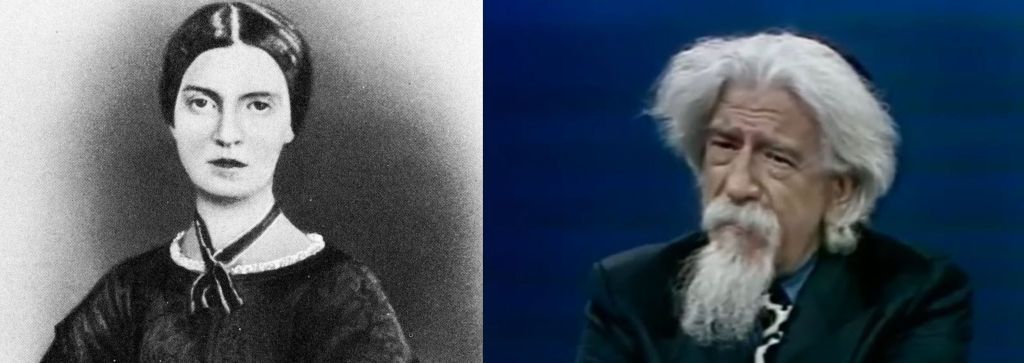
Paradise

berliner-rabbinical-seminary-1988

A story is told about a rabbi who once entered heaven in a dream. He was permitted to approach the temple in Paradise where the great sages of the Talmud, the tannaim, were spending their eternal lives. He saw that they were just sitting around tables studying the Talmud. The disappointed rabbi wondered, “Is this all there is to Paradise?” But suddenly he heard a voice, “You are mistaken. The tannaim are not in Paradise. Paradise is in the tannaim.”

Abraham Joshua Heschel, Moral Grandeur and Spiritual Audacity: Essays