I don’t care about history Cause that’s not where I want to be Rock ‘n’ Roll High School, The Ramones
Most Americans don’t know much about history. They may know highlight events, or events that are personal to them, or events that support their particular ideology. But the big, long-term picture—not just America, not just recent times—is outside their interest or learning.
Which is unfortunate from a political perspective, and especially in critical political times. Which these are.
One thing we learn is that history is neither a continuum nor a pendulum. It is messy and nonlinear. Leaders, movements and eras may last much longer than we think. Or they can be over in a wink. The only way to see that is the long and wide view.
China is a good example of this perspective. Over the course of thousands of years, China has seen, if not all, then most of everything. Some of its historical eras lasted longer than America has been a nation-in-the-making and nation. Chinese citizens may not be better studied historians than their American counterparts, but they don’t have to be. History is baked into Chinese culture, and not just in our Fourth of July way. If you don’t believe it, listen to Xi Jinping’s long policy harangue at the recent Communist Party Congress, where he became essentially dictator for life.
How does this fit into politics and the upcoming election?
We are living through a time when a formerly quieter movement, a regressive and reactionary one, has found its voice and its votes. How that plays out in elections and policies is an open question, and will be even after these midterm elections are over. Short-lived and reversible? Long-term and foundational?
As smart as we think we are, as smart as some pundits think they are, we don’t know. Even though we don’t know—because we don’t know—we are obliged to act, to do the best we can.
Which means, good or bad historians, in a democracy we vote and encourage others to vote. However it turns out, that’s our contribution to history.
“This is the secret of the teaching. It may be so, but it is not always so. Without being caught by words or rules, without many preconceived ideas, we actually do something, and doing something, we apply our teaching.” Shunryu Suzuki
One may be very smart, somewhat smart, somewhat not smart or very not smart. One thing widely shared is intellectual stubbornness. That is: I’ve thought this through and I am unalterably sure I am right.
Some problems. Those who believe they’ve “thought things through” may or may not have. Even if they’ve thought things through, they or the situation or the world may have changed. In fact, they and the situation and the world have changed, for certain. It is the truth of everything changes.
Intellectual stubbornness is easy. Once you make the initial effort, your thinking can be locked down. Intellectual flexibility is hard. “I don’t know” and “I am wrong” are two phrases that don’t come easily to many people. “I know” and “I am right” is so much simpler. Even if they don’t and they aren’t.
The form of media of course matters, and those forms have evolved dynamically over the past couple of decades. But creativity, message, heart and soul also matter. And these are eternal.
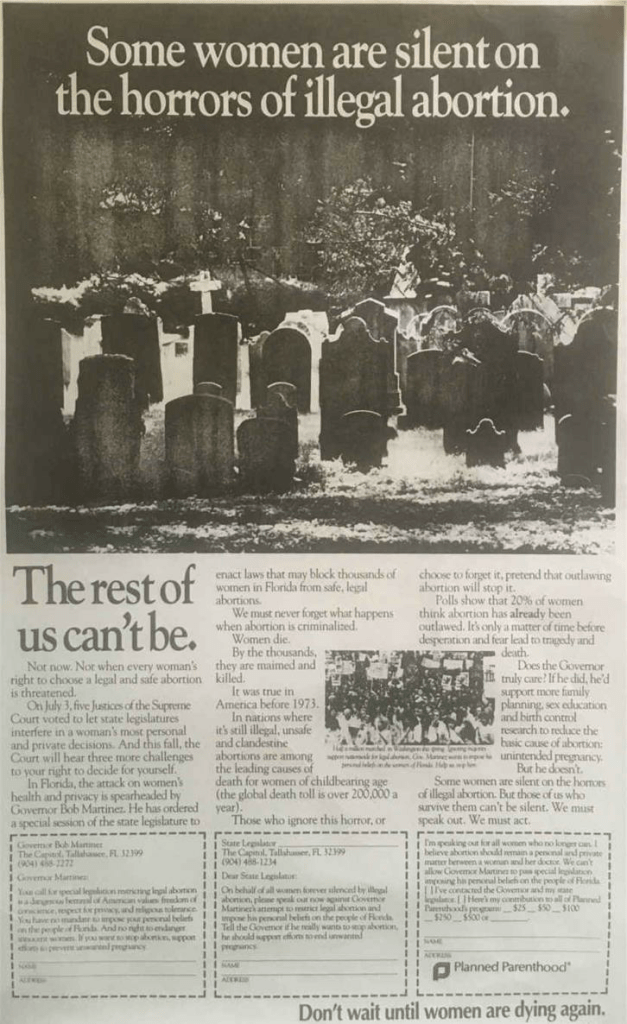
For decades, Jerry Mander and his colleagues used the available tools to craft advertising aimed at changing minds and changing the world, one reader and one critical issue ad at a time. This book serves as a reminder, not just to those in the creative industries but certainly there, how much good their gifts—your gifts—can do. One creation at a time.
The New York Times, 6 December 1999The New York Times, 3 January 1984The New York Times, 31 October 1993; Los Angeles Times, 27 December 1993The New York Times, 27 April 1989; The San Francisco Chronicle, 27 April 1989; The South Bend Tribune, 22 June 1989; The Miami Herald, 5 October 1989; The Tampa Tribune, 5 October 1989; The Orlando Sentinel, 5 October 1989; Tallahassee Democrat, 5 October 1989; The Naples Daily News, 10 October 1989
Alinsky’s thinking was informed by decades of organizing for change in an America that resisted change. He recognized the mistakes made in the 1960s and would recognize the mistakes being made right now.
Like it or not, the Democrats, as one of only two parties, are not just the primary champions for change, but are the current hope for defending and securing democracy in America. The 2022 elections are the next test of that, but not the last.
It isn’t easy to heed Alinksy’s call to communicate giving “full respect to the other’s values.” Maybe Democrats think there is a point beyond which those values are so abhorrent—or completely absent—that respect is out of the question. Maybe we’ve reached that point.
But Alinsky’s wisdom can’t be dismissed. Read the final paragraph, written more than fifty years ago. Americans who are “hurt, bitter, suspicious, feeling rejected and at bay”, whose “fears and frustrations at their helplessness are mounting to a point of a political paranoia which can demonize people to turn to the law of survival in the narrowest sense.” Sound familiar?
As an organizer I start from where the world is, as it is, not as I would like it to be. That we accept the world as it is does not in any sense weaken our desire to change it into what we believe it should be — it is necessary to begin where the world is if we are going to change it to what we think it should be. That means working in the system….
This failure of many of our younger activists to understand the art of communication has been disastrous. Even the most elementary grasp of the fundamental idea that one communicates within the experience of his audience — and gives full respect to the other’s values — would have ruled out attacks on the American flag. The responsible organizer would have known that it is the establishment that has betrayed the flag while the flag, itself, remains the glorious symbol of America’s hopes and aspirations, and he would have conveyed this message to his audience….
The “silent majority,” now, are hurt, bitter, suspicious, feeling rejected and at bay. This sick condition in many ways is as explosive as the current race crisis. Their fears and frustrations at their helplessness are mounting to a point of a political paranoia which can demonize people to turn to the law of survival in the narrowest sense. These emotions can go either to the far right of totalitarianism or forward to Act II of the American Revolution.
To look upon and to touch Oh gosh Life is really too much Donovan, Oh Gosh
The designated Jewish Days of Awe have passed, at least for this year.
The birds this morning overwhelmed me with their songs, so multiple and layered that if you tried to follow just one thread of notes you would be even more lost than you usually are.
It is awesome.
I think about experiences, some natural, some induced, some sought, some accidental, that are inescapable awe. Time stopping, time reversing and advancing awe.
That is what all the experiences are about, at their heart, at their core (couer). Once awed—by birds, love, drugs, god—the unawed will occupy us again, replacing awe with the agenda of our selves. Ah, but having visited there, Aweland, we may return.
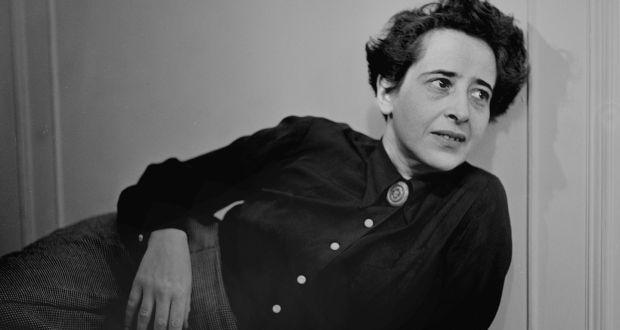
“That this called not only for lamentation and denunciation but for comprehension seemed to me obvious. This book is an attempt at understanding what at first and even second glance appeared simply outrageous.
“Comprehension, however, does not mean denying the outrageous, deducing the unprecedented from precedents, or explaining phenomena by such analogies and generalities that the impact of reality and the shock of experience are no longer felt. It means, rather, examining and bearing consciously the burden that events have placed upon us—neither denying their existence nor submitting meekly to their weight as though everything that in fact happened could not have happened otherwise. Comprehension, in short, means the unpremeditated, attentive facing up to, and resisting of, reality—whatever it may be or might have been.”
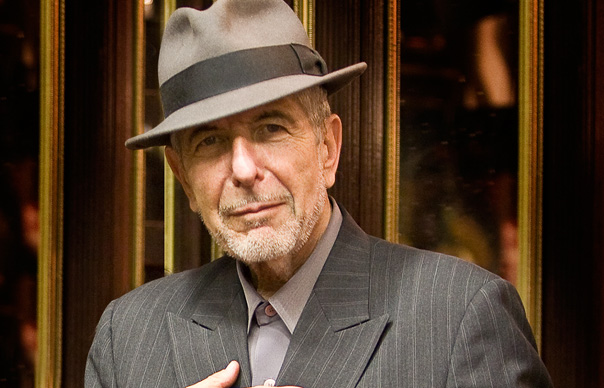
It is easy to point to Leonard Cohen’s Who By Fire for Yom Kippur, as it is his take on the liturgical poem Unetanah Tokef, recited during the holiday services. The poem says:
On Rosh Hashanah it is inscribed, And on Yom Kippur it is sealed. How many shall pass away and how many shall be born, Who shall live and who shall die, Who shall reach the end of his days and who shall not, Who shall perish by water and who by fire, Who by sword and who by wild beast, Who by famine and who by thirst, Who by earthquake and who by plague, Who by strangulation and who by stoning, Who shall have rest and who shall wander, Who shall be at peace and who shall be pursued, Who shall be at rest and who shall be tormented, Who shall be exalted and who shall be brought low, Who shall become rich and who shall be impoverished. But repentance, prayer and righteousness avert the severe decree.
Here it is featured as one of three songs that cover kindred territory and decades of his creative and spiritual life: Who By Fire (1974), Everybody Knows (1988), You Want It Darker (2016).
Appropriate for Yom Kippur, you will read and hear the evolution that artists model for us as they—and we—face our world, our lives and each other. Cohen as a man in his thirties, in his fifties, in his eighties.
You Want It Darker, written as he approached death, is punctuated by an exclamation suitable for facing your god, your life, yourself: Hineni. Here I am.
Who By Fire
And who by fire, who by water Who in the sunshine, who in the night time Who by high ordeal, who by common trial Who in your merry merry month of may Who by very slow decay And who shall I say is calling?
And who in her lonely slip, who by barbiturate Who in these realms of love, who by something blunt Who by avalanche, who by powder Who for his greed, who for his hunger And who shall I say is calling?
And who by brave assent, who by accident Who in solitude, who in this mirror Who by his lady’s command, who by his own hand Who in mortal chains, who in power And who shall I say is calling?
Everybody Knows
Everybody knows that the dice are loaded Everybody rolls with their fingers crossed Everybody knows the war is over Everybody knows the good guys lost Everybody knows the fight was fixed The poor stay poor, the rich get rich That’s how it goes Everybody knows
Everybody knows that the boat is leaking Everybody knows that the captain lied Everybody got this broken feeling Like their father or their dog just died Everybody talking to their pockets Everybody wants a box of chocolates And a long-stem rose Everybody knows
Everybody knows that you love me baby Everybody knows that you really do Everybody knows that you’ve been faithful Oh, give or take a night or two Everybody knows you’ve been discreet But there were so many people you just had to meet Without your clothes Everybody knows
Everybody knows, everybody knows That’s how it goes Everybody knows Everybody knows, everybody knows That’s how it goes Everybody knows
And everybody knows that it’s now or never Everybody knows that it’s me or you And everybody knows that you live forever When you’ve done a line or two Everybody knows the deal is rotten Old Black Joe’s still picking cotton For your ribbons and bows And everybody knows
And everybody knows that the Plague is coming Everybody knows that it’s moving fast Everybody knows that the naked man and woman Are just a shining artifact of the past Everybody knows the scene is dead But there’s gonna be a meter on your bed That will disclose What everybody knows
And everybody knows that you’re in trouble Everybody knows what you’ve been through From the bloody cross on top of Calvary To the beach of Malibu Everybody knows it’s coming apart Take one last look at this Sacred Heart Before it blows Everybody knows
You Want It Darker
If you are the dealer, I’m out of the game If you are the healer, it means I’m broken and lame If thine is the glory, then mine must be the shame You want it darker We kill the flame
Magnified, sanctified Be the holy name Vilified, crucified In the human frame A million candles burning For the help that never came You want it darker
Hineni, hineni I’m ready, my Lord
There’s a lover in the story But the story’s still the same There’s a lullaby for suffering And a paradox to blame But it’s written in the scriptures And it’s not some idol claim You want it darker We kill the flame
They’re lining up to prisoners And the guards are taking aim I struggle with some demons They were middle class and tame I didn’t know I had permission To murder and to maim You want it darker
Hineni, hineni I’m ready, my Lord
Magnified, sanctified Be the holy name Vilified, crucified In the human frame A million candles burning For the love that never came You want it darker We kill the flame
If you are the dealer, let me out of the game If you are the healer, I’m broken and lame If thine is the glory, mine must be the shame You want it darker
Politicians and others in our worlds, public and private, do some good things. Politicians and others in our worlds, public and private, do some not so good or bad things. As much as they make our lives better, they are known to make our lives at various times worse.
Let us appreciate artists, who are trying, sometimes subtly, sometimes wildly, to make things that do make our lives a little better, or a lot better. When we are put upon or put down, they give us reasons to live. Also, do not forget that the people who love us are artists too. We are their art. And they are ours.
In the seventh month on the first day of the month, you shall observe a sacred occasion. You shall observe it as a day when the coyote cries. (Numbers 29:1)
No silver trumpet no ram’s horn no long blasts. Coyote crying in the valley under the new moon like fire on the mountain shouting hineni here I am.
Rosh Hashanah and the Ten Days of Awe are a fitting time to begin, resume or continue a practice of meditation. While meditation is associated with a range of personal and social missions, it is, beneath it all, a way to see things as they are, the reality called in some traditions thusness or suchness. A note of these holidays is looking unflinchingly within and without. At what has been and what is.
Aryeh Kaplan was the contemporary expert on Jewish meditation (Jewish Meditation) . The last chapter of his book Meditation and Kabbalah is devoted to Rabbi Nachman of Bratslav (1772–1810). Rabbi Nachman, great-grandson of the Baal Shem Tov, is the most gifted of Hasidic masters, both as a mystic and as a creator of stories so mysterious and complex (A Palace of Pearls: The Stories of Rabbi Nachman of Bratslav) that they served as inspiration for Kafka.
Kaplan describes many different meditation practices, such as mantra, contemplation and visualization. About Rabbi Nachman he writes:
“The classical word for meditation is Hitbodedut, which literally means mental self-seclusion. Although this term has been used in this context for a thousand years, the name with which it is most often associated is Rabbi Nachman of Breslov. Where other masters speak of Hitbodedut only occasionally, Rabbi Nachman has provided us with an entire literature.”
A small selection from Rabbi Nachman’s directions on meditation:
You must therefore be alone, at night, on an isolated path, where people are not usually found. Go there and meditate, cleansing your heart and mind of all worldly affairs. You will then be worthy of a true aspect of self-nullification.
Meditating at night in an isolated place, you should make use of many prayers and thoughts, until you nullify one trait or desire. Then make use of much meditation to nullify another trait or desire. Continue in such a time and place, proceeding in this manner, until you have nullified all. If some ego remains, work to nullify that. Continue until nothing remains.
Rabbi Nachman, Likutey Moharan
Hitbodedut meditation is the best and the highest level of worship.
Set aside an hour or more each day to meditate, in the fields or in a room, pouring out your thoughts to God. Make use of arguments and persuasion, with words of grace, longing and petition, supplicating God and asking that He bring you to serve Him in truth.
Such meditation should be in the language that you normally speak. It is difficult to express your thoughts in Hebrew, and the heart is therefore not drawn after the words. We do not normally speak Hebrew, and are not accustomed to expressing ourself in this language. It is therefore much easier to express yourself in your native language….
In your everyday native language, express all your thoughts to God, speaking of everything that is in your heart. This can involve regret and repentance for the past, or requests and supplications asking that you should truly come close to God in the future. Every person can express his own thoughts, each according to his level….
Even if you cannot speak at all, you should simply repeat a single word, and this, too, is very good. If you can say nothing else, remain firm, and repeat this word over and over again, countless times. You can spend many days with this one word alone, and this will be very beneficial. Remain firm, repeating your word or phrase countless times. God will eventually have mercy on you and open your heart so that you will be able to express all your thoughts.
Speech has great power. It is even possible to prevent a gun from firing. Understand this.






 Bob Schwartz