Beautiful Boy
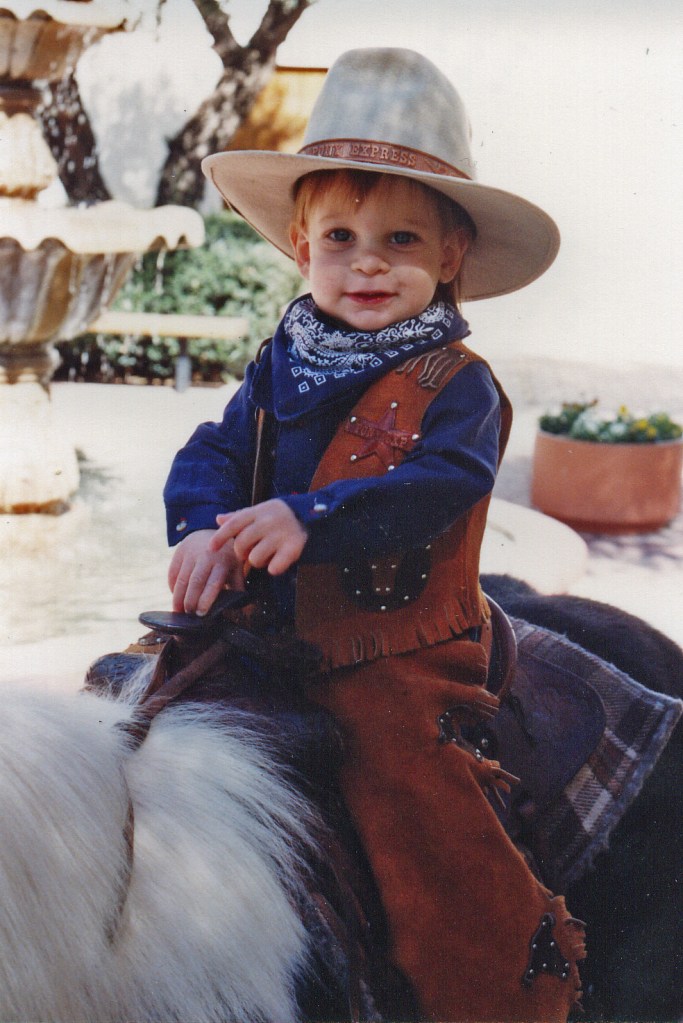
Beautiful Boy
Desert to ocean to hills
hills to lake to ocean
roads straight
gently curving
twisted.
Sun rises in the west
sun sets in the east
sun rises
moon follows.
Love is a lasting legacy we leave.
Beautiful Boy
Desert to ocean to hills
hills to lake to ocean
roads straight
gently curving
twisted.
Sun rises in the west
sun sets in the east
sun rises
moon follows.
Love is a lasting legacy we leave.
Words fail
Everyone knows
even the pros
that words fail
pretend words don’t
fool some of the people
including ourselves
all of the time trying
to fail less
© 2022 Bob Schwartz

Peace Piece
For Bill Evans
Peace on the mountain
Peace in the valley
Peace at the waterfall
Cascading notes
High and low
Smooth and rough
In the end
Begin again
Play
Three or four notes in, you are somewhere else. Not a perfect place, but perfectly there. Holy of holies, commonplace of commonplaces. Which is, when we ask, if we ask, all we ask for.
Pay attention—how could you not?—to the few discordants thrown in setting what came before and comes after. We are always setting what came before and what comes after.
As played by Bill Evans, it is all. A just-discovered new performance by guitarist Sean Shibe is now on the list. Now.
© 2022 Bob Schwartz

Republicans think they have another rhetorical winner in tagging anyone with any contemporary ideas and policies as “woke”. This appears to have some appeal, demonstrated by presidential wannabe DeSantis delivering an entire “Woke! Woke! Woke!” speech.
The opposite of woke is asleep. The only question then is whether Republicans want an electorate that is asleep. Maybe.
Or is it even more revealing? Maybe Republicans want to govern while they themselves are asleep, dreaming of reconstructing a simpler and more manageable (for them) America that never existed.
If Republicans want to stay asleep and dream, let us help. Why should they have their dreamtime interrupted by the inconvenience of actually governing? Even bad governing takes time. So let us send them back to their comfortable bedrooms, or wherever else they lay their heads, and let them dream their unawake lives away. Far away from the controls of government.
© 2022 Bob Schwartz

Door in a room
You look around a room
In the middle is a door
You stand in front of the door
Walk through to the other side
You look around
You are in the same room
Only on the other side of the door
You turn around to face the door
You walk back through to the other side
Where were you
Where have you been
Where are you
What is this room
What is this door
Knock knock
© 2022 Bob Schwartz

First they came for the socialists, and I did not speak out—because I was not a socialist.
Then they came for the trade unionists, and I did not speak out—because I was not a trade unionist.
Then they came for the Jews, and I did not speak out—because I was not a Jew.
Then they came for me—and there was no one left to speak for me.
—Martin Niemöller
The New York Times reports that according to analysis of 10 states with available voter registration data, “On average in the month after Dobbs, 55 percent of newly registered voters in those states were women, according to the analysis, up from just under 50 percent before the decision was leaked in early May.”
Which begs the question: Why didn’t they choose to vote before?
The most likely answer is that they didn’t vote because they weren’t motivated and interested enough, that is, the circumstances did not seem to affect their interests enough. Now they do.
Which is shortsighted because:
IN A DEMOCRACY VOTING IS ALWAYS IN YOUR INTEREST.
The famous quote from Martin Niemöller about living in Nazi Germany is not specifically about voting, just about “speaking out”. So if we substitute “vote” for “speaking out”:
First they came for the socialists, and I did not vote—because I was not a socialist.
Then they came for the trade unionists, and I did not vote—because I was not a trade unionist.
Then they came for the Jews, and I did not vote—because I was not a Jew.
Then they came for me—and there was no one left to vote for me.
In a democracy, voting is the ultimate and most effective means of speaking out. Americans who are newly choosing to register—and hopefully then to vote—are welcome and needed participants in that democracy.
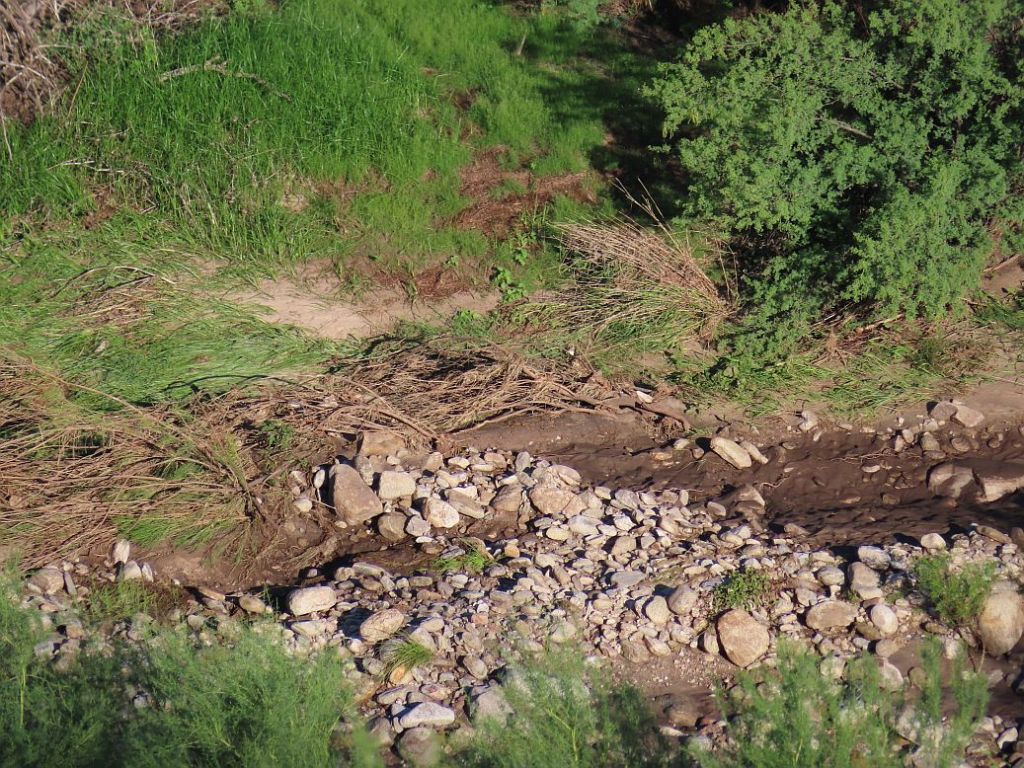
Night monsoon leaves water rushing through the wash. The mountains are silent and invisible. The clouds are silent and invisible. The wash that is usually dry is a noisy stream. The rain washed the mountains, the mountains washed the waters.
“All waters appear at the foot of the eastern mountains. Accordingly, all mountains ride on clouds and walk in the sky. All mountains are the tops of the heads of all waters. Walking beyond and walking within are both done on water. All mountains walk with their toes on waters and make them splash.”
Zen Master Dogen, Mountains and Waters Sutra

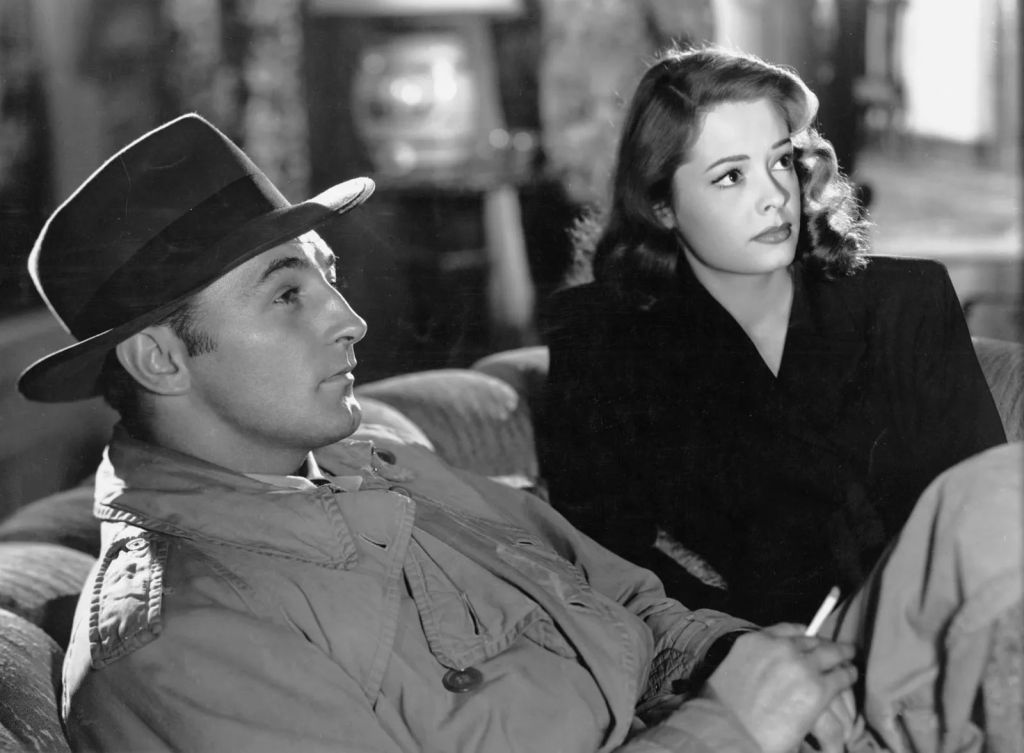
Out of the Past (1947), directed by Jacques Tourneur and starring Robert Mitchum, has two distinctions.
It is the best film noir ever produced.
It is the most quotable movie ever produced.
It has competition in both categories.
Roman Polanski’s Chinatown (1974) is film noir, more like neo-noir, since it was made after the era when film noir first flourished. Chinatown is one of the great movies ever, near top of the all-time list, but Out of the Past is literally definitional of the genre. Once it was made, other artists could be inspired and attempt, but it would never be topped.
As for quotes from dialogue, plenty of movies have that, but here there are dozens, each one sharper and more full of weary wisdom than the next. Rather than document them all here, I focus on one that is good advice for anyone.
The scene is Whit Sterling (Kirk Douglas), a big “operator”, hiring Jeff Bailey (Robert Mitchum), to find the woman who left him and took off with his money. (Among other distinctions of Out of the Past, Jane Greer as Kathie Moffat is also the greatest femme fatale in all film noir. If you watch the movie, and you should, check out the first time Jeff sees her, walking into a Mexican bar. His fate is sealed, and as viewers so is ours.)
Here’s wisdom from Out of the Past:
Whit Sterling: You just sit and stay inside yourself. You wait for me to talk. I like that.
Jeff Bailey: I never found out much listening to myself.
And here is the scene when we first meet Kathie Moffat:

The central theme of the Chuang Tzu may be summed up in a single word: freedom.
–Burton Watson
But to wear out your brain trying to make things into one without realizing that they are all the same–this is called “three in the morning.” What do I mean by “three in the morning”? When the monkey trainer was handing out acorns, he said, “You get three in the morning and four at night.” This made all the monkeys furious. “Well, then,” he said, “you get four in the morning and three at night.” The monkeys were all delighted. There was no change in the reality behind the words, and yet the monkeys responded with joy and anger. Let them, if they want to. So the sage harmonizes with both right and wrong and rests in Heaven the Equalizer. This is called walking two roads.
-Chuang Tzu
We don’t know much about the life of Chuang Tzu (aka Zhuangzi). He may have been born around 369 BCE and have died around 286 BCE. We have the texts attributed to him, which are simply known by his name, but we aren’t sure which parts are actually his and which were written and compiled by others. Seven sections of the Chuang Tzu, the Inner Chapters, are considered the most likely to be fully his.
We do know that he is one of the most creative thinkers in the thousands of years of Chinese history, on a par with the much better known Confucius. Chuang Tzu is consistently grouped with Lao Tzu (who was almost certainly not a real person), known for the Tao Te Ching, as foundational figures in the religion and philosophy of Taoism.
Even those who know nothing else about Chuang Tzu or Taoism know this story:
Once upon a time, I, Chuang Tzu, dreamt that I was a butterfly, flitting around and enjoying myself. I had no idea I was Chuang Tzu. Then suddenly I woke up and was Chuang Tzu again. But I could not tell, had I been Chuang Tzu dreaming I was a butterfly, or a butterfly dreaming I was now Chuang Tzu?
If you live in era of seeming chaos, personal or public, there is no one more fitting than Chuang Tzu. Burton Watson, one of his translators into English, explains in the Preface to Chuang Tzu: Basic Writings:
The central theme of the Chuang Tzu may be summed up in a single word: freedom.
Essentially, all the philosophers of ancient China addressed themselves to the same problem: how is man to live in a world dominated by chaos, suffering, and absurdity? Nearly all of them answered with some concrete plan of action designed to reform the individual, to reform society, and eventually to free the world from its ills. The proposals put forward by the Confucians, the Mo-ists, and the Legalists, to name some of the principal schools of philosophy, are all different, but all are based upon the same kind of common-sense approach to the problem, and all seek for concrete social, political, and ethical reforms to solve it.
Chuang Tzu’s answer, however, the answer of one branch of the Taoist school, is radically different from these, and is grounded upon a wholly different type of thinking. It is the answer of a mystic, and in attempting to describe it here in clear and concrete language, I shall undoubtedly be doing violence to its essentially mystic and indescribable nature. Chuang Tzu’s answer to the question is: free yourself from the world.
From Burton Watson’s translation:
Discussion on Making All Things Equal
Once a man receives this fixed bodily form, he holds on to it, waiting for the end. Sometimes clashing with things, sometimes bending before them, he runs his course like a galloping steed, and nothing can stop him. Is he not pathetic? Sweating and laboring to the end of his days and never seeing his accomplishment, utterly exhausting himself and never knowing where to look for rest–can you help pitying him? I’m not dead yet! he says, but what good is that? His body decays, his mind follows it–can you deny that this is a great sorrow? Man’s life has always been a muddle like this. How could I be the only muddled one, and other men not muddled?
If a man follows the mind given him and makes it his teacher, then who can be without a teacher? Why must you comprehend the process of change and form your mind on that basis before you can have a teacher? Even an idiot has his teacher. But to fail to abide by this mind and still insist upon your rights and wrongs-this is like saying that you set off for Yiieh today and got there yesterday. This is to claim that what doesn’t exist exists. If you claim that what doesn’t exist exists, then even the holy sage Yu couldn’t understand you, much less a person like me!
Words are not just wind. Words have something to say. But if what they have to say is not fixed, then do they really say something? Or do they say nothing? People suppose that words are different from the peeps of baby birds, but is there any difference, or isn’t there? What does the Way rely upon,’ that we have true and false? What do words rely upon, that we have right and wrong? How can the Way go away and not exist? How can words exist and not be acceptable? When the Way relies on little accomplishments and words rely on vain show, then we have the rights and wrongs of the Confucians and the Moists. What one calls right the other calls wrong; what one calls wrong the other calls right. But if we want to right their wrongs and wrong their rights, then the best thing to use is clarity.
Everything has its “that,” everything has its “this.” From the point of view of “that” you cannot see it, but through understanding you can know it. So I say, “that” comes out of “this” and “this” depends on “that”-which is to say that “this” and “that” give birth to each other. But where there is birth there must be death; where there is death there must be birth. Where there is acceptability there must be unacceptability; where there is unacceptability there must be acceptability. Where there is recognition of right there must be recognition of wrong; where there is recognition of wrong there must be recognition of right. Therefore the sage does not proceed in such a way, but illuminates all in the light of Heaven.’ He too recognizes a “this,” but a “this” which is also “that,” a “that” which is also “this.” His “that” has both a right and a wrong in it; his “this” too has both a right and a wrong in it. So, in fact, does he still have a “this” and “that”? Or does he in fact no longer have a “this” and “that”? A state in which “this” and “that” no longer find their opposites is called the hinge of the Way. When the hinge is fitted into the socket, it can respond endlessly. Its right then is a single endlessness and its wrong too is a single endlessness. So I say, the best thing to use is clarity.
To use an attribute to show that attributes are not attributes is not as good as using a nonattribute to show that attributes are not attributes. To use a horse to show that a horse is not a horse is not as good as using a non-horse to show that a horse is not a horse,’ Heaven and earth are one attribute; the ten thousand things are one horse.
What is acceptable we call acceptable; what is unacceptable we call unacceptable. A road is made by people walking on it; things are so because they are called so. What makes them so? Making them so makes them so. What makes them not so? Making them not so makes them not so. Things all must have that which is so; things all must have that which is acceptable. There is nothing that is not so, nothing that is not acceptable.
For this reason, whether you point to a little stalk or a great pillar, a leper or the beautiful Hsi-shih, things ribald and shady or things grotesque and strange, the Way makes them all into one. Their dividedness is their completeness; their completeness is their impairment. Nothing is either complete or impaired, but all are made into one again. Only the man of far-reaching vision knows how to make them into one. So he has no use [for categories], but relegates all to the constant. The constant is the useful; the useful is the passable; the passable is the successful; and with success, all is accomplished. He relies upon this alone, relies upon it and does not know he is doing so. This is called the Way.
But to wear out your brain trying to make things into one without realizing that they are all the same–this is called “three in the morning.” What do I mean by “three in the morning”? When the monkey trainer was handing out acorns, he said, “You get three in the morning and four at night.” This made all the monkeys furious. “Well, then,” he said, “you get four in the morning and three at night.” The monkeys were all delighted. There was no change in the reality behind the words, and yet the monkeys responded with joy and anger. Let them, if they want to. So the sage harmonizes with both right and wrong and rests in Heaven the Equalizer. This is called walking two roads….
The torch of chaos and doubt–this is what the sage steers by. So he does not use things but relegates all to the constant. This is what it means to use clarity.
Now I am going to make a statement here. I don’t know whether it fits into the category of other people’s statements or not. But whether it fits into their category or whether it doesn’t, it obviously fits into some category. So in that respect it is no different from their statements. However, let me try making my statement.
There is a beginning. There is a not yet beginning to be a beginning. There is a not yet beginning to be a not yet beginning to be a beginning. There is being. There is nonbeing. There is a not yet beginning to be nonbeing. There is a not yet beginning to be a not yet beginning to be nonbeing. Suddenly there is being and nonbeing. But between this being and nonbeing, I don’t really know which is being and which is nonbeing. Now I have just said something. But I don’t know whether what I have said has really said something or whether it hasn’t said something.
Trump will be getting more and more messages of appreciation from criminals who, like him, are being persecuted by law enforcement. Here is one of those possible messages.
Dear President Trump,
Thank you sir. Police, prosecutors, judges and juries say that I am a criminal and have been for many years.
Wrong, wrong, wrong!
Finally, someone important like you has the courage to say that the system is rigged, that law enforcement is corrupt, that all they do is plant evidence and frame innocent people like us, when we have done nothing wrong. Nothing!
You are my hero. You are a hero to all of us wrongly accused, tried and convicted.
The fake “justice” system is never going to convict you, sir. Because people like me are on your side.
Keep up the fight against all law enforcement. FBI never! Trump forever!
I know it probably won’t happen, but I sure do look forward to meeting you and thanking you in person when I get out of prison.
Not A Criminal
 Bob Schwartz