It is advised that attachment to any of these will result in suffering, for yourself and others. You don’t have to be involved in any tradition, just as a human being, to know that is true.
Concern about receiving or not receiving gifts has other facets. Concern about receiving the “wrong” gift, or concern about whether to give a gift or about giving the “wrong” gift.
This is the season for receiving and giving gifts. This message is not about receiving or not receiving or giving or not giving gifts.
You may receive gifts and give gifts. You may be famous or disreputable. You may win praise or be subject to criticism. You may feel pleasure or pain. This is life. The holidays are on their way.
This season, clinging to concerns about what you receive will not make you and others happy. The empty box, or even no box at all, is okay.
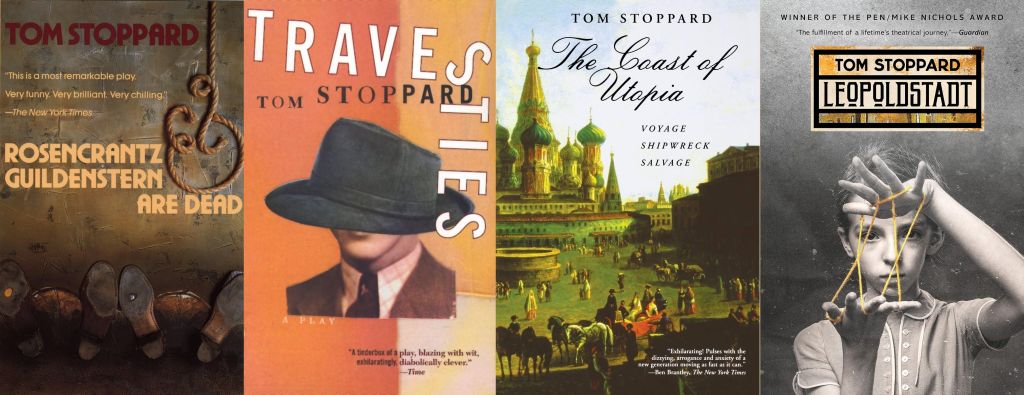
He was not just “playwright” in the limited sense of writer of brilliant, crowd-pleasing and critically acclaimed stage events. He also wrote a number of radio and TV plays, and many movies including Brazil (1985), Empire of the Sun (1987), The Russia House (1990), Billy Bathgate (1991), Shakespeare in Love (1998), Enigma (2001), and Anna Karenina (2012). Those of us who didn’t get to see or hear all the plays read them like novels, imagining each scene in our own theater.
When the BBC wanted to mark the 40th anniversary of Pink Floyds Dark Side of the Moon in 2013, they asked Stoppard to create a radio play. The result is Darkside, which integrates dramatic wit and philosophy into the album. Who does that? Who could do that?
Here are three descriptions and appreciations from the Guardian on the occasion of his death:
Long ago, my high school English class took a trip to see a Broadway show newly arrived from Britain. Rosencrantz and Guildenstern Are Dead was the play that launched Stoppard’s career. You may find the film version, which Stoppard directed, or you may and should read the play. The trick, which he used later in Shakespeare in Love, was to weave together familiar Shakespeare with universal modern issues. I was already a lover of great plays and playwrights, but seeing this play changed what I thought plays, in fact any artistic creation, could be. I have been with Stoppard for the decades since.
Sample Stoppard however you can. It might change you too.
Please pull back for a moment from thinking about what bargains we might find on Black Friday.
Black Friday used to be the one day after Thanksgiving, but is now an entire season of deals that seems to begin in October.
If you step back from bargain hunting, you might wonder why it is called “Black Friday”.
The term “Black Friday” has an interesting history. While widespread retail sales on this day began in the mid-20th century, the name itself has contested origins: The most commonly cited explanation is that it refers to retailers moving from being “in the red” (operating at a loss) to being “in the black” (turning a profit) due to the surge in sales. However, this explanation appears to be a later rebranding.
The term actually originated in Philadelphia in the 1960s, where police used it to describe the chaos of heavy pedestrian and vehicle traffic that flooded the city the day after Thanksgiving. The crowds came for the Army-Navy football game held on Saturday and began their holiday shopping on Friday. Police had to work long shifts dealing with traffic and crowds, which they found unpleasant—hence the “black” descriptor.
Retailers initially disliked the negative connotation and tried to rebrand it as “Big Friday,” but the name Black Friday stuck. By the 1980s, retailers embraced the term, reframing it with the more positive “red to black” accounting narrative.
Just for a moment—the deals will wait—let’s change colors. Yesterday, at Thanksgiving, we may have been able to share company and a table with family and friends. In the coming weeks, we will be celebrating holidays that have light as a theme.
So let’s set aside the black and feature the light. This, the day after Thanksgiving, is Bright Friday. Are there light Bright Friday things waiting to be grabbed? Sure, if you know what they are and can find them.
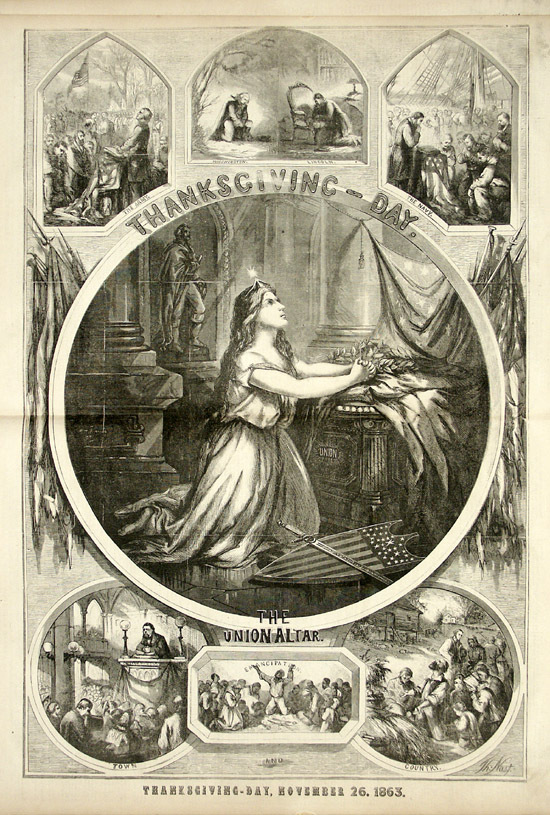
“Thanksgiving-Day,” by Thomas Nast, Harper’s Weekly, December 5, 1863.
The modern Thanksgiving holiday begins with Abraham Lincoln issuing a Thanksgiving Day proclamation on October 3, 1863, at the height of the Civil War.
At that point, America was a country of two cultures; in fact, of two nations at war. Even history was the subject of dispute. The North traced our national origin to the Puritans of New England, thus Thanksgiving was their American holiday. The South believed America began with the settlement of Jamestown, Virginia.
In his proclamation, Lincoln calls for healing and for “peace, harmony, tranquillity, and union.” In terms of union, however, it isn’t clear who Lincoln refers to when he asks for “humble penitence for our national perverseness and disobedience.” Exactly who has been perverse and disobedient?
One thing is clear. Even with all his divine pleas, Lincoln calls this conflict of principles and cultures inevitable—“the lamentable civil strife in which we are unavoidably engaged.”
Lincoln held a famously and understandably dark view of his American times, shaded by realities and by his own depressive personality. We can and should take a brighter view this Thanksgiving, having come so far from the America of 1863, and having much to be thankful for. But just as we repeat his call for “peace, harmony, tranquillity” we are remiss to ignore the realities of 2016. Like Lincoln, we should be big, open and wise enough to see things as they are, and to change them as needed, always being painfully aware of the cost.
From his proclamation:
It has seemed to me fit and proper that they should be solemnly, reverently, and gratefully acknowledged as with one heart and one voice by the whole American people. I do, therefore, invite my fellow-citizens in every part of the United States, and also those who are at sea, and those who are sojourning in foreign lands, to set apart and observe the last Thursday of November next as a Day of Thanksgiving and Prayer to our beneficent Father who dwelleth in the heavens. And I recommend to them that, while offering up the ascriptions justly due to Him for such singular deliverances and blessings, they do also, with humble penitence for our national perverseness and disobedience, commend to His tender care all those who have become widows, orphans, mourners, or sufferers in the lamentable civil strife in which we are unavoidably engaged, and fervently implore the interposition of the Almighty hand to heal the wounds of the nation, and to restore it, as soon as may be consistent with the Divine purposes, to the full enjoyment of peace, harmony, tranquillity, and union.
The Shaker dance song Simple Gifts (Joseph Brackett, 1848) is the ultimate Thanksgiving song. It is also the ultimate American song, provided we recognize that in America, the most religious and richest nation on earth, simplicity and humility are ideals worth aspiring to and striving for.
Ken Burns writes this about his documentary The Shakers:
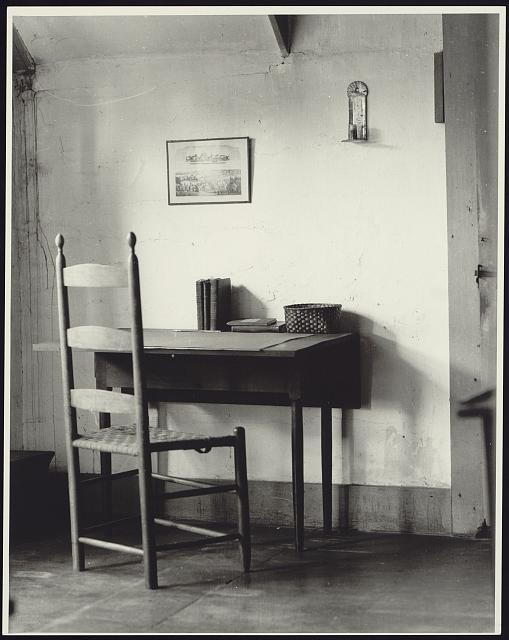
They called themselves the United Society of Believers in Christ’s Second Appearing, but because of their ecstatic dancing, the world called them Shakers. Though they were celibate, they are the most enduring religious experiment in American history. They believed in pacifism, natural health and hygiene, and for more than 200 years insisted that their followers should strive for simplicity and perfection in everything they did.
Shaker design, including furniture and baskets, may be familiar to you. So may the melody of Simple Gifts. It is frequently used in pop culture, and is most famous musically in Aaron Copland’s orchestral masterpiece, Appalachian Spring. And while the tune is often heard, the lyrics are not as frequently sung. Here is an appropriately unadorned version by Judy Collins.
Even if you can’t read music, you can look at the musical score and see how very simple this song is:
Here are the lyrics. Happy Thanksgiving.
‘Tis the gift to be simple, ’tis the gift to be free
‘Tis the gift to come down where we ought to be,
And when we find ourselves in the place just right,
‘Twill be in the valley of love and delight.
When true simplicity is gain’d,
To bow and to bend we shan’t be asham’d,
To turn, turn will be our delight,
Till by turning, turning we come ’round right.
“Imaginatione and historie are a fine paire.” Made up old-fashioned quote
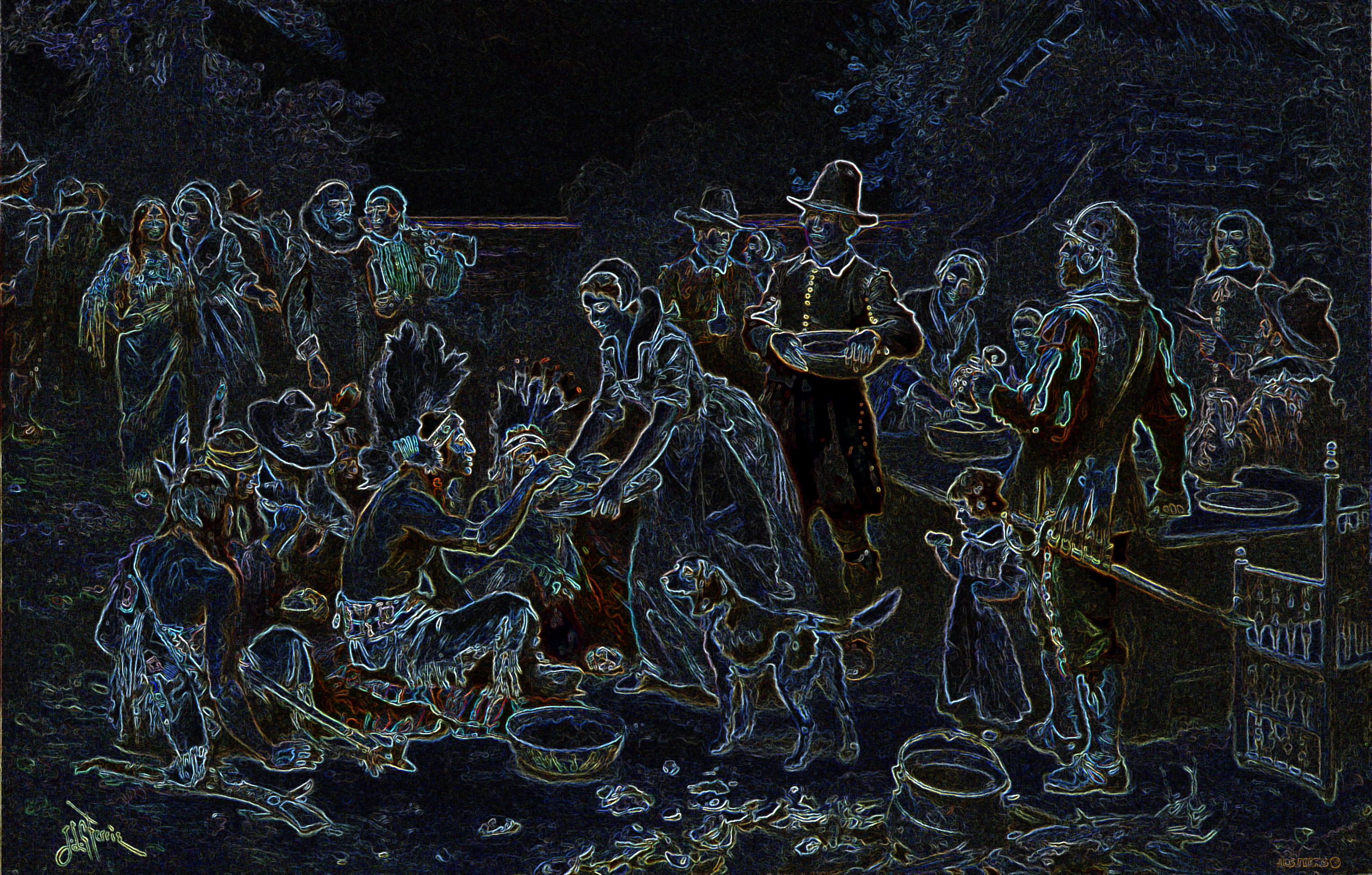
Some believe that the accounts of the first Thanksgiving feast in 1621 have been sanitized to leave out an extraordinary detail. Somehow, it is thought by some, the Native Americans at Plymouth had traded for peyote from Southwestern tribes and shared it with the colonists at that famous three-day meal.
First, here’s the version we have, from Edward Winslow in Mourt’s Relation, published in 1622:
Our harvest being gotten in, our governor sent four men on fowling, that so we might after a special manner rejoice together after we had gathered the fruits of our labor. They four in one day killed as much fowl as, with a little help beside, served the company almost a week. At which time, amongst other recreations, we exercised our arms, many of the Indians coming amongst us, and among the rest their greatest king Massasoit, with some ninety men, whom for three days we entertained and feasted, and they went out and killed five deer, which we brought to the plantation and bestowed on our governor, and upon the captain and others. And although it be not always so plentiful as it was at this time with us, yet by the goodness of God, we are so far from want that we often wish you partakers of our plenty.
The omitted mention of psychedelics explains much. For example, the outlandish hats and clothing we associate with the pilgrims in fact did not exist in that community. Instead, it is possible that those in the midst of an experience began sketching the ridiculous fashions they thought they saw. “Tall hats with buckles,” William Bradford said. “Oh wow, such hats reflect our reaching to heaven.” “Awesome!” the others who were still capable of speaking might have exclaimed.
Happy Thanksgiving (yes, we all still call the holiday that).
For those who wonder whether meanness is a sin or vice, you can start with Summa Theologica by St. Thomas Aquinas, where Question 135 addresses the issue. Or you could ask your parents or your elementary school teachers or your spouse or your children: It’s not nice to be mean.
Which should make us think about why rampant meanness is not only acceptable, but encouraged, entertaining, and profitable. Cheaters may never prosper (though they often do), but meaners are doing very well these days.
Saying that all things virtuous seem to be dying and on life support is an overstatement that doesn’t get us far. Instead, four possible explanations of how what was once a private disturbance has become such a pandemic, a public poison:
Meanness by proxy: All art and performance is based on the ability and willingness of creators to express what we can’t or won’t. It would be nice to think that we only long to be the one who can move people to tears or laughter, inspire people to reach higher, and if we can’t be those creators, at least they are doing that for us. The same thing unfortunately applies to darker messaging, though. We may not be able to attack quite so sharply and eloquently, but we appreciate that someone can. “Yeah, what he said!”
Meanness as superiority: This is a subset of meanness by proxy. There’s perversity in enjoying the meanness of others, but at the same time taking pride in being one who would never say something like that because…we are better than that and would never be so mean. (Whatever the theological status of meanness, by the way, pride is definitely on all the lists of sins.)
Meanness as incompetent and faulty criticism: This is the explanation of meanness as sub-juvenile behavior. When little children aren’t sure why they hate somebody or something, or can’t articulate it, they revert to name-calling and indiscriminate meanness: “You’re a poo-poo head!” It’s a fantastic dream that one day, thanks to some spell, the most gratuitously mean would be magically forced to speak only such childish epithets.
Meanness unconditioned by a thought/speech barrier: The thought/speech barrier, the wall that should keep many thoughts from ever being spoken, is dissolving. Whether phenomena such as Twitter are causal, enabling, or merely symptomatic is beside the point. Thought moves from brain to mouth (or keyboard) at the speed of synapse. Mean heart becomes mean words in a literal instant.
There is a genuine critical function, which can be exercised with thoughtfulness, care, and respect. That simple sentence, a foundation of a free, enlightened society, is looking particularly quaint, and seems for many to have lost its meaning.
“As for the peace plan floated by the White House last week: The 28-point plan amounts to a holiday wish list from the Kremlin….This isn’t a peace plan. It’s a blueprint for Ukraine’s capitulation. If implemented, it would turn this pro-Western, democratic nation, which has been courageously resisting Russian aggression since 2014, into a Kremlin colony.”
Russia’s barbaric assault on Ukraine continues: A single Russian drone and missile strike on an apartment block in western Ukraine last week killed at least 31 civilians. Meanwhile, Russia is ramping up its campaign of sabotage in Europe: Polish authorities blamed the Kremlin for a Nov. 15 explosion on a rail line used to transport supplies to Ukraine. As German Chancellor Friedrich Merz said recently, Europe “is not at war” but it is also “no longer at peace” with Russia.
The growing threat from Vladimir Putin’s despotic, expansionist regime calls for Churchillian resolution, unity and strength on the part of the transatlantic alliance. Instead, Neville Chamberlain-style irresolution and confusion reigns on both sides of the Atlantic. The situation is far more concerning in the United States than in Europe, with the Trump administration having seemingly endorsed, at least for now, a “peace plan” that would give Russia a victory at the negotiating table that it hasn’t earned on the battlefield.
The Europeans have stepped up, providing weapons and funding to Ukraine as U.S. support has dried up. The European Union has a plan to do even more by sending Kyiv some $200 billion in frozen Russian assets as a “loan” that would likely never be repaid. Obviously, given the current corruption scandal in Kyiv, safeguards on the disbursement of the money would be needed. But this is a vital — indeed, irreplaceable — source of funding that can keep Ukraine afloat for years. Yet tiny Belgium, where most of the funds are frozen, is wringing its hands and holding up the plan. There is no Plan B: Europe has to send the Russian funds or else Ukraine will run out of money. So why dither and delay?
As for the peace plan floated by the White House last week: The 28-point plan amounts to a holiday wish list from the Kremlin. It would require Ukraine to cede the entire Donbas region — even the parts that Russian troops have been unable to conquer — and to cut the size of its armed forces by roughly a third. Ukraine would not be allowed to join NATO, and NATO would not be allowed to dispatch peacekeeping troops to Ukraine. Ukraine would hold elections within 100 days and “all Nazi ideology” would be “prohibited”; this is Kremlin code for toppling the Zelensky government. Russia isn’t being asked to limit the size of its armed forces or to hold elections; all the demands are on Ukraine.
What does Ukraine get in return? A separate draft agreement specifies that in the event of renewed Russian aggression, the United States could respond with “armed force, intelligence and logistical assistance, economic and diplomatic actions.” But the U.S. wouldn’t be compelled to do anything. Ukraine would be left to rely on a worthless Russian pledge of “nonaggression” — something it already promised in the 1994 Budapest Memorandum.
This isn’t a peace plan. It’s a blueprint for Ukraine’s capitulation. If implemented, it would turn this pro-Western, democratic nation, which has been courageously resisting Russian aggression since 2014, into a Kremlin colony.
Apparently, the odious proposal was hatched in secret meetings between Steve Witkoff, President Donald Trump’s credulous peace envoy, and Kirill Dmitriev, the wily head of Russia’s sovereign wealth fund, who is dangling promises of lucrative Russian investments if the Trump administration will only end the war on the Kremlin’s terms. (The draft agreement speaks of “mutually beneficial” opportunities, including energy and artificial intelligence.) Ukraine and Europe were not consulted, and both are scrambling to make their voices heard in Washington.
Yet the White House is pressuring Ukraine to agree by Thanksgiving or else lose all remaining U.S. support, including, presumably, U.S. intelligence warnings of Russian missile and drone launches. This is a geopolitical five-alarm fire, with the only saving grace being that Trump could change his mind, as he has so often done in the past.
In August, Trump met with Putin in Alaska and afterward told European leaders that Ukraine would have to cede land it still controls to Russia. Alarmed European leaders rushed to the White House and convinced Trump to back off. Trump subsequently imposed sanctions on two Russian oil companies, Rosneft and Lukoil, and even gave Ukraine permission to use U.S.-supplied missiles to strike Russia for the first time.
The U.S. sanctions, combined with Ukrainian drone attacks, are reducing the funds available to back Putin’s war machine: Russian oil revenues have fallen 20 percent in the past month. Even India is weaning itself from Russian energy imports. It would be folly to remove the pressure now, when it is just starting to bite.
That is all the more the case because other recent developments favor Russia: notably, the corruption scandal currently embroiling Zelensky and the likelihood that the eastern Ukrainian city of Pokrovsk will finally fall to the Russian army after a lengthy and costly siege. From Putin’s perspective, Ukraine now might be weak enough to bow down before his maximalist demands. Trump apparently believes this too.
That is an illusion. While Ukrainians may be more divided than before about Zelenksy’s leadership and more willing to trade some territory for peace, they remain united in refusing to surrender. The Witkoff-Dmitriev pact is a victor’s peace, but Ukraine hasn’t been defeated. The Russian military has barely advanced since 2022, at a price of roughly a million casualties. But the Trump administration’s willingness to make peace on the Kremlin’s terms can only raise Putin’s hopes that he can win this war after all.
That is the worst possible signal to send at a time when the Russian threat to Europe has never been clearer or more ominous. It makes a wider war with Russia more, not less, likely. Europe needs to counter Trump’s appeasement by rushing frozen Russian funds to Ukraine without delay.
By Max Boot Max Boot is a Washington Post columnist and a senior fellow at the Council on Foreign Relations. A Pulitzer Prize finalist in biography, he is the author, most recently, of the New York Times bestseller “Reagan: His Life and Legend,” which was named one of the 10 best books of 2024 by the New York Times.
The Hebrew Bible (Old Testament) begins with the Hebrew word “Bereshit”, conventionally translated as “In the beginning”.
In Hebrew the word begins with the second letter of the alphabet, Bet, like the second letter B.
But it is the beginning. So why doesn’t the text start with an Aleph/A word, the first letter of the alphabet?
This is a conundrum that has challenged the rabbis for centuries. They have spoken and written insightfully at length about it.
You don’t have to know what the rabbis have said or written. You don’t have to be Jewish, you don’t have to know Hebrew. You don’t have to be a student of the Bible. You already know enough, as detailed above.
Instead, consider this like a Zen koan, something to ponder without resolving. If it helps your pondering, whether you know Hebrew or not, you might look at and contemplate the image of the letters. Is there something about the letters themselves that tells you something about why one was chosen instead of the other to start off this famous story?
First, not all billionaires, not even most billionaires, are bad for the nation and the people of the nation.
Second, absent some horrible investment decisions, the billionaires will not be impoverished, in this or any future lifetime.
But there are billionaires who are using their money and power to make things worse for people or who don’t care if their money and power make things worse for people.
Here is the good news: A number of those billionaires made and continue to make their money from the buying power of consumers. Buying power as in power. Consumers as in…well, maybe you.
If this sounds simplistic, it isn’t. I am not alone in thinking about where the profits from my purchases of goods and services are going. Sometimes I make conscientious choices. Sometimes—I admit it—I choose price, convenience or utility over other factors.
The thing is, when I see and hear about the billionaires I’ve funded and fund, making the individuals or their companies richer, the path to alternative choices continues to shrink. Consolidation, conglomeration, oligopoly, monopoly rule.
The leverage is still there. ______________ will not find themselves living on the street or standing in a breadline, unless that is where they get their kicks. But if some choices you make keep a little of your money away from them, that’s not such a bad thing, is it?