The cartoons are scratches, the tiny prose pieces are sometimes described as nonsense, compared to Lewis Carroll.
What we see in these, as we could see in the first Lennon songs, is that he was not the average pop music star, with a voice, some catchy tunes, and a few interesting ideas. We would learn as he grew that he was one of a kind, with few equals, and like all of us, however many years he had to live and give, he lived and gave.
Go listen, if you have the chance, to a little John Lennon today.
December 8 is Bodhi Day, the day on which the Buddha’s enlightenment is traditionally celebrated.
The English word “enlightenment” is so packed with meaning that it might be better to just go back to what the Buddha is reported to have said: I am awake.
This is useful because it leads to the two questions: woke up from what and woke up to what?
The Buddha, sitting there under the Bodhi tree, woke up from a journey. Born a royal son, he had fled a life of accidental privilege to answer ultimate questions about suffering and death—the very same questions that consume religious lives of all kinds. He believed that if he tried a, b, and c (such as extreme asceticism), he would discover some secret x, y, and z. There was some kind of magic formula, and all he had to do was learn it. That sort of magic is still at the heart of much of our religion.
He woke up to discover that there was no magic, not in such an instrumental sense. Nothing was different. Suffering and death would not go away, no matter what efforts we make. The best and worst aspects of life would go on, with and without us. Great fortunes would be made and lost. Great structures would be built and then destroyed, by cataclysms natural and human. Love would be here and gone.
But this: He could see something in all of that that made sense of all of that. There is no big plan in which we are players, active or passive, though we could and do make and execute our own little plans. There are just things, relationships between those things, and change, and of all those of a singular piece. We can and do overlay that with all of our very complicated details and distinctions, which is after all a definition of the life we live. But if we discover that underlying existence, we just might choose to live differently. And in that living differently, make change and wake others up. And on and on.
None of that eliminated suffering and death for the Buddha, as it won’t for anyone. He grew old and tired and, legend has it, died from being given spoiled food. He had told his followers what he had discovered, none of which involved magic. It was all about the infinite depth of the ordinary. For him, there was no more a kingdom in the clouds than the kingdom he had left behind when he started his journey. There was just what is. Strive on with diligence, he told those followers at the last.
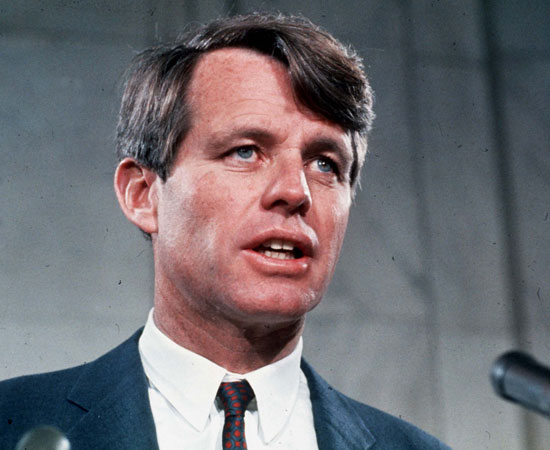
The post below was published on June 6, 2018, the 50th anniversary of the assassination of Bobby Kennedy. I’ve published six posts about Bobby Kennedy over the years.
The feeling many of us had toward Bobby Kennedy is based on a complicated and tragic part of our history. His brother, the President, had been assassinated five years earlier. Martin Luther King Jr. had been assassinated months before. Just as importantly, it increasingly looked like Bobby Kennedy would be the next Democratic candidate for president, and would win, starting the process of getting out of Vietnam. Above all that, separate from the Kennedy legacy and from the politics, he was beloved.
Then he was gone. The Democratic Convention was a disaster. Hubert Humphrey was the candidate, who lost and gave us Richard Nixon. So it goes.
The feeling many of us–most Americans–have toward RFK Jr., our health czar, is indescribably negative and scared. He has Bobby Kennedy’s name and DNA, and nothing else.
My advice: Every time you see RFK Jr. or hear about another of his outrages, take a moment to learn a little more about Bobby Kennedy. The post below can be a start.
Come, my friends, ‘T is not too late to seek a newer world. Ulysses by Alfred, Lord Tennyson.
Bobby Kennedy was killed 50 years ago today, in the midst of what might have been a successful campaign for the Democratic nomination and for the presidency in 1968. We don’t know unwritten stories. He was 42 years old.
You will find plenty of perspectives on Bobby Kennedy published today, and in the dozens of books and hundreds of essays written about him and his place in history. I’ve written about him too, but today I find myself with little new to say.
Instead, I’ll quote, as I have before, from a poem he recited on the campaign trail.
The poem is Ulysses (1842), written by Alfred, Lord Tennyson.
Imagine that. A 20th century politician reciting a 19th century poem about a hero who first appeared more than two thousand years earlier. Not just any poem and hero, but an idealistic poem about a hero who reluctantly takes on a mission. Having already sacrificed family life for duty, he can’t help but set out one more time. Leaving the life of ease behind, he fiercely pursues a dream until the end of days.
The language of the poetry may be old-fashioned to the modern ear, but please read it carefully. It remains a timeless description of what drives people to mission and sacrifice, in spite of the lure of comfort and the toll of years. If America needed that—and almost got it—in 1968, we need it now.
…Come, my friends,
‘T is not too late to seek a newer world.
Push off, and sitting well in order smite
The sounding furrows; for my purpose holds
To sail beyond the sunset, and the baths
Of all the western stars, until I die.
It may be that the gulfs will wash us down:
It may be we shall touch the Happy Isles,
And see the great Achilles, whom we knew.
Tho’ much is taken, much abides; and tho’
We are not now that strength which in old days
Moved earth and heaven, that which we are, we are;
One equal temper of heroic hearts,
Made weak by time and fate, but strong in will
To strive, to seek, to find, and not to yield.
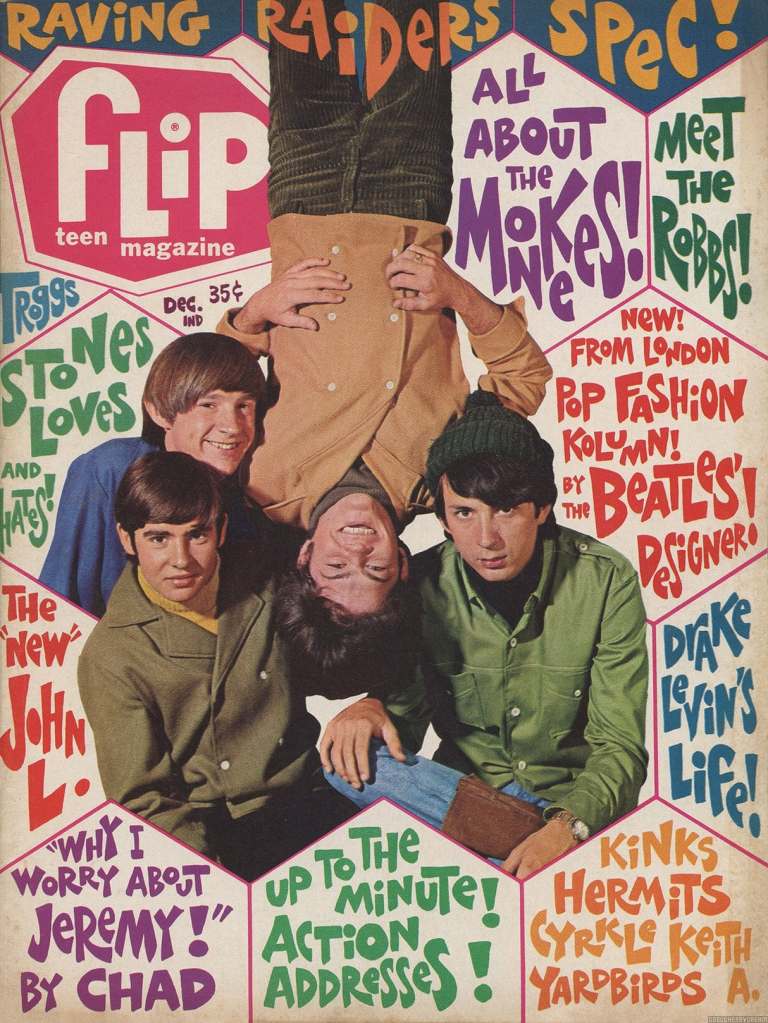
FLIP’s GROOVY GUIDE TO THE GROOPS! happened because you asked for it.
It’s an outasite one-of-a-kind book!
FLIP’s entire staff in New York, London and Hollywood contributed to this book, but two people must be especially mentioned. Carol Deck, FLIP’s Hollywood Editor, served as the book’s supervising editor, and Tracy Thomas spent weeks tracking down most of the groups for the last and largest section of the book—the Groovy Groups.
And you had the most important part of all: You told us which 100 great groups to squeeze into the 240 picture-popping pages of this boss book!
STEPHEN KAHN Publisher FLIP Magazine
December 1966
Some will think that featuring a “groovy” book from 1968 is some sort of nostalgia trip. It is anything but.
Cultural perspective has two dimensions, breadth and depth. Broad, as in covering more than a little piece of your world. Deep, as in covering time before the time you were born or just a few years before that.
At college, I often researched at a huge university library. This was before digital conversion, so the stacks were overstuffed with bound volumes of newspapers and magazines that went far back into the previous century. I wasn’t “nostalgic” for cultural items from decades earlier. I was, and still am, trying to gain perspective on how things were, how we got here, and where we might go.
Jimmy Kimmel features a segment where people walking down Hollywood Boulevard, young and old, are asked basic questions about current events, geography, history, etc. Some might shake their head and laugh at ridiculous responses, maybe calling some of these people ignorant.
I prefer thinking of them as culturally provincial, with knowledge and perspective narrowing more and more into a small circle and the last thing that happened.
That’s why Flip’s Groovy Guide and other artifacts from different times and different places are so important, as an antidote to cultural provincialism. Plus, a lot of fun!
One more thing.
If you think this book reflects a frivolous time, here are other books that were advertised on the back page:
THE NEW YORK TIMES ELECTION HANDBOOK, 1968 edited by Harold Faber. The political experts of The New York Times provide an authoritative, informative manual designed to help the public sort out the facts at work in a controversial election.
HOW TO GET OUT OF VIETNAM: A Workable Solution to the Worst Problem of Our Time by John Kenneth Galbraith. The distinguished economist, political theorist, and bestselling author offers a practical plan for U. S. withdrawal from “a war we cannot win, should not wish to win, are not winning, and which our people do not support.”
THE HIPPIES by Burton Wolfe. At once highly critical and deeply sympathetic, this is an in-depth examination of the hippie kingdom—its “government,” its organizing principle, its leaders and members, the drug scene, the communes, the poverty, the disease.
BEST CAMPUS HUMOR OF THE SWINGING 60’s edited by Bill Adler. A unique tribute to the freshness and diversity of college humor, ranging in subject from Vietnam to college exams, from LSD to campus sex.
THE SECOND CIVIL WAR: ARMING FOR ARMAGEDDON by Garry Wills. An eye-witness account of the explosive racial crises that occurred in New York, Albany, and Detroit dur ing the summer of 1967.
THE HIPPIE PAPERS edited by Jerry Hopkins. An eye-opening collection of outspoken articles from the nation’s underground press on subjects ranging from LSD to free love, from Vietnam to police brutality.
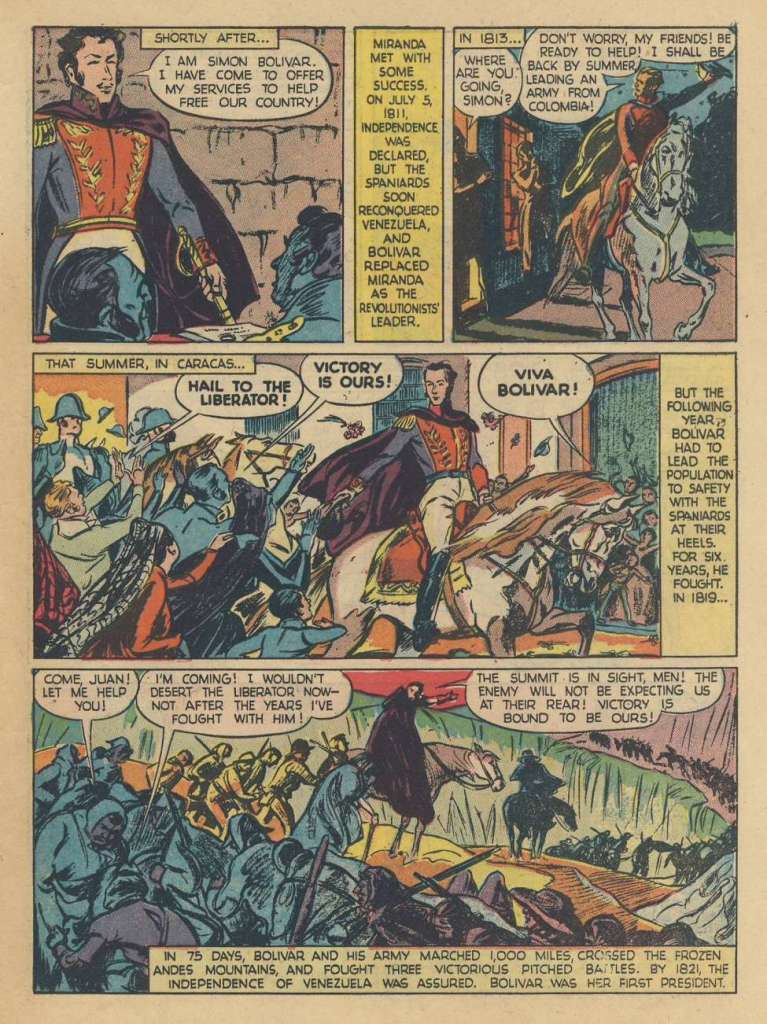
In 1943, America was at war with Nazi Germany to save the free world.
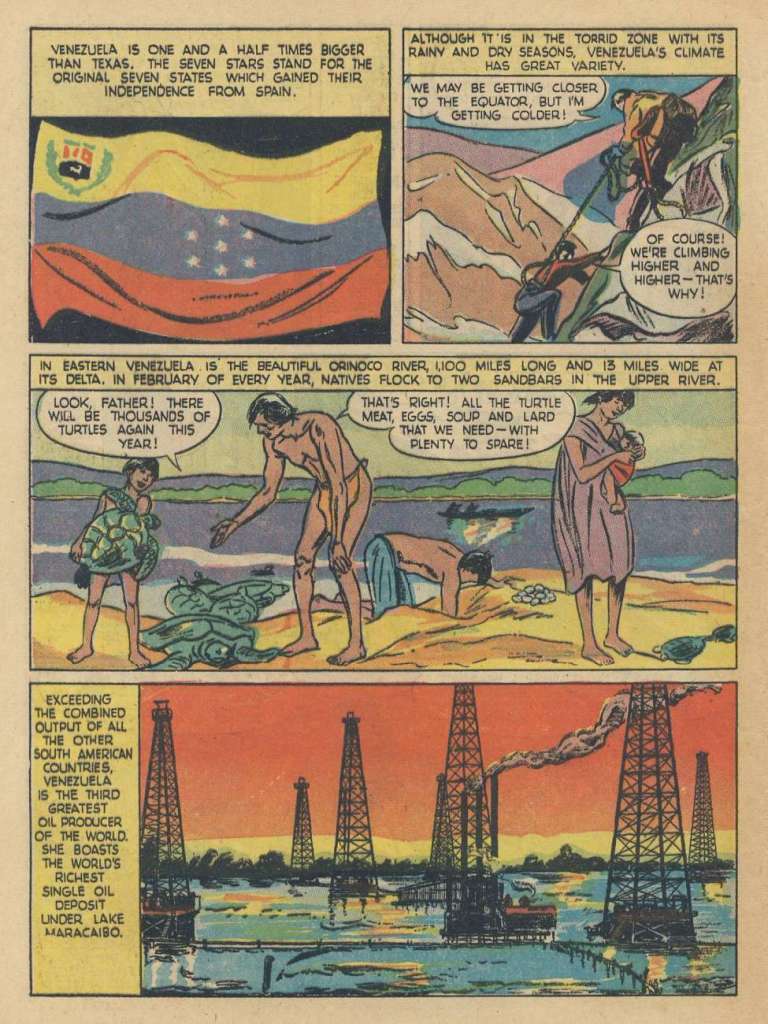
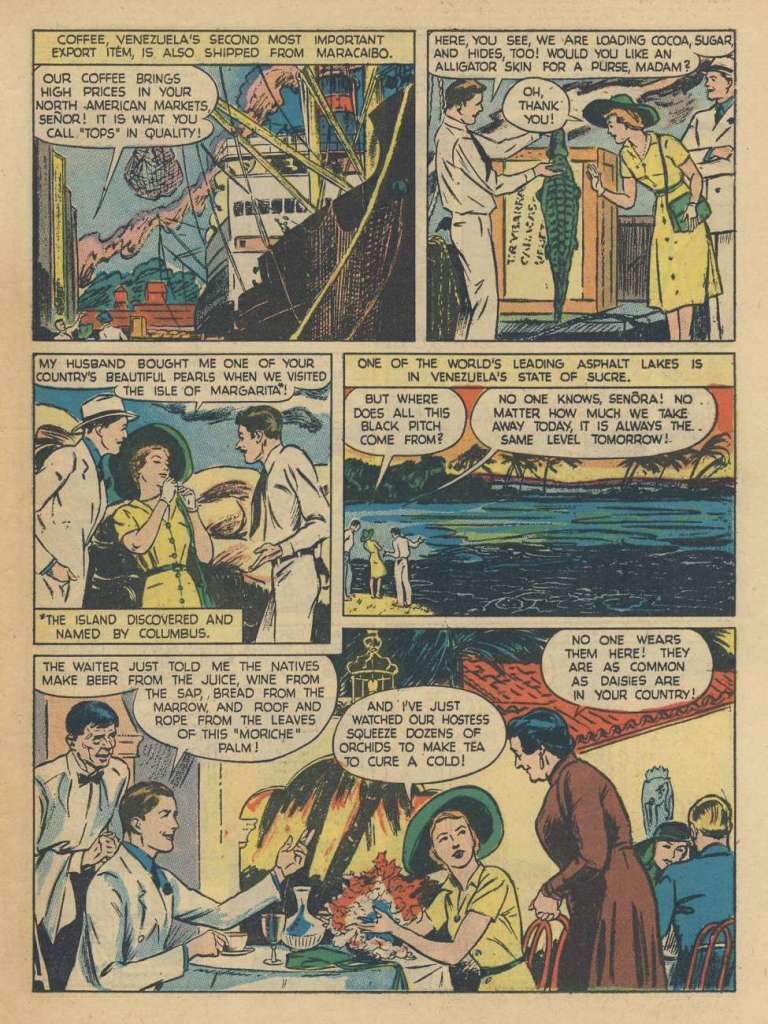
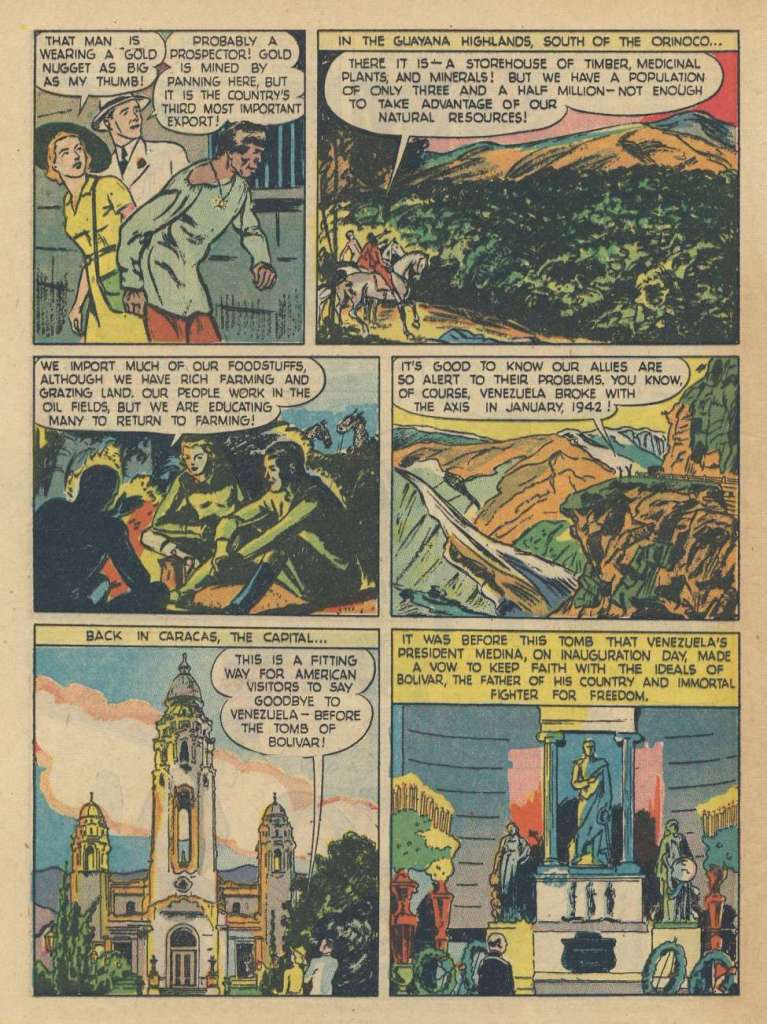
This issue of True Comics from December 1943 (“TRUTH is stranger and a thousand time more thrilling than FICTION”) features a six-page story about our friend and neighbor Venezuela (see below).
The same issue also features “The Story of Scapegoats in History: They Got the Blame”.
“The scapegoat trick is as old as history itself. The Nazis used it to seize power in Germany. To weaken from within their enemies in Europe, they tried to divide and conquer the United States! To know the trick is to be on guard against it. That is the purpose of this story—to expose the scapegoat trick and how it works.”
The U.S. appears to be intent on toppling the government of Venezuela, possibly committing war crimes in an illegal war. The pretext is a war on drugs. Whether or not there is an actual invasion on the ground—a real possibility—the point seems to be control of Venezuela’s substantial oil reserves.
In case you don’t know much about Venezuela, and aren’t moved to do the research, six pages of a comic book is a pretty painless way of learning about our neighbor. Truth is stranger and more thrilling than government fiction.
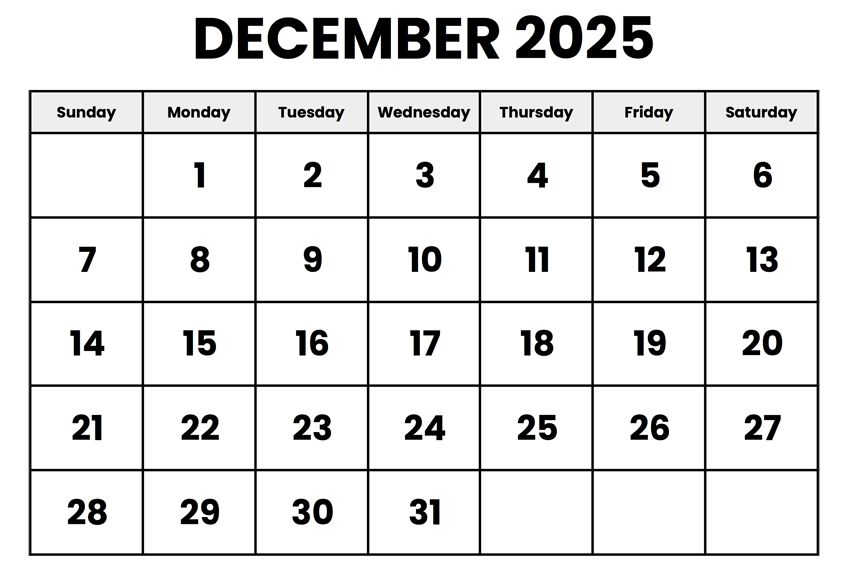
December is full of important holidays and dates. Following are some I will be featuring in the month ahead. In the meantime, feel free to learn more about them—even the ones you are familiar with.
December 8 Bodhi Day is the Buddhist holiday that commemorates the day that Gautama Buddha is said to have attained enlightenment.
December 8 Anniversary of the death of John Lennon (1940-1980)
December 10 Anniversary of the death of Thomas Merton (1915-1968)
I am not an expert on clothing styles, though it interests me—mostly as a spectator. My personal style has long been…well, I’ll leave it to others to describe it. I’d say it is in the middle, not too conservative, not too edgy.
I do know a lot about ties, choosing them and tying them. My father passed this love of ties to me. He took me tie shopping with him, which is how I learned what to look for. As far as tying, I can make all of the major knots, including bow ties (yes, I own some, and yes, there was a period when I kind of wore a few, unironically).
This style article in the Wall Street Journal today made me smile, and laugh a little.
There are two ways of looking at the suggested tie styles below. One is to see it as a creative and personal approach to wearing an admittedly boring piece of cloth around your neck. The other is to see it as an absurd attempt to create a weird style option where none is needed. You be the judge.
If you’ve ever tried to tie a tie, on yourself or someone else, and failed, a few of these knots look exactly like what you’d get. Except planned. But as I said, I’m no style expert.
Style Guide: Five Ways to Wear a Tie This Holiday Season The knot of this Saint Laurent tie can be just as much an accessory as the item itself
Leveling up your holiday outfit can be as simple as tying your tie a different way. A good old-fashioned Windsor knot won’t ever be a bad choice, but there are so many more creative options to test out.
Wall Street Journal Dec. 2, 2025
1. The Trinity Knot.2. The Eldredge Knot.3. The Van Wijk Knot.4. The Scale Knot.5. The Butterfly Knot.
GivingTuesday is a global generosity movement unleashing the power of radical generosity. GivingTuesday was created in 2012 as a simple idea: a day that encourages people to do good. Since then, it has grown into a year-round global movement that inspires hundreds of millions of people to give, collaborate, and celebrate generosity.
Join the movement and give, whether it’s some of your time, a donation, or the power of your voice in your local community.
It’s a simple idea: whether it’s making someone smile, helping a neighbor or stranger out, showing up for an issue or people we care about, or giving some of what we have to those who need our help, every act of generosity counts and everyone has something to contribute toward building the better world we all want to live in.
Show Your Generosity
It’s more important than it ever has been to show up for our communities.
Support your local social good organizations, mutual aid networks, and community organizers
Do an act of kindness or help a neighbor
Identify your gifts, pick a cause that gets you fired up, and give back – not just for GivingTuesday but every day.
If you have favorite charities, give today, through the holiday season and whenever.
As previous posts have noted, the International Rescue Committee (IRC) is an excellent choice. Best of all, right now there is a 5X match for your donation:
Nearly all civilians in Gaza are in urgent need of humanitarian assistance. Children are dying of starvation and disease. With aid access severely limited, the IRC and its partners are responding where we can to provide nutrition, clean water, sanitation and hygiene services, along with child protection in some of the hardest-hit areas.
Today, your additional gift will be 5X-matched, helping the IRC make a lasting impact for people in crisis in Gaza and across the world—at a scale that truly makes a meaningful impact.
When I look back at my past posts, which began in 2012, some are too time-bound and topical to be of much interest to anybody today. Others remain relevant.
The context of this older post, from May 12, 2012: The U.S. economy bottomed out in 2008. When PBS (which is still hanging on, despite ongoing attempts to kill it) produced this Frontline documentary, it was trying to explain what happened and warn us, all those years ago, that it wasn’t getting fixed, and might only get worse.
In describing the documentary that was “don’t miss, can’t watch” I wrote:
“In a world where financial forces become too big to understand or control, it is still our job as citizens and public servants to understand and control them. Because when it finally hits, ideologies and political badges are not really going to matter.”
How’s that going?
It is hard to recommend the four-part PBS Frontline documentary Money, Power & Wall Street and hard not to. Difficult as it is to watch the financial crisis unfolding, the film is superior even by Frontline’s high standard of excellence. As a history and prospectus, it is an insightful, even-handed and essential work of reporting. As a source of optimism, it is a complete failure, because the conclusion is that nothing has substantially changed, and that maybe nothing will.
It is as good as any disaster movie in pulling us in and moving us inexorably along. We see the scenes in detail, meet the cast of characters—lead and supporting actors—and have a growing sense of foreboding: this can’t end well.
It is different than most disaster movies in two ways. Most have some heroes, and with a few exceptions, there are no heroes here. And most disaster movies end with some movement toward rebuilding and reform, and with a sense of lessons learned: we will keep better watch for asteroids, we will build a system of asteroid warning and protection, we will come out this with a fundamentally better society. There is none of that here.
Yet Money Power & Wall Street has to be seen by every American. Those with political agendas will no doubt point to particular decisions or non-decisions, or particular actions or inactions, to prove a partisan point. But when they do, they will have missed the bigger point. In a world where financial forces become too big to understand or control, it is still our job as citizens and public servants to understand and control them. Because when it finally hits, ideologies and political badges are not really going to matter.
Science-Fiction Thinking Machines, edited by Groff Conklin (1955)
I unearthed the above book, Science-Fiction Thinking Machines (1955), this weekend. The twelve stories are written by sci-fi greats including Isaac Asimov, Clifford Simak, Theodore Sturgeon and Poul Anderson.
Robots…Androids…Electronic Brains
The mechanical men are waiting, biding their time. Imitation flesh and blood—soulless but not mindless—they were invented by man to do the world’s hard work—but how long will they let us be masters?
Read the twelve superb stories in this book, and see what the best Science Fiction writers of our time think might happen…or what might be happening now!
Naturally, I turned to a “thinking machine” to discuss the distinctions between the two terms. Here is the transcript of my conversation with Claude.
Bob:
What is the history of the term “thinking machines” to describe what is currently referred to as “artificial intelligence”?
Claude:
The term “thinking machines” has a fascinating history that predates and overlaps with “artificial intelligence.”
Early Usage (1940s-1950s)
The phrase “thinking machines” emerged in the 1940s as computers were being developed. It was popularized by figures like Edmund Berkeley, who wrote “Giant Brains, or Machines That Think” (1949), describing early computers in accessible terms for the public. The term reflected both excitement and anxiety about machines that could perform logical operations previously requiring human thought.
Alan Turing’s landmark 1950 paper opened with the question “Can machines think?” and proposed what became the Turing Test. This paper, titled “Computing Machinery and Intelligence,” helped establish “thinking machines” as a serious subject of scientific inquiry rather than just science fiction.
The Birth of “Artificial Intelligence” (1956)
The term “artificial intelligence” was coined at the 1956 Dartmouth Conference by John McCarthy and colleagues. They chose it deliberately for their research proposal, partly because it sounded more scientific and precise than alternatives like “thinking machines” or “automata studies.” The new term helped establish AI as a distinct academic field.
Divergence in Usage
After 1956, “artificial intelligence” became the dominant academic and technical term, while “thinking machines” continued in popular discourse and remained common in:
Popular science writing and journalism
Philosophical discussions about machine consciousness
Science fiction
Public debates about technology’s implications
Modern Context
Today, “thinking machines” is used more informally or rhetorically, often carrying philosophical overtones about whether machines truly “think” versus merely process information. “Artificial intelligence” remains the standard technical term, though debates continue about whether current AI systems genuinely think or simply simulate thinking through pattern matching and statistical processing.
Bob:
Do you think using the term “thinking machines” would change attitudes toward artificial intelligence?
Claude:
That’s a thought-provoking question. I think the terminology could influence attitudes in several ways:
Potential Effects of “Thinking Machines”
The term might make AI feel more tangible and relatable. “Thinking” is something everyone understands from direct experience, whereas “artificial intelligence” sounds more abstract and technical. This familiarity could cut both ways – making AI seem either more trustworthy (it thinks like we do) or more threatening (it’s a rival thinker, not just a tool).
“Thinking machines” also foregrounds the philosophical question that “artificial intelligence” somewhat obscures: Do these systems actually think? Using “thinking machines” might provoke more public debate about machine consciousness, understanding, and the nature of thought itself. This could be healthy, forcing us to grapple with what we’re actually creating.
On the other hand, “thinking machines” might anthropomorphize AI systems in unhelpful ways. It could lead people to overestimate current AI capabilities or project human-like qualities onto systems that work very differently from human cognition. “Artificial intelligence” at least signals that this is something constructed and distinct from natural intelligence.
Why Terminology Matters Less Than You Might Expect
However, I’m somewhat skeptical that terminology alone would dramatically shift attitudes. People’s views on AI seem driven more by their experiences with it, media narratives, economic concerns, and deeper values than by whether we call it “AI” or “thinking machines.” The rise of “generative AI” and “large language models” as terms hasn’t fundamentally changed the underlying debates – people still argue about the same questions of capability, safety, and impact.
What do you think? Do you sense that “thinking machines” would change how you or others relate to this technology?
Notes
1. My asking Claude “Do you think using the term…” can be called meta, or ironic, or weird, or fitting, since the topic is “thinking machines.” .
2. Claude saying “That’s a thought-provoking question.” reflects a well-reported tendency for AI platforms to be more or less affirmative, encouraging and engaging.
3. Claude closing by asking “What do you think?” is a typical probing, almost Socratic, question, a way of keeping the conversation going and digging deeper.