Bob Schwartz

The VP Guessing Game: Too Much Is Never Enough


Come on, political junkies, admit it: You say you’ve had enough of the Republican VP speculation, but like that bag of barbecue potato chips, you kind of hope it never ends.

Character is destiny, and the character of this Republican nominating process has been so wacky that you would expect nothing less from the Vice Presidential selection.

We are beyond “you can’t tell the players without a program,” so if you haven’t kept up, here’s where we stand, as best as anyone can tell.

The supposed short list of possibilities includes Tim Pawlenty, Rob Portman and, lately talked about, Paul Ryan.

The list of those speculated about but almost certainly not to be picked is long, and even longer if you include never-going-to-happen-in-a-million-years names such as Newt Gingrich. This season, it’s not so much an insult not to be picked as it is not to be included in the longshot list. Herman Cain deserved to have somebody floating his name.

In between are those who have or had a colorable chance of being picked, though they aren’t on the short list. Chris Christie appears to be out, since he will be giving the keynote address at the convention. From a spectator’s perspective this is too bad: with Biden and Christie as the designated loyal-to-the-death hitmen, this could have been a battle for the ages.

Marco Rubio is a strange case. Some polls show him as the preference of Republican and Republican-leaning voters, though this probably has more to do with name-recognition than anything else. Rubio is viewed as flawed in terms of experience, maturity, baggage and positions, which overweigh any Latino advantage.

Back to the top three, every day brings a different leader—kind of like the much-missed days of the Republican primaries. Just within the past few days, Ryan is being pushed as the true conservative with some real public appeal. Portman is viewed as boring, but solid and from Ohio, two real pluses. Pawlenty has governing experience, but proved in his brief Presidential run that he may lack the right stuff, or even the just okay stuff.

Strategically, it is thought that the selection will come this week. The Romney campaign doesn’t so much need a game changer as a topic changer. It needs a second candidate who can start fighting right now. And it needs to end the polarizing that is now developing around the selection among Republicans, and particularly conservatives.

Everybody is never happy with the selection of a VP candidate. In close nominating contests, the second place finisher is a politically logical choice, so complaints are muted. That’s how we get Kennedy-Johnson and Reagan-Bush. (And when dynamics trump political logic, how we don’t get Obama-Clinton.)

But there is no mandated logic to this VP pick. The longer this goes on, the more the factions will feel free to push their own ideas about what’s best for the ticket and the party. And the more that goes on, the deeper will be the disappointment when the choice is actually, finally made.

Of the top three, any prediction is subject to change in fifteen minutes.

Portman is undynamic, and there is no proof that his selection will “deliver” Ohio. He is haunted by the ghost of an Administration and budgets past. It is an invitation to bring George W. Bush to the convention he is not attending. If Portman is asked whether prosecuting two wars while offering tax breaks is sound budgeting, and whether that contributed to economic instability, he is stuck. If he says yes, he puts into question his role as Bush’s budget chief; if no, his credibility is at stake, since even some Republicans have concluded that the Bush budget was a bad idea that made things worse.

Ryan is instead haunted by the ghost of budgets future, specifically the proposed budget that bears his name. Some Republican pundits have openly said this is a good thing, since the budget should be a central issue, and Ryan will do a better job than Mitt Romney explaining, defending and promoting that budget. That may be the case, given Romney’s unwillingness to be specific about budget issues, other than his general support for…the Ryan budget. Ryan, despite being the most dynamic and appealing of the three, also shares Portman’s lack of elected executive experience.

Pawlenty is more dynamic than Portman, less than Ryan. He has executive experience as governor of Minnesota. His brief run for the Republican nomination was far from stellar, especially given the strange lineup of competitors. Set aside the clichéd test of whether you can see the VP taking over if needed. Set aside all the political calculations, including those above. Just picture the team taking that stagecoach down the home stretch, Romney driving, someone else riding shotgun. For the moment, that someone else looks like Tim Pawlenty.

At least for the next fifteen minutes.

Note: The illustration above is a photo of Vice President Thomas Riley Marshall, who served President Woodrow Wilson from 1913-1921. As a matter of political and historical trivia (for junkies who use both), Marshall was the last President or Vice President with facial hair; the last such President was William Howard Taft, who preceded Wilson in office. Almost a hundred years without a mustache or beard in an Administration explains the real reason that Herman Cain did not go further in the process: it wasn’t Pokemon, it was his mustache.
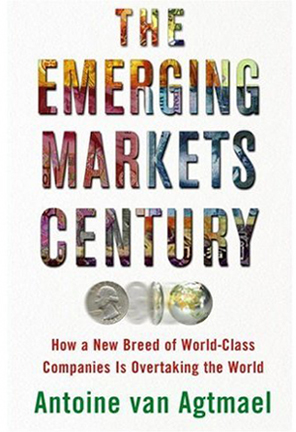
Should the U.S. Disguise Itself As An Emerging Market?

The term “emerging market” was coined in 1981 by Antoine van Agtmael. According to the Economist:

He was trying to start a “Third-World Equity Fund” to invest in developing-country shares, but his efforts to attract money were being constantly rebuffed. “Racking my brain, at last I came up with a term that sounded more positive and invigorating: emerging markets. ‘Third world’ suggested stagnation; ‘emerging markets’ suggested progress, uplift and dynamism.”

The term stuck, but like many neologisms, its meaning has expanded and shifted according to the times. The Economist suggests that it has outlived its usefulness:

Is it time to retire the phrase “emerging markets”? Many of the people interviewed for this special report think so. Surely South Korea, with sophisticated companies such as Samsung, has fully emerged by now. And China already has the world’s fourth-largest economy.

Whatever they are called, emerging markets continue to be prime targets for investment, with clear risks but enormous upside potential.

The U.S. is having problems getting investors to loosen their purse strings and flood our businesses with cash. Our economy is long past and beyond emerging; the perception among some is that it is post-post-emerged, which is to say a little old and over the hill.

That is a perception, not a reality, but perceptions matter as much in investment as elsewhere. So let us change the perception.

The proposal is to declare the U.S. an emerging market. There is a huge underclass just waiting for the means and opportunity to take their place in the middle. There is a middle class with upside potential of its own: although that potential is due to its having receded recently, potential is still potential.

Will investors be fooled by such a trick, what amounts to a name change and disguise? It wouldn’t be the first time. Anyway, as Antoine van Agtmael might say, “emerging market” sounds more positive and invigorating than “mired in recession.”

Is Mitt Romney Being Handled?

It is preposterous to think that a Presidential candidate, let alone a President, is being “handled” by other people or forces, instead of just informed and guided. Politicians at that level are accomplished and have big egos, ranging from large to XXL, that seemingly would not permit it.

But less preposterous is the idea that others believe that they should, can, or will handle the candidate. It is an idea that thrives given Mitt Romney’s uncertainty, reticence and vacillation about his positions. It is an idea that has currency. It is an idea that is bothering people, and in an election year, that means voters.

History teaches that some Presidents and candidates have been more malleable or more stubborn than others. One proposed theme of the George W. Bush Presidency is that Dick Cheney really ran the country, that he was the real President, and that Bush merely carried out his bidding. Cheney undoubtedly had huge influence, but the idea that Bush rolled over at his command is inconsistent with anything we know about the ego that was Bush.

More than a century ago, in the election of 1896, it was suggested that Mark Hanna was not only the mastermind of William McKinley’s campaign, but that Hanna was the master of the McKinley Presidency. This idea has persisted since, though some historians believe it was more of a synergistic partnership, each one playing to his political and strategic strengths.

There are not so veiled intimations from insurgent forces in the Republican Party that Romney is expected to be a “team player” once he is in the White House. We don’t know what is said in private, but in public Romney hasn’t so much failed to toe the Tea Party line as failed to toe any line. This encourages some to think that he will ultimately fall into the right place, but others to worry that he will blithely fall into the wrong place.

In other words, there is thinking—well founded or not— that Mitt Romney can or will allow himself to be handled. For some operatives and for many voters, the only question is by whom and for what.

The Irony of Baptist Intolerance

Rev. Stan Weatherford, pastor at First Baptist Church of Crystal Springs, Mississippi, refused to marry a black couple, Charles and Te’Andrea Wilson, at the church, after a handful of congregants complained. The minister did marry them at a nearby church, but the damage was done, and this has become a global story. The meaning of the story is something that is still developing.

As for Mississippi, this has undoubtedly bolstered a painful stereotype that the state cannot shake. Personal experience in a dozen or so states, including Mississippi, says that there are racists in most states, probably totaling in the millions. Mississippi, a great state is so many ways, has the unfortunate burden of being on racial probation, maybe for the rest of American history. In fact, this hyper-consciousness has led many—though not all—Mississippians to pay special attention and take special care to move forward where others around the country just pretend that there isn’t a problem where they live.

More interesting than the Mississippi angle is the Baptist story. The Southern Baptist Convention was quick to point out that this was a sad and regrettable event, and that the refusal to marry a couple on the basis of their race is completely unacceptable. It is a congregational denomination, so decisions ultimately rest with the congregation and its pastor. In this case, SBC said, the pastor was in a difficult position—as in the likelihood, but not certainty, that he would have lost his job if he had proceeded with the marriage at the church.

This is where the irony comes in so loudly. Throughout American history, Baptists have been notable for their courage in the face of religious persecution and intolerance. American religious liberty, as ultimately codified in the Bill of Rights, is a direct response to that persecution. As the Library of Congress exhibit on Religion and the Founding of the American Republic points out:

In Virginia, religious persecution, directed at Baptists and, to a lesser degree, at Presbyterians, continued after the Declaration of Independence. The perpetrators were members of the Church of England, sometimes acting as vigilantes but often operating in tandem with local authorities. Physical violence was usually reserved for Baptists, against whom there was social as well as theological animosity. A notorious instance of abuse in 1771 of a well-known Baptist preacher, “Swearin Jack” Waller, was described by the victim: “The Parson of the Parish [accompanied by the local sheriff] would keep running the end of his horsewhip in [Waller’s] mouth, laying his whip across the hymn book, etc. When done singing [Waller] proceeded to prayer. In it he was violently jerked off the stage; they caught him by the back part of his neck, beat his head against the ground, sometimes up and sometimes down, they carried him through the gate . . . where a gentleman [the sheriff] gave him . . . twenty lashes with his horsewhip.”

The persecution of Baptists made a strong, negative impression on many patriot leaders, whose loyalty to principles of civil liberty exceeded their loyalty to the Church of England in which they were raised. James Madison was not the only patriot to despair, as he did in 1774, that the “diabolical Hell conceived principle of persecution rages” in his native colony. Accordingly, civil libertarians like James Madison and Thomas Jefferson joined Baptists and Presbyterians to defeat the campaign for state financial involvement in religion in Virginia.

The picture above is The Dunking of David Barrow and Edward Mintz in the Nansemond River (1778):

David Barrow was pastor of the Mill Swamp Baptist Church in the Portsmouth, Virginia, area. He and a “ministering brother,” Edward Mintz, were conducting a service in 1778, when they were attacked. “As soon as the hymn was given out, a gang of well-dressed men came up to the stage . . . and sang one of their obscene songs. Then they took to plunge both of the preachers. They plunged Mr. Barrow twice, pressing him into the mud, holding him down, nearly succeeding in drowning him . . . His companion was plunged but once . . . Before these persecuted men could change their clothes they were dragged from the house, and driven off by these enraged churchmen.”

Maybe Rev. Weatherford had never heard of David Barrow and Edward Mintz. Maybe the congregants who didn’t want black people married in the church hadn’t either. More than two hundred and thirty years is a long time. Maybe Rev. Weatherford could have stood up to the minority in his church, depending on whether he thought that losing his job was better or worse than being dunked in a river. Maybe he could have done a better job of bringing a part of the Christian message to those congregants, but people are stubborn in their worst beliefs, and anyway that’s not really his job. In all religions, but especially in disintermediated ones such as the Baptist Church, it all comes down to you and God, one of you talking, one of you listening and learning. It’s always true that some listen and learn better than others.

Barack’s Birthday Card

This is not intended as a criticism of President Barack Obama, or of First Lady Michelle Obama (who by all accounts is loved by a vast majority of Americans, and much more popular than her husband), or of the Obama campaign.

But I did receive this e-mail message:

Bob —

Barack’s 51st birthday is coming up.

I hope you’ll wish him a happy birthday by signing the card we’re putting together for him.

You’ll be adding Bob, alongside thousands of other supporters’ names — folks from all 50 states, from all different backgrounds. Together, all those names will be impressive — they’ll show the strength of this campaign and our support for Barack.

And I know he’s going to love it.

Add your name today — and then ask a friend to join you:

These last few months until Election Day won’t be easy — so let’s show Barack we have his back every step of the way.

– Michelle

The short answer, respectfully and with all the regard I have for the President, is “maybe”.

Does the President really need a birthday card? Given the choice, wouldn’t he rather have our money and our votes?

The President’s birthday on August 4 just happens to be a few days away from my own. It is reported that they will be holding a small birthday party for the President in Chicago, which will serve as a campaign fundraiser. As far as I know, unless it’s a big surprise, nobody will be holding a fundraiser for my birthday.

It is unlikely that the President, the First Lady or the campaign are reading this. And if you are, shame on you, because you all have way more important things to do. But on the odd chance you are, here’s a deal. If Barack Obama, or even Michelle Obama, or even Jim Messina or some other campaign staffer will sign my card, I will sign Barack’s. It’s the least I can do.

Scissoring And Shunning Sheldon

Pay no attention, just for a moment, to the images above of billionaire Romney supporter Sheldon Adelson and to Sarah Silverman demonstrating the sexual act she would perform on him, if he agrees to instead give his money to Barack Obama.

The diversity of Jewish views on spiritual, social and political issues might be described as a crazy quilt that has never been pieced together. Or as a big tent without a ringmaster, no Pope to say what goes and what does not. This is admirable in some ways, but especially in stressed times, it can be uneasy and inconvenient.

Progressivism is a constant in Jewish thought and action, and just as constantly challenged by pragmatic and contrary considerations. The rise of Jewish neo-conservatism in America is a recent example, and the ready acceptance of Christian Evangelical support of Israel is another—paradoxical in that certain Christian eschatology clearly envisions the end of the Jewish people in Israel, at least as Jews.

Sheldon Adelson is taking this to a next step. He is using his unlimited campaign resources to target and convince Jews who may have mistakenly voted for Obama last time that only Mitt Romney and the Republicans offer a true Jewish vision of America and the world.

That’s where Sarah Silverman comes in. Having little by way of intellectual or humanistic argument to convince him, she offers to perform an exotic sex act on him,  if he will transfer to Obama the $100 million he has promised to use on behalf of Romney. We are going to hear a lot about bad taste, going too far, etc., but this is an indecent and brilliant piece of satire on many levels, worthy of tragic comic god Lenny Bruce.

Still, Sheldon Adelson is not going to take up this proposal. So here is another more decent one.

Even though Judaism has no final arbiter, outside of certain sects, this doesn’t mean that the Jewish communities are judgment-free. So while Sheldon Adelson can’t be “excommunicated” it can be made clear by other Jews that the agenda he is promoting with a tiny bit of his massive fortune does not represent Jewish ideals and that what he is doing is a schanda fur die goyim—a shame before the people and the nations.

Whether or not he gets scissored by Sarah Silverman, Sheldon Adelson should be shunned. There is no way to make it official, and even if there were the guess is that his billions could fix it. But conscience can’t be bought, any more than elections can (or that’s what we used to think anyway). Whether or not one is a Jew, let alone a “good” Jew, is something ultimately left to God and the individual. But that shouldn’t stop us from making clear that those who claim to act in the name of Judaism are not necessarily one of us.

Penn State: Worse Than Death

There is a theme in crime and horror fiction in which someone is not killed, but is instead punished by being allowed to live and witness the degradation and demise of all that he has loved and built.

That is exactly what happened for alumni, fans and boosters, with this morning’s announced sanctions against Penn State. In advance of the announcement, some speculated that the NCAA would be creative in its punishments and that in the end Penn State might actually wish for the “death penalty” of a cancelled season of football.

Done and done.

Every current Penn State football player is free to play elsewhere this season and in future. If he is on scholarship, he can choose to stay at school but never play, and he will still receive his scholarship. Current recruits are free to commit to other colleges. Four years of no post-season play assures that first-rank players are unlikely to play at Penn State. Scholarships will be cut back. And the all-time winning record of Joe Paterno has been toppled, just like his statue, by the vacating of all team wins from 1998 to 2011.

When Penn State fields a team this year, it will be a spectacle. The team will be bereft of talent, a ghost of its gloried self. Lose or win, it will perform under fifty shades of ignominy. Even now, there may be someone at the school thinking that Penn State might be better off volunteering to take the one year break that the NCAA did not impose. That dramatic step won’t happen, but it might help convince the very skeptical—who believe that the reprioritizing of college football is beyond the reach of the most well-meaning and contrite—that Penn State really gets the magnitude of what is wrong, and that it can be a reluctant role model for a better next generation of college athletics.

Us And Them: Presidential Pink Floyd

In response to ABC’s Robin Roberts’ questions about Mitt Romney’s tax returns, Ann Romney stood firm:

“We’ve given all you people need to know and understand about our financial situation and about how we live our life.”

The benefit of the doubt might indicate that “you people” meant “the media” rather than the huddled masses yearning for information and transparency. But it does seem to fit the storyline that the Romneys believe, appropriately, that the rich are different.

In either case, Pink Floyd’s Us and Them from Dark Side of the Moon came to mind. Us and Them is hauntingly beautiful and multivalently obscure. Hundreds of interpretations have been generated (war? money? Kent State? Syd Barrett?). Who knows? This is art and Pink Floyd, for God’s sake, and like the rest of Dark Side it both washes over you and seeps into you.

Us and them
And after all we’re only ordinary men.
Me and you.
God only knows it’s not what we would choose to do.

Black and blue
And who knows which is which and who is who.
Up and down.
But in the end it’s only round and round.

Haven’t you heard it’s a battle of words
The poster bearer cried.
Listen son, said the man with the gun
There’s room for you inside.

Down and out
It can’t be helped but there’s a lot of it about.
With, without.
And who’ll deny it’s what the fighting’s all about?

Us and Them is clearly the theme of this Presidential campaign. So much so that we should adapt the Dark Side of the Rainbow approach, in which Dark Side of the Moon is mind-blowingly synchronized as the soundtrack to The Wizard of Oz. In this case, Dark Side can be synchronized to your choice of campaign videos. This is not as crazy as it sounds, especially given that both Obama and Romney have exhibited their musical chops. It is doubtful that either one has ever tried singing anything from Pink Floyd, or in Romney’s case even heard the band, but it would be fun and enlightening. The bright promise of politics in Eclipse, maybe?:

All that you touch
All that you see
All that you taste
All you feel.
All that you love
All that you hate
All you distrust
All you save.
All that you give
All that you deal
All that you buy,
beg, borrow or steal.
All you create
All you destroy
All that you do
All that you say.
All that you eat
And everyone you meet
All that you slight
And everyone you fight.
All that is now
All that is gone
All that’s to come
and everything under the sun is in tune
but the sun is eclipsed by the moon.

Aurora, Colorado

We are on a forced break from Big Politics and Big Entertainment as usual, in the aftermath of last night’s massacre at an Aurora, Colorado movie theater. Words fail in the face of the still unfolding details about this off-screen horror.

Business as usual will return, as it always does, at its own pace. Meanwhile, there will be attempts to make sense of the senseless. Conclusions will be jumped to, based on varying degrees of information and ideology.

There will be questions about the seeming increase in incidents like this, whether that seeming is based on anecdote or hard statistics.

There will be questions about the prevalence and availability of weapons of multiple destruction (WMD) in our country.

There will be questions about the effect of media and entertainment content on our lives.

All these are questions worth asking and answering constructively, which means openly and intelligently, and not just to score points. There will be time enough for that. Tragedies on any scale can indeed lead to progress and evolution. But there is a fine line so easy to cross, where the incident is just a rhetorical device to make some “bigger” and “more important” point. This can easily dishonor and disregard the basic nature of the loss. All of us who believe this or that, however fervently, have to take care.

Summer All Day Music


Even a serious (or seriocomic) blog needs a summer break. So here it is.

Driving down the mean streets of a mid-sized American city at midday, it is 92 degrees, hotter than it should be the first week of summer. Not bad, though, with the radio loud but edgeless cool, playing summer songs. Women wait to cross at the corners, long loose print cotton skirts clinging and waving in the breeze, sleeveless tops. This means War.

There’s All Day Music

Music is what we like to play
To soothe your soul, yeah

Down at the beach or party in town
Making love or just riding around
Let’s have a picnic, go to the park
Rolling in the grass till long after dark

And on the flip there’s Summer

Riding round town with all the windows down
Eight track playing all your favorite sounds
The rhythm of the bongos fill the park
The street musicians trying to get a start

Cause it’s summer
Summer time is here
Yes, it’s summer
My time of year

So there are no more eight tracks. So what? The hot songs of summer, girls of summer, boys of summer are forever.