Bob Schwartz

How to Innovate: Hit ‘Em Where They Ain’t

Willie Keeler

Here’s a bit of advice on innovation from baseball great Willie Keeler, who played in the majors from 1892 to 1910.

Batters usually hit to the field on the side of the plate they bat from. Right-handed batters stand on the left side of the plate and usually hit to left field. This is known as pull hitting. Some batters can time their swing so that they can hit to the opposite field—that is, right handers to right field—and this is appropriately known as hitting to the opposite field. In either case, when fielders know the tendency of the batter, they can be positioned to best catch the ball.

The greatest batters can hit the ball wherever they want, leaving fielders having to guess and work for every out, and leaving those hitters with awesome statistics.

Keeler was one of those greats. He was called “Wee Willie” because he was only 5’4-1/2” tall and weighed 140 pounds. That did not stop him from compiling a .341 career batting average (14th all time), hitting over .300 16 times in 19 seasons, and hitting over .400 once. If you’re not a baseball person, just trust that this is really good.

How did he do it?

He advised keeping the ball away from opposing fielders. “Keep your eye clear, and hit ’em where they ain’t.”

So if you are starting or renewing a business, starting or renewing a career, no matter how “wee” you think you are, take it from someone who knew. Hit ‘em where they ain’t.

Education Epic: The ACT Chapter

ACT College Readiness 2013
The epic of American education goes on, success and failure, part triumph, part tragedy. Today’s chapter is the release of a report from ACT about the college readiness of American high school students. The ACT, along with the SAT, is the test used by colleges to determine admission of individual students. In various states, one or the other test predominates; college-bound or college-aspiring students take at least one, at least once.

States and school districts are increasingly using these scores as a standardized measure of just how well (or poorly) they are doing—so much so that some states are now paying for and requiring all students, college track or not, to take the tests.

Today’s ACT report could generously be characterized as equivocal (the ACT press release headlines: “ACT Points to Improvement Efforts and Calls for More Action”) but that is sugar coating. You will see the report covered both nationally and locally; you can read the state numbers and see whether and how they are being spun or faced head on. You can also read the report yourself.

You will come across a small collateral matter that is meant to explain, not excuse, the drop in scores in some places. Previously, those students that had been granted extra time to take the test as an accommodation for disabilities (10% of ACT takers) were not included in the aggregate score; now they are. ACT had not revealed this before, and it is now a mini-tempest of its own. States, districts and disability advocates call this previous exclusion discriminatory and inappropriate. For whatever reason, the fact is that this cohort did score lower than average, something—one might speculate—that ACT knew, and kept out of the statistics so that they would not look quite so bad.

They look bad. Here are some highlights from the ACT press release:

ACT Points to Improvement Efforts and Calls for More Action, Especially for Underserved Students

IOWA CITY, Iowa—College and career readiness problems persist among U.S. high school graduates, with the majority ill-prepared for success at the next level, according to the latest edition of nonprofit ACT’s yearly report, The Condition of College & Career Readiness 2013. ACT, however, points to solutions and ongoing efforts that could help improve student readiness in the future.

Only 39 percent of ACT-tested 2013 graduates met three or more of the four ACT College Readiness Benchmarks. Conversely, 31 percent of graduates did not meet any of the benchmarks. ACT research suggests that students who don’t meet the benchmarks are likely to struggle in relevant first-year courses at two- and four-year colleges, which increases their risk of not succeeding in college. “Once again, our data show that high school success and college readiness are not necessarily the same thing,” said Jon Whitmore, ACT chief executive officer. “Too many students are likely to struggle after they graduate from high school. As a nation, we must set ambitious goals and take strong action to address this consistent problem. The competitiveness of our young people and of our nation as a whole in the global economy is at stake.”

The research-based ACT College Readiness Benchmarks specify the minimum score students must earn on each of the four subject tests that make up the ACT® college readiness assessment (English, math, reading, and science) to have about a 75 percent chance of earning a grade of C or higher in a typical credit-bearing first-year college course in that subject area. ACT research suggests that students who meet the benchmarks are more likely than those who do not to persist in college and earn a degree….

Largest, Most Diverse Group of Test Takers Ever

The ACT report examines the ACT scores of a record 1.8 million students, 54 percent of the U.S. graduating class. It was the largest and most diverse group of graduates ever to take the ACT, the nation’s leading college entrance exam, and also likely the broadest in terms of academic preparation. This is due in part to an increase in the number of states and districts that administer the ACT to all students, not just those who were preparing to go to college. This year’s report includes 29 states in which 50 percent or more of graduates took the ACT and 12 states in which 90 percent or more took the assessment. As more students take the ACT, the data obtained from scores better reflect the entire U.S. graduating class, providing a glimpse of the emerging educational pipeline.

The national college-readiness level of 39% is, like most national aggregates, a bit misleading. In some states, that readiness level according to the ACT is about 18%.

Aside from the “steps are being taken” happy mantra, there is something good to say. In state after state, for the first time since standardized test scores have been the centerpiece of our education policy, the tests are being made appropriately stringent, playing scholastic hardball rather than softball or T-ball. This has caused scores to drop, even in some of the most sought-after school districts. Admitting you have a problem may be the first step, but admitting the actual depth of the problem is the second. As today’s ACT report indicates, we are indeed in deep.

Analogies to Egypt

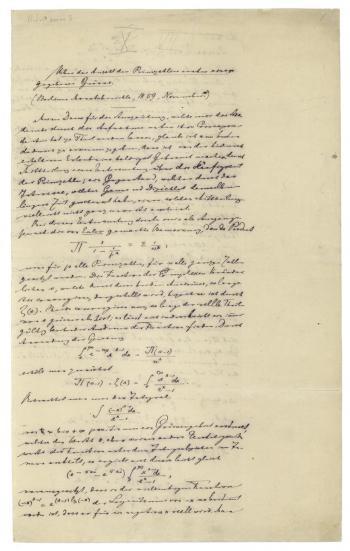
Rosetta Stone

Who doesn’t love analytical analogies—situations past that bear a resemblance to current circumstances and might offer at least a little usable insight.

The current state of Egypt, like many situations in the new global age, is a bit sui generis—a unique thing of its own that we neither know how to classify or handle. For some, it is like going to watch a sports competition where you don’t exactly understand the game, don’t know nearly enough about the teams, and yet are being expected to choose sides—to root for somebody.

Here are a few of what we might call impressionistic analogies: examples from recent history that won’t withstand close scrutiny as directly related scenarios, but do have a certain similarity that at least gives us food for thought.

Iran – The impending release of Mubarek by the military government—ostensibly because the fraud case leading to his arrest would not hold up—brings to mind Iran and the last Shah. The Iranian Revolution of 1979 deposed the Shah and ended the West-friendly dynasty that the U.S. had long supported. One of the small but historically high-profile early incidents was President Jimmy Carter allowing the very ill Shah to seek medical help here in 1980—a factor in the subsequent hostage-taking, that in turn was (just one) of the reasons that Carter was not re-elected.

The U.S. is not alone in having to bet on somebody in turbulent times. Leaders are both real and symbolic in these contests. In Iran, our betting on the Shah—who was like us, who we understood, and who wss not like “them”—has proven disastrous. In the case of Mubarek in Egypt, what we wanted with him all those years was stability and moderation, but when it became apparent during the Arab Spring that we were looking decidedly anti-democratic, we opted to cut him loose and hope for democracy to follow. When that democracy started looking theocratic, possibly militantly so (Muslim Brotherhood), we were very confused and concerned—and so were the remnants of Mubarekism still in or near power. Military and stability or democracy and “adventure”. The Egyptian military made their decision, but we seem unable to decide. Will the military try to re-install Mubarek, or just leave him as a symbol of better days. Do we wish that we had handled Iran better, maybe helping to ease out the Shah and autocratic rule? It probably would not have prevented theocracy, but we didn’t try.

Iraq – Iraq, like Egypt, is another example of wanting to act strategically, while looking like the “good guy” and trying to figure out what a good guy looks like or acts like in these times. We supported Saddam Hussein, we refused to topple him, we toppled him, we executed him. All hell broke loose, and that fire may burn for generations. Whatever our skill at playing a real-world version of Risk globally, our track record in the Middle East is atrocious. At this point, we may want to consider where we stand relative to the historic record of the British and the French. (Note: We seem to have a bizarre predilection for following in their footsteps with little more, or even less, success than they had. See, e.g, Vietnam, Afghanistan, etc.)

Latin America – Our experiences in Latin America may serve as the most interesting of these tenuous analogies. The policy and history is easy to understand. We feared (still do) the incursion of Communism into the continent. We would support just about anybody who promised to keep the threat of socialism/Communism down. This put us in bed with a very bad lot, alliances that have had two lasting impacts. American fingerprints are all over the legacy of some despicable regimes. And now that many of those regimes are in the dustbin of history, residual anti-Americanism lingers on.

None of these alone, or even taken together, may offer much guidance in figuring out what to do in Egypt. Maybe a general lesson is that being powerful is not the same as being smart or being right. Maybe it’s that America is not as powerful as it thinks—back then, or even more so now—in a world it does not fully understand (again, ask the British and the French).

Egypt today is not that different from Egypt two years ago, or Syria now, or Iran or Iraq or Latin America. America has to expressly define and transparently decide how to stack our values and principles. Do we want American-style democracy or are we willing to settle for one of its other versions? Do we want democracy no matter what the results, or are we willing to trade democracy for authoritarian rule? Is authoritarian rule better than democratic or quasi-democratic Islamism, socialism or Communism? What is regional or global stability worth? What is peace worth? What is a Syrian or Egyptian or American life worth? Could billions in Egyptian aid, aside from whether or not we continue or suspend it, be better used to help Americans in an age of sequestration and austerity?

Grown up questions for grownups at the table.

Obama Must Renounce His Hawaiian Citizenship

Ted Cruz Birth Certificate

Now that we’ve (mostly) agreed that Barack Obama was born in Hawaii, there’s one final step: he must renounce his Hawaiian citizenship to legitimately serve as President of the United States.

That’s actually not right. Hawaii was a state when Obama was born there, and before that, it was an American territory (remember Pearl Harbor?).

But it is a splashy way to introduce the latest chapter in the story of Ted Cruz as possible presidential candidate.

Ted Cruz, U.S. Senator from Texas, was born in Calgary, Alberta, Canada to an American mother. The question of whether he is qualified to be President arises from Article Two, Section 1 of the U.S. Constitution, which restricts the presidency to “natural born Citizen[s]”. Even though there has been a colloquial understanding that this means “born in the U.S.A.”, the point has never been litigated, and there is a growing sense that it simply means born American, rather than naturalized.

There is no dispute that Cruz was an American citizen at birth, being born of an American citizen, even if abroad. But after he released his birth certificate this weekend (see above), to answer speculation that he might not be qualified, a new wrinkle has cropped up. As indisputably as he is an American citizen, it now appears that he is—at this very moment—also a Canadian citizen. A number of experts on Canadian law are making it clear that when you are born in Canada, citizenship is automatic. You can renounce it later on if you choose, as some do. But right now, Cruz is both an American and Canadian citizen, able to vote in Canadian elections and even run for office there. (Note how weirdly complicated this would have been had he been born there before 1947, when his birth would have made him both an American citizen and a British subject: God Save the Queen.)

It isn’t clear whether Cruz has long known he was also a Canadian citizen, whether he secretly participates in Canadian ceremonies, whether he privately exhibits the legendary Canadian civility and sensibility, whether his support of the XL Pipeline was specially motivated, whether his plan to bring the U.S. government to a halt is meant to make his Canadian homeland look better by comparison, whether he still has feelings for Her Royal Highness, given that he is a citizen of the Commonwealth, if not the United Kingdom.

There is a political issue here, though one that Cruz might be able to turn to his advantage. He might be able to continue his Senate role as a dual citizen (at least it’s Canada, not Russia), but the presidency is another matter. If he does choose to renounce, he could do it on an ideological basis, pointing out how the socialist leanings of his homeland to the north have left it far behind the achievements of free market America, and how, unless America is careful, it will end up exactly like Canada—the land he chose to leave at the age of four, precisely because he knew that America was the true land of freedom and opportunity. Not to mention a whole lot warmer, particularly in Texas.

Bowie and Gaga: The Shoulders of Giants

Bowie Gaga
If I have seen further, it is by standing on the shoulders of giants.
Isaac Newton

Scroll below today’s news about Egypt or the NSA or dozens of other significant stories and you will come to the contest between the new singles from Katy Perry (Roar) and Lady Gaga (Applause). Which is Number 1? Which is better? Listen if you want, or don’t. Life goes on either way. But music and excellence matter, so a related note.

Depending on whether you want to go back centuries or decades, we are now in the nth generation of popular music. Individual songs or entire genres, music and the styles that go with it are invented, perfected, synthesized, inspired by, borrowed; there is some balance between the entirely new and the entirely old.

The question is whether a listener can take a current artist at face value, without reference to what came before, without knowing (in Newtonian terms) what giant shoulders are stood on, or whether a listener should be aware of the influences, precursors, originators. This becomes particularly important when the earlier or original version was, once it is experienced by comparison, simply better art.

David Bowie’s extraordinary artistry can be summed up in two points.

He has six albums among the Rolling Stone 500 Greatest Albums of All Time. And each of these is created in a different style than the others.

Which brings us to the second point. Aside from creating superb music, Bowie devised the process of total artistic reinvention in pop—not only in musical style, but in performing personality. Up to that time, the assumption was that fans wanted a degree of continuity in their stars. The Beatles had broken through this assumption with a few changes during their short career, but Bowie smashed artistic continuity entirely: Ziggy Stardust, The Thin White Duke, etc. A review of his album covers is a roster of these personas.

Above is an image of Bowie as Ziggy Stardust. Next to it is an image of Lady Gaga from her current ARTPOP album period (all caps from her; it’s that important).

All artistically painted faces are not related, of course. But Gaga acknowledges David Bowie as an artistic influence. This presumably explains the various Gagas during her brief career: the artist dressed in meat, the artist emerging from a plastic womb, etc. Change all the clothes and makeup you want, and say all the right things that make you seem like an artist (Bowie, by the way, let his style do his talking), and it still comes down to music.

So, Gaga fans, if you are reading this, listen up, literally. While she may be copying only his approach to style and not his music, nothing she has done measures up artistically to Bowie. This isn’t a song-by-song, style-by-style comparison. It is a reminder, not just about Gaga but about music new and old, that tastes vary, but excellence doesn’t. With the release of the rest of ARTPOP, maybe there will be some artistic gems. Gaga is actually a talented singer and performer, so it is possible.

But for the moment, and pending further developments: Gaga, we’ve seen David Bowie, we’ve heard David Bowie, and you are no David Bowie. Or Isaac Newton.

(For fans of Isaac Newton, who may be wondering why his picture isn’t included, below is something from his CALCULUS period.)

newton

The Republican Health Care Plan Is Obamacare

National Health System for America - Heritage Foundation (1989)

Say something once, why say it again?
Talking Heads, Psycho Killer

Sometimes making a point means repeating yourself and not saying you’re sorry.

The current situation is that Newt Gingrich yesterday criticized attempts by some Republicans to repeal the Affordable Care Act, saying that the party had to offer alternative plans and unfortunately had not one idea.

He is of course wrong. As pointed out in an earlier post Heritagecare, the Republicans at one time did have a big idea about health care reform. It was developed at the conservative Heritage Foundation in 1989, as a market-based alternative to any sort of single-payer national health plan. The centerpiece of this reform was a national mandate requiring everybody to have insurance. With some refinement, this Heritage plan is at the heart of the Affordable Care Act. Obamacare is a version of Heritagecare.

Following the development of the Heritage plan, this is what happened.

Bill Clinton was elected President. First Lady Hillary Clinton promoted the adoption of national single-payer universal health care. This proved to be a political disaster and embarrassment. Health care was taken off the table for years.

Mitt Romney was elected Governor of Massachusetts. He used the Heritage plan—a Republican idea— as the basis for a state health care program. By all accounts, it was a success.

Barack Obama was elected President. He made health care reform a priority, but with single-payer dead in the water—maybe forever—he promoted a program based on the Heritage plan. As proof of concept for the Affordable Care Act, he could point to Massachusetts, where such an idea had worked.

Republicans intent on eviscerating Obama and his presidency used what they called “Obamacare” as a prime example of totalitarian socialism in action. They ignored the conservative origins of the plan. These Republicans were aghast when the Supreme Court narrowly allowed the plan to proceed as constitutional, but continue to do whatever they can to thwart it, including the dozens of attempts to repeal it—the same useless attempts that Gingrich criticized.

Mitt Romney ran for President. He could no longer embrace Heritagecare/Romneycare/Obamacare. He explained that while the plan might be good for Massachusetts, it is no good for America. He was never directly confronted with a version of the question: Are you serious?

Newt Gingrich is a very complicated man and politician, but he should be given his due. He is joining a chorus of mostly old-school Republicans trying to tell the Young Turks to get real. In this case, getting real could actually work to the Republican advantage, though they seem to be too ideology-blinded (and Obama-hate blinded) to see it.

People really do have some serious and legitimate qualms about the Affordable Care Act, and its implementation is bound to be a rocky road. If the Republicans looked back to their own Heritage plan, and if they took seriously the lip service of “compassionate conservatism”, they might actually be able to offer some constructive, earnest and enlightened adjustments—all for the sake of the general welfare of the country. As it is, that won’t be happening now or anytime soon.

Bandon by the Sea and Living Forever

Continuum Center
This is about a beach town and the possibility of living forever.

Bandon is a small beach town (about 3,000 people) on the southern coast of Oregon. It is special because of its beauty and spirit, including extraordinary rock outcroppings and stacks of bleached drift logs that hover in the sun and occasional fog. It is also special because few know about it. It is far enough from anywhere—248 miles south of Portland, 465 north of San Francisco—that there are other tourist stops better known and, to some, more exciting.

Bandon 4

The New Age is an ignored topic that deserves more than this brief discussion. In the 1970s, the movement toward a new consciousness coalesced around the concept of a New Age, a new era of human enlightenment and evolution that would move us forward, leaving some of the darkest aspects of our sometimes-sorry history behind. This included not only spirituality and religion, but psychology, art, music, mythology, earth, food, sex—anything that could help transform us and the way we live. By name, “New Age” has fallen into disuse; but as a matter of fact, many of the ideas and expressions are now part of our cultural fabric.

In 1979, philanthropist Hugh Harrison visited the Continuum Exhibit at JFK University in California. The exhibit showcased the Immortality Principle, the possibility of consciousness continuing after death. He was impressed and put the exhibit on tour, and also established a home for it in Bandon, in a building on Main Street called the Continuum Center. It was a splendid multimedia exhibit, state of the art for its time.

Continuum Book
One of faces of the New Age movement that is powerful though sometimes mocked is its music. New Age music was once a common category, though it has fallen into disuse. No good cultural development goes untortured. New Age music at its start and at its best is an attempt to coax, drag, push, pull and otherwise move your consciousness by the ear. In less talented hands it has been oversimplified and underpowered, but no different than with any other musical genre.

When I walked into the Continuum Center in Bandon years ago, I saw the oversized graphics and read about a vision of consciousness. But the very first thing I noticed was the music playing. It was, it turned out, the sublime Angel’s Flight by Shadowfax, and it was the first New Age music I had ever heard. The pictures and text of that visit are a little indistinct in memory, but that song isn’t, maybe because I’ve listened to it a few hundred times since.

A recent visit to Bandon, for the first time in a long time, revealed that not much had changed, a good thing. Maybe it was not a surprise that the Continuum Center as an exhibit is gone. But the building is still there, transformed into a small shopping plaza, but as you’ll see above, the name remains. Spirit abides.

So if any of this is interesting, here’s what to do. Listen to Angel’ Flight and other transportive music by Shadowfax and other worthy New Age artists. Learn a little more about the possibilities of consciousness and change, if you aren’t already doing so. Does consciousness survive death? Who knows, but what a beautiful question.

Last but not least, if your travels take you to the Pacific coast, visit Bandon. Unlike the Continuum Center exhibit, which lasted a few years, the beach and rocks and waves go on and on and on, waiting for you. They will wait forever.

Jane Austen To Be American Idol Judge

Jane Austen

Jane Austen is actually dead; has been for almost two centuries. Whether or not that would stop American Idol from circulating rumors about her possible addition to the ever-changing panel of judges is unknown.

There is a new Idol connection to one of the most popular of British authors. The headline from the Daily Mail:

Anonymous donor gives $150,000 to stop U.S. singer Kelly Clarkson buying Jane Austen ring and keep in the UK

An anonymous donor has handed a Jane Austen museum £100,000 so that it may try and buy one of the author’s rings back from U.S. singer Kelly Clarkson who wants to take it out of Britain.

Earlier this month, the British government placed a temporary export ban on the gold-and-turquoise ring in the hope that money could be found to keep it in Britain.

The Jane Austen’s House museum said it had raised £103,200 of the £152,450 asking price since launching a fundraising campaign on Friday, most of it from a single anonymous donation.

Clarkson, a big Austen fan who reportedly owns a first edition of Persuasion, was top bidder for the ring in a Sotheby’s auction. The museum appreciates that the attention of an adoring pop star will help further raise awareness of the already-trendy author (see the newly-released indie film Austenland). But it also bemoans how much of Austen’s legacy has already left Britain, and how little remains there.

Two of the many thoughts this sparks:

Is there an Austen-inspired Kelly Clarkson single or album in the offing? One can imagine tracks inspired by each of the novels.

Should American Idol give up on judges with musical backgrounds (or in at least one case, a comedy/talk show one), and go instead with literary types? It could be current authors (J.K. Rowling, for example). Deceased authors may be out of bounds, although technically they could go with holograms or “tribute” judges pretending, i.e., if Kelly Clarkson won’t be a judge as herself, she could appear as Jane Austen. Given some of the judging antics past, this sort of thing might not be a reach too far.

The Failure of the American Autopilot

Otto the Autopilot

Congress is going on vacation, again. Will we miss them?

Maybe the greatest thing about America is its ability to run on autopilot, the brilliant way that it manages to handle whatever may come, internally or externally, to right itself, and move forward. Politics, corruption, war, economics, inequities—they have been painful, damaging and upsetting, but America was somehow able to get to tomorrow, and rise a little bit higher when it was all over.

Only once in the past century, before this moment, has the autopilot failed. The Great Depression required action and intervention, and we got it. Since then, and with the victorious end of World War II, it has been onward and upward. We’ve overcome so many mistakes that an entire generation now takes the American autopilot for granted.

This has lulled some into a sense that doing the wrong thing or doing nothing can’t hurt in the long run because, based on history, nothing can hurt in the long run. The problem is that we have hit one of those very rare moments when the autopilot is not doing its job. So that when we have a conspiracy by some in Congress not to do their job—confident that doing nothing is just the sort of medicine that an overactive American government needs—we are in a seeming tail spin. But they simply don’t believe that’s possible, because they have never lived in a time when the autopilot failed and, despite their embrace of vintage America, they may be poor students of history.

The least effective Congress in generations, maybe ever, is about to take another break. The country will still be here when they get back to non-work, and they will continue to engage in embarrassing their opposition, petty insults, ideological blowhardery, and mostly just trying to get elected again.

The American people are much smarter than them. For the most part, we know the autopilot that we’ve depended on is not working, and we know that Congress doesn’t seem to know that, or at least won’t admit it. We also know that Congress isn’t working, and if not them, who exactly is supposed to keep this country running straight, on and up?

Come senators, congressmen
Please heed the call
Don’t stand in the doorway
Don’t block up the hall
For he that gets hurt
Will be he who has stalled
The Times They Are A-Changin’
Bob Dylan

Diana’s Grandson

Diana, William & Harry

An ecstatic caller to the BBC said that Diana would be so proud to see the birth of William and Kate’s son.

No one in the royal family, and few elsewhere, can be far from thinking about William’s mother, the most influential British royalty in recent history. She changed the culture of modern monarchy, making the most of her position even as she navigated the waters between outrageous global fame and real life. She also raised two decent young men under impossible circumstances, one of whom became a father today.

Diana would be a grandmother today. And she would be proud.