Bob Schwartz

Rosh Hashanah and Syria

UNHRC

Politics and prayer. There will be plenty of both during these Jewish High Holy Days.

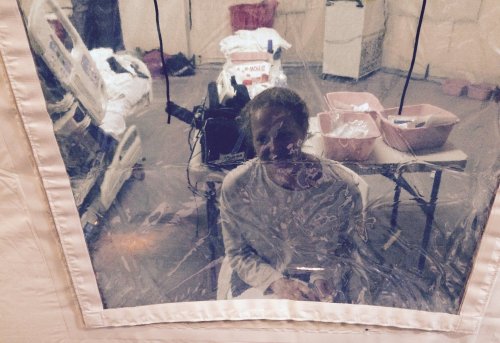
Rosh Hashanah, the New Year, begins this evening. Please consider a donation to the UN Refugee Agency (UNHCR) to help the more than two million refugees who have so far fled Syria.

Ktivah v’chatima tova. May you be inscribed and sealed for a good year.


Chemical Weapons 101

OPCW
We are in one of those moments that we often reach in modern public discussion: unequal measures of facts, opinions, emotions and agendas, stirred up so that we are no longer sure of what we know, what we feel and what we think. That’s where logic and learning come in, helping us to sort things out.

Unfortunately, developing and exercising logic is going to take more than visiting a website (and if you do want to sharpen your logical skills, please don’t be looking to some of our politicians for that). But if you want to learn more about chemical weapons, and particularly about why we have agreed to abhor them, you can learn the basics in one stop. Visit the site of the Organisation for the Prohibition of Chemical Weapons (OPCW)  and you will be way ahead of many know-it-all pontificators:

The Organisation for the Prohibition of Chemical Weapons is the implementing body of the Chemical Weapons Convention (CWC), which entered into force in 1997. As of today the OPCW has 189 Member States, who are working together to achieve a world free from chemical weapons. They share the collective goal of preventing chemistry from ever again being used for warfare, thereby strengthening international security.

Among the pages of information, along with descriptions of the work currently being done by OPCW in the Syria situation, you will find a Brief History of Chemical Weapons Use:

Although chemicals had been used as tools of war for thousands of years—e.g. poisoned arrows, boiling tar, arsenic smoke and noxious fumes, etc.—modern chemical warfare has its genesis on the battlefields of World War I.

During World War I, chlorine and phosgene gases were released from canisters on the battlefield and dispersed by the wind. These chemicals were manufactured in large quantities by the turn of the century and were deployed as weapons during the protracted period of trench warfare. The first large-scale attack with chlorine gas occurred 22 April 1915 at Ieper in Belgium. The use of several different types of chemical weapons, including mustard gas (yperite), resulted in 90,000 deaths and over one million casualties during the war. Those injured in chemical warfare suffered from the effects for the rest of their lives; thus the events at Ieper during World War I scarred a generation. By the end of World War I, 124,000 tonnes of chemical agent had been expended. The means of delivery for chemical agent evolved over the first half of the twentieth century, increasing these weapons’ already frightening capacity to kill and maim through the development of chemical munitions in the form of artillery shells, mortar projectiles, aerial bombs, spray tanks and landmines.

After witnessing the effects of such weapons in World War I, it appeared that few countries wanted to be the first to introduce even deadlier chemical weapons onto the World War II battlefields. However, preparations were made by many countries to retaliate in kind should chemical weapons be used in warfare. Chemical weapons were deployed on a large scale in almost all theatres in the First and Second World Wars, leaving behind a legacy of old and abandoned chemical weapons, which still presents a problem for many countries.

During the Cold War, the United States and the Soviet Union both maintained enormous stockpiles of chemical weapons, amounting to tens of thousands of tonnes. The amount of chemical weapons held by these two countries was enough to destroy much of the human and animal life on Earth….

And a Brief Description of Chemical Weapons:

The general and traditional definition of a chemical weapon is a toxic chemical contained in a delivery system, such as a bomb or shell.

The Convention defines chemical weapons much more generally. The term chemical weapon is applied to any toxic chemical or its precursor that can cause death, injury, temporary incapacitation or sensory irritation through its chemical action. Munitions or other delivery devices designed to deliver chemical weapons, whether filled or unfilled, are also considered weapons themselves.

The toxic chemicals that have been used as chemical weapons, or have been developed for use as chemical weapons, can be categorised as choking, blister, blood, or nerve agents. The most well known agents are as follows: choking agents—chlorine and phosgene, blister agents (or vesicants)—mustard and lewisite, blood agents—hydrogen cyanide, nerve agents—sarin, soman, VX….

Above all you will find an overview and details of the Chemical Weapons Convention. Parties to the the OPCW “represent about 98% of the global population and landmass, as well as 98% of the worldwide chemical industry.”

You may have better things to do than learn about chemical weapons and their elimination; our political representatives and leaders don’t. Whether we unilaterally respond to the use of chemical weapons in Syria, whether that response stops Assad from their further use, whether stopping this particular weapon changes the sociopathic path he is on with respect to his citizens (it likely won’t), whether the response has collateral consequences in the region and world (it likely will), at least we can think and act knowledgeably.

John Kerry’s Munich Moment: Is Political Reporting Too Polite?

Fear and Loathing on the Campaign Trail
When the going gets weird, the weird turn pro.
Hunter S. Thompson

About a week ago, President Obama said that if Syria’s Bashar Assad was not stopped from using chemical weapons, we might find those same weapons used against America. When asked about this days later, a presidential spokesman ignored the question. This weekend Secretary of State John Kerry said that the decision to stop Assad’s use of the weapons was a “Munich moment.” Meaning: Just as the Munich Agreement of 1938 condoned Hitler’s occupation of Czech territory, emboldening and enabling his vision of global conquest, so would our failure to respond to Assad’s use of chemical weapons further his insidious master plan.

Experts who have bothered to talk about the prospect of these chemical weapons being used against America have dismissed it out of hand. As for the “Munich moment,” that requires a bit more nuance. Nobody claims, at least not yet, that Assad has any extra-territorial plans or delusions of regional grandeur. His plan seems to be simply to punish any Syrians who stand in the way of him and his family fiercely holding on to power. Garden variety despotry; Assad is no Hitler. If “Munich” means appeasing his inhumanity, that is also silly. The bulk of Assad’s inhumanity is also garden variety: guns, bombs, etc. Nothing that Obama has proposed is intended to take care of that.

The region really did have a Munich moment in 1990. Saddam Hussein invaded and annexed Kuwait. A thirty-four nation coalition, led by the U.S., pushed him back to his own borders. Both the history of the Gulf War and its aftermath—including the decision by Bush 1 to go no further and the decision by Bush 2 to finish the job—are beyond the scope of this note. This is just to say that if you want to know what a Munich moment looks like, that was it.

The authenticity and civility of our political life are always in question. We ask whether politicians and their supporters are speaking truth, saying what they mean, meaning what they say, and saying it all in a way that is reasonably respectful and polite. That’s a lot to ask of them, and our expectations are right now pretty low. It’s also a lot to ask of political pundits and commentators. Unconstrained by the limitations of office or election, some of them, left to right, go wherever their opinions take them. Fish gotta swim, birds gotta fly.

Then there are political journalists. This is where things get tricky. Calling a political statement a lie or stupid, or calling a politician a liar or stupid, is supposed to fail the professional standard on a few scores. It supposedly puts a journalist’s objectivity in question; that sort of discourse is best left to political minions and commentators. And if not carefully couched or softened, it can come off as inappropriately impolite and uncivil, another professional faux pas.

We should all miss Hunter S. Thompson right about now. His suicide in 2005 left a gap in political journalism that hasn’t been filled and probably never will be. He didn’t begin as a political reporter. He came up as a writer during the time of the so-called “new journalism” in the 1960s (Tom Wolfe, Gay Talese, et al), when the lines between the factual, the personal and the expressive broke down. By his own admission, Thompson was crazy, formally or informally; he was also a stunningly talented observer and writer. When he hit the political beat, it was right place, right time, right writer. If politics was an exercise in duplicity, venality and near-insanity, it needed a professional journalist just as insane. The collection of his Rolling Stone coverage of the 1972 presidential election, Fear and Loathing on the Campaign Trail, is not just on another planet from the classic campaign coverage up to then; it is in another solar system.

Thompson had a special relationship with Richard Nixon. He ended up respecting and applauding Nixon’s brilliant mind as an expert football strategist, but otherwise Thompson despised him. He wrote a 1994 obituary of Nixon.  In it he continues the case for that untempered loathing, but in this excerpt also explains why it is an appropriate attitude for a journalist:

Kissinger was only one of the many historians who suddenly came to see Nixon as more than the sum of his many squalid parts. He seemed to be saying that History will not have to absolve Nixon, because he has already done it himself in a massive act of will and crazed arrogance that already ranks him supreme, along with other Nietzschean supermen like Hitler, Jesus, Bismarck and the Emperor Hirohito. These revisionists have catapulted Nixon to the status of an American Caesar, claiming that when the definitive history of the 20th century is written, no other president will come close to Nixon in stature. “He will dwarf FDR and Truman,” according to one scholar from Duke University.

It was all gibberish, of course. Nixon was no more a Saint than he was a Great President. He was more like Sammy Glick than Winston Churchill. He was a cheap crook and a merciless war criminal who bombed more people to death in Laos and Cambodia than the U.S. Army lost in all of World War II, and he denied it to the day of his death. When students at Kent State University, in Ohio, protested the bombing, he connived to have them attacked and slain by troops from the National Guard.

Some people will say that words like scum and rotten are wrong for Objective Journalism — which is true, but they miss the point. It was the built-in blind spots of the Objective rules and dogma that allowed Nixon to slither into the White House in the first place. He looked so good on paper that you could almost vote for him sight unseen. He seemed so all-American, so much like Horatio Alger, that he was able to slip through the cracks of Objective Journalism. You had to get Subjective to see Nixon clearly, and the shock of recognition was often painful.

It’s not that we don’t have good and great political journalists working today; we may have more than ever. And it’s not that there aren’t plenty of partisans pointing out gaps in someone else’s facts and reasoning.

It’s just that an amazing amount of stuff gets said and seems to get by far too unchallenged or challenged too narrowly or politely. It wasn’t so long ago that the Republican party produced a nominating spectacle that is widely characterized as a circus or a clown car. But at the time, journalists were unwilling to even hint at how ridiculous some of it was, as the party of Lincoln earnestly considered nominating Herman Cain or Donald Trump as their standard bearer.

Sure we need objectivity, maybe now more than ever in a social media enriched/poisoned environment. What we shouldn’t do is confuse objectivity with comity and politeness. If Hunter Thompson was shockingly blunt—and so much fun to read—it was to wake people up from the soporific effect of treating truth and lies, intelligence and stupidity, as rhetorical equivalents, in the name of objectivity, politeness and respect. In the name of keeping the peace. That would be the media Munich moment.

Update: Rereading this post, I have to add that the closest we come to Hunter S. Thompson’s “gonzo” political journalism is The Daily Show on Comedy Central. This revelation came watching the first few days of Jon Stewart’s return after his summer away, coming back to a grim and arguably ridiculous political crisis. The Daily Show’s trick is to protest (too much) that it is a “fake” news show, which gives it total license to completely get its facts straight while speaking truth to absurdity. And when, as this week, vicious jokes aren’t quite enough, Stewart vents his frustration directly and straight, no humor. Oh, to see what The Daily Show would have made of the Nixon Years.

Labor Day 2013

ILGWU - Yiddish, Italian, English
In talking about the labor movement, there are reasons to be encouraging and critical.

I grew up in a union household. My grandfather was an immigrant who joined and trained in the International Ladies Garment Workers Union (ILGWU), famous for its “Look for the union label” song. I keep his union card handy in my desk.

The contributions of unions to American life, to the creation of a huge middle class, are beyond debate. Whatever you think of unions today, the labor movement helped make America.

Any critical comments will be taken as ammunition by those who oppose unions reflexively as an un-American scourge on our economy and way of life. Some of these people would not only eliminate the labor movement from present day America, but would be pleased to go back in a time machine and wipe it from history. There is little doubt that if this could somehow be accomplished, America might look like Czarist Russia or some other unbalanced and benighted society.

Those are the caveats. Here is the current situation.

Organized labor is disappearing from American life. Union membership as a percentage of the work force was 35% in the 1950s; it now hovers around 11% and is still dropping. The relentless push for right to work laws goes on, but even without that, the numbers may not rise, and may continue to decline.

It doesn’t matter how it got like this. There are plenty of rear view mirror analyses, including things like admitted abuses and overreaching, along with a shortsighted sense that the party would never end. For a lot of workers, union and otherwise, the party is over.

This, however, is not the end of the story. A heroic effort to re-imagine and re-vision unions and the labor movement can take place. This is going to take brutal self-examination and, as is implied, imagination and vision. Unions can evaluate who they are and who they can be in the context of 2013 and beyond—including being a centerpiece for progressive change. But with that, unions must also figure out who they can’t be and shouldn’t be. This is where having eyes wide open comes in. It is also where courage comes in and defensiveness must go out.

The idea that agents of progress look the same in every age is patently untrue. It is one of the traps of progressive movements, thinking that who and what worked a century ago or a few decades ago will work forever. It won’t. But there is something that will. Creating that something doesn’t begin by blaming the enemies, though enemies there be. It begins by admitting that there is a problem making unions fit in with current America, and an opportunity to create a labor movement that does.

There are Labor Day cakes in the local supermarket, decorated with American flags. The stores probably didn’t mean that Labor Day is the patriotic, all-American equivalent of Independence Day. Last night the local country club exploded Labor Day fireworks. That probably isn’t a political or economic statement. So maybe, as organized labor gets to work trying to figure out what exactly a 2013 movement looks like, it might start with the simple task of putting the “labor” back in Labor Day.

Masters of War

Freewheelin' Bob Dylan
There may be a few too many Bob Dylan albums, depending on whether you are a completist/fanatic. The number of albums, somewhere north of infinity, is supplemented this week by the release of The Bootleg Series, Vol. 10 – Another Self Portrait (1969-1971). On the other hand, this is what you would expect, and some would hope for, from a continuingly productive artist with a long and storied career.

Bob Dylan may be old school—maybe ancient school—but there are at least two things to note. For a time, he was one of the two most significant pop music artists in the world, matched only by The Beatles. And while his free form musical poetry combining the personal and the social may have owed something to folk music and beatnik coffee houses, it was something new, and is strangely part of the soil in which rap grew.

Masters of War is a track from The Freewheelin’ Bob Dylan in 1963. As a recording, it couldn’t be farther from current slick production values. It is a young guy strumming a guitar, singing in a way that then and now is pretty idiosyncratic. But like a lot of the great Dylan works, it grabs you and won’t let you go.

It is a song about war, but it isn’t an anti-war song; listening to it reveals that, and Dylan later confirmed it. It is about the people behind the curtain, the people on the battlefield, the people caught in the crossfire. War is a serious business, but it appears we are chronically not taking it seriously enough. Maybe we have to fight sometimes, maybe we don’t, but for God’s sake, let’s put our motives on the table for everyone to see, and let’s act, if we have to, from the deepest reaches of heart and mind. Elsewise, Dylan says, even Jesus would never forgive what you do.

Come you masters of war
You that build all the guns
You that build the death planes
You that build the big bombs
You that hide behind walls
You that hide behind desks
I just want you to know
I can see through your masks

You that never done nothin’
But build to destroy
You play with my world
Like it’s your little toy
You put a gun in my hand
And you hide from my eyes
And you turn and run farther
When the fast bullets fly

Like Judas of old
You lie and deceive
A world war can be won
You want me to believe
But I see through your eyes
And I see through your brain
Like I see through the water
That runs down my drain

You fasten the triggers
For the others to fire
Then you set back and watch
When the death count gets higher
You hide in your mansion
As young people’s blood
Flows out of their bodies
And is buried in the mud

You’ve thrown the worst fear
That can ever be hurled
Fear to bring children
Into the world
For threatening my baby
Unborn and unnamed
You ain’t worth the blood
That runs in your veins

How much do I know
To talk out of turn
You might say that I’m young
You might say I’m unlearned
But there’s one thing I know
Though I’m younger than you
Even Jesus would never
Forgive what you do

Let me ask you one question
Is your money that good
Will it buy you forgiveness
Do you think that it could
I think you will find
When your death takes its toll
All the money you made
Will never buy back your soul

And I hope that you die
And your death’ll come soon
I will follow your casket
In the pale afternoon
And I’ll watch while you’re lowered
Down to your deathbed
And I’ll stand o’er your grave
’Til I’m sure that you’re dead

Syria and the Fog of Or Else

Fog
Rhetoric is no substitute for reasoning. Or strategy.

President Obama may soon be undertaking a response to Syria’s use of chemical weapons or going to Congress with the case for such a response.

His speculation yesterday that Syrian chemical weapons might end up in an attack on America, therefore implicating our national interest, is far-fetched. But it is a necessary thing to say, given the way that matters have developed.

The U.S. stood by as President Assad brutally attacked his own people so that he could maintain power in Syria. Despite the fact that the U.S. has always tried to steer global events subtly or not so subtly, intervening in the internal strife of sovereign nations is a “red line” that we are reluctant to cross. This doesn’t mean we haven’t crossed it. It just means that if and when we do this, we do our best to make a colorable, principled case for acting under exceptional circumstances.

There are three other reasons why we’ve held back in Syria, now and over the past two years. There is our very shaky track record of Middle East intervention. There is a book-length list of potential consequences of such intervention, starting with a more violent and destabilized Syria and ending with a more violent and destabilized region and world. Finally, we have no express idea of what we want and how we want to accomplish it, without which ill effects are all the more likely if we do choose to act.

Hints of chemical weapons allowed Obama to employ his own red line: no chemical weapons—or else. Because of world history and established international agreement, certain weapons of mass destruction are deemed so out of bounds that action is semi-automatically called for. That is, using chemical weapons trumps sovereignty. The international community might stand by for the internal slaughter of thousands, no matter how inhumane, but it is quasi-obligated to answer when certain civilized conventions come into play. In other words, the chemical weapons would offer a license to act, even if the other inhumanities didn’t

A license to act—if we knew what we could reasonably achieve, if people believe that it is worth losing lives to enforce the ban on chemical weapons, if it is actually about chemical weapons, if acting doesn’t make matters worse, if we knew exactly what we planned to do and how we would deal with all the possible aftermaths. None of which is clear now. None of which is likely to be clear anytime soon.

Welcome to the fog of or else.

Steve Lonegan: I Personally Like Being a Guy

Steve Lonegan
I’m strictly a male male
And my future I hope will be
In the home of a lovely female
Who’ll enjoy being a girl having a guy like me.
Apologies to Rodgers and Hammerstein, I Enjoy Being a Girl

Better to remain silent and be thought a fool than to speak out and remove all doubt.
Abraham Lincoln

Newark mayor Cory Booker is running for the U.S. Senate seat from New Jersey, left empty by the death of Sen. Frank Lautenberg in June. Booker’s Republican opponent in the October16 election is Steve Lonegan.

Booker is unmarried, does not talk about his sexuality, though he has made reference to girlfriends past. He is, along with many politicians and Americans, a supporter of marriage equality. There has been discussion and innuendo that Booker may be gay, something he has not directly addressed.

Enter candidate Lonegan, who is twenty points down in the polls, and very unlikely to win, whatever he throws at Booker. Without comment, here are some of the remarks made by Lonegan in an interview with Newsmax.

Maybe one comment: Lonegan’s “I personally like being a guy” is one of the stranger things said in the midst of political discourse. And that is saying something.

“It’s kind of weird. As a guy, I personally like being a guy. I don’t know if you saw the stories last year. They’ve been out for quite a bit about how he likes to go out at 3 o’clock in the morning for a manicure and a pedicure…Maybe that helps to get him the gay vote, by acting ambiguous. That I can’t address. All I know is I don’t like going out in the middle of the night, or any time of the day, for a manicure and pedicure. It was described as his peculiar fetish, is how it was described. I have a more peculiar fetish. I like a good Scotch and a cigar. That’s my fetish, but we’ll just compare the two.”

A final comment: Steve Lonegan, sometimes a cigar is just a cigar. And then again…

One Direction of A Hard Day’s Night

This Is Us - A Hard Day's Night
This summer marks the anniversary of A Hard Day’s Night, released in July 1964. That isn’t exactly a round-numbered anniversary, but the upcoming release of One Direction’s This Is Us movie brings it to mind. According to the film’s producers:

ONE DIRECTION: THIS IS US is a captivating and intimate all-access look at life on the road for the global music phenomenon. Weaved with stunning live concert footage, this inspiring feature film tells the remarkable story of Niall, Zayn, Liam, Harry and Louis’ meteoric rise to fame, from their humble hometown beginnings and competing on the X-Factor, to conquering the world and performing at London’s famed O2 Arena. Hear it from the boys themselves and see through their own eyes what it’s really like to be One Direction.

The Beatles weren’t the first pop stars to create a movie to exploit and enhance their popularity and to satisfy the insatiable appetite of fans. Elvis had been doing if for years, with some decent creative results. But A Hard Day’s Night turned out to be something new and completely else. It combined great writing and direction with four young men who were personable, lovable, witty, and who were also the most artistically successful performer/songwriters of the 20th century (which wasn’t yet proven in 1964). In some ways, it couldn’t help but be at least okay (as for okay, see Help, the Beatles’ second movie). Instead it was outstanding, considered a great movie in it’s own right, and an inspiration for pop movies to come.

A Hard Day’s Night is not a documentary; it’s a non-documentary fictionalized chronicle of a television appearance. If you’re a movie fan, a pop music fan, or both, see it, even if you’re neutral on the Beatles. And if you’re a 1D fan, here are some of the critics’ takes on four British lads who’d never been in a movie before, but had knocked around in front of audiences for years, in some of the sleaziest dives in Europe. All these years later, A Hard Day’s Night is still on all-time lists (99% critics rating on Rotten Tomatoes)—as, of course, is the music.

“Not only has this film not dated, it may even look fresher than it did in 1964; the zigzag cutting and camera moves, the jaunty ironies and pop-celebrity playfulness, are all standard issue now on MTV and its offspring.”

“It’s a fine conglomeration of madcap clowning in the old Marx Brothers’ style, and it is done with such a dazzling use of camera that it tickles the intellect and electrifies the nerves.”

“To watch the final concert segment is to look back decades and realize, as you do seeing vintage footage of Duke Ellington or Frank Sinatra or John Coltrane, that it’s never really gotten any better.”

“The music video by which all other music videos must be judged. And none top it.”

“No previous rocksploitation film had ever done so splendid a job of selling its performers.”

“An hour and a half of pure, chaotic bliss.”

One Direction’s This Is Us opens on August 30. Your turn, lads.

Syria and Foreign Incoherence

Red Line
America may not have had a coherent foreign policy since the end of World War II. And the beat goes on.

Incoherence doesn’t mean that there haven’t been successes. It doesn’t mean that other countries have done better in that time. And it doesn’t mean that the era has been an easy one: the world is more complex and diffracted than ever.

Coherence means an open, intelligent discussion about principles, followed by an open, intelligent discussion about taking action or withholding, and about the consequences and aims of the paths we choose or avoid.

Our policy seems to be driven by overwhelming ideology, good intentions and self-interest—none of which are exceptional or indictable, but all of which should be expressed in a much bigger and more sensible and realistic context. We ought to know what we’re about and candidly tell our citizens what we’re about. And when we don’t know what we’re doing—hard as that is to admit—we ought to say so.

Harry Truman was the last President to have a foreign policy named after him, in that case the Truman Doctrine. In 1947 he warned that the U.S. and the free world could not stand for Greece and Turkey falling into Communist hands (though he never used the word Communism):

It is necessary only to glance at a map to realize that the survival and integrity of the Greek nation are of grave importance in a much wider situation. If Greece should fall under the control of an armed minority, the effect upon its neighbor, Turkey, would be immediate and serious. Confusion and disorder might well spread throughout the entire Middle East….

It would be an unspeakable tragedy if these countries, which have struggled so long against overwhelming odds, should lose that victory for which they sacrificed so much. Collapse of free institutions and loss of independence would be disastrous not only for them but for the world. Discouragement and possibly failure would quickly be the lot of neighboring peoples striving to maintain their freedom and independence.

Should we fail to aid Greece and Turkey in this fateful hour, the effect will be far reaching to the West as well as to the East.

March 12, 1947

(A digression: The reason Greece was considered vulnerable to insidious forces in 1947 is that it was broke and falling apart. Presumably, without a Communist threat looming, Greece 2013 is no longer considered as significant.)

That black-and-white view was in some ways a vestige of the black-and-white war we had just finished—and won. But soon after that speech, global gray was the new black-and-white. Empires were crumbling, new nations were being made. In the year of the Truman Doctrine alone, two of the world’s most populous nations changed course: India became independent, Mao won a revolution in China—events representing more than a third of the world population. The following year, the Middle East (and history) came unglued forever with the creation of Israel. We could pretend that all this was part of some simple monolithic history, but that really made no sense.

And yet we proceeded with a dyadic us-versus-them model for decades, mostly inexplicably and unquestioningly. Korea was supposed to stop the Communism; the military result was a bloody stalemate and status quo, the economic result a Chinese hegemon. Vietnam was supposed to stop Communism; we lost the war, and Southeast Asia is a geopolitical hodgepodge. Soviet Communism crumbled, partly because of a changing world and culture, partly because being a Russian non-Communist economic and political oligarch is much more lucrative than being a party apparatchik.

When we were attacked by the Muslim Middle East, our policy was to strike back, just as we had after Pearl Harbor. Never mind that the policy was sixty years old, and that the complexities of the world could not possibly be much affected by those approaches. Sadaam Hussein is dead, and Iraq is descending at some speed into chaos. Afghanistan is or soon will be about where we found it. Osama Bin Laden is dead, but just as with the Taliban, even if Al Qaeda is diminishing, movements with other names are already rising up to take its place.

All that is preface to our incoherence in Syria.

It is easy to see why the chemical weapon “red line” matters and why proving that it has been crossed matters.

The brutality of World War I made us rethink just far we would go and where as a ‘civilized” world we would draw the line. The Geneva Protocol of 1925 prohibits their use. The community of nations has, more or less, stood behind this and its successors.

(Another digression: If the world had considered the real possibility of atomic weapons in this period between the wars, would these also have been put in the same prohibited category as chemical and biological weaons?)

The reason for taking such care about making sure the line is actually crossed of course goes back to Iraq. Having cried wolf so recently, the U.S. could not stand having its credibility questioned, internally or externally, on the issue of weapons of mass destruction.

But as the drumbeat for “doing something” gets louder in the wake of the U.S. now being completely confident that chemical weapons were used by the Assad regime, so many questions are not being asked, and if asked, not discussed or answered.

If we are already confident that thousands are killed, tens of thousands injured, hundreds of thousands displaced, and a nation is being destroyed from inside, why was the imperative waiting for this line at all? There is a global political answer, of course, which is that chemical weapons are a bigger and less assailable common ground upon which most or all can agree. That is indeed a pragmatic strategy, but we also have to talk about moral imperatives, no matter which way the discussion goes.

What exactly can and should we do? And if we do act, what do we expect and hope will be the result? And if we do act, what are the potential consequences?

Our leaders can talk about the red line in Syria, but they should stop pretending that this amounts to coherent and deep consideration. The three questions of actions, expectations and consequences should be the topic that consumes us. If we have principles and doctrines, let’s put them on the table and inspect them and see how aspirational and practical they are. If we believe in sovereignty in some cases but not others, let’s make sure that we know what the cases are and why the distinctions matter. If we do or don’t intervene in foreign political matters or insurrections or civil wars, let’s talk about it and how we act or react.

Instead, what we get are red lines and, in the case of Egypt, the sight of the U.S. being unwilling to call a coup a coup, and otherwise being paralyzed in figuring out what to do or say, so that “subtle” back channel goings on can go on.

Subtle goings on or silence can also may mean that you don’t know what to do or say, or that you don’t want the greater citizenry to hear what you are actually thinking. Maybe our leaders really aren’t very good at being statesmen. Maybe that citizenry isn’t up to the task of having discussions about what we believe, what we can accomplish and what we can’t. The only way to know this is to have it out in the open.

We seem to be more comfortable in the black and white and red line world of the Truman Doctrine. That wasn’t even a true picture of the world seventy years ago, and it definitely isn’t today. Can we talk, without slogans, without the fairy tale that the world of 2013 is a place that will resolve to our political and moral satisfaction soon—or ever? Before we make one more mistake, we have to find out.

Lee and Nancy: Summer Wine and Some Velvet Morning

Phedre - Alexandre Cabanel
When Lee Hazlewood and Nancy Sinatra got together in the 1960s to create pop music (he to write and produce, she to perform and record), who could know that this very day, music fan, you would discover one of those tracks and go “pretty cool”, while the other would elicit “what the heck is that?”

Nancy Sinatra was firstly famous as Frank Sinatra’s daughter, and then as the singer of a string of big hits, most notably These Boots Are Made for Walking. She was never a great singer, but her voice did have an appealing quality (genes count for something), and the material and production were often irresistible.

Lee Hazlewood was the source of many of those hit songs. And then he began performing and recording some of his songs as duets with Nancy Sinatra. If you think that Boots or Sugar Town are all there is to Nancy Sinatra, a couple of these duets just have to be heard.

Summer Wine – Hazlewood’s songs leaned toward country pop, and Summer Wine was a duet in the vein of Jackson from Johnny Cash and June Carter, and scores of other such duets. His pop sensibilities make this work, as does the contrast between his gruff baritone and Sinatra’s sweet not quite innocence. How good is the song? Good enough for it to be well covered even now, including a 2010 collaboration between Andrea Coors and Bono.

Some Velvet Morning – If Summer Wine is cool pop, Some Velvet Morning is something else. Hazlewood is sometimes identified as Cowboy Psychedelic, and the accent here is on psychedelic—in the best possible way. To this day, people argue about whether the song means something or nothing. As usual, reading lyrics don’t do songs justice. But if you want to think about it and listen, consider this:

Lee:
Some velvet morning when I’m straight
I’m gonna open up your gate
And maybe tell you ’bout Phaedra
and how she gave me life
and how she made it in
Some velvet morning when I’m straight

Nancy:
Flowers growing on the hill
Dragonflies and daffodils
Learn from us very much
Look at us but do not touch
Phaedra is my name

Lee:
Some velvet morning when I’m straight
I’m gonna open up your gate
And maybe tell you ’bout Phaedra
and how she gave me life
and how she made it in
Some velvet morning when I’m straight

Nancy:
Flowers are the things we knew
Secrets are the things we grew
Learn from us very much
Look at us but do not touch
Phaedra is my name

Lee:
Some velvet morning when I’m straight
Nancy:
Flowers growing on the hill
Lee:
I’m gonna open up your gate
Nancy:
Dragonflies and daffodils
Lee:
And maybe tell you ’bout Phaedra
Nancy:
Learn from us very much
Lee:
And how she gave me life
Nancy:
Look at us but do not touch
Lee:
and how she made it in

(Phaedra, by the way, is a tragic figure of Greek mythology, in love with her husband’s son—which probably has nothing to do with the song. Or does it? Who can tell with a highly educated psychedelic cowboy?)

In 2003 The Telegraph named this the best pop duet ever:

1. Lee Hazlewood and Nancy Sinatra
Some Velvet Morning, 1968

Most pop music is quickly forgotten. All too rare are the songs that endure, whose sheer otherness takes your breath away, even 30-odd years after they were conceived. Some Velvet Morning belongs in that company. Around the time that Frank Sinatra sang Somethin’ Stupid with his daughter Nancy, she was making other duets which brought a hipper, bolder edge to the format, and which would influence countless subsequent pairings. Nancy conducted these with Lee Hazlewood, a laconic Oklahoman who had masterminded her kitsch anthem of women’s liberation, These Boots Are Made for Walkin’.

In 1967, he recorded songs with her for possible inclusion in her first TV Special, Movin’ With Nancy. One, incredibly, was Some Velvet Morning – one of the strangest, druggiest, most darkly sexual songs ever written. Somehow, perhaps as a sop to the new demographic opening up during the Summer of Love, it made it on to the show. There are “flowers” and “daffodils”, but it’s hardly Sonny and Cher. Hazlewood’s sonorous, old-manly tones tell of “Phaedra, and how she gave me life, and how she made it end”, the reverberating bass sounds surrounding his echoey voice like storm clouds.

The music changes to a skipping, childish rhythm, and Nancy chimes in as Phaedra, innocent but ever more menacing as the verses are intercut more regularly. It’s a song whose mysteries have occasioned numerous covers, most recently by Primal Scream, with Kate Moss “doing” Nancy. None, though, can rival the macabre atmosphere of the original – ambitious, beautiful and unforgettable.

As always, those are just words. The music is in the tracks. Please listen.