Some politicians, without naming names or pointing fingers, do what will get themselves elected/reelected (by votes) or keep them in the race (by not being primaried), and convince themselves that their actions are therefore “the right thing”. This gives them some peace, as in not anguishing and losing sleep, by bridging the gap between pragmatism and principle.
This has been on display for as long as there has been politics. But it has been especially evident in these times, as the gap between political action and the right, humane, legal, constitutional, reasonable thing grows wider.
Again, not naming names, but the most recent weekly message from our Congressman reflects this. To supplement the above thoughts, one might say that the gap between politics and principle is frequently filled with, to be polite, nonsense. Ever thus. But knowing that is the case, especially these days, does not make it easier.
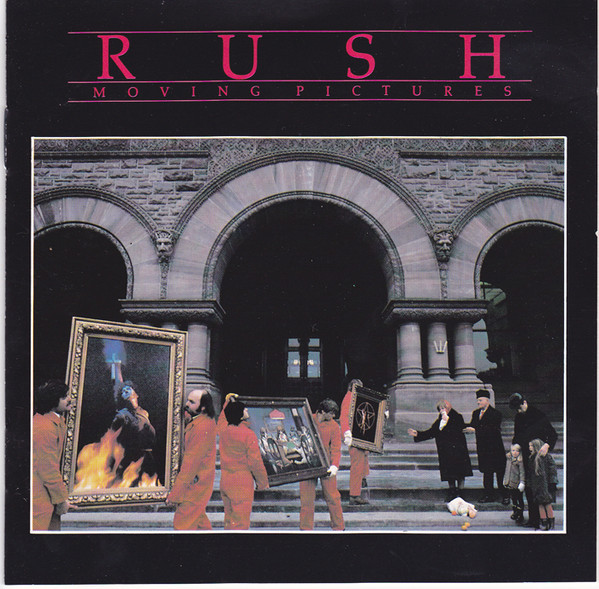
I wanted to pick just one song by one musical Blue Jays fan, so here it is. Geddy Lee of Rush (45 million albums sold) is frequently seen at Blue Jays games. Hard to pick just one Rush track, so here it is.
Tom Sawyer (1981) has nothing to do with baseball. Or does it? Maybe you don’t like Rush. Maybe you don’t like this kind of music or music in general. Maybe you don’t like Canada. Maybe you don’t like baseball. As I wrote in my last post, it’s a free country?
Anyway, if you let this move you, lift you, perplex you, it will.
The Toronto Blue Jays have won the championship of the MLB American League, heading to the World Series against the Los Angeles Dodgers.
When the Arizona Diamondbacks (National League champion in 2023) failed to make this year’s playoffs, I temporarily moved my fandom for this season to the Toronto Blue Jays.
Why? Because I already liked our North American neighbor Canada, but when Trump began his campaign of disdain and disrespect—idiotically suggesting that it should become the 51st state—I became a bigger Canada supporter and promoter.
It is still a question whether the Blue Jays can defeat the Dodgers, though it would be great to have a Canadian team as world champion of the American game (they have before, 31 years ago).
I am guessing that some MAGA people, often uninformed and irrational, will clamor for this Canadian team to be excluded entirely from Major League Baseball. Or, alternatively, will push harder for Canada as a 51st state.
I’m not saying that if you don’t love Trump you should love the Blue Jays. I’m not not saying that. Maybe you love LA, maybe you love the Dodgers. It’s a free country?
All I’m saying is that the Blue Jays are a very good baseball team, that Canada is a very good independent country with lots to recommend it, so rooting for the Blue Jays is worth considering. O Canada! Go Canada!
I have been listening to music through ear devices for decades. Being older, that includes single-earphones cabled to a monoraul, low-fi transistor radio.
Over the years, as stereo devices—radios, players, phones—took over, I’ve had many different personal listening tools. Wired, wireless, over the ear, in the ear.
When it comes to amplified music, through speakers or earphones, I have good ears but not smart or genius ears. I would never call myself an audiophile, and neither would those who call themselves audiophiles. But I know better sound when I hear it, so I’m willing to go a little above the bottom tier of amps and speakers, but not a lot.
Spotify, my music streamer of choice, finally is offering what it calls lossless audio. It is not the absolute highest level of audio that other services offer, but it is very good.
There is a small issue about lossless for those who listen, as I mostly do, via Bluetooth. Bluetooth cannot carry lossless, though even degraded it is still high quality. But I did want to try out this new level, and the only way to do that is through wires, to speakers or to earphones.
I still do use wired earphones sometimes, nice but plain vanilla ones (that is, relatively inexpensive). When I looked around, I discovered something that audio people know all about, but as I said, I am not that audio guy.
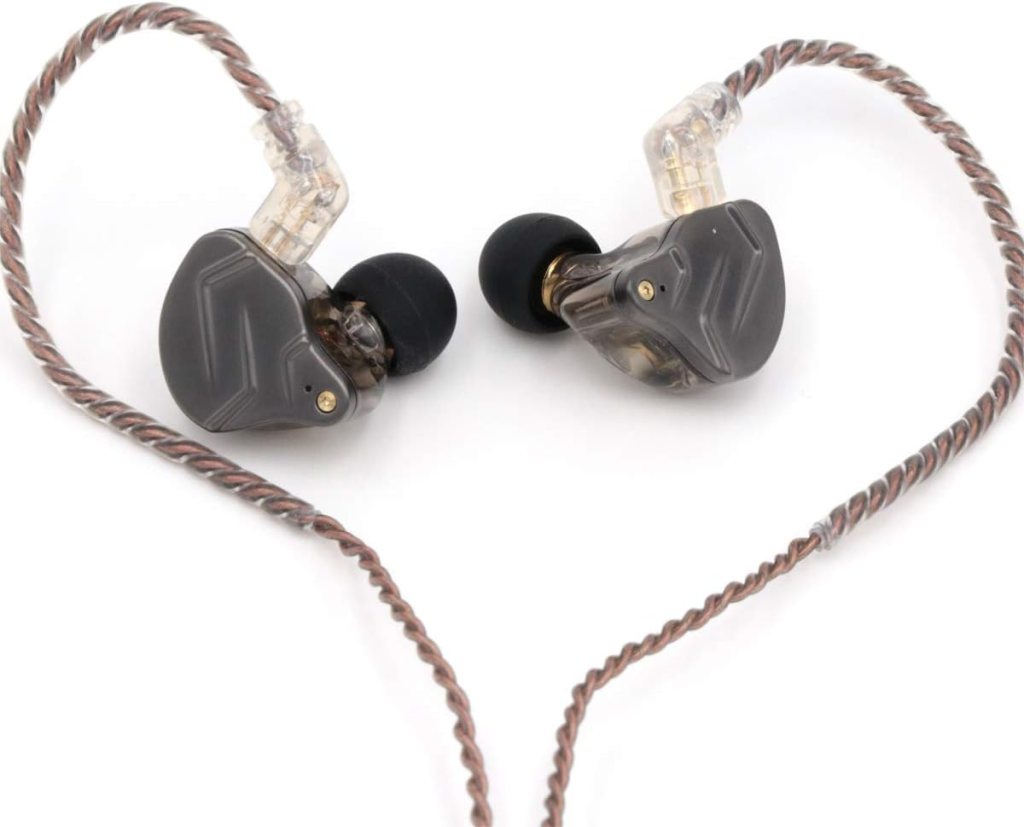
In-ear monitors (IEMs) are often used by music professionals, on stage or in studio, because the fidelity is greater. To put it in simple terms, they are like tiny powerful speakers you put in your ears.
I got a very modest ($18) pair of IEMs from a reputable tech company. The sound is as good as promised. The lossless audio really does sound better, even to an inexpert ear.
Now the issue, which I could have figured out if I had thought. Instructions for standard earphones and headphones warn about high volume, which they should. But the instructions for these spent lots of time on the matter.
After I tried them, I knew why. I always keep the volume down. Years ago, with earphones in, I accidentally plugged in with my device at unsafe volume and, in the vernacular, I blew my ears out. It was not permanent, but it was a warning.
When I started listening through these IEMs, at a safe low volume, trying out a few classical tracks, it was great. But when I took them out, I felt a bit the way you do after a very loud live concert.
I checked it out, and indeed, IEMs, when used too loud or too often, can cause hearing loss. Which, if you go back to something I said before, is not a surprise, since these are like tiny powerful speakers in your ears.
What now? Is the extra bit of audio quality worth it, or should I just be listening to this excellent audio through speakers or less dangerous earphones?
A lot of star musical artists have lost their hearing because of their art. I am not a star or musical artist, standing among columns of speakers, playing to millions. I’m definitely not Beethoven. I’m just a guy who loves listening to music.
The new IEMs are sitting here. Will I use them again? We’ll see. And hear.
At this moment, six of the nine universities who were offered the White House deal to get money in exchange for losing control of their schools have turned it down. Only the University of Arizona, Vanderbilt University and the University of Texas are still considering it. Today is a deadline, so by the time you read this, there may be more decisions made.
Strategically, while the White House would be happy with all or most of the schools accepting the agreement, Trump can be okay if only one university accepts. Here’s why:
The accepting school or schools will be showered—flooded—with federal money in ridiculous amounts. Meanwhile, the schools that rejected the offer will see funds dry up. This will serve as a terrorizing demonstration, a tactic that Trump continues to use in a variety of domains, global and domestic. Not just a high-powered version of carrot and stick. A threat, a warning, of what could happen to those who don’t comply with whatever the latest demand is.
To use the coarse language that Trump sometimes uses in public, and probably uses frequently in private, he wants to show resistant universities that he is not fucking around. He isn’t.
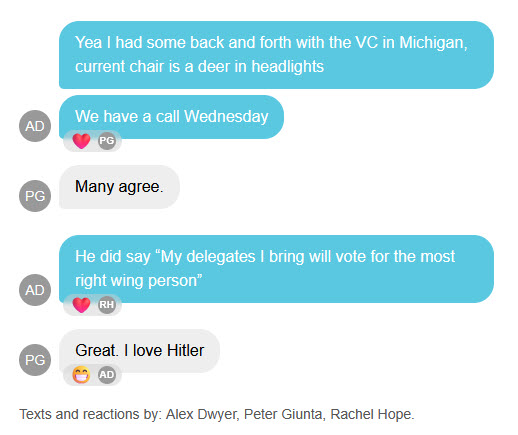
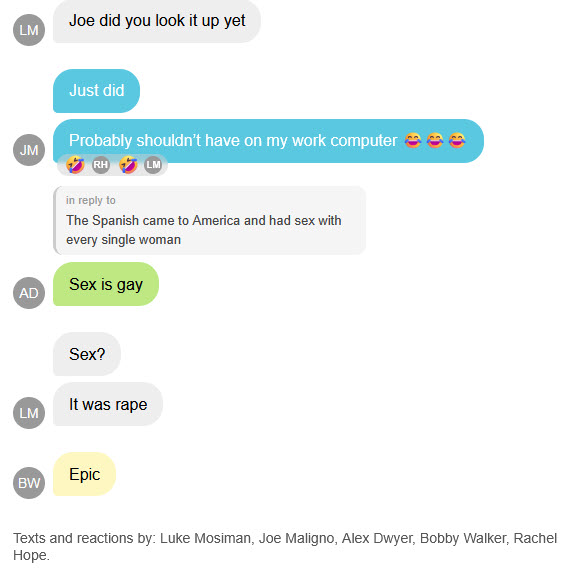
I have never before begged readers to go back and read a previous post or the underlying Politico exclusive. This is the exception. It is that important, but has not gotten the media attention it deserves.
It is important because the Republican Party, the party in power, knowingly or negligently has become a haven and breeding ground for future leaders who are hateful, racist, misogynistic, antisemitic fans of Hitler and Nazism.
This is not to say the Republican Party is entirely, or mostly, filled with haters, racists, misogynists, antisemites and fans of Hitler and Nazism. But if the party hasn’t already figured out before this revelation that a number of its future leaders are and have been just that, the party doesn’t deserve to lead America. Because one day, those leaders of tomorrow, especially the many others not in this chat, become the leaders of today.
The quality and well-being of government, which in America is some form of constitutionally-supported democracy, is inversely proportional to the volume, availability, intensity and attractiveness of non-essential distractions.
Trump is not a student of history and not a student of higher education.
He doesn’t know or care that two of the nine universities that received his demand for his academic hegemony were founded by Ben Franklin (University of Pennsylvania) and Thomas Jefferson (University of Virginia), eminent figures in the founding of America on a platform of freedom.
The University of Pennsylvania just rejected the offered compact, as have three of the other schools. The University of Virginia has expressed opposition, but no decision has been announced.
If the remaining universities need inspiration and encouragement, beyond what other schools have already done, I suggest asking the questions: WWBFD and WWTJD. I think they and we know.
Two postscripts:
The seal of the University of Pennsylvania includes its motto: Leges sine moribus vanae. Laws without morals are in vain.
Trump University was an education scam perpetrated by Trump before he became president. It offered a few seminars, but nothing like a degree. It folded in the wake of numerous lawsuits. But it did have a big beautiful logo.
The Desert Fathers were early Christian hermits and ascetics who withdrew to the Egyptian desert in the 3rd-4th centuries CE to pursue spiritual perfection through prayer, solitude, and self-discipline.
If we want to set our lives right and find peace, it is not the tolerant attitude of others that will do it for us. It will come about, rather, by our learning how to show compassion to them. If we try to avoid this hard struggle of compassion, by preferring a withdrawn and solitary life, we will simply drag our unhealed obsessions into solitude with us. We might well have hidden them. We certainly will not have eliminated them. If we do not seek liberation from our obsessions, then becoming more withdrawn and less social may even make us more blind to them, since it can mask them. —John Cassian