Bob Schwartz

Category: Uncategorized

Mistake After Mistake (File a File)

Mistake after mistake: 將錯就錯 [shōshaku jushaku], literally, take a file (rasp) and work on the file. File a file about something. Take up a mistake and settle in with the mistake. Mistakes surpass mistakes.

“When we reflect on what we are doing in our everyday life, we are always ashamed of ourselves. One of my students wrote to me saying, “You sent me a calendar, and I am trying to follow the good mottoes which appear on each page. But the year has hardly begun, and already I have failed!” Dogen-zenji said, “Shoshaku jushaku.” Shaku generally means “mistake” or “wrong.” Shoshaku jushaku means “to succeed wrong with wrong,” or one continuous mistake. According to Dogen, one continuous mistake can also be Zen. A Zen master’s life could be said to be so many years of shoshaku jushaku. This means so many years of one single-minded effort.”
–Shunryu Suzuki, Zen Mind Beginner’s Mind

“We should understand that, in reality, mistakes are called learning, and the state of no mistake is called nowness. In nowness there is no before or after, no goals, agendas, or fixed direction. Like the meandering river, it twists and turns in accord with circumstances but always knows how to find its way to the great ocean. If you wish to travel like this, you must go alone, not carry any baggage, and trust yourself implicitly.”
–Dogen, The True Dharma Eye

Dark Night of the Republican Soul

Don’t be fooled. Don’t let them fool you. Don’t think they are fooling themselves. Many Republicans, especially Senators, sleep badly and fitfully in a dark night.

The restless nights began for some when they saw Trump likely to win the nomination, as he ultimately did. They were comforted by the uneasy thought that, rooting against their own candidate, he had slim chance of being elected.

By the time of the inauguration, the difficult nights set in. At first, and for years to come, rationalizations, some very practical, such as holding on to their seats, helped. Delusions, drink and drugs might provide a little rest and respite.

But at some quiet moments, awake and alone in the dark with their thoughts, reality grips them. For the more religious, they realize that they can relentlessly lie to America, lie to themselves, but God is too smart for that. Others who have some sense of history imagine the history books they will spend the rest of their lives trying, against the current, to criticize and correct. History books that will paint them at best as selfish dupes, at worst as enablers and accomplices.

Many people have dark nights, brought on by the unavoidable tragedies of capricious life. Those nights are not wished on anyone. Sometimes it is the anguish of bad choices made. Sometimes the sleepless nights never ever end.

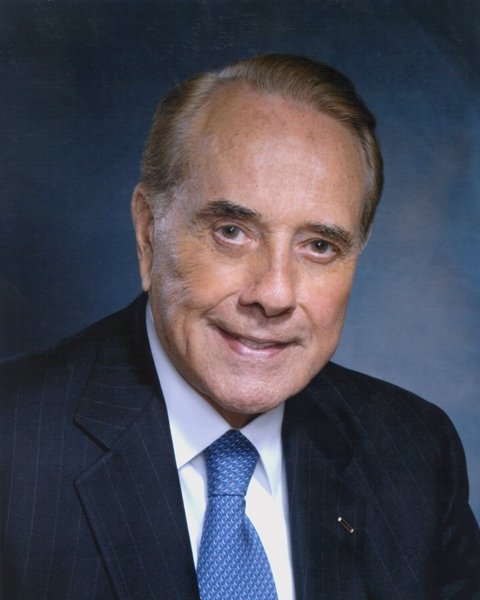
Republican Senators are attacking Mitt Romney. Is Bob Dole next on the hit list?

CNN:

GOP senator says Romney ‘wants to appease the left by calling witnesses’ in impeachment trial

Republican Georgia Sen. Kelly Loeffler targeted her colleague GOP Sen. Mitt Romney of Utah on Monday over the issue of witnesses at the Senate impeachment trial.

In a tweet, Loeffler leveled an accusation at Romney, saying, “After 2 weeks, it’s clear that Democrats have no case for impeachment. Sadly, my colleague @SenatorRomney wants to appease the left by calling witnesses who will slander the @realDonaldTrump during their 15 minutes of fame. The circus is over. It’s time to move on!”

Not so long ago, Trump and the Republican Senators also came down hard on John McCain. Even after he died.

McCain and Romney were, of course, the previous two Republican presidential nominees. Assuming that Republican Senators are targeting only losers, they will skip George W. Bush and go straight for the prior Republican loser, Bob Dole.

Never mind that Bob Dole is 96, was a widely respected Senate Majority Leader, is a wounded World War II veteran and, as mentioned, was a Republican presidential nominee. Republicans seem to have no shame and don’t mind cannibalizing even their most distinguished former nominees for Trump’s sake.

Bob Dole, please watch your back.

Rationale for any bad behavior: I’m just a regular person, so if it’s okay for a president, it’s okay for me.

From an interview with Mark Galli, retiring editor of Christianity Today, whose editorial criticized Trump’s immoral conduct in office and called for his removal:

Do you think evangelicals’ willingness to excuse Mr. Trump’s behavior will translate to a more broad willingness to forgive bad behavior by politicians, or does it seem to be Trump-specific?

I think his supporters would say it is limited to Trump. But I will say that some of his closest followers are, in a sense, being discipled by him. Mr. Trump’s typical response to a critic is to frame the entire conversation as a competition between success and failure.

The question is too narrow. The question should be: Do you think evangelicals’ willingness to excuse Mr. Trump’s behavior will translate to a more broad willingness to excuse their own bad behavior?

The answer is yes.

In fact, the willingness of evangelicals, Republican politicians, and many others to excuse Trump’s behavior is precisely based on that. Trump is a get-out-of-hell-free card. “I already told you that it isn’t wrong for him to [fill in the blank]. So obviously it isn’t wrong for me.”

A rise in expressive and aggressive hateful words and actions is not hard to explain. Just hard to fix.

People, to some degree and in some numbers, experience frustration, alienation and related negative emotions. Some of those people will speak out and act out in response to those emotions in hateful ways. The target for that speaking and acting out may be an individual or a group of individuals, identified by some affiliation or characteristics.

Two things are happening now, as they have happened before in history, and as they always will.

One is an increase in the drivers for that frustration and negativity. It may be economic, social, cultural, ideological. Certain trends are leading some people to feel themselves, individually and as part of a society, put upon by the way things are going.

The second thing is acceptance, encouragement and enabling of that acting and speaking out. The contributors to this are too long to list here, but include for example social media and high-profile individuals. Or better said, high-profile individuals who use and exploit social media.

Once and still, we had and have counterbalancing forces, both in helping to reduce that sense of frustration and alienation and in tempering the acceptability of speaking and acting out in hateful ways. But the presence and power of those forces seems to be diminishing.

Unless and until those counterbalancing forces—those that help reduce frustration and alienation and those that temper the acceptability of hatefulness—regain power, we are not getting out of our situation anytime soon.

Trump says I am a citizen of American Jewland. I am not.

Newsweek:

Jewish Groups Accuse Trump of Anti-Semitism Over ‘Horrifying’ Plan to Define Judaism As a Nationality

Liberal American Jewish advocacy groups have reacted with horror to reports that President Donald Trump plans to sign an executive order defining Judaism as a nationality rather than just a religion.

According to a Tuesday report from The New York Times, the president is planning the order to help combat anti-Semitism on U.S. college campuses and crack down on boycott campaigns against the state of Israel.

But progressive Jewish groups suggested the reported move is actually anti-Semitic, in that casts Jews as a separate nationality to all other Americans, and arguing it could stifle legitimate criticism of Israeli policies.

The move comes as the president himself is facing renewed accusations of anti-Semitism, after a weekend speech in which he used multiple anti-Semitic tropes and again suggested that all Jews must support for the Israeli government.

The Education Department can currently withhold funding from institutions or programs that discriminate “on the ground of race, color, or national origin,” but not religion, the Times explained.

By defining Judaism as a nationality, the administration will be able to defund institutions seen to be allowing an anti-Semitic environment do develop.

But it will also help the Education Department’s efforts to quell Boycott, Divestment and Sanctions-linked movements, which seek to pressure the Israeli government to improve its treatment of Palestinians and end its continued violation of international law.

Let us parse this craven move as a political and religious matter.

Politically, the vast majority of American Jews don’t like or support Trump. If, however, he can exploit differences in the Jewish communities to weaken that opposition and resistance, his handlers believe he comes out ahead. Support for Israel, including condemnation of BDS, crosses political lines. If Trump is seen as a “hero” to some Jews, that bolsters his chronically narrow support.

Religiously, this is typically careless, as in his not caring or knowing about Judaism, Christianity or any other religious tradition. Or about history. If he did, he would understand that racializing and nationalizing Jews is an insidious matter, used to raise issues of split loyalties and to set Jews apart from “regular” citizens.

Human Rights Day

Human Rights Day is observed every year on 10 December — the day the United Nations General Assembly adopted, in 1948, the Universal Declaration of Human Rights (UDHR): a milestone document proclaiming the inalienable rights which everyone is inherently entitled to as a human being regardless of race, colour, religion, sex, language, political or other opinion, national or social origin, property, birth or other status. Available in more than 500 languages, it is the most translated document in the world.

Peyote Pilgrims

“Imaginatione and historie are a fine paire.”
Made up old-fashioned quote

Some believe that the accounts of the first Thanksgiving feast in 1621 have been sanitized to leave out an extraordinary detail. Somehow, it is thought by some, the Native Americans at Plymouth had traded for peyote from Southwestern tribes and shared it with the colonists at that famous three-day meal.

First, here’s the version we have, from Edward Winslow in Mourt’s Relation, published in 1622:

Our harvest being gotten in, our governor sent four men on fowling, that so we might after a special manner rejoice together after we had gathered the fruits of our labor. They four in one day killed as much fowl as, with a little help beside, served the company almost a week. At which time, amongst other recreations, we exercised our arms, many of the Indians coming amongst us, and among the rest their greatest king Massasoit, with some ninety men, whom for three days we entertained and feasted, and they went out and killed five deer, which we brought to the plantation and bestowed on our governor, and upon the captain and others. And although it be not always so plentiful as it was at this time with us, yet by the goodness of God, we are so far from want that we often wish you partakers of our plenty.

The omitted mention of psychedelics explains much. For example, the outlandish hats and clothing we associate with the pilgrims in fact did not exist in that community. Instead, it is possible that those in the midst of an experience began sketching the ridiculous fashions they thought they saw. “Tall hats with buckles,” William Bradford said. “Oh wow, such hats reflect our reaching to heaven.” “Awesome!” the others who were still capable of speaking might have exclaimed.

Happy Thanksgiving (yes, we all still call the holiday that).

Dawn, again

Dawn, again

The first sip of light
can be so sweet
wonder waiting
untold possibility
once more
no promises
not even a seen sun
just a slip of blue gray
unnamed day

© Bob Schwartz

America is a nuclear plant in meltdown

Chernobyl control room

Nuclear plants are immeasurably powerful and potentially dangerous. To run properly and safely they require strict systems and conscientious people. When the systems or people fail, the power is set chaotically free. Disaster follows.

America is right at that point, though we are assured, and assure ourselves, that this is a ridiculously exaggerated metaphor, and concern should not proceed to panic. We have no historical precedent for the worst, at least not here. We believe that the Constitution, the laws, and the essential goodness and wisdom of people in power and citizens make a meltdown impossible.

What if our optimism is wrong? What if our confidence in systems and people is tragically misplaced? What, if anything, can and should we do?