Bob Schwartz

Category: Spirituality

Give to the Emperor

Render Unto Caesar

Resolutions to stay away from politics, when it’s pretty or ugly or pretty ugly, can be hard to keep. But politics, no matter how significant it may seem, can be like psychic, emotional, moral quicksand, which as it reaches your shoulders, leaves you wondering if this trip was really necessary.

So let’s see what Jesus said about all this.

The famous “Question about Paying Taxes” is one of the most discussed and interpreted passages in the Gospels. Here it is, from the Gospel of Luke in the NRSV translation:

So they watched him and sent spies who pretended to be honest, in order to trap him by what he said, so as to hand him over to the jurisdiction and authority of the governor. So they asked him, “Teacher, we know that you are right in what you say and teach, and you show deference to no one, but teach the way of God in accordance with truth. Is it lawful for us to pay taxes to the emperor, or not?” But he perceived their craftiness and said to them, “Show me a denarius. Whose head and whose title does it bear?” They said, “The emperor’s.” He said to them, “Then give to the emperor the things that are the emperor’s, and to God the things that are God’s.” And they were not able in the presence of the people to trap him by what he said; and being amazed by his answer, they became silent. (Luke 20:20-26)

Some view this as a story about the separation of state and church. Some view it as about obedience to civil or religious authority. Some view it very particularly as a directive on withholding tax payment from ungodly government. And so on.

I take this as a spiritual message, grounded in practical experience. Political speech and action can be very important, even essential, to the accomplishment of positive and beneficial goals. And very seductive. But those activities can also set you in the midst of circumstances and environments that can seriously put you at a distance from more enlightening aspirations and possibilities. Sometimes really far from them.

You can’t run away from politics and its consequences. Those coins and emperors are always going to be there. So if you get caught up in it, just remember that there are other higher callings that have nothing to do with policies and positions and politicians.

The Revival of Enlightened and Transformative Politics

Talking about the revival of enlightened and transformative politics is bound to be imprecise.

That concept has never actually been dead. Looking at Christianity, a recent post about Jim Wallis and Sojourners highlights just one instance. A bigger and much more famous current example is Pope Francis. And it is nothing new. The Social Gospel movement, which is still represented (though not always appreciated), aimed to see the realization of the highest Christian principles in everyday practical society.

Keeping with the Christian theme, this is not about what Jesus would say about abortion or gay marriage or prayer in schools or any of these specific arguments—though all have a certain significance. It is about politics as a tool of overall transformation, beyond sectarian concerns.

This is not limited to Christianity. Every one of the traditions has a core of enlightenment and large scale transformation. But each of those traditions has found a way to occasionally devolve that mission into movements and policies and tactics that diverge and even contradict the higher principles and aspirations. It isn’t necessary to point out the wrong turns that, for example, Judaism and Islam have taken along the way to supposedly establish heaven on earth.

In the era of what was affectionately, or for some derisively, known as the New Age movement, this concept of politics as a transformative tool was central. There was the idea that if we kept our eyes on the prize—not just a country but a world elevated above our baser selves—we could together create something better. Politics was one of the tools that would serve that end, instead of enabling smaller personal ambitions and selfish, possibly pernicious, goals.

So here we are. Enlightened and transformative politics is not dead. But it may be missing in action. Each political choice we make—each donation, each tweet, each vote and, yes, each post—might help us find it. Or kill it. It’s up to us.

What Is So Wonderful About Climbing Mount Everest?

Hotel Mount Everest

Climbing Mount Everest is special. Unless you’re from Tibet:

Human beings are capable of so much endeavor, even in small matters. People spend their lives trying to measure the height of mountains or the depth of the sea. These provide useful information, but they may not prove significant in the long run. For example, we Tibetans could never understand why people climbed mountains for no reason. The mountaineers would say, “I am doing an expedition on Mount Everest,” as if it were the most important thing in the world. They would spend so much time and money; they would even risk, and sometimes lose, their lives. We would wonder if they were mad, and ask, “What do you get when you reach the top?” They replied, “Oh, it is just wonderful!” We would say, “What is so wonderful in that cold wind?” The answer was, “Oh, it is so exciting!” It might seem wonderful, but it will only last a short time, and it is only wonderful if you consider it wonderful. Someone else might think that the most wonderful thing is being curled up, warm and snug, in a cozy bed. To me, for instance, that is much more wonderful.

Ringu Tulku Rinpoche in Radical Compassion: Shambhala Publications Authors on the Path of Boundless Love. Available free.

The I Ching of Paris

Hexagrams 44 and 29

Question for the I Ching (using the coin method of consultation): How do we deal with the events in Paris?

The I Ching replies:

Hexagram 44 – Gou (Encountering, Coming to Meet)
Heaven above, Wind below.
Changing lines in the third, fourth and top place.

Changes to:

Hexagram 29 – Kan (Water, Darkness, The Abysmal)
Water above, Water below.

Excerpts from two leading translations:

The Complete I Ching
Alfred Huang

Hexagram 44 – Gou

The structure of the gua [hexagram] is Heaven above, Wind below. The wind blows everywhere under Heaven, encountering every being. It should be an auspicious gua. However, there is only one yielding line beneath five solid lines, symbolizing that the yin element is advancing and approaching the yang elements. When King Wen saw this happening, he heightened his vigilance. He realized that an unworthy person was worming his way into favor at the court. The growing negative influences would displace good people one after another. Darkness and difficulties had been eliminated, but their negative influences had not totally faded. These influences were permeating different areas. One must beware of this tendency and take prompt precautions against possible misfortune. Thus King Wen’s Decision and the Duke of Zhou’s Yao Text are full of warnings. But Confucius’s commentaries still shed light on the positive side.

This gua discusses the principle of encountering. In Chinese, meeting a person (or anything) unexpectedly is defined as encountering. When people encounter each other, either they are attracted, making adjustment for a harmonious relationship, or they reject each other, creating conflict between them. In human life sometimes one cannot refrain from misunderstanding and conflict. But one should not indulge in it and think that conflict is unavoidable and cannot be resolved. The ancient sages advocated adopting a conciliatory attitude. Here one yin element approaches five yang elements. She dares to come forward because her strength grows stronger. In this situation, one should not overlook taking preventive measures.

King Wen’s strategy of eliminating evil forces was to show no animosity but to act without tolerance. His administration constrained evil elements like tying up rams. But evil elements still wormed themselves into the favor of the court. King Wen realized that the evil forces had been eliminated, yet their influence had not totally faded. His analogy was that the maiden was too strong; it was not good to marry such a woman. The Duke of Zhou describes the evil forces as waiting to move forward like a lean pig. They should be stopped as if fastened with a metal brake. It is wise to restrain their influence by not letting them influence other people, but it was wiser to influence people with positive virtue.

[Changes to:]

Hexagram 29 – Kan

The central theme of this gua is: falling but not drowned; in danger but not lost. Maintain your confidence: soothe your mind. With assurance and faith, caution and trust, you can pass through any difficult situation. Both Abysmal and Abyss carry the sense of being bottomless. Kan is a pit, but it is not bottomless. There is hope.

Darkness represents not only a pit but also a situation of difficulty or danger. The structure of this gua is a doubling of the primary gua, Water. The image of Water is a yang line plunging between two yin lines, like running water flowing along and between the banks of a river. In ancient times, crossing a river represented a great danger. Thus, the attribute of Water was designated a situation of difficulty or danger. Here, Water is doubled, suggesting that one is plunging into a situation fraught with difficulties or danger. However, the ancient Chinese believed that no matter how dangerous or dark a situation was, if one was able to follow the way of Heaven, one could pass through it as safely as water passes through a ravine.

Water flows on twice over,
Darkness is doubled.
In correspondence with this,
The superior person cultivates and practices virtue constantly
And responds through teaching.


The I Ching
Wilhelm/Baynes

Hexagram 44 – Kou

This hexagram indicates a situation in which the principle of darkness, after having been eliminated, furtively and unexpectedly obtrudes again from within and below. Of its own accord the female principle comes to meet the male. It is an unfavorable and dangerous situation, and we must understand and promptly prevent the possible consequences.

The inferior man rises only because the superior man does not regard him as dangerous and so lends him power. If he were resisted from the first, he could never gain influence.
The time of COMING TO MEET is important in still another way. Although as a general rule the weak should not come to meet the strong, there are times when this has great significance. When heaven and earth come to meet each other, all creatures prosper; when a prince and his official come to meet each other, the world is put in order. It is necessary for elements predestined to be joined and mutually dependent to come to meet one another halfway. But the coming together must be free of dishonest ulterior motives, otherwise harm will result.

[Changes to:]

Hexagram 29 – K’an

In man’s world K’an represents the heart, the soul locked up within the body, the principle of light inclosed in the dark—that is, reason. The name of the hexagram, because the trigram is doubled, has the additional meaning, “repetition of danger.” Thus the hexagram is intended to designate an objective situation to which one must become accustomed, not a subjective attitude. For danger due to a subjective attitude means either foolhardiness or guile. Hence too a ravine is used to symbolize danger; it is a situation in which a man is in the same pass as the water in a ravine, and, like the water, he can escape if he behaves correctly.

Through repetition of danger we grow accustomed to it. Water sets the example for the right conduct under such circumstances. It flows on and on, and merely fills up all the places through which it flows; it does not shrink from any dangerous spot nor from any plunge, and nothing can make it lose its own essential nature. It remains true to itself under all conditions. Thus likewise, if one is sincere when confronted with difficulties, the heart can penetrate the meaning of the situation. And once we have gained inner mastery of a problem, it will come about naturally that the action we take will succeed. In danger all that counts is really carrying out all that has to be done—thoroughness—and going forward, in order not to perish through tarrying in the danger.

Properly used, danger can have an important meaning as a protective measure. Thus heaven has its perilous height protecting it against every attempt at invasion, and earth has its mountains and bodies of water, separating countries by their dangers. Thus also rulers make use of danger to protect themselves against attacks from without and against turmoil within.

Wonderful Inspiration

The word inspiration is lovely and wonderful. Especially if you are involved in breathing as a practice, which is everybody, or in being inspired or inspiring.

Breathing is good. So is that thing when you hear something or read something or see something and you sense something happening in you and to you.

Some etymology notes from the Oxford dictionary:

Middle English enspire, from Old French inspirer, from Latin inspirare ‘breathe or blow into’, from in- ‘into’ + spirare ‘breathe’. The word was originally used of a divine or supernatural being, in the sense ‘impart a truth or idea to someone’.

Our word spirit is based on Latin spiritus ‘breath or spirit’, from spirare ‘to breathe’—the ancient Romans believed that the human soul had been ‘breathed’ into the body—the image is the same as ‘the breath of life’. The sense ‘strong distilled alcoholic drink’ comes from the use in alchemy of spirit to mean ‘a liquid essence extracted from some substance’….Spirare forms the basis of numerous English words including aspire (mid 16th century) from adspirare ‘to breath upon, seek to reach’; conspire (Late Middle English) from conspirare ‘to breath together, agree’; expire (late 16th century) ‘to breath out’; inspire (Late Middle English) ‘breath into’ from the idea that a divine or outside power has inspired you; and perspire (mid 17th century) ‘to breath through’; and transpire (Late Middle English) ‘breath across. In English spirit was shortened to sprite (Middle English) which in turn developed sprightly (late 16th century).

So at least three big ideas are related that might not seem so. Breathing, spirit and inspiration. Add to that aspire, conspire, transpire, expire and most fun of all, sprites, and you have an entire family.

You have hopefully had those moments of inspiration. Sometimes it seems literally to go to your head, propelling your mind to places it hasn’t been. It may also skip your mind entirely, going straight someplace inside that lifts you, like a filled balloon, though that’s not quite it either. Maybe it’s more like a good clear fresh breath gently filling your lungs. What, of all riches, could be more immediately real and inspiring?

Treasure Again

Dhammapada

How could I know
When I first read this treasure
How I would wander away
This way and that.
Make no mistake that others
Had value
Like other food that feeds well
Medicine that soothes ills.
But all along there it stood
Waiting for me to look again
And see its simplicity.
No time wasted
Here it is.

It is easier than we might think to lose track of things that once inspired us, the way a match is lost once we use it to light a fire.

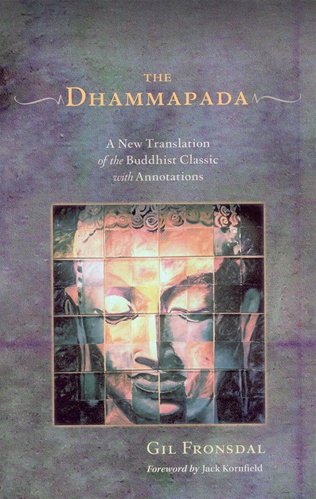
This verse refers to my turning back to the Dhammapada. It is the brief, most basic, and most widely-read collection of wisdom from the Buddha, whose recollected discourses fill volumes. Depending on which Buddhist trails you follow, just as with Jewish, Christian, Muslim, etc. trails, you will have read and heard plenty of excellent teaching from plenty of excellent teachers along the way. But there is something extraordinary about revisiting the first thing seen, the first coin from the treasure, which for many on the Buddhist way is The Dhammapada.

If you are curious to explore the Dhammapada, try this translation by Thomas Byrom or this one by Gil Fronsdal, both from Shambhala Publications.

New Beginnings: The Torah and the I Ching

Bet

In Jewish congregations, the annual Torah reading cycle begins again this week with the first chapters of the Bible. In Hebrew it begins with the word b’reishit, and in its best-known translation, the first verse goes like this:

In the beginning, God created the heavens and the earth.

And with that comes a puzzle.

If B’reishit is the beginning of a very big and consequential story, and if the creators of the Torah were sensitive to the mystical meanings of the Hebrew alphabet and language, why does the Torah begin with the second letter bet (B) rather than the first letter alef (A)?

Looking at a bigger picture, this connects to a related puzzle and an unlikely source: the I Ching.

The I Ching is a classic of Chinese literature and philosophy, a text as ancient as the Torah and just as influential.

Richard J. Smith writes in The I Ching: A Biography:

The Changes first took shape about three thousand years ago as a divination manual, consisting of sixty-four six-line symbols known as hexagrams. Each hexagram was uniquely constructed, distinguished from all the others by its combination of solid (——) and/or broken (— —) lines. The first two hexagrams in the conventional order are Qian and Kun; the remaining sixty-two hexagrams represent permutations of these two paradigmatic symbols….

The operating assumption of the Changes, as it developed over time, was that these hexagrams represented the basic circumstances of change in the universe, and that by selecting a particular hexagram or hexagrams and correctly interpreting the various symbolic elements of each, a person could gain insight into the patterns of cosmic change and devise a strategy for dealing with problems or uncertainties concerning the present and the future.

The first intriguing note is that the I Ching (pronounced Yi Jing) begins with those hexagrams Qian and Kun—known generally in English as Heaven and Earth. The cosmos of change and the I Ching begin then with Heaven and Earth.

It is at the close of the 64 hexagrams that the conundrum appears. Hexagram 63, the penultimate one, is Ji Ji—After Completion. This should be the end of the story. But it isn’t. The final hexagram, Hexagram 64, is Wei Jei—Before Completion. In the end, it doesn’t stop. It begins again. The Book of Changes emphasizes that the changes never end.

This is an explanation of why the Torah does not begin with the beginning of the alphabet. If it starts with A, that presumes a Z, A to Z, or in Hebrew, alef to tav. Creation would thus be represented as a finite element of a finite cosmos. In the text it starts instead, as the Latin phrase goes, in media res—in the middle of things. Just as the Torah will end in the middle of things, after completion of a journey, but with Moses never allowed to experience what is yet to happen, before the next completion. On and on, always beginning, never done. Just like the I Ching. Just like the Torah itself.

Pope Francis, Kim Davis and Caesar

Caesar Coin

Pope Francis tried very hard in his U.S. visit to watch the line between moral guidance that has political effect and politics itself. He appears, maybe unwittingly, to have crossed the line. In a big way.

His visit with Kim Davis belies a misunderstanding of who she is and what she represents. It’s not that freedom of religious conscience is not an important issue. It’s that Kim Davis is the wrong poster person.

It appears from the context that he may have seen her in the line of great conscientious objectors. He reportedly thanked her for her courage and told her to be strong.

Kim Davis does have a religious conscience. And she does object to authorizing same-sex marriages. But there are two problems.

First, unlike true conscientious objectors, she doesn’t really want to suffer for her beliefs. Civil disobedients and conscientious objectors expect to be punished; sometimes they welcome it. But Kim Davis wants to have it both ways. Martin Luther King Jr. did not write in his letter from a Birmingham jail: For God’s sake, let me out of here. As far as we know, Kim Davis didn’t write any letters from her jail, at least not ones that will be in literary anthologies for the next fifty years.

The second problem is that her objection, at its heart, is that the Constitution and the Supreme Court are wrong, and that’s why she gets to keep her job and perform her duties as she sees fit. As a public servant, she is either explicitly by oath or implicitly by understanding sworn to uphold the Constitution. If she chooses not to, she has no privilege to hold that job, nor is she privileged to be free of sanction. That’s it.

Pope Francis, who I have expressed admiration for, may not understand that or the background of the Kim Davis saga. In that event, he should have followed the advice of Jesus in these situations:

‘Tell us, then, what you think. Is it lawful to pay taxes to the emperor, or not?’ But Jesus, aware of their malice, said, ‘Why are you putting me to the test, you hypocrites? Show me the coin used for the tax.’ And they brought him a denarius. Then he said to them, ‘Whose head is this, and whose title?’ They answered, ‘The emperor’s.’ Then he said to them, ‘Give therefore to the emperor the things that are the emperor’s, and to God the things that are God’s.’

Matthew 22:17-21 (NRSV)

For Me To Be A Saint Means To Be Myself: Thomas Merton and Pope Francis

Thomas Merton

In his speech to Congress, Pope Francis put Thomas Merton back in the public light, where he has long belonged as an American spiritual master:

A century ago, at the beginning of the Great War, which Pope Benedict XV termed a “pointless slaughter”, another notable American was born: the Cistercian monk Thomas Merton. He remains a source of spiritual inspiration and a guide for many people. In his autobiography he wrote: “I came into the world. Free by nature, in the image of God, I was nevertheless the prisoner of my own violence and my own selfishness, in the image of the world into which I was born. That world was the picture of Hell, full of men like myself, loving God, and yet hating him; born to love him, living instead in fear of hopeless self-contradictory hungers”. Merton was above all a man of prayer, a thinker who challenged the certitudes of his time and opened new horizons for souls and for the Church. He was also a man of dialogue, a promoter of peace between peoples and religions.

Pope Francis, like Merton, is a natural. One of those players who finds their game and becomes a star because their nature brought them to it. This doesn’t mean there aren’t struggles on the way to greatness. On the contrary, the unceasing struggles are an essential part of their nature. At first we may be inspired by the worthy message and outward model. But ultimately, when we explore them, it is the dimensions and shading we come to admire. A child’s drawing is all black and white, a simple sketch. A master drafts with subtle and powerful lines and shadows, in which we see so much depth.

The Pope’s regard and mention of Merton in his speech to Congress is also natural. Merton chose to be a cloistered monk, then rebelled against his voluntary and self-imposed discipline. The demands of quiet and obedience to authority clashed with the imperative of a great writer freely writing and a great thinker freely thinking. Not gratuitous and loose writing and thought. Always guided by a compass that pointed both higher and back to an inescapable benevolent source, always grounded in the reality of daily life, strong and weak. That sort of creative independence in calling seems to mark Pope Francis too.

Merton died in 1968, almost exactly a year before Pope Francis was ordained. To say they would have loved to have met is understatement. Like many of us, Pope Francis met Merton in countless books, by and about him. In those writings, we learn that Merton was a mystic and a man. What else are saints anyway? “For me to be a saint is to be myself,” Merton said. We can’t be our better self without being our truer self, our littler self and our bigger self. No divine without human, the most and best human possible. It’s all about love and awareness. So Merton lived and wrote. So Pope Francis echoes in his life and his messages.

If you want to learn more about Merton, see The Thomas Merton Center. Among the overwhelming list of books, consider starting small with these:

Thomas Merton: Essential Writings

Love and Living, a collection of essays from the later days of his life.

An excerpt from Learning to Live, the first essay in Love and Living:

What I am saying is this: the score is not what matters. Life does not have to be regarded as a game in which scores are kept and somebody wins. If you are too intent on winning, you will never enjoy playing. If you are too obsessed with success, you will forget to live. If you have learned only how to be a success, your life has probably been wasted. If a university concentrates on producing successful people, it is lamentably failing in its obligation to society and to the students themselves…

The least of the work of learning is done in classrooms. I can remember scores of incidents, remarks, happenings, encounters that took place all over the campus and sometimes far from the campus: small bursts of light that pointed out my way in the dark of my own identity. For instance, Mark Van Doren saying to me as we crossed Amsterdam Avenue: “Well, if you have a vocation to the monastic life, it will not be possible for you to decide not to enter” (or words to that effect). I grasped at once the existential truth of this statement.

One other scene, much later on. A room in Butler Hall, overlooking some campus buildings. Daisetz Suzuki, with his great bushy eyebrows and the hearing aid that aids nothing. Mihoko, his beautiful secretary, has to repeat everything. She is making tea. Tea ceremony, but a most unconventional one, for there are no rites and no rules. I drink my tea as reverently and attentively as I can. She goes into the other room. Suzuki, as if waiting for her to go, hastily picks up his cup and drains it.

It was at once as if nothing at all had happened and as if the roof had flown off the building. But in reality nothing had happened. A very very old deaf Zen man with bushy eyebrows had drunk a cup of tea, as though with the complete wakefulness of a child and as though at the same time declaring with utter finality: “This is not important!”

The function of a university is to teach a man how to drink tea, not because anything is important, but because it is usual to drink tea, or, for that matter, anything else under the sun. And whatever you do, every act, however small, can teach you everything—provided you see who it is that is acting.

Phyllis Tickle: The Godmother of Us All

Phyllis Tickle

Phyllis Tickle died last week at the age of 81. No matter the number, it would always be too low.

Phyllis is the godmother of contemporary religion publishing and those who worked there. She established the Religion section of Publishers Weekly, the bible of the industry. It is possible that no single individual has had a bigger impact on a significant genre of publishing.

She was also a remarkable writer and speaker on matters of religion and spirituality, including her insights into the emerging church for changing times. Among her many books: The Divine Hours, a series of guides to the ancient practice of hourly prayer, and The Shaping of a Life: A Spiritual Landscape, a memoir that is as close as those who didn’t know her will get to the unique and unforgettable person and spirit she was.

Like a brilliant and generous mother, she encouraged and enabled creative editorial talent and writing for decades. If you look at the careers of the good and the great in the field, you will find Phyllis at the nexus. She is found in the acknowledgments of scores of books, like this one picked at random:

“Phyllis Tickle answered countless e-mailed questions, no matter where in the world she was.”

I don’t precisely remember the first time I met Phyllis. She was just always there. I do remember the last time I spoke with her. That voice, the one I can hear clearly right now, that soft and distinctive Tennessee talk, just lifted and lightened you.

“I love you, Schwartz,” she would say. Love you back, Miss P. Miss you too.