Bob Schwartz

Category: Religion

Barely Audible

Barely Audible

קוֹל דְּמָמָה דַקָּה

A still small voice
1 Kings 19:12

Hurricanes earthquakes
Fires in the brain
Awed but unable
To follow a thought
Or lose one.
Hear O hear
Minute stillness
Soft murmuring
Gentle whisper
Still small.

Note: “God will reveal himself not in storm or fire or the shaking of the mountain but in a small, barely audible sound. On Mount Carmel, God spoke through fire; here at Horeb, he speaks [to Elijah] in a more subtle language, for the deity is by no means limited to seismic manifestations.”
Ancient Israel: The Former Prophets, translation with commentary by Robert Alter

© Bob Schwartz 2017

Yaqui: The last piece in a spiritual puzzle?

Saying that something is “the last piece in a spiritual puzzle” is misleading in so many ways.

It is not a spiritual puzzle, there are no pieces, and they do not appear and are not apprehended in sequence. It is a mystery of mysteries, at best they are clues, which fly in and out of the seen and unseen sky like birds, some of which you recognize, but many of which you will not identify until much later, if ever at all.

I am not a fan of spiritual syncretism and I am not not a fan of spiritual syncretism. Those who go from birth to death in a single tradition have much. Those who like bees or hummingbirds go from flower to flower have much. So it goes.

As for me, continuing a metaphorical mix, I’ve looked at plans and kept to some, picked up building materials along the way, and constructed what I could from what I found or what was delivered. It doesn’t look quite like anything else, I wouldn’t necessarily recommend the structure even if I could, but I might suggest it is not a terrible process. Or place to work and rest in.

Here is something about the Yaqui of the Sonoran Desert of Arizona and Mexico and something from the most extraordinary of Buddhist scriptures.


Sea Aniya: The Flower World

In the spiritual heart of the “enchanted” natural world is the dream-like presence of this “blossoming” world. This realm is difficult to define in words. It is part of a ritualized symbolic language of spirit that is understood by not solely by the mind, but also by the heart. What can be said is that the Sea Aniya is the integral part of a very ancient belief that is also a part of most Mexican Indian peoples’ mythology: the idea of flowers “expressing” a spiritual message, flowers symbolizing growth (germination, budding, flowering) of spiritual awareness. Flowers are the harmony, fertility, and beauty of this world. Yaquis believe in a manifested reality so that we know this is a very real world that is located east of the sun and in a place below the dawn. It is an ideally perfected world that mirrors the grace and beauty of the desert territory.

Deer Dancer: Yaqui Legends & Myths by Stan Padilla

The Flower Ornament Scripture

The Flower Ornament Scripture, called Avatamsaka in Sanskrit and Huayan in Chinese, is one of the major texts of Buddhism. Also referred to as the major Scripture of Inconceivable Liberation, it is perhaps the richest and most grandiose of all Buddhist scriptures, held in high esteem by all schools of Buddhism that are concerned with universal liberation. Its incredible wealth of sensual imagery staggers the imagination and exercises an almost mesmeric effect on the mind as it conveys a wide range of teachings through its complex structure, its colorful symbolism, and its mnemonic concentration formulae….

[Book One] “THUS HAVE I HEARD. At one time the Buddha was in the land of Magadha, in a state of purity, at the site of enlightenment, having just realized true awareness. The ground was solid and firm, made of diamond, adorned with exquisite jewel discs and myriad precious flowers, with pure clear crystals. The ocean of characteristics of the various colors appeared over an infinite extent. There were banners of precious stones, constantly emitting shining light and producing beautiful sounds. Nets of myriad gems and garlands of exquisitely scented flowers hung all around. The finest jewels appeared spontaneously, raining inexhaustible quantities of gems and beautiful flowers all over the earth.”

The Flower Ornament Scripture, translated by Thomas Cleary

Ex Nihilo

Ex Nihilo

When once was nothing
Was something?
Where once was nothing
Was nowhere?
Know everything
Believe in what you know
And nothing else?
Believe everything
And know nothing?
Aleph to tav
Alpha to omega
Awwal to akkir.
Is this the emet
The truth?

© Bob Schwartz 2017

Pantry (Morning Explorer)

Pantry (Morning Explorer)

In the beginning is
The same breakfast
Or so it starts.
But the pantry shelves
Are so full of wholesome ingredients
It seems impossible to ignore.
It isn’t the prospect of a new tasty dish
It is the possibility the morning sun offers
Who am I
Creative cook and diner
To ignore it?

© Bob Schwartz 2017

Note: Yes, it is the last morning of Passover, and yes, it has been a week since breakfast was pancakes, and yes, this should be a picture of matzo brei. But this poem containing a breakfast metaphor arose spontaneously today, and Passover or not, pancakes are a beautiful breakfast sight. Tomorrow.

Heschel for Passover (or Any Time)

A reader reminds me that a year ago, I posted about including readings from Abraham Joshua Heschel in the Passover seder (A Heschel Haggadah).

You will find the readings I included in last year’s seder below. As regular readers know, I’ve mentioned Heschel a few times in this blog, and more frequently in my conversations and discussions. He may be the greatest of modern masters of Judaism or of any spiritual traditions. He is not always easy, but he is accessible, inspirational, mind-and-soul-stirring at a depth that lasts. His is not fast food; it is a long, rich, delicious meal that nourishes you for a lifetime and that you never forget—kind of like a seder. In addition to Elijah, who we expect at every seder, Heschel would be so welcome any time.

Along with the readings below, I urge you to take a look at some of the collections of readings available and then, if you like what you find, check out some of the many books (I am particularly fond of The Sabbath, but there are so many worthy ones).

Abraham Joshua Heschel: Essential Writings

The Wisdom of Heschel

I Asked for Wonder: A Spiritual Anthology  (“Never once in my life did I ask God for success or wisdom or power or fame. I asked for wonder, and he gave it to me.”)


THE MEANING OF EXISTENCE is experienced in moments of exaltation. Man must strive for the summit in order to survive on the ground. His norms must be higher than his behavior, his ends must surpass his needs. The security of existence lies in the exaltation of existence.

This is one of the rewards of being human: quiet exaltation, capability for celebration. It is expressed in a phrase which Rabbi Akiba offered to his disciples:

A song every day,
A song every day


THE TABLETS ARE BROKEN whenever the Golden Calf is called into being. We believe that every hour is endowed with the power to lend meaning to or withhold meaning from all other hours. No moment is as a moment able to bestow ultimate meaning upon all other moments. No moment is the absolute center of history. Time is a circle whose center is everywhere and whose periphery is nowhere.


THE WORLD COULD NOT EXIST at all except as one; deprived of unity, it would not be a cosmos but chaos, an agglomeration of countless possibilities … Life is tangled, fierce, fickle. We cannot remain in agreement with all goals. We are constantly compelled to make a choice, and the choice of one goal means the forsaking of another.


THE PROPHETS PROCLAIMED that justice is omnipotent, that right and wrong are dimensions of world history, not merely modes of conduct. The existence of the world is contingent upon right and wrong … The validity of justice and the motivation for its exercise lie in the blessings it brings to man … Justice exists in relation to a person … An act of injustice is condemned, not because the law is broken, but because a person has been hurt.


THE HEART IS OFTEN A LONELY VOICE in the marketplace of living. Man may entertain lofty ideals and behave like the ass that, as the saying goes, “carries gold and eats thistles.” The problem of the soul is how to live nobly in an animal environment; how to persuade and train the tongue and the senses to behave in agreement with the insights of the soul.


HUMAN LIFE IS HOLY, holier even than the Scrolls of the Torah … Reverence for God is shown in our reverence for man. The fear you must feel of offending or hurting a human being must be as ultimate as your fear of God. An act of violence is an act of desecration. To be arrogant toward man is to be blasphemous toward God.


TO PRAY is to take notice of the wonder, to regain a sense of the mystery that animates all beings, the divine margin in all attainments. Prayer is our humble answer to the inconceivable surprise of living. It is all we can offer in return for the mystery by which we live.

To escape from the mean and penurious, from calculating and scheming, is at times the parching desire of man … Prayer clarifies our hope and intentions. It helps us discover our true aspirations, the pangs we ignore, the longings we forget. It is an act of self-purification … It teaches us what to aspire to, implants in us the ideals we ought to cherish.


THE MOST MAGNIFICENT EDIFICES, most beautiful temples and monuments of worldly glory, are repulsive to the man of piety when they are built by the sweat and tears of suffering slaves, or erected through injustice and fraud. Hypocrisy and pretense of devoutness are more distasteful to him than open iniquity. But in the roughened, soiled hands of devoted parents, or in the maimed bodies and bruised faces of those who have been persecuted but have kept faith with God, he may detect the last great light on earth.


WHAT WOULD ART HAVE BEEN without the religious sense of mystery and sovereignty, and how dreary would religion have been without the incessant venture of the artist to embody the invisible in visible forms, to bring his vision out of the darkness of the heart, and to fill the immense absence of the Deity with the light of human genius? The right hand of the artist withers when he forgets the sovereignty of God, and the heart of the religious man has often become dreary without the daring skill of the artist. Art seemed to be the only revelation in the face of the Deity’s vast silence.

Ben Zoma Inside Out

The person in the hut lives here calmly,
not stuck to inside, outside, or in-between.
Song of the Grass Hut

Gone
Gone Beyond
Gone Completely Beyond
Heart Sutra

Ben Zoma Inside Out

Ben Zoma in the grass hut
Waters above
Waters below.
What does Rabbi Joshua know?
Sekito knows
Ben Zoma is outside
Inside and in-between.
Gone completely beyond.

Note: Creating, whatever your material, can be like the proverbial dog with a bone. There is sometimes spontaneity, done and gone, and then there is the idea that won’t go away. In that case, the idea is actually the dog and you are the bone. A previous version of this poem can be found here. Who knows what the next version, if any, will look like? Not me.

American Freedom Seder 2017: Where There’s a Pharaoh There’s a Wilderness

It is still a while until Passover (evening of April 10), but not too early to recommend holding or attending a Freedom Seder this year. Recommended for all people—even if you’re not Jewish, even if you’re not religious. All that’s needed is faith in freedom.

Freedom Seders are a tradition that began in the 1960s, relating the Passover journey to other struggles—race, gender, justice, war, etc. It may be a long way and a long time from Egypt to the Promised Land. But we can get there.

It’s possible you believe there are some special struggles going on right now in America. Which would make it a good time to gather with like-minded friends and family, brothers and sisters, and as a community share a meal and recall that the struggle is never easy or short (and might include some flat, dry bread), but that there is a better nation at the end of the journey. One hopeful, undiscouraged step at a time.

The Pope and the Dalai Lama: How Did We Get So Lucky?

In a newly published interview with Die Zeit, Pope Francis talks about many matters. Including his own faith. Asked about whether he ever doubts the existence of God, he said:

“I too know moments of emptiness.”

The current Pope shows us the honesty, humility, humor, wisdom and spirit we would like to see in all our traditions and in all our leaders—and in ourselves. The same can be said about the current Dalai Lama.

You don’t have to be a Roman Catholic or a Tibetan Buddhist to be inspired by these people. And just people they are, according to them, as the Pope reminds us in the same interview:

“I am a sinner and I am fallible. When I am idealized, I feel attacked.”

Pope Francis is 80. The Dalai Lama is 81. They will not live and serve forever, as much as we would be benefited by that gift. It is possible that both will be succeeded by their equal, but we can’t know that.

So let’s enjoy them and be inspired by them while they are here, wondering what we did to deserve this.

Lovers Before Me

Lovers Before Me

The wise ones are
The lovers here before me.
They loved with passion and skill
Students of each other
Students of their own experience
Who graduated to be teachers of the ultimate prize.
I am jealous and intimidated
Wondering why I should bother to approach
Let alone try to love.
Still I listen to their tales of conquest
With the one I hoped would be mine.
Don’t try to love, they tell me:
Forget us.
Forget your lover.
Forget yourself.
None of us
Were ever here.

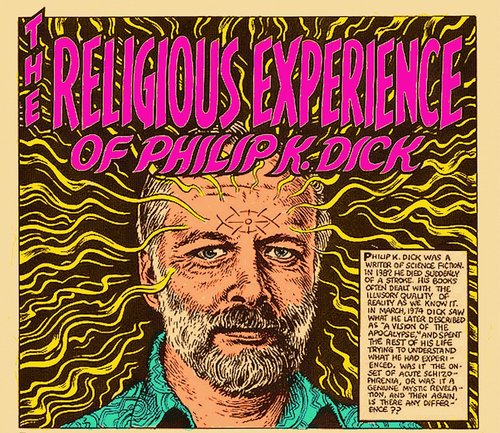
Philip K. Dick, Now More Than Ever

Philip K. Dick color

Pretty much every day now, my head spins, just a little. My head does not usually and chronically spin, but it does these days. I find myself not so much trying to make sense of some things, but trying to determine whether there is or will appear some appropriate and constructive response. So far, nothing.

Today, however, I did think about Philip K. Dick. I wrote a little about Dick a while ago. To say he was just a science fiction writer is not nearly enough. Some of his many books and stories have been turned into a number of successful movies (Blade Runner, Total Recall, etc.) and now into an excellent TV series (Man in the High Castle).

The reason for his books being so adaptable, and for his loyal and committed readers, is that Dick was a visionary, some might say a prophet. He was also psychologically and cognitively different. The two parts often go together.

The reason I’m thinking about Dick is the possibility that those of us who are confused about what is going on are being far too rational and far too narrow about all of it. Maybe what we need is a much bigger and stranger vision. Maybe to understand madness, we all have to try to be a little mad ourselves, or pretend to be. Just a thought.

Anyway, Dick suffered through some mental illness and/or religious experience late in his life. Some would say Dick was a bit of a madman. Or a visionary or a prophet. In any case, if we want to know what the future might look like—or for that matter what the present looks like—we can do no better than look at it through Dick’s eyes.

Writer Jonathan Lethem has written some fine appreciations of Dick. This is from Lethem’s Introduction to Selected Stories of Philip K. Dick:

Dick’s great accomplishment, on view in the twenty-one stories collected here, was to turn the materials of American pulp-style science fiction into a vocabulary for a remarkably personal vision of paranoia and dislocation. It’s a vision as yearning and anxious as Kafka’s, if considerably more homely. It’s also as funny. Dick is a kitchen-sink surrealist, gaining energy and invention from a mad piling of pulp SF tropes—and clichés—into his fiction: time travel, extrasensory powers, tentacled aliens, ray guns, androids, and robots. He loves fakes and simulacra as much as he fears them: illusory worlds, bogus religions, placebo drugs, impersonated police, cyborgs. Tyrannical world governments and ruined dystopian cities are default settings here. Not only have Orwell and Huxley been taken as givens in Dick’s worlds, so have Old Masters of genre SF like Clifford Simak, Robert Heinlein, and A. E. Van Vogt. American SF by the mid-1950s was a kind of jazz, stories built by riffing on stories. The conversation they formed might be forbiddingly hermetic, if it hadn’t quickly been incorporated by Rod Serling and Marvel Comics and Steven Spielberg (among many others) to become one of the prime vocabularies of our age….

If Dick, as a bearded, drug-taking Cal-i-fornian, might have seemed a candidate for Beatdom (and in fact did hang out with the San Francisco poets), his persistent engagement with the main materials of his culture kept him from floating off into reveries of escape. It links him instead to writers like Richard Yates, John Cheever, and Arthur Miller (the British satirist John Sladek’s bull’s-eye Dick parody was titled “Solar Shoe Salesman”). Dick’s treatment of his “realist” material can seem oddly cursory, as though the pressing agenda of his paranoiac fantasizing, which would require him to rip the facade off, drop the atomic bomb onto, or otherwise renovate ordinary reality, made that reality’s actual depiction unimportant. But no matter how many times Dick unmasks or destroys the Black Iron Prison of American suburban life, he always returns to it. Unlike the characters in William S. Burroughs, Richard Brautigan, or Thomas Pynchon, Dick’s characters, in novels and stories written well into the 1970s, go on working for grumbling bosses, carrying briefcases, sending interoffice memos, tinkering with cars in driveways, sweating alimony payments, and dreaming of getting away from it all—even when they’ve already emigrated to Mars….

Whether or not he was ready for the world, or the world ready for him, he longed for a respectable recognition, and sought it variously and unsuccessfully throughout his life. In fact, he wrote eight novels in a somber realist mode during the 1950s and early 1960s, a shadow career known mainly to the agents who failed to place the books with various New York publishers. It’s stirring to wonder what Dick might have done with a wider professional opportunity, but there’s little doubt that his SF grew more interesting for being fed by the frustrated energies of his “mainstream” ambition. Possibly, too, a restless streak in Dick’s personality better suited him for the outsider-artist status he tasted during his lifetime….Here, from an introduction written for Golden Man, a collection of stories assembled in 1980, Dick reminisces:

But I think you should know this—specifically, in case you are, say, in your twenties and rather poor and perhaps becoming filled with despair, whether you are an SF writer or not, whatever you want to make of your life. There can be a lot of fear, and often it is a justified fear. People do starve in America. I have seen uneducated street girls survive horrors that beggar description. I have seen the faces of men whose brains have been burned-out by drugs, men who could still think enough to be able to realize what had happened to them; I watched their clumsy attempt to weather that which cannot be weathered. . . . Kabir, the sixteenth-century Sufi poet, wrote, “If you have not lived through something, it is not true.” So live through it; I mean, go all the way to the end. Only then can it be understood, not along the way.