Bob Schwartz

Category: Religion

A Sense of Wonder: The Greatest Research Question Ever

“Never once in my life did I ask God for success or wisdom or power or fame. I asked for wonder, and he gave it to me.”
― Abraham Joshua Heschel

As part of its epic Religious Landscape Study, the Pew Research Center asked Americans what may be the greatest research question ever: How frequently do you feel a sense of wonder about the universe?

Possible responses were: At least once a week; Once or twice a month; Several times a year; Seldom/never; Don’t know. The results were analyzed and reported according to a variety of factors, including by religious group, generation, gender, race, ethnicity, immigrant status, income, education, marital status, belief in God, frequency of prayer, frequency of meditation, belief in heaven and hell, party affiliation, and many more. The results were also reported by state.

Within religious traditions, the highest percentage of those who feel a weekly sense of wonder about the universe are Jehovah’s Witness (62%), Muslim (56%) and Buddhist (55%). The highest percentage for seldom or never are Historically Black Protestant (29%), Catholic (27%) and Mainline Protestant (25%).

Among the states, the people of Nevada (54%) and Arizona (53%) lead the nation in weekly wonder, with Oregon (51%) and New Mexico (50%) not far behind. Delaware has the distinction of having the lowest percentage of people who feel a sense of wonder once a week (37%). The state with the highest percentage of people who seldom or never feel a sense of wonder is Alabama (34%).

This is just one of the many questions that Pew and other researchers ask about religious beliefs, attitudes and practices. What makes this one question so special?

It gets to the heart of what makes religion and spirituality so essential. Whatever your beliefs, whatever your status, and whatever your experience, this is what you should have learned by now—or eventually will: We are part of the universe, not masters of it, even if our ego, power and learning lead us to believe otherwise. Wonder is the acknowledgment and realization of that.

How frequently do you feel a sense of wonder about the universe?


Do Justice. Love Kindness. Walk Humbly.

Whether you are faithful, less so, or not so at all, you probably recognize the value of a compass.

The Roy Moore situation seems one of the many these days where some people, for various reasons, seem to have lost their compass or even thrown it away.

For people of any faith or none, the words of Micah 6:8 can be one such compass. Nowhere in the Bible is there a more compact directional message. The Jewish Study Bible says, “This didactic saying is one of the most influential and often quoted sayings in prophetic literature. It was considered as a possible compendium of all the mitzvot.”

So for Roy Moore, the people of Alabama, the people of America, here it is:

He has told you, O mortal, what is good;
and what does the LORD require of you
but to do justice, and to love kindness,
and to walk humbly with your God?
Micah 6:8 (NRSV)

David and Donald: The Men Who Would Be King

For those who think that Donald Trump is on his way to becoming an authoritarian strongman, this is far from the first time in history that some citizens have begged for such a leader—against the best advice. We can go way back, biblically back, to the story of how Israel got a king, first Saul then David—against the biggest advice of all.

Here is a passage from Chapter 8 of 1 Samuel, translated by Robert Alter:

And it happened when Samuel grew old that he set his sons up as judges for Israel. And the name of his firstborn son was Joel and the name of his Secondborn was Abijah—judges in Beersheba. But his sons did not go in his ways and they were bent on gain and took bribes and twisted justice.

And all the elders of Israel assembled and came to Samuel at Ramah. And they said to him, “Look, you yourself have grown old and your sons have not gone in your ways. So now, set over us a king to rule us, like all the nations.” And the thing was evil in Samuel’s eyes when they said, “Give us a king to rule us.” And Samuel prayed to the LORD.

And the LORD said to Samuel, “Heed the voice of the people in all that they say to you, for it is not you they have cast aside but Me they have cast aside from reigning over them. Like all the deeds they have done from the day I brought them up from Egypt to this day, forsaking Me and serving other gods, even so they do as well to you. So now, heed their voice, though you must solemnly warn them and tell them the practice of the king that will reign over them.” And Samuel said all the words of the LORD to the people who were asking of him a king. And he said, “This will be the practice of the king who will reign over you: Your sons he will take and set for himself in his chariots and in his cavalry, and some will run before his chariots. He will set for himself captains of thousands and captains of fifties, to plow his ground and reap his harvest and to make his implements of war and the implements of his chariots. And your daughters he will take as confectioners and cooks and bakers. And your best fields and your vineyards and your olive trees he will take and give to his servants. And your seed crops and your vineyards he will tithe and give to his courtiers and to his servants. And your best male and female slaves and your cattle and your donkeys he will take and use for his tasks. Your flocks he will tithe, and as for you, you will become his slaves. And you will cry out on that day before your king whom you chose for yourselves and he will not answer you on that day.” And the people refused to heed Samuel’s voice and they said, “No! A king there will be over us! And we, too, shall be like all the nations and our king will rule us and go out before us and fight our battles.” And Samuel listened to all the words of the people and he spoke them in the LORD’S hearing.

And the LORD said to Samuel, “Heed their voice and make them a king.”

According to the elders of Israel, divine political direction is how they ended up in the swamp. The sons of Samuel were judges who “did not go in his [Samuel’s] ways and they were bent on gain and took bribes and twisted justice.”

Their proposed solution: drain the swamp by doing what other nations did—appointing and anointing a king.

God disagrees. First, because it reflects a lack of faith. Second, because kings are a bad idea, as listed in his parade of horribles:

This will be the practice of the king who will reign over you: Your sons he will take and set for himself in his chariots and in his cavalry, and some will run before his chariots. He will set for himself captains of thousands and captains of fifties, to plow his ground and reap his harvest and to make his implements of war and the implements of his chariots. And your daughters he will take as confectioners and cooks and bakers. And your best fields and your vineyards and your olive trees he will take and give to his servants. And your seed crops and your vineyards he will tithe and give to his courtiers and to his servants. And your best male and female slaves and your cattle and your donkeys he will take and use for his tasks. Your flocks he will tithe, and as for you, you will become his slaves. And you will cry out on that day before your king whom you chose for yourselves and he will not answer you on that day.

As is typical in Bible stories, God advises and then shrugs when nobody listens. You’re going to do what you want to do anyway, he says, just don’t blame me when it all goes wrong. And wrong it went, as the history of the monarchy demonstrates.

The take-way, which preceded the emergence of modern democracy, is that it may seem that kingship is a good idea, so long as you select the right kind of king rather than the wrong kind. But in the end, that is never the case. You have that on the highest authority.

Pope Francis: Amassing Wealth While Children Die Is ‘Idolatry That Kills’

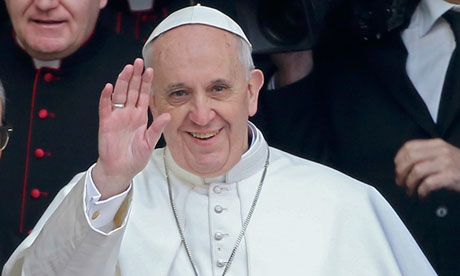
I am not a Catholic or a Christian, but no major world leader—religious or political—gives me more hope for the possibility of humanity than Pope Francis.

Today’s story as reported by Crux:

Pope says amassing wealth while children die is ‘idolatry that kills’

In his homily at morning Mass on Monday, Pope Francis returned to a familiar theme — how amassing wealth, both money and land, while children suffer and die, is a morally unacceptable form of idolatry. There’s an “idolatry that kills,” that makes “human sacrifices” Francis said, by those who are hungry of money, land and wealth, who have “a lot” in front of “hungry children who have no medicine, no education, who are abandoned.”

ROME – During his daily morning Mass on Monday, Pope Francis said there are those in the world who have too much wealth, and their hoarding of money and land in the face of hungry children with no access to medicine or education is the equivalent of making “human sacrifices.”

In times when the media reports “so many calamities, so many injustices,” especially concerning children, Francis sent a “strong” prayer to God, asking him to convert the hearts of men so that they don’t worship “the God of money.”

Francis’s homily, partially reported by Vatican Radio, turned on the Gospel of the day, a passage from the Book of Luke that tells the parable of the rich man for whom, according to the pope, money was his god. The passage, the pontiff said, leads to a reflection of how useless it is to rely on earthly property, emphasizing how much the true treasure is instead one’s relationship with God.

Despite the abundance of his harvest, the man in the parable wanted to expand his storehouses to have even more, in his “fantasy” of “stretching life out,” collecting more goods “to the point of nausea,” not knowing when it’s enough, in an “exasperated consumerism.”

This, Francis said, is the “reality of today,” when many people who live to worship money and make it their god, lead a senseless life.

There’s an “idolatry that kills,” that makes “human sacrifices” Francis said, by those who are hungry of money, land and wealth, who have “a lot” in front of “hungry children who have no medicine, no education, who are abandoned.

“This idolatry causes so many people to starve. We only think of one case: 200,000 Rohingya children in refugee camps,” the pope said, referring to the refugee crisis in Myanmar and Bangladesh. “There are 800,000 people there, 200,000 of whom are children.”

“Our prayer must be strong: Lord, please touch the hearts of these people who worship God, the god of money,” he said. “And also touch my heart, so I don’t fall into this too, so that I can see.”

Rosh Hashanah

If you believe that you can damage, then believe that you can fix.
If you believe that you can harm, then believe that you can heal.
Rebbe Nachman of Breslov (1772-1810)

Shana Tova! (A Good Year)

Table-Clearing Religion

A splendidly set and provisioned table can be lovely and satisfying, especially when you’re hungry and there is a great cook at work.

But there is also a simple table, before anything has been laid on it, before the bowls and platters have been brought from the kitchen. Or the same table after it has been cleared.

Which why we might appreciate those religious movements that set a simple table, or try to clear one that has been cluttered, even if the clutter seems beneficial.

Table clearing is a phenomenon among many traditions. Jesus proposed something like it, as did the Baal Shem Tov. Some Christian sects are grounded in it, such as the Shakers. That sort of table clearing is also an essence of Zen. The value of various complex Buddhist movements may not be denied, but in the beginning the Buddha himself tried all that was being offered, and ended up just sitting.

Sit at whichever table suits you, and eat whatever you like from it. But maybe consider the elegant simplicity of the table before it is set, or after it is cleared.

Candle for the Least

Candle for the Least

The first will be last.

Too many candles
Too many in need
To choose.
The last one
In the last row.
Outside
Barge through
A cloud of butterflies.

© Bob Schwartz

Selichot, Angels and Heschel

I lit a candle
For the care of those
In the storm’s way
The light answered:
It is up to you.

The Jewish High Holy Days—the Days of Awe—begin with Rosh Hashanah, the New Year, on Wednesday evening, September 20. In preparation for that, on Saturday night, September 16, are the prayers and contemplation of Selichot.

I’ve written before about a controversial Selichot prayer, Machnisei Rachamim (Conveyers of Compassion):

Conveyers of compassions, obtain our mercy before the Master of compassion,
Makers of prayer, make our prayer heard before the Hearer of prayer.
Makers of wailing, make our wail heard, before the Hearer of wailing.
Conveyers of tears, convey our tears before the King who yields to tears.
Strive to raise up supplication, raise up supplication and plea,
Before the King, high and exalted. The King, high and exalted.

The controversy is theological and has gone on for centuries, with the prayer being redacted and even deleted among some Jewish communities and traditions. Machnisei Rachamim asks angels to serve as intermediaries for prayer, and some claim that this is wholly inconsistent with the Jewish theology of an unintermediated and direct line between Jews and God. One contemporary rabbi who opposes it claims that its continued recitation is a symptom of Judaism becoming “too spiritual.”

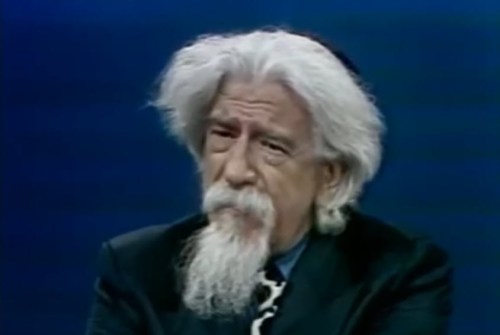
Rather than weighing in on this dispute, and being a Jew who is probably “too spiritual” for some (that is, whether it is angels, saints or bodhisattvas, humankind needs all the spiritual help it can get), I turned to the greatest of modern Jewish theologians, Abraham Joshua Heschel, for some thoughts on angels. I found this story he told, which is not only about angels, but about the Torah portion read on the second day of Rosh Hashanah—the akeda, the binding of Isaac.

At a Vietnam War protest in 1967, Heschel talked about being a child in Poland, learning about the akeda from his rabbi. Heschel said:

“Isaac was on the way to Mt. Moriah with his father. There he lay on the altar, bound, waiting to be sacrificed. My heart began to beat very fast. I actually sobbed with pity for Isaac. Behold, Abraham now lifted the knife and how my heart froze within me with fright. Suddenly the voice of the angel was heard, ‘Abraham, lay not thine hand upon the lad for now I know that thou fearest God.’ And here I broke into tears and wept aloud. ‘Why are you crying?’ asked my rabbi. ‘You know that Isaac was not killed.’ I said to him, still weeping, ‘But rabbi, suppose the angel had come a second too late!’ The rabbi comforted me and calmed me by telling me that an angel cannot ever come too late.”

And then Heschel said: “An angel cannot come too late, my friends, but we, made of flesh and blood, we may come too late”

The Furniture of Religion

When I look at the religions I practice or have a studied interest in—Judaism, Buddhism, and Christianity among them—I see empty houses and furniture.

Some religions seem to begin with emptying the previously stuffed house, or at least minimizing the furniture. Buddhism and Christianity look like this, at least in the beginning. But the nature of religious evolution is to buy, borrow or build furnishings to fill the rooms, because it seems an improvement and because it is what people seem to like in their homes. And so, thousands of years later, you find plenty of variety in the Buddhist and Christian neighborhoods—some very grand constructions spiritually, intellectually, and physically, that seem a long way from the original simple houses.

Judaism, which like Hinduism harks back to a more ancient world where more is more, begins overstuffed (or in the Yiddish expression, ongeshtopt, meaning overstuffed). There have been continuing movements to strip down the Jewish furniture to basics and barer floors and walls, the most powerful of which has been the Hasidic stream, flowing from the Baal Shem Tov in the 18th century. (But in the spirit of exponential furnishing, the Hasidic movement became more and more overstuffed over the next few hundred years, leaving the Besht’s house barely recognizable.)

Regular readers know my appreciation for religion and my practice of Zen, which for me remains the best (but not only) way to clear out the furniture, or at least see through it to the basic house, or even to see through the house itself to where it sits in the universe. Once there, you can bring in the furniture you really need, whatever the period or the style.


Buddhist Anarchism

Celebrated poet Gary Snyder has been a master swimmer in the cultural and spiritual currents of our times. His biography from the Poetry Foundation notes:

Gary Snyder began his career in the 1950s as a noted member of the “Beat Generation,” though he has since explored a wide range of social and spiritual matters in both poetry and prose. Snyder’s work blends physical reality and precise observations of nature with inner insight received primarily through the practice of Zen Buddhism. While Snyder has gained attention as a spokesman for the preservation of the natural world and its earth-conscious cultures, he is not simply a “back-to-nature” poet with a facile message….

Snyder’s emphasis on metaphysics and his celebration of the natural order remove his work from the general tenor of Beat writing—and in fact Snyder is also identified as a poet of the San Francisco Renaissance along with Jack Spicer, Robert Duncan and Robin Blaser. Snyder has looked to the Orient and to the beliefs of American Indians for positive responses to the world, and he has tempered his studies with stints of hard physical labor as a logger and trail builder. Altieri believed that Snyder’s “articulation of a possible religious faith” independent of Western culture has greatly enhanced his popularity. In his study of the poet, Bob Steuding described how Snyder’s accessible style, drawn from the examples of Japanese haiku and Chinese verse, “has created a new kind of poetry that is direct, concrete, non-Romantic, and ecological. . . . Snyder’s work will be remembered in its own right as the example of a new direction taken in American literature.” Nation contributor Richard Tillinghast wrote: “In Snyder the stuff of the world ‘content’—has always shone with a wonderful sense of earthiness and health. He has always had things to tell us, experiences to relate, a set of values to expound. . . . He has influenced a generation.”

In 1961, Snyder published an essay entitled Buddhist Anarchism. Anarchism is a slippery term, though a call to turn things upside down, or an observation of our heading there, probably qualifies. The Buddhist part is definite here. Yes, it is radical, and pragmatic history may seem to demonstrate that the vision is idealistic, impractical and impossible. Even quaint in the face of the 21st century real world and real life. But without the idealistic, impractical and impossible, where is the fun and the future?

Buddhist Anarchism

Buddhism holds that the universe and all creatures in it are intrinsically in a state of complete wisdom, love and compassion; acting in natural response and mutual interdependence. The personal realization of this from-the-beginning state cannot be had for and by one-“self” — because it is not fully realized unless one has given the self up; and away.

In the Buddhist view, that which obstructs the effortless manifestation of this is Ignorance, which projects into fear and needless craving. Historically, Buddhist philosophers have failed to analyze out the degree to which ignorance and suffering are caused or encouraged by social factors, considering fear-and-desire to be given facts of the human condition. Consequently the major concern of Buddhist philosophy is epistemology and “psychology” with no attention paid to historical or sociological problems. Although Mahayana Buddhism has a grand vision of universal salvation, the actual achievement of Buddhism has been the development of practical systems of meditation toward the end of liberating a few dedicated individuals from psychological hangups and cultural conditionings. Institutional Buddhism has been conspicuously ready to accept or ignore the inequalities and tyrannies of whatever political system it found itself under. This can be death to Buddhism, because it is death to any meaningful function of compassion. Wisdom without compassion feels no pain.

No one today can afford to be innocent, or indulge himself in ignorance of the nature of contemporary governments, politics and social orders. The national polities of the modern world maintain their existence by deliberately fostered craving and fear: monstrous protection rackets. The “free world” has become economically dependent on a fantastic system of stimulation of greed which cannot be fulfilled, sexual desire which cannot be satiated and hatred which has no outlet except against oneself, the persons one is supposed to love, or the revolutionary aspirations of pitiful, poverty-stricken marginal societies like Cuba or Vietnam. The conditions of the Cold War have turned all modern societies — Communist included — into vicious distorters of man’s true potential. They create populations of “preta” — hungry ghosts, with giant appetites and throats no bigger than needles. The soil, the forests and all animal life are being consumed by these cancerous collectivities; the air and water of the planet is being fouled by them.

There is nothing in human nature or the requirements of human social organization which intrinsically requires that a culture be contradictory, repressive and productive of violent and frustrated personalities. Recent findings in anthropology and psychology make this more and more evident. One can prove it for himself by taking a good look at his own nature through meditation. Once a person has this much faith and insight, he must be led to a deep concern with the need for radical social change through a variety of hopefully non-violent means.

The joyous and voluntary poverty of Buddhism becomes a positive force. The traditional harmlessness and refusal to take life in any form has nation-shaking implications. The practice of meditation, for which one needs only “the ground beneath one’s feet,” wipes out mountains of junk being pumped into the mind by the mass media and supermarket universities. The belief in a serene and generous fulfillment of natural loving desires destroys ideologies which blind, maim and repress — and points the way to a kind of community which would amaze “moralists” and transform armies of men who are fighters because they cannot be lovers.

Avatamsaka (Kegon) Buddhist philosophy sees the world as a vast interrelated network in which all objects and creatures are necessary and illuminated. From one standpoint, governments, wars, or all that we consider “evil” are uncompromisingly contained in this totalistic realm. The hawk, the swoop and the hare are one. From the “human” standpoint we cannot live in those terms unless all beings see with the same enlightened eye. The Bodhisattva lives by the sufferer’s standard, and he must be effective in aiding those who suffer.

The mercy of the West has been social revolution; the mercy of the East has been individual insight into the basic self/void. We need both. They are both contained in the traditional three aspects of the Dharma path: wisdom (prajna), meditation (dhyana), and morality (sila). Wisdom is intuitive knowledge of the mind of love and clarity that lies beneath one’s ego-driven anxieties and aggressions. Meditation is going into the mind to see this for yourself — over and over again, until it becomes the mind you live in. Morality is bringing it back out in the way you live, through personal example and responsible action, ultimately toward the true community (sangha) of “all beings.”

This last aspect means, for me, supporting any cultural and economic revolution that moves clearly toward a free, international, classless world. It means using such means as civil disobedience, outspoken criticism, protest, pacifism, voluntary poverty and even gentle violence if it comes to a matter of restraining some impetuous redneck. It means affirming the widest possible spectrum of non-harmful individual behavior — defending the right of individuals to smoke hemp, eat peyote, be polygynous, polyandrous or homosexual. Worlds of behavior and custom long banned by the Judaeo-Capitalist-Christian-Marxist West. It means respecting intelligence and learning, but not as greed or means to personal power. Working on one’s own responsibility, but willing to work with a group. “Forming the new society within the shell of the old” — the IWW slogan of fifty years ago.

The traditional cultures are in any case doomed, and rather than cling to their good aspects hopelessly it should be remembered that whatever is or ever was in any other culture can be reconstructed from the unconscious, through meditation. In fact, it is my own view that the coming revolution will close the circle and link us in many ways with the most creative aspects of our archaic past. If we are lucky we may eventually arrive at a totally integrated world culture with matrilineal descent, free-form marriage, natural-credit communist economy, less industry, far less population and lots more national parks.

GARY SNYDER
1961