Bob Schwartz

Category: Religion

Why I Read the Qur’an This Yom Kippur

Qur'an

There comes a time on Yom Kippur, the holiest day on the Jewish calendar, when the official proceedings pause. In the space between morning and afternoon services, lunch on a fast day not being an option, some people engage in group discussions of matters biblical and theological. A sort of hungry High Holy Days Torah study.

This year, I read the Qur’an.

At Yom Kippur services, the Book of Jonah is read. I made that the topic of my High Holy Days blog post, writing that Jonah is a tale we tell to the youngest children, as if, literally, a five-year-old would get it. In fact, Jonah is unique among all Old Testament prophetic books, and may be one of the most variously interpreted texts in the Hebrew Bible. So if you or that five-year-old think it is the simple story of obedience to God and the power of repentance, you might think twice.

Then a few days later, it was reported that an Iranian psychotherapist had just been hanged for, among other things, misinterpreting the Qur’an and insulting the prophet Jonah. For those unfamiliar with the Qur’an, many of the major figures of the Bible—Abraham, Noah, Moses, Jesus, and others—make appearances there. Sometimes it is a quick mention, but they are important links in the chain leading to Mohammed. Jonah among them.

This then became for me the Yom Kippur of Jonah. The Book of Jonah is so short, four brief chapters, that it can be read in minutes. While I have read many of the suras (chapters) in the Qur’an, I had never focused on the role of Jonah.

My interest in Qur’an began years ago with an extraordinary 3-volume set, Judaism, Christianity, and Islam by Professor F. E. Peters. Peters is one of the leading scholars on the shared foundations of these faiths, and this work offers parallel scriptural excerpts from each on a range of themes. I was well-versed in the Bible, Jewish and Christian, but had never read a single word of Qur’an. This began my still-ongoing attempt to fill that gap.

Literacy and familiarity with Abrahamic scriptures—reading them, being aware of structure and content, knowing some of the theological and interpretive issues—might run from 0 (no knowledge) to 10 (comprehensive knowledge). On that scale, many if not most Jews would probably score a 2 for the Hebrew Bible (maybe higher if limited to Torah and assorted familiar books of the Tanach), 0 for the New Testament, and a negative number for the Qur’an, that is, a studied and sometimes antagonistic ignorance. No blame for any of that, though we hope that those who engage in discussion or offer opinions about them might do it with some measure of knowledge.

The sura Jonah (Yonus) in the Qur’an is not what a non-Muslim might expect. Jonah is mentioned only once in it at verse 98:

If only a single town had believed and benefited from its belief! Only Jonah’s people did so, and when they believed, We relieved them of the punishment of disgrace in the life of this world, and let them enjoy life for a time.

The next verse of the sura encourages the Prophet (Mohammed) to be patient in waiting for unbelievers to come around:

Had your Lord willed, all the people on earth would have believed. So can you [Prophet] compel people to believe?

The more familiar biblical story is found at verse 139 of the sura Al-Saffat (37). As with many of the Qur’an’s recaps of these stories, it is very condensed:

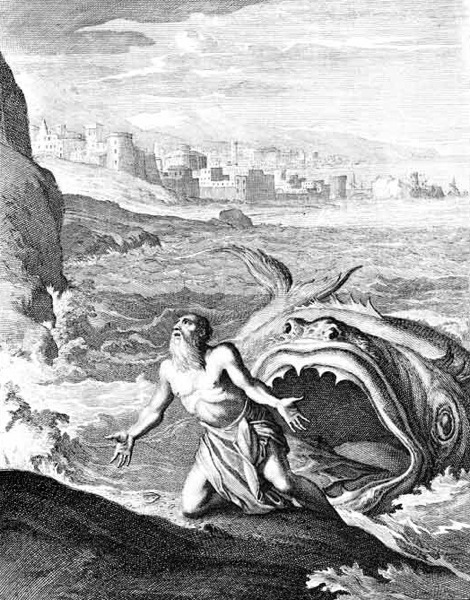
Jonah too was one of the messengers. He fled to the overloaded ship. They cast lots, he suffered defeat, and a great fish swallowed him, for he had committed blameworthy acts. If he had not been one of those who glorified God, he would have stayed in its belly until the Day when all are raised up, but We cast him out, sick, on to a barren shore, and made a gourd tree grow above him. We sent him to a hundred thousand people or more. They believed, so We let them live out their lives.

It isn’t clear from the reports how the psychotherapist, who was leading a Qur’an study, insulted Jonah. It is true that much of official Islam “discourages” unorthodox translation and interpretation (in some cases with fatwas, imprisonment, and death). It is also true that translators, scholars, and teachers have continued to push the boundaries anyway, shaking up the tradition and risking it all.

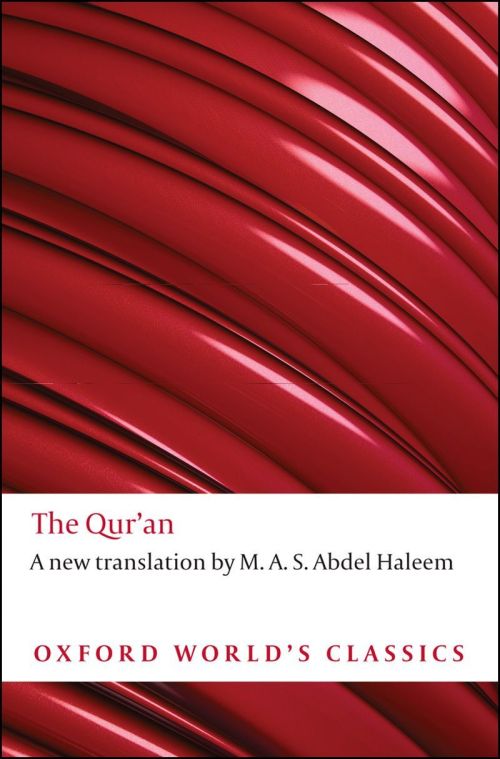
If you have an interest in seeing what the modern generation of Qur’an translations reads like, see M.A.S. Abdel Haleem’s The Qur’an: A New Translation (2005)
(from which the above excerpts are taken).

Don’t wait until next Yom Kippur. You don’t even need a holiday, Jewish or Christian. If you are of the non-Muslim Abrahamic persuasion, or even if you’re not persuaded at all, have a look at the Qur’an. You may believe in many respects besides religious—historical, social, cultural—that the Bible is one of the most important books in the world. You may also have to admit that in its impact, the Qur’an is its equal.

We hear regularly about how there are people killing for the Qur’an, or at least for their often misguided interpretations of it. Remember that there are also those trying to correct those interpretations, and they are dying for it.

Jonah, Yom Kippur, Iran and Irony

Mohsen Amir-Aslani

Sometimes coincidence is irony to the point of cruelty.

This week, the Book of Jonah is read as a part of the Yom Kippur service.

Last week, Iranian psychotherapist Mohsen Amir-Aslani was hanged for, among other things, insulting the prophet Jonah.

In a post last week, Jonah and the New Year, I gave free rein to biblical possibilities. I pointed out, “It is supposedly so simple a story that we tell it to the youngest children. It isn’t that simple.”

For many reasons, it is a good thing that I am not in Iran. It is also a good thing to be part of a faith and a country that not only tolerate interpretive iconoclasm but (theoretically) encourage and thrive on it. According to the report in The Guardian:

Mohsen Amir-Aslani was arrested nine years ago for his activities which the authorities deemed were heretical. He was engaged in psychotherapy but also led sessions reading and reciting the Qur’an and providing his own interpretations of the Islamic holy book, his family said….

According to the source, Iran’s ministry of intelligence was behind Amir-Aslani’s arrest. “He was initially held for making innovations in Islam and providing his own interpretations of the Qur’an but later he was accused of insulting prophet Jonah and also faced accusations of having sex outside marriage,”

This week, whether you read the Book of Jonah at Yom Kippur services or on your own, consider Amir-Aslani. We can do little directly about this aspect of Iranian life. And if we are not Muslims, there is little that we can do about the evolution of someone else’s religion, other than encouragement and modeling progressive behavior. The best we can do—and it is no small thing—is to honor openness in religion by demonstrating openness in our own religion. By supporting innovation, and making sure it is never tantamount to a capital crime.

Jonah and the New Year

Jonah

“Like Jonas himself I find myself traveling toward my destiny in the belly of a paradox.”
Thomas Merton
The Sign of Jonas

The Jewish High Holy Days begins this evening, starting with Rosh Hashanah (New Year 5775) and ending on the tenth day with Yom Kippur (Day of Atonement). So it is a good time to talk about Jonah.

On Yom Kippur, the Book of Jonah is read at services. It is supposedly so simple a story that we tell it to the youngest children. It isn’t that simple.

Prof. Barry Bandstra writes:

The book of Jonah has been interpreted in many different ways: as a satire on prophetic calling and the refusal of prophets to follow God’s call; as a criticism of Israelite prophets who were insincere in preaching repentance (because they really wanted to see destruction); as a criticism of the Jewish community’s unwillingness to respond to prophetic calls to repentance (in contrast with Nineveh); as a criticism of an exclusive view of divine election (God only cares about “chosen people”); as an assertion of God’s freedom to change God’s mind over and against prophets who would limit that freedom; as emphasizing the problem with true and false prophecy (even true prophets have words that do not come true); or as an allegory of Israel in exile (both Jonah and Judah look to God for destruction of an evil empire). De La Torre argues for an interpretation of the book that views Jonah as a marginalized person frustrated with God for not punishing those who have brutally oppressed people. Person reads the book of Jonah as a conversation between author and reader, focusing on the implied verbal rejection of God’s command by Jonah in 1:3.

The entire very brief Book of Jonah is at the end of this post. It goes something like this:

God tells Jonah to preach to the wicked city of Nineveh.
Jonah runs away from this assignment and gets on a ship.
A storm batters the ship and the sailors figure out Jonah is the cause.
The sailors say they don’t want to throw him overboard to appease God, but then they do anyway.
Jonah is swallowed by a big fish.
After three days, the fish disgorges Jonah on land.
Jonah finally preaches repentance to Nineveh.
Nineveh does repent.
God has mercy and doesn’t destroy Nineveh.
Jonah complains that he went through a lot of trouble, so God should have destroyed Nineveh.
God gives Jonah a special plant and then destroys it, as an example of how a prophet has nothing to do with what happens and shouldn’t care how God ultimately deals with things. God explains:

“You are concerned for the castor-oil plant which has not cost you any effort and which you did not grow, which came up in a night and has perished in a night. So why should I not be concerned for Nineveh, the great city, in which there are more than a hundred and twenty thousand people who cannot tell their right hand from their left, to say nothing of all the animals?”

So for the New Year, among the many things you may ask yourself:

Was God too lenient? Was Jonah not compassionate enough, taking joy in the misfortune of others? Am I or should I be more like God? Like Jonah? Like the sailors on the ship? Like the people of Nineveh? Like the fish? Can I tell my right hand from my left?

Whatever your faith or no-faith, you can never have enough New Years and new starts. Please have a happy one.


Book of Jonah from the Jerusalem Bible (J.R.R. Tolkien)

Selecting a Catholic translation of the Book of Jonah on Rosh Hashanah may seem odd. There are two reasons. The Jerusalem Bible is the best English-language combination of literary style and scholarship. And this particular book has a very special translator/editor: J.R.R. Tolkien.

The original Jerusalem Bible, published in English in 1966, was conceived as a very modern Catholic Bible—modern in terms of both language and scholarship. A French edition had already been published, and for the English version, a number of English-language scholars and writers were enlisted. Some texts were translated from original languages (Hebrew, Greek) while other texts were re-translations of the French. Tolkien was brought on as an editor, but he did create one book in English, taken from the French: The Book of Jonah.

Jonah 1

1. The word of Yahweh was addressed to Jonah son of Amittai:
2. ‘Up!’ he said, ‘Go to Nineveh, the great city, and proclaim to them that their wickedness has forced itself upon me.’
3. Jonah set about running away from Yahweh, and going to Tarshish. He went down to Jaffa and found a ship bound for Tarshish; he paid his fare and boarded it, to go with them to Tarshish, to get away from Yahweh.
4. But Yahweh threw a hurricane at the sea, and there was such a great storm at sea that the ship threatened to break up.
5. The sailors took fright, and each of them called on his own god, and to lighten the ship they threw the cargo overboard. Jonah, however, had gone below, had lain down in the hold and was fast asleep,
6. when the boatswain went up to him and said, ‘What do you mean by sleeping? Get up! Call on your god! Perhaps he will spare us a thought and not leave us to die.’
7. Then they said to each other, ‘Come on, let us draw lots to find out who is to blame for bringing us this bad luck.’ So they cast lots, and the lot pointed to Jonah.
8. Then they said to him, ‘Tell us, what is your business? Where do you come from? What is your country? What is your nationality?’
9. He replied, ‘I am a Hebrew, and I worship Yahweh, God of Heaven, who made both sea and dry land.’
10. The sailors were seized with terror at this and said, ‘Why ever did you do this?’ since they knew that he was trying to escape from Yahweh, because he had told them so.
11. They then said, ‘What are we to do with you, to make the sea calm down for us?’ For the sea was growing rougher and rougher.
12. He replied, ‘Take me and throw me into the sea, and then it will calm down for you. I know it is my fault that this great storm has struck you.’
13. The sailors rowed hard in an effort to reach the shore, but in vain, since the sea was growing rougher and rougher.
14. So at last they called on Yahweh and said, ‘O, Yahweh, do not let us perish for the sake of this man’s life, and do not hold us responsible for causing an innocent man’s death; for you, Yahweh, have acted as you saw fit.’
15. And taking hold of Jonah they threw him into the sea; and the sea stopped raging.
16. At this, the men were seized with dread of Yahweh; they offered a sacrifice to Yahweh and made vows to him.

Jonah 2

1. Now Yahweh ordained that a great fish should swallow Jonah; and Jonah remained in the belly of the fish for three days and three nights.
2. From the belly of the fish, Jonah prayed to Yahweh, his God; he said:
3. Out of my distress I cried to Yahweh and he answered me, from the belly of Sheol I cried out; you heard my voice!
4. For you threw me into the deep, into the heart of the seas, and the floods closed round me. All your waves and billows passed over me;
5. then I thought, ‘I am banished from your sight; how shall I ever see your holy Temple again?’
6. The waters round me rose to my neck, the deep was closing round me, seaweed twining round my head.
7. To the roots of the mountains, I sank into the underworld, and its bars closed round me for ever. But you raised my life from the Pit, Yahweh my God!
8. When my soul was growing ever weaker, Yahweh, I remembered you, and my prayer reached you in your holy Temple.
9. Some abandon their faithful love by worshipping false gods,
10. but I shall sacrifice to you with songs of praise. The vow I have made I shall fulfil! Salvation comes from Yahweh!
11. Yahweh spoke to the fish, which then vomited Jonah onto the dry land.

Jonah 3

1. The word of Yahweh was addressed to Jonah a second time.
2. ‘Up!’ he said, ‘Go to Nineveh, the great city, and preach to it as I shall tell you.’
3. Jonah set out and went to Nineveh in obedience to the word of Yahweh. Now Nineveh was a city great beyond compare; to cross it took three days.
4. Jonah began by going a day’s journey into the city and then proclaimed, ‘Only forty days more and Nineveh will be overthrown.’
5. And the people of Nineveh believed in God; they proclaimed a fast and put on sackcloth, from the greatest to the least.
6. When the news reached the king of Nineveh, he rose from his throne, took off his robe, put on sackcloth and sat down in ashes.
7. He then had it proclaimed throughout Nineveh, by decree of the king and his nobles, as follows: ‘No person or animal, herd or flock, may eat anything; they may not graze, they may not drink any water.
8. All must put on sackcloth and call on God with all their might; and let everyone renounce his evil ways and violent behaviour.
9. Who knows? Perhaps God will change his mind and relent and renounce his burning wrath, so that we shall not perish.’
10. God saw their efforts to renounce their evil ways. And God relented about the disaster which he had threatened to bring on them, and did not bring it.

Jonah 4

1. This made Jonah very indignant; he fell into a rage.
2. He prayed to Yahweh and said, ‘Please, Yahweh, isn’t this what I said would happen when I was still in my own country? That was why I first tried to flee to Tarshish, since I knew you were a tender, compassionate God, slow to anger, rich in faithful love, who relents about inflicting disaster.
3. So now, Yahweh, please take my life, for I might as well be dead as go on living.’
4. Yahweh replied, ‘Are you right to be angry?’
5. Jonah then left the city and sat down to the east of the city. There he made himself a shelter and sat under it in the shade, to see what would happen to the city.
6. Yahweh God then ordained that a castor-oil plant should grow up over Jonah to give shade for his head and soothe his ill-humour; Jonah was delighted with the castor-oil plant.
7. But at dawn the next day, God ordained that a worm should attack the castor-oil plant — and it withered.
8. Next, when the sun rose, God ordained that there should be a scorching east wind; the sun beat down so hard on Jonah’s head that he was overcome and begged for death, saying, ‘I might as well be dead as go on living.’
9. God said to Jonah, ‘Are you right to be angry about the castor-oil plant?’ He replied, ‘I have every right to be angry, mortally angry!’
10. Yahweh replied, ‘You are concerned for the castor-oil plant which has not cost you any effort and which you did not grow, which came up in a night and has perished in a night.
11. So why should I not be concerned for Nineveh, the great city, in which there are more than a hundred and twenty thousand people who cannot tell their right hand from their left, to say nothing of all the animals?’
The Sabbath: To Have and To Do Without

Abraham Joshua Heschel

“To set apart one day a week for freedom, a day on which we would not use the instruments which have been so easily turned into weapons of destruction, a day for being with ourselves, a day of detachment from the vulgar, of independence of external obligations, a day on which we stop worshiping the idols of technical civilization, a day on which we use no money, a day of armistice in the economic struggle with our fellow men and the forces of nature—is there any institution that holds out a greater hope for man’s progress than the Sabbath?

“The solution of mankind’s most vexing problem will not be found in renouncing technical civilization, but in attaining some degree of independence of it.

“In regard to external gifts, to outward possessions, there is only one proper attitude—to have them and to be able to do without them. On the Sabbath we live, as it were, independent of technical civilization: we abstain primarily from any activity that aims at remaking or reshaping the things of space. Man’s royal privilege to conquer nature is suspended on the seventh day.”

The Sabbath
Abraham Joshua Heschel

The News and the Wheel

The Wheel - Jerry Garcia

The wheel is turning
and you can’t slow down
You can’t let go
and you can’t hold on
You can’t go back
and you can’t stand still
If the thunder don’t get you
then the lightning will

The Wheel
Jerry Garcia

If you are still listening to, watching, or reading the news, oh boy. If the world seems out of balance, that’s not just the news talking. That’s the way it is.

Thousands of U.S. troops sent to fight Ebola. No troops but planes and bombs to fight thuggish madmen disguised as religious fanatics whose organizational name we can’t keep straight. Honored gladiators beating their wives and children. Police shooting the people they are sworn to protect. The most powerful legislature in the world doing nothing when something is called for, something when nothing is called for, and blabbering on when silence is golden. Rampant use of destructive drugs, demonizing of less destructive drugs. Speaking of drugs, powerful pharmaceuticals interrupting your entertainment with the news that they can cure you, but may also kill you, harshly and slowly. And that’s just for starters.

Every time that wheel turn round
bound to cover just a little more ground

Won’t you try just a little bit harder
Couldn’t you try just a little bit more?
Won’t you try just a little bit harder?
Couldn’t you try just a little bit more?

Breathe. If it seems like madness, that’s because it is. But it’s our madness and we just have to live with it. Being strong and smart will move us forward, but it’s never enough. Being strong and smart will not, for example, cure our madness, and like those very high-tech pharmaceutical drugs, can do more harm than good. Misplaced confidence in our strength and our brains is like putting a thumb on the scale. Which is no way to get in balance.

Obama Speech: Is It ISIS, ISIL or IS, and What is a True Religion?

Obama ISIS Speech

This is not a comprehensive review of last night’s speech by President Obama about ISIS/ISIL/IS. But if you asked me to join the millions of reviewers, descriptors that come to mind are lukewarm, vague, uninspiring, insufficiently informative, tactical (the speech, not the plan), and blah-blah-blah.

Here is one paragraph that stuck out, because it reflects two issues that may not get enough attention:

And one of those groups is ISIL — which calls itself the “Islamic State.”

Now let’s make two things clear: ISIL is not “Islamic.” No religion condones the killing of innocents. And the vast majority of ISIL’s victims have been Muslim. And ISIL is certainly not a state. It was formerly al Qaeda’s affiliate in Iraq, and has taken advantage of sectarian strife and Syria’s civil war to gain territory on both sides of the Iraq-Syrian border. It is recognized by no government, nor by the people it subjugates. ISIL is a terrorist organization, pure and simple. And it has no vision other than the slaughter of all who stand in its way.

What Is the Name of This Enterprise That We Are at War Against?

Is it ISIS, ISIL, or Islamic State? This is much more significant than whether the English transliteration of the name of the Egyptian President was Morsy, Morsi, or Mursi or the Libyan dictator was Gadhafi, Qaddafi, Kadafi, Gaddafi, or Gadafy. This is our new mortal enemy, and besides, all these IS names are in English.

Different nations and different news media have different approaches to this. The BBC, for example, has settled on Islamic State, apparently opting for whatever the organization chooses to call itself. What is totally strange about the “official” U.S. nomenclature is that at the highest levels, there is no consistency. The President prefers ISIL, while those in his cabinet regularly use ISIS.

One small matter about ISIL does deserve note. The full name is the Islamic State in Syria and the Levant. I challenge many in the administration, and many in Congress, and many in the media, to explain—without Google or cheat sheet—what the Levant is. For five hundred years or so it has described the land of the eastern Mediterranean, now roughly comprising Syria, Lebanon, Israel, and contiguous countries. The word comes from the French word for “rising”, as in the east where the sun rises. It isn’t much in use any more, outside of scholarly circles and, of course, in our latest war.

So please, President Obama, if you are gathering the support of dozens of nations and hundreds of millions of Americans, let’s all decide on what to call this organization that, in the words of Vice President Joe Biden, we will pursue to the Gates of Hell.

What is a True Religion?

“No religion condones the killing of innocents,” the President said. Without going into historic and contemporary detail, this is patently false. I believe the President knows better, but he didn’t want to get into a deep discussion, and instead just wanted to make a rhetorical flourish. If he doesn’t know, there are thousands of histories he can read and scholars he can consult, or even easier, news reports from the past few weeks, months, and years he can read.

If, however, he really did mean it, he has disqualified the majority of world religions from being classified as such. Which, by the way, plenty of critics of religion would applaud.

The President doesn’t have to be the Teacher in Chief, the Scholar in Chief, the Explainer in Chief, etc. Being Communicator in Chief is enough of a job, but if he just wants to say stuff for effect, without regard to its making sense or being true, we’ve already had plenty of that in years past, from those less smart or thoughtful than you. We get enough nonsense from many in Congress. Speak as if some of us are actually thinking about what you say. Because some of us are.

Jack Cristil: The Voice of God is Gone

Jack Cristil Biography

There are two ways you might know Jack Cristil, who died this weekend at the age of 88. But maybe not.

If you’re from Mississippi, or an SEC sports fan, you know him as the The Voice of Mississippi State football and basketball for almost sixty years, until his retirement in 2011.

If you are a member of the Tupelo Jewish community, where Jack was an essential part of Temple B’nai Israel for almost that long, you know him, more or less, as The Voice of God. In addition to his leadership roles in the congregation, Jack frequently led services. Most of us have heard clergy and lay people at the pulpit with some memorable voices and presences. Jack stood above them all. That perfectly modulated baritone, driven by his deep and unshakable faith, gave us all the play-by-play for a different sort of game, season after season.

That extraordinary voice would mean nothing without the man behind it—just a trick of vocal cords and breath. But Jack’s mind and heart were even bigger than that voice. Which is why when he spoke on the radio or at services, or in the more intimate setting of a meeting or conversation, you listened. Some people get our attention by the way they say things, and Jack could get anybody’s attention. But others keep our attention because of what they say, and even more, who they are.

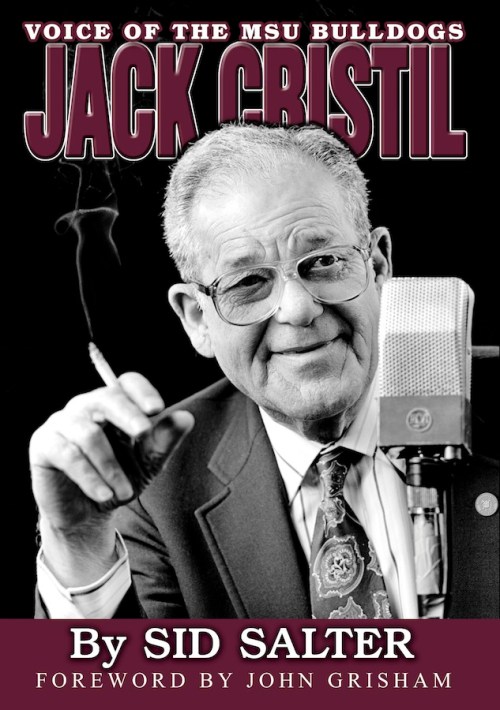
In case you still think that Jack was not so well-known or important, see the above book cover from a biography of him. You may not have heard of Jack or of the author, veteran Mississippi journalist Sid Salter. But the man who wrote the Foreword to Jack’s biography is a little more familiar—a Memphis-based writer named John Grisham.

And if that’s not famous enough, here’s a photo of Jack interviewing Elvis:

Jack Cristil and Elvis

Jack is gone, but anyone who has heard that voice, even once, will hear it forever. One of Jack’s favorite bits in services was to ask the congregation to turn to a particular page in the prayer book and to indicate having done so by being seated. Today, we indicate our love and respect by standing up. We hear you, Jack.

MUJI to Sleep: Minimalist Essential Wonderful Free App

MUJI Waterfall

Japanese retailer MUJI has a free gift for you. A tiny gift that will delight you and transform your phone or tablet into an instrument of wonder. MUJI for Sleep.

MUJI sells minimalist furniture, home goods, apparel, and other personal products—online and in a small number of stores in New York and California.

On their U.S. website, MUJI explains its philosophy:

MUJI is not a brand whose value rests in the frills and “extras” it adds to its products.
MUJI is simplicity – but a simplicity achieved through a complexity of thought and design.
MUJI’s streamlining is the result of the careful elimination and subtraction of gratuitous features and design unrelated to function.
MUJI, the brand, is rational, and free of agenda, doctrine, and “isms.” The MUJI concept derives from us continuously asking, “What is best from an individual’s point of view?”
MUJI aspires to modesty and plainness, the better to adapt and shape itself to the styles, preferences, and practices of as wide a group of people as possible. This is the single most important reason people embrace MUJI.

MUJI sells a successful line of sleep products for travel. Which explains the MUJI to Sleep campaign, featuring their Neck Pillow and the MUJI to Sleep app to go with it.

Simplicity and minimalism hardly describe the app. It has five screens to swipe through, each a different color, each with a brushstroke sketch of a scene, each scene with a flow of continuous sound: a river, a bird, a waterfall, a fire, a forest. There is a timer to keep it running for 30, 60, or 90 minutes. Touch on, touch pause. That’s it. As simple as a flashlight app. And more valuable.

You can fall asleep to MUJI of course, which is what it intends. Or you can play it as background for your activities or non-activities, a sort of aural incense. It will contribute to your life in ways unexpected and wonderful.

The MUJI to Sleep app currently has less than 100,000 downloads on Google Play. It should have millions.

When you have true practice, then valley sounds and colors, mountain colors and sounds, all reveal the eighty-four thousand verses. When you are free from fame, profit, body, and mind, the valleys and mountains are also free. Through the night the valley sounds and mountain colors do and do not actualize the eighty-four thousand verses. When your capacity to talk about valleys and mountains as valleys and mountains is not yet mature, who can see and hear you as valley sounds and mountain colors?

Zen Master Dogen
Treasury of the True Dharma Eye
Valley Sounds, Mountain Colors (1240)

Do Something/Anything about ISIS? Would You Rather Have No Strategy or Bad Strategy?

Just Do It

President Obama candidly admitted that we have no strategy for dealing with ISIS, but that we are developing one.

Maybe too candid for the moment and his leadership position, but still a necessary truth. Necessary because no one on earth has a good strategy for dealing with that or the complex of situations around the world right now. For the religiously inclined, consider that Moses, Jesus, and Mohammed convening in the Situation Room would have a tough time figuring out what to do next, short of calling in the Big Gun and wiping the slate clean and starting again.

This hasn’t stopped Congress from urging a simple solution to this puzzle: do something/anything. This is an all-time irony, given that Congress is currently infamous for doing absolutely nothing, ever, no matter how important the problem and no matter how relatively simple the solution. If a number of the members had a sense of irony, we could all wryly laugh at this, except that their sense of irony is absent, along with a sense of duty, democracy, and Americanism (the real kind, not the fake). Some of these same members do seem to have a sense of justice, John Wayne frontier justice, which is unfortunately out of place in the liquid world of 2014 global politics and insurgency.

A few years ago, some thought that democracy would spread around the oppressed nations like an epidemic, like Arab Spring fever. But chaos is also an opportunistic contagion, and as those on one insurgent or imperialist front look at the other fronts multiplying, they see opportunity and seize it. It doesn’t help that the geography is claustrophobic. If you don’t know it, connect the dots from Iraq to Syria to Israel to Gaza to Egypt, Sudan, and Libya. And that’s just one pole of the current dynamic.

We have been tragically mistaken on strategy in the last three major American wars. One was an abject defeat, the other two—Iraq and Afghanistan—have sort of ended, with an indeterminate outcome, and withdrawal that may or may not last. Let’s pull back from partisan finger-pointing, and just admit that some situations—whether you choose to demur or however you choose to engage—may have outcomes, but may not have solutions.

You can be smart or stupid, fearless or timid, right or wrong, and you can still be overwhelmed by circumstances. That is, there is no “perfect” strategy, especially not with the way things are aligning. So no, you can’t wait for that perfect strategy. But you also shouldn’t rush in with the next idea that comes into your head, especially if that idea comes from some outdated playbook that has already proven itself ineffective in current realities.

“Just do it” sounds great, as long as you spend sufficient time really considering what “it” is and what the consequences and outcomes might be. Oh, and also, you might try being candid, as Obama has been, rather than making stuff up. Like about WMDs. Like about wars that will last weeks and cost nothing. Let’s leave that sort of unhelpful lying to fairy tale tellers like Vladimir Putin, who is not invading Ukraine, and to Putin’s admirers and portrait painters.

Making No Sense

NASA - Stars

I looked at the stars
Like an astrologer
Saw constellations
Like an astronomer
Saw suns and planets.
I looked again
And saw stars.