Bob Schwartz

Category: Religion

Reason and spirit, wisdom and compassion

Reason

Reason
as solid
as a rock.
Clinging to it
in the middle
of the ocean.

When I look to friends, colleagues and mentors who have taught and influenced me, I see in many of them a happy and helpful balance of reason and spirit. I thank them, and recommend having such people in your life.

This may be what I might want others to say of me, that I neither abandoned reason nor clung to it too tightly.

Govern a nation as you would fry a small fish

Sardine

A message to candidates and voters from the Tao Te Ching. It is the first line of chapter 60, in various translations. Please read and feel free to interpret as you like. Comments are welcome.

If I were moderating a presidential debate, I would simply recite this line and ask Hillary Clinton and Donald Trump what this means to them. What illuminating fun that would be.

Govern a nation as you would fry a small fish.

Directing the flow of affairs of a large country
Is like cooking a small fresh fish.

Govern great nations
like frying small fish.

Ruling a large country is like cooking a small fish.

The Tao of No Place Like Home

These words from Verse 80 of the Tao Te Ching could come from the Wizard of Oz:

let there be another state so near
people hear its dogs and chickens
but live out their lives
without making a visit

In other words, there is no place like home.

The force of exploration, discovery and progress is strong with us. This post, for example, is drafted on an amazing digital device, edited on another amazing digital device, and published on an amazing global network. Moving house and traveling are easier and more convenient than ever. So many modern tools. So big a world.

Verse 80 proposes a different view. Labor-saving tools not used. Boats and carts not ridden. Knots used to communicate (a pre-writing system). Pleased and content with clothing and goods. You may think that this is regress, the opposite of progress. But is it? In your heart, is that what you believe?

Imagine a small state with a small population
let there be labor-saving tools
that aren’t used
let people consider death
and not move far
let there be boats and carts
but no reason to ride them
let there be armor and weapons
but no reason to employ them
let people return to the use of knots
and be satisfied with their food
and pleased with their clothing
and content with their homes
and happy with their customs
let there be another state so near
people hear its dogs and chickens
but live out their lives
without making a visit

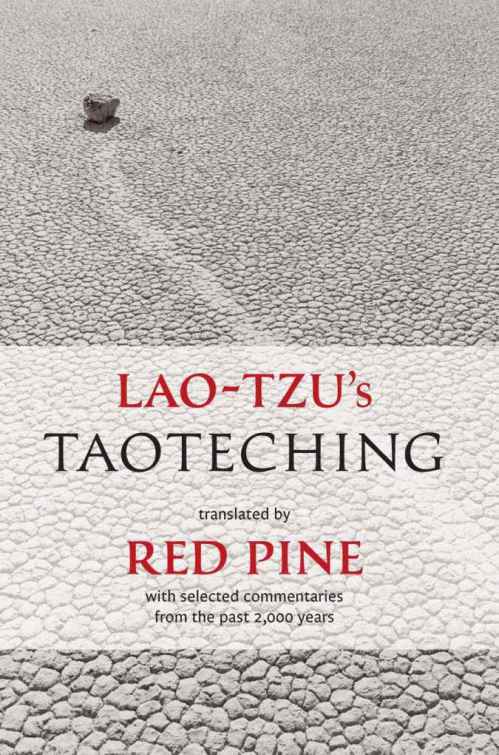
Lao-tzu’s Taoteching, translated by Red Pine


Laughing at Swallowing a Flaming Iron Ball

Dhammapada - Juan Mascaro

This morning I laughed at a few translated lines from a great and serious spiritual classic. The Dhammapada is a brief (423 verses in 26 chapters) collection of the sayings of the Buddha. For over two thousand years, there may have been no more succinct summary of the heart of Buddhism.

As with the Bible, there are many translations of the Dhammapada from Pali into English, each with its own character. I keep a number of different translations handy, and given that chapters are short, it is possible to easily compare.

I was reading Chapter 25, called variously The Monk, The Practitioner, The Seeker, The Bhikku. In the very loose and poetic translation by Thomas Byrom, the chapter begins:

Master your senses,
What you taste and smell,
What you see, what you hear.

In all things be a master
Of what you do and say and think.
Be free.

You are a seeker.
Delight in the mastery
Of your hands and your feet,
Of your words and your thoughts.

It is at verse 371 that I got my laugh. There the worthy translation by Ven. Balangoda Ananda Maitreya reads:

Do not allow your heart to whirl in the pleasures of senses.
Do not swallow a flaming iron ball and then,
As you burn, cry out, “Oh, that hurts!”

I can’t explain, exactly, what is funny about that last line. It just is. Compared to the other translations of what you might say swallowing this hot iron ball (“This is woe!”, “This is pain!”, “This is suffering!”, “No more!”), “Oh, that hurts!” just tickled me.

Note: Some other translations of the Dhammapada worth looking at:

Juan Mascaro (The first I ever read, excellent, and an awesome bargain as an ebook: $.95 v. $6.38 for the paperback.)

Gil Fronsdal

Glenn Wallis

John Ross Carter

Abbeville, Louisiana and the Flood

City of Abbeville

Abbeville, Vermilion Parish, Louisiana is something more than special.

Here’s the bridge across the Vermilion River. That’s St. Mary Magdalen Church on the right.

Abbeville

Here’s Magdalen Square.

Magdalen Square

Here’s what Abbevile looked like on Saturday, August 13, during the flood.

Vermillion River 081316

This is a link to Vermilion Today, online home of the Abbeville Meridional newspaper, if you want to learn what’s going on after the flood.

This is a link to the Red Cross, if you’d like to donate something for the special people of Louisiana, who are suffering through perhaps the worst U.S. natural disaster in the past four years.

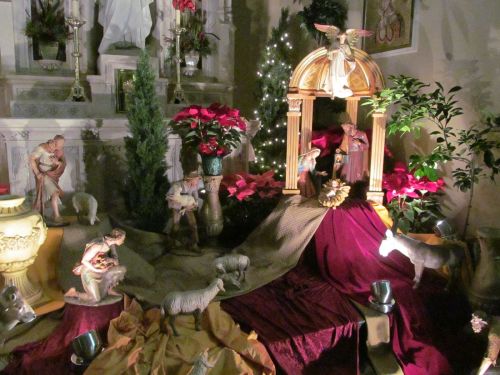
Finally, here’s a picture taken last December at the church. To lift your spirits. And open your hearts.

Abbeville Church 7 Select

Lao-tzu’s Taoteching

Taoteching

“The world is a spiritual thing.”

Taoteching, Chapter 29

Trying to govern the world with force
I see this not succeeding
the world is a spiritual thing
it can’t be forced
to force it is to harm it
to control it is to lose it
sometimes things lead
sometimes they follow
sometimes they blow hot
sometimes they blow cold
sometimes they expand
sometimes they collapse
sages therefore avoid extremes
avoid extravagance
avoid excess

Reading and studying the little (81 tiny chapters) and infinite pool of Lao-tzu’s Tao Te Ching is as valuable as knowing any text from any tradition. Of the dozens of translations into English, all different and many worthy, the one by Red Pine—the translator and scholar Bill Porter—is the place to visit and rest awake. Along with his translation, he includes excerpts from 2,000 years of commentaries.

Summit for Change: Streaming Online

The Summit

Summit for Change in Washington, D.C. begins today at 6:00pm and runs through Friday. The event is streaming online. Please watch a little if you can.

The Summit is a gathering of 300 leaders committed to changing the world through faith and justice. This diverse convening creates opportunity for building relationships and cross-sector collaboration. Through meals shared together, inspirational talks, and opportunities for smaller group gatherings, The Summit event provides a space for leaders to connect to their peers and find hope for the future.

The roster of featured participants is mind-blowing and uplifting.

If you’ve maybe felt a little hopeless and frustrated about social progress lately, this could be a dose of something you need. It must be possible. James Baldwin, in his famous essay My Dungeon Shook: Letter to My Nephew on the One Hundredth Anniversary of the Emancipation, quoted a spiritual:

The very time I thought I was lost, My dungeon shook and my chains fell off.

Poem: My Night with the Sages

Talmud

My Night with the Sages

I found their numbers
Six, sixty-three.
Dispensing wisdom
Demanding action
Citing authority.
Talking
And talking
And talking.
How could they possibly
Help with the night?
Lost in loud logic
Where is the comfort or distraction?
But I called anyway
And they came.
To uneasy free floating
In the bleak
They added gravity
And light
Not quite
In reach
But there.
To sleep.

The Whole Wheat of Spirit and the Millstone of Reason

Encyclopedia of Jewish Myth

Going beyond pure reason is a trip too far for many, to a place where the possible and the impossible seem to coexist on equal terms.

But why not go beyond, at least for a visit or vacation? You never know what you will find or learn there.

Mama always told me not to look into the sights of the sun
Oh but mama that’s where the fun is
Bruce Springsteen, Blinded by the Light

To the pious man God is as real as life, and as nobody would be satisfied with mere knowing or reading about life, so he is not content to suppose or to prove logically that there is a God; he wants to feel and to give himself to Him; not only to obey but to approach Him. His desire is to taste the whole wheat of spirit before it is ground by the millstone of reason. He would rather be overwhelmed by the symbols of the inconceivable than wield the definitions of the superficial.
Abraham Joshua Heschel, Man Is Not Alone

Recommended:

The Encyclopedia of Jewish Myth, Magic and Mysticism: Second Edition, Geoffrey W. Dennis

The new edition of a thoroughly readable and accessible compendium of information and insights. Fun for the casually curious, valuable for the interested reader and researcher.

From the Introduction:

Judaism is one of the oldest living esoteric traditions in the world. Virtually every form of Western mysticism and spiritualism known today draws upon Jewish mythic and occult teachings—magic, prayer, angelology, alchemy, numerology, astral projection, dream interpretation, astrology, amulets, divination, altered states of consciousness, alternative, and rituals of power—all have roots in the Jewish occult….

Modern Jews like to imagine that magic has been swept into the dustbin of history by the long, inexorable progress of rationalism. More than that, Jews have been taught from our youth that Judaism has always possessed an essentially naturalistic worldview and that magic, merely a marginal Jewish preoccupation at most, was just an anomaly resulting from our being situated (and corrupted) by the superstitions of our neighbors. But that’s not entirely accurate. It is only in the last two centuries that Jews have fully embraced science, but we have always been looking for ways to change the world for the better, whether it be through science, medicine, or “practical Kabbalah.”

Even today, rationalism has not completely displaced our sense that there is a mystical potential at work in the world; Occam’s razor has never been able to fully overpower the Sixteen-Sided Sword of the Almighty. Millions of people, both Jews and gentiles, continue to believe that the stars influence our lives. Most Americans believe in the reality of angels. Jewish techniques of dream interpretation and for combating the evil eye are still widely practiced today. When you read the entries of this book on topics such as these, you will realize that magical thinking and enchanting deeds have always had a place in Judaism and, however much some might want to dismiss Judaism’s miraculous and wondrous traditions, the presence of Jewish magic in Jewish life has merely been eclipsed, never uprooted; it still has the potential to empower us.

Vesak: Buddha Day

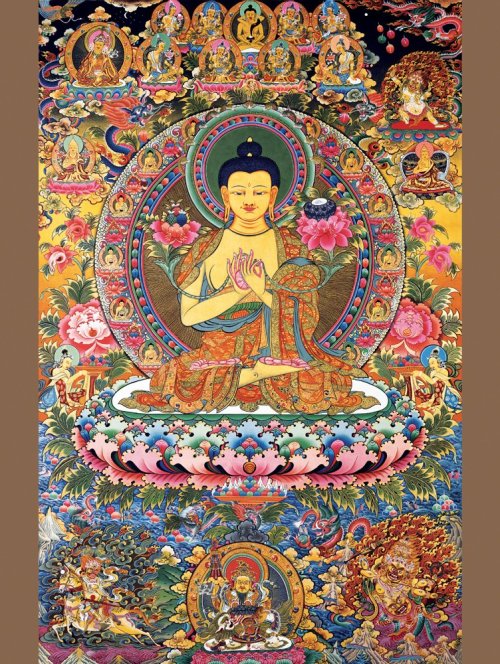
Sakyamuni Buddha

Today is Vesak, the holiday also known as Buddha Day.

Around the world, especially in Buddhist Asia, Vesak combines a celebration of the Buddha’s birth, enlightenment and passing. This year the holiday was noted by the UN, by President Obama, by Canadian Prime Minister Trudeau, and by many others. This is part of the growing recognition that the world might benefit from even a little bit of Buddhism added to our complex, crazy and chaotic affairs.

Here is the Mangala Sutta (The Sutra on Happiness), a wise and uplifting discourse of the Buddha that is one of the best-loved and most frequently recited texts in the Southeast Asian Buddhist world.  Only twelve verses long, it is a recital of auspicious things, and along with texts such as the Metta Sutta, is believed to bring happiness and good fortune when chanted or heard.

The Sutra on Happiness

I heard these words of the Buddha one time when the Lord was living in the vicinity of Savatthi at the Anathapindika Monastery in the Jeta Grove. Late at night, a deva appeared whose light and beauty made the whole Jeta Grove shine radiantly. After paying respects to the Buddha, the deva asked him a question in the form of a verse:

“Many gods and men are eager to know
what are the greatest blessings
which bring about a peaceful and happy life.
Please, Tathagata, will you teach us?”

(This is the Buddha’s answer):

“Not to be associated with the foolish ones,
To live in the company of wise people,
Honoring those who are worth honoring—
This is the greatest happiness.

“To live in a good environment,
To have planted good seeds
And to realize that you are on the right path—
This is the greatest happiness.

“To have a chance to learn and grow,
To be skillful in your profession or craft,
Practicing the precepts and loving speech—
This is the greatest happiness.

“To be able to serve and support your parents,
To cherish your own family,
To have a vocation that brings you joy—
This is the greatest happiness.

“To live honestly, generous in giving,
To offer support to relatives and friends,
Living a life of blameless conduct—
This is the greatest happiness.

“To avoid unwholesome actions,
Not caught by alcoholism or drugs,
And to be diligent in doing good things—
This is the greatest happiness.

“To be humble and polite in manner,
To be grateful and content with a simple life,
Not missing the occasion to learn the Dharma—
This is the greatest happiness.

“To persevere and be open to change,
To have regular contact with monks and nuns,
And to fully participate in Dharma discussions—
This is the greatest happiness.

“To live diligently and attentively,
To perceive the Noble Truths,
And to realize nirvana—
This is the greatest happiness.

“To live in the world
With your heart undisturbed by the world,
With all sorrows ended, dwelling in peace—
This is the greatest happiness.

“For the one who accomplishes this
Is unvanquished wherever she goes;
Always he is safe and happy—
Happiness lives within oneself.”

Translated by Thich Nhat Hahn