Bob Schwartz

Category: Psychology

Philip K. Dick, Now More Than Ever

Philip K. Dick color

Pretty much every day now, my head spins, just a little. My head does not usually and chronically spin, but it does these days. I find myself not so much trying to make sense of some things, but trying to determine whether there is or will appear some appropriate and constructive response. So far, nothing.

Today, however, I did think about Philip K. Dick. I wrote a little about Dick a while ago. To say he was just a science fiction writer is not nearly enough. Some of his many books and stories have been turned into a number of successful movies (Blade Runner, Total Recall, etc.) and now into an excellent TV series (Man in the High Castle).

The reason for his books being so adaptable, and for his loyal and committed readers, is that Dick was a visionary, some might say a prophet. He was also psychologically and cognitively different. The two parts often go together.

The reason I’m thinking about Dick is the possibility that those of us who are confused about what is going on are being far too rational and far too narrow about all of it. Maybe what we need is a much bigger and stranger vision. Maybe to understand madness, we all have to try to be a little mad ourselves, or pretend to be. Just a thought.

Anyway, Dick suffered through some mental illness and/or religious experience late in his life. Some would say Dick was a bit of a madman. Or a visionary or a prophet. In any case, if we want to know what the future might look like—or for that matter what the present looks like—we can do no better than look at it through Dick’s eyes.

Writer Jonathan Lethem has written some fine appreciations of Dick. This is from Lethem’s Introduction to Selected Stories of Philip K. Dick:

Dick’s great accomplishment, on view in the twenty-one stories collected here, was to turn the materials of American pulp-style science fiction into a vocabulary for a remarkably personal vision of paranoia and dislocation. It’s a vision as yearning and anxious as Kafka’s, if considerably more homely. It’s also as funny. Dick is a kitchen-sink surrealist, gaining energy and invention from a mad piling of pulp SF tropes—and clichés—into his fiction: time travel, extrasensory powers, tentacled aliens, ray guns, androids, and robots. He loves fakes and simulacra as much as he fears them: illusory worlds, bogus religions, placebo drugs, impersonated police, cyborgs. Tyrannical world governments and ruined dystopian cities are default settings here. Not only have Orwell and Huxley been taken as givens in Dick’s worlds, so have Old Masters of genre SF like Clifford Simak, Robert Heinlein, and A. E. Van Vogt. American SF by the mid-1950s was a kind of jazz, stories built by riffing on stories. The conversation they formed might be forbiddingly hermetic, if it hadn’t quickly been incorporated by Rod Serling and Marvel Comics and Steven Spielberg (among many others) to become one of the prime vocabularies of our age….

If Dick, as a bearded, drug-taking Cal-i-fornian, might have seemed a candidate for Beatdom (and in fact did hang out with the San Francisco poets), his persistent engagement with the main materials of his culture kept him from floating off into reveries of escape. It links him instead to writers like Richard Yates, John Cheever, and Arthur Miller (the British satirist John Sladek’s bull’s-eye Dick parody was titled “Solar Shoe Salesman”). Dick’s treatment of his “realist” material can seem oddly cursory, as though the pressing agenda of his paranoiac fantasizing, which would require him to rip the facade off, drop the atomic bomb onto, or otherwise renovate ordinary reality, made that reality’s actual depiction unimportant. But no matter how many times Dick unmasks or destroys the Black Iron Prison of American suburban life, he always returns to it. Unlike the characters in William S. Burroughs, Richard Brautigan, or Thomas Pynchon, Dick’s characters, in novels and stories written well into the 1970s, go on working for grumbling bosses, carrying briefcases, sending interoffice memos, tinkering with cars in driveways, sweating alimony payments, and dreaming of getting away from it all—even when they’ve already emigrated to Mars….

Whether or not he was ready for the world, or the world ready for him, he longed for a respectable recognition, and sought it variously and unsuccessfully throughout his life. In fact, he wrote eight novels in a somber realist mode during the 1950s and early 1960s, a shadow career known mainly to the agents who failed to place the books with various New York publishers. It’s stirring to wonder what Dick might have done with a wider professional opportunity, but there’s little doubt that his SF grew more interesting for being fed by the frustrated energies of his “mainstream” ambition. Possibly, too, a restless streak in Dick’s personality better suited him for the outsider-artist status he tasted during his lifetime….Here, from an introduction written for Golden Man, a collection of stories assembled in 1980, Dick reminisces:

But I think you should know this—specifically, in case you are, say, in your twenties and rather poor and perhaps becoming filled with despair, whether you are an SF writer or not, whatever you want to make of your life. There can be a lot of fear, and often it is a justified fear. People do starve in America. I have seen uneducated street girls survive horrors that beggar description. I have seen the faces of men whose brains have been burned-out by drugs, men who could still think enough to be able to realize what had happened to them; I watched their clumsy attempt to weather that which cannot be weathered. . . . Kabir, the sixteenth-century Sufi poet, wrote, “If you have not lived through something, it is not true.” So live through it; I mean, go all the way to the end. Only then can it be understood, not along the way.

Free Your Mind and the Country Will Follow

free-your-ass

Free Your Mind and the Country Will Follow

They say
All tactics
No strategy.
They say
All strategy
No tactics.
They say
No strategy
No tactics.
None of it matters
Without a mind
Clear and open
As the ocean.

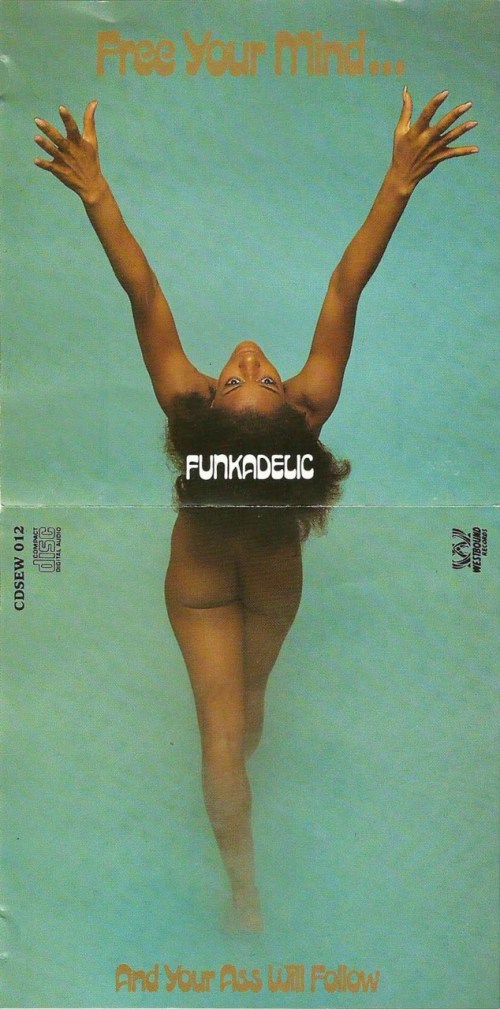
This was inspired by listening to Charlie Haden’s Liberation Music Orchestra (born 1969, reborn 1983). The title is adapted from an album by Funkadelic (above), Free Your Mind and Your Ass Will Follow (1970). In politics and life, the point exactly.

Making America Crazy Again: How to Survive and Thrive After the Election

make-america-crazy-again

You don’t want to hear this, but things may get crazier after the election.

If Hillary Clinton wins, she will be the least liked, least trusted President to ever take office. All the assumptions and suppositions about how the Clintons’ good intentions have been mixed with and compromised by expedient centrism, ambition, greed, secrecy and overall ugliness have been confirmed.

Progressives who tried an insurgency within the Democratic Party will learn that if they have a place at the table, it will be set with modest meals, if not mere crumbs.

Republicans will be gleeful at the prospect of obstructing everything and unwinding anything, without much of a plan of their own. Their glee is misplaced, since there is no Republican Party left, not one recognizable as such. Instead, it is merely the shaky platform for another set of would-be Presidents to start jockeying for position as the candidate in 2020.

And then of course there’s Donald Trump, whose hat should have first read Make The GOP Crazy, then Make The Election Crazy, and finally Make America Crazy Again. He is good at each of these. There is no doubt, whatever form his public pathology takes, he will help make 2017 a year we will not forget, just as 2016 is an election we will not forget, no matter how we try.

And so, some suggestions for getting on with our lives, not just surviving, but thriving, after the election.

  1. Religion, spirituality, philosophy, or something like them. Principled views of reality and the world can be very helpful. There is nothing inherently wrong with making stuff up as we go along. Except that when the wind blows, which it does pretty much all the time, and sometimes with hurricane force, we might want to have something to keep us steady.
  1. Media diet. When I see the ad for that cheeseburger with six strips of crisp bacon on top, something in me wants one. Except I don’t eat cheeseburgers any more, don’t eat bacon anymore, and if I did, I don’t think it would be in that particular configuration, since I plan to live a long and healthy life. The news media, even the supposedly respectable ones, are mostly offering us the equivalent of 1-pound burgers with an entire package of bacon on top, hour after hour. If you don’t want to be crazy unhealthy, please watch what you eat.
  1. Learning. You don’t have to learn about anything or anyone. You can learn exactly as much as you need to get on with your life and through the day. If you do choose to be interested in something, including public affairs, do try to learn and discern. We have spent the past year in a storm of misinformation and disinformation, lies and nonsense. That is not going to stop after the election. In fact, it could get worse, hard as that is to believe.
  1. Silence.

Cigarette Ads Circa 1960: Size Matters

TV Guide - July 9 1960

Above is an ad from the back cover of TV Guide from July 9, 1960. It is for Parliament cigarettes. The image shows a man (judging by the hands) measuring a cigarette with a ruler, while a woman looks on with a mysterious, Mona Lisa-like expression. Is she thinking about taste? About how “your lips and tongue never touch” the filter? She is also holding a cigarette. Hers is lit and smoking.

In 1957, journalist and social critic Vance Packard published his groundbreaking bestseller The Hidden Persuaders, “the first book to expose the hidden world of “motivation research,” the psychological technique that advertisers use to probe our minds in order to control our actions as consumers.” Chapter 8 is entitled The Built-in Sexual Overtone.

Since then, discussions about the role of psychology in advertising have continued unabated. Setting aside those discussions, it can be said that sometimes a cigarette is just a cigarette, a ruler is just a ruler, etc. On the other hand, every picture tells a story. So what’s the story here?

Political Insanity Defense

People have watched enough criminal trials on TV to know about the insanity defense—or actually defenses, since it differs state to state:

THE INSANITY DEFENSE

  • What are the legal standards for insanity?

Each state, and the District of Columbia, has its own statute setting out the standard for determining whether a defendant was legally insane, and therefore not responsible, at the time his crime was committed. In general, the standards fall into two categories.

About half of the states follow the “M’Naughten” rule, based on the 1843 British case of Daniel M’Naughten, a deranged woodcutter who attempted to assassinate the prime minister. He was acquitted, and the resulting standard is still used in 26 states in the U.S.: A defendant may be found not guilty by reason of insanity if “at the time of committing the act, he was laboring under such a defect of reason from disease of the mind as not to know the nature and quality of the act he was doing, or if he did know it, that he did not know what he was doing was wrong.” (emphasis added) This test is also commonly referred to as the “right/wrong” test.

Twenty-two jurisdictions use some variation of the Model Standard set out by the American Law Institute (A.L.I.) in 1962. Under the A.L.I. rule, a defendant is not held criminally responsible “if at the time of his conduct as a result of mental disease or defect he lacks substantial capacity either to appreciate the criminality (wrongfulness) of his conduct or to conform his conduct to the requirements of law.” (emphasis added) The A.L.I. rule is generally considered to be less restrictive than the M’Naughten rule.

Some states that use the M’Naughten rule have modified it to include a provision for a defendant suffering under “an irresistible impulse” which prevents him from being able to stop himself from committing an act that he knows is wrong.

Three states — Montana, Idaho, and Utah — do not allow the insanity defense at all.

PBS Frontline: A Crime of Insanity

What if—and I know this is far-fetched and fantastical—some political candidate was suffering from what some of the states call “mental disease or defect”? Could that candidate claim no responsibility for behavior on or off the campaign trail? No responsibility for behavior in office, if by some chance elected?

Such a candidate might claim—and again, far-fetched and fantastical—that ISIS will be taking over the United States if he is not elected. That Speaker of the House Paul Ryan is part of a “secret deal” and a vast conspiracy to defeat him. That he, the candidate, is a savior, and that he and he alone in all the world is capable of saving the nation.

This is fertile territory for legal, psychological and political scholars, as far-fetched and fantastical as it may be.

Respected Political Journalist John Heilemann Calls Trump a Lunatic

Eclipse

You lock the door
And throw away the key
There’s someone in my head but it’s not me

John Heilemann is one of the most respected, talented and fair-minded political journalists in America.

He and his partner Mark Halperin  have written two of the most insightful and entertaining presidential campaign books of all time: Game Change: Obama and the Clintons, McCain and Palin, and the Race of a Lifetime  and Double Down: Game Change 2012. They are the Managing Editors of Bloomberg Politics. They have a weekly show about the campaign on Showtime called The Circus: Inside the Greatest Political Show on Earth. They have a daily show for Bloomberg Politics that airs on MSNBC called With All Due Respect.

It was on that show that something extraordinary happened yesterday. It was a tiny moment, one that could go unnoticed and unremarked. Talking about Donald Trump and the week he has had, Heilemann called Trump a lunatic.

One possibility is that despite the overwhelming evidence of a career marked by even-handed reporting, Heilemann has all along been a substandard journalist with a secret partisan agenda. The other possibility is that Heilemann is a great professional journalist who just finally had enough and could not avoid speaking the obvious.

In the event, hearing the word brought to mind the song I think about any time the word lunatic pops up, Pink Floyd’s Brain Damage from Dark Side of the Moon. It is the penultimate track on the album, leading into the closing Eclipse. The song is inspired in part by the tragic story of original Pink Floyd member Syd Barrett, whose genius was paired with and compromised by mental illness.

This may have absolutely nothing to do with the presidential campaign and election. Then again…

The lunatic is on the grass
Remembering games and daisy chains and laughs
Got to keep the loonies on the path

The lunatic is in the hall
The lunatics are in my hall
The paper holds their folded faces to the floor
And every day the paper boy brings more

And if the dam breaks open many years too soon
And if there is no room upon the hill
And if your head explodes with dark forebodings too
I’ll see you on the dark side of the moon

The lunatic is in my head
You raise the blade, you make the change
You re-arrange me ’til I’m sane
You lock the door
And throw away the key
There’s someone in my head but it’s not me

And if the cloud bursts, thunder in your ear
You shout and no one seems to hear
And if the band you’re in starts playing different tunes
I’ll see you on the dark side of the moon

Taco Trucks on Every Corner. Pizza Shops Too.

Latinos for Trump founder Marco Gutierrez said yesterday “My culture is a very dominant culture. And it’s imposing, and it’s causing problems. If you don’t do something about it, you’re going to have taco trucks on every corner.”

This was meant as a comment on immigration, not food. Without going into the complexities of immigration or the bizarre backwardness/cluelessness/meanness of the Trump campaign, it does make you think about the connection.

If we had done something about the Italians (and we tried) maybe we wouldn’t have pizza shops on every block. Same for the Chinese and Chinese restaurants. Same for Eastern European Jews and bagel shops. And so on.

We do have pizza shops and/or Chinese restaurants and/or bagel shops on many blocks, even in the smallest towns. Taco and burrito shops too. We are better for it. This probably doesn’t tell us how to deal with the very difficult issue of immigration. But it does tell us something about America and American values and American culture. Just as the remark by Gutierrez tells us something hard to digest about Trump and some of his followers.

How to Change Your Mind

Floral Chair

The phrase “how to change your mind” is, as are many English expressions, simple and complex:

“How to” as in which method.
“How to” as in which direction.
“Change your mind” as in making a different decision.
“Change your mind” as in transforming it.

Sorting through all that begins with an example.

There is a big colorful overstuffed chair. The fancy fabric is maybe striped or covered with big flowers or designs.

You look at it and think it is beautiful or ugly. You sit in it and think it is comfortable or uncomfortable.

Someone else looks at it and thinks it is beautiful or ugly. Sits in it and thinks it comfortable or uncomfortable.

You two discuss the chair, your thoughts and feelings about it. One may try and explain to the other why one view or experience is better or worse, right or wrong. You might talk about the construction and style relative to the current market for chairs or the historic evolution of chairs.

Yet there it just is. An object with four legs, to keep you sitting up from the floor. There it just is.

You might change your mind about the chair by engaging in the discussion about it, or by sitting in it a few more times.

Or you might realize that it is just that chair. About which your mind is fundamentally changed. Whether the chair is plain wood or elaborately upholstered. Whether you think about it or look at it or sit in it or not.

That is one way to change your mind.

MIND is the forerunner of all actions.
All deeds are led by mind, created by mind.
If one speaks or acts with a corrupt mind, suffering follows,
As the wheel follows the hoof of an ox pulling a cart.

Mind is the forerunner of all actions.
All deeds are led by mind, created by mind.
If one speaks or acts with a serene mind,
Happiness follows,
As surely as one’s shadow.

“He abused me, mistreated me, defeated me, robbed me.”
Harboring such thoughts keeps hatred alive.
“He abused me, mistreated me, defeated me, robbed me.”
Releasing such thoughts banishes hatred for all time.

From the Dhammapada, translated by Ananda Maitreya.

Opioids and Heroin: Where Does It Hurt?

There is bipartisan agreement that we have a national problem of opiodd and heroin addiction. But few politicos are willing to discuss the hard questions.

The political consensus is that we address the addicts and how to treat and end their addiction. Which is a good and humane objective.

But there are two other aspects the politicos are less willing to take on.

Supply chain

The old school war on drugs went for the top of the supply pyramid. Think El Chapo. In the case of opioids, that supply chain leads up from pharmacies to doctors to pharmaceutical companies. But if you listen to the grandstanding from Democrats and Republicans, you hardly if ever hear the legal producers of the drugs called to account. It is true that product makers are not unconditionally responsible for how people ultimately use their products—not alcohol makers, not cigarette makers, not gun makers. But at least those suppliers can be spotlighted as significant stakeholders.

Where does it hurt?

Pain killers are a blessing to those who suffer from chronic physical pain or from intermittent severe physical pain. That kind of pain is a damnable thing, and we should all be glad that we have developed such a solution.

Millions of those who use painkillers, prescription and otherwise, are not in physical pain. But many of them are in psychic pain, whether out of loss, desperation, frustration, purposelessness, difficult circumstances, or just boredom. It is convenient but not completely helpful to lump these into “mental Illness” for which increased funding and access could be made available. This kind of pain is not illness; it is just a response to a condition or injury, no different than the hurt that might come from being hit over the head really hard.

Politicos don’t want to talk about this. The solutions to this kind of pain involve changes in society and in people’s lives that require lots of self-awareness, lots of politically tricky analysis, lots of controversial proposals that go beyond better addiction services. And lots of hard questions that politicos don’t want to ask, let alone try to answer. Such as:

Where does it hurt?

Trump: Who’s the Wack Job Now?

Yesterday Donald Trump called U.S. Senator Bernie Sanders “a wack job.” He has also called U.S. Senator Ted Cruz “wacko” multiple times. Along with all his other free association invective, versions of “crazy” seem to be Trump favorites.

Back in November I wrote a post gently inquiring about Trump’s mental health. Now I discover that at the same time, actual psychiatrists and psychologists were considering the same thing.

Is Donald Trump Actually a Narcissist? Therapists Weigh In! appeared in Vanity Fair. Professionals raised genuine concerns that Trump’s history and his behavior during the campaign reflect a psychological shortfall, not an ideological or policy one. A shortfall big enough to put in question his fitness for the job he is seeking (and that he believes only he can succeed at).

As an observer, it isn’t hard to see some projection possibly going on here. Setting aside the lack of civility or respect in these accusations, neither Sanders nor Cruz nor any of the other “wack jobs” Trump finds are actually mentally unhealthy. Extreme, maybe, and not to Trump’s liking, but not crazy. Trump, on the other hand, may be revealing what he sees in the mirror. Besides a President.