Bob Schwartz

Category: Poetry

A Blue Blanket

A Blue Blanket

A million items
Flood the closet.
Stacks and shelves
Hangers and boxes
Haphazard cascading
Valued and worthless
Detritus of a life.
In their company
A blue blanket
Carefully folded.
Any night
It may take its place in a dimmed room.
Cover for a middle hours half sleeper.
Blue cloud in a black sky,
Warm soft comfort
Caught between memories and dreams.
The way to sleep and then,
Morning through the blinds,
Folded and away again,
Until another restless night.

One Breath

One breath is the wind
Leveling mountains,
Raising mountains,
Emptying rivers,
Filling rivers.

The Sandokai: You Don’t Have To Be Zenish

Branching Streams

You don’t have to be a Zen person to read and appreciate the Sandokai (Harmony of Difference and Equality). You don’t have to be any particular person at all.

The Sandokai is a poem by eighth-century Chinese Zen Ancestor Sekito Kisen. It is a core text that is recited daily by many Zen practitioners.

It is often described as “difficult” the same way that oceans are described as “deep.” The depth is valuable and explorable, and yet ships of all kinds from all nations seem to float and travel on its surface beneficially, without regard to the depths below.

It is read as a challenge to even the most practiced reader. But a first reading by a beginner (and we are all beginners) can be surprisingly lightening.

The unsurpassed modern overview of the Sandokai is by Shunryu Suzuki Roshi. His talks from 1970 at the Tassajara Zen Mountain Center are collected in Branching Streams Flow in the Darkness: Zen Talks on the Sandokai. (You can also read the unedited transcripts and hear the talks themselves by visiting the San Francisco Zen Center archives.)

If you have any interest in the nature of things, just read. Don’t worry about what else you’ve studied or about what perspective or tradition you are coming from, or not studied or are not coming from. Just read, and if any of the verses strike you—or strike you over the head—all for the good. And if not, well, it’s still an interesting and lyrical poem.


Harmony of Difference and Equality (Sandokai)

The mind of the great sage of India
is intimately transmitted from west to east.

While human faculties are sharp or dull,
the Way has no northern or southern ancestors.

The spiritual source shines clear in the light;
the branching streams flow on in the dark.

Grasping at things is surely delusion,
according with sameness is still not enlightenment.

All the objects of the senses
transpose and do not transpose.

Transposing, they are linked together;
not transposing, each keeps its place.

Sights vary in quality and form;
sounds differ as pleasing or harsh.

Darkness merges refined and common words;
brightness distinguishes clear and murky phrases.

The four elements return to their natures,
Just as a child turns to its mother.

Fire heats, wind moves,
water wets, earth is solid.

Eye and sights, ear and sounds,
nose and smells, tongue and tastes;

Thus for each and every thing,
according to the roots, the leaves spread forth.

Trunk and branches share the essence;
revered and common, each has its speech.

In the light there is darkness,
but don’t take it as darkness;

In the dark there is light,
but don’t see it as light.

Light and dark oppose one another
like the front and back foot in walking.

Each of the myriad things has its merit,
expressed according to function and place.

Existing phenomenally like box and cover joining;
according with principle like arrow points meeting.

Hearing the words, understand the meaning;
don’t establish standards of your own.

Not understanding the Way before your eyes,
how do you know the path you walk?

Walking forward is not a matter of far or near,
but if you are confused, mountains and rivers block your way.

I respectfully urge you who study the mystery,
don’t pass your days and nights in vain.

Translation from the Soto Zen Text Project.

Mandatory Campaign Esperanto and Poetry

The First Amendment forbids the government from controlling how political candidates campaign. Which seems a shame, since the abuse of language, logic, and truth that goes on often seems criminal, a form of citizen abuse.

But if we could make some changes, it might be fun and even enlightening. So instead of having to endure candidates pandering with their (sometimes questionable) fluency in Spanish, we could require all of them to campaign in Esperanto.

Jeb Bush might then have launched his campaign this way, almost certainly capturing the Esperanto vote:

En ajna lingvo, mia mesaĝo estos optimisma ĉar mi estas certa ke ni povos fari la jardekoj tuj antaŭ la plej granda tempo iam esti viva en tiu mondo.

Ke hazardo, ke espero postulas pli bona kiu estas en ni, kaj Mi gxin donos mian ĉiuj.

Mi kampanji kiel mi utilus, irante ĉie , parolante al ĉiuj, observante Miajn vorto, alfrontante la demandoj sen flinching, kaj restante fidela al kion mi kredas.

Mi prenos nenio kaj neniu por sentado. Mi kuras kun koro.

Mi kuras por gajni.

Ĝi komencas tie kaj nun.

Kaj mi petas vian voĉdonon.

Dankon. Dio benu vin.

In any language, my message will be an optimistic one because I am certain that we can make the decades just ahead the greatest time ever to be alive in this world.

That chance, that hope requires the best that is in us, and I will give it my all.

I will campaign as I would serve, going everywhere, speaking to everyone, keeping my word, facing the issues without flinching, and staying true to what I believe.

I will take nothing and no one for granted. I will run with heart.

I will run to win.

It begins here and now.

And I’m asking for your vote.

Thank you. God Bless You.

Even better, let us require all candidates to campaign in poetry, rather than in their often overextended, useless, uninspired, and uninspiring prose.

They could choose any genre or form that suited them and their message. Rhyming or free verse. Classic or experimental. Long or short. Of course, we would be thrilled if they would go with haiku or some other sort of micro poetry. Imagine a campaign speech only 17 syllables long. It would be blissfully over as quickly as it began. By the time they got through “God bless you and God bless the United States of America,” they would have exactly one syllable left. Which given the nonsense that we have to endure, may still be one syllable too many.

Winnie-the-Pooh

winnie-the-pooh

Winnie-the-Pooh is not only a children’s book, not exactly, though it should be read to and by every child. It wasn’t read to or by me as a child, but I found it later anyway, and have never let go of it since.

Pooh, as you know or might have heard, is a bear formally known as Edward Bear, but nicknamed by his friend Christopher Robin. He lives with his other friends Rabbit, Piglet, Eeyore, Kanga and her baby Roo in the Hundred Acre Wood.

In this bit from Chapter 7, Pooh and friends are trying to distract Kanga so that they can capture her baby. Pooh recites some spontaneous poetry:

“Talking of Poetry,” said Pooh, “I made up a little piece as I was coming along. It went like this. Er–now let me see–“

“Fancy!” said Kanga. “Now Roo, dear–“

“You’ll like this piece of poetry,” said Rabbit

“You’ll love it,” said Piglet.

“You must listen very carefully,” said Rabbit.

“So as not to miss any of it,” said Piglet.

“Oh, yes,” said Kanga, but she still looked at Baby Roo.

“How did it go, Pooh?” said Rabbit.

Pooh gave a little cough and began.

LINES WRITTEN BY A BEAR OF VERY LITTLE BRAIN

On Monday, when the sun is hot
I wonder to myself a lot:
“Now is it true, or is it not,”
“That what is which and which is what?”

On Tuesday, when it hails and snows,
The feeling on me grows and grows
That hardly anybody knows
If those are these or these are those.

On Wednesday, when the sky is blue,
And I have nothing else to do,
I sometimes wonder if it’s true
That who is what and what is who.

On Thursday, when it starts to freeze
And hoar-frost twinkles on the trees,
How very readily one sees
That these are whose–but whose are these?

On Friday—-

“Yes, it is, isn’t it?” said Kanga, not waiting to hear what happened on Friday. “Just one more jump, Roo, dear, and then we really must be going.”

Note to English and philosophy professors: Shakespeare is great, but if you are not including A.A. Milne and his Pooh books in your syllabus, you are shortchanging your students. As for philosophy, “what is which and which is what?” and “who is what and what is who?” are questions that could take up a full semester, if not a lifetime.

Note to parents and children of all ages: If you are not reading Pooh to your kids or you haven’t read the book yourself, just do it.

Note to lovers: This may not seem like very romantic literature. But it contains the sort of sweet nonsensical silliness that love, stripped down to its unserious basics, is all about.

WARNING TO ALL: The Disney version of Pooh is known and beloved by many, maybe including you. Sweet Christopher Robin and Pooh would never say unkind or harsh things, such as saying that the Disney version completely misses everything wonderful about the Pooh books and characters, and that it might be deemed a creative desecration. They would never say anything like that.

The Road of Life: A New Musical

Road of Life

Some of our greatest and most popular musicals have been set against the background of darkest history. Les Miserables. Miss Saigon. Fiddler on the Roof. Cabaret. In the context of adversity, shining stories of love and human spirit stand out starkly, movingly—and musically.

The German Siege of Leningrad, lasting 900 days between 1941 and 1944, has been relatively ignored when we think about the atrocities of that atrocious war. A million people died over the course of more than two years, and millions of others suffered attacks and depravations that brought them to the brink and marked their lives forever.

Ann Reid writes in Leningrad: The Epic Siege of World War II:

[T]he siege of Leningrad, the deadliest blockade of a city in human history…. Other modern sieges – those of Madrid and Sarajevo – lasted longer, but none killed even a tenth as many people. Around thirty-five times more civilians died in Leningrad than in London’s Blitz; four times more than in the bombings of Nagasaki and Hiroshima put together.

Hope, wrote Emily Dickinson, is the thing with feathers. A songbird who lifted the people of Leningrad during this cold hell was a poet named Olga Burggolts. Each day she broadcast from Leningrad’s only radio station—reporting events, reading her poems, exemplifying the imperative of survival. Just as the siege is too forgotten, so she is not very well-known or celebrated for her achievement. But as much as we may dismiss poetry as an idle pastime, maybe nowhere at no time has a poet done more to affect so many—and to help those people withstand the brutality of history.

The team of Jay Jacques and Mark Chimsky have created a bold and uplifting new musical intertwining this big history with the individual lives, loves, and losses that are its true components. It is an invitation to see this chapter of the not-so-distant past in a new light, one that demonstrates in theater and song how dreams rise from the depths. To find out more, please visit The Road of Life. Read the story, listen to the music, and be inspired.

The News and the Wheel

The Wheel - Jerry Garcia

The wheel is turning
and you can’t slow down
You can’t let go
and you can’t hold on
You can’t go back
and you can’t stand still
If the thunder don’t get you
then the lightning will

The Wheel
Jerry Garcia

If you are still listening to, watching, or reading the news, oh boy. If the world seems out of balance, that’s not just the news talking. That’s the way it is.

Thousands of U.S. troops sent to fight Ebola. No troops but planes and bombs to fight thuggish madmen disguised as religious fanatics whose organizational name we can’t keep straight. Honored gladiators beating their wives and children. Police shooting the people they are sworn to protect. The most powerful legislature in the world doing nothing when something is called for, something when nothing is called for, and blabbering on when silence is golden. Rampant use of destructive drugs, demonizing of less destructive drugs. Speaking of drugs, powerful pharmaceuticals interrupting your entertainment with the news that they can cure you, but may also kill you, harshly and slowly. And that’s just for starters.

Every time that wheel turn round
bound to cover just a little more ground

Won’t you try just a little bit harder
Couldn’t you try just a little bit more?
Won’t you try just a little bit harder?
Couldn’t you try just a little bit more?

Breathe. If it seems like madness, that’s because it is. But it’s our madness and we just have to live with it. Being strong and smart will move us forward, but it’s never enough. Being strong and smart will not, for example, cure our madness, and like those very high-tech pharmaceutical drugs, can do more harm than good. Misplaced confidence in our strength and our brains is like putting a thumb on the scale. Which is no way to get in balance.

Making No Sense

NASA - Stars

I looked at the stars
Like an astrologer
Saw constellations
Like an astronomer
Saw suns and planets.
I looked again
And saw stars.

Spring: Flowers in the Sky

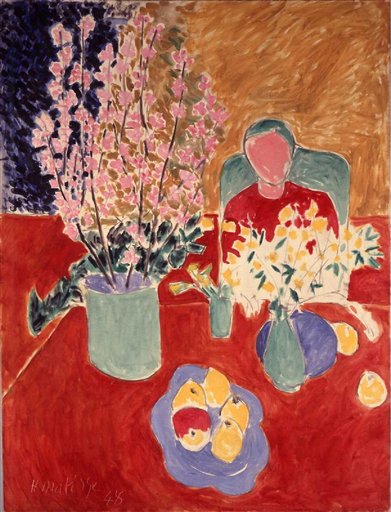
The Plum Blossoms - Henri Matisse
This message for the start of spring comes from the masterpiece Treasury of the True Dharma Eye (Shobo Genzo) by Dogen, the founder of Soto Zen.

The passage is taken from Fascicle 44, Flowers in the Sky, written in 1243:

Thus, when the time comes, flowers open. This is the moment of flowers, the arrival of flowers. At this very moment of flowers arriving, there is no other way. Plum and willow flowers unfailingly bloom on plum and willow trees. You see the flowers and know plum and willow trees. You understand flowers by looking at plum and willow trees. Peach and apricot flowers have never bloomed on plum and willow trees. Plum and willow flowers bloom on plum and willow trees. Peach and apricot flowers bloom on peach and apricot trees. Flowers in the sky bloom in the sky in just this way. They do not bloom on other grasses or trees.

Seeing the colors of flowers in the sky, you fathom the limitlessness of fruit in the sky. Seeing the opening and falling of flowers in the sky, study the spring and autumn of flowers in the sky. The spring of flowers in the sky and the spring of other flowers should be the same. Just as there are a variety of flowers in the sky, there should be a variety of springtimes. This being so, there are springs and autumns in the past and present.

Those who assume that flowers in the sky are not real and other flowers are real have not seen or heard the Buddha’s teaching. To hear the words that the sky originally had no flowers and assume that the flowers in the sky that did not exist do exist now is a lesser view based on shallow thinking. Step forward and think deeply.

The Magi

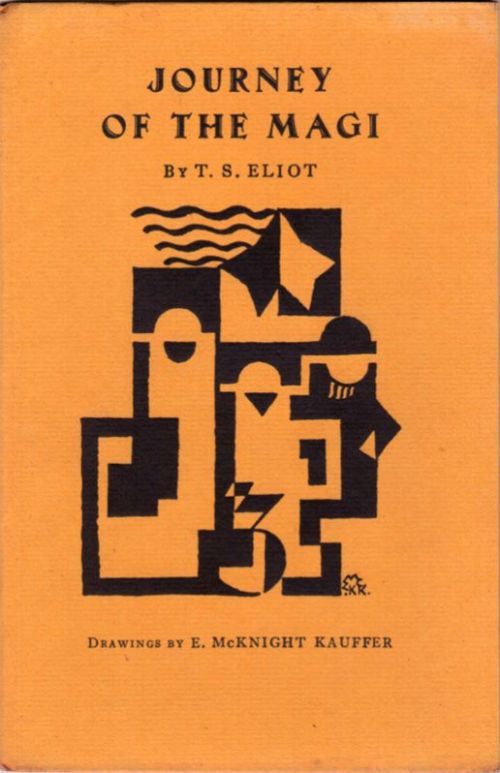
Journey of the Magi
The magi are for everyone, whatever your beliefs.

These three figures in the Christmas tradition appear in only one of the four Christian gospels, and even that role in Matthew is sketchy. They are foreigners bringing gifts for the infant Jesus and they return home by a different route to evade Herod. That’s it.

Translations and interpretations of what they brought vary, and even less clear is exactly who these foreigners were supposed to be in the story. They may be kings, wise men, astrologers or, as some have it, Zoroastrian priests from Persia.

This is why the particulars don’t matter much at all: the story is so basic and illuminating that it has captured the imagination of millions in its various retellings. Christian faithful have one view of it, and the more literal vision is that of concrete history. But for those who lean away from that, there is much to be gotten out of this compelling story:

  • Some people of discernment—in terms of wisdom, astrology or otherwise—had a sense that something special was going on outside of their ordinary sphere. Maybe they saw a light.
  • They travelled a long way to discover what was going on, and having found out, expressed their gratitude humbly and generously.

Again, that’s it. Some may want to think about theology. Others may want to think about other sorts of lights they’ve glimpsed, journeys they’ve made or haven’t made, and about possibilities. Christmas or just winter solstice and New Year, there is no better time to think about possibilities and all the rest.

T.S. Eliot wrote a brief but cinematic poem about the magi. It is written from a believer’s perspective, as the magi suffer twice, once on the journey, once again when they return home and find themselves so spiritually transformed by the experience that they feel like strangers in their own land. This is certainly a Christian view of the holiday, but non-Christians may just as well consider the more general phenomenon of all sorts of enlightenment, sitting between the way you have been and the way you discover you could be or already are. The magi say they would be glad of another death like that.

The Journey of the Magi
T.S. Eliot

‘A cold coming we had of it,
Just the worst time of the year
For a journey, and such a long journey:
The ways deep and the weather sharp,
The very dead of winter.’
And the camels galled, sorefooted, refractory,
Lying down in the melting snow.
There were times we regretted
The summer palaces on slopes, the terraces,
And the silken girls bringing sherbet.
Then the camel men cursing and grumbling
and running away, and wanting their liquor and women,
And the night-fires going out, and the lack of shelters,
And the cities hostile and the towns unfriendly
And the villages dirty and charging high prices:
A hard time we had of it.
At the end we preferred to travel all night,
Sleeping in snatches,
With the voices singing in our ears, saying
That this was all folly.

Then at dawn we came down to a temperate valley,
Wet, below the snow line, smelling of vegetation;
With a running stream and a water-mill beating the darkness,
And three trees on the low sky,
And an old white horse galloped away in the meadow.
Then we came to a tavern with vine-leaves over the lintel,
Six hands at an open door dicing for pieces of silver,
And feet kicking the empty wine-skins.
But there was no information, and so we continued
And arriving at evening, not a moment too soon
Finding the place; it was (you might say) satisfactory.

All this was a long time ago, I remember,
And I would do it again, but set down
This set down
This: were we led all that way for
Birth or Death? There was a Birth, certainly
We had evidence and no doubt. I had seen birth and death,
But had thought they were different; this Birth was
Hard and bitter agony for us, like Death, our death.
We returned to our places, these Kingdoms,
But no longer at ease here, in the old dispensation,
With an alien people clutching their gods.
I should be glad of another death.