Bob Schwartz

Category: Music

An Askew Take on the Grammy Awards

Lorde - Grammy 2014
There are a few kinds of award shows. One is the kind that you’re glad you watched live, even if you can always see it in a recorded version later on, skipping the ads and the bad or worst parts, focusing only on the good or (if any) great parts. The other is the kind that, assuming you didn’t escape early, leaves you wondering whether or how you can get the two or three hours of your life back.

So which kind was Grammy 2014? Far from a CWOT (complete waste of time), with moments of validation, pathos, and brilliance. But with all the coverage and videos you can find, you don’t need one more. If you haven’t heard about Pharrell William’s hat or about Taylor Swift’s seizure-style hair whipping and mistaken belief that she won album of the year, check it out. Or not.

Here instead are a few askew points.

Lorde – Okay, this is close to mainstream coverage, but having written so much about Lorde before, I can’t skip it. She won Best Pop Solo Performance and Best Song for Royals. That’s best songwriting won by a seventeen-year-old. She also performed Royals, with a really haunting arrangement of an already haunting, what’s-that-sound track. She also has a softly herky-jerky stage presence, not quite Joe Cocker, but very cool and punk (unlike Taylor Swift’s hair whipping). Accepting an award she said, “Thank you everyone who has let this song explode. Because it’s been mental.” That’s her performing above.

Paul Williams – When Daft Punk won Album of the Year, one of their many awards, and couldn’t speak for themselves (because they are robots), a somewhat short older guy came to the mic, as one of the songwriters. That guy is Paul Williams, 72, who has been around the business so long that a recent documentary about him is called Paul Williams Still Alive. Many if not most viewers had no idea who this guy is, but he gave the final speech of the night, a funny, wonderful, inspirational few moments that put the whole Ryan Lewis and Macklemore/Same Love/mass gay marriage event in brightly positive context. For those who don’t know, Williams is a songwriter, singer, actor and, currently, president of ASCAP. His compositions include Top Ten hits for Barbara Streisand (Evergreen), Three Dog Night (Just an Old Fashioned Love), the Carpenters (We’ve Only Just Begun, Rainy Days and Mondays), and many more. Now he’s part of the Album of the Year in 2014. How f***g cool is that.

CBS and Language – And speaking about language, CBS or any broadcast network that wants to feature music awards, or for that matter movie or television awards, is going to have to figure out how to deal with language in 2014. Questions about the evolution/devolution of language norms and niceties are huge right now, but outside the scope of these notes. Kendrick Lamar’s electrifying performance with Imagine Dragons wasn’t spoiled by the bleeps (the button guy missed one, by the way), but it goes beyond silly to artistically hurtful. If you’re going to feature and exploit current art, take it and present it for what it is, or don’t. But if you want to feature universally praised nude paintings as cultural highlights, neither CBS nor the FCC should be putting black bars across the nice but naughty bits.

The Finale – And speaking about artistically hurtful, the show ran late, as awards shows will. The Grammys and CBS make a big promotional deal about all-star finales, in this case an interesting combination of Dave Grohl, Lindsey Buckingham, Nine Inch Nails and Queens of the Stone Age. For those who don’t follow music, three of these people are in the pantheon: Grohl (Nirvana), Buckingham (Fleetwood Mac) and Trent Reznor (Nine Inch Nails). Most of these big-name combinations don’t work, but this was really captivating, in a kind of dark, progressive, alt rock way. It seemed a little unusual as an ending, but artistic, edgy and vital. Before it was done, though, the cameras pulled back, and the sponsorship promos began, followed by the credits—all while the artists were still performing.

Reznor tweeted: “Music’s biggest night…to be disrespected. FUCK YOU guys.”

Led Zeppelin – In covering the nominations, I wrote about the absurdity of Led Zeppelin being nominated for Best Rock Album. In 2014. For a performance in 2007. Of songs released in 1975. They won.

Jake Bugg: Another Reason to be Optimistic

Jake Bugg
Jake Bugg is another reason to be generally optimistic.

Some of us—maybe you—use pop music to get through the bad days and times and to celebrate the good. But part of the time, including now, if all you hear is what’s at or near the top of the charts, you might be a little charmed but a lot discouraged. Where is that something to tickle your ears, touch your heart and tap your feet, mixing originality and talent with that secret musical sauce?

It does come along; see earlier posts about Lorde. Once again me catching up with those who already got there, here’s Jake Bugg. Unlike Lorde, who is now seventeen, he is much older. Last year he recorded and released his second album, Shangri La, at the age of nineteen.

You can read all about him, and I could write all about him, but you know my motto: It’s in the tracks. So listen to both albums whole if you can. Below are links to a few sample tracks, but like a lot of new artists, the work is genre blending/mashing/smashing, so please try not to category listen.

His biggest track, from the first album, Jake Bugg, is Lightning Bolt. From the new album, released in November, There’s A Beast and We All Feed It (“There’s a beast eating every bit of beauty and yes we all feed it.”). And for those who want less beat, more ballad, Broken .

Is he a next really big thing? Who knows, but whatever the charts and awards say, we are all a little better off with this music around.

Grammy Nominations Time Again

Neon Philharmonic
It’s Grammy nominations time again, in advance of January’s awards for the best in recorded music.

In some circles, the relevance of the Grammys is beyond question—as in there’s no question that they are irrelevant. In part that’s because of their being behind the times and missing the mark at various points. Of course awards are matters of disagreement and controversy, so it does come with the territory.

Still, there have been some infamously wild choices. Most celebrated, and the emblematic botched call, was Jethro Tull’s winning the 1988 Grammy for Hard Rock/Heavy Metal, over Metallica among others. (When asked about this today, as he always is, Jethro Tull leader Ian Anderson simply notes that he presumes the band got the award for being “nice guys’ who had never won.)

It takes literally an hour to read the entire list of nominations and probably days to listen to all the nominated music. It might be fair and nice to acknowledge what Grammy got right, but that’s no fun. They don’t need anybody’s encouragement and way to gos/att boys. Instead it is more hopefully corrective to list some offbeat nominations or lack thereof.

Lorde is nominated for Record of the Year, Song of the Year (songwriting) and Best Popo Solo Performance for Royals. But she is somehow not in the running for Best New Artist. That single and the album (Pure Heroine) have been monstrously popular across a variety of audiences. By way of bonus, this is genuinely original and interesting music, and she wrote and recorded it when she was only sixteen. So if she shouldn’t win Best New Artist—there are some worthy competitors—she kind of deserved a shot at it.

On the other chronological end we have the oldsters. For that weirdness, you have to check out the Grammy history for Led Zeppelin. They were nominated as Best New Artist in 1970, but lost to Crosby, Stills and Nash (the other nominees were Chicago, Neon Philharmonic and Oliver. Oliver.). Then nothing, no nominations, nada. Even though all the major Zep albums sit somewhere in the all-time 100, not to mention some of the even-more iconic tracks. (To keep from singing Stairway, I listened to Neon Philharmonic’s big hit Morning Girl and Oliver’s Jean. That’ll keep you from getting too crazy heavy.)

The reunited Led Zeppelin performed at a benefit concert in 2007, and the soundtrack of the film of that concert was released, and has resulted in two Grammy nominations: Best Rock Performance for Kashmir and Best Rock Album for Celebration Day, the concert soundtrack.

That’s right. A band that broke up in 1980 (33 years ago), a band that reunited for one performance in 2007 (six years ago) to record a song it first released in 1975 (38 years ago) is up for two Grammys.

Take that you naysayers. Who says Grammy isn’t still “with it”? If that is what the kids are saying these days.

TV: Love Note to Tessanne Chin

Tessanne Chin
Last night were the semifinal performances on The Voice. There are three worthy contenders left, including Cole Vosbury and James Wolpert. Then there is Tessanne Chin from Jamaica.

Tessanne sang Bridge Over Troubled Water and owned the night. Talent competitions are not meritocracies, so she may not win, and it won’t matter.

1. She is beautiful, inside and out, delightfully open-hearted, loving and modest. You can tell this by watching and listening to her and by the testimony of her coach, Adam Levine. Adam obviously has a crush on her and he isn’t alone.

2. Even with the normal lyricism of a Jamaican accent, hers is especially enrapturing. Randy Jackson, former judge on the soon-to-be-former American Idol, constantly complimented contestants by saying they could sing the phone book. Tessanne could read the phone book and people would pay for it.

3. Her performance last night was one of the great performances on a singing competition ever. There are dozens of recorded covers of the original, most famously by Aretha Franklin. Listening to some of them, there may be a few that are technically more pristine, but not a one that seems to have skipped the singer’s vocal cords and lungs and sprung directly from a beating heart. This may explain in part why her coach was tearing up, as were undoubtedly many others.

All that is why it doesn’t matter whether Tessanne wins or not. If you don’t watch The Voice, see her first performance of Pink’s Try. And consider that performances are gifts, no matter what the circumstances, and Tessanne is a very talented and generous giver.

Darkside: When Philosophy Drama Pink Floyd and Madness Collide

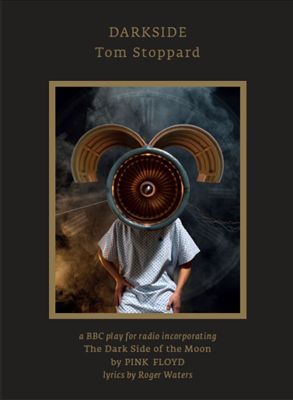
Darkside
Last week, the most unusual pop album ever was released. That’s an incredible overstatement, literally unbelievable, because who has listened to all those truly out-there albums and how could you possibly contrast and compare them anyway?

Okay, last week, the most philosophical unusual pop album ever was released.

Tom Stoppard, maybe the greatest of all living English-language playwrights, is a longtime Pink Floyd fan, with a special place in his heart for Syd Barrett, the disturbed creator who sparked the group, even after his untimely but unavoidable departure. You may know Stoppard most popularly for his Oscar-winning work as co-writer of Shakespeare in Love. Before and after that, his total embrace of language, philosophy, literature and the overall beautiful strangeness of people led to masterful theatre and, often, radio plays.

When the BBC wanted to mark the 40th anniversary of Dark Side of the Moon, they asked Stoppard to create one of his radio concoctions. The result is Darkside, which integrates dramatic scenes into the music of the album.

Description is futile. Stoppard has always believed that philosophy is a form of play, that you can play philosophy the way you do language and music and entertain with it. Listeners and viewers might also learn something. Here we have clever demonstrations of moral philosophy and discussion of the nature of thought itself; that is, as he keeps pointing out, what he is doing is a thought experiment—as is all creativity. He then asks us and them about the juggler on the radio: there is a juggler on the radio, but not hearing him, how do we know? Do we believe in the juggler?

What is most clear listening to Darkside is not just that Stoppard knows how to play with words and mind, but that Pink Floyd was just as agile doing the same, with the addition of some of the most memorable and popular music of all time. Dark Side of the Moon was on the Billboard 200 chart for 14 years after it was released in 1973, and still hovers near there, 40 million copies later. Thousands still buy it every week and somewhere right now someone is listening and discovering something. Stoppard has devised a valuable appreciation of the weird wonder that is Dark Side, making it just a bit more wonderful. The lunatic is still on the grass and in your head.

All that you touch
And all that you see
All that you taste
All you feel
And all that you love
And all that you hate
All you distrust
All you save
And all that you give
And all that you deal
And all that you buy
Beg, borrow or steal
And all you create
And all you destroy
And all that you do
And all that you say
And all that you eat
And everyone you meet
And all that you slight
And everyone you fight
And all that is now
And all that is gone
And all that’s to come
And everything under the sun is in tune
But the sun is eclipsed by the moon
Eclipse, Dark Side of the Moon

Annals of Journalism: The Best Lead Paragraph Ever (Hint: It Involves Miley Cyrus)

Miley Cyrus Joint Dwarf

The Associated Press has issued the following lead paragraph for a story about Miley Cyrus’ most recent antics. It is the best lead paragraph ever.

AMSTERDAM (AP) — In an unabashed — and likely successful — bid for attention, singer Miley Cyrus smoked a joint on stage and twerked with a dwarf during the MTV Europe Music Awards.

Journalism students and logicians, please don’t focus on the joint smoking and the dwarf twerking, and for God’s sake, avert your eyes from the videos and photos (okay, you peeked; it’s irresistible, isn’t it?).

Instead, pay attention to this phrase: “unabashed — and likely successful — bid for attention.” What makes that phrase so delightful, the cherry on the Miley Cyrus-joint-dwarf news sundae, is that one of the largest news organizations in the world is covering the story, moving the success of her bid for attention from “likely” to certain and actual. As sure as the sun rises, Miley Cyrus will do something outrageous (the dwarf is an interesting touch, though it’s hard to say whether it’s trite or hip old school), and even the most respectable media outlets will cover it. So Associated Press, you just made your journalistic prediction come true. Oh the humanity! What would H.L. Mencken say?


Rock and Roll Prophecy: Show Biz Kids

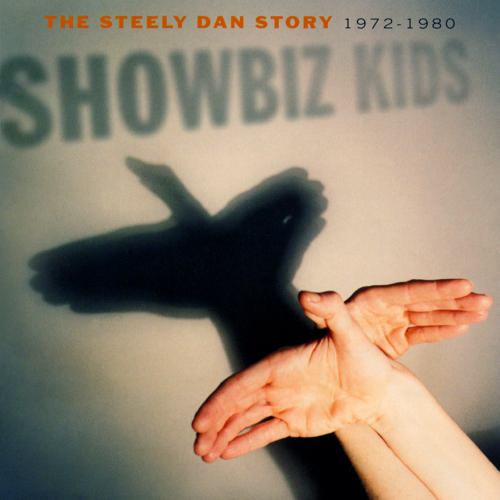
Show Biz Kids
Show biz kids making movies
Of themselves you know they
Don’t give a fuck about anybody else
Show Biz Kids, Steely Dan

Pop music self-reflection has been around for decades. The wonderful Lorde does a take on it with Royals, looking at superstar excess from the perspective of a regular teenager. Jethro Tull sang “When you’re too old to rock and roll but too young to die” in 1976—without a time machine to watch 70-year-old Mick Jagger prance around the stage almost forty years later.

But when it comes to visionary, nothing beats Steely Dan’s 1973 Showbiz Kids from the Countdown to Ecstasy album. Walter Becker and Donald Fagen always cast a little bit of jaundiced eye on society, show business and fame, which along with their musical sophistication and eclecticism made them a lock to get into the Rock and Roll Hall of Fame in 2001.

Their lyrics are often poetic, obscure and ambiguous, but Show Biz Kids is just plain straightforward. Show business, including pop, has had its share of bratty, self-absorbed behavior from star children of all ages. So it’s nothing new, and it may not be more over the top than ever—even if it seems that way sometimes. The poor people are still sleepin’ with the shade on the light while the stars come out at night. Once in a while these days, it appears, as Steely Dan sang, the show biz kids don’t care what they do or how it looks.

While the poor people sleepin’
With the shade on the light
While the poor people sleepin’
All the stars come out at night

After closing time
At the Guernsey Fair
I detect the El Supremo
From the room at the top of the stairs
Well I’ve been around the world
And I’ve been in the Washington Zoo
And in all my travels
As the facts unravel
I’ve found this to be true

They got the house on the corner
With the rug inside
They got the booze they need
All that money can buy
They got the shapely bods
They got the Steely Dan T-shirt
And for the coup-de-gras
They’re outrageous

Show biz kids making movies
Of themselves you know they
Don’t give a fuck about anybody else

Lesson from The Voice: Caveat Inspector

The Voice
The Voice is now the dominant singing competition on television, having surpassed, probably permanently, American Idol. There is a lesson from The Voice that goes beyond just music, a lesson that goes to the heart of what has become a more media centric/entertainment centric society.

The reasons for the success of The Voice are pretty simple:

A substantial number of solidly talented and interesting contestants.

Panels of likeable and helpful celebrity coaches, with real musical expertise and real chemistry between them: Adam Levine, Cee-Lo Green, Christina Aguilera and Blake Shelton in the fall; Shakira, Usher with Levine and Shelton in the spring.

The show process begins with the uber-concept in the show’s name. The first round is a blind competition, where the panelists can hear but not see the contestants sing. It is, at least in part, all about “the voice.”

This week began the Knockout Rounds, where votes from the TV audience determine who will stay and who will be eliminated. The first of two nights on Monday was peculiar, anomalous for any singing competition. Of the ten singers who performed, not a single one was criticized, even for a tiny misstep—even though a few performances were very good, some were okay, and some were just not quality singing.

American Idol never quite figured out how to deal with judges’ criticism of contestants. Starting with the original panel, and continuing through the revolving door of judges who failed, there were more or less roles for the judges: the more brutal but somewhat constructive one (Simon Cowell), the kind, encouraging and heart-on-the-sleeve, maybe a little ditzy one (Paul Abdul) and whatever one (Randy Jackson).

There was an underlying issue in all that. There is little doubt that the producers of Idol shaded and spun the show so that certain contestants might rise a little higher than others. Whether this amounted to rigging results is unsubstantiated overstatement. But clearly, with all the elements at their command, producers could shine a different light on different singers, light that might affect voting. A judge’s praise or criticism could certainly be one of those elements.

In so many ways, for the better, The Voice is not American Idol. But the toolbox has some of the same tools: heartwarming or heartrending back stories, strategic song choices, etc. If the panelists/coaches criticism could affect the outcome, on Monday the decision seemed to be to have none at all.

And it was weird. At some point, even as the least trained audience ears could sense a musical problem, you could see coaches forcing smiles and faint praise. One big tell is when a panelist begins by telling a singer how good they look or how wonderful a person they are. Which is utterly ironic, since the show is based on the premise that voice matters above all.

If Monday’s absence of criticism was notable, it was even more apparent as soon as the Tuesday Knockout Round began. From the first singer on, many of the performances received what was in all cases deserved small critiques—never devastating, sometimes not as big as it could have been, but critique nonetheless. It was as if someone behind the scenes had noticed and said: our audience may like certain singers for their look, their attitude, their personality, but the audience isn’t deaf or stupid. We have a panel with four eminently talented musicians, and while we don’t want brutality, their credibility as judges of performances—their honesty—is on the line.

Which brings us to the greater lesson that should never be forgotten. From the beginning of advertiser-paid media, newspapers to now, all of those media have dual roles to play. They are whatever they essentially do—report news, entertain us, stage competitions, offer ways to publish short messages to the world, etc. But they are all also ways of delivering eyes, ears, hearts and minds to advertisers. There is nothing wrong with this. Nor is there anything wrong with media not being transparent about this obvious dual role and announcing all the things they do to increase the audience.

So enjoy. Get invested in your favorites (this season: Caroline Pennell, Tessanne Chin and Cole Vosberry, all of whom could be The Voice, all of whom deserve success). But remember that in commercial media, along with caveat emptor (buyer beware), it is caveat lector (reader beware), caveat inspector (viewer beware), and on this day of the Twitter IPO, caveat tweeter.

Which Comes First: Evolution or Revolution?

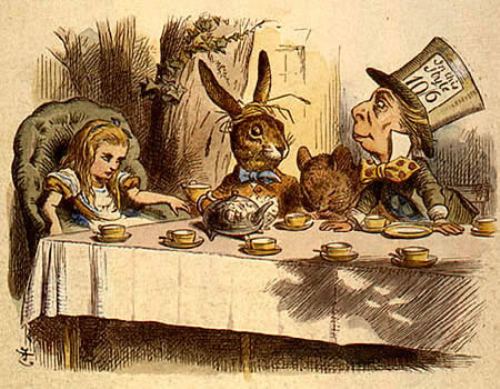
Tea Party
The 20th century gave us two world wars and an atomic bomb, but the most interesting of the Big Events of the century may be the Russian Revolution. An inequitable and unbalanced way of life gave bloody way to abstract enlightened visions of a better world. The particular inequities ended, Russia moved into modern times, but competition for the “right” vision and ineradicable baser human natures seeking power and control led to decades of national and global troubles. “Meet the new boss, same as the old boss,” the Who said.

The Russian Revolution was grounded in a Marxist vision, which was in turn a Christian vision: a community on earth as it is in heaven, a brotherhood of people in which suffering and want would be softened, if not alleviated, by those who have a surplus of comfort and resource. It was Lennon, not Marx, who said, “You can say I’m a dreamer, but I’m not the only one. I hope someday you’ll join us, and the world will live as one.”

What went wrong?

What almost always goes wrong is that evolution and revolution are out of sync. It is easy to say that people and society should first evolve for a while, and then at some critical moment, all that’s needed is that next faster-than-evolution event to take it to the next level.

That turns out rarely to be the case.

Evolution is slow, erratic, and always engenders resistance and reaction. The cliché is that people and society fear change, but that is too easy. They fear the unknown. The expression “better the devil you know than the one you don’t” sums it up. It takes a substantial leap—you might say a leap of faith—the walk into a vision rather than remain in a lesser but familiar reality.

Revolution is both an attempt to make evolution more real and to create conditions where that evolution can continue more broadly and forcefully. But, as pointed out with the Russian experience, it doesn’t always work that way. Revolution is conflict, and conflict creates its own set of conditions sometimes antithetical to evolution. “Fighting for peace” is oxymoronic (some would say just plain moronic), but we have had to live through that. (Note the moment in Stanley Kubrick’s brilliant film Dr. Strangelove where the President scolds his arguing advisers, “Stop it. There’s no fighting in the War Room.”)

One of the exceptional examples of evolution and revolution working together is the American Revolution. It is one of the reasons it worked so well. The founders may have been the fathers of our country, but they were the children of the Enlightenment. That multi-faceted evolution—philosophical, political, economic, spiritual—had gone as far as it could go when it hit a wall. They believed that if they could break through, which did mean war, they could establish an enlightened nation. And, to an extent greater or lesser than some might like or expect, they did.

Evolution, or lack of it, is at the heart of some current American problems.

America is heir to two great evolutions, sometimes unrecognized, often distorted. Some of those obstructionists who fight today hark back to the patriots who were mad as hell and wouldn’t take it any more, and so upended a cargo of British tea. Others who claim this is a Christian nation have the idea that if alive today, Jesus would certainly choose to be an American.

Every American in these dynamic times is free to pick the evolution they aspire to. There are plenty to choose from. We do have two very big ones on the menu. If a rabid revolutionary patriot, you might choose to follow the path of a 21st century version of Enlightenment; you might even study the work of those founding Enlightenists—Jefferson, Madison, Monroe, et al.—for guidance. If a committed Christian it’s even easier. No slogging through the Federalist Papers, or even the whole Bible. Just read and read again the words of Jesus—the ones in red type—and consider just how much evolution he was asking for and expecting. Then again, maybe it’s not evolution he was talking about at all.

Miley Ray Cyrus for Halloween

Miley Ray Cyrus
Millions of children and adults will spend Halloween dressed as some version of Miley Cyrus, which is a scary thought in so many ways.

The first suggestion to counteract this is that people dress as her father, Billy Ray Cyrus, as seen during the heyday of his popularity. But just wearing a mullet and spending the entire halloday singing Achy Breaky Heart seems cruel, with lots of pain and not much payoff.

Then an epiphany. Why not mash up father and daughter, Billy Ray and Miley. Dress as Miley Ray Cyrus. The most outrageous near-nude mullet-headed sex-crazed country dance pop tart in the history of music. Anyway, it’s all in the DNA.

For those who still don’t get it, and still need convincing, here are just some of the lyrics from the remix that you’ve all been asking for, know it or not:

Achy Breaky Wrecky Ball

You can tell my arms to go back onto the phone
You can tell my feet to hit the floor
Or you can tell my lips to tell my fingertips
They won’t be reaching out for you no more

We clawed, we chained our hearts in vain
We jumped never asking why
We kissed, I fell under your spell.
A love no one could deny

But don’t tell my heart, my achy breaky heart
I just don’t think it’d understand
And if you tell my heart, my achy breaky heart
He might blow up and kill this man

Don’t you ever say I just walked away
I will always want you
I can’t live a lie, running for my life
I will always want you

You can tell your ma I moved to Arkansas
Or you can tell your dog to bite my leg
Or tell your brother Cliff who’s fist can tell my lips
He never really liked me anyway

I came in like a wrecking ball
I never hit so hard in love
All I wanted was to break your walls
All you ever did was wreck me
Yeah, you, you wreck me