Bob Schwartz

Category: Music

Lesson from The Voice: Caveat Inspector

The Voice
The Voice is now the dominant singing competition on television, having surpassed, probably permanently, American Idol. There is a lesson from The Voice that goes beyond just music, a lesson that goes to the heart of what has become a more media centric/entertainment centric society.

The reasons for the success of The Voice are pretty simple:

A substantial number of solidly talented and interesting contestants.

Panels of likeable and helpful celebrity coaches, with real musical expertise and real chemistry between them: Adam Levine, Cee-Lo Green, Christina Aguilera and Blake Shelton in the fall; Shakira, Usher with Levine and Shelton in the spring.

The show process begins with the uber-concept in the show’s name. The first round is a blind competition, where the panelists can hear but not see the contestants sing. It is, at least in part, all about “the voice.”

This week began the Knockout Rounds, where votes from the TV audience determine who will stay and who will be eliminated. The first of two nights on Monday was peculiar, anomalous for any singing competition. Of the ten singers who performed, not a single one was criticized, even for a tiny misstep—even though a few performances were very good, some were okay, and some were just not quality singing.

American Idol never quite figured out how to deal with judges’ criticism of contestants. Starting with the original panel, and continuing through the revolving door of judges who failed, there were more or less roles for the judges: the more brutal but somewhat constructive one (Simon Cowell), the kind, encouraging and heart-on-the-sleeve, maybe a little ditzy one (Paul Abdul) and whatever one (Randy Jackson).

There was an underlying issue in all that. There is little doubt that the producers of Idol shaded and spun the show so that certain contestants might rise a little higher than others. Whether this amounted to rigging results is unsubstantiated overstatement. But clearly, with all the elements at their command, producers could shine a different light on different singers, light that might affect voting. A judge’s praise or criticism could certainly be one of those elements.

In so many ways, for the better, The Voice is not American Idol. But the toolbox has some of the same tools: heartwarming or heartrending back stories, strategic song choices, etc. If the panelists/coaches criticism could affect the outcome, on Monday the decision seemed to be to have none at all.

And it was weird. At some point, even as the least trained audience ears could sense a musical problem, you could see coaches forcing smiles and faint praise. One big tell is when a panelist begins by telling a singer how good they look or how wonderful a person they are. Which is utterly ironic, since the show is based on the premise that voice matters above all.

If Monday’s absence of criticism was notable, it was even more apparent as soon as the Tuesday Knockout Round began. From the first singer on, many of the performances received what was in all cases deserved small critiques—never devastating, sometimes not as big as it could have been, but critique nonetheless. It was as if someone behind the scenes had noticed and said: our audience may like certain singers for their look, their attitude, their personality, but the audience isn’t deaf or stupid. We have a panel with four eminently talented musicians, and while we don’t want brutality, their credibility as judges of performances—their honesty—is on the line.

Which brings us to the greater lesson that should never be forgotten. From the beginning of advertiser-paid media, newspapers to now, all of those media have dual roles to play. They are whatever they essentially do—report news, entertain us, stage competitions, offer ways to publish short messages to the world, etc. But they are all also ways of delivering eyes, ears, hearts and minds to advertisers. There is nothing wrong with this. Nor is there anything wrong with media not being transparent about this obvious dual role and announcing all the things they do to increase the audience.

So enjoy. Get invested in your favorites (this season: Caroline Pennell, Tessanne Chin and Cole Vosberry, all of whom could be The Voice, all of whom deserve success). But remember that in commercial media, along with caveat emptor (buyer beware), it is caveat lector (reader beware), caveat inspector (viewer beware), and on this day of the Twitter IPO, caveat tweeter.
Which Comes First: Evolution or Revolution?

Tea Party
The 20th century gave us two world wars and an atomic bomb, but the most interesting of the Big Events of the century may be the Russian Revolution. An inequitable and unbalanced way of life gave bloody way to abstract enlightened visions of a better world. The particular inequities ended, Russia moved into modern times, but competition for the “right” vision and ineradicable baser human natures seeking power and control led to decades of national and global troubles. “Meet the new boss, same as the old boss,” the Who said.

The Russian Revolution was grounded in a Marxist vision, which was in turn a Christian vision: a community on earth as it is in heaven, a brotherhood of people in which suffering and want would be softened, if not alleviated, by those who have a surplus of comfort and resource. It was Lennon, not Marx, who said, “You can say I’m a dreamer, but I’m not the only one. I hope someday you’ll join us, and the world will live as one.”

What went wrong?

What almost always goes wrong is that evolution and revolution are out of sync. It is easy to say that people and society should first evolve for a while, and then at some critical moment, all that’s needed is that next faster-than-evolution event to take it to the next level.

That turns out rarely to be the case.

Evolution is slow, erratic, and always engenders resistance and reaction. The cliché is that people and society fear change, but that is too easy. They fear the unknown. The expression “better the devil you know than the one you don’t” sums it up. It takes a substantial leap—you might say a leap of faith—the walk into a vision rather than remain in a lesser but familiar reality.

Revolution is both an attempt to make evolution more real and to create conditions where that evolution can continue more broadly and forcefully. But, as pointed out with the Russian experience, it doesn’t always work that way. Revolution is conflict, and conflict creates its own set of conditions sometimes antithetical to evolution. “Fighting for peace” is oxymoronic (some would say just plain moronic), but we have had to live through that. (Note the moment in Stanley Kubrick’s brilliant film Dr. Strangelove where the President scolds his arguing advisers, “Stop it. There’s no fighting in the War Room.”)

One of the exceptional examples of evolution and revolution working together is the American Revolution. It is one of the reasons it worked so well. The founders may have been the fathers of our country, but they were the children of the Enlightenment. That multi-faceted evolution—philosophical, political, economic, spiritual—had gone as far as it could go when it hit a wall. They believed that if they could break through, which did mean war, they could establish an enlightened nation. And, to an extent greater or lesser than some might like or expect, they did.

Evolution, or lack of it, is at the heart of some current American problems.

America is heir to two great evolutions, sometimes unrecognized, often distorted. Some of those obstructionists who fight today hark back to the patriots who were mad as hell and wouldn’t take it any more, and so upended a cargo of British tea. Others who claim this is a Christian nation have the idea that if alive today, Jesus would certainly choose to be an American.

Every American in these dynamic times is free to pick the evolution they aspire to. There are plenty to choose from. We do have two very big ones on the menu. If a rabid revolutionary patriot, you might choose to follow the path of a 21st century version of Enlightenment; you might even study the work of those founding Enlightenists—Jefferson, Madison, Monroe, et al.—for guidance. If a committed Christian it’s even easier. No slogging through the Federalist Papers, or even the whole Bible. Just read and read again the words of Jesus—the ones in red type—and consider just how much evolution he was asking for and expecting. Then again, maybe it’s not evolution he was talking about at all.

Miley Ray Cyrus for Halloween

Miley Ray Cyrus
Millions of children and adults will spend Halloween dressed as some version of Miley Cyrus, which is a scary thought in so many ways.

The first suggestion to counteract this is that people dress as her father, Billy Ray Cyrus, as seen during the heyday of his popularity. But just wearing a mullet and spending the entire halloday singing Achy Breaky Heart seems cruel, with lots of pain and not much payoff.

Then an epiphany. Why not mash up father and daughter, Billy Ray and Miley. Dress as Miley Ray Cyrus. The most outrageous near-nude mullet-headed sex-crazed country dance pop tart in the history of music. Anyway, it’s all in the DNA.

For those who still don’t get it, and still need convincing, here are just some of the lyrics from the remix that you’ve all been asking for, know it or not:

Achy Breaky Wrecky Ball

You can tell my arms to go back onto the phone
You can tell my feet to hit the floor
Or you can tell my lips to tell my fingertips
They won’t be reaching out for you no more

We clawed, we chained our hearts in vain
We jumped never asking why
We kissed, I fell under your spell.
A love no one could deny

But don’t tell my heart, my achy breaky heart
I just don’t think it’d understand
And if you tell my heart, my achy breaky heart
He might blow up and kill this man

Don’t you ever say I just walked away
I will always want you
I can’t live a lie, running for my life
I will always want you

You can tell your ma I moved to Arkansas
Or you can tell your dog to bite my leg
Or tell your brother Cliff who’s fist can tell my lips
He never really liked me anyway

I came in like a wrecking ball
I never hit so hard in love
All I wanted was to break your walls
All you ever did was wreck me
Yeah, you, you wreck me

A Chilly Breeze of Hate, a Hungarian Conductor and the Prospects for American Anti-Semitism

Ivan Fischer
Those of us who grew up Jewish in late 20th century America had a pretty good experience of tolerance, certainly compared to even our parents’ generation. The Holocaust had an immunizing effect, not so much because people saw where such ugly expressions of hatred might lead, but because it was harder to hold those views—at least publicly. There was not an immediate spillover effect, so common prejudices against blacks, women, gays, and other intolerance “classics” continued, while new groups such as Muslims were added all the time. Hate takes no holiday.

The news was not without stories of anti-Semitism. And if we lived in certain parts of the country, we might be more likely to feel like a stranger, and even to hear somebody we liked talk about bargaining as “Jewing” someone down. Oh well, that was ignorance talking, and overall those folks often had a good heart. Maybe the greatest deterrent to taking it too seriously was the Jewish cohort who daily found an anti-Semite around every corner. It wasn’t that there weren’t and aren’t anti-Semites everywhere, including some positions of high profile and power, it’s just that the progress Jews have made in acceptance and mainstreaming made these anomalies. There were other groups still having a much tougher time.

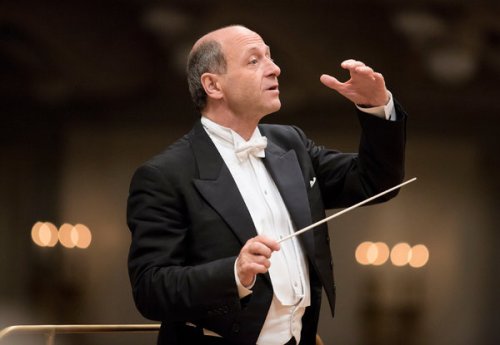
A story from this weekend’s New York Times prodded that complacency, just a little. It comes not from America at all. It is from Hungary. There, anti-Semitism and nationalism are on the rise, to the point where the country’s most celebrated conductor, Ivan Fischer, has written and staged an opera about it. Called The Red Heifer, it is about a 19th century incident in which Jews were blamed for the murder of a peasant girl. But contemporary elements make clear that this is not a story about historical artifacts. The whole world context of the opera is not just Hungary; much of Europe, particularly but not entirely those in the former Soviet empire, are trying to establish new identities in these trying times. That insurgent identity frequently involves a broad menu of nationalistic intolerance. See, for example, the treatment of gays in Russia and the rise of neo-Francoism in Spain. And where there’s a list, Jews are on it. That doesn’t make sense, but not making sense is precisely the hallmark of all this.

It is no secret that certain kinds of intolerance are a little more obviously a part of American life today. There can, for example, be argument about whether the unprecedented disrespect and vitriol for the President is purely political. It isn’t, and most know, or should, that race is near the heart of the hate. Americans too are having hard times that may continue for a while. Even if the current crop of demagogues seems penny-ante compared to “real” American demagogues of the 20th century—the Huey Longs, the Father Coughlins, the Joe McCarthys, the George Wallaces—demagoguery it is. And if we hope and do transcend history, it may be that some things don’t or can’t change: where there’s a list, Jews are on it.

One of the saddest phenomena of recent years is the ultra-ironic sight of a Jewish vigilance about anti-Semitism bizarrely combining with near-paranoid anti-Islamism. E-mails have circulated praising Dutch nationalist politician Geert Wilders, who advocates keeping Muslims out of the Netherlands and out of all (supposedly) white and Western Europe, lest those white and Western values be despoiled, or worse. Why this appeals to some Jews may not be a mystery, but it is moral madness.

And yet. These are stressful times around the world; outside of war, the most stressful in generations. Distrust and fear of “the other” is bred in the human bone. We must work to rise above and to mutate it out. If you have any sense of history—and all of us should study to be amateur historians—you may at certain moments get a little instinct, a buzz, a foreboding that you hope is way off, one that might be as much about you as about the state of things, and thus should be shaken off. On the other hand, there is the cliché: just because you’re paranoid doesn’t mean that somebody isn’t out to get you.

Two truths co-exist in America. Public anti-Semitism has never been at a lower ebb, and will not return to earlier levels. Privately, the truth is that the vast majority of Americans have never met a Jew, and know little about Judaism except the occasional news story or that it is the primitive religious precursor to Christianity. That unknowing is not pernicious, even if it’s not ideal. But seeing what is going on in the rest of the world is a reminder that vacuums can be filled by suspicion, perplexing troubles need someone to blame, and this “other” or that “other” is just too convenient not to accuse.

For American Jews, it is overstatement to call this a chilly breeze. There is not much in the air at the moment. But intolerance is a funny thing. It has a life of its own, and it doesn’t always take the same course. Over-vigilance and paranoia can be counter-constructive and debilitating. This doesn’t mean that closing your eyes works either. What’s happening thousands of miles away is not happening here. But who’s to say who’s next, once the dogs of hate are let loose.

There are never enough occasions to repeat the famous words of Martin Niemöller, the Protestant pastor who was a public foe of Adolf Hitler and who spent years in concentration camps. In a sense it is his translation of Christian (and Buddhist) non-judgmentalism and non-dualism. If you think you are not different but/or are “the right kind” of different, you are mistaken.

First they came for the Socialists, and I did not speak out—
Because I was not a Socialist.

Then they came for the Trade Unionists, and I did not speak out—
Because I was not a Trade Unionist.

Then they came for the Jews, and I did not speak out—
Because I was not a Jew.

Then they came for me—and there was no one left to speak for me.

Good Gadgets Cheap: Logitech S120 Speakers

Logitech S120
Thousand dollar computers. Five hundred dollar smartphones. Ten dollar speakers.

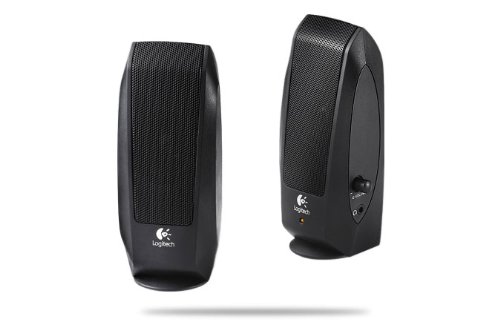
Sitting on the counter, framing the food processor, mixer, blender and coffee grinder, are a pair of Logitech S120 speakers. Ten bucks, more or less; these come off the shelf from Walmart. They fill the kitchen with decent sounding symphonies, and the sound isn’t too bad overheard in adjacent rooms either.

You could splurge and go for the Z130 and get 5 watts instead of 2.3 watts, at about twice the price. You may already have a more powerful audio setup, one that really offers mind-numbing volume and fidelity to satisfy the most discerning listener. Good. But in that space where you just want to plug your phone into something and happily listen, this can’t be beat.

The bigger point may be that happiness and satisfaction come in lots of packages, and they are not all precious and expensive. Just because it cost only ten dollars doesn’t mean it won’t turn making breakfast—and maybe your whole day—into something special.

Another Fleetwood Mac Presidency?

Fleetwood Mac - Rumours
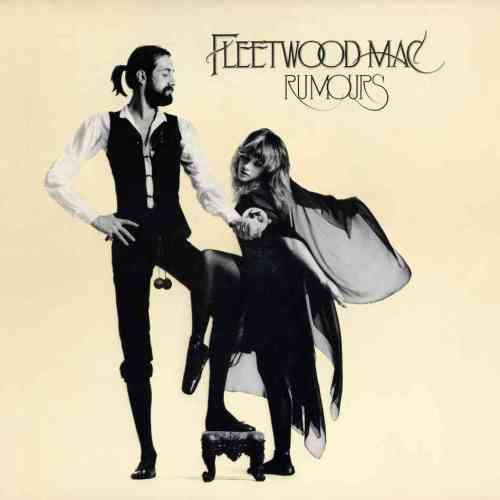
That’s not Bill and Hillary Clinton on the cover of the Rumours album.

Pandora popped this album up and three things came to mind. The music is still pretty good, as well-crafted as any pop of its day, but it does sound  a bit dated. The second thought is about this now-iconic photo of Mick Fleetwood and Stevie Nicks. What in the name of artsy pretentiousness is going on, and why does Mick have two balls hanging near his crotch?

The final thought was of the Clintons. If you were there, you will never, ever get the identity between Bill and the campaign theme song Don’t Stop out of your head, hard as you try.

Hillary’s presidential candidacy is a big topic that has to be dealt with in bite-size chunks. Among the sub-topics is whether she will run, whether she will win the nomination, whether she will win the presidency, and whether any of it is a good idea for the party or the country. All that is stuff for another day.

The subject here is what it means in terms of Fleetwood Mac. Does Hillary still like and listen to them, or did she never, instead just giving in to another of Bill’s peccadilloes? Did she think of herself more as a Stevie Nicks or as a Christine McVie? Did she think more of Stevie or Christine? Did Bill think more about Stevie or Christine?

(As a bonus, consider that the songs on Rumours are famously confessional about broken relationships and secret infidelities among band members. That’s why it’s called Rumours. Ironic, yes?)

The big question is whether a Hillary candidacy is a hark back to Mac, essentially a call for the better days of the mid-1970s or early-1990s, the decades that frame the Clinton Years. If it is, the question then is what kind of place, if any, there is for Fleetwood Mac in 2016. It’ll soon be here.

Music: Royals by Lorde

Lorde

When you’re a young pop music fanatic, you spend half your time listening. Music is life, life is music. When you get older, you still love it, but it takes its place among so many other occupiers. Which is why some of us who really do care and appreciate end up as “middle of the day” discoverers instead of early adopters.

I nearly had to pull off the road when I first heard Royals by Lorde on the radio this week. I was transported, transfixed, whatever transcendent pop music word you want to use. I am about the five millionth person to find out about this phenomenon, but I don’t care.

This is from the Billboard 21 Under 21 list, where Lorde comes in at Number 6, just a few spots below Justin Bieber and Miley Cyrus:

Why She’s Hot: At this time last year, Ella Yelich-O’Connor was an unknown 15-year-old in New Zealand, still two months away from releasing her debut EP for free on the Internet. Fast forward one calendar frame, and one of the songs on that EP, “Royals,” is a record-setting hit on Billboard’s Alternative chart and a Top 5 single on the U.S. Hot 100. Its creator, now known as Lorde, is one of the most fascinating new talents in pop music, with sold-out shows, a beguiling debut album titled “Pure Heroine,” and an astoundingly level head about her heightened profile. The head of Lorde’s record label says that she could be “the artist of her generation,” and thousands agree. It’s time to hail Lorde with a spot in this year’s Top 10.

And if everything else about Royals isn’t already plus-perfect, the song itself, written by Lorde and Joel Little, offers a message about rich pop stars from the common people perspective: “we’ll never be royals.”

I’ve never seen a diamond in the flesh
I cut my teeth on wedding rings in the movies
And I’m not proud of my address
In the torn up town, no post code envy

But every song’s like:
Gold teeth
Grey Goose
Tripping in the bathroom
Bloodstains
Ball gowns
Trashing the hotel room

We don’t care, we’re driving Cadillacs in our dreams

But everybody’s like:
Crystal
Maybach
Diamonds on your timepiece
Jet planes
Islands
Tigers on a gold leash

We don’t care, we aren’t caught up in your love affair

And we’ll never be royals
It don’t run in our blood
That kind of lux just ain’t for us, we crave a different kind of buzz
Let me be your ruler
You can call me queen bee
And baby I’ll rule, I’ll rule, I’ll rule, I’ll rule
Let me live that fantasy

My friends and I we’ve cracked the code
We count our dollars on the train to the party
And everyone who knows us knows
That we’re fine with this, we didn’t come from money

This is the dream for every artist and producer, and for music fans too: something so familiar yet different, something so infinitely listenable and desirable that it is a musical drug. Will Lorde go on to be, as her label says, “the artist of her generation”? They have to say that, there’s a long way to go, and one great track doesn’t make a career. But what a great track and what a great way to start.

Masters of War

Freewheelin' Bob Dylan
There may be a few too many Bob Dylan albums, depending on whether you are a completist/fanatic. The number of albums, somewhere north of infinity, is supplemented this week by the release of The Bootleg Series, Vol. 10 – Another Self Portrait (1969-1971). On the other hand, this is what you would expect, and some would hope for, from a continuingly productive artist with a long and storied career.

Bob Dylan may be old school—maybe ancient school—but there are at least two things to note. For a time, he was one of the two most significant pop music artists in the world, matched only by The Beatles. And while his free form musical poetry combining the personal and the social may have owed something to folk music and beatnik coffee houses, it was something new, and is strangely part of the soil in which rap grew.

Masters of War is a track from The Freewheelin’ Bob Dylan in 1963. As a recording, it couldn’t be farther from current slick production values. It is a young guy strumming a guitar, singing in a way that then and now is pretty idiosyncratic. But like a lot of the great Dylan works, it grabs you and won’t let you go.

It is a song about war, but it isn’t an anti-war song; listening to it reveals that, and Dylan later confirmed it. It is about the people behind the curtain, the people on the battlefield, the people caught in the crossfire. War is a serious business, but it appears we are chronically not taking it seriously enough. Maybe we have to fight sometimes, maybe we don’t, but for God’s sake, let’s put our motives on the table for everyone to see, and let’s act, if we have to, from the deepest reaches of heart and mind. Elsewise, Dylan says, even Jesus would never forgive what you do.

Come you masters of war
You that build all the guns
You that build the death planes
You that build the big bombs
You that hide behind walls
You that hide behind desks
I just want you to know
I can see through your masks

You that never done nothin’
But build to destroy
You play with my world
Like it’s your little toy
You put a gun in my hand
And you hide from my eyes
And you turn and run farther
When the fast bullets fly

Like Judas of old
You lie and deceive
A world war can be won
You want me to believe
But I see through your eyes
And I see through your brain
Like I see through the water
That runs down my drain

You fasten the triggers
For the others to fire
Then you set back and watch
When the death count gets higher
You hide in your mansion
As young people’s blood
Flows out of their bodies
And is buried in the mud

You’ve thrown the worst fear
That can ever be hurled
Fear to bring children
Into the world
For threatening my baby
Unborn and unnamed
You ain’t worth the blood
That runs in your veins

How much do I know
To talk out of turn
You might say that I’m young
You might say I’m unlearned
But there’s one thing I know
Though I’m younger than you
Even Jesus would never
Forgive what you do

Let me ask you one question
Is your money that good
Will it buy you forgiveness
Do you think that it could
I think you will find
When your death takes its toll
All the money you made
Will never buy back your soul

And I hope that you die
And your death’ll come soon
I will follow your casket
In the pale afternoon
And I’ll watch while you’re lowered
Down to your deathbed
And I’ll stand o’er your grave
’Til I’m sure that you’re dead

One Direction of A Hard Day’s Night

This Is Us - A Hard Day's Night
This summer marks the anniversary of A Hard Day’s Night, released in July 1964. That isn’t exactly a round-numbered anniversary, but the upcoming release of One Direction’s This Is Us movie brings it to mind. According to the film’s producers:

ONE DIRECTION: THIS IS US is a captivating and intimate all-access look at life on the road for the global music phenomenon. Weaved with stunning live concert footage, this inspiring feature film tells the remarkable story of Niall, Zayn, Liam, Harry and Louis’ meteoric rise to fame, from their humble hometown beginnings and competing on the X-Factor, to conquering the world and performing at London’s famed O2 Arena. Hear it from the boys themselves and see through their own eyes what it’s really like to be One Direction.

The Beatles weren’t the first pop stars to create a movie to exploit and enhance their popularity and to satisfy the insatiable appetite of fans. Elvis had been doing if for years, with some decent creative results. But A Hard Day’s Night turned out to be something new and completely else. It combined great writing and direction with four young men who were personable, lovable, witty, and who were also the most artistically successful performer/songwriters of the 20th century (which wasn’t yet proven in 1964). In some ways, it couldn’t help but be at least okay (as for okay, see Help, the Beatles’ second movie). Instead it was outstanding, considered a great movie in it’s own right, and an inspiration for pop movies to come.

A Hard Day’s Night is not a documentary; it’s a non-documentary fictionalized chronicle of a television appearance. If you’re a movie fan, a pop music fan, or both, see it, even if you’re neutral on the Beatles. And if you’re a 1D fan, here are some of the critics’ takes on four British lads who’d never been in a movie before, but had knocked around in front of audiences for years, in some of the sleaziest dives in Europe. All these years later, A Hard Day’s Night is still on all-time lists (99% critics rating on Rotten Tomatoes)—as, of course, is the music.

“Not only has this film not dated, it may even look fresher than it did in 1964; the zigzag cutting and camera moves, the jaunty ironies and pop-celebrity playfulness, are all standard issue now on MTV and its offspring.”

“It’s a fine conglomeration of madcap clowning in the old Marx Brothers’ style, and it is done with such a dazzling use of camera that it tickles the intellect and electrifies the nerves.”

“To watch the final concert segment is to look back decades and realize, as you do seeing vintage footage of Duke Ellington or Frank Sinatra or John Coltrane, that it’s never really gotten any better.”

“The music video by which all other music videos must be judged. And none top it.”

“No previous rocksploitation film had ever done so splendid a job of selling its performers.”

“An hour and a half of pure, chaotic bliss.”

One Direction’s This Is Us opens on August 30. Your turn, lads.

Lee and Nancy: Summer Wine and Some Velvet Morning

Phedre - Alexandre Cabanel
When Lee Hazlewood and Nancy Sinatra got together in the 1960s to create pop music (he to write and produce, she to perform and record), who could know that this very day, music fan, you would discover one of those tracks and go “pretty cool”, while the other would elicit “what the heck is that?”

Nancy Sinatra was firstly famous as Frank Sinatra’s daughter, and then as the singer of a string of big hits, most notably These Boots Are Made for Walking. She was never a great singer, but her voice did have an appealing quality (genes count for something), and the material and production were often irresistible.

Lee Hazlewood was the source of many of those hit songs. And then he began performing and recording some of his songs as duets with Nancy Sinatra. If you think that Boots or Sugar Town are all there is to Nancy Sinatra, a couple of these duets just have to be heard.

Summer Wine – Hazlewood’s songs leaned toward country pop, and Summer Wine was a duet in the vein of Jackson from Johnny Cash and June Carter, and scores of other such duets. His pop sensibilities make this work, as does the contrast between his gruff baritone and Sinatra’s sweet not quite innocence. How good is the song? Good enough for it to be well covered even now, including a 2010 collaboration between Andrea Coors and Bono.

Some Velvet Morning – If Summer Wine is cool pop, Some Velvet Morning is something else. Hazlewood is sometimes identified as Cowboy Psychedelic, and the accent here is on psychedelic—in the best possible way. To this day, people argue about whether the song means something or nothing. As usual, reading lyrics don’t do songs justice. But if you want to think about it and listen, consider this:

Lee:
Some velvet morning when I’m straight
I’m gonna open up your gate
And maybe tell you ’bout Phaedra
and how she gave me life
and how she made it in
Some velvet morning when I’m straight

Nancy:
Flowers growing on the hill
Dragonflies and daffodils
Learn from us very much
Look at us but do not touch
Phaedra is my name

Lee:
Some velvet morning when I’m straight
I’m gonna open up your gate
And maybe tell you ’bout Phaedra
and how she gave me life
and how she made it in
Some velvet morning when I’m straight

Nancy:
Flowers are the things we knew
Secrets are the things we grew
Learn from us very much
Look at us but do not touch
Phaedra is my name

Lee:
Some velvet morning when I’m straight
Nancy:
Flowers growing on the hill
Lee:
I’m gonna open up your gate
Nancy:
Dragonflies and daffodils
Lee:
And maybe tell you ’bout Phaedra
Nancy:
Learn from us very much
Lee:
And how she gave me life
Nancy:
Look at us but do not touch
Lee:
and how she made it in

(Phaedra, by the way, is a tragic figure of Greek mythology, in love with her husband’s son—which probably has nothing to do with the song. Or does it? Who can tell with a highly educated psychedelic cowboy?)

In 2003 The Telegraph named this the best pop duet ever:

1. Lee Hazlewood and Nancy Sinatra
Some Velvet Morning, 1968

Most pop music is quickly forgotten. All too rare are the songs that endure, whose sheer otherness takes your breath away, even 30-odd years after they were conceived. Some Velvet Morning belongs in that company. Around the time that Frank Sinatra sang Somethin’ Stupid with his daughter Nancy, she was making other duets which brought a hipper, bolder edge to the format, and which would influence countless subsequent pairings. Nancy conducted these with Lee Hazlewood, a laconic Oklahoman who had masterminded her kitsch anthem of women’s liberation, These Boots Are Made for Walkin’.

In 1967, he recorded songs with her for possible inclusion in her first TV Special, Movin’ With Nancy. One, incredibly, was Some Velvet Morning – one of the strangest, druggiest, most darkly sexual songs ever written. Somehow, perhaps as a sop to the new demographic opening up during the Summer of Love, it made it on to the show. There are “flowers” and “daffodils”, but it’s hardly Sonny and Cher. Hazlewood’s sonorous, old-manly tones tell of “Phaedra, and how she gave me life, and how she made it end”, the reverberating bass sounds surrounding his echoey voice like storm clouds.

The music changes to a skipping, childish rhythm, and Nancy chimes in as Phaedra, innocent but ever more menacing as the verses are intercut more regularly. It’s a song whose mysteries have occasioned numerous covers, most recently by Primal Scream, with Kate Moss “doing” Nancy. None, though, can rival the macabre atmosphere of the original – ambitious, beautiful and unforgettable.

As always, those are just words. The music is in the tracks. Please listen.