Bob Schwartz

Category: Holidays

A Hanukkah Gift from Isaac Bashevis Singer

The pessimism of the creative person is not decadence but a mighty passion for the redemption of man. While the poet entertains he continues to search for eternal truths, for the essence of being. In his own fashion he tries to solve the riddle of time and change, to find an answer to suffering, to reveal love in the very abyss of cruelty and injustice. Strange as these words may sound I often play with the idea that when all the social theories collapse and wars and revolutions leave humanity in utter gloom, the poet—whom Plato banned from his Republic—may rise up to save us all.
Isaac Bashevis Singer, Nobel Prize Lecture (1978)

Among his many incomparable stories, Isaac Bashevis Singer left a number that take place at Hanukkah. I had planned to excerpt one of those as a Hanukkah gift—his gift to us.

But then I came across the lecture he gave when he received the Nobel Prize in Literature in 1978. I’ve included an excerpt below. It is a bit long, but with eight days of Hanukkah, you could just read one paragraph each night.

If you are someone who writes, as a profession or a passion, you naturally wonder whether you are wasting your time, or worse, wasting the time of your readers. Singer suggests maybe not.

Happy Hanukkah!


The Nobel Prize in Literature 1978
Isaac Bashevis Singer – Nobel Lecture
8 December 1978

The storyteller and poet of our time, as in any other time, must be an entertainer of the spirit in the full sense of the word, not just a preacher of social or political ideals. There is no paradise for bored readers and no excuse for tedious literature that does not intrigue the reader, uplift him, give him the joy and the escape that true art always grants. Nevertheless, it is also true that the serious writer of our time must be deeply concerned about the problems of his generation. He cannot but see that the power of religion, especially belief in revelation, is weaker today than it was in any other epoch in human history. More and more children grow up without faith in God, without belief in reward and punishment, in the immortality of the soul and even in the validity of ethics. The genuine writer cannot ignore the fact that the family is losing its spiritual foundation. All the dismal prophecies of Oswald Spengler have become realities since the Second World War. No technological achievements can mitigate the disappointment of modern man, his loneliness, his feeling of inferiority, and his fear of war, revolution and terror. Not only has our generation lost faith in Providence but also in man himself, in his institutions and often in those who are nearest to him.

In their despair a number of those who no longer have confidence in the leadership of our society look up to the writer, the master of words. They hope against hope that the man of talent and sensitivity can perhaps rescue civilization. Maybe there is a spark of the prophet in the artist after all.

As the son of a people who received the worst blows that human madness can inflict, I must brood about the forthcoming dangers. I have many times resigned myself to never finding a true way out. But a new hope always emerges telling me that it is not yet too late for all of us to take stock and make a decision. I was brought up to believe in free will. Although I came to doubt all revelation, I can never accept the idea that the Universe is a physical or chemical accident, a result of blind evolution. Even though I learned to recognize the lies, the clichés and the idolatries of the human mind, I still cling to some truths which I think all of us might accept some day. There must be a way for man to attain all possible pleasures, all the powers and knowledge that nature can grant him, and still serve God – a God who speaks in deeds, not in words, and whose vocabulary is the Cosmos.

I am not ashamed to admit that I belong to those who fantasize that literature is capable of bringing new horizons and new perspectives – philosophical, religious, aesthetical and even social. In the history of old Jewish literature there was never any basic difference between the poet and the prophet. Our ancient poetry often became law and a way of life.

Some of my cronies in the cafeteria near the Jewish Daily Forward in New York call me a pessimist and a decadent, but there is always a background of faith behind resignation. I found comfort in such pessimists and decadents as Baudelaire, Verlaine, Edgar Allan Poe, and Strindberg. My interest in psychic research made me find solace in such mystics as your Swedenborg and in our own Rabbi Nachman Bratzlaver, as well as in a great poet of my time, my friend Aaron Zeitlin who died a few years ago and left a literary inheritance of high quality, most of it in Yiddish.

The pessimism of the creative person is not decadence but a mighty passion for the redemption of man. While the poet entertains he continues to search for eternal truths, for the essence of being. In his own fashion he tries to solve the riddle of time and change, to find an answer to suffering, to reveal love in the very abyss of cruelty and injustice. Strange as these words may sound I often play with the idea that when all the social theories collapse and wars and revolutions leave humanity in utter gloom, the poet – whom Plato banned from his Republic – may rise up to save us all.

The high honor bestowed upon me by the Swedish Academy is also a recognition of the Yiddish language – a language of exile, without a land, without frontiers, not supported by any government, a language which possesses no words for weapons, ammunition, military exercises, war tactics; a language that was despised by both gentiles and emancipated Jews. The truth is that what the great religions preached, the Yiddish-speaking people of the ghettos practiced day in and day out. They were the people of The Book in the truest sense of the word. They knew of no greater joy than the study of man and human relations, which they called Torah, Talmud, Mussar, Cabala. The ghetto was not only a place of refuge for a persecuted minority but a great experiment in peace, in self-discipline and in humanism. As such it still exists and refuses to give up in spite of all the brutality that surrounds it. I was brought up among those people. My father’s home on Krochmalna Street in Warsaw was a study house, a court of justice, a house of prayer, of storytelling, as well as a place for weddings and Chassidic banquets. As a child I had heard from my older brother and master, I. J. Singer, who later wrote The Brothers Ashkenazi, all the arguments that the rationalists from Spinoza to Max Nordau brought out against religion. I have heard from my father and mother all the answers that faith in God could offer to those who doubt and search for the truth. In our home and in many other homes the eternal questions were more actual than the latest news in the Yiddish newspaper. In spite of all the disenchantments and all my skepticism I believe that the nations can learn much from those Jews, their way of thinking, their way of bringing up children, their finding happiness where others see nothing but misery and humiliation. To me the Yiddish language and the conduct of those who spoke it are identical. One can find in the Yiddish tongue and in the Yiddish spirit expressions of pious joy, lust for life, longing for the Messiah, patience and deep appreciation of human individuality. There is a quiet humor in Yiddish and a gratitude for every day of life, every crumb of success, each encounter of love. The Yiddish mentality is not haughty. It does not take victory for granted. It does not demand and command but it muddles through, sneaks by, smuggles itself amidst the powers of destruction, knowing somewhere that God’s plan for Creation is still at the very beginning.

There are some who call Yiddish a dead language, but so was Hebrew called for two thousand years. It has been revived in our time in a most remarkable, almost miraculous way. Aramaic was certainly a dead language for centuries but then it brought to light the Zohar, a work of mysticism of sublime value. It is a fact that the classics of Yiddish literature are also the classics of the modern Hebrew literature. Yiddish has not yet said its last word. It contains treasures that have not been revealed to the eyes of the world. It was the tongue of martyrs and saints, of dreamers and Cabalists – rich in humor and in memories that mankind may never forget. In a figurative way, Yiddish is the wise and humble language of us all, the idiom of frightened and hopeful Humanity.

https://www.nobelprize.org/mediaplayer/index.php?id=1517

Be an American Maccabee

This Hanukkah in America we are all called to be Maccabees. Not only Jews, but everyone.

Our highest values are under siege, from powerful outside forces and from our own choices. We aren’t necessarily certain of our own values. We are busy and distracted. We don’t know how to respond. It is inconvenient and risky. What if we make things worse for ourselves? What if we lose? Even when the temple is desecrated, we may stand by and feel helpless.

Jews among all people know this situation. Instead of standing by we stand up. The history is mixed and messy, the results not always ideal. But since days of old we do it because we are called.

This Hanukkah in America the lights are still burning, if dimming. We can’t depend on others, or even God, to make sure the lights don’t go out. That is up to us, the Maccabees.

Bodhi Day Is Here Again

One who recites many teachings
But, being negligent, doesn’t act accordingly,
Like a cowherd counting others’ cows,
Does not attain the benefits of the contemplative life.

December 8 is Bodhi Day, commemorating the enlightenment of Shakyamuni Buddha

It is marked in many ways. Some communities hold multi-day sesshins for practice and ceremonies. Some individuals sit all night the night before. There are many sorts of celebrations across the Buddhist world.

A blog post invites different opportunities, including images, videos, sounds and, of course, words. There are plenty of texts to choose from—Buddhist and not-Buddhist, wise and not-wise.

I considered including a Buddha joke or cartoon. Not that I know any off the top of my mind, but it turns out there are lots online. I have always loved jokes featuring religious figures, such as, “Moses, Jesus and Buddha go golfing…” (You will have to finish that one yourself.)

Then there is always silence, the one-size-fits-all Buddhist message.

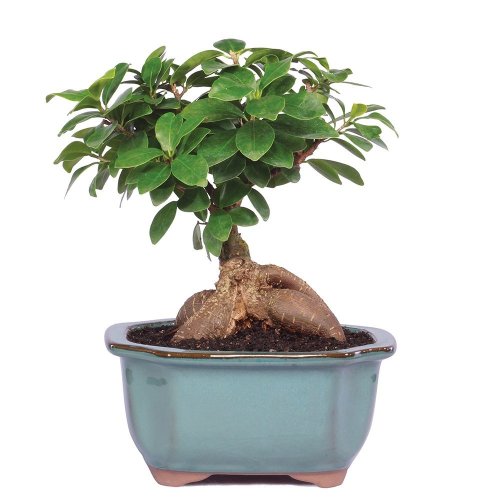
This Bodhi Day, I gifted myself a bodhi tree, just like the one that the Buddha was sitting under when he was enlightened. Almost just like it. This bonsai ficus religiosa (above) is about 8 inches high, so I will not be sitting under it. Or on it.

I can’t leave this post without letting the Buddha speak for himself. This is from the Dhammapada, a brief (423 verses in 26 chapters) collection of the sayings of the Buddha, the most succinct summary of the heart of Buddhism.

In keeping with the power of randomness, even on (or especially on) Bodhi Day, this is a random chapter from the Dhammapada:

ONE
Dichotomies

All experience is preceded by mind,
Led by mind,
Made by mind.
Speak or act with a corrupted mind,
And suffering follows
As the wagon wheel follows the hoof of the ox.

All experience is preceded by mind,
Led by mind,
Made by mind.
Speak or act with a peaceful mind,
And happiness follows
Like a never-departing shadow.

“He abused me, attacked me,
Defeated me, robbed me!”
For those carrying on like this,
Hatred does not end.

“She abused me, attacked me,
Defeated me, robbed me!”
For those not carrying on like this,
Hatred ends.

Hatred never ends through hatred.
By non-hate alone does it end.
This is an ancient truth.

Many do not realize that
We here must die.
For those who realize this,
Quarrels end.

Whoever lives
Focused on the pleasant,
Senses unguarded,
Immoderate with food,
Lazy and sluggish,
Will be overpowered by Māra,
As a weak tree is bent in the wind.

Whoever lives
Focused on the unpleasant,
Senses guarded,
Moderate with food,
Faithful and diligent,
Will not be overpowered by Māra,
As a stone mountain is unmoved by the wind.

Whoever is defiled
And devoid of self-control and truth,
Yet wears the saffron robe,
Is unworthy of the saffron robe.

Whoever has purged the defilements,
Is self-controlled, truthful,
And well established in virtue,
Is worthy of the saffron robe.

Those who consider the inessential to be essential
And see the essential as inessential
Don’t reach the essential,
Living in the field of wrong intention.

Those who know the essential to be essential
And the inessential as inessential
Reach the essential,
Living in the field of right intention.

As rain penetrates
An ill-thatched house,
So lust penetrates
An uncultivated mind.

As rain does not penetrate
A well-thatched house,
So lust does not penetrate
A well-cultivated mind.

One who does evil grieves in this life,
Grieves in the next,
Grieves in both worlds.
Seeing one’s own defiled acts brings grief and affliction.

One who makes merit rejoices in this life,
Rejoices in the next,
Rejoices in both worlds.
Seeing one’s own pure acts brings joy and delight.

One who does evil is tormented in this life,
Tormented in the next,
Is tormented in both worlds.
Here he is tormented, knowing, “I have done evil.”
Reborn in realms of woe, he is tormented all the more.

One who makes merit is delighted in this life,
Delighted in the next,
Is delighted in both worlds.
Here she is delighted, knowing, “I have made merit.”
Reborn in realms of bliss, she delights all the more.

One who recites many teachings
But, being negligent, doesn’t act accordingly,
Like a cowherd counting others’ cows,
Does not attain the benefits of the contemplative life.

One who recites but a few teachings
Yet lives according to the Dharma,
Abandoning passion, ill will, and delusion,
Aware and with mind well freed,
Not clinging in this life or the next,
Attains the benefits of the contemplative life.

The Dhammapada translated by Gil Fronsdal

Thanksgiving: How to Respond to Grateful and Ungrateful People

We have arrived at a holiday about gratitude, an element of so many traditions. Gratitude helps put us in our place—not so much a place below or beholden to others as a place connected to others.

The historic Huayan school of Buddhism is based on a very long (1200 pages in English translation) and very extravagant text known as the Flower Ornament Sutra. The text and its insights have contributed to the development of many current Buddhist streams.

Taigen Dan Leighton writes:

Among the Huayan tools for bringing the universal into our everyday experience are gathas, or verses, which include many practice instructions to be used as enlightening reminders in all kinds of everyday situations. Specifically, the eleventh chapter of the Flower Ornament Sutra, titled “Purifying Practice,” includes 140 distinct verses to encourage mindfulness in particular circumstances. Some of the following situations are cited: awakening from sleep; before, during, and after eating; seeing a large tree, flowing water, flowers blooming, a lake, or a bridge; entering a house; giving or receiving a gift; meeting teachers, or various other kinds of people; and proceeding on straight, winding, or hilly roads.

All the verses use the situations mentioned to encourage mindfulness and as reminders of the fundamental intention to help ourselves and others more fully express compassion and wisdom.

Among the verses are these two involving grateful and ungrateful people:

Seeing grateful people
They [enlightened beings] should wish that all beings
Be able to know the blessings
Of the Buddhas and enlightening beings.

Seeing ungrateful people
They should wish that all beings
Not increase the punishment
Of those who are bad.

The Flower Ornament Scripture: A Translation of the Avatamsaka Sutra by Thomas Cleary

The first of these verses is straightforward and positive: You see grateful people (you will see many of them at Thanksgiving) and you are reminded to wish that all people know the ways of enlightenment. Everybody feels good, and it all begins with witnessing gratitude.

The second situation might appear to be less positive. You see ungrateful people (you will not see many of them at Thanksgiving, at least not at your table), which may not make you feel good or feel good about them. But instead of feeling bad, you are advised to remember compassion and mercy—“wish that all beings not increase the punishment of those who are bad.”

Hard as it seems, along with giving and getting thanks, you might set aside those “punishments” you have in mind for “those who are bad.” That isn’t exactly gratitude, but it’s a close companion quality. On any Thanksgiving, and maybe on this one in particular.

A Very Short Primer on Veterans

1. When we as people of a nation order or ask others to fight for any cause, we must treat them, their service, and their families with the highest practical lifelong honor and healing, that is, with more than just symbols or rhetoric.

2. As we order or ask for that service, from the first we must study the causes that we are fighting for, in light of all our truest values, not just the values that are convenient, expedient, self-serving or inadequately considered.

3. While we will likely never be a world without warriors, we owe it to the warriors—past, present and future—to be peacemakers.

Yom Kippur Picnic

Emma Goldman’s dislike of religion is evidenced by her participation in events such as this [Yom Kippur Picnic], scheduled on Jewish holy days.
Jewish Women’s Archive

We were invited to a picnic this Saturday. We declined. Because it is Yom Kippur, a fast day and the holiest day on the Jewish calendar.

Curiosity led to discovering that there were once not only Yom Kippur Picnics but Yom Kippur Balls.

Eddy Portnoy writes in Tablet:

When Jews decide to chow down on Yom Kippur, it’s usually done clandestinely, sneaking tasty morsels in a dark pantry, or disappearing into a diner in some nearby non-Jewish neighborhood. But furtive noshing wasn’t always the heretical path of choice on the Day of Atonement. Just over a century ago, a range of leftists held massive public festivals of eating, dancing, and performance for the full 25 hours of Yom Kippur, not only as a way to fight for the their right to party, but to unshackle themselves from the oppressive religious dictates they grew up with. What does one do, after all, when prayers and traditional customs no longer hold any meaning yet you still want to be part of a Jewish community? Eating with intention on a fast day allows you, in one fell swoop, to thumb your nose at the religious establishment and create a secular Jewish identity.

These Yom Kippur Balls, organized initially by anarchists in the mid-1880s, started in London and migrated to New York and Montreal. Smaller nosh fests and public demonstrations were also celebrated by Jewish antinomians in other locales. Unorthodox Jews in interwar Poland could pull hundreds of locals into small venues on Yom Kippur in shtetls like Kalish and Chelm; in larger cities like Warsaw and Lodz, they could sell out 5,000-seat circuses. Heresy was big business; tickets for early 1890s Yom Kippur events cost 15 cents for anarchists: capitalists who deigned to attend paid double.

There’s no suggestions here about what Jews of any religious or political stripe should do about fasting or partying on Yom Kippur. As with all such things, there is what your society or community expects you to do, what your God demands that you do, and what your heart and mind tell you to do. If there is a paradise, Emma Goldman is probably there, still railing against injustice, still noshing on Yom Kippur.


Ohigan, Rosh Hashanah and Autumn: The Other Shore

“The goal of our life’s effort is to reach the other shore, Nirvana. Prajna paramita, the true wisdom of life, is that in each step of the way, the other shore is actually reached.”
— Shunryu Suzuki

These days in September, three celebrations coincide: Rosh Hashanah, the Jewish New Year; Ohigan, the twice-yearly Japanese celebration of the equinox; the autumn equinox itself.

One way to harmonize these is to look first at Ohigan. The name literally means “other shore”, and is taken two ways. There are the ancestors honored who have crossed over to the other shore. And there is the crossing over to enlightenment, on the path of the paramitas (perfections): giving (dāna), morality (śīla), patience or forbearance (kṣānti), effort (vīrya), concentration (dhyāna) and wisdom (prajñā).

Then there is Rosh Hashanah, the Birthday of the World, the start of Ten Days of Awe, during which through teshuva (turning), tefilla (prayer) and tzedaka (righteousness) we emerge by the time of Yom Kippur on the other shore as newer people in a new year.

It is autumn again. Summer is left behind again. We can live with giving, morality, patience, effort, concentration, or wisdom, or not. We hope at least to arrive safely on the other shore of winter, maybe more enlightened or newer.

Rosh Hashanah: Tashlich

On the first day of Rosh Hashanah, the custom of tashlich is to throw bread into a body of water, casting your sins away. (When no natural body of water is available, a well or even a bucket has been known to do.)

A passage from Micah is recited:

What god can compare with you; taking fault away,
pardoning crime,
not cherishing anger for ever
but delighting in showing mercy?
Once more have pity on us
tread down our faults
to the bottom of the sea
throw all our sins.
Micah 7:18-19, Jerusalem Bible translation

Fault, crime, anger, sins. Ourselves and others. Pardoning, mercy, pity. Hard for ourselves and others. And as delightful as ducks and fish eating bread on the lake.

Rosh Hashanah

If you believe that you can damage, then believe that you can fix.
If you believe that you can harm, then believe that you can heal.
Rebbe Nachman of Breslov (1772-1810)

Shana Tova! (A Good Year)

The Book of Ruth: Ivanka and Jared, Donald and Charles

It was reported that Ivanka Trump and Jared Kushner celebrated the Jewish holiday of Shavuot this week, though without much other detail given. It would be interesting to know more, given the connection between the holiday and their own current situation.

Shavuot began as an agricultural festival, celebrating the “first fruits” of the harvest season. It evolved into the holiday marking the giving of the Torah. Among the traditions associated with Shavuot is reading the Book of Ruth.

The Book of Ruth is considered one of the literary treasures of the Bible. It is often referred to and analyzed as a short story or novella. What a story it is. A woman and her daughter-in-law are separated by culture and religion but bound together—forever—by family. When their men die, what connects them is stronger than any force that might tear them apart. It is about loyalty, love and faith above all else, through the hardest times. These strong women are not an ancillary sideshow; they are the main event. They alone assure continuity and the future. No wonder it is thought possible that among the biblical books, this one might have been written by a woman.

We expect that Ivanka and Jared, as faithful Jews, read the Book of Ruth this week, but we can’t know what they make of it. Do they also feel that unbreakable obligation that overcomes the greatest adversity and testing? Before the current events, each of them probably faced some difficulties with their respective fathers. Now the stories of Donald Trump and Charles Kushner are entangled through their children. Those children, Ivanka and Jared, might well believe and say to those fathers, as Ruth said to Naomi, “wherever you go, I go.”

For more about Shavuot and the Book of Ruth, see this earlier post.