Attorney Troll

I came across the above image in my folders. I probably intended it to illustrate a post about Michael Cohen. I don’t recall. It is in no way a reflection of or commentary on lawyers in general. But it is too good to pass up.
I came across the above image in my folders. I probably intended it to illustrate a post about Michael Cohen. I don’t recall. It is in no way a reflection of or commentary on lawyers in general. But it is too good to pass up.

I don’t know the words or the enticements to move people to read the book On Tyranny: Twenty Lessons from the Twentieth Century. I wrote about it when it was released two months ago. I would write it about it every day. Because American democracy, and the values that support and enable American democracy, are under daily siege—from the highest levels of the republic itself. Using the vast history of tyrannical regimes—tyranny that exists elsewhere right now—we should learn how to respond and act constructively. Rather than running around as if our national hair was on fire or, worse, just giving up and giving in.
1. The book is cheap. Really cheap. $3.99 for the ebook. $6.39 for the paperback.
2. The book is short. Really short. 128 pages.
3. The book is great and essential. Some sample reviews:
“We are rapidly ripening for fascism. This American writer leaves us with no illusions about ourselves.” —Svetlana Alexievich, Winner of the Nobel Prize in Literature
“Timothy Snyder reasons with unparalleled clarity, throwing the past and future into sharp relief. He has written the rare kind of book that can be read in one sitting but will keep you coming back to help regain your bearings. Put a copy in your pocket and one on your bedside table, and it will help you keep going for the next four years or however long it takes.” —Masha Gessen
“Please read this book. So smart, so timely.” —George Saunders
“Easily the most compelling volume among the early resistance literature. . . . A slim book that fits alongside your pocket Constitution and feels only slightly less vital. . . . Clarifying and unnerving. . . . A memorable work that is grounded in history yet imbued with the fierce urgency of what now.” —Carlos Lozada, The Washington Post
“Snyder knows this subject cold. . . . It is impossible to read aphorisms like ‘post-truth is pre-fascism’ and not feel a small chill about the current state of the Republic. . . . Approach this short book the same you would a medical pamphlet warning about an infectious disease. Read it carefully and be on the lookout for symptoms.” —Daniel W. Drezner, The New York Times Book Review
“As Timothy Snyder explains in his fine and frightening On Tyranny, a minority party now has near-total power and is therefore understandably frightened of awakening the actual will of the people.” —Adam Gopnik, The New Yorker
“Snyder is superbly positioned to bring historical thinking to bear on the current political scene. . . . These unpretentious words remind us that political resistance isn’t a matter of action-movie heroics, but starts from a willingness to break from social expectations.” —Jeet Heer, The New Republic
“The perfect clear-eyed antidote to Trump’s deliberate philistinism. . . . These 128 pages are a brief primer in every important thing we might have learned from the history of the last century, and all that we appear to have forgotten.” —Tim Adams, The Guardian
“On Tyranny demands to be read.” —The Forward
“The manifesto we need. . . . Snyder detects dangerous trends in American politics that may be less visible to most citizens who cannot believe that our country, with its system of checks and balances, could succumb to illiberalism or authoritarianism.” —Darryl Holter, Los Angeles Review of Books
“Bracing. . . . On Tyranny is a call to action. . . . A brisk read packed with lucid prose.” —Vox
4. The book is popular:
#2 in Kindle Store > Kindle eBooks > Nonfiction > Politics & Social Sciences > Politics & Government > Specific Topics > Civics
#3 in Kindle Store > Kindle eBooks > Nonfiction > Politics & Social Sciences > Politics & Government > Ideologies & Doctrines > Democracy
#7 in Kindle Store > Kindle eBooks > History > Modern (16th-21st Centuries) > 20th Century
#5 in Books > Politics & Social Sciences > Politics & Government > Specific Topics > Civics & Citizenship
#6 in Books > Politics & Social Sciences > Politics & Government > Ideologies & Doctrines > Democracy
The chapters in On Tyranny:
Finally, “it can’t happen here” are infamous last words. And as the epigraph to the book says:
In politics, being deceived is no excuse.
—Leszek Kołakowski

Always the beautiful answer who asks a more beautiful question
E. E. Cummings, Introduction to New Poems (1938)
If you are a teacher or a student, it is the time of year to ask and answer questions. Actually, any time is the time for anyone to ask and answer questions.
The best line about questions comes from poet E. E. Cummings. Interestingly, it is not from one of his many poems. It is from the Introduction to his volume New Poems (1938), though the Introduction (see below) is pretty poetic and very Cummings.
Always the beautiful answer who asks a more beautiful question
It is easy to ask questions, harder to ask good and beautiful questions. Bad questions hardly generate good and beautiful answers. Good and beautiful questions ask for—demand—better and more beautiful answers.
I considered completing this post without an E. E. Cummings poem. But no:
you shall above all things be glad and young
For if you’re young,whatever life you wear
it will become you;and if you are glad
whatever’s living will yourself become.
Girlboys may nothing more than boygirls need:
i can entirely her only love
whose any mystery makes every man’s
flesh put space on;and his mind take off time
that you should ever think,may god forbid
and (in his mercy) your true lover spare:
for that way knowledge lies,the foetal grave
called progress,and negation’s dead undoom.
I’d rather learn from one bird how to sing
than teach ten thousand stars how not to dance
E. E. Cummings
Introduction to New Poems (1938)
The poems to come are for you and for me and are not for mostpeople– it’s no use trying to pretend that mostpeople and ourselves are alike. Mostpeople have less in common with ourselves than the squarerootofminusone. You and I are human beings;mostpeople are snobs. Take the matter of being born. What does being born mean to mostpeople? Catastrophe unmitigated. Socialrevolution. The cultured aristocrat yanked out of his hyperexclusively ultravoluptuous superpalazzo,and dumped into an incredibly vulgar detentioncamp swarming with every conceivable species of undesirable organism. Mostpeople fancy a guaranteed birthproof safetysuit of nondestructible selflessness. If mostpeople were to be born twice they’d improbably call it dying–
you and I are not snobs. We can never be born enough. We are human beings;for whom birth is a supremely welcome mystery,the mystery of growing:which happens only and whenever we are faithful to ourselves. You and I wear the dangerous looseness of doom and find it becoming. Life,for eternal us,is now’and now is much to busy being a little more than everything to seem anything,catastrophic included.
Life,for mostpeople,simply isn’t. Take the socalled standardofliving. What do mostpeople mean by “living”? They don’t mean living. They mean the latest and closest plural approximation to singular prenatal passivity which science,in its finite but unbounded wisdom,has succeeded in selling their wives. If science could fail,a mountain’s a mammal. Mostpeople’s wives could spot a genuine delusion of embryonic omnipotence immediately and will accept no substitutes.
-luckily for us,a mountain is a mammal. The plusorminus movie to end moving,the strictly scientific parlourgame of real unreality,the tyranny conceived in misconception and dedicated to the proposition that every man is a woman and any woman is a king,hasn’t a wheel to stand on. What their synthetic not to mention transparent majesty, mrsandmr collective foetus,would improbably call a ghost is walking. He isn’t a undream of anaesthetized impersons, or a cosmic comfortstation,or a transcedentally sterilized lookiesoundiefeelietastiesmellie. He is a healthily complex,a naturally homogenous,citizen of immorality. The now of his each pitying free imperfect gesture,his any birth of breathing,insults perfected inframortally milleniums of slavishness. He is a little more than everything,he is democracy;he is alive:he is ourselves.
Miracles are to come. With you I leave a remembrance of miracles: they are somebody who can love and who shall be continually reborn,a human being;somebody who said to those near him,when his fingers would not hold a brush “tie it to my hand”–
nothing proving or sick or partial. Nothing false,nothing difficult or easy or small or colossal. Nothing ordinary or extraordinary,nothing emptied or filled,real or unreal;nothing feeble and known or clumsy and guessed. Everywhere tints childrening,innocent spontaneaous,true. Nowhere possibly what flesh and impossibly such a garden,but actually flowers which breasts are amoung the very mouths of light. Nothing believed or doubted;brain over heart, surface:nowhere hating or to fear;shadow,mind without soul. Only how measureless cool flames of making;only each other building always distinct selves of mutual entirely opening;only alive. Never the murdered finalities of wherewhen and yesno,impotent nongames of wrongright and rightwrong;never to gain or pause,never the soft adventure of undoom,greedy anguishes and cringing ecstasies of inexistence;never to rest and never to have;only to grow.
Always the beautiful answer who asks a more beautiful question
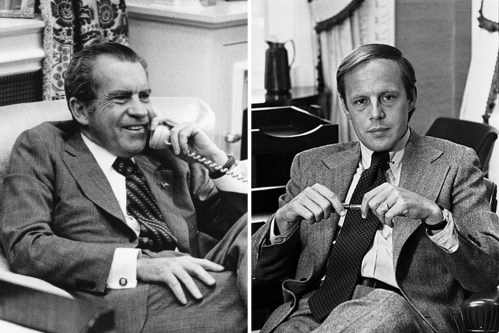
John Dean: I would say these people are going to cost a million dollars over the next two years.
President Nixon: We could get that. If you—on the money, if you need the money, I mean, you could get the money fairly easily. From the Russians. (sentence added)
The Nixon Tapes
You can be forgiven if you’re not thinking about Watergate in the context of current presidential corruption. It was a long time ago, and unlike Trump, Richard Nixon, while evil, was actually a very smart and capable man, who did a few good things and some very bad things as president.
I do think about Watergate, and today remembered one of the infamous conspirational conversations recorded on the Nixon Tapes. Here Nixon discusses with his White House Counsel John Dean paying a million dollars in hush money to the Watergate defendants. I wondered what it would have been like if Nixon suggested raising the money from the Russians—then as now our enemies.
Date: Wednesday, March 21, 1973 – 10:12am – 11:55am
Participants: Richard Nixon, John Dean
John Dean: Where are the soft spots on this? Well, first of all, there’s the problem of the continued blackmail—
President Nixon: Right.
Dean: —which will not only go on now, it’ll go on when these people are in prison, and it will compound the obstruction-of-justice situation. It’ll cost money. It’s dangerous. Nobody, nothing—people around here are not pros at this sort of thing. This is the sort of thing Mafia people can do: washing money, getting clean money, and things like that. We just don’t know about those things, because we’re not used to, you know, we’re not criminals. We’re not used to dealing in that business. It’s a—
President Nixon: That’s right.
Dean: It’s a tough thing to know how to do.
President Nixon: Maybe we can’t even do that.
Dean: That’s right. It’s a real problem as to whether we could even do it. Plus, there’s a real problem in raising money. [Attorney General John] Mitchell has been working on raising some money, feeling he’s got, you know, he’s got—he’s one of the ones with the most to lose. But there’s no denying the fact that the White House and [John] Ehrlichman, [Bob] Haldeman, and Dean are involved in some of the early money decisions.
President Nixon: How much money do you need?
Dean: I would say these people are going to cost a million dollars over the next two years.
Short pause.
President Nixon: We could get that.
Dean: Mm-hmm.
President Nixon: If you—on the money, if you need the money, I mean, you could get the money fairly easily.
Dean: Well, I think that we’re—
President Nixon: What I meant is, you could get a million dollars. And you could get it in cash. I know where it could be gotten.
Dean: Mm-hmm.
President Nixon: I mean, it’s not easy, but it could be done. From the Russians. (sentence added)

I watched a news panel discussing reports that Michael Cohen is distraught for his family and realizes that his business and professional life is over—not to mention the possibility of years in prison.
Some panelists expressed compassion for someone in his position. But another was less sympathetic, saying that this was the life he had chosen.
I can’t be sure, but this may have been meant to echo one of the many famous lines from the Godfather movies. In Godfather II, the dying Hyman Roth explains his attitude towards the killing of Moe Green, the man who invented modern Las Vegas. Roth knows that the Corleone family executed Green, but Roth explains to Michael Corleone why he set that fact aside:
HYMAN ROTH: There was this kid I grew up with; he was younger than me. Sorta looked up to me, you know. We did our first work together, worked our way out of the street. Things were good, we made the most of it. During Prohibition, we ran molasses into Canada… made a fortune, your father, too. As much as anyone, I loved him and trusted him. Later on he had an idea to build a city out of a desert stop-over for GI’s on the way to the West Coast. That kid’s name was Moe Greene, and the city he invented was Las Vegas. This was a great man, a man of vision and guts. And there isn’t even a plaque, or a signpost or a statue of him in that town! Someone put a bullet through his eye. No one knows who gave the order. When I heard it, I wasn’t angry; I knew Moe, I knew he was head-strong, talking loud, saying stupid things. So when he turned up dead, I let it go. And I said to myself, this is the business we’ve chosen; I didn’t ask who gave the order, because it had nothing to do with business!

“Defense Stocks Rally As U.S. Exit From Iran Deal Adds To Mideast Tension”
There are so many messages in today’s headline from Investor’s Business Daily. None of them good.
1. No matter how enlightened and high-minded—or unenlightened and low-minded—the proponents of war are, there are always going to be those who profit from it. The promise of profiting from war is one way to convince influential people and enterprises to support a war footing. That is not cynicism; it is history.
2. The list of Mideast wars, past and present, is too long to list here. Also long is the list of thoughtful people who think the regional situation right now is more tense than it has been in a very long time, and think that the Trump/Bolton position, popular mostly among the extreme and the extremely nationalistic and uninformed, only adds fuel to the flames.
3. Jared Kushner is officially in charge of peace in the Mideast. So we can all rest easy. Unfortunately, among other poor decisions, he invested in money-losing buildings instead of profitable defense stocks, so he is not sleeping all that well. Wherever he is hiding.

In America, and in much of the world, we pay attention to Trump every day, sometimes for hours on end. We do it because he is a powerful public executive who can affect many lives. We also do it because he is there, a major natural disaster or train wreck, fascinating even if it doesn’t affect us. This is exactly what Trump wants, the only thing he wants. If that attention used to be voluntary, he believes it is now mandatory because he is the most powerful person in America and the world.
Forbes just released its ranking of The World’s Most Powerful People:
This year’s list highlights the consolidation of power in the hands of an elite few. Xi Jinping, General Secretary of the Communist Party of China, seizes the top spot for the first time ever after China’s congress amended its constitution in March, broadening his influence and eliminating term limits. He enjoys a cult of personality not seen since Chairman Mao.
Xi’s elevation to the world’s most powerful person unseats Russian President Vladimir Putin (#2), who held the top spot for an unprecedented four consecutive years. Putin has ruled Russia since May of 2000, and this year he was re-elected to a fourth term with nearly 77 percent of the vote. That’s the largest margin of victory for any candidate for the office since the fall of the Soviet Union.
One year into his term, President Donald Trump falls to the No. 3 spot. Trump has seen limited success pushing his agenda through a Congress controlled by his own party, is under investigation by multiple law enforcement agencies, and can’t shake off scandals arising from his personal and business life –but he’s still Commander in Chief of the world’s greatest economic and military power….
To compile the ranking of The World’s Most Powerful People, we considered hundreds of candidates from various walks of life all around the globe, and measured their power along four dimensions. First, we asked whether the candidate has power over lots of people. Pope Francis, ranked #6, is the spiritual leader of more than a billion Catholics. Doug McMillon (#23), is the CEO of the world’s largest private employer, Wal-Mart Stores, with more than 2.3 million workers around the globe.
Next we assessed the financial resources controlled by each person. Are they relatively large compared to their peers? For heads of state we used GDP, while for CEOs, we looked at measures like their company’s assets and revenues. When candidates have a high personal net worth, like the world’s richest man, Jeff Bezos (#5), we also took that into consideration. In certain instances we considered other valuable resources at the candidate’s disposal, like access to oil reserves.
Then we determined if the candidate is powerful in multiple spheres. There are only 75 slots on our list –one for approximately every 100 million people on the planet– so being powerful in just one area is often not enough. Our picks project their influence in myriad ways: Elon Musk (#25) has power in the auto business through Tesla Motors, in the aerospace industry through SpaceX, because he’s a billionaire, and because he’s a highly respected tech visionary.
Lastly, we made sure that the candidates actively used their power. North Korean dictator Kim Jong-un (#36) has near absolute control over the lives of the 25 million people who live in his country, and is known to punish dissent with death.
To calculate the final rankings, a panel of Forbes editors ranked all of our candidates in each of these four dimensions of power, and those individual rankings were averaged into a composite score. This year’s list comes at a time of rapid and profound change, and represents our best guess about who will matter in the year to come.
If you feel the need to pay constant or even obsessive attention to a powerful person, let it be someone—anyone—except Trump. Just about anybody on the list below may be smarter, more interesting, more accomplished, and in many cases more important than Trump.
| Rank | Name | Organization | Age |
| #1 | Xi Jinping | China | 64 |
| #2 | Vladimir Putin | Russia | 65 |
| #3 | Donald Trump | United States | 71 |
| #4 | Angela Merkel | Germany | 63 |
| #5 | Jeff Bezos | Amazon.com | 54 |
| #6 | Pope Francis | Roman Catholic Church | 81 |
| #7 | Bill Gates | Bill & Melinda Gates Foundation | 62 |
| #8 | Mohammed bin Salman Al Saud | Saudi Arabia | 32 |
| #9 | Narendra Modi | India | 67 |
| #10 | Larry Page | 45 | |
| #11 | Jerome H. Powell | United States | 65 |
| #12 | Emmanuel Macron | France | 40 |
| #13 | Mark Zuckerberg | 33 | |
| #14 | Theresa May | United Kingdom | 61 |
| #15 | Li Keqiang | China | 62 |
| #16 | Warren Buffett | Berkshire Hathaway | 87 |
| #17 | Ali Hoseini-Khamenei | Iran | 78 |
| #18 | Mario Draghi | European Central Bank | 70 |
| #19 | Jamie Dimon | JPMorgan Chase | 62 |
| #20 | Carlos Slim Helu | America Movil SAB de CV (ADR) | 78 |
| #21 | Jack Ma | Alibaba Group | 53 |
| #22 | Christine Lagarde | International Monetary Fund | 62 |
| #23 | Doug McMillon | Wal-Mart Stores | 51 |
| #24 | Tim Cook | Apple | 57 |
| #25 | Elon Musk | Tesla | 46 |
| #26 | Benjamin Netanyahu | Israel | 68 |
| #27 | Ma Huateng | Tencent Holdings | 46 |
| #28 | Larry Fink | BlackRock | 65 |
| #29 | Akio Toyoda | Toyota Motor | 62 |
| #30 | John L. Flannery | General Electric | 56 |
| #31 | Antonio Guterres | United Nations | 69 |
| #32 | Mukesh Ambani | Reliance Industries Ltd. | 61 |
| #33 | Jean-Claude Juncker | European Union | 63 |
| #34 | Darren Woods | ExxonMobil | 53 |
| #35 | Sergey Brin | Alphabet | 44 |
| #36 | Kim Jong-un | North Korea | 34 |
| #37 | Charles Koch | Koch Industries | 82 |
| #38 | Shinzo Abe | Japan | 63 |
| #39 | Rupert Murdoch | News Corp | 87 |
| #40 | Satya Nadella | Microsoft | 50 |
| #41 | Jim Yong Kim | World Bank | 58 |
| #42 | Stephen Schwarzman | Blackstone Group | 71 |
| #43 | Khalifa bin Zayed Al-Nahyan | United Arab Emirates | 70 |
| #44 | Haruhiko Kuroda | Japan | 73 |
| #45 | Abdel Fattah el-Sisi | Egypt | 63 |
| #46 | Li Ka-shing | CK Hutchison Holdings | 89 |
| #47 | Lloyd Blankfein | Goldman Sachs Group | 63 |
| #48 | Recep Tayyip Erdogan | Turkey | 64 |
| #49 | Bob Iger | Walt Disney | 67 |
| #50 | Michel Temer | Brazil | 77 |
| #51 | Michael Bloomberg | Bloomberg | 76 |
| #52 | Wang Jianlin | Dalian Wanda Group | 63 |
| #53 | Mary Barra | General Motors | 56 |
| #54 | Moon Jae-in | South Korea | 65 |
| #55 | Masayoshi Son | Softbank Corp. | 60 |
| #56 | Bernard Arnault | LVMH Moet Hennessy Louis Vuitton | 69 |
| #57 | Justin Trudeau | Canada | 46 |
| #58 | Robin Li | Baidu | 49 |
| #59 | Michael Dell | Dell | 53 |
| #60 | Hui Ka Yan | Evergrande Real Estate Group | 59 |
| #61 | Lee Hsien Loong | Singapore | 66 |
| #62 | Bashar al-Assad | Syria | 52 |
| #63 | John Roberts | United States | 63 |
| #64 | Enrique Pena Nieto | Mexico | 51 |
| #65 | Ken Griffin | Citadel LLC | 49 |
| #66 | Aliko Dangote | Dangote Group | 61 |
| #67 | Mike Pence | United States | 58 |
| #68 | Qamar Javed Bajwa | Pakistan | 57 |
| #69 | Rodrigo Duterte | Philippines | 73 |
| #70 | Abigail Johnson | Fidelity Investments | 56 |
| #71 | Reed Hastings | Netflix | 57 |
| #72 | Robert Mueller | United States | 73 |
| #73 | Abu Bakr al-Baghdadi | Islamic State | 46 |
| #74 | Joko Widodo | Indonesia | 56 |
| #75 | Gianni Infantino | FIFA | 48 |

I cannot fully explain James Hillman in this space, not briefly, not at all. If there is a badge, it might say psychologist, or Jungian psychologist, but that would be misleading, limiting and wrong. Thomas Moore, in his Prologue to The Essential James Hillman: A Blue Fire, begins with this:
James Hillman is an artist of psychology. If it sounds odd to call a psychologist an artist, then you, the reader, know your task as you take up this anthology. You will be challenged all along the way to rethink, to re-vision, and to reimagine. The difficulty in reading Hillman is not to learn a new bag of techniques or a new conceptual system. Hillman demands nothing short of a new way of thinking. He takes psychoanalysis out of the context of medicine and health, not only in the obvious ways, rejecting the medical model, but in subtle ways: asking us to give up fantasies of cure, repair, growth, self-improvement, understanding, and well-being as primary motives for psychological work. He is more a painter than a physician, more a musician than a social scientist, and more an alchemist than a traditional philosopher.
Hillman has written many books and articles, but A Blue Fire, made up of short passages from many works, is what to read to get the essence. Choosing a representative excerpt is impossible, since it is bound to miss most other points Hillman makes. But the excerpt below, covering the nature of illiteracy, silence and imagination, is close to my heart, and to some of our life in 2018: “An education that in any way neglects imagination is an education into psychopathy. It is an education that results in a sociopathic society of manipulations. We learn how to deal with others and become a society of dealers.”
Why have we as a nation become more and more illiterate? We blame television and the computer, but they are not causes. They are results of a prior condition that invited them in. They arrived to fill a gap. When imaginative ability declines, other ways to communicate appear. These ways work even though they too are dyslexic in structure: simultaneity of bits, odd juxtapositions, messages that do not move linearly from left to right. Yet television and personal computers communicate.
Evidently, reading does not depend solely on the ordering of words or the ordering of letters in the words. Indeed, poets use dyslexic structures deliberately. Reading depends on the psyche’s capacity to enter imagination. Reading is more like dreaming, which, too, goes on in silence. Our illiteracy reflects our educative process away from the silent grounds of reading: silent study halls and quiet periods, solitary homework, learning by heart, listening through a whole class without interruptions, writing an essay exam in longhand, drawing from nature instead of lab experiments. This long neglect of imaginational conditions that foster reading—Sputnik and the new math; social problems and social relatedness; mecentered motivation; the confusion of information with knowledge, of opinion with judgment, and trivia with sources; communications as messages by telephone calls and answering machines rather than as letter writing in silence; learning to speak up without first having something learned to say; multiple choice and scoring as a test of comprehension—has produced illiteracy.
The human person as a data bank does not need to read more than functionally. A data bank deciding yes or no on the basis of feedback (i.e., reinforcement) need not imagine beyond getting, storing, and spending. Just get the instructions right; never mind the content. Learn the how rather than the what with its qualities, values, and subtleties. Then the human agent becomes an incarnated credit card performing the religious rituals of consumerism. You need only be able to sign your name in the space marked Xy like an immigrant, like a slave, or a …
Or a psychopath. Descriptions of psychopathy, or sociopathic personalities, speak of their inability to imagine the other. Psychopaths are well able to size up situations and charm people. They perceive, assess, and relate, making use of any opportunity. Hence their successful manipulations of others. But the psychopath is far less able to imagine the other beyond a fantasy of usefulness, the other as a true interiority with his or her own needs, intentions, and feelings. An education that in any way neglects imagination is an education into psychopathy. It is an education that results in a sociopathic society of manipulations. We learn how to deal with others and become a society of dealers.
James Hillman
“Right to Remain Silent”
Journal of Humanistic Education and Development (1988)
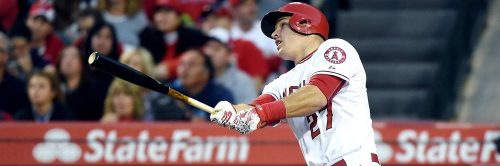
“As always, his personal stats continue to give off a beam of light.”
Mike Lupica, MLB.com
Mike Trout of the Los Angeles Angels is universally considered the best player in Major League Baseball. The only questions remaining are how much better he might get and whether he may be the best to ever play the game. Seriously, and seriously amazing since Trout is only 26 and has been in the majors only since 2011.
I’ll let veteran sportswriter Mike Lupica take over the story. But there is one more point to make about Trout. Along with overwhelming acknowledgment of his once-in-a-generation talent, he is universally regarded for his humility and lack of showmanship. He only wants to do three things: play baseball as well as he can for his team, get better every day at playing baseball, and be known and seen for playing baseball and not for anything else he says or does.
For those of us who are not nearly the best, let alone the best ever, that should be inspiring and aspirational.
Mike Lupica
MLB.com
The question for the Angels’ Mike Scioscia, who has seen it all from Mike Trout from the moment Trout hit the big leagues in 2011, was simple enough. It was about Trout’s capacity, if he has one, to still surprise his own manager, as Trout continues to be the greatest star of his sport and one of the great stars of American sports, even if he is not discussed nearly often enough outside baseball the way he ought to be, which means as baseball’s LeBron….
It doesn’t work that way in baseball, or for Trout, who is the best player of his time, on his way, if he is blessed by good health, to someday being called one of the most complete of all time. To this point, Trout has only played three postseason games in his career. He has just one postseason home run in the books. LeBron always has the postseason stage, and the brightest lights there are. So does someone like Tom Brady, who has played eight Super Bowls in his own career.
Not Trout, at least not so far.
It does not change who Trout is and what he has done in baseball and keeps doing, before his 27th birthday. From the time he played his first full season for the Angels in 2012, the only time he has finished worse than second in the American League’s MVP Award voting was last season, when he got hurt and only played 114 games. Even with all the missed time, Trout finished fourth in the voting. So he has two MVPs already, three seconds, a fourth. As always, his personal stats continue to give off a beam of light.
When I suggested to Reggie Jackson, who lives in southern California and has had his own ringside seat to the way Trout plays the game, that Trout is the superstar who sometimes seems to be hiding in plain sight, Reggie said, “No. We all know that he’s the best player.”
Added Reggie: “You know how we always talk about five-tool players [hitting for average, hitting for power, base running, throwing, and fielding]? You watch Trout play and sometimes you swear he’s got even more than that. He checks boxes that you didn’t even know were boxes.”
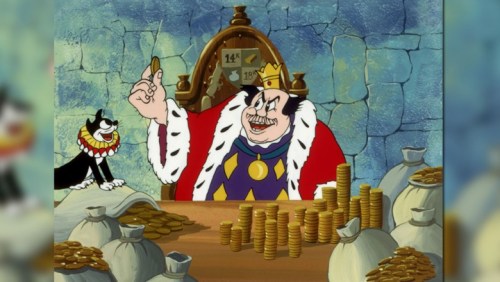
He’s King Midas with a curse.
He’s King Midas in reverse.
He’s not the man to hold your trust,
Everything he touches turns to dust in his hands.
King Midas in Reverse, The Hollies
From The Hill:
President Trump on Friday thanked Kanye West during his speech at the National Rifle Association’s (NRA) annual convention, giving the artist credit for his rising popularity in the polls among African Americans.
“And by the way, Kanye West must have some power, because you probably saw, I doubled my African-American support numbers,” the president told those gathered in Dallas, Texas. “I went from 11 to 22 in one week.”
“Thank you Kanye, thank you,” he added….
West has sparked outrage and intense debate among the hip-hop and African-American communities in recent days with tweets in support of Trump, with some celebrities expressing support for West while others, including many of his fans, have expressed disappointment.
“We are both dragon energy. He is my brother,” West tweeted in one of his pro-Trump messages starting April 25….
Trump has previously thanked West for the support on Twitter, tweeting that it was “very cool!”
Kanye is only the latest in a long series of those who have seen their careers or lives turn to “dirt” (to be polite) simply by having anything to do with Trump. Sometimes it happens relatively quickly, as in the case of Dr. Ronny Jackson. Sometimes it happens after years and years, as in the case of Michael Cohen. Besides being an exceptional artist—which he has been—Kanye seems to have a bunch of other problems, not totally related to his Trump thing. But he seems to have been able to overcome some of those difficulties—until this. Being thanked by Trump at the NRA Convention is almost certainly the coup de grace.
The moral of the story: If you think it necessary or advantageous to get in bed with a pathological narcissist, know that you will wake up alone and covered in dirt. Possibly under a bus. Which is never very cool.
 Bob Schwartz