Bob Schwartz

Bernie Sanders and Pope Francis

Bernie Sanders at the Vatican

This kind-of-cute headline from Politico sort of says it all.

Bernie’s fanboy moment: A meeting with Pope Francis

As you may know, Bernie Sanders was invited to a conference at the Vatican on issues related to economic justice. He interrupted his New York campaign to attend, gave an excellent speech that frequently cited the Pope’s own writings, but was told that the Pope would not be able to meet with him and others at the conference.

Then, at the last minute, the Pope was able to meet for five minutes with Bernie and his wife Jane. It was thrilling to hear that. It is unimaginable to conceive what it must have been like for Bernie, who as the headline suggests, is a huge fan of the Pope and his thinking on economic issues.

In case you think this is all about electoral politics, think again.

A major American politician has met with the Pope, based on a shared vision of economic justice. That vision comes from a background of Jewish fairness and compassion in one case and from the deepest, most Jesus-based tenets of the Catholic Church in the other. This doesn’t happen every day, or month, or year.

It is a unique and sweet moment for those who care about the future of America and the world. If that sounds a little grandiose, maybe believing big is exactly what we need.

Garbage Disposal of the Mind

Garbage Disposal

Garbage Disposal of the Mind

Sinkhole for waste
From things
Expensive and cheap
Raw and cooked
No longer
Useful or needed.
Very noisy.


Unicorn Island

Unicorn Island

Unicorn Island

What difference does it make
Where the sun rises
What the time zone?
The earth and sun
Don’t care.

The bag man
Leisurely strolls
Past the French watch store.
The restaurants
Are ready from last night
White tablecloths
White napkins rolled.
Past an apartment courtyard
The smell of breakfast.

The time and place
The names and lives
No place
This morning
Is an island.

Note: The title requires an explanation. This is a scene in Westwood in Los Angeles. I love L.A.: sometime resident, recent visitor. Walking down Wilshire, I saw a billboard for a new YouTube movie called Unicorn Island. I decided that this was the perfect new name for the city. Filled with unicorns, a bit of an island. It might not catch on, but for me, from now on, L.A. is always Unicorn Island.

Baseball: The Green Fields of the Mind

The Major League Baseball season begins this weekend.

I’ve read, written and talked about baseball almost as passionately as about anything else in my life. Baseball people understand. Others may not.

Looking for something else to say besides what I’ve said before, including in this blog, I’ve decided instead to repeat myself. Or, to be precise, to repeat my repeating what somebody else said.

The fifth post on this blog was four years ago, just as that baseball season was beginning. The post, replicated here, speaks for itself. Even if you’re just a fan of life and not of baseball, there is something for you here.


A. Bartlett Giamatti was the president of Yale University and, for a brief time until his untimely death in 1989, the Commissioner of Major League Baseball.

Besides his commitment to baseball, Giamatti was a man of letters who left behind some remarkable writing about the game. None is more moving and famous than his short essay The Green Fields of the Mind.

On the occasion of a new baseball season, here is an excerpt. Whoever you root for, whatever the season or the game – baseball, politics, art, religion, business, love, life – it offers hard to accept wisdom and the semi-sweet opposite of comfort:

It breaks your heart. It is designed to break your heart. The game begins in the spring, when everything else begins again, and it blossoms in the summer, filling the afternoons and evenings, and then as soon as the chill rains come, it stops and leaves you to face the fall alone. You count on it, rely on it to buffer the passage of time, to keep the memory of sunshine and high skies alive, and then just when the days are all twilight, when you need it most, it stops…

It breaks my heart because it was meant to, because it was meant to foster in me again the illusion that there was something abiding, some pattern and some impulse that could come together to make a reality that would resist the corrosion; and because, after it had fostered again that most hungered-for illusion, the game was meant to stop, and betray precisely what it promised…

And there are others who were born with the wisdom to know that nothing lasts. These are the truly tough among us, the ones who can live without illusion, or without even the hope of illusion. I am not that grown-up or up-to-date. I am a simpler creature, tied to more primitive patterns and cycles. I need to think something lasts forever, and it might as well be that state of being that is a game; it might as well be that, in a green field, in the sun.

Four Freedoms Passover

Four Freedoms - Norman Rockwell

Passover is coming. The first seder meal will be held on the evening of Friday, April 22. Even for non-observant Jews, this holiday is frequently a time for participation. One estimate says that 80% of Jews attend some sort of seder.

This year I suggest we go way back for a Passover theme. Back to FDR’s Four Freedoms from 1941.

The overall order of the seder (“seder” actually means order) has been standardized for centuries—the blessings, the rituals, the symbolic food and drink, the songs, and most of all, the recitation of the events of the exodus from Egypt. But the text and the form and the meaning have been subject to remixing, some of it pretty adventurous.

In the modern era, the freedom embedded in Passover has been extended to all sorts of concerns. During the time of the civil rights movement, the obvious connection was made between ancient and modern oppression, and the struggle to end that oppression.

In 1969 Rabbi Arthur Waskow created a Freedom Seder, making this connection more direct. He explains:

One of my earliest and warmest memories is that of my father reciting the Dayenu, the chant of rebellion, liberation, travail, and the creation of a new law that is the story of Passover. One of my latest and warmest memories is that of working with my wife and children to make of our own Passover Seder something that would speak to our deep concerns about our selves and our world.

Our efforts became sharper and more urgent in 1968, when the Passover came one bare week after the murder of Martin Luther King, the April uprising of black Washington against the blank-eyed pyramid-builders of our own time, and the military occupation of our city. Who in
those days could forget that the prophet King had remembered Moses?– had spoken of how he had been to the mountain-top, had seen the promised land, but might never enter. … And then we realized that in 1969, the third night of Passover, April 4, would be the first anniversary of King’s death.

Since then, Passover has become the platform for seders centered around all kinds of affliction, oppression, aspiration and freedom. Women. LGBT. Poverty. Peace. The Earth. And so on.

One example of this concerns a new tradition that is widely practiced. The seder plate contains a number of foods symbolizing the story of the Egyptian captivity and the fight for freedom. Susannah Heschel conceived of one more thing to add:

So how was it that the orange found its place on the seder plate as a Passover symbol of feminism and women’s rights?

Susannah Heschel, daughter of Abraham Joshua Heschel and a scholar in her own right, says that at the height of the Jewish feminist movement of the 1980s, she was inspired by the abundant new customs expressing women’s viewpoints and experiences and started placing an orange on the seder plate.

At an early point in the seder, she asked each person to take a segment of the orange, make the blessing over fruit and eat the segment in recognition of gay and lesbian Jews and of widows, orphans, Jews who are adopted and all others who sometimes feel marginalized in the Jewish community. She encouraged each guest to spit out the seeds in their orange segment to reject homophobia and hatred. The orange suggests the fruitfulness for all Jews when everyone in our community is a contributing and active member of Jewish life. (From The Wandering Is Over Haggadah, JewishBoston.com)

On January 6, 1941 President Franklin D. Roosevelt delivered an historic State of the Union Address. The world was increasingly gripped by brutal tyranny. On top of that, America was still recovering from the effects of the Great Depression. And it seemed almost impossible for the U.S. to stay out of the global fight for freedom.

In the address, FDR summarized what freedom meant—and why we would fight for it, here and abroad. That statement became known as the Four Freedoms–Freedom of Speech, Freedom of Worship, Freedom from Want, Freedom from Fear:

In the future days, which we seek to make secure, we look forward to a world founded upon four essential human freedoms.

The first is freedom of speech and expression—everywhere in the world.

The second is freedom of every person to worship God in his own way—everywhere in the world.

The third is freedom from want—which, translated into world terms, means economic understandings which will secure to every nation a healthy peacetime life for its inhabitants—everywhere in the world.

The fourth is freedom from fear—which, translated into world terms, means a world-wide reduction of armaments to such a point and in such a thorough fashion that no nation will be in a position to commit an act of physical aggression against any neighbor—anywhere in the world.

That is no vision of a distant millennium. It is a definite basis for a kind of world attainable in our own time and generation. That kind of world is the very antithesis of the so-called new order of tyranny which the dictators seek to create with the crash of a bomb.

Some will point out the hypocrisies and ironies of the statement. At that point in American history, millions were not free and were under attack because of their race, religion, and economic circumstances. Maybe the biggest irony of all is that the final call for disarmament and the final phrase “crash of a bomb” ultimately faced the reality of a horrific war and an unthinkable bomb to end it.

But as a goal and aspiration, the Four Freedoms still ring out. Maybe we can ring them this Passover.

The posters above are by Norman Rockwell. Maybe more famous than FDR’s speech are the propaganda posters that Rockwell painted based on the Four Freedoms. As with the speech, some complain that Rockwell’s America was over-idealized and far too white. Probably so, and the images themselves may look quaint and, from today’s perspective, backward looking.

To counter that, following are a couple of works from Ben Shahn, an illustrator who was contemporary with Rockwell, artistically his equal, culturally his opposite:

Ben Shahn was born in Kovno, Russia on September 12, 1898 to Joshua Hessel and Gittel (Lieberman) Shahn and died on March 14, 1969. A Jewish-born artist, muralist, social activist, photographer and teacher, he is best known for his works of Social realism…From May to June of 1933, Shahn served as an assistant to Diego Rivera while the artist executed the infamous Rockefeller Center mural. By circulating a petition among the workers to keep the mural on display, Shahn played an important role in fanning the controversy.

Among his many famous works, in 1930 Shahn created a series of watercolor drawings for a Passover Haggadah. In 1965 these drawings were incorporated into a complete haggadah. Here, in an illustration called The Bread of Affliction, the hand of God leads the people out Egypt:

Bread of Affliction 2 - Ben Shahn

And here is a bit of Shahn’s later work, part of a series of union posters urging people to register and vote:

M25958-1 001
Happy Passover! Let freedom ring!

Shapes

Circle Triangle Square - Sengai Gibon

As day begins
I sketch
Circle
Triangle
Square.
They are everywhere
I look.
Appearing
Disappearing
Reappearing.

Illustration: Circle, Triangle, Square by Sengai Gibon (1750 – 1837)

Outsmarting a Coffee Machine

Zen Tea

When I arrive at my hotel room, I find a very modern coffee machine. Very smart. It tells me to place the coffee pod in its holder. Close the lid. Another lid opens to accept water. Pour in water and close that lid. Place the cup on the pedestal, which it then knows is in place. Press the brew button. And in a matter of seconds, hot coffee.

But what if I just want hot water? Then I have to outsmart it. When it directs me to place the coffee pod in its holder, I don’t. I just pretend. I put the water in the tank, put the cup in place, and proceed as if what I want, what I am expecting, is a cup of coffee. What it gives me instead, what I want instead, is simply a cup of hot water. Which I can then use for any of the things you can do with hot water. Such as making a cup of tea with a teabag.

The machine is smart. Or I am smart. The machine is stupid. Or I am stupid.

Have a cup of tea.


Zhaozhou’s Cup of Tea
(Koan 233 of Zen Master Dogen’s Three Hundred Koans)

MAIN CASE

Zhaozhou asked a newly arrived monk, “Have you been here before?”

The monk said, “Yes, I have been here.”

Zhaozhou said, “Have a cup of tea.”

Later he asked another monk, “Have you been here before?”

The monk said, “No, I haven’t been here.”

Zhaozhou said, “Have a cup of tea.”

The monastery director then asked Zhaozhou, “Aside from the one who has been here, why did you say ‘Have a cup of tea’ to the one who had not been here?”

Zhaozhou said, “Director.”

The director responded, “Yes?”

Zhaozhou said, “Have a cup of tea.”

COMMENTARY

In the real truth, there is no other thing that is present. In worldly truth, the ten thousand things are always present. We should clearly understand that real truth and worldly truth are nondual and that this, in and of itself, is the highest meaning of the holy truths.

The monastery director was lost in the differences between the two monks, so Zhaozhou moved in all directions at once to help him see it. If you go to the words to understand this, you will miss it. If, however, you see into it directly, it will be like the bottom falling out of a bucket. Nothing remains. How do you see into it directly? Have a cup of tea.

Beyond Anger, Again

Beyond Anger

Almost exactly two years ago, I posted about a free book from Shambhala Publications, Beyond Anger: How to Hold On to Your Heart and Your Humanity in the Midst of Injustice.

At that moment, in March 2014, the most prominent global issue was the Russian invasion of Ukraine. But it was, of course, not the only critical issue or hotspot.

Shambhala had published Beyond Anger the previous year:

In July 2013, multiple bombs exploded in Bodh Gaya, India, in and around the holiest Buddhist pilgrimage site, the Mahabodhi temple that marks the spot where the Buddha attained enlightenment. In response, Shambhala Publications offers this free eBook consisting of excerpts from some of our books from a variety of Buddhist traditions that encapsulate values of love and nonviolence, which we can all practice ourselves.

Today there was a suicide bombing in Lahore, Pakistan. Earlier this week were the bombings in Brussels. Not to mention the other less reported breaches of peace around the world. Not to mention political battles, here and abroad, laced with pointless poison. Not to mention whatever tomorrows bring.

Beyond Anger is a very good little book. And it is free. Please consider downloading it, reading it, and sharing it.

It also helps to recognize that many conflicts will not be resolved in a single encounter. Some conflicts might not be resolved for a very long time. Yet whether or not you succeed in resolving a conflict that you observe or are yourself involved in, you always have options. Whatever happens, you can work on yourself. In order not to become overwhelmed or disturbed while a conflict is taking place, you can cultivate your own inner qualities. If you can develop your qualities and remain true to your own pure aspirations, at the very least you will always be able to take heart in knowing that there is one less harmful person in the world.

Two Thoughts on the Passion: The Buddha and Bob Dylan


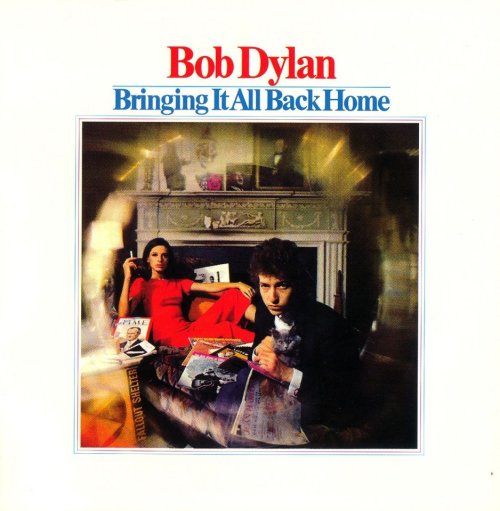
Bringing It All Back Home

“He not busy being born is busy dying.”

For anyone, Christian or not, the story of Easter is remarkable. Story, that is, not necessarily treated either as a story told or as a history chronicled.

Two of a thousand thoughts.

1.

The Buddhist conception of rebirth is complicated, beyond my simple and simplest understanding. So consider this just a summary and a thought about something of nearly infinite scope.

The realization that we are bound to grow old and die breaks the spell of infatuation cast over us by sensual pleasures, wealth, and power. It dispels the mist of confusion and motivates us to take fresh stock of our purposes in life. We may not be ready to give up family and possessions for a life of homeless wandering and solitary meditation, but this is not an option the Buddha generally expects of his householder disciples. Rather, as we saw above, the first lesson he draws from the fact that our lives end in old age and death is an ethical one interwoven with the twin principles of kamma and rebirth. The law of kamma stipulates that our unwholesome and wholesome actions have consequences extending far beyond this present life: unwholesome actions lead to rebirth in states of misery and bring future pain and suffering; wholesome actions lead to a pleasant rebirth and bring future well-being and happiness. Since we have to grow old and die, we should be constantly aware that any present prosperity we might enjoy is merely temporary. We can enjoy it only as long as we are young and healthy; and when we die, our newly acquired kamma will gain the opportunity to ripen and bring forth its own results. We must then reap the due fruits of our deeds. With an eye to our long-term future welfare, we should scrupulously avoid evil deeds that result in suffering and diligently engage in wholesome deeds that generate happiness here and in future lives.

In the Buddha’s Words: An Anthology of Discourses from the Pali Canon

My own take is that these rebirths are not a succession of lives, in the sense of multiple spans, but within this one life, this span of decades. We are constantly offered the opportunity to be new, based on who we have been but also on who we will be—who we will ourselves through thoughts and actions to be. If this sounds somewhat like the premise of Christian rebirth—of being born again—it might be.

(Note: To add yet another layer, Zen Master Bankei   talked about the unborn, that is, the unborn Buddha mind. When we realize that there is a reality that is there even before birth, we are marvelously illuminated. Not being born, we are not even subject to rebirth. But that’s another story.)

2.

Thinking about the story of the death and resurrection of Jesus, a soundtrack came to mind: Bob Dylan’s song It’s Alright, Ma (I’m Only Bleeding), from the album Bringing It All Back Home (1965).

I looked to see whether Dylan had ever talked about a connection between the song and the Bible story. At first glance, it looks like not.

Maybe I’m just reaching, the way exegetes sometimes do, but it seems clear to me. If you’re not familiar with the song, please read the lyrics (below) and listen to the track. As a poem, it is up there with the classics of modern beat poetry, such as Allen Ginsberg’s Howl. It is that good.

The song begins with a son singing to his mother about a darkness at noon. He obviously is, or considers himself, some kind of prophet, railing against the status quo and the powers that be. He acknowledges that this is dangerous. He finishes by imagining his execution: “And if my thought-dreams could be seen/They’d probably put my head in a guillotine.”

All along, he assures the mother that everything is alright:

It’s alright, Ma, I’m only bleeding…
It’s alright, Ma, I’m only sighing…
And it’s alright, Ma, I can make it…
I got nothing, Ma, to live up to…
But it’s alright, Ma, if I can’t please him…
But it’s alright, Ma, it’s life, and life only


It’s Alright, Ma (I’m Only Bleeding)
Written by Bob Dylan

Darkness at the break of noon
Shadows even the silver spoon
The handmade blade, the child’s balloon
Eclipses both the sun and moon
To understand you know too soon
There is no sense in trying

Pointed threats, they bluff with scorn
Suicide remarks are torn
From the fool’s gold mouthpiece the hollow horn
Plays wasted words, proves to warn
That he not busy being born is busy dying

Temptation’s page flies out the door
You follow, find yourself at war
Watch waterfalls of pity roar
You feel to moan but unlike before
You discover that you’d just be one more
Person crying

So don’t fear if you hear
A foreign sound to your ear
It’s alright, Ma, I’m only sighing

As some warn victory, some downfall
Private reasons great or small
Can be seen in the eyes of those that call
To make all that should be killed to crawl
While others say don’t hate nothing at all
Except hatred

Disillusioned words like bullets bark
As human gods aim for their mark
Make everything from toy guns that spark
To flesh-colored Christs that glow in the dark
It’s easy to see without looking too far
That not much is really sacred

While preachers preach of evil fates
Teachers teach that knowledge waits
Can lead to hundred-dollar plates
Goodness hides behind its gates
But even the president of the United States
Sometimes must have to stand naked

An’ though the rules of the road have been lodged
It’s only people’s games that you got to dodge
And it’s alright, Ma, I can make it

Advertising signs they con
You into thinking you’re the one
That can do what’s never been done
That can win what’s never been won
Meantime life outside goes on
All around you

You lose yourself, you reappear
You suddenly find you got nothing to fear
Alone you stand with nobody near
When a trembling distant voice, unclear
Startles your sleeping ears to hear
That somebody thinks they really found you

A question in your nerves is lit
Yet you know there is no answer fit
To satisfy, insure you not to quit
To keep it in your mind and not forget
That it is not he or she or them or it
That you belong to

Although the masters make the rules
For the wise men and the fools
I got nothing, Ma, to live up to

For them that must obey authority
That they do not respect in any degree
Who despise their jobs, their destinies
Speak jealously of them that are free
Cultivate their flowers to be
Nothing more than something they invest in

While some on principles baptized
To strict party platform ties
Social clubs in drag disguise
Outsiders they can freely criticize
Tell nothing except who to idolize
And then say God bless him

While one who sings with his tongue on fire
Gargles in the rat race choir
Bent out of shape from society’s pliers
Cares not to come up any higher
But rather get you down in the hole
That he’s in

But I mean no harm nor put fault
On anyone that lives in a vault
But it’s alright, Ma, if I can’t please him

Old lady judges watch people in pairs
Limited in sex, they dare
To push fake morals, insult and stare
While money doesn’t talk, it swears
Obscenity, who really cares
Propaganda, all is phony

While them that defend what they cannot see
With a killer’s pride, security
It blows the minds most bitterly
For them that think death’s honesty
Won’t fall upon them naturally
Life sometimes must get lonely

My eyes collide head-on with stuffed
Graveyards, false gods, I scuff
At pettiness which plays so rough
Walk upside-down inside handcuffs
Kick my legs to crash it off
Say okay, I have had enough, what else can you show me?

And if my thought-dreams could be seen
They’d probably put my head in a guillotine
But it’s alright, Ma, it’s life, and life only

Political Parties: Big Corporate Landscaping Companies vs Caring Gardeners

Front Yard

People deal differently with the gardens and landscaping around their houses.

Sometimes people tend the garden themselves.

Sometimes people hire big corporate landscaping companies to care for the garden, who then send out service people to make sure it is okay. The company is primarily interested in keeping you as one of their thousands of customers, and if it’s okay with you, it’s okay with them, and there is no problem.

Sometimes people hire just a single caring gardener, a craftsmen who may have come with the property, who has tended the same garden for years, and treats it as his own. As yours and his. Because, really, it is.

We’ve entrusted our political garden to two very big parties. It appears that many have now looked out the window or stepped out on the front porch, seen the sorry shape the garden is in, and said: Oh. My. God.

Consider this in the current political climate. It may be that a big corporate landscaping company can do a good job. But maybe you should consider some caring gardeners, who really will treat the garden as their own. As yours and theirs. Because, really, it is.