Bob Schwartz

Tag: Yom Kippur

The best musical surprise of Yom Kippur: Compassion by Lior

“Compassion does not enter into anything without beautifying it, and is not removed from anything without making it ugly.”

Spotify created a 50-track Yom Kippur playlist for me.

Among a wide array of tracks, it included one bizarre surprise, a North Korean patriotic pop song, Are We Still Living Like in Those Days.

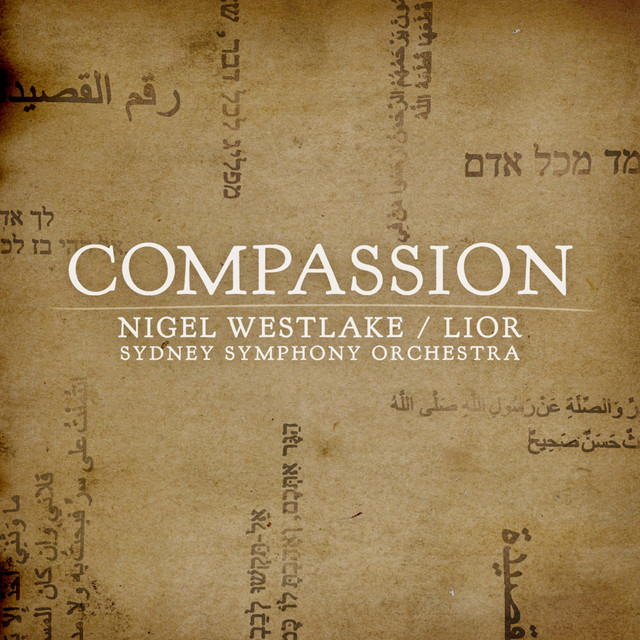
Joyously it also included a great surprise, Avinu Malkeinu from the album Compassion (2014) by Lior and Nigel Westlake, with the Sydney Symphony Orchestra. Lior is an Israeli-born singer/songwriter whose family emigrated to Australia when he was young.

The notes to this song cycle explain the rich mixture of Hebrew and Arabic songs, including an essential High Holiday hymn like Avinu Malkeinu, all centered on the title concept–and the Yom Kippur concept–of compassion.

Compassion: IV: Inna Rifqa (The Beauty Within) is taken from a Muslim hadith:

“Compassion does not enter into anything without beautifying it, and is not removed from anything without making it ugly.”

Yom Kippur: Beyond the Self

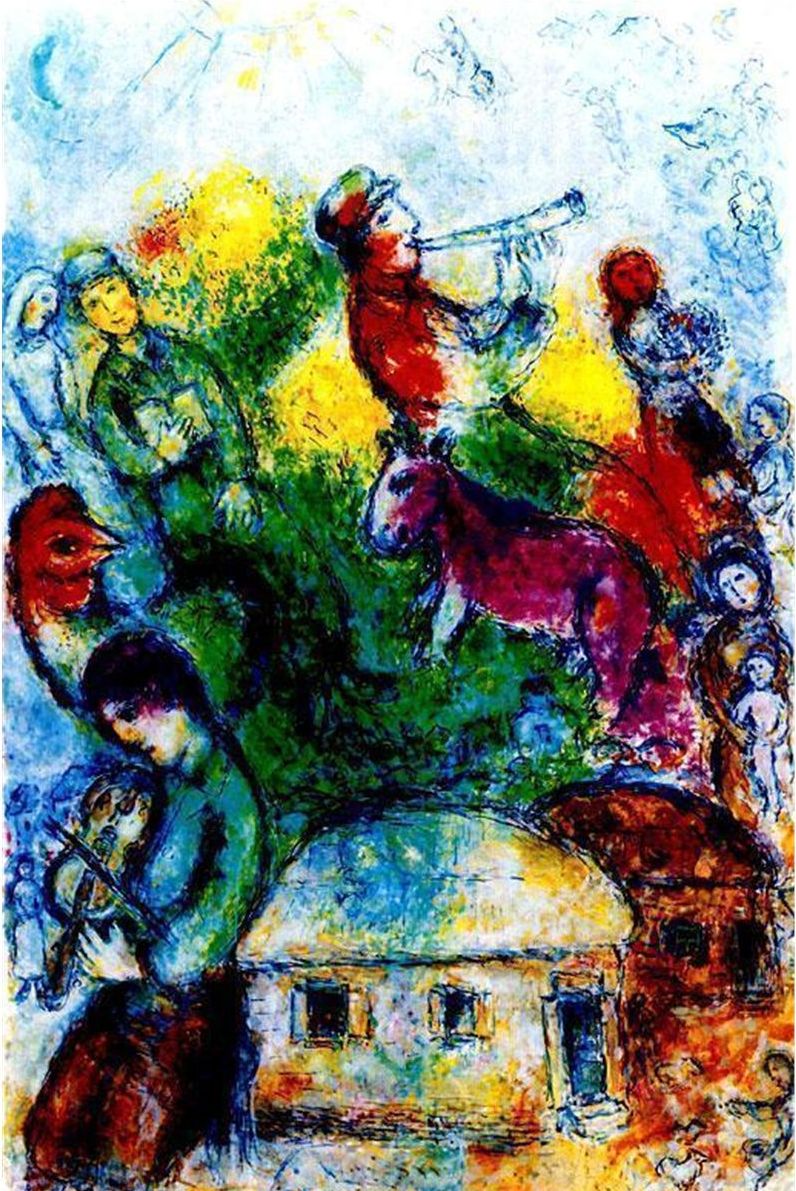
Shofar - Chagall


No sin is so light that it may be overlooked; no sin is so heavy that it may not be repented.
—Moses ibn Ezra

A person cannot find redemption until he sees the flaws in his soul, and tries to efface them. Nor can a people be redeemed until it sees the flaws in its soul and tries to efface them. But whether it be a person or a people, whoever shuts out the realization of his flaws is shutting out redemption. We can be redeemed only to the extent which we see ourselves.
—Martin Buber

Should we despair of our being unable to retain perfect purity? We should, if perfection were our goal. However, we are not obliged to be perfect once and for all, but only to rise again and again beyond the level of the self.
—Abraham Joshua Heschel

Bear in mind that life is short, and that with every passing day you are nearer to the end of your life. Therefore, how can you waste your time on petty quarrels and discords? Restrain your anger, hold your temper in check, and enjoy peace with everyone.
—Rabbi Nachman of Breslov

Al Cheit (For Our Sins) is a central prayer of Yom Kippur. It is traditionally recited while beating our hearts for each item on the list.

It is a long list. Few will have committed all of them. Few have escaped committing any. It is just a list of examples. Your experience may vary, and there may be others you might add.

The tradition says that the Book of Life is open during the Ten Days of Awe. When the holy days end with Yom Kippur, the Day of Atonement, when the shofar sounds, the book closes and our lives will have been written for the next year. But the book is always open. This isn’t an inventory of recriminations. It is an opportunity to reflect and, if needed, to make amends. That is how, as Heschel says, “to rise again and again beyond the level of the self.” That is how we write the book.


Al Cheit
For Our Sins

For the sins we have committed through arrogance and selfishness:
For being obsessed with our own concerns,
For choosing rudeness over common courtesy,
For loving our egos.

For the sins we have committed by defrauding others:
For using people in pursuit of our ambitions,
For manipulating the love of others,
For gossiping.

For the sins we have committed through denial and deceit:
For creating theories to rationalize our behavior,
For faking emotions for our own benefit,
For using the sins of others to excuse our own,
For claiming that ends justify the means.

For the sins we have committed through greed and overindulgence:
For using force to maintain our power,
For poisoning our planet,
For remembering the price of things but forgetting their value.

For the sins we have committed through hardening our hearts:
For accepting poverty as inevitable,
For staying silent when we should speak out,
For resenting the young and ignoring the elderly,
For abandoning proper outrage.

For the sins we have committed through hypocrisy:
For condemning in our children the faults we tolerate in ourselves,
For condemning in our parents the faults we tolerate in ourselves,
For neglecting our promises.

For the sins we have committed by narrow-mindedness:
For passing judgment without knowledge,
For denying our baseless hatreds.

For the sins we have committed against You through sex and love:
For confusing love with lust,
For pursuing fleeting pleasure while disregarding lasting hurt,
For withholding affection to control the ones we love.

For all these sins, forgive us, pardon us, grant us atonement.


You Kippur and Job


The days from Rosh Hashanah (“Head of the Year”, the New Year) and Yom Kippur (“Day of Atonement”) are the ten holiest on the Jewish calendar. Known as the Days of Awe or Days of Repentance, they are a time for reflection on the year past and the year to come, and a time to make amends—not by asking God for forgiveness, but by asking it from those who have been wronged, and through the practice of repentance (literally, “turning”), prayer and charity.

During these days, the Book of Life is metaphorically open, and on its pages your life is weighed: “On Rosh Hashanah it is written, on Yom Kippur it is sealed.”

The liturgy for these holidays, and particularly for Yom Kippur, is some of the most moving and soul-searching in all of the religious canon. There are Old Testament readings included, but not too often from the Book of Job.

There are two solid consensuses about the Book of Job.

Literary types agree that it is probably the greatest work of literature in the Bible.

Religious types agree that it is the most puzzling book in the Old Testament, and that even when you look at it in the most common and superficial way (“Why do bad things happen to good people?”), you end up scratching your head.

Job is the book to read for Yom Kippur. It is the book to ponder at the start of the year, at the end of the year, and at points between. (It was, by the way, Abraham Lincoln’s most studied book of the Bible.)

We begin with the book itself.

It is unusual for it to have been included in the canon of the Hebrew Bible because it is not about a Jew. When non-Jews appear in other books, it is usually a story of helping Jews or hurting Jews or marrying Jews or eventually becoming Jewish. None of that applies to the Book of Job.

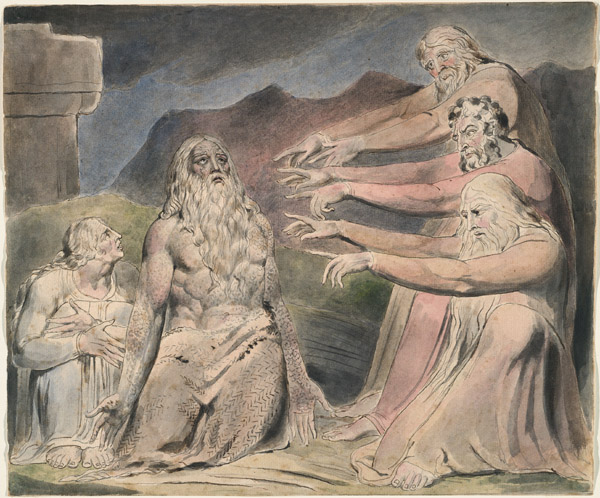
The story is relatively simple, at least until the end. Job is a rich and pious man who has everything: health, wealth, family and friends (or so they seem). Satan wants to prove that Job’s piety is dependent on his having everything, and challenges God to take it all away. God does.

Job’s friends are convinced that he must have done something wrong, and urge him to figure it out and repent. The scenes with his friends are talky, like a play, or maybe like the film My Dinner With Andre—except this is My Dinner with Eliphaz the Temanite, Bildad the Shuhite and Zophar the Naamathite.

Job’s wife has a different suggestion: “Curse God and die.”

Job remains steadfast in his faith.

And then, in Chapter 37, God appears to Job, to explain it all.

The chapters that follow are a poetic and breathtaking description of the world’s wonders, by the one who made them. God tells Job that his friends don’t know what they’re talking about (God takes care of them later). And God implicitly tells Job the only two things to do: Be awed. Be humble.

Job’s reply in Chapter 42 is one of the most important passages in the Bible. It is not only the watchword for Yom Kippur; it is the watchword for everyone, religious or otherwise, who is convinced they are smarter than anyone in the room or in the universe:


Then Job answered the Lord:
“I know that you can do all things,
and that no purpose of yours can be thwarted.
‘Who is this that hides counsel without knowledge?’
Therefore I have uttered what I did not understand,
things too wonderful for me, which I did not know.
‘Hear, and I will speak;
I will question you, and you declare to me.’
I had heard of you by the hearing of the ear,
but now my eye sees you;
therefore I despise myself,
and repent in dust and ashes.”

“I have uttered what I did not understand, things too wonderful for me, which I did not know.”


Whether this is a day of reflection and fasting, reciting centuries-old prayers, or an ordinary day of work or study, managing others or being managed; whether you are Job beset by unexplained misfortune, or Job’s wife, ready to kill him if he doesn’t kill himself, or Job’s friends so quick with advice; whether you are being punished by God, Satan, or whatever other forces you believe are working against you; whether you are the smartest person in the room or not; this is what we can do, even if there is seemingly no comfort in it:

Be awed. Be humble.
Yom Kippur Picnic

Emma Goldman’s dislike of religion is evidenced by her participation in events such as this [Yom Kippur Picnic], scheduled on Jewish holy days.
Jewish Women’s Archive

Eddy Portnoy writes in Tablet:


When Jews decide to chow down on Yom Kippur, it’s usually done clandestinely, sneaking tasty morsels in a dark pantry, or disappearing into a diner in some nearby non-Jewish neighborhood. But furtive noshing wasn’t always the heretical path of choice on the Day of Atonement. Just over a century ago, a range of leftists held massive public festivals of eating, dancing, and performance for the full 25 hours of Yom Kippur, not only as a way to fight for the their right to party, but to unshackle themselves from the oppressive religious dictates they grew up with. What does one do, after all, when prayers and traditional customs no longer hold any meaning yet you still want to be part of a Jewish community? Eating with intention on a fast day allows you, in one fell swoop, to thumb your nose at the religious establishment and create a secular Jewish identity.

These Yom Kippur Balls, organized initially by anarchists in the mid-1880s, started in London and migrated to New York and Montreal. Smaller nosh fests and public demonstrations were also celebrated by Jewish antinomians in other locales. Unorthodox Jews in interwar Poland could pull hundreds of locals into small venues on Yom Kippur in shtetls like Kalish and Chelm; in larger cities like Warsaw and Lodz, they could sell out 5,000-seat circuses. Heresy was big business; tickets for early 1890s Yom Kippur events cost 15 cents for anarchists: capitalists who deigned to attend paid double.


There’s no suggestions here about what Jews of any religious or political stripe should do about fasting or partying on Yom Kippur. As with all such things, there is what your society or community expects you to do, what your God demands that you do, and what your heart and mind tell you to do. If there is a paradise, Emma Goldman is probably there, still railing against injustice, still noshing on Yom Kippur.


Urim and Thummin: Instrument of decision

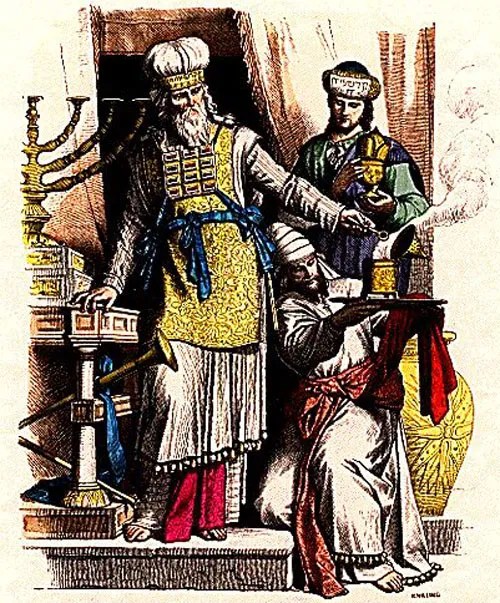
Jewish High Priest and Levites, Andreas Müller, 19th century

For HB on his birthday. Zolst leben un zein gezunt.

I am going to build a church some day. It will have a holy of holies and a holy of holy of holies, and in that ultimate box will be a random number table.
—Gregory Bateson

Chance plays a repeated part in the Hebrew Bible.

In the Purim story, the evil Haman employs a lottery—“pur” meaning “lots”—to determine the date on which the Jews will be eliminated.

On Yom Kippur we recall the story of the sacrificial goat:


And Aaron shall place lots upon the two he goats: one lot “For the Lord,” and the other lot, “For Azazel.”
And Aaron shall bring the he goat upon which the lot, “For the Lord,” came up, and designate it as a sin offering.
—Leviticus 16:8-9


Then there is the mysterious Urim and Thummim:


Inside the breastpiece of decision you shall place the Urim and Thummim, so that they are over Aaron’s heart when he comes before God. Thus Aaron shall carry the instrument of decision for the Israelites over his heart before God at all times.
—Exodus 28:30


We don’t know exactly what the Urim and Thummim were supposed to be. Like the lots drawn to choose the goat, they are binary, perhaps as simple as two stones—heads or tails, a flip of a coin.

One perspective is that when it comes to decisions, big or small, there may be a point beyond which reason does not work. What lies beyond reason is different for different traditions and philosophies. It may be God, it may be the nature of reality and our mind. We are told to look and keep looking. Meanwhile, we experience the limitations of reason. Something will happen, a choice will be made, but who can know what’s next? It’s a beautiful and necessary mystery.

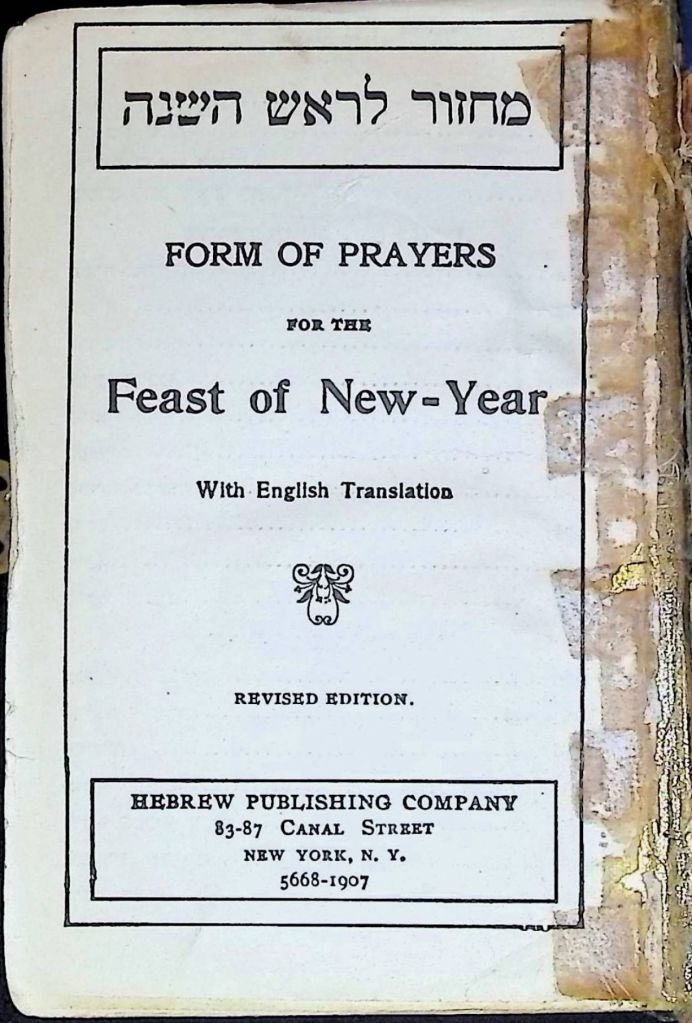
Form of Prayers for the Feast of New-Year (5668-1907)

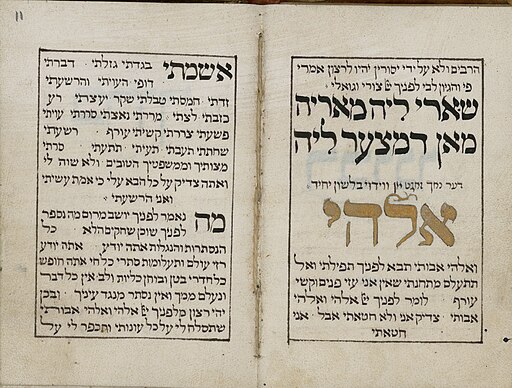
I have a small collection of older High Holiday machzor (prayer books), including ones used by my grandfather and father.

The jewel of that collection is the one pictured here. It is called Form of Prayers for the Feast of New-Year With English Translation, published by the Hebrew Publishing Company on Canal Street, New York in 1907. The book, with ornate metal clasp, is 3.5 inches x 5 inches.

The cover is mother of pearl and metal. The centerpiece is a carved decoration inscribed with the numbers of the Ten Commandments—in Roman numerals! I think this looks something like a hamsa—a spiritual amulet shaped like a hand, popular in Jewish and other traditions. Maybe not.

I would like to share more pages, but the book is delicate, having been lovingly held together with taped binding during the past century plus. The pages I’ve included below are from the concluding service on Yom Kippur, the Neilah. This offers a tiny idea of what this precious book is like.

Shana tova. A sweet and peace-filled New Year.

Confession for the Jewish High Holidays 5785/2024

Ashamnu
אָשַׁמְנוּ
nahn maswuwlun
نحن مسؤولون
We are responsible

Bagadnu
בָּגַדְנוּ
nahn nakhun
نحن نخون
We betray

Gazalnu
גָּזַלְנוּ
nahn nasriq
نحن نسرق
We steal

Dibarnu dofi
דִבַּרְנוּ דֹפִי
nahn nahtaqir
نحن نحتقر
We scorn

He-evinu
הֶעֱוִינוּ
nahn natasaraf bishakl munharif
نحن نتصرف بشكل منحرف
We act perversely

V’hirshanu
וְהִרְשַׁעְנוּ
nahn qusa
نحن قساة
We are cruel

Zadnu
זַדְנוּ
nahn nukhatit
نحن نخطط
We scheme

Chamasnu
חָמַסְנוּ
nahn eanifun
نحن عنيفون
We are violent

Tafalnu shaker
טָפַלְנוּ שֶקֶר
nahn alaiftira’
نحن الافتراء
We slander

Ya-atznu ra
יָעַצְנוּ רַע
nahn nabtakir alshara
نحن نبتكر الشر
We devise evil

Kizavnu
כִּזַבְנוּ
nahn naqul al’akadhib
نحن نقول الأكاذيب
We lie

Latznu
לַצְנוּ
nahn naskhar
نحن نسخر
We ridicule

Maradnu
מָרַדְנוּ
nahn naesi
نحن نعصي
We disobey

Ni-atznu
נִאַצְנוּ
nahn nasi’
نحن نسيء
We abuse

Sararnu
סָרַרְנוּ
nahn natahadak
نحن نتحداك
We defy

Avinu
עָוִינוּ
nahn nufsid
نحن نفسد
We corrupt

Tzararnu
צָרַרְנוּ
nahn eadaayiyuwna
نحن عدائيون.
We are hostile

Kishinu oref
קִשִׁינוּ עֹרֶף
nahn eanidun
نحن عنيدون
We are stubborn

Rashanu
רָשַׁעְנוּ
nahn ghayr ‘akhlaqiiyn
نحن غير أخلاقيين
We are immoral

Shichatnu
שִׁחַתְנוּ
nahn naqtul
نحن نقتل
We kill

Tiavnu
תִּעַבְנוּ
nahn nufsid
نحن نفسد
We spoil

Ta·inu
תָּעִינוּ
nahn nudil
نحن نضل
We go astray

Titanu
תִּעְתָּעְנוּ
nahn naqud alakharin ‘iilaa aldalal
نحن نقود الآخرين إلى الضلال
We lead others astray


The Jewish High Holidays 5785/2024—the ten Days of Repentance and Awe—begin with Rosh Hashanah, the New Year, on the evening of October 2, and end with Yom Kippur, the Day of Repentance, on October 10.

Confession is a centerpiece of the holiday. In the liturgy, Vidui includes two confessional prayers, Ashamnu and Al Cheit. Ashamnu is the shorter list of transgressions. Al Cheit is a longer detailed list of particular wrongdoings.

The past year has been one of tragedy, suffering and war in Israel, Gaza, the Middle East, and the Jewish world. Whatever our faith, status, history, ideology, grievances, or rationales, we are reminded now that none of is above responsibility, none of us as above the need for confession.

Above is my adaptation of Ashamnu. In Hebrew it is an acrostic, the first letter of each line in alphabetical order. English translations of those words vary, but all are admissions of conduct to be fixed in the year ahead. I’ve changed the common translation of the first word, Ashamnu. Often translated as “we have trespassed” or “we are guilty”, I have borrowed from Abraham Joshua Heschel. He famously said about his early protest of the Vietnam War: “In a free society, few are guilty, but all are responsible.”

My version also adds a rough translation of each expression into Arabic. Not in the least literate in the language, I’ve relied on a digital translator. For any errors in this, small or egregious, my humble and sincere apologies.

The message is that all of us, from the heinous to the heavenly, are responsible. The High Holidays insist that we are imperfect in ways that we may not acknowledge or may ignore. Our hearts may be hard when they should be soft. Why else do we literally beat our chests as we recite each of our wrongs? So we can locate our hearts, reach in, and know what condition they are in.

Shana tova. A good and sweet New Year to all.

© 2024 by Bob Schwartz

Days of Awesome: Jewish High Holidays 5785

Rosh Hashanah, the Jewish New Year 5785, begins on the evening of October 2. The ten High Holidays continue until Yom Kippur on October 12.

The High Holidays are known as the Days of Repentance or the Days of Awe.

These holidays are complicated. Like SweeTARTS.

We take an unvarnished look back at what we’ve done and who we’ve been in the past year. We confess our transgressions in excruciating detail. We make a solemn commitment to do better in the year ahead.

We also leave the past year behind for the better sweeter year to come. The better sweeter us. We eat apples dipped in honey as a reminder of that possibility.

The term “Days of Awe” reflects a few things.

There is a belief that all this occurs in the face of a God that is powerful, judgmental and merciful. Something to be in awe of and afraid of.

Another perspective is that when we set aside days to look at ourselves, at others, at our relation and connection to others and to everything, we are in awe of a wonder-filled existence. Awesome

That is why we may call these the Days of Awesome. When some of us think of awesome, besides thinking theologically and philosophically, we naturally think about The Lego Movie.

Above is an image of Emmet and Wyldstyle reading from the High Holidays machzor (prayer book). The message: Everything is awesome.

Some may think that mixing up this solemn time with SweeTARTS and Legos trivializes and even desecrates the holidays. Or maybe during those special days, everything really is awesome.

Revisiting last Yom Kippur and reopening the Book of Life

The Hamas massacre in Israel and the subsequent war in Gaza took place just two weeks after last Yom Kippur. I have already put away the High Holy Days liturgy until next year, but I am now revisiting it.

I may detail what I find in coming messages. Maybe not. Here is a general thought.

I listed my sins in the past year and asked for forgiveness—not just of God, but first of those down-to-earth people wronged. We did the same as a community and as a people. The Book of Life had been open for ten days and then closed, supposedly sealing our fate for the coming year. Whether or not there is such a book, whether God or angels are writing in it, we don’t know. We do know that our thoughts and actions lead to consequences. Those consequences are our book.

Now, here, weeks after Yom Kippur, you can still hear the blasts of the shofar. May you write for good in your own book.

© 2023 by Bob Schwartz

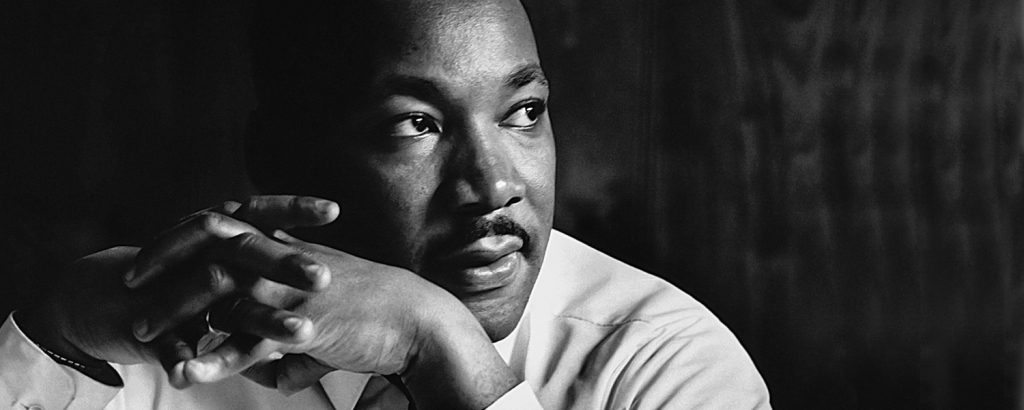
Yom Kippur: Martin Luther King, Jr. on Repentance

Yom Kippur (Day of Atonement) begins this evening. It is the final day of the Jewish Days of Awe.

“Such an attitude stems from a tragic misconception of time, from the strangely irrational notion that there is something in the very flow of time that will inevitably cure all ills. Actually, time itself is neutral; it can be used either destructively or constructively. More and more I feel that the people of ill will have used time much more effectively than have the people of good will. We will have to repent in this generation not merely for the hateful words and actions of the bad people but for the appalling silence of the good people.”
Martin Luther King, Jr.
Letter from Birmingham Jail (1963)