Bob Schwartz

Tag: Trayvon Martin

George Zimmerman: Not Guilty. Responsible? Sorry?
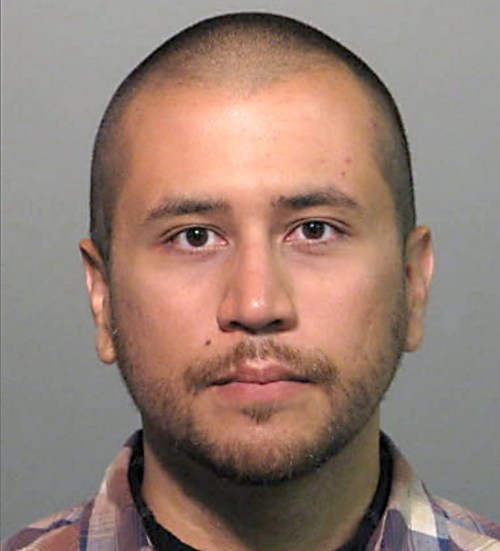
George Zimmerman
It’s easy to see how we’ve come to confuse the legal and the moral. Here and everywhere, laws are put in place that offend a general or specific sense of what is right, so we tend to connect the two. We’re also so used to seeing the legal system in media that it occupies a lot of our thinking. Even though those movies and shows try to include moral dilemmas for lawyers and clients, it’s the law that intrigues and entertains us. We have not yet had a hit television show featuring a team of super-attractive philosophers hammering out the fine points of moral right and wrong.

George Zimmerman is not guilty, at least of the crimes charged in Florida. We are awaiting possible federal civil rights charges or a wrongful death civil lawsuit. But we have no official moral court, and so we can consider where he might stand before that bench.

Every minute, people around the world, people you know, maybe even you, cross some pretty bright moral lines, and we don’t put them in jail. Not that they don’t deserve to somehow be punished, but the legal system doesn’t fit the deed, and anyway, our prison overcrowding would be exponentially more critical.

There are lots of killings we allow or sanction, including self-defense, war and capital punishment. (It would be disingenuous and dishonest not to include abortion—not because it is or isn’t killing, but because from the moral perspective of some, it is killing that we legally allow, and we can’t have the already underserved moral discussion without at least mentioning it.)

George Zimmerman killed Trayvon Martin. It is an unrefuted, admitted fact. The legal system, in its first but maybe not last swipe at the situation, has found him not guilty of a particular crime. For the record, for those who think the justice system failed, be aware that it was never enough for the jury to believe that Zimmerman was a liar and that his version of the scenario made no sense at all. The jury could only convict on the basis of another, more damning scenario—a scenario many of us could easily imagine, but a scenario the prosecution could never paint from the evidence they had to work with. The jury is allowed to draw inferences but can’t just use their imagination the way we can.

George Zimmerman killed Trayvon Martin, and many of us have come to the reasonable, non-legal conclusion about how it happened. People who reach that conclusion want him to be punished, not just for retribution, but to prevent something like this every happening again. Even if further legal proceedings don’t end up punishing him, many have the clear sense that he crossed a moral line and he was very wrong. That’s something that gets lost in all the fascinating legal discussion. You don’t have to be guilty to be wrong. And ever if there isn’t some sort of moral jail, that is still a big deal.

Which brings us to the apology. Even giving credit to the Zimmerman account, the killing happened, he did it, and all the legal exoneration can’t take it back or make it better. Apologies have gotten an increasingly bad name; just look at how the Republicans used it as pejorative in describing President Obama’s early “apology tour” of the world. (It does make you wonder what home life is like for some of those politicians, who in the face of expected apology refuse, not wanting to seem weak or ineffectual. Marriage counseling alert.)

George Zimmerman should apologize to Trayvon Martin’s family. Fully and sincerely. In legal terms, he can’t, of course, since there are still proceedings possible or likely. In moral terms, though, experts say that the need to confess is the best friend of police and prosecutors, because truth is a heavy weight that needs lifting. He is actually half-way to a confession anyway, since we know he shot Trayvon Martin. He doesn’t even have to detail the circumstances in any way different than he has, even if it’s not true.

All he has to say is this: I shot him I killed him. Whatever the law says, I was wrong. I’m sorry.

Notes for a George Zimmerman Sermon

Pulpit
This is Sunday, the day after the night before when the George Zimmerman verdict was reached and announced.

There will be countless sermons preached in churches today about the meaning of the crime, the trial and the verdict. The quick take of the media has focused on black churches for obvious reasons. In a case easily seen as having a racial component, the anger and frustration has been color-blind, but members of the black communities have reason to have special interest, if not to take it personally.

That still leaves a large number of churches that are not predominantly black. or more broadly, not non-white, or more plainly, white churches. This isn’t a monolith, nor is this an easy case and verdict to digest. There will be pastors who openly question how well justice was done, others who distance themselves from judgment, and maybe others who find a vindication of something in the verdict. Many more will not touch it at all, either because it has nothing to do with what goes on in church or because even if it does, the right words aren’t yet found to be spoken.

Whatever the identity of those in the pulpits or the pews, here are a few points that might belong in a George Zimmerman sermon.

The laws written by people and the higher laws (whether you call them the laws of God or something else) are two different things. Human imperfection extends to our inability to do perfect justice. Not only is it impossible to do perfectly, it is impossible for people to conceive of how it would be done perfectly in some other “better” realm. If there is a heaven or heaven/hell combination, exactly what are those trials like and what do the statures and rules of evidence look like? Whether you picture the 10 laws, or the 613 laws, or however many laws and interpretive regulations being litigated against you or those you love or despise, how does that case go?

There are some suggested solutions that are widely preached but, let’s say, inconstantly practiced. If we admit we don’t know everything, can’t build everything, can’t “correctly” judge everything, then we might be stuck with just some one-size-fits-all answer: forgive. This doesn’t mean, in the case of George Zimmerman, giving up on changing the laws, or not pursuing further legal tactics such as a federal civil rights suit or a civil wrongful death suit, or being friendly to George Zimmerman if you see him on your street or on your tv screen. Those are the worldly things we should feel free to pursue if that is what’s in our hearts. But in our hearts, where those higher laws are supposed to find a home, we are better off working on the compassion and forgiveness stuff. Especially with a tragic death, when we are the living, still capable of making things better.

Imperfection. Compassion. Forgiveness. Especially in light of this case. Oh God, that is so hard to take.

What Sorts of Weapons Might George Zimmerman Now Carry?

Bandolier
Robert Zimmerman says that his brother George will now be “looking over his shoulder.” There has been plenty of angry and overheated rhetoric aimed at George Zimmerman in the wake of the not guilty verdict in the case of his killing Trayvon Martin. Whether or not he needs to be in fear of his safety and life, that is something he is going to have to reasonably decide—a decision he has experience with.

In case he does decide he needs extra protection, Florida statute gives him lots of options:

Title XLVI, Chapter 790
WEAPONS AND FIREARMS

790.06 License to carry concealed weapon or firearm.—
(1) The Department of Agriculture and Consumer Services is authorized to issue licenses to carry concealed weapons or concealed firearms to persons qualified as provided in this section. Each such license must bear a color photograph of the licensee. For the purposes of this section, concealed weapons or concealed firearms are defined as a handgun, electronic weapon or device, tear gas gun, knife, or billie, but the term does not include a machine gun as defined in s. 790.001(9). (emphasis added)

So now that George has gotten his handgun back, he doesn’t have to stop there. He is free to add a bigger handgun, a Taser, a tear gas gun, a knife or billie club—or all of them. This is Florida, right on the edge of the subtropics, so it is almost literally a jungle out there. If he chooses not to stay in Florida, which he might deem a good idea, he may feel more comfortable out West, where there are states with conceal carry laws even more accepting of the Zimmerman philosophy, and where standing your ground while armed to the teeth is historically a way of life on the frontier. He might begin a new career writing cowboy fiction, where phrases like “you got me!” would not be out of place.

That was the 19th century, of course, and this is the 21st, but unfortunately for the sometimes glacial advance of civilization, some things never seem to change. If anything, they can look like they are moving backward.