Bob Schwartz

Tag: Spirituality

Reason and spirit, wisdom and compassion

Reason

Reason
as solid
as a rock.
Clinging to it
in the middle
of the ocean.

When I look to friends, colleagues and mentors who have taught and influenced me, I see in many of them a happy and helpful balance of reason and spirit. I thank them, and recommend having such people in your life.

This may be what I might want others to say of me, that I neither abandoned reason nor clung to it too tightly.

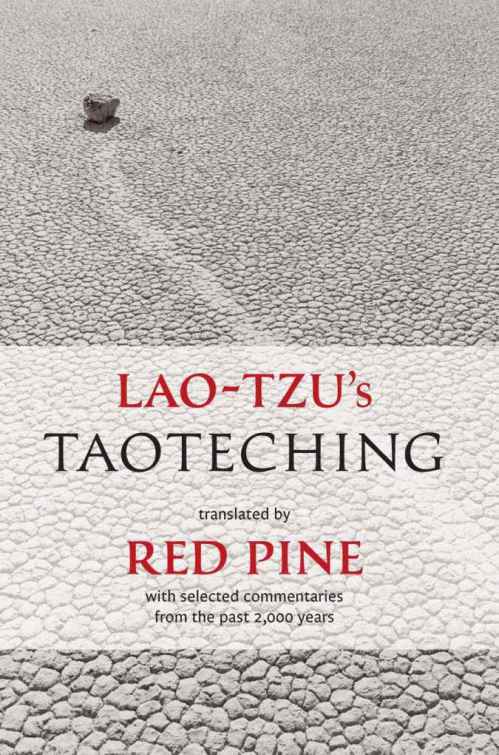
Lao-tzu’s Taoteching

Taoteching

“The world is a spiritual thing.”

Taoteching, Chapter 29

Trying to govern the world with force
I see this not succeeding
the world is a spiritual thing
it can’t be forced
to force it is to harm it
to control it is to lose it
sometimes things lead
sometimes they follow
sometimes they blow hot
sometimes they blow cold
sometimes they expand
sometimes they collapse
sages therefore avoid extremes
avoid extravagance
avoid excess

Reading and studying the little (81 tiny chapters) and infinite pool of Lao-tzu’s Tao Te Ching is as valuable as knowing any text from any tradition. Of the dozens of translations into English, all different and many worthy, the one by Red Pine—the translator and scholar Bill Porter—is the place to visit and rest awake. Along with his translation, he includes excerpts from 2,000 years of commentaries.

Poem: My Night with the Sages

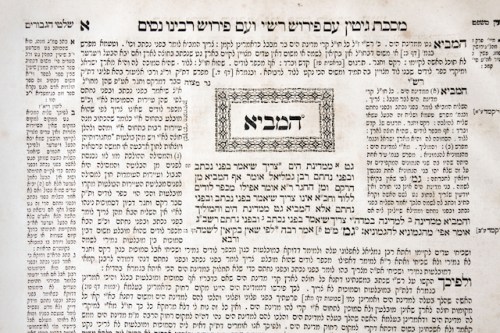
Talmud

My Night with the Sages

I found their numbers
Six, sixty-three.
Dispensing wisdom
Demanding action
Citing authority.
Talking
And talking
And talking.
How could they possibly
Help with the night?
Lost in loud logic
Where is the comfort or distraction?
But I called anyway
And they came.
To uneasy free floating
In the bleak
They added gravity
And light
Not quite
In reach
But there.
To sleep.

The Whole Wheat of Spirit and the Millstone of Reason

Encyclopedia of Jewish Myth

Going beyond pure reason is a trip too far for many, to a place where the possible and the impossible seem to coexist on equal terms.

But why not go beyond, at least for a visit or vacation? You never know what you will find or learn there.

Mama always told me not to look into the sights of the sun
Oh but mama that’s where the fun is
Bruce Springsteen, Blinded by the Light

To the pious man God is as real as life, and as nobody would be satisfied with mere knowing or reading about life, so he is not content to suppose or to prove logically that there is a God; he wants to feel and to give himself to Him; not only to obey but to approach Him. His desire is to taste the whole wheat of spirit before it is ground by the millstone of reason. He would rather be overwhelmed by the symbols of the inconceivable than wield the definitions of the superficial.
Abraham Joshua Heschel, Man Is Not Alone

Recommended:

The Encyclopedia of Jewish Myth, Magic and Mysticism: Second Edition, Geoffrey W. Dennis

The new edition of a thoroughly readable and accessible compendium of information and insights. Fun for the casually curious, valuable for the interested reader and researcher.

From the Introduction:

Judaism is one of the oldest living esoteric traditions in the world. Virtually every form of Western mysticism and spiritualism known today draws upon Jewish mythic and occult teachings—magic, prayer, angelology, alchemy, numerology, astral projection, dream interpretation, astrology, amulets, divination, altered states of consciousness, alternative, and rituals of power—all have roots in the Jewish occult….

Modern Jews like to imagine that magic has been swept into the dustbin of history by the long, inexorable progress of rationalism. More than that, Jews have been taught from our youth that Judaism has always possessed an essentially naturalistic worldview and that magic, merely a marginal Jewish preoccupation at most, was just an anomaly resulting from our being situated (and corrupted) by the superstitions of our neighbors. But that’s not entirely accurate. It is only in the last two centuries that Jews have fully embraced science, but we have always been looking for ways to change the world for the better, whether it be through science, medicine, or “practical Kabbalah.”

Even today, rationalism has not completely displaced our sense that there is a mystical potential at work in the world; Occam’s razor has never been able to fully overpower the Sixteen-Sided Sword of the Almighty. Millions of people, both Jews and gentiles, continue to believe that the stars influence our lives. Most Americans believe in the reality of angels. Jewish techniques of dream interpretation and for combating the evil eye are still widely practiced today. When you read the entries of this book on topics such as these, you will realize that magical thinking and enchanting deeds have always had a place in Judaism and, however much some might want to dismiss Judaism’s miraculous and wondrous traditions, the presence of Jewish magic in Jewish life has merely been eclipsed, never uprooted; it still has the potential to empower us.
Mystic Maps

Maps

Mystic Maps

Before the journey
The maps were few,
Colorful, promising.
Destination uncertain
Roads to travel
Randomly real.
More maps
Until there was no room
To hold them
No time
To study them.
The map makers,
Had they seen these roads
Visited these towns
Or are these conjectures
Visions, fantasies
Conjured up?
Map makers or magicians
Directions or tricks,
Now I see where they took me
Where I stop and sit.
Time and joy
For the maps
And the trip.

The Revival of Enlightened and Transformative Politics

Talking about the revival of enlightened and transformative politics is bound to be imprecise.

That concept has never actually been dead. Looking at Christianity, a recent post about Jim Wallis and Sojourners highlights just one instance. A bigger and much more famous current example is Pope Francis. And it is nothing new. The Social Gospel movement, which is still represented (though not always appreciated), aimed to see the realization of the highest Christian principles in everyday practical society.

Keeping with the Christian theme, this is not about what Jesus would say about abortion or gay marriage or prayer in schools or any of these specific arguments—though all have a certain significance. It is about politics as a tool of overall transformation, beyond sectarian concerns.

This is not limited to Christianity. Every one of the traditions has a core of enlightenment and large scale transformation. But each of those traditions has found a way to occasionally devolve that mission into movements and policies and tactics that diverge and even contradict the higher principles and aspirations. It isn’t necessary to point out the wrong turns that, for example, Judaism and Islam have taken along the way to supposedly establish heaven on earth.

In the era of what was affectionately, or for some derisively, known as the New Age movement, this concept of politics as a transformative tool was central. There was the idea that if we kept our eyes on the prize—not just a country but a world elevated above our baser selves—we could together create something better. Politics was one of the tools that would serve that end, instead of enabling smaller personal ambitions and selfish, possibly pernicious, goals.

So here we are. Enlightened and transformative politics is not dead. But it may be missing in action. Each political choice we make—each donation, each tweet, each vote and, yes, each post—might help us find it. Or kill it. It’s up to us.