Bob Schwartz

Tag: Spirituality

Ex Nihilo

Ex Nihilo

When once was nothing
Was something?
Where once was nothing
Was nowhere?
Know everything
Believe in what you know
And nothing else?
Believe everything
And know nothing?
Aleph to tav
Alpha to omega
Awwal to akkir.
Is this the emet
The truth?

© Bob Schwartz 2017

Pantry (Morning Explorer)

Pantry (Morning Explorer)

In the beginning is
The same breakfast
Or so it starts.
But the pantry shelves
Are so full of wholesome ingredients
It seems impossible to ignore.
It isn’t the prospect of a new tasty dish
It is the possibility the morning sun offers
Who am I
Creative cook and diner
To ignore it?

© Bob Schwartz 2017

Note: Yes, it is the last morning of Passover, and yes, it has been a week since breakfast was pancakes, and yes, this should be a picture of matzo brei. But this poem containing a breakfast metaphor arose spontaneously today, and Passover or not, pancakes are a beautiful breakfast sight. Tomorrow.

Heschel for Passover (or Any Time)

A reader reminds me that a year ago, I posted about including readings from Abraham Joshua Heschel in the Passover seder (A Heschel Haggadah).

You will find the readings I included in last year’s seder below. As regular readers know, I’ve mentioned Heschel a few times in this blog, and more frequently in my conversations and discussions. He may be the greatest of modern masters of Judaism or of any spiritual traditions. He is not always easy, but he is accessible, inspirational, mind-and-soul-stirring at a depth that lasts. His is not fast food; it is a long, rich, delicious meal that nourishes you for a lifetime and that you never forget—kind of like a seder. In addition to Elijah, who we expect at every seder, Heschel would be so welcome any time.

Along with the readings below, I urge you to take a look at some of the collections of readings available and then, if you like what you find, check out some of the many books (I am particularly fond of The Sabbath, but there are so many worthy ones).

Abraham Joshua Heschel: Essential Writings

The Wisdom of Heschel

I Asked for Wonder: A Spiritual Anthology  (“Never once in my life did I ask God for success or wisdom or power or fame. I asked for wonder, and he gave it to me.”)


THE MEANING OF EXISTENCE is experienced in moments of exaltation. Man must strive for the summit in order to survive on the ground. His norms must be higher than his behavior, his ends must surpass his needs. The security of existence lies in the exaltation of existence.

This is one of the rewards of being human: quiet exaltation, capability for celebration. It is expressed in a phrase which Rabbi Akiba offered to his disciples:

A song every day,
A song every day


THE TABLETS ARE BROKEN whenever the Golden Calf is called into being. We believe that every hour is endowed with the power to lend meaning to or withhold meaning from all other hours. No moment is as a moment able to bestow ultimate meaning upon all other moments. No moment is the absolute center of history. Time is a circle whose center is everywhere and whose periphery is nowhere.


THE WORLD COULD NOT EXIST at all except as one; deprived of unity, it would not be a cosmos but chaos, an agglomeration of countless possibilities … Life is tangled, fierce, fickle. We cannot remain in agreement with all goals. We are constantly compelled to make a choice, and the choice of one goal means the forsaking of another.


THE PROPHETS PROCLAIMED that justice is omnipotent, that right and wrong are dimensions of world history, not merely modes of conduct. The existence of the world is contingent upon right and wrong … The validity of justice and the motivation for its exercise lie in the blessings it brings to man … Justice exists in relation to a person … An act of injustice is condemned, not because the law is broken, but because a person has been hurt.


THE HEART IS OFTEN A LONELY VOICE in the marketplace of living. Man may entertain lofty ideals and behave like the ass that, as the saying goes, “carries gold and eats thistles.” The problem of the soul is how to live nobly in an animal environment; how to persuade and train the tongue and the senses to behave in agreement with the insights of the soul.


HUMAN LIFE IS HOLY, holier even than the Scrolls of the Torah … Reverence for God is shown in our reverence for man. The fear you must feel of offending or hurting a human being must be as ultimate as your fear of God. An act of violence is an act of desecration. To be arrogant toward man is to be blasphemous toward God.


TO PRAY is to take notice of the wonder, to regain a sense of the mystery that animates all beings, the divine margin in all attainments. Prayer is our humble answer to the inconceivable surprise of living. It is all we can offer in return for the mystery by which we live.

To escape from the mean and penurious, from calculating and scheming, is at times the parching desire of man … Prayer clarifies our hope and intentions. It helps us discover our true aspirations, the pangs we ignore, the longings we forget. It is an act of self-purification … It teaches us what to aspire to, implants in us the ideals we ought to cherish.


THE MOST MAGNIFICENT EDIFICES, most beautiful temples and monuments of worldly glory, are repulsive to the man of piety when they are built by the sweat and tears of suffering slaves, or erected through injustice and fraud. Hypocrisy and pretense of devoutness are more distasteful to him than open iniquity. But in the roughened, soiled hands of devoted parents, or in the maimed bodies and bruised faces of those who have been persecuted but have kept faith with God, he may detect the last great light on earth.


WHAT WOULD ART HAVE BEEN without the religious sense of mystery and sovereignty, and how dreary would religion have been without the incessant venture of the artist to embody the invisible in visible forms, to bring his vision out of the darkness of the heart, and to fill the immense absence of the Deity with the light of human genius? The right hand of the artist withers when he forgets the sovereignty of God, and the heart of the religious man has often become dreary without the daring skill of the artist. Art seemed to be the only revelation in the face of the Deity’s vast silence.
Ben Zoma Inside Out

The person in the hut lives here calmly,
not stuck to inside, outside, or in-between.
Song of the Grass Hut

Gone
Gone Beyond
Gone Completely Beyond
Heart Sutra

Ben Zoma Inside Out

Ben Zoma in the grass hut
Waters above
Waters below.
What does Rabbi Joshua know?
Sekito knows
Ben Zoma is outside
Inside and in-between.
Gone completely beyond.

Note: Creating, whatever your material, can be like the proverbial dog with a bone. There is sometimes spontaneity, done and gone, and then there is the idea that won’t go away. In that case, the idea is actually the dog and you are the bone. A previous version of this poem can be found here. Who knows what the next version, if any, will look like? Not me.

The Pope and the Dalai Lama: How Did We Get So Lucky?

In a newly published interview with Die Zeit, Pope Francis talks about many matters. Including his own faith. Asked about whether he ever doubts the existence of God, he said:

“I too know moments of emptiness.”

The current Pope shows us the honesty, humility, humor, wisdom and spirit we would like to see in all our traditions and in all our leaders—and in ourselves. The same can be said about the current Dalai Lama.

You don’t have to be a Roman Catholic or a Tibetan Buddhist to be inspired by these people. And just people they are, according to them, as the Pope reminds us in the same interview:

“I am a sinner and I am fallible. When I am idealized, I feel attacked.”

Pope Francis is 80. The Dalai Lama is 81. They will not live and serve forever, as much as we would be benefited by that gift. It is possible that both will be succeeded by their equal, but we can’t know that.

So let’s enjoy them and be inspired by them while they are here, wondering what we did to deserve this.

Music: Ladies and gentlemen we are floating in space

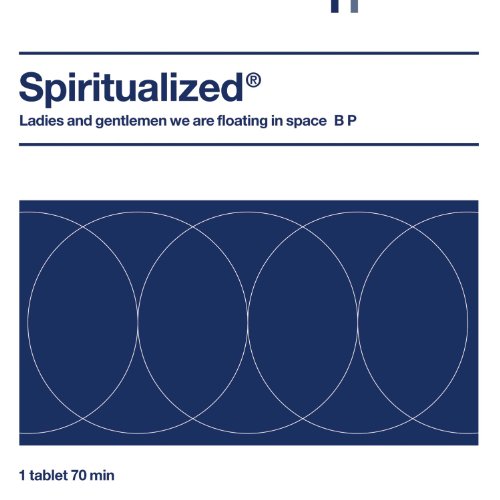
Ladies and Gentlemen We Are Floating in Space

If the Russian composer Alexander Scriabin (1872-1915) had lived into the late 20th century and completed his cosmic epic Mysterium as pop music, it might have sounded like Spiritualized’s Ladies and gentlemen we are floating in space, the title track and the album (1997). (Note: the brilliant and adventurous explorer Scriabin thought that when Mysterium was finished and played, it would bring about the end of the world.)

Spiritualized is descended from a group called Spacemen 3 (Taking Drugs To Make Music to Take Drugs To). Do not be misled either by album titles or by a sense that Spiritualized is either psychedelic music or some sort of New Age/space music. This is something you have never heard before. When you hear it, efforts to fit it into an aesthetic or artistic pigeonhole fail. Something is going on, and if you listen without prejudice (as you always should), you may find it an expansive and transporting experience.


Ben Zoma Still Outside

waters-above

Ben Zoma Still Outside

Lost and found
Between the waters of creation
Ben Zoma
Is outside
Is still outside

And God said, “Let there be a space within the water, and let it separate between water and water.” And God made the space, and it separated between the water that was under the space and the water that was above the space. And it was so. (Gen 1:6-7)

Ben Zoma sat at the Temple Mount, lost in thought. His rebbe Yehoshua ben Chananya came by, but Ben Zoma did not notice or rise in respect. R. Yehoshua roused him from his reverie and asked what he was doing. Gazing at the space between the upper and lower waters, he replied. R.  Yehoshua explained to his disciples:

Ben Zoma is still outside.

What If We Took on the Character of the Places Our Clothes Are Made?

pyramids

I try to buy clothing made in America, but as a practical matter that’s very hard. Most of the basic, reasonably-priced items are made globally. Maybe that will change sometime, but it has been the trend for decades.

One thing I do, however, is look at the labels of the global clothes I wear. As I looked today I wondered: what if, in some of kind of magic, the clothes imparted the wearer with some of the character of the places they began?

Here is today’s lineup:

Shirt: Egypt
Jeans: Mexico
Briefs: Nicaragua

That itinerary does change from day to day, and includes Vietnam, Bangladesh, China, Honduras and other ports of call.

Is the spirit of Egypt in my shirt, and does it pass through my skin? How about my Mexican jeans? And what about Nicaragua, so very close to my very important parts?

Something to think about as we wrestle with the impact of globalism.

Paradise

berliner-rabbinical-seminary-1988

A story is told about a rabbi who once entered heaven in a dream. He was permitted to approach the temple in Paradise where the great sages of the Talmud, the tannaim, were spending their eternal lives. He saw that they were just sitting around tables studying the Talmud. The disappointed rabbi wondered, “Is this all there is to Paradise?” But suddenly he heard a voice, “You are mistaken. The tannaim are not in Paradise. Paradise is in the tannaim.”

Abraham Joshua Heschel, Moral Grandeur and Spiritual Audacity: Essays


The Cathedral and the Grass Hut

cathedral-lafayette-la

“I’ve built a grass hut where there’s nothing of value.
After eating, I relax and enjoy a nap.”

Grand
Grander than grand.
Splendid glory
Magic carpet
Of gold and glass
Whisks us away
To God’s neighborhood.
The grass hut reminds us
That houses and vehicles
Are just that.
Means not
Journey or destination.

“A shining window below the green pines—
jade palaces or vermilion towers can’t compare with it.”

Quotes from Song of the Grass Hut by Shitou Xiqian (700–790), translated by Taigen Dan Leighton and Kazuaki Tanahashi.