Bob Schwartz

Tag: Religion

American Gnostic

Demiurges: Yaldabaoth, Sakla, Samael, Nebro, Azazi’il, Lucifer, Satan.  “At best incompetent and at worst malevolent. Mean-spirited, ignorant, tragic, megalomaniacal, ugly, erroneous.”

From The Gnostic Bible (emphases added):

“Consequently, gnostics provided innovative and oftentimes disturbing interpretations of the creation stories they read. They concluded that a distinction, often a dualistic distinction, must be made between the transcendent, spiritual deity, who is surrounded by aeons and is all wisdom and light, and the creator of the world, who is at best incompetent and at worst malevolent. Yet through everything, they maintained, a spark of transcendent knowledge, wisdom, and light persists within people who are in the know. The transcendent deity is the source of that enlightened life and light. The meaning of the creation drama, when properly understood, is that human beings—gnostics in particular—derive their knowledge and light from the transcendent god, but through the mean-spirited actions of the demiurge, the creator of the world, they have been confined within this world. (The platonic aspects of this imagery are apparent.) Humans in this world are imprisoned, asleep, drunken, fallen, ignorant. They need to find themselves—to be freed, awakened, made sober, raised, and enlightened. In other words, they need to return to gnosis….

“As noted, the demiurge or creator of this world is commonly distinguished from the transcendent deity in gnostic texts. The demiurge is ignorant, tragic, megalomaniacal. In the Secret Book of John he is depicted as the ugly child of Sophia, snakelike in appearance, with the face of a lion and eyes flashing like bolts of lightning. He is named Yaldabaoth, Sakla, Samael, and he is the chief archon and an arrogant, jealous god. In the Gospel of Judas he is given another name, Nebro, said to mean “rebel.” In the Gospel of Truth error behaves like the demiurge, for it becomes strong and works in the world, but erroneously. Similar, too, are the actions of nature in the Paraphrase of Shem, Ptahil in Mandaean literature, the five evil archons in Manichaean literature, Azazi’il in the Mother of Books, and Lucifer or Satan among the Cathars.


St. Rafqa’s Knit Haiku

For my beautiful and beloved knitter

St. Rafqa’s Knit Haiku

Who needs the arrows
of Valentine when we knit
with Rafqa’s needles

Note: I went looking for the Catholic patron saint of knitters—there’s usually an official or unofficial saint for everything—only to discover that there is no consensus about knitting. Suggestions include Saints Fiachra/Fiacre, Rafqa/Rebecca, Dymphna, Lucy, Ursula, Sebastian or Blaise. The idea was to connect the arrows of St. Valentine to the needles of St. Whoever. The haiku idea comes from having found the Japanese Knitting Stitch Bible as a gift for a knitter. All in all, a pretty long explanation for a pretty obscure poem. Happy Valentine’s Day.

Abraham Joshua Heschel: “I am an optimist against my better judgment.”

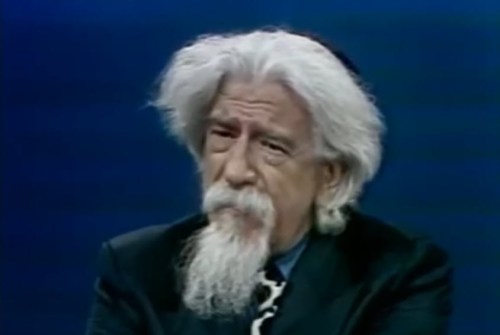
If you have the time—and you should make the time—please watch this half-hour interview of Abraham Joshua Heschel from 1972, shortly before he died.

It doesn’t matter whether you believe in God, the Bible or religion. That such a person might grace the world and our lives is testament to the human possibility. Few of us will reach that height, but just knowing that there is such light among us should inspire us dimmer bulbs.

“I am an optimist against my better judgment,” he says. On our better days, so should we all try to be.

Grist for the Mill

Grist for the Mill

This mill does not live
By wheat alone
Barley spelt corn
Amaranth rice
Welcome and ground
Wherever whoever
Cultivates and harvests
This mill is for all
Who bake cook and eat
And might be hungry

©

A Sense of Wonder: The Greatest Research Question Ever

“Never once in my life did I ask God for success or wisdom or power or fame. I asked for wonder, and he gave it to me.”
― Abraham Joshua Heschel

As part of its epic Religious Landscape Study, the Pew Research Center asked Americans what may be the greatest research question ever: How frequently do you feel a sense of wonder about the universe?

Possible responses were: At least once a week; Once or twice a month; Several times a year; Seldom/never; Don’t know. The results were analyzed and reported according to a variety of factors, including by religious group, generation, gender, race, ethnicity, immigrant status, income, education, marital status, belief in God, frequency of prayer, frequency of meditation, belief in heaven and hell, party affiliation, and many more. The results were also reported by state.

Within religious traditions, the highest percentage of those who feel a weekly sense of wonder about the universe are Jehovah’s Witness (62%), Muslim (56%) and Buddhist (55%). The highest percentage for seldom or never are Historically Black Protestant (29%), Catholic (27%) and Mainline Protestant (25%).

Among the states, the people of Nevada (54%) and Arizona (53%) lead the nation in weekly wonder, with Oregon (51%) and New Mexico (50%) not far behind. Delaware has the distinction of having the lowest percentage of people who feel a sense of wonder once a week (37%). The state with the highest percentage of people who seldom or never feel a sense of wonder is Alabama (34%).

This is just one of the many questions that Pew and other researchers ask about religious beliefs, attitudes and practices. What makes this one question so special?

It gets to the heart of what makes religion and spirituality so essential. Whatever your beliefs, whatever your status, and whatever your experience, this is what you should have learned by now—or eventually will: We are part of the universe, not masters of it, even if our ego, power and learning lead us to believe otherwise. Wonder is the acknowledgment and realization of that.

How frequently do you feel a sense of wonder about the universe?


Do Justice. Love Kindness. Walk Humbly.

Whether you are faithful, less so, or not so at all, you probably recognize the value of a compass.

The Roy Moore situation seems one of the many these days where some people, for various reasons, seem to have lost their compass or even thrown it away.

For people of any faith or none, the words of Micah 6:8 can be one such compass. Nowhere in the Bible is there a more compact directional message. The Jewish Study Bible says, “This didactic saying is one of the most influential and often quoted sayings in prophetic literature. It was considered as a possible compendium of all the mitzvot.”

So for Roy Moore, the people of Alabama, the people of America, here it is:

He has told you, O mortal, what is good;
and what does the LORD require of you
but to do justice, and to love kindness,
and to walk humbly with your God?
Micah 6:8 (NRSV)

Pope Francis: Amassing Wealth While Children Die Is ‘Idolatry That Kills’

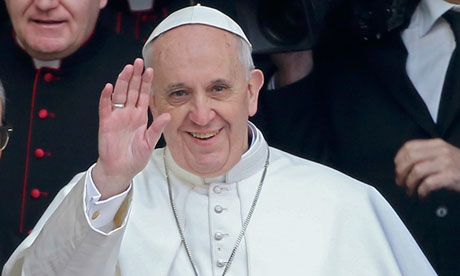
I am not a Catholic or a Christian, but no major world leader—religious or political—gives me more hope for the possibility of humanity than Pope Francis.

Today’s story as reported by Crux:

Pope says amassing wealth while children die is ‘idolatry that kills’

In his homily at morning Mass on Monday, Pope Francis returned to a familiar theme — how amassing wealth, both money and land, while children suffer and die, is a morally unacceptable form of idolatry. There’s an “idolatry that kills,” that makes “human sacrifices” Francis said, by those who are hungry of money, land and wealth, who have “a lot” in front of “hungry children who have no medicine, no education, who are abandoned.”

ROME – During his daily morning Mass on Monday, Pope Francis said there are those in the world who have too much wealth, and their hoarding of money and land in the face of hungry children with no access to medicine or education is the equivalent of making “human sacrifices.”

In times when the media reports “so many calamities, so many injustices,” especially concerning children, Francis sent a “strong” prayer to God, asking him to convert the hearts of men so that they don’t worship “the God of money.”

Francis’s homily, partially reported by Vatican Radio, turned on the Gospel of the day, a passage from the Book of Luke that tells the parable of the rich man for whom, according to the pope, money was his god. The passage, the pontiff said, leads to a reflection of how useless it is to rely on earthly property, emphasizing how much the true treasure is instead one’s relationship with God.

Despite the abundance of his harvest, the man in the parable wanted to expand his storehouses to have even more, in his “fantasy” of “stretching life out,” collecting more goods “to the point of nausea,” not knowing when it’s enough, in an “exasperated consumerism.”

This, Francis said, is the “reality of today,” when many people who live to worship money and make it their god, lead a senseless life.

There’s an “idolatry that kills,” that makes “human sacrifices” Francis said, by those who are hungry of money, land and wealth, who have “a lot” in front of “hungry children who have no medicine, no education, who are abandoned.

“This idolatry causes so many people to starve. We only think of one case: 200,000 Rohingya children in refugee camps,” the pope said, referring to the refugee crisis in Myanmar and Bangladesh. “There are 800,000 people there, 200,000 of whom are children.”

“Our prayer must be strong: Lord, please touch the hearts of these people who worship God, the god of money,” he said. “And also touch my heart, so I don’t fall into this too, so that I can see.”

Rosh Hashanah

If you believe that you can damage, then believe that you can fix.
If you believe that you can harm, then believe that you can heal.
Rebbe Nachman of Breslov (1772-1810)

Shana Tova! (A Good Year)

Table-Clearing Religion

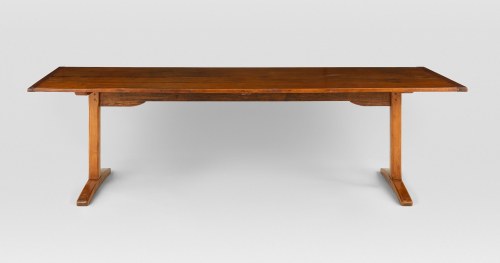
A splendidly set and provisioned table can be lovely and satisfying, especially when you’re hungry and there is a great cook at work.

But there is also a simple table, before anything has been laid on it, before the bowls and platters have been brought from the kitchen. Or the same table after it has been cleared.

Which why we might appreciate those religious movements that set a simple table, or try to clear one that has been cluttered, even if the clutter seems beneficial.

Table clearing is a phenomenon among many traditions. Jesus proposed something like it, as did the Baal Shem Tov. Some Christian sects are grounded in it, such as the Shakers. That sort of table clearing is also an essence of Zen. The value of various complex Buddhist movements may not be denied, but in the beginning the Buddha himself tried all that was being offered, and ended up just sitting.

Sit at whichever table suits you, and eat whatever you like from it. But maybe consider the elegant simplicity of the table before it is set, or after it is cleared.

Candle for the Least

Candle for the Least

The first will be last.

Too many candles
Too many in need
To choose.
The last one
In the last row.
Outside
Barge through
A cloud of butterflies.

© Bob Schwartz