Bob Schwartz

Tag: politics

The Next Trap for Trump: Facts Can’t Be Defamed But People Can

Stormy Daniels released a sketch of the man who threatened her in 2011 to keep her from talking about Trump. In a tweet, Trump called this threat and sketch a “con job.” She has now sued Trump for defamation, claiming he accused her of the crime of making a false accusation of committing a crime against another.

This may seem like grasping at straws, but it isn’t. If Trump had ever said one word directly refuting her account of their relationship—which he hasn’t—he would find himself in a bigger defamation action. But even this smaller one is a harbinger of what may become a new trend.

Defamation is a perfect action to bring in the case of chronic and pathological liars. The essential defense to defamation is the truth of the matter asserted. If the reputation-damaging statement was undeniably made, but the speaker/writer will not or cannot prove that it is true, proof of damage is enough for the plaintiff to prevail. In every instance where Trump is the defamer, and an action is brought, he would be obliged to prove that the damaging words he says or tweets about someone are true. Which in all cases, he either won’t do or can’t do.

It is a shame that all the facts that Trump has brutally attacked don’t have standing to sue (two thousand lies and counting, just as president). But people do have that standing. Stormy Daniels, who has one of the smartest, most creative, most articulate, most media-savvy lawyers of the Trump era, is taking advantage of this vulnerability. Do not be surprised to see more of these defamation actions from all sorts of people who have been publicly maligned by Trump.

Explosive New Book: Trump/Russia: A Definitive History

“Kenneth McCallion, a former prosecutor who tracked the flows of Russian criminal money into Trump’s properties, told me, “Trump’s genius – or evil genius – was, instead of Russian criminal money being passive, incidental income, it became a central part of his business plan.””
Trump/Russia: A Definitive History

It was during the Moscow trip that Sater used his Kremlin connections to impress Trump’s daughter. Sater would later boast: “I arranged for Ivanka to sit in Putin’s private chair at his desk and office in the Kremlin.”
Trump/Russia: A Definitive History

Next week, the book Trump/Russia: A Definitive History will be released—and it will be explosive.

Written by Seth Hettena, an award-winning journalist who was a long-time investigative reporter for the Associated Press, it “chronicles the many years Trump has spent wooing Russian money and power. From the collapse of his casino empire—which left Trump desperate for cash—and his first contacts with Russian deal-makers and financiers, on up to the White House.”

The only excerpt available so far was published in Rolling Stone, A Brief History of Michael Cohen’s Criminal Ties. That brief excerpt paints one corner of a bigger picture that we will finally be able to see once the Mueller investigation is complete.


From Trump/Russia: A Definitive History:

Michael Cohen’s bare-knuckled tactics earned him the nickname of “Tom,” a reference to Tom Hagen, the consigliore to Mafia Don Vito Corleone in The Godfather. He grew up on Long Island, the son of a physician who survived the Holocaust in Poland, and like Tom Hagen spent a childhood around organized crime, specifically the Russian Mafiya. Cohen’s uncle, Morton Levine, was a wealthy Brooklyn doctor who owned the El Caribe Country Club, a Brooklyn catering hall and event space that was a well-known hangout for Russian gangsters. Cohen and his siblings all had ownership stakes in the club, which rented for years to the first Mafiya boss of Brighton Beach, Evsei Agron, along with his successors, Marat Balagula and Boris Nayfeld. (Cohen’s uncle said his nephew gave up his stake in the club after Trump’s election.)

I spoke to two former federal investigators who told me Cohen was introduced to Donald Trump by his father-in-law, Fima Shusterman, a naturalized U.S. citizen from Ukraine who arrived in the U.S. in 1975. Shusterman was in the garment business and owned a fleet of taxicabs with his partners, Shalva Botier and Edward Zubok – all three men were convicted of a money-laundering related offense in 1993….

Shusterman, who owned at least four New York taxi companies, also set his son-in-law up in the yellow cab business. Cohen once ran 260 yellow cabs with his Ukrainian-born partner, the “taxi king” Simon V. Garber, until their partnership ended acrimoniously in 2012…

Cohen was able to purchase a $1 million condo at Trump World Tower in 2001, persuading his parents, his Ukrainian in-laws and Garber to do the same in other Trump buildings. Cohen’s in-laws Fima and Ania Shusterman bought three units in Trump World Tower worth a combined $7.66 million. Cohen later purchased a nearly $5 million unit in Trump Park Avenue. In a five-year period, he and people connected to him would purchase Trump properties worth $17.3 million….

A year after Trump World Tower opened in 2002, Trump had agreed to let Miami father-and-son developers Gil and Michael Dezer use his name on what ultimately became six Sunny Isles Beach condominium towers, which drew in new moneyed Russians all too eager to pay millions. “Russians love the Trump brand,” said Gil Dezer, who added that Russians and Russian-Americans bought some 200 of the 2,000 or so units in Trump buildings he built. A seventh Trump-branded hotel tower built up Sunny Isles into what ostensibly has become a South Florida Brighton Beach.

An investigation by Reuters found that at least 63 individuals with Russian passports or addresses have bought at least $98.4 million worth of property in the seven Trump-branded luxury towers. And that was a conservative estimate. At least 703 – or about one-third – of the 2044 units were owned by limited liability companies, or LLCs, which could conceal the property’s true owner. Executives from Gazprom and other Russian natural resource giants also owned units in Trump’s Sunny Isles towers. In an observation that several people I spoke with echoed, Kenneth McCallion, a former prosecutor who tracked the flows of Russian criminal money into Trump’s properties, told me, “Trump’s genius – or evil genius – was, instead of Russian criminal money being passive, incidental income, it became a central part of his business plan.” McCallion continued, “It’s not called ‘Little Moscow’ for nothing. The street signs are in Russian. But his towers there were built specifically for the Russian middle-class criminal.”

Cohen joined the Trump Organization around the time that the second Sunny Isles tower was being built. A few years earlier, he had invested $1.5 million in a short-lived Miami-based casino boat venture run by his two Ukrainian business partners, Arkady Vaygensberg and Leonid Tatarchuk. Only three months after its maiden voyage, it would become the subject of a large fraud investigation. But Cohen was saved from his bad investment by none other than Trump himself, who hired Cohen as an attorney just before his casino ship sank. A source who investigated Cohen’s connections to Russia told me, “Say you want to get money into the country and maybe you’re a bit suspect. The Trump organization used lawyers to allow people to get money into the country.”…

Michael Cohen’s in-laws, the Shustermans, also bought real estate in Sunny Isles. The development was paying off. Trump’s oldest son, Don Jr., would later note, “We see a lot of money pouring in from Russia.” There is no question Trump owed his comeback in large part to wealthy Russian expatriates.

Cohen and Felix Sater have known each other for nearly 30 years. They met in Brighton Beach when Cohen started dating his future wife, Shusterman’s daughter, Laura, who Sater says he knew from the neighborhood. When Cohen joined the Trump organization, Sater had become a fixture in the office. Sater was developing Trump SoHo, a hotel-condo in lower Manhattan that later would be consumed by scandal, and had earned Trump’s trust. Trump asked him to look after his children, Ivanka and Don Jr., on a 2006 visit to Moscow. (It was during the Moscow trip that Sater used his Kremlin connections to impress Trump’s daughter. Sater would later boast: “I arranged for Ivanka to sit in Putin’s private chair at his desk and office in the Kremlin.”) When Sater’s criminal past was exposed in The New York Times, Trump suddenly looked and acted like a man with something to hide. Despite laying claim to “one of the great memories of all time,” he seemed to be having trouble recollecting who Sater was. “Felix Sater, boy, I have to even think about it,” Trump told The Associated Press in 2015. “I’m not that familiar with him.”

 

Politely Ask Trump to Resign

The majority of Americans think that Trump is a threat to civility, to honesty, to American values, democracy and institutions, and to American and global peace and progress. As one new and untried tactic, we should simply, politely and plainly ask him to resign.

This is not a replacement for any of the other ongoing approaches, including investigation of his wrongdoing, ridicule, humor, and calls for impeachment or action under the 25th amendment. And of course, voting.

It is, however, a civilized way of doing something it is increasingly hard to do: be a better and more civilized person than Trump himself. It is hard not to fall into the sinkhole of being as terrible as our worst nemesis—that is an ancient theme. The pragmatic fact is that it is sometimes unavoidable, if the better is to triumph over the lesser. But when that happens, we are in danger of being just as bad, and our remaining upright and our job of healing and recovering is made that much more difficult.

So let us ask Trump to resign, politely explaining the many reasons it is best for America and Americans, and for the world. Of course he will not do it or consider it, and will mock it, since in his mind any show of decency and quiet reason is a show of weakness. Instead, though, it is a small demonstration that we still believe that decency is a show of strength. Which is something we are understandably starting to forget.

Note:

As is my practice, I asked the I Ching about this proposal. It is appropriate to do that for two reasons. The I Ching itself is in part a philosophical response to centuries of national political changes in China, cataclysms that make a few years of Trump look like a picnic. Second, China itself in 2018 still uses the I Ching for guidance. So why shouldn’t we?

The I Ching says (Alfred Huang translation):

59
Huan • Dispersing

NAME AND STRUCTURE

Originally Huan meant ice breaks, melts, and vanishes. Later on, it came to mean to separate and scatter.

Sequence of the Gua: After happiness and joyfulness, there comes dispersing. Thus, after Joyful, Dispersing follows.

The ideograph of Huan expresses its original meaning. The image on the left represents water. It resembles the primary gua for Water, turned vertically. On the top right is a knife, and on the bottom are two hands with fingers and arms. In the middle are two pieces of ice. Taken as a whole, this ideograph pictures a knife used to break up the ice, with two hands separating the pieces of ice. The ice melts and becomes water, at last dispersing and vanishing. The structure of the gua is Wind   above, Water   below. The wind blows over the water and disperses the waves. The inner gua is Water; its attribute is danger. It symbolizes one’s vital energy blocked within. The outer gua is Wind; its attribute is penetration. Penetrating and breaking the blockage leads to dispersion.

Decision

Dispersing.
Prosperous and smooth.
The king arrives at the temple.
Favorable to cross great rivers.
Favorable to be steadfast and upright.

Commentary on the Decision

Dispersing.
Prosperous and smooth.
The firm comes without hindrance.
The yielding is at the proper place.
It goes out to meet its similarity above.
The king arrives at the temple.
He is in the central place.
Favorable to cross great rivers.
The merit comes from mounting on the wood.

Commentary on the Symbol

The wind moves over the water.
An image of Dispersing.
In correspondence with this,
The ancient king offers sacrifice to the Lord of Heaven
And establishes temples.

SIGNIFICANCE

The gua takes the image of the wind moving over the water to demonstrate the act of dispersing people’s resentment. During the time of dispersing, having a leader with wisdom and foresight is crucial. The king approaching his temple gives us an image of his connection with the spiritual world. Crossing great rivers signifies the hardship and difficulty of the work. Steadfastness and uprightness should be the virtue of a great leader. He has self-confidence, so he is able to live and work in peace. The host of the gua is the solid line at the fifth place. This line represents the king who approaches his temple to connect himself with the Lord of Heaven. During the time of dispersing he is the only one who, in the honored place, is able to establish order throughout his nation. The fourth line represents the king’s minister, while the second line is his officer. They faithfully assist the king to unite the people in the time of dispersing.

During King Wen’s sitting in stillness he meditated upon joyfulness and dispersion. After people had been joyful, their energy dispersed, and their focus was scattered. At such a time, a leader with wisdom and foresight was needed. He arrived at his temple and communicated with the deity. His sincerity and trustworthiness encouraged people to work in full cooperation and with unity of purpose. The Duke of Zhou narrates that to be of help at such a time, one should have the speed of a strong horse. Dispersing self-serving groups led to a union as solid as a mound.

Heschel on Politicians

“I consider the heart of the problem of human existence is to fight against mendacity, against lying. I would like to use a word which may be too often used, but it’s still the most important word—and that is “honesty,” or “sincerity,” or “trust.””

“I am against the word “politician.” I have great respect for the word “statesman.” It’s very interesting, the word “statesman” is not used. “Politician” is used. “Statesman” is a great word….The task of a statesman is to be a leader, to be an educator, and not to cater to what people desire almost against their own interests. To be a leader.”

From an interview with Abraham Joshua Heschel at the University of Notre Dame in 1967, published in Moral Grandeur and Spiritual Audacity, essays by Heschel.

Q: Your esteem for religious colleagues is greater than your esteem for politicians. I think you once said that the most depressing word in the English language is “politician.” Politicians are necessary, aren’t they? Why disparage them?

A: No, I’m not against politicians in their vocation. I’m against politicians in their tactics. Against the very meaning, the semantic meaning of the word “politician.”

Now let me elaborate. It may take me two minutes to explain it to you. I consider the heart of the problem of human existence is to fight against mendacity, against lying. I would like to use a word which may be too often used, but it’s still the most important word—and that is “honesty,” or “sincerity,” or “trust.”

The tragedy of our time is, we don’t trust each other. The Golden Rule today is not “Love thy neighbor as thyself” but “Suspect thy neighbor as thyself.” We suspect all politicians because we know in advance they don’t mean what they say and they don’t say what they mean.

Q: Is that justified? That suspicion?

A: Ask the people in the country. You’re asking me? I’m only one citizen. I have only one vote.

If you go to the country and ask them, “What do you think of politicians?,” they’ll say a politician is a synonym for a person who is not necessarily truthful. Right? Do you mind my elegant way of speaking?

We have a type of politician today—I suppose we’ve always had, and I don’t want to identify anyone—who tells us that he is doing what the peoples want. And, in fact, that may be so. Of course, that doesn’t reach to the question of leadership. Should our leaders give us what we want, or is there some other role?

I think there is another role. By the way, I am against the word “politician.” I have great respect for the word “statesman.” It’s very interesting, the word “statesman” is not used. “Politician” is used. “Statesman” is a great word.

Now, about doing what the people want—I’ll tell you what the people want. One of the major inclinations in every human being is a desire to be deceived. Self-deception is a major disease.

Q: To be told what one wants to hear?

A: Yes. You want to be deceived.

The task of a statesman is to be a leader, to be an educator, and not to cater to what people desire almost against their own interests. To be a leader.

The great question of today is mendacity. We live in a world full of lies. And the tragedy that our young people—or maybe it’s good—the young people have discovered how many lies are uttered daily and every moment. They can’t stand it. If there’s anything they despise, it’s someone who is phony, false rhetoric. We call it “credibility gap”—what we mean really is lying.

Crazy Like a Fox and Friends: After the Laughter It Is Not At All Funny

Discomfort and despair has led to dark laughter as we listen to Trump’s half-hour unraveling/meltdown in his call-in monologue on Fox and Friends yesterday. Of course it is not actually funny.

Except for willfully oblivious Republicans, Trump’s instability is obvious to everyone. There is wide agreement not only that the thirty minutes of nearly uninterrupted chatter was often nonsensical and non-sequitur, but that if the Fox and Friends hosts—who were clearly aghast—had not intervened (“you have a million things to do, Mr. President”), Trump might have gone on blathering for hours.

Why Republicans ignore, excuse and put up with just about anything Trump dishes out, including rants that beg for a psychological evaluation, is best told by an old and wise joke:

Guy walks into a psychiatrist’s office. “Doc,” he says, “my brother thinks he’s a chicken.” Doctor says, “Bring him in and I’m sure I can help him.” Guy says, “I would Doc, but we need the eggs.”

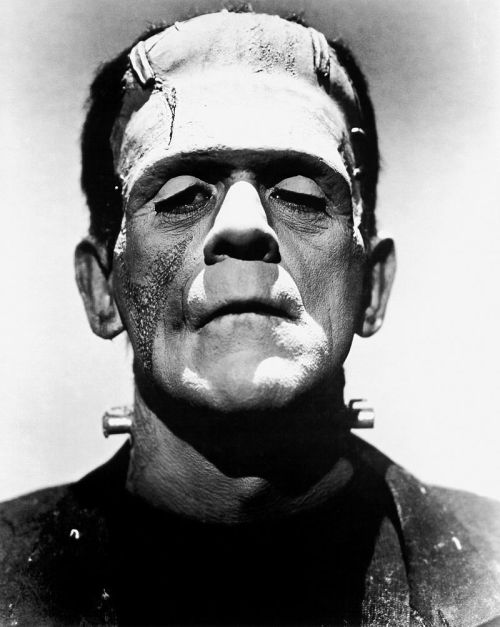
Frankenstein: The Republican Creature

“The Creature showed unparalleled malignity and selfishness in evil; he destroyed my friends; he devoted to destruction beings who possessed exquisite sensations, happiness, and wisdom; nor do I know where this thirst for vengeance may end. Miserable himself that he may render no other wretched, he ought to die. The task of his destruction was mine, but I have failed.”
Frankenstein

I was at first touched by the expressions of his misery; yet, when I called to mind what Frankenstein had said of his powers of eloquence and persuasion, and when I again cast my eyes on the lifeless form of my friend, indignation was rekindled within me. “Wretch!” I said. “It is well that you come here to whine over the desolation that you have made. You throw a torch into a pile of buildings, and when they are consumed, you sit among the ruins and lament the fall.”
Frankenstein

This year marks the 200th anniversary of the publication of Frankenstein, Mary Shelley’s monumental work of modern literature. The characters and story have been fashioned into hundreds of forms, some truer to the original than others. One basic element is inescapable: the story of a skilled technician trying to create something new, only to discover that the Creature is ultimately destructive of much that is cherished and good.

That is where the Republican Party finds itself with Trump. Admittedly, Trump has more fans than Victor Frankenstein’s Creature ever did, but is similarly an uncontrollable force of twisted nature.

In the final chapter of Frankenstein, Captain Walton concludes the narrative letters that chronicle his passenger Victor Frankenstein’s relating the tale of the Creature he created:

You have read this strange and terrific story, Margaret; and do you not feel your blood congeal with horror, like that which even now curdles mine?…

Sometimes I endeavoured to gain from Frankenstein the particulars of his creature’s formation, but on this point he was impenetrable. “Are you mad, my friend?” said he. “Or whither does your senseless curiosity lead you? Would you also create for yourself and the world a demoniacal enemy? Peace, peace! Learn my miseries and do not seek to increase your own.”…

“Oh! My friend, if you had known me as I once was, you would not recognize me in this state of degradation. Despondency rarely visited my heart; a high destiny seemed to bear me on, until I fell, never, never again to rise.”…

“If I were engaged in any high undertaking or design, fraught with extensive utility to my fellow creatures, then could I live to fulfil it. But such is not my destiny; I must pursue and destroy the being to whom I gave existence; then my lot on earth will be fulfilled and I may die.”…

“He [the Creature] showed unparalleled malignity and selfishness in evil; he destroyed my friends; he devoted to destruction beings who possessed exquisite sensations, happiness, and wisdom; nor do I know where this thirst for vengeance may end. Miserable himself that he may render no other wretched, he ought to die. The task of his destruction was mine, but I have failed.”…

I entered the cabin where lay the remains of my ill-fated and admirable friend. Over him hung a form which I cannot find words to describe — gigantic in stature, yet uncouth and distorted in its proportions. As he hung over the coffin, his face was concealed by long locks of ragged hair; but one vast hand was extended, in colour and apparent texture like that of a mummy. When he heard the sound of my approach, he ceased to utter exclamations of grief and horror and sprung towards the window. Never did I behold a vision so horrible as his face, of such loathsome yet appalling hideousness….

I was at first touched by the expressions of his misery; yet, when I called to mind what Frankenstein had said of his powers of eloquence and persuasion, and when I again cast my eyes on the lifeless form of my friend, indignation was rekindled within me. “Wretch!” I said. “It is well that you come here to whine over the desolation that you have made. You throw a torch into a pile of buildings, and when they are consumed, you sit among the ruins and lament the fall.”

Titanic Metaphor

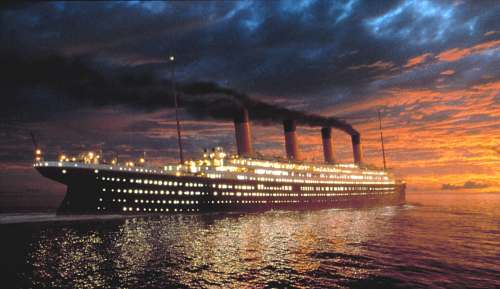
It has been more than twenty years since the epic, iconic movie Titanic was released. More than a century since the “unsinkable” biggest ship sank. Yet until today, when the movie popped up, I hadn’t fully focused on its metaphoric value. Which makes me one of the last to catch on, but I’m known to be slow.

On the same day, the rich president, whose only “achievement” has been to help other even richer people get even richer, was spouting normal nonsense—all based on America being unsinkable (thanks only to its being in his “capable” hands). Meanwhile, the stock market, a bellwether of confidence, is suffering another difficult day, pointing to an inevitable big correction, or worse.

We’ve had over a hundred years to consider the Titanic, a situation combining arrogance, incompetence, selfishness, ignorance, stubbornness, pride, wealth, along with the tragic power of nature and chance. King of the World doesn’t matter if you’re the captain or just a passenger heading for an avoidable iceberg.

March for Our Lives

And these children that you spit on
As they try to change their worlds
Are immune to your consultations
They’re quite aware of what they’re goin’ through
David Bowie, Changes

To the NRA, the politicians in their pocket, Fox News and all the others who bully and lie as a regular self-serving practice:

These astonishingly active and articulate children you dismiss as naïve pawns of special interests are anything but. They are smart and caring voters and voters-to-be, they are inspirational organizers, they are brave warriors for peace, common sense and truth.

They are the edge of a wave of American humanity that will wash you away. If you believe your own nonsense and are too stupid to be afraid of being sidelined and replaced, you should be very afraid. Nothing happens without struggle, and you may think this is a struggle that you are bound to win. But if you are students of American history, you know how this eventually goes. If you are students of history, watching (or more likely ignoring) this extraordinary moment, you would know that you are history. The arc of history is long, MLK said, but it bends toward justice.

And admit that the waters
Around you have grown
And accept it that soon
You’ll be drenched to the bone.
If your time to you
Is worth savin’
Then you better start swimmin’
Or you’ll sink like a stone
For the times they are a-changin’.
Bob Dylan, The Times They Are A Changin’

Lesson for Trump Attorneys: The Lawyers of Watergate

“The Nixon White House initially dismissed the break-in as a “third-rate burglary,” but after a year of increasingly persistent media coverage, Congress initiated multiple investigations that exposed the involvement of more than 20 of the most powerful lawyers in the United States.”

This was going to open with a list of lawyers who are representing Trump and Trump-related enterprises—including the White House. But that list changes too fast; Trump’s chief attorney in the Mueller investigation, John Dowd, resigned just this week.

Whoever they are or will be, they have one thing in common. They are working for a client who almost certainly has engaged in unethical, if not illegal, practices—before and during his political life, including his presidency. A client who has asked others, including his attorneys, to help fix or cover-up those practices when they were in danger of coming to light. A client who is vindictive, willful, self-absorbed, not very smart, and possibly psychologically unstable. A client who will not listen to them.

All of which brings us to Nixon and the lawyers of Watergate. One difference between Nixon and Trump is that Nixon was smart, a lawyer himself and a long-time national politician who understood how government works. Nixon was also a patriot, and, at least at some point in his life, a brave man, having served with distinction in World War II.

Unfortunately, Nixon, like Trump, found himself engaged in practices that he eventually needed to hide. He enlisted a gang of henchmen to help him—and many of those men were lawyers. When they truth came out, many of those lawyers were no longer allowed to be lawyers (including Nixon), and Nixon was no longer president.

If you wonder why lawyers are leaving Trump right and left, the following suggests one of the reasons.

ABA Journal, June 2012

The Lawyers of Watergate: How a ‘3rd-Rate Burglary’ Provoked New Standards for Lawyer Ethics

The Nixon White House initially dismissed the break-in as a “third-rate burglary,” but after a year of increasingly persistent media coverage, Congress initiated multiple investigations that exposed the involvement of more than 20 of the most powerful lawyers in the United States.

At the top of the list was Nixon, the 37th president of the United States, who resigned on Aug. 8, 1974, as Congress was gearing up to conduct impeachment proceedings.

But the list also included two U.S. attorneys general, two White House counsels, an assistant attorney general and a chairman of the U.S. Securities and Exchange Commission.

John D. Ehrlichman
Disbarred in Washington State.

John W. Dean III
Disbarred in Virginia.

Spiro T. Agnew
Disbarred in Maryland.

Charles W. Colson
Disbarred in Virginia and the District of Columbia, license suspended in Massachusetts.

Herbert W. Kalmbach
Law license in California was suspended, but reinstated in 1977.

Richard G. Kleindienst
Law license in District of Columbia suspended for a month, and censured by Arizona disciplinary authorities.

Egil “Bud” Krogh Jr
Disbarred in 1975 by the Washington Supreme Court, but petition for reinstatement was granted in 1980.

Gordon Liddy
Disbarred in New York.

Robert C. Mardian
Law licenses suspended in California and by the U.S. Supreme Court, but later reinstated.

John N. Mitchell
Disbarred in New York and from the U.S. Supreme Court Bar.

Richard M. Nixon
Disbarred in New York.

Harry L. Sears
Law license suspended in New Jersey for three years.

Donald H. Segretti
Law license suspended in California for two years.

Bradford Cook
Nebraska law license was suspended for three years.

Trump and the Battle of Universes: Crisis on This Earth

It is painful to be reducing the future of America to a simplistic metaphor—or to a comic book concept. But here goes.

For Trump, reality is Trump. Trump Earth. Trump World. Trump Universe. Nothing else exists.

For everybody else, reality is everything else. Not-Trump Earth. Not-Trump World. Not-Trump Universe.

It is really that simple. A little practically complicated because Trump is president. But conceptually, just that simple.

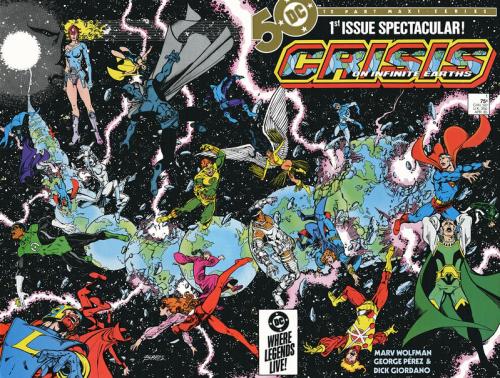
The battle has already started and is likely to get worse before it gets better. For examples, see the various series in the comic book world, such as Crisis on Infinite Earths. Not pretty, with lots of collateral damage. The good news is that in the long run, the good guys and good gals win. We hope.