Bob Schwartz

Tag: politics

The Revival of Enlightened and Transformative Politics

Talking about the revival of enlightened and transformative politics is bound to be imprecise.

That concept has never actually been dead. Looking at Christianity, a recent post about Jim Wallis and Sojourners highlights just one instance. A bigger and much more famous current example is Pope Francis. And it is nothing new. The Social Gospel movement, which is still represented (though not always appreciated), aimed to see the realization of the highest Christian principles in everyday practical society.

Keeping with the Christian theme, this is not about what Jesus would say about abortion or gay marriage or prayer in schools or any of these specific arguments—though all have a certain significance. It is about politics as a tool of overall transformation, beyond sectarian concerns.

This is not limited to Christianity. Every one of the traditions has a core of enlightenment and large scale transformation. But each of those traditions has found a way to occasionally devolve that mission into movements and policies and tactics that diverge and even contradict the higher principles and aspirations. It isn’t necessary to point out the wrong turns that, for example, Judaism and Islam have taken along the way to supposedly establish heaven on earth.

In the era of what was affectionately, or for some derisively, known as the New Age movement, this concept of politics as a transformative tool was central. There was the idea that if we kept our eyes on the prize—not just a country but a world elevated above our baser selves—we could together create something better. Politics was one of the tools that would serve that end, instead of enabling smaller personal ambitions and selfish, possibly pernicious, goals.

So here we are. Enlightened and transformative politics is not dead. But it may be missing in action. Each political choice we make—each donation, each tweet, each vote and, yes, each post—might help us find it. Or kill it. It’s up to us.

The Year America Gets Politically Sober

There are endless stories about people whose wild and self-destructive behaviors, addictions and obsessions careen out of control. Some of those stories are in books and movies. A lot more of them, millions of them, are in real life.

The stories sometimes end very badly. But sometimes, after a lost weekend, or a lost year, or a lost decade, something happens. Nearing bottom, or hitting bottom, people wake up. They realize that the path they are on—or the lack of a path—can only lead to bad times getting worse. And so they ask for help. Or they find the help within themselves. They recover. They get sober.

All the talking heads have explanations of how “we” got into this political chaos, with many people not particularly pleased with the choices they have, many people appalled at the choices other people are making, and a government—which is after all the point of politics—basically frozen and irrational.

“We” are not the victims. “We” created this mess ourselves. The forms of behaviors, addictions and obsessions are too many to list here. Let’s just say that if we choose not to be broadly informed, choose not to vote, choose to leave it up to other people, choose to be more interested in style than in substance, choose to be selfish, choose to divide by identity, choose to overlook serious problems, and make many other questionable choices, what do you expect?

All hope is not lost.

Just as with addicts and others who find themselves out of control, maybe this is our lost election, and maybe we are going to have to suffer its consequences, but maybe as we near bottom, or hit bottom, we will change our ways.

That’s a happy thought.

Jim Wallis: Evangelical Voters Have Some Explaining To Do

Embarrasing to Be an Evangelical

Jim Wallis says that some Evangelical voters should be embarrassed.

Wallis is President and Founder of the Christian social justice organization Sojourners. It is impossible in short form to explain what treasures Jim Wallis and Sojourners are. So please visit the links to read the descriptions.

Wallis is a stubborn reminder of what he believes Jesus would expect from American Christians, in the face of some of their shortcomings, hypocrisy and grandstanding. No matter what your own faith preference, he is admirable as a brave and insistent conscience for America.

Please read today’s piece, “It’s Embarrassing to Be an Evangelical This Election:
The So-Called ‘Evangelical Vote’ Has Some Explaining to Do.

U.S. voter turnout is very low. But what if something is happening here?


U.S. Voter Turnout

Pew Research reports that “U.S. voter turnout trails most developed countries.” But what if something is happening here?

What if U.S. voter turnout was more like Belgium (89% of voting age population)? Or Australia (82%)? Or Israel (76%)? To name just a few of the countries where people vote in great numbers.

Instead, U.S. voter turnout is mired at 54% of voting age population, just a few places from the bottom.

There are about 235 million Americans of voting age. If turnout increased to the top of the list (89%), that would increase the number of voters by 35% (89%-54%). Thirty-five percent of 235 million is about 82 million more voters.

82 million more voters. To put that in perspective, the winner of the last presidential election received about 66 million votes.

82 million more votes. Many young. Many not white. Many open to new ideas and proposals, as the old ones don’t seem to work so well. Many not committed to maintaining the status quo, which has not been all that good to and for them.

This is what should worry all the established political parties and politicians. And the establishments that depend on them and on predictable stability rather than change, radical or even incremental.

Except that the parties, politicians and establishments don’t seem, at least publicly, to be worried. They appear to believe that non-voting Americans won’t suddenly show up at the polls in great numbers to vote their own views and interests. And just in case, some of those establishments are ready to deploy tools to help keep those numbers down.

Sometimes history is a bending arc. Sometimes it’s a runaway train. Votes are the fuel. That train may already be rolling slowly. Getting ready to speed up.

Because something is happening here
But you don’t know what it is
Do you, Mister Jones?

Bob Dylan, Ballad of a Thin Man

John Lewis clarifies comments on Bernie Sanders

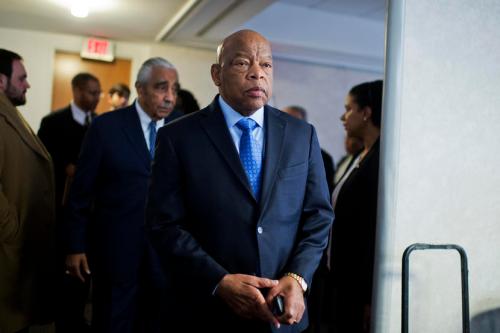
UNITED STATES - FEBRUARY 11: Rep. John Lewis, D-Ga., and Rep. Charlie Rangel, D-N.Y., behind him, arrive for a news conference at the DNC where members of the Congressional Black Caucus PAC endorsed Hillary Clinton for president, February 11, 2016. (Photo By Tom Williams/CQ Roll Call)

John Lewis is the latest elder statesperson to have experienced some difficulties in speaking on behalf of Hillary Clinton.

First it was former Secretary of State Madeleine Albright, who apologized for seeming to suggest that young women who didn’t support Hillary were going to “a special place in hell.”

Then it was feminist pioneer Gloria Steinem, who apologized for saying that young women were flocking to Bernie Sanders because that is where the boys are.

Now it is the turn of civil rights era leader and legend John Lewis. On Thursday he suggested that he knew the Clintons from way back in the movement days, but he had never seen nor heard from this Bernie Sanders guy.

Today he apologized for misspeaking.

”If you take a look at a transcript of my statement, you will find I did not say that I met Hillary and Bill Clinton when I was chairman of SNCC in the 1960s. My point was that when I was doing the work of civil rights, led the Voter Education Project and organized voter registration in the South in the 1970s, I did cross paths with Hillary and Bill Clinton in the field. They were working in politics, and Bill Clinton became attorney general of Arkansas in the 1970s as well. That began a relationship with them that has lasted until today.”

As for Bernie Sanders:

“I was responding to a reporter’s question who asked me to assess Sen. Sanders’ civil rights record. I said that when I was leading and was at the center of pivotal actions within the Civil Rights Movement, I did not meet Sen. Bernie Sanders at any time. The fact that I did not meet him in the movement does not mean I doubted that Sen. Sanders participated in the Civil Rights Movement, neither was I attempting to disparage his activism. Thousands sacrificed in the 1960s whose names we will never know, and I have always given honor to their contribution.”

In fact, Bernie Sanders had been involved in the movement almost as early as John Lewis was. Sanders’ sacrifice included going to jail for trying to desegregate the University of Chicago dorms.

Everyone is entitled to zealously support preferred candidates, and zeal sometimes crosses over into exaggeration. But when icons like Albright, Steinem and Lewis get caught overreaching so far that they are forced to furiously backpedal, especially all in one week, you have to wonder what exactly is going on.

New Hampshire Primary Aftermath: Battle of the Billionaire Front Pages

The New York Daily News and the New York Post have been tabloid newspaper rivals forever. And that battle is most deliciously seen on their front pages.

These papers are currently owned by very different billionaires: The Daily News by Mort Zuckerman (leans liberal), the Post by Rubert Murdoch (Fox News, enough said).

In the U.S., the Daily News and Post are the champions of creative, clever, crass or crude. Here is what they came up with the morning after a very momentous night in politics.

New York Daily News

NY_NYP

New Hampshire Primary: Chinese New Year Quiz Edition

Pig Snake

It is the Chinese New Year, the Year of the Monkey. Time to guess what the Chinese lunar calendar tells us about the two Democratic candidates.

Following are descriptions of the two astrological animals representing the dates on which Bernie Sanders and Hillary Clinton were born. The game is to guess which is which.

For those not obsessively interested in the often ridiculous and disheartening zoo/farm of this silly season, good for you.

Note: It is good fortune to wear red for the Chinese New Year, especially red underwear. You likely don’t know me well enough to know it, but I have no red underwear. I do have red ties and am wearing one today. If you are someone who does have red underwear, wear it and good luck.

And now the quiz. Which is Hillary and which is Bernie?

Democratic Candidate 1:

Born in the Year of the Pig

Elemental type of Pig based on a 60-year cycle: Fire Pig
Ambitious, persevering, but impatient.

Pigs are diligent, compassionate, and generous. They have great concentration: once they set a goal, they will devote all their energy to achieving it. Though Pigs rarely seek help from others, they will not refuse to give others a hand. Pigs never suspect trickery, so they are easily fooled.

General speaking, Pigs are relatively calm when facing trouble. No matter how difficult the problems are Pigs encounter, they can handle things properly and carefully. They have a great sense of responsibility to finish what they are engaged in.

People born in a Year of the Pig will encounter so many disruptions in their career that they will work under great pressure. It will not be suitable for them to carry out new plans or new measures.

Democratic Candidate 2:

Born in the Year of the Snake

Elemental sign based on a 60-year cycle: Gold Snake
Determined, courageous, confident, and able. A born leader.

In Chinese culture, the Snake is the most enigmatic animal among the twelve zodiac animals. People born in a year of the Snake are supposed to be the most intuitive.

Snakes tend to act according to their own judgments, even while remaining the most private and reticent. They are determined to accomplish their goals and hate to fail.

Snakes represent the symbol of wisdom. They are intelligent and wise. They are good at communication but say little. Snakes are usually regarded as great thinkers.

Snakes are materialistic and love keeping up with the Joneses. They love to possess the best of everything, but they have no patience for shopping.

Snake people prefer to work alone, therefore they are easily stressed. If they seem unusually stressed, it is best to allow them their own space and time to return to normal.

Snakes will have a smooth career after overcoming hardships in 2016. They will be hampered by unscrupulous people at the beginning of the year, but the situation will change in the middle of the year, and it will turn out smoothly at the end of the year. They will not achieve anything if they give up halfway; therefore, they must be confident about their future.

Shepard Fairey: The Art of Political Revolution

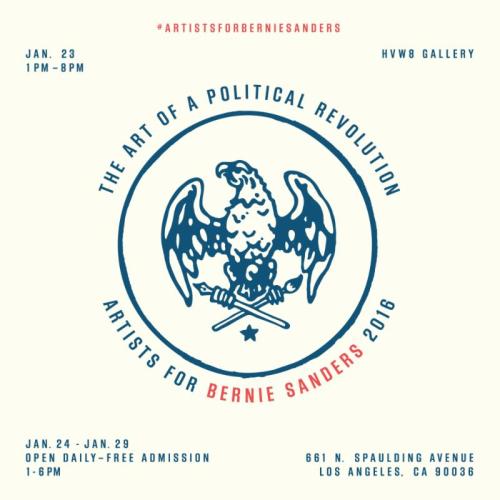
Shepard Fairey - Bernie Sanders Concert

Not many people had heard of the artist Shepard Fairey (“Manufacturing Quality Dissent Since 1989”) until he created the Obama “Hope” poster, one of the most famous pieces of art in modern American politics.

Since then, he has been spending his time creating, exhibiting and selling all sorts of provocative and eminently viewable art/propaganda on the beneficial edge of society, politics and culture.

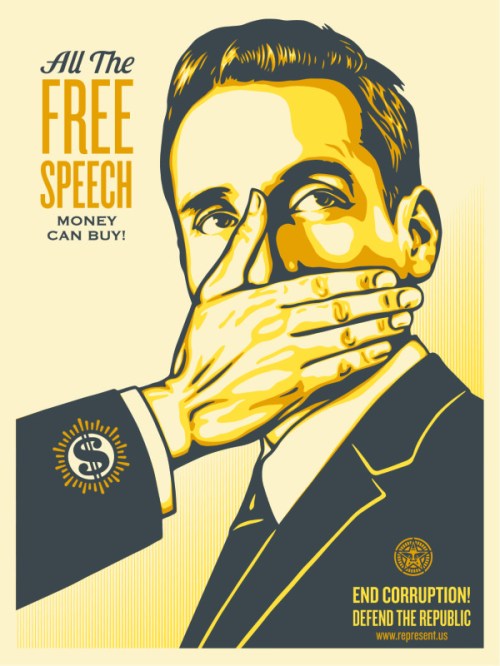
He created the poster above for today’s Bernie Sanders benefit concert in Los Angeles. For those who haven’t looked for a while, or don’t know Shepard’s work, here is a sampling:

End Corruption

Make Art Not War

3fe6ad0d-98bd-49f4-b2d3-851ef7c7a746


Rules for Radicals: A Pragmatic Primer for Realistic Radicals

Rules for Radicals

Saul Alinsky, author of Rules for Radicals: A Pragmatic Primer for Realistic Radicals (1971), is a currently infamous architect of political change, demonized but also mostly unread.

His infamy comes from the revelation that Barack Obama had used Alinsky’s work as a sourcebook for community organizing back in Chicago. That was enough for conservative Obama haters, who took this as just one more sign of Obama’s anti-Americanism. Most of them had never read Alinsky, but were sure he was some sort of scary Commie/enemy of the state type, who in the right kind of America belonged in jail—if he hadn’t already been dead.

Rules for Radicals is none of that. It is instead an articulate and sensible outline for making political change—not by rejecting or blowing up the system or the establishment, but by first accepting the way things and people are and working from there.

As an organizer I start from where the world is, as it is, not as I would like it to be. That we accept the world as it is does not in any sense weaken our desire to change it into what we believe it should be — it is necessary to begin where the world is if we are going to change it to what we think it should be. That means working in the system.

Anything else, Alinsky says, alienates people by going outside their experience. Which is why, for example, he was so opposed to the tactic of burning the American flag as a form of protest.

This failure of many of our younger activists to understand the art of communication has been disastrous. Even the most elementary grasp of the fundamental idea that one communicates within the experience of his audience — and gives full respect to the other’s values — would have ruled out attacks on the American flag. The responsible organizer would have known that it is the establishment that has betrayed the flag while the flag, itself, remains the glorious symbol of America’s hopes and aspirations, and he would have conveyed this message to his audience.

Alinsky cites many political thinkers, giving special attention to the virtues and vices of those behind the American Revolution. Sam Adams, for example, made the case for revolution against the British, but once he was part of the established new regime, opposed rebellions within the new American democracy. This, Alinsky says, is a typical pattern.

Writing in 1971, after decades as an organizer, Alinsky hoped to guide a new generation of young radicals who seemed passionate but relatively rudderless. He laid out the practical lessons of his experience, especially the distinction between the rhetorical radical and the pragmatic radical.

This is the promise and the danger of what Alinsky saw at the time, and in a certain light, might still see today:

The “silent majority,” now, are hurt, bitter, suspicious, feeling rejected and at bay. This sick condition in many ways is as explosive as the current race crisis. Their fears and frustrations at their helplessness are mounting to a point of a political paranoia which can demonize people to turn to the law of survival in the narrowest sense. These emotions can go either to the far right of totalitarianism or forward to Act II of the American Revolution.

Snow White in Iowa

Snow White - Magic Mirror
Hillary Clinton: Magic mirror on the wall, who won the Iowa caucus?

Magic Mirror: Over the seven jeweled hills, beyond the seventh fall, in New Hampshire campaigns Bernie Sanders, the winner in Iowa.

Hillary Clinton: I won Iowa. Bernie Sanders is dead. Behold the results.

Magic Mirror: Bernie Sanders still lives. You failed to vanquish him.

Hillary Clinton: Then I’ve been tricked.

With sincere apologies to Ted Sears, Richard Creedon, Otto Englander, Dick Rickard, Earl Hurd, Merrill De Maris, Dorothy Ann Blank, and Webb Smith, the writers of Disney’s Snow White and the Seven Dwarfs (1937). And to the Brothers Grimm.