Wander
Wander
I try to stay home
But I wander
Not for somewhere better or new
Or because there is too much to do
I just forget to be here
Until I read a poem
That is the address
And I am home
Wander
I try to stay home
But I wander
Not for somewhere better or new
Or because there is too much to do
I just forget to be here
Until I read a poem
That is the address
And I am home
Calculus
Calculus
Of the lightened load:
Add less
Than you are losing
Steady and Stop
The ship she
Takes on weight
Ballast and anchor
To steady and stop
The journey on
The unsettled sea
Weary
One more story
About something that is nothing
One more missing
About something that is something
Eyes bleary
Ears weary
But who can tell
Anyone
Which is which
Triage and Detritus
What you watch
Tells you
What not to see
What you listen to
Tells you
What not to hear
What you keep
Tells you
What to discard
Note: There is as much in the title as in the poem.
Triage is from the French trier, to sort. It is best known as a medical term, the sorting of casualties according to severity of injuries. This is how it was used in the Napoleonic wars, later in World War I, and to this day in emergency medicine. But it has for centuries had non-medical uses, as in the sorting of wool, coffee beans, and even recently in discussing which endangered species to try to save first. So in general, triage is an assessment and sorting according to quality.
Detritus is also from the French. It is the disintegrated material and debris that remains after wearing away, from rocks or from organisms. It is related to the word detriment.
The context, particularly of the last lines (What you keep/Tells you/What to discard), is a review of stuff to be kept or let go. If you look at a thing, you may have all sorts of thoughts—arguments with yourself—about what to keep. But if you look at what is in the absolutely-must-have box, those things that require no thought, that tells you something, maybe everything, about the rest. The essential speaks for itself, but you do have to shut up and listen.
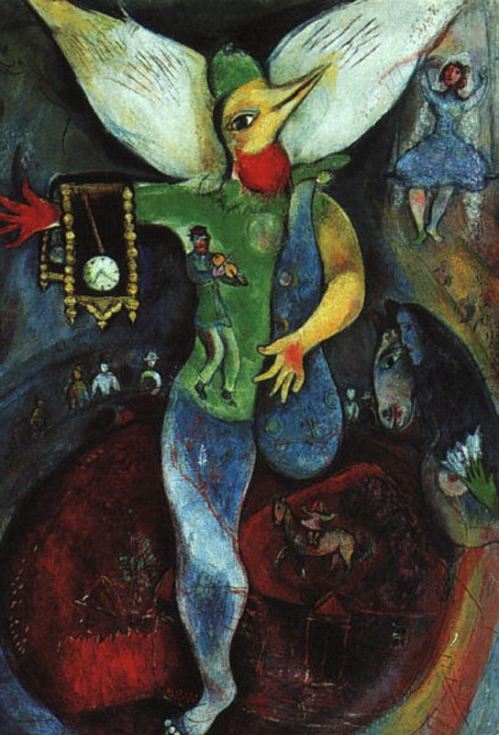
Infinite Jugglers
Juggle balls and knives
Fruits and vegetables
Jewels and poison
Planets and stars
Three to infinity.
It is a skill and a trick
Admired and applauded
When the circle stops
Objects laid on the ground
What is performance
Who is the audience
Who is the performer?
Wisdom House
I see those
Who visited the house
Some knocked
Stopped for a chat or meal
Stayed for a weekend or season
Or never left.
There is no guest book
But some signed it anyway.
One left a note:
You know
This isn’t your house.
Recite
Morning
After dreams
These are the words
That wake:
Hear
Listen
Light
One
Heavens
Earth
Beings
Delusions
Chaos
Desolation
Formless
Void
All is
Hevel.
Note: The word hevel is Hebrew, found in the famous first words of Ecclesiastes. “Hevel hevelim, amar Koheleth, hevel hevelim, kol hevel” is best known in English as something like “Vanity, vanity, says the Teacher, all is vanity.” But as with so much mysterious biblical Hebrew, translators still work on English approximations, of which “vanity” is only one attempt. You will also find hevel translated as air, vapor, breath, mist, smoke, futility, meaningless, pointless, useless. This can put the supposed pessimism of Ecclesiastes in a different light. How can breath be useless?
Sigh
Stop your sighing
You will scare away
The birds
Wisdom Is Where You Find It
Wisdom is here
Where you find it
Collect everything
Discard everything
Still everything remains
One thousand and one sages
Advise you
Then disappear
Leaving you with empty shelves
And the world
 Bob Schwartz