Bob Schwartz

Tag: Passover

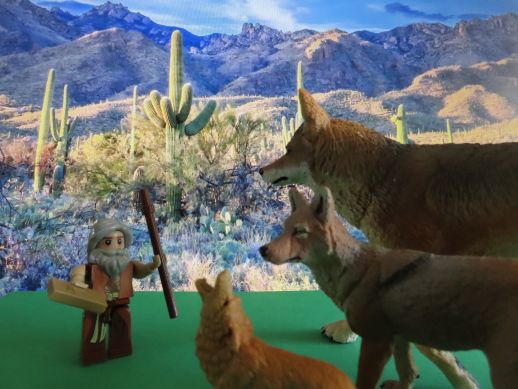
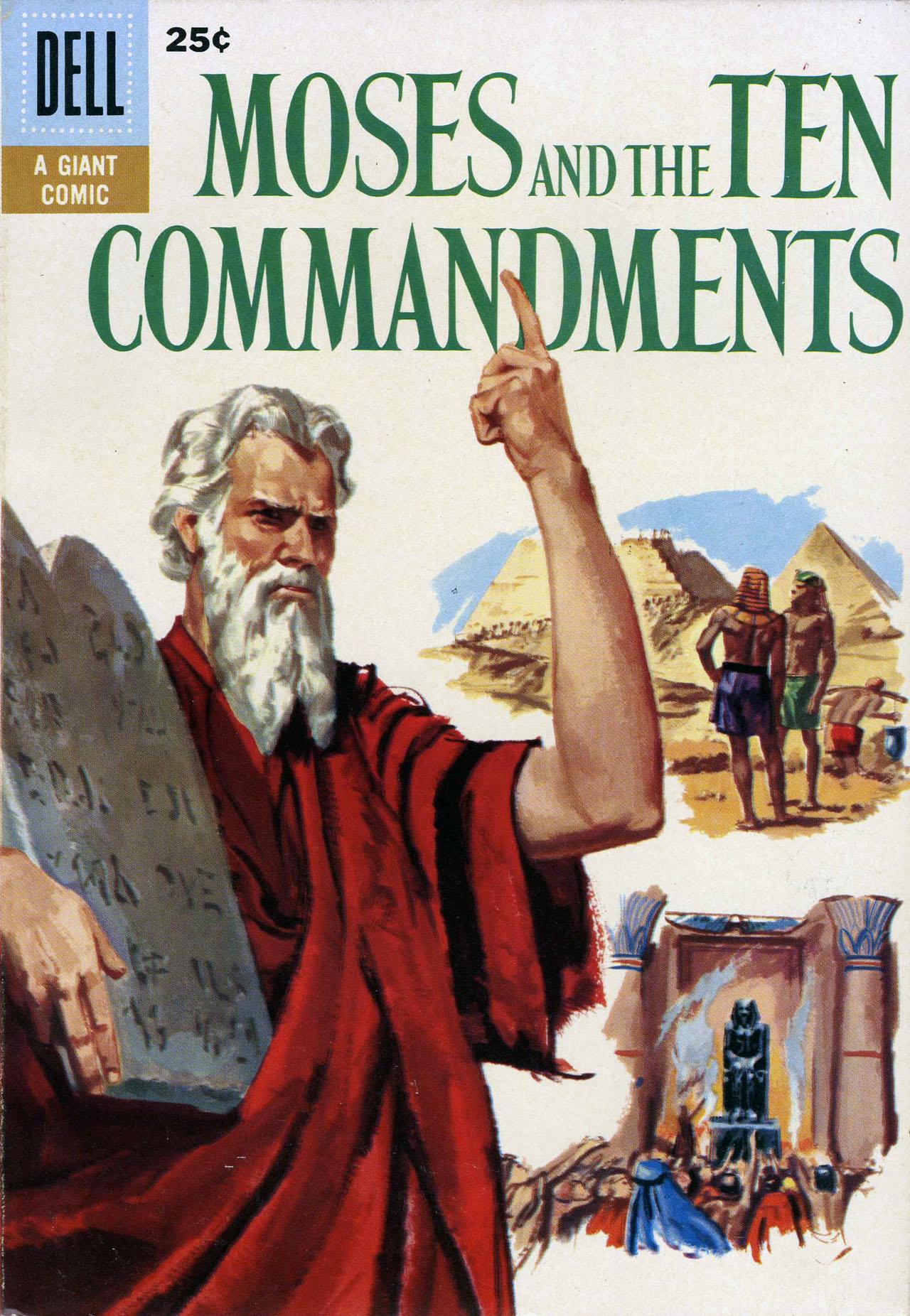
Moses and the three coyotes

Who are you and what are you doing here, the three coyotes asked.

They call me Moses, because as an infant I was set afloat and was picked out of the water by a princess, and then…it’s a long story. I wandered in a desert for a long time and I got used to it. So I’m trying out other deserts.

This is the Sonoran Desert, the three coyotes said. What are you carrying? It looks like a stick and a stone.

The stick is a magic staff. It can turn into a snake. The stone is a bunch of sayings. Do you want to hear them?

No we don’t, the three coyotes said. We don’t need a stick that turns into a snake. We’ve got plenty of snakes of our own.

Well, I guess I’ll be moving on, Moses said. I’m sure I’ll see you again.

Not if we see you first, the three coyotes said.

© 2025 by Bob Schwartz

A new Passover tradition: Matzah oracle

On the first morning of Passover, I came across a book on using the letters of the Hebrew Bible as an oracle.

To be clear, oracles—the I Ching is a well-known example—don’t foretell particular outcomes in a detailed way, though that is one perspective. Instead, they open your mind to deeper visions of the questions you ask and the situations you are confronting.

The first morning of Passover is also a time to think about matzah, as in: What am I going to have for breakfast that includes matzah rather than bread?

That is the origin of the matzah oracle. The steps:

1. Put a sheet of matzah in a one-galloon storage bag.

2. Place the storage bag with the matzah on a hard surface, a table or the floor.

3. Ask your question or seek some insight.

4. Drop a heavy object on the storage bag. For my first oracle, I used a book, a 700-page commentary on the Torah. But it doesn’t have to be a book and it doesn’t have to relevant. Just something that will break the matzah into pieces but won’t obliterate it to total crumbs.

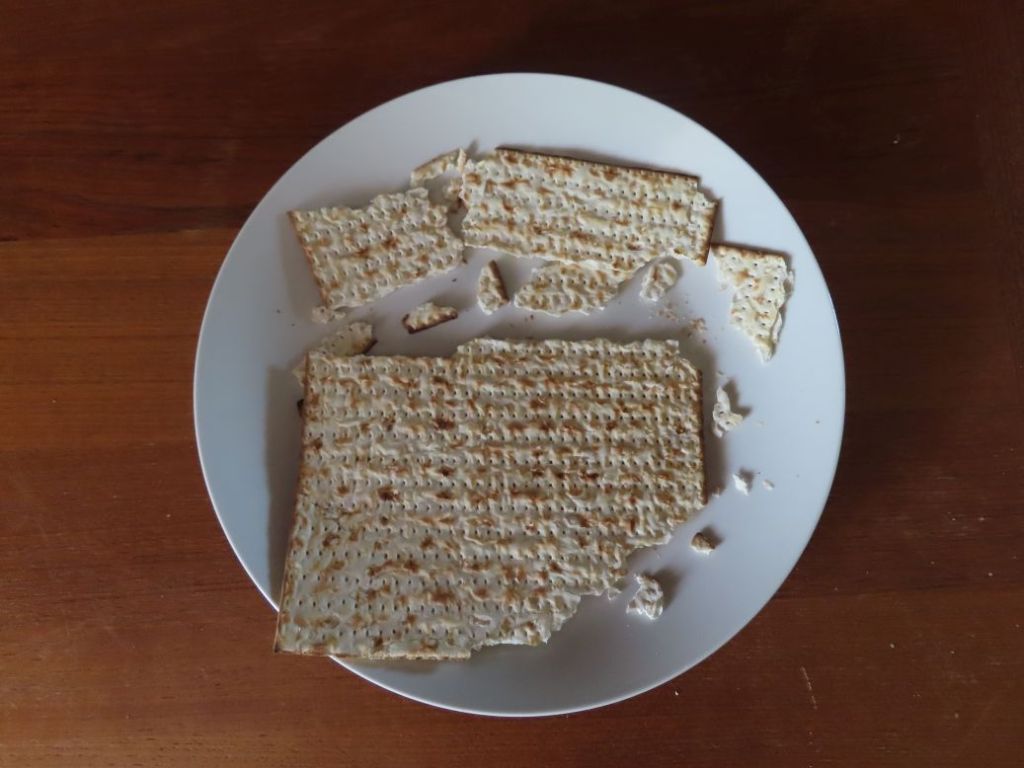
5. Remove the pieces to a plate so you can count them. The difference between a small piece and a crumb can be hard to determine. Don’t worry. Remember that this is an oracle to deepen your thinking, not a predictor, so it won’t matter.

6. Count the pieces. My first matzah oracle contained ten pieces, which corresponds to the letter Yud.

7. Find the Hebrew letter or combination of letters corresponding to that number. Here is a list:


א (Aleph)
1

ב (Bet)
2

ג (Gimel)
3

ד (Dalet)
4

ה (Heh)
5

ו (Vav)

6

ז (Zayin)
7

ח (Cheth)
8

ט (Teth)
9

י (Yud)
10

כ (Kaf)
20

ל (Lamed)
30

מ (Mem)
40

נ (Nun)
50

ס (Samech)
60

ע (Ayin)
70

פ (Peh)
80

צ (Tzaddi)
90

ק (Qof)
100

ר (Resh)
200

ש (Shin)

300

ת (Tav)
400


A number greater than ten requires a combination of letters, e.g., 12=Yud (10)+Bet (2).

This oracle is a work in progress, and I have a few ideas about how to deal with letter combinations. The simplest suggestion is to consider both letters. In the example above, consider both Yud and Bet.

Also, it is unlikely that the matzah oracle will generate all the letters. A piece of matzah that breaks into 400 pieces is likely a pile of crumbs. Maybe there are those committed enough to count all the crumbs.

8. Once you have a letter or letters, there are a number of books and countless websites devoted to the meaning of Hebrew letters—some more valuable than others.

Here are two books that offer thoughtful insights:

A New Oracle of Kabbalah: Mystical Teachings of the Hebrew Letters by Richard Seidman

The Wisdom in the Hebrew Alphabet by Michael Munk

Once you are done with the oracle, the matzah is available for eating. My suggestion, since the matzah is already in pieces, is to soak them in water, combine them with a beaten egg, and fry them into matzah brei, the best of all Passover breakfast dishes.

© 2025 by Bob Schwartz

The Passover story revised: Rameses lets my people go!

“Your plea has moved me. Your people are free to go. You have a long and perilous journey ahead of you.”
Rameses

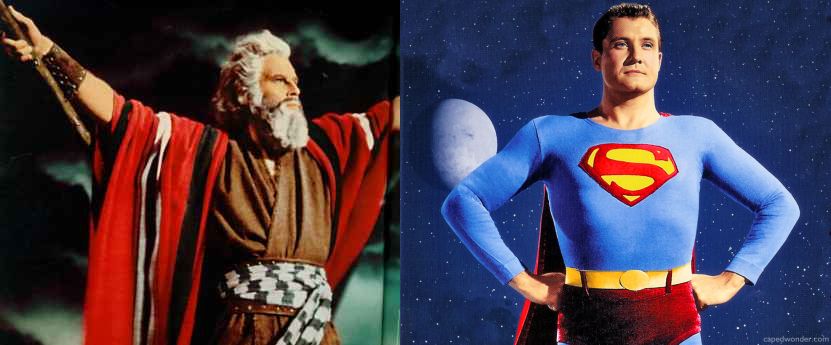
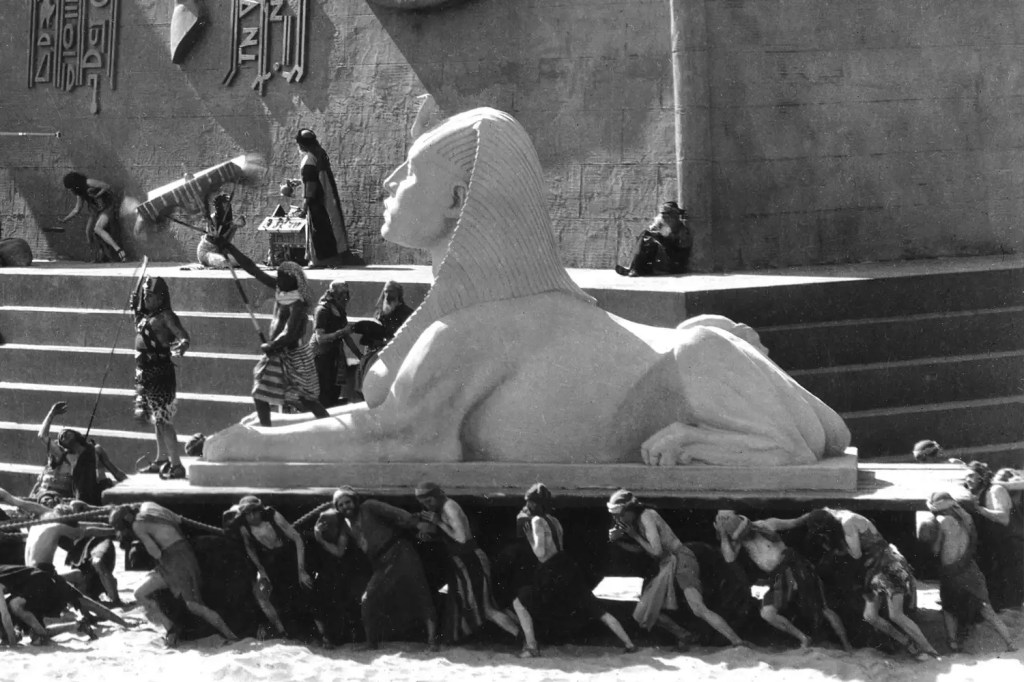
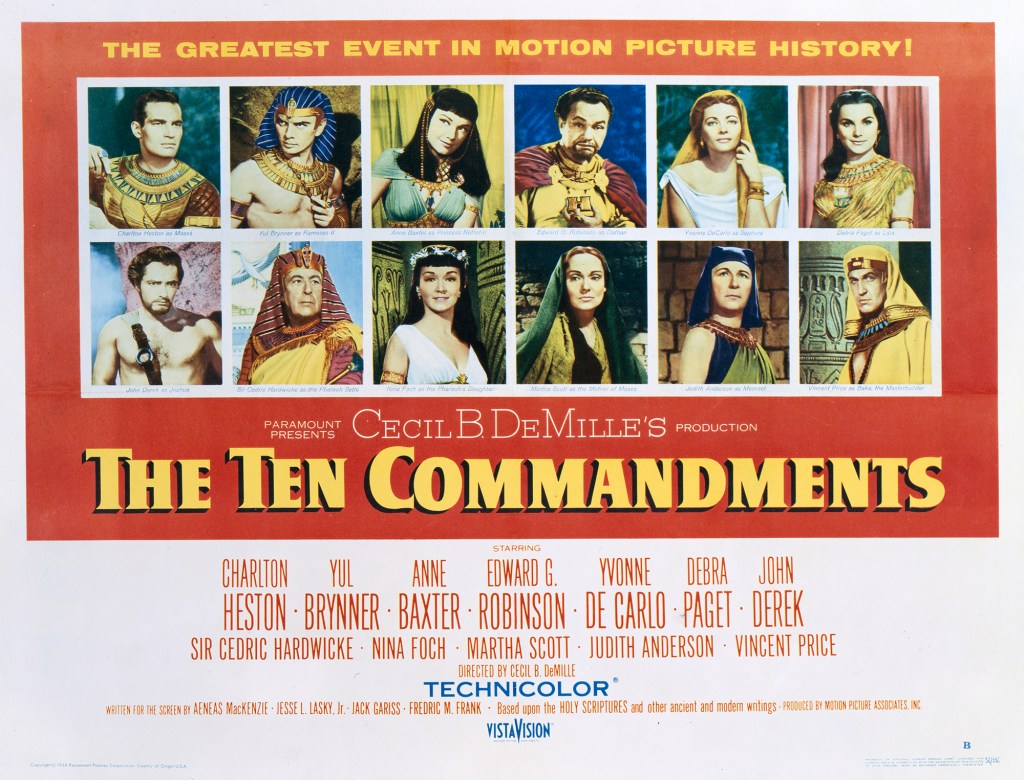
The movie The Ten Commandments (1956) is a famous and spectacular wide-screen reimagining of the Passover story. Following is a revision of that reimagining.

The scene here, adapted from the original movie scene, is one in which Moses approaches Rameses and makes the legendary demand “Let my people go!”

Instead of hardened heart, Rameses relents. He sees that a peaceful resolution will be best for all concerned and will avoid conflict and unnecessary death and destruction.


Rameses sits on his throne. Moses approaches, with the calm, stern face of a prophet, staff in hand and wearing a Bedouin robe. The white-robed Wazir moves to bar their way.

WAZIR
What kingdom has sent you?

MOSES
The Kingdom of the Most High.

The Wazir looks bewildered but makes no further effort to detain their approach to the dais.

FANBEARER
These must be ambassadors from Midian, Divine One.

RAMESES
Oh – Bedouins.

FANBEARER
What gifts do you bring?

MOSES
We bring you the Word of God.

Rameses, puzzled, tries to recall some association with the voice. His features harden ­ then change into a grim smile. Rameses is prepared to be amused.

RAMESES
What is this word?

MOSES
Thus saith the Lord God of Israel: Let my people go! Men shall be ruled by Law… not by the will of other men.

RAMESES
I recognize you now my brother. How you have changed! You and I have had our bitter differences. I do not know your God. I thought our God was your God, but now I see that is not so. I am not as hardhearted as you believe. Your plea has moved me. Your people are free to go. You have a long and perilous journey ahead of you.


Viewing The Ten Commandments

Clips from The Ten Commandments on YouTube

Free on Internet Archive

Free broadcast on ABC, Saturday, April 12, 2025, 7:00pm ET/PT

© 2025 by Bob Schwartz

Coyote brokers peace deal between Moses and Pharaoh

Coyote brokers peace deal between Moses and Pharaoh

It is possible, possible, possible. It must
Be possible.
Wallace Stevens, Notes Toward a Supreme Fiction

Passover message: “No stranger shall you oppress, for you know the stranger’s heart, having yourselves been strangers in the land of Egypt.”

גֵ֖ר לֹ֣א תִלְחָ֑ץ וְאַתֶּ֗ם יְדַעְתֶּם֙ אֶת־נֶ֣פֶשׁ הַגֵּ֔ר כִּֽי־גֵרִ֥ים הֱיִיתֶ֖ם בְּאֶ֥רֶץ מִצְרָֽיִם׃
Exodus 23:9

One line from the Book of Exodus crystallizes our moment.

As with all biblical Hebrew, the translation is challenging and varied.


Exodus 23:9

You shall not oppress a stranger, for you know the feelings of the stranger, having yourselves been strangers in the land of Egypt. (NJPS)

You shall not oppress a resident alien; you know the heart of an alien, for you were aliens in the land of Egypt. (NRSV)

No sojourner shall you oppress, for you know the sojourner’s heart, since you were sojourners in the land of Egypt. (Robert Alter)


Alter addresses one of the translation challenges, the Hebrew word nefesh/נֶ֣פֶשׁ:

“The Hebrew is nefesh, “heart”, “life,” “inner nature,” “essential being,” “breath.””

Another word needing expansion is the Hebrew ger/גֵּ֔ר. Scholars Mark Allen Powell and Dennis R. Bratcher explain in the HarperCollins Bible Dictionary:


alien (ger): In the Bible, one who is not a member of a particular social group. Accordingly, Abraham was an alien (NRSV: “stranger”) among the Hittites at Hebron (Gen. 23:4), as were Moses in Midian (Exod. 2:22) and the Israelites in Egypt (Deut. 23:7; cf. Ruth 1:1). The Hebrew word is ger, and it has often been translated “sojourner” in English Bibles. The NRSV is inconsistent, translating it “alien” in some instances and “stranger” in others. After the settlement in Canaan, the term not only designated a temporary guest but also acquired the more specialized meaning of “resident alien,” one who lived permanently within Israel (Exod. 22:21; 23:9). No doubt because the Israelites were keenly aware of their own heritage as aliens without rights in a foreign land, they developed specific laws governing the treatment of aliens. Strangers or aliens were to be treated with kindness and generosity (Lev. 19:10, 33–34; 23:22; Deut. 14:29). The basic principle was, “You shall also love the stranger, for you were strangers in the land of Egypt” (Deut. 10:19). And, again, “You shall love the alien as yourself, for you were aliens in the land of Egypt” (Lev. 19:34)….

“Alien” or “stranger” also appears in a figurative sense, usually in appealing to the generosity and mercy of God in dealing with undeserving people (Pss. 39:12; 119:19; 1 Chron. 29:15). The idea of dwelling in a land owned by someone else is also applied theologically to the relationship of the Israelites to the land; it belonged to God and they were the strangers in it (Lev. 25:23). (emphasis added)


This Passover, we give a thought to the nefesh—heart, life, inner nature, essential being, breath—of the ger—stranger, sojourner, resident alien. As the Bible reminds us, we were strangers too.

Hag Pesach sameach.

This Passover donate to the International Rescue Committee

Passover begins on the evening of April 22, 2024.

Some people, Jews and others, believe that the Israeli strategy in Gaza is justified and that the deaths and suffering of innocent people are unfortunate collateral damage of an important goal. Some people, Jews and others, disagree.

One thing we all can agree on is that when people, especially children, suffer, justifiably or not, it is our duty to help relieve that suffering in any way we can. People of all religious traditions or none can agree on this.

The International Rescue Committee is one of the most respectable and responsible organizations in the world working on this:


The International Rescue Committee (IRC) helps people affected by humanitarian crises—including the climate crisis—to survive, recover and rebuild their lives.

Founded at the call of Albert Einstein in 1933, the IRC is now at work in over 50 crisis-affected countries as well as communities throughout Europe and the Americas.


As Jews, on Passover we recall how our storied ancestors suffered—under the hand of a wicked ruler, wandering in a desolate desert. As we have suffered and suffer still, how can we deny the suffering of others and fail to relieve it?

When the Israelites were starving in the desert, we are told that God provided manna:


In the desert the whole community grumbled against Moses and Aaron. The Israelites said to them, “If only we had died by the Lord’s hand in Egypt! There we sat around pots of meat and ate all the food we wanted, but you have brought us out into this desert to starve this entire assembly to death.” Then the Lord said to Moses, “I will rain down bread from heaven for you. The people are to go out each day and gather enough for that day. (Exodus 16:2-4)


We cannot wait for manna. It is up to you.

Please donate to International Rescue Committee. Chag Pesach sameach.

Elijah’s reward (Passover)

Elijah’s reward

Who wants to be a prophet?
Preaching and predicting
Making enemies of friends
Exhausted and enraged
By the constant gloom
Dying alone in the end.
Except Elijah.
Attending dinner parties
Seated in a special chair
As honored guest
Surrounded by admirers
Drunk on wine
Leaving bleak visions behind
Never dying.
Open the door.

© 2024 by Bob Schwartz

Schrödinger’s Jesus

We begin with the physics concept of superposition, which is the ability of a quantum system to be in multiple states at the same time until it is measured.

In 1935 Nobel Prize physicist Erwin Schrödinger devised a thought experiment to illustrate what he believed was a flaw in one interpretation of this concept. Schrödinger’s cat, also known as Schrödinger’s cat paradox, is one of the most referenced, debated and misunderstood thought experiments in modern science.

In simple form:

A cat, a bit of radioactive material, a Geiger counter, a hammer, and a glass flask of poison are in a sealed box. During the next hour, there is an equal chance that the radioactive substance might emit a particle and an equal chance it might not. If it is emitted, the Geiger counter will measure it, cause the connected hammer to shatter the flask, releasing the gas and killing the cat. During that hour, there is equal probability of the cat being alive or dead. Only when an observer opens the box is the cat alive or dead. Until then the cat is simultaneously alive and dead, according to quantum superposition. Schrödinger devised this “ridiculous case” to demonstrate its absurdity.

Easter is a powerful example of an alive or dead paradox, and not the only one in the Bible. Elijah, we are told, did not die, but was taken alive to heaven in a fiery chariot.

Billions of people live in a state of faith. Billions more (I hope) in a state of reason. It is an appropriate time to ask whether we can live in a simultaneous state of reason and a state of faith, or if we must choose between the two.

On Easter some ask whether and how it is possible that there is life after death. On Passover some ask whether the story of an impossible journey actually took place. I am one of those questioners.

Reason is powerful and has its limits. Faith is powerful and has its limits. Schrödinger was, from a certain perspective, wrong in thinking that his cat could not be both dead and alive, that it was a ridiculous absurdity.

“There are more things in heaven and Earth, Horatio, / Than are dreamt of in your philosophy.” (Hamlet). Don’t you think?

© 2023 by Bob Schwartz

Music for Passover: The Ten Commandments Soundtrack and Freedom! ‘90

It’s not easy finding Passover morning music. Once you’ve gotten through Maotzur, Chag Gadya and Dayenu at seder, you’re done. Or are you?

The Ten Commandments Soundtrack (1956) by Elmer Bernstein

As memorable and long (3 hours and 40 minutes) as The Ten Commandments movie is, you don’t want to be dealing with Charlton Heston first thing the morning after seder. Instead, listen to the exceptional musical score by legendary film composer Elmer Bernstein.

Freedom! ’90 by George Michael

Once you get past the obvious connection between the Exodus and freedom, there’s no real reason to listen to this for Passover, except it is a great pop track and one of the best videos of the Golden Age of music videos. Also, the album is called Faith, so there’s that.

© 2023 by Bob Schwartz

“My God, my God, why have you forsaken me?”: The last words of Moses?

Robert Hawke Dowling (1827–1886)

Then Moses went up to Mount Nebo and God showed him the whole land. God said to him, “This is the land of which I swore to Abraham, to Isaac, and to Jacob, saying, ‘I will give it to your descendants’ I have let you see it with your eyes, but you shall not cross over there.”* Moses cried with a loud voice, “אֵלִי, אֵלִי, לָמָה עֲזַבְתָּנִי?” (“Eli, Eli, lema sabachthani?”), that is, “My God, my God, why have you forsaken me?”**

*Deuteronomy 34:1-4
**Matthew 27:46 (with revision)


Passover is mostly about Moses. Easter is all about Jesus.

Passover is about the life of Moses. Easter is about the death of Jesus.

Yet with all the drama of the Exodus story, the moment of greatest pathos in the life of Moses—maybe in the Torah—is his death. All that trouble (the Yiddish word is tzuris), and God denies him entry to the promised land.

Moses had complained to God before, as do others in the Tanakh, but at that moment not a word from him. Jesus had an equally understandable reason to talk back, hanging on the cross. He does, with a question that has sounded down the millennia: “My God, my God, why have you forsaken me?”

The denial of Moses on Mount Nebo is heartbreaking. We are not told whether Moses himself was heartbroken, angry or bitter. Or maybe accepting and understanding. He stays silent. The next thing we are told is that Moses is dead and honored.

Which doesn’t stop us from imagining. In my imagining, the last words Moses speaks are the last words Jesus speaks.

Happy Passover. Happy Easter.

© 2023 by Bob Schwartz