Bob Schwartz

Tag: Old Testament

Don’t forget Gaza

Walter Brueggemann

One crisis after another.

Greenland. Venezuela. Minneapolis. It is easy to forget any particular crisis. Or put another way, it is impossible to pay attention to all the crises. Not to mention all the non-critical items that crop up in our lives and our vision, some pleasant, some not.

So when one crisis gets mentioned or covered, there may be a tendency to say “well, what about…?”

So here I am saying, “What about Gaza?” That is, despite all the other headlines, don’t forget Gaza.

As I’ve implied before, in posts and conversations, Israel, including the Gaza situation, is all about theology, particularly Old Testament theology.

Walter Brueggemann (1933-2025) was one of the most prolific and influential theologians of the 20th and 21st centuries. Much of his work focused on the Old Testament, in which he found radical guidance for modern people of faith—a Bible that does not demand, justify or accept damaging political ideologies and nationalism.

In 2015 Brueggemann published Chosen?: Reading the Bible Amid the Israeli-Palestinian Conflict. He wrote:


INTRODUCTION

The seemingly insolvable conflict between the state of Israel and the Palestinian people requires our best thinking, our steadfast courage, and a deep honesty about the politically possible. The conflict is only “seemingly” beyond solution, because all historical-political problems have solutions if there is enough courage, honesty, and steadfastness.

The conflict is not a fixed, unchanging situation; rather, it is a dynamic historical reality that is dramatically changing and being redefined over time. As a result, it is imperative that our thinking not be settled in a fixed position but that it be regularly reevaluated in response to the changed and changing realities on the ground. If we should settle for a fixed solution, then we will have arrived at an ideology, which is quite unhelpful for real problems on the ground.

In my own thinking, which is much influenced by my work as a Scripture scholar, I begin with a focus on the claim of Israel as God’s chosen people. That conviction is not in doubt in the Bible. It is a theological claim, moreover, that fits with compelling persuasiveness with the reality of Jews in the wake of World War II and the Shoah. Jews were indeed a vulnerable people whose requirement of a homeland was an overriding urgency. Like many Christians, progressive and evangelical, I was grateful (and continue to be so) for the founding and prospering of the state of Israel as an embodiment of God’s chosen people. That much is expressed in my earlier book entitled The Land. I took “the holy land” to be the appropriate place for the chosen people of the Bible which anticipates the well-being of Israel that takes land and people together.

Of course, much has changed since then in the linkage between the state of Israel and the destiny of the chosen people of God.

–The state of Israel has evolved into an immense military power, presumably with a nuclear capacity. There is no doubt that such an insistence on military power has been in part evoked by a hostile environment in which the state of Israel lives, including periodic attacks by neighboring states.

–The state of Israel has escalated (and continues to escalate) its occupation of the West Bank by an aggressive development of new settlements.

–The state of Israel has exhibited a massive indifference to the human rights of Palestinians.

Thus, it seems to me that the state of Israel, in its present inclination and strategy, cannot expect much “positive play” from its identity as “God’s chosen people.” As a consequence, my own judgment is that important initiatives must be taken to secure the human rights of Palestinians. This changed stance on my part is reflected in the new edition of my book on the land. It is a change, moreover, that is featured in the thinking of many critics who have been and continue to be fully committed to the security of the state of Israel, as am I.

This rethinking is important both for political reasons and for more fundamental interpretive issues. A change in attitude and policy is important to help resolve the conflict. It is clear enough that the state of Israel will continue to show little restraint in its actions toward Palestinians as long as U.S. policy gives it a “blank check” along with commensurate financial backing. Such one-sided and unconditional support for the state of Israel is not finally in the interest of any party, for peace will come only with the legitimation of the political reality of both Israelis and Palestinians. As long as this issue remains unaddressed, destabilization will continue to be a threat to the larger region.

It will not do for Christian readers of the Bible to reduce the Bible to an ideological prop for the state of Israel, as though support for Israel were a final outcome of biblical testimony. The dynamism of the Bible, with its complex interactions of the chosen people and other peoples, is fully attested, and we do well to see what is going on in the Bible itself that is complex and cannot be reduced to a simplistic defense of chosenness. The Bible itself knows better than that!

It is my hope that the Christian community in the United States will cease to appeal to the Bible as a direct support for the state of Israel and will have the courage to deal with the political realities without being cowed by accusations of anti-Semitism.

It is my further hope that U.S. Christians will become more vigorous advocates for human rights and will urge the U.S. government to back away from a one-dimensional ideology for the sake of political realism. It seems to many of us that the so-called two-state solution is a dead possibility, as Israel in its present stance will never permit a viable Palestinian state. We are required to do fresh thinking about human rights in the face of the capacity for power coupled with indifference and cynicism in the policies of the state of Israel, which is regularly immune to any concern for human rights.

I have not changed my mind an iota about the status of Israel as God’s chosen people or about urgency for the security and well-being of the state of Israel. Certainly the Christian West continues to have much to answer for with its history of anti-Semitic attitudes and policies. None of that legacy, however, ought to cause blindness or indifference to political reality and the way in which uncriticized ideology does enormous damage to prospects for peace and for the hopes and historical possibilities of the vulnerable. The attempt to frame the Israeli-Palestinian conflict in terms of anti-Semitism is unpersuasive. More courage and honesty are required amid the realities of human domination and human suffering. As the hymn writer James Russell Lowell wrote in reference to the U.S. Civil War, “New occasions teach new duties.” The current conflict, with its escalation of cynical violence, is a new occasion. New duties are now required.

Walter Brueggemann, Chosen?: Reading the Bible Amid the Israeli-Palestinian Conflict


God Does Not Like Guns

William Strutt - Peace
God does not like guns. God is also not crazy about nuclear weapons, and about all the easy to use and widely available tools of destruction in between.

This isn’t obvious. As scholars of religion and violence point out, the Old Testament is a compendium of both divine and divine-inspired and endorsed human mayhem. In the continuing battle against moral evil, which often has a religious component or context, the imperative to take up arms goes unquestioned among some, but not all. Finally, an entire eschatological theology is based on a battle that ends and transcends history as we know it, leading once and for all to the heaven on earth we have all been awaiting.

Let us pull back to the now and here, particularly last night in Newtown, Connecticut, where clergy of all faiths talked about God, if not for God.

The events in Newtown opened up a door to a new world. It was not Armageddon in an epic sense, but it was the end of the world for some, and everyone felt that. The door is a passage to the place where we leave the theology of the Second Amendment behind, where we stop listening to the priests of the National Rifle Association and their interpretations of what the founding gods meant.

This is the time to extend last night in Newtown to every congregation in America. There, leaders will explain to congregants whether God loves guns, and particularly whether God loves guns in such massive quantities and destructiveness.

The leaders can then cite Isaiah 11, and explain how “a child will lead them” is not merely some hermeneutic puzzle pointing to a messiah. Instead, it is reflected in the instruction by Jesus: “Let the little children come to me, and do not stop them; for it is to such as these that the kingdom of heaven belongs.”

The leaders will close by acknowledging that the faithful congregants will hear and themselves espouse practical arguments that stand in the way. Leaders will then patiently explain that all faith is ultimately impractical and heedless of impossibility. God does not like guns, but as his instruments, we are bound to do the worldly work of reducing their number and universal availability. If we claim to be faithful, that is more than just a good deed. It is a divine mission. God, it appears, will be more disappointed than ever if we fail.

You Kippur and Job


The days from Rosh Hashanah (“Head of the Year”, the New Year) and Yom Kippur (“Day of Atonement”) are the ten holiest on the Jewish calendar. Known as the Days of Awe or Days of Repentance, they are a time for reflection on the year past and the year to come, and a time to make amends—not by asking God for forgiveness, but by asking it from those who have been wronged, and through the practice of repentance (literally, “turning”), prayer and charity.

During these days, the Book of Life is metaphorically open, and on its pages your life is weighed: “On Rosh Hashanah it is written, on Yom Kippur it is sealed.”

The liturgy for these holidays, and particularly for Yom Kippur, is some of the most moving and soul-searching in all of the religious canon. There are Old Testament readings included, but not too often from the Book of Job.

There are two solid consensuses about the Book of Job.

Literary types agree that it is probably the greatest work of literature in the Bible.

Religious types agree that it is the most puzzling book in the Old Testament, and that even when you look at it in the most common and superficial way (“Why do bad things happen to good people?”), you end up scratching your head.

Job is the book to read for Yom Kippur. It is the book to ponder at the start of the year, at the end of the year, and at points between. (It was, by the way, Abraham Lincoln’s most studied book of the Bible.)

We begin with the book itself.

It is unusual for it to have been included in the canon of the Hebrew Bible because it is not about a Jew. When non-Jews appear in other books, it is usually a story of helping Jews or hurting Jews or marrying Jews or eventually becoming Jewish. None of that applies to the Book of Job.

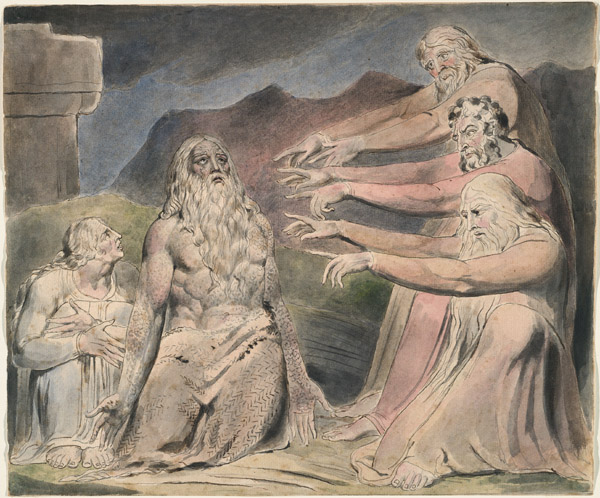
The story is relatively simple, at least until the end. Job is a rich and pious man who has everything: health, wealth, family and friends (or so they seem). Satan wants to prove that Job’s piety is dependent on his having everything, and challenges God to take it all away. God does.

Job’s friends are convinced that he must have done something wrong, and urge him to figure it out and repent. The scenes with his friends are talky, like a play, or maybe like the film My Dinner With Andre—except this is My Dinner with Eliphaz the Temanite, Bildad the Shuhite and Zophar the Naamathite.

Job’s wife has a different suggestion: “Curse God and die.”

Job remains steadfast in his faith.

And then, in Chapter 37, God appears to Job, to explain it all.

The chapters that follow are a poetic and breathtaking description of the world’s wonders, by the one who made them. God tells Job that his friends don’t know what they’re talking about (God takes care of them later). And God implicitly tells Job the only two things to do: Be awed. Be humble.

Job’s reply in Chapter 42 is one of the most important passages in the Bible. It is not only the watchword for Yom Kippur; it is the watchword for everyone, religious or otherwise, who is convinced they are smarter than anyone in the room or in the universe:

Then Job answered the Lord:
“I know that you can do all things,
and that no purpose of yours can be thwarted.
‘Who is this that hides counsel without knowledge?’
Therefore I have uttered what I did not understand,
things too wonderful for me, which I did not know.
‘Hear, and I will speak;
I will question you, and you declare to me.’
I had heard of you by the hearing of the ear,
but now my eye sees you;
therefore I despise myself,
and repent in dust and ashes.”

“I have uttered what I did not understand, things too wonderful for me, which I did not know.”

Whether this is a day of reflection and fasting, reciting centuries-old prayers, or an ordinary day of work or study, managing others or being managed; whether you are Job beset by unexplained misfortune, or Job’s wife, ready to kill him if he doesn’t kill himself, or Job’s friends so quick with advice; whether you are being punished by God, Satan, or whatever other forces you believe are working against you; whether you are the smartest person in the room or not; this is what we can do, even if there is seemingly no comfort in it:

Be awed. Be humble.

Mitt Romney Doesn’t Really Want To Be President


Mitt Romney doesn’t want to be President. This has been apparent for a while, but it seemed so unlikely—so strange for a person who is actually a nominee—that it defied saying. But it is the clearest explanation of everything that is happening.

Why would Romney run if he doesn’t want the office? The clichéd but useful explanation goes to a father-son dynamic.

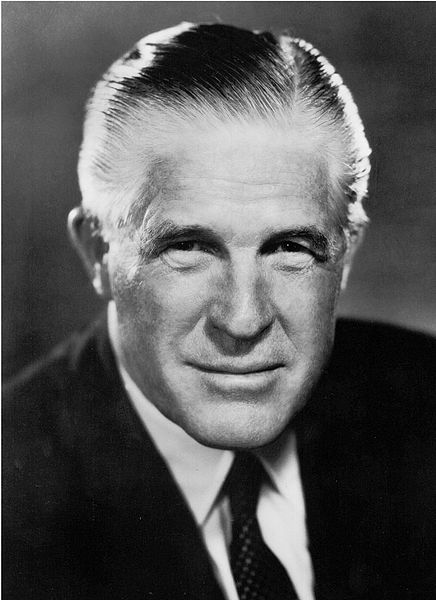
In at least one objective respect, Mitt has spectacularly surpassed George Romney. Mitt Romney is a very, very rich man, wealthier than his father ever was.

As a businessman, it is a little more complicated. George Romney was, as the saying used to go, a captain of industry. He worked his way up to become head of one of the largest automakers, back when that mattered much more than it does now. Even if American Motors wasn’t one of the Big Three, it was a notable, forward-looking player in the field.

Mitt Romney’s success is different. Even treating the financial world as a discrete industry, which it of course is, the term “captain of industry” doesn’t seem to apply to Mitt. In the annals of financial history, no one will be talking about the creativity of Bain Capital the way business historians still do about the ahead-of-its-time thinking that marked American Motors—the company that believed the oversized car era was over, and that consumers would be buying compact and efficient automobiles. Eventually they would.

Politics is where the distinction is sharpest. George Romney was elected Republican Governor of Michigan three times—a state that was then decidedly Democratic. He had substantial political appeal and support, but his dream of being President was scuttled in part by the infamous “brainwashing” incident. He had visited Vietnam, and was told by the generals how well the war was going—in spite of evidence to the contrary. When he spoke about his opposition to the war, he said he had been “brainwashed” by the generals. George Romney’s political career never recovered.

As a politician, Mitt Romney has run for office just twice, and won only once. He was defeated for U.S. Senate from Massachusetts in 1994, and then was elected Governor in 2002. He chose not to run for re-election in 2006. Indications were that he would have a difficult race, and he instead began his run for the Presidency the day before he left office.

This father-son analysis—that Mitt Romney is trying, at all costs and for whatever reasons, to do what his father never could—may sound too easy. But the story of fathers and sons is just about the oldest story ever told. The patriarchal sagas of the Old Testament begin there, and great stories derive their greatness from the fact that some things never change.

Mitt Romney is following a program that he may not see or understand but that he has little or no choice about. It is a program, this running for President, that normally requires some combination of skill and desire. A surplus of one can balance out a deficit in the other. But trying to run without either—which we have never seen in a Presidential race—is bound to produce some anomalous results.

In the case of Mitt Romney, we can set aside the issue of how much political skill he has, though many have their doubts. The real question is how much desire he has. The answer, strangely, is little or none.

The outcome of the election is far from written. In case Mitt Romney loses, there is reason to believe that he will suffer some nagging psychic pain. But given the possibility that it is not something he really wants. there is also reason to believe he will go back to an extraordinarily comfortable life, and secretly be relieved.