Bob Schwartz

Tag: Moses

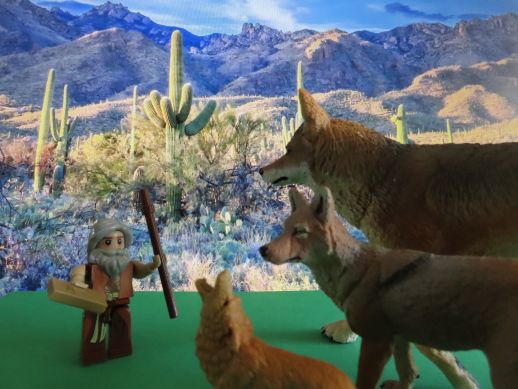
Moses and the three coyotes

Who are you and what are you doing here, the three coyotes asked.

They call me Moses, because as an infant I was set afloat and was picked out of the water by a princess, and then…it’s a long story. I wandered in a desert for a long time and I got used to it. So I’m trying out other deserts.

This is the Sonoran Desert, the three coyotes said. What are you carrying? It looks like a stick and a stone.

The stick is a magic staff. It can turn into a snake. The stone is a bunch of sayings. Do you want to hear them?

No we don’t, the three coyotes said. We don’t need a stick that turns into a snake. We’ve got plenty of snakes of our own.

Well, I guess I’ll be moving on, Moses said. I’m sure I’ll see you again.

Not if we see you first, the three coyotes said.

© 2025 by Bob Schwartz

Coyote brokers peace deal between Moses and Pharaoh

Coyote brokers peace deal between Moses and Pharaoh

It is possible, possible, possible. It must
Be possible.
Wallace Stevens, Notes Toward a Supreme Fiction

Mad Gods by the sea

Palestine Sunbird in Gaza

Mad Gods by the sea

God of Moses
God of Jesus
God of Mohammed
God of infinite names
Sitting by the desert sea
Pained and grieved.
This is madness.
These people
Every inclination
Is only evil
All the time.*
They take our names
In vile vain.**
There is the water
Let us drive them in
And start again
Just like days of old
Do better next time.
But how would they learn?
Hard hearts may soften
Dissolved in blood and tears.
We won’t abandon
We don’t approve.

*Genesis 6.5-7
**Exodus 20.6

© 2023 by Bob Schwartz

“My God, my God, why have you forsaken me?”: The last words of Moses?

Robert Hawke Dowling (1827–1886)

Then Moses went up to Mount Nebo and God showed him the whole land. God said to him, “This is the land of which I swore to Abraham, to Isaac, and to Jacob, saying, ‘I will give it to your descendants’ I have let you see it with your eyes, but you shall not cross over there.”* Moses cried with a loud voice, “אֵלִי, אֵלִי, לָמָה עֲזַבְתָּנִי?” (“Eli, Eli, lema sabachthani?”), that is, “My God, my God, why have you forsaken me?”**

*Deuteronomy 34:1-4
**Matthew 27:46 (with revision)


Passover is mostly about Moses. Easter is all about Jesus.

Passover is about the life of Moses. Easter is about the death of Jesus.

Yet with all the drama of the Exodus story, the moment of greatest pathos in the life of Moses—maybe in the Torah—is his death. All that trouble (the Yiddish word is tzuris), and God denies him entry to the promised land.

Moses had complained to God before, as do others in the Tanakh, but at that moment not a word from him. Jesus had an equally understandable reason to talk back, hanging on the cross. He does, with a question that has sounded down the millennia: “My God, my God, why have you forsaken me?”

The denial of Moses on Mount Nebo is heartbreaking. We are not told whether Moses himself was heartbroken, angry or bitter. Or maybe accepting and understanding. He stays silent. The next thing we are told is that Moses is dead and honored.

Which doesn’t stop us from imagining. In my imagining, the last words Moses speaks are the last words Jesus speaks.

Happy Passover. Happy Easter.

© 2023 by Bob Schwartz

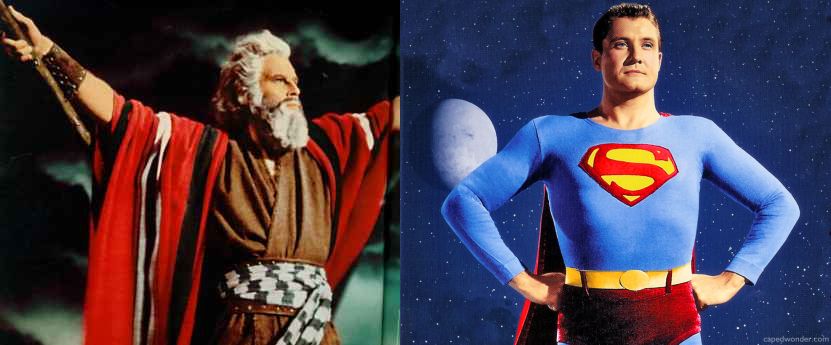
The ultimate Opening Day match up: Moses v Jesus

It happens every spring. The Major League Baseball season begins, then the major holy days of Passover and Easter arrive.

There are some serious explanations of the coincidence between these two holidays. But let’s set those aside.

Instead, let’s talk about the Opening Day pitching match up between Moses and Jesus. Both are known for their seemingly miraculous powers with a baseball (and with all kinds of other things, including big and little bodies of water). They’ve got great stuff. When either is on the mound, it hardly seems fair to batters. But as in religion and life, in baseball some are just more gifted than others.

Who would win? Both have great teams behind them. Moses has his prophets and rabbis. Jesus has his saints. All of them five-tool players: hitting, hitting for power, running, fielding and throwing. But it always comes down to pitching. Moses and Jesus have been described as “magicians on the mound” and they are. (Some batters facing Moses have claimed that sometimes their bats turn into snakes, though it’s never been proven).

Moses v Jesus? Even though it’s baseball, of course it’s a tie. Happy Passover. Happy Easter. Play ball!

© 2023 by Bob Schwartz

Passover 2020: With stay-at-home seders, Elijah will be making many more wine stops

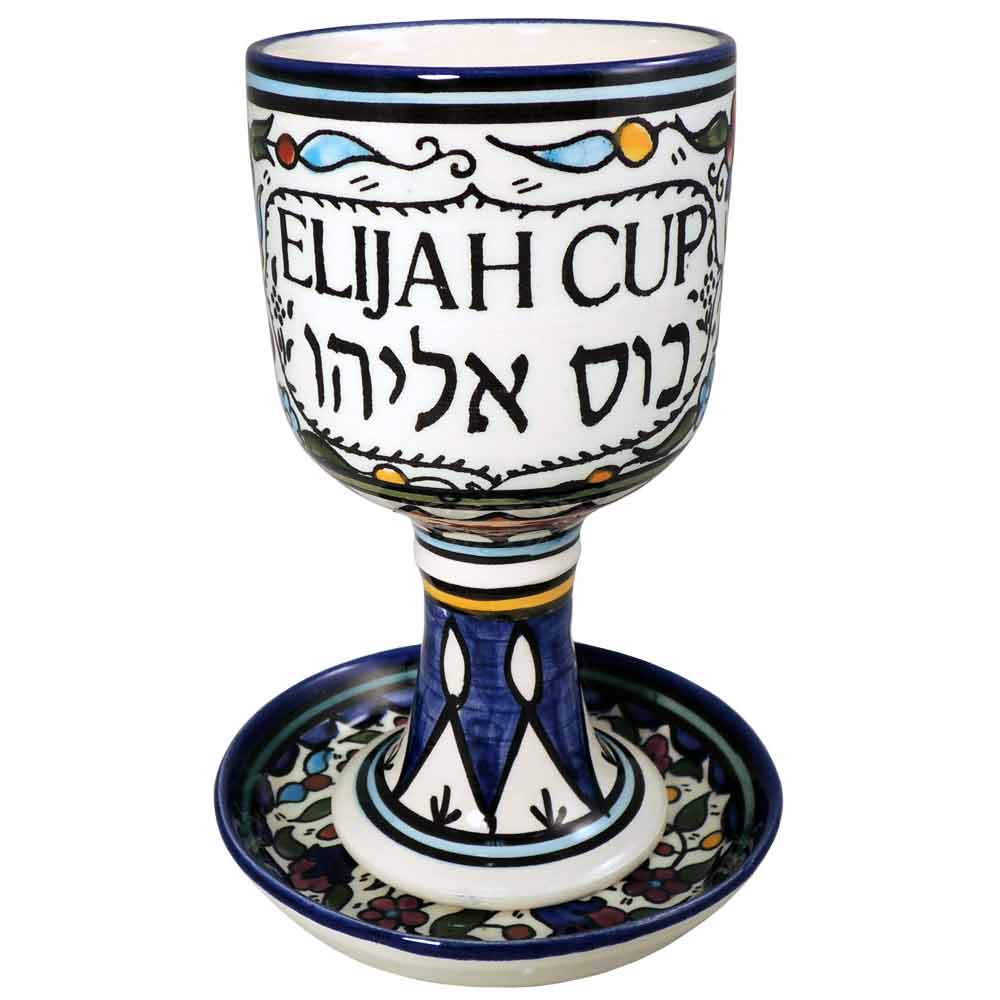
The tradition of Elijah at the seder is common in many Jewish communities. The practice of pouring a fifth cup of wine and opening the door for Elijah has a complex history. The theme is the prophet as a harbinger of redemption. The scholarship on this is voluminous, and it is generally concluded that the practice is not ancient, only coming into use after the Crusades.

Setting aside the fascinating history of the cup of Elijah, this much is clear: at Passover 2020, Elijah will be visiting a lot more seders. Instead of big groups, single family seders—many of them virtually connected—will be pouring that extra cup for Elijah to drink. Not to mention all the other extra cups that will be poured and drunk on this Passover, different than all other Passovers.

According to the Bible story, Elijah, like Moses before him, fled to the wilderness. Pursued by Ahab and Jezebel, Elijah wanted to give up. Instead, he found water and food to sustain him, ending up at the very same mountain where Moses stood:

And He said, “Go and stand on the mountain before the LORD, and, look, the LORD is about to pass over, with a great and strong wind tearing apart mountains and smashing rocks before the LORD. Not in the wind is the LORD. And after the wind an earthquake. Not in the earthquake is the LORD. And after the earthquake—fire. Not in the fire is the LORD. And after the fire, a sound of minute stillness.” (1 Kings 19:10-12, Robert Alter translation)

Wilderness, food, wine, a sound of minute stillness. Happy Passover.

Moses, Elijah and Jesus (Plus Four) Meet on a Mountain: The Feast of the Transfiguration

The Feast of the Transfiguration is celebrated today in many Christian communities. It marks one of the most fascinating stories reported in the Gospels. From the Gospel of Matthew:

Six days later, Jesus took with him Peter and James and his brother John and led them up a high mountain, by themselves. And he was transfigured before them, and his face shone like the sun, and his clothes became dazzling white. Suddenly there appeared to them Moses and Elijah, talking with him. Then Peter said to Jesus, “Lord, it is good for us to be here; if you wish, I will make three dwellings here, one for you, one for Moses, and one for Elijah.” While he was still speaking, suddenly a bright cloud overshadowed them, and from the cloud a voice said, “This is my Son, the Beloved; with him I am well pleased; listen to him!” When the disciples heard this, they fell to the ground and were overcome by fear. But Jesus came and touched them, saying, “Get up and do not be afraid.” And when they looked up, they saw no one except Jesus himself alone. (Matthew 17:1-8, NRSV)

Among those Christian communities, the transfiguration has been subject to different interpretations:

The Transfiguration refers to the appearance of Jesus to his disciples in glorified form. The three synoptic Gospels record the episode: Matthew 17:1–9; Mark 9:2–10; Luke 9:28–36. Jesus took Peter, James, and John with him onto a mountain. (Tradition locates it on Mount Tabor, but many scholars prefer Mount Hermon.) He appeared there before them in a luminous form with Moses and Elijah at his side. Peter proposed that they build three tabernacles, or tents. A heavenly voice declared Jesus to be the “beloved son” and enjoined the disciples to heed him. Jesus then appeared in his usual form and commanded his disciples to keep silence.

There are various interpretations of the episode. Some view it as a misplaced account of a resurrection appearance. Others view it as a mystical experience that Jesus’ disciples had in his presence. Others as a symbolic account devised by Matthew or the tradition on which his Gospel relied. Whatever its origin, the episode of the Transfiguration serves at the very least as a literary device to place Jesus on the same level as the Law (represented by Moses) and the Prophets (represented by Elijah) and as a foreshadowing of his future glory. He is the authentic source of divine truth for those who would listen to him.

The feast of the Transfiguration originated in the East and became widely celebrated there before the end of the first Christian millennium. The feast was not celebrated in the West until a much later date. Pope Callistus III ordered its celebration in 1457 in thanksgiving for the victory over the Turks at Belgrade on July 22, 1456, news of which reached Rome on August 6. The feast is on the General Roman Calendar and is also celebrated by the Russian and Greek Orthodox Churches, the Church of England, and the Episcopal Church in the USA. (Lives of The Saints: From Mary and St. Francis of Assisi to John XXIII and Mother Teresa by Richard P. McBrien)

However you view this story as a matter of fact, faith or theology, it is a big meeting of some heavy hitters. It begins with Jesus plus three apostles, which is not by itself particularly unusual. Then Moses and Elijah arrive. This meeting now qualifies as a big deal, one of the highest-level conclaves in the Bible. But of course there’s more. God shows up—and speaks. (Note that Moses and Elijah both had experience with this: we aren’t sure what kind of voice Moses heard, but Elijah reportedly heard something still and small.)

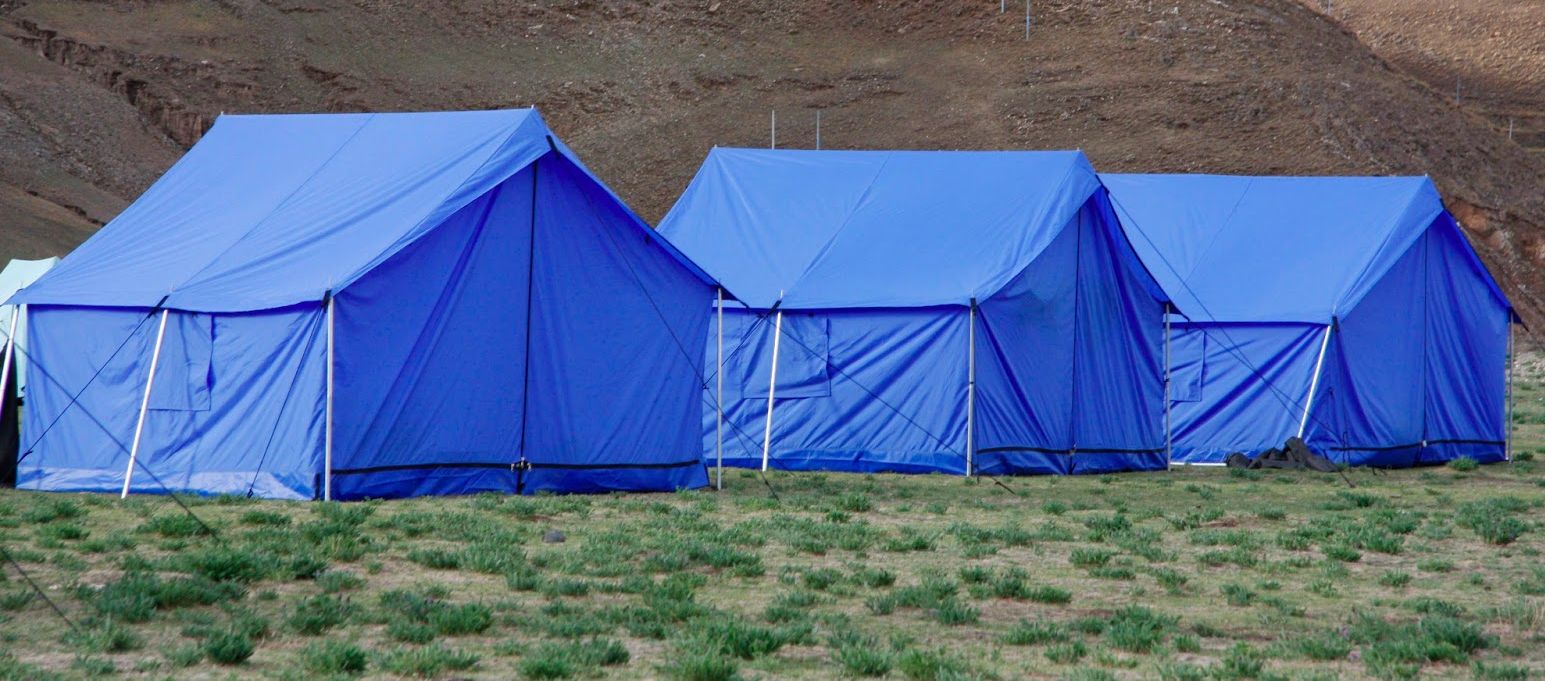
Maybe the most fascinating detail of the story is the offer by the apostles to build three separate tents for Jesus, Moses and Elijah. Some think this is a reference to the Feast of Tabernacles, the Jewish pilgrimage festival at which tents/booths are built. But it seems more a gesture of welcome: You guys have traveled a long way to get here for this meeting; the least we can do is give you someplace to rest and refresh. Would they have gone ahead and built those tents for Moses and Elijah if God had not interrupted? It’s a thought.

Trump v. Moses: Grievances Win Over Vision

People can be complainers. Grievances can be powerful. Just ask Trump. Or Moses.

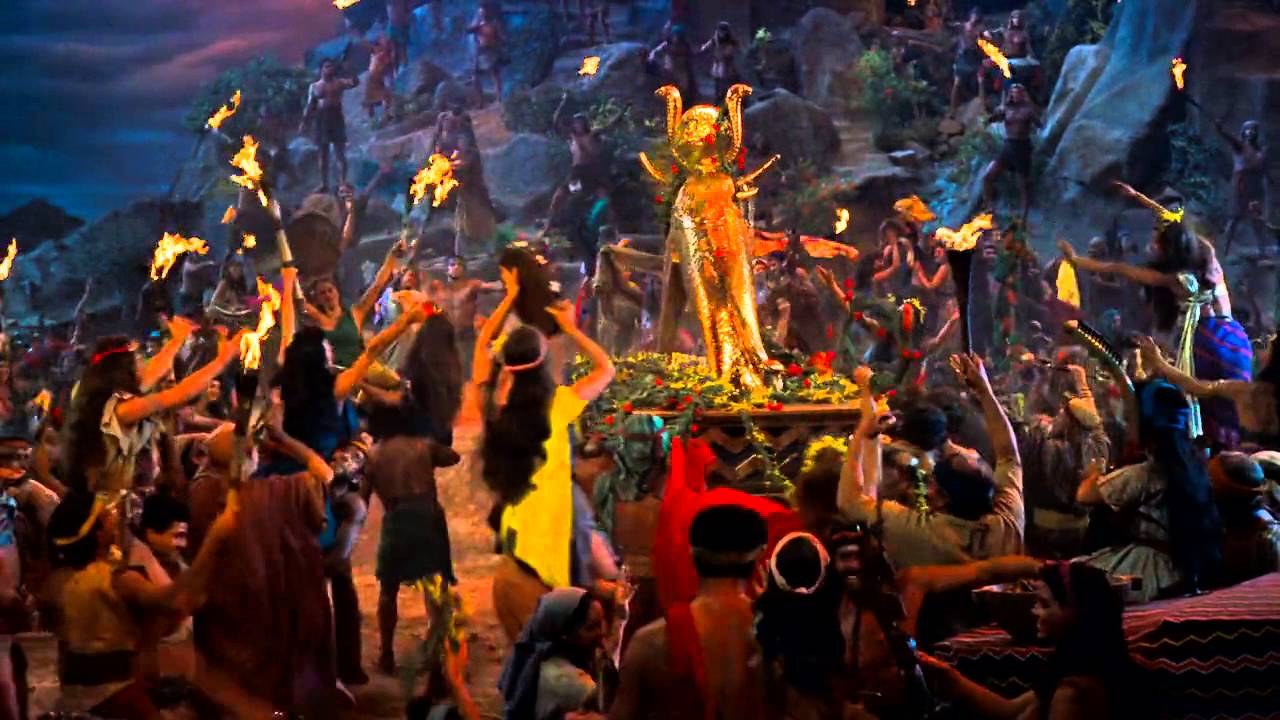
Prior freedom and miracles were not enough for the Jews at Mount Sinai. While Moses goes up the mountain, for what turns out to be a monumental visionary moment, the people head in an entirely different direction. They are still chronically unhappy and complaining about their lives and the way things have been going, and so engage in all sorts of crazy behavior. In that story, the vision does end up prevailing, but only after lots more tzuris (troubles) and mishegas (craziness).

The only chance for vision to prevail over grievance is for there to be an actual coherent and enlightened vision, and for there to be widespread confidence among people in that actual vision. Otherwise people, who are just human, will complain—sometimes selfishly and shortsightedly, sometimes justifiably. And they will channel those complaints into strange behaviors and choices.

In America, there are a lot of people with grievances. And there is a vision vacuum, at least among those whose supposed structural mission is to be practical visionaries (for example, Democrats and religious institutions). Even with miracles behind him, Moses had a tough time. Without miracles or vision, in elections and at other times, we may be seeing a lot more golden calves.


The Mountain and the Cross

The Mountain and the Cross

How is the view
From up there?

Can you see
How you got there?
Others look
At every act you took
Word you spoke
Song you sang
Pull them apart
Put them together
A journey
That never seems to end.

For you it ends here
For a time
On the mountain and the cross.

A privileged child
A prince
A prodigy
A champion of the people
An enemy
A wise man
A miracle worker embarrassing mere magicians
A leader
A rebel
How did that rebellion go
How is it now?

One mistake after another
Has cost you everything
Won you something
But what in the end
Did it all mean?

(Jesus wonders
If he might have lived longer
Not one hundred twenty
But more than thirty three.
Moses has no complaint
About the number
And would not trade places
Sitting on a mountain
Not hanging from a cross
But regrets having to survey
An unreachable destination.)

You were just infants
Too young to remember
How it began.
Leave it to others
To imagine that past
And future.
You have no choice
But to let them see and speak for you
As you saw and spoke for others.
Now your eyes and mouth are closed
In dark silence from a height.

© Bob Schwartz 2017

Buddha Bemidbar (In the Wilderness)

Buddha Bemidbar (In the Wilderness)

Moses is missing
In his place
Siddhartha sits.

Israelites are numbered
Can he free them?

The way in the wilderness
Is unpassable.
Can they pass it?

Too dark to sea
The waters give way
To dry ground
As if they were not there
From the beginning.

Walk on
The mountain next.